7 Pink Flowers That Love Growing in Shade
To add a pop of color to your shade garden, you can’t go wrong with pink flowers. Gardening expert Madison Moulton shares seven pink-flowering plants that perform well in shaded gardens, from compact groundcovers to statement shrubs.

Contents
Pink flowers and shady spots don’t always go together easily. Most of the showiest pink bloomers want full sun (roses are first to come to my mind), and many plants marketed as shade-tolerant produce disappointing, washed-out flowers when they don’t get enough light. So it’s easy to end up with a shaded border that’s all foliage and no color.
But there are plants that flower well without a full day of direct sun. Some of them prefer it. It is important to know which prefer dappled light by nature and which ones merely tolerate it. The difference shows up in how many blooms you get, but you’ll definitely see some pink flowers if you grow any of these in the shade.


‘Sweet Rose Magic’ Sweet William
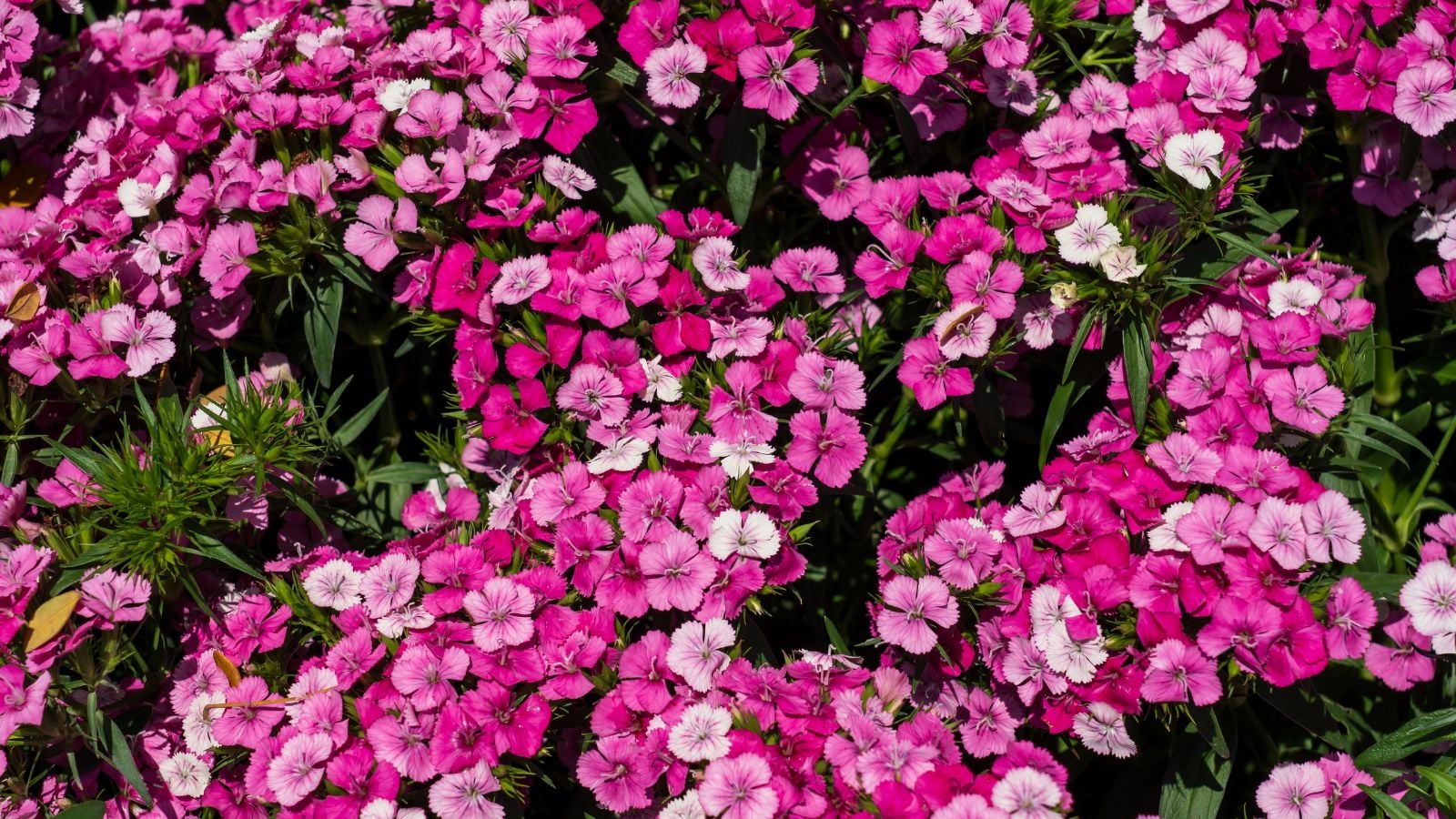
Sweet William is typically thought of as a cottage garden plant for sunny borders. Luckily, it handles part shade surprisingly well, especially in warmer climates where afternoon sun can negatively impact flowering.
‘Sweet Rose Magic‘ is a pink shade flower worth growing for the color alone. Individual blooms open white, turn pink, and deepen to a rich rose as they mature, so you end up with three shades per bloom.
The plants grow about two feet tall with sturdy stems, which makes them useful as cut flowers on top of everything else. They’re technically biennial (or short-lived perennial), so expect leaves the first year and flowers the second if you’re starting from seed. That said, they self-sow reliably enough that once you have them established, they tend to stick around.
Give them moist, well-drained soil and a spot that gets morning sun with afternoon shade, and the flower colors should hold longer than they would in a full-sun position.
Bee Balm
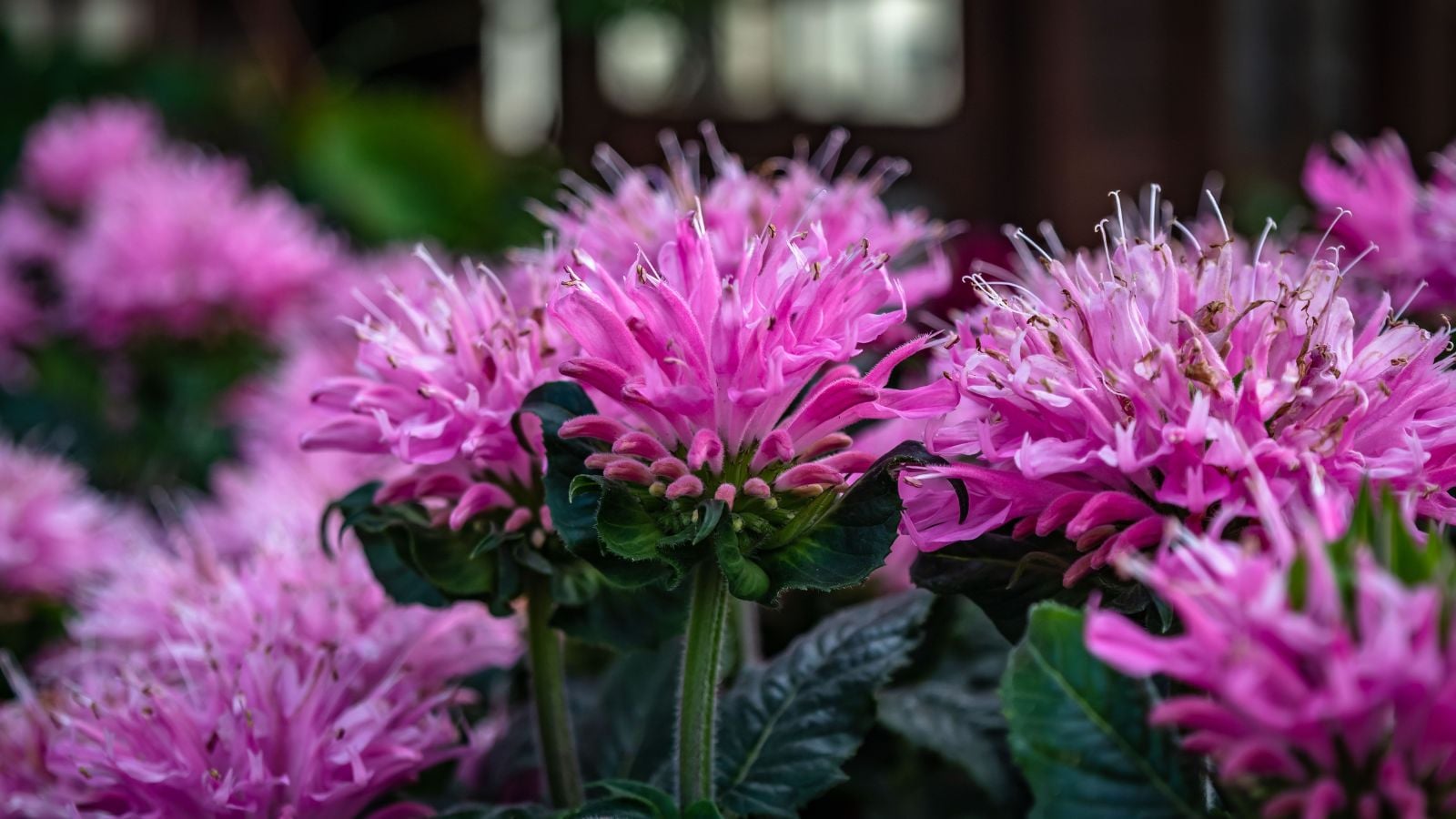
If you’ve ever grown bee balm, you know it tends to take over. It’s a member of the mint family and spreads underground, which means a single plant can spread to a good stretch of garden bed within a couple of seasons.
Bee balm flowers best in full sun, but it handles part shade without much fuss. You’ll get fewer blooms than you would in a sunny border, though the trade-off is that the plants tend to stay more compact and don’t spread as vigorously. Pink-flowering varieties keep the color soft while still pulling in hummingbirds and butterflies.
Powdery mildew is the most common problem with bee balm, and shade tends to make it worse. Good air circulation helps. If your plants are crammed against a fence in a damp corner, mildew is almost guaranteed. Space them out and they should stay healthier.
Coneflower

Including purple coneflower on a list of pink flowers for shade requires a caveat. This is a full-sun plant at heart. It’s native to open prairies where it gets plenty of direct light, and in deep shade, the stems get floppy and flowering drops off noticeably. But in part shade (four to six hours of sun), it performs well enough to earn a place in a garden that doesn’t get light all day.
The flowers are more pink than purple, despite the common name. They bloom from midsummer into fall, attract pollinators, and the dried seed heads feed birds through winter if you leave them standing.
It comes back year after year without much attention. This happens through self-seeding without becoming invasive. Plus, it handles heat and humidity without collapsing. Just don’t expect the same flower output you’d see in a sunny spot.
‘Victoria Pink’ Forget-Me-Not
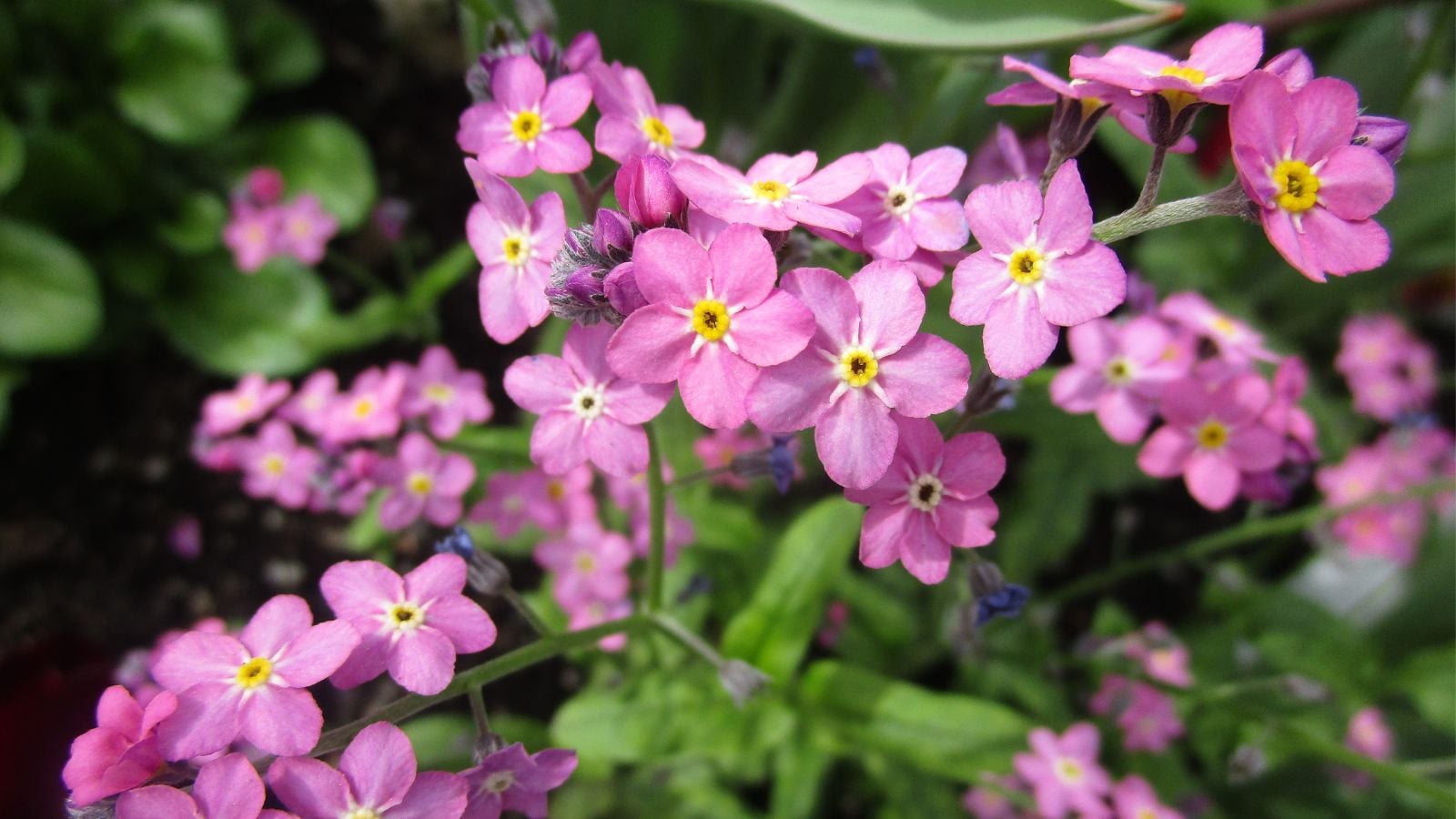
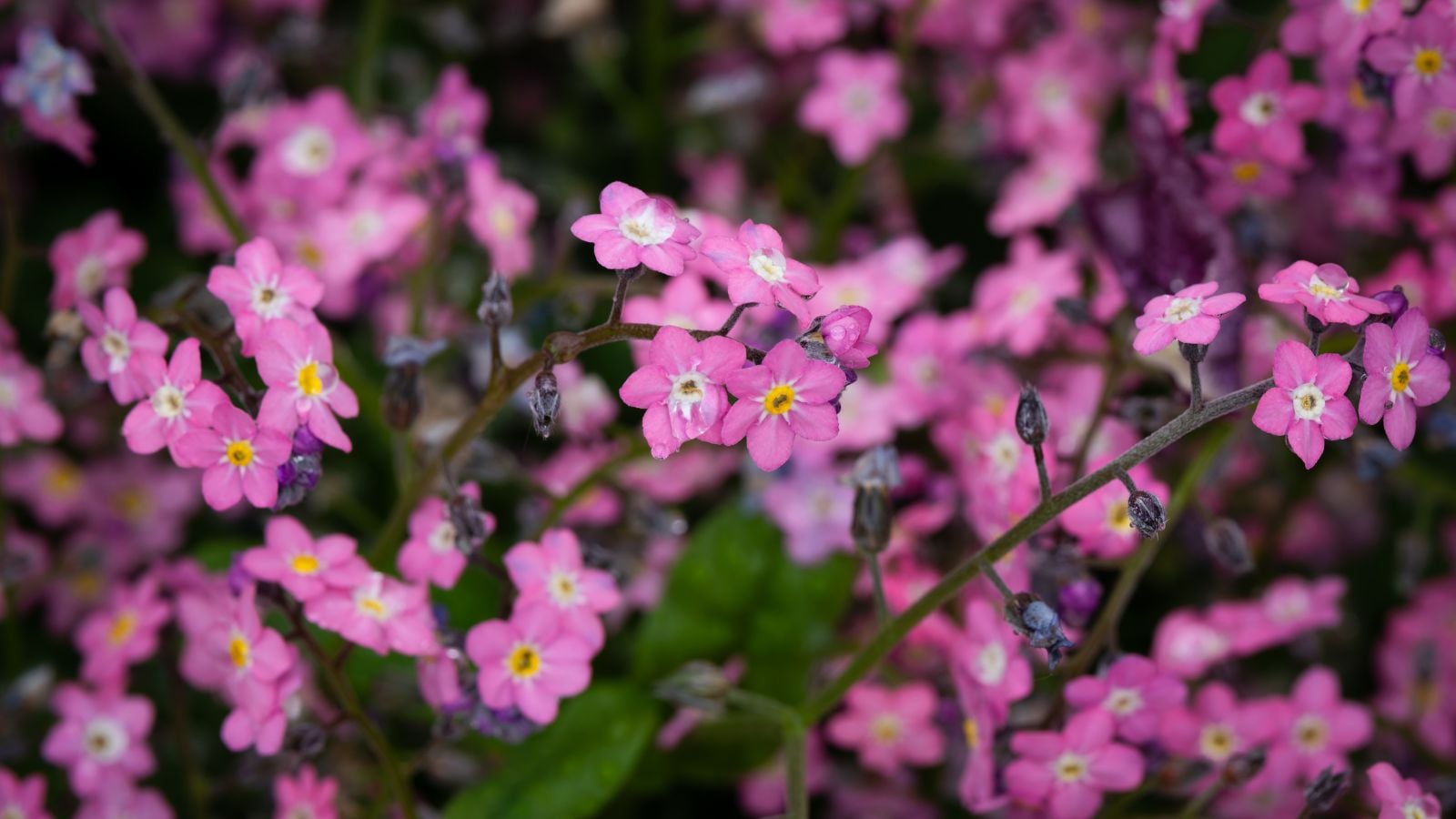
Unlike most plants on this list that tolerate shade, ‘Victoria Pink’ forget-me-not actively prefers it. This is a true shade plant. It thrives in the kind of dappled, woodland light where a lot of flowering plants give up. It produces dense mounds about six inches tall that cover themselves in tiny pink star-shaped flowers with white centers.
The blooming window is relatively short (about eight weeks in spring). But if you let the plants go to seed, they’ll reseed themselves for future years.
Forget-me-nots are technically biennial, putting out foliage the first season and flowering the second. Letting them naturalize is the easiest approach. Once they’re established, you stop thinking about planting them because they just keep showing up.
‘Victoria Pink’ works beautifully as an underplanting for spring bulbs. Tuck it beneath tulips or daffodils and you get a carpet of soft pink at ground level while the taller flowers bloom above.
‘Pink Dynamo’ Hydrangea
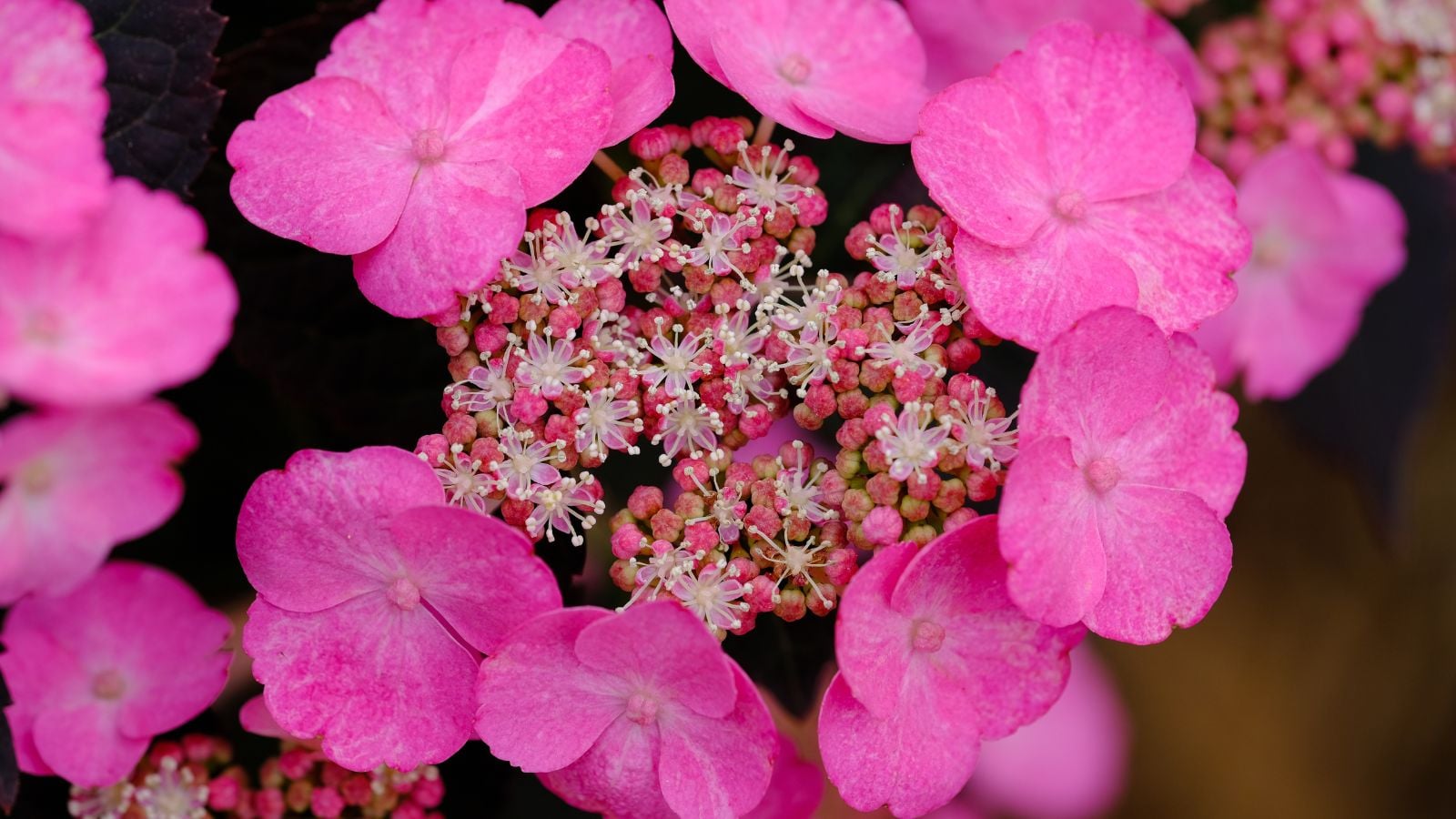
Hydrangeas are already shade-garden staples, but ‘Pink Dynamo’ stands out for a couple of reasons. It’s a mountain hydrangea rather than the more common bigleaf type, which means it’s hardier and tends to bloom more reliably in colder climates.
The lacecap flowers are a vivid hot pink set against dark. It’s a striking contrast you don’t see in many hydrangeas. The plant stays compact at about three feet tall, which makes it a good fit for smaller gardens or containers. And because it blooms on old wood from late spring through summer, you get months of color without needing to do much beyond keeping the soil moist.
Part shade is ideal for ‘Pink Dynamo.’ Morning sun with afternoon protection keeps the flowers from fading and the foliage from scorching. In northern climates with cooler summers, it can handle more sun, but in the South, afternoon shade is essential.
‘Nova Zembla’ Rhododendron

‘Nova Zembla‘ is one of the most cold-hardy rhododendrons you can grow, bred to handle severe winters that would kill most other varieties. The flowers are a bright, saturated red that leans toward deep pink depending on the light, blooming in large rounded clusters in mid to late spring.
Rhododendrons as a group are woodland plants, and ‘Nova Zembla’ follows that pattern. It wants dappled shade or a spot with morning sun and afternoon protection. The soil needs to be acidic (somewhere around pH 4.5 to 5.5), consistently moist, and well-drained.
Getting the soil right matters more than almost anything else with rhododendrons. If your soil is alkaline or heavy clay, the plant will struggle regardless of how perfect the light and watering are.
The shrub grows to about five feet tall and wide at maturity, with glossy evergreen foliage that looks good year-round. It’s a reliable choice for foundation plantings in cooler climates where other evergreens tend to suffer.
‘Dream Weaver’ Camellia
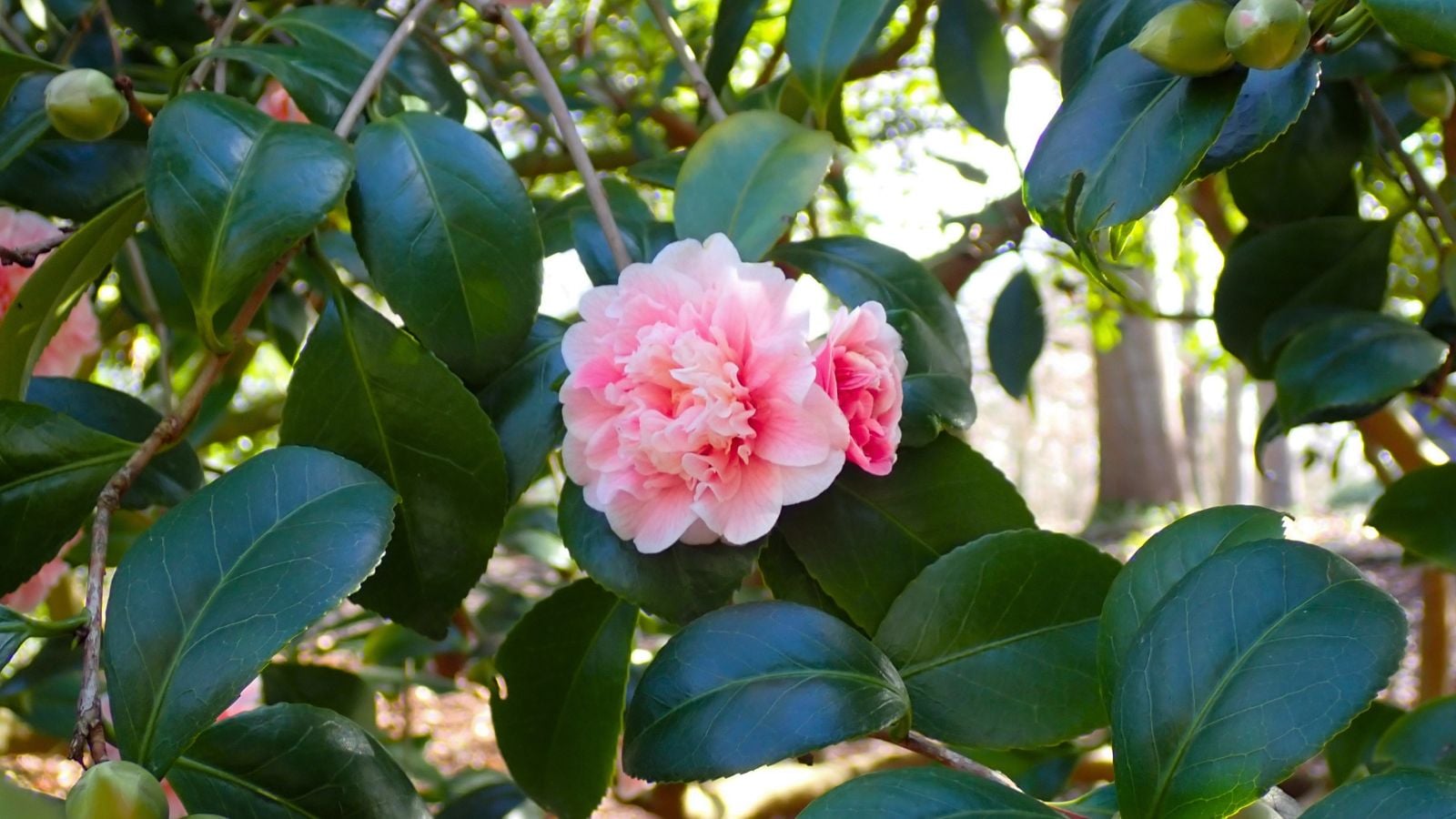
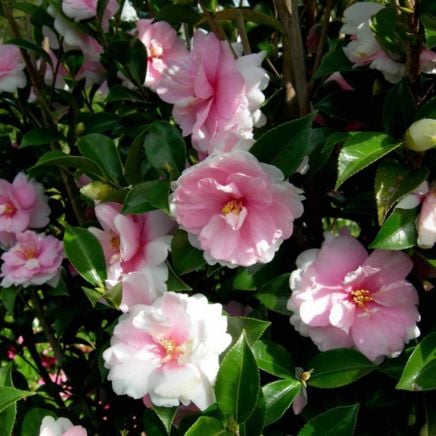
‘Dream Weaver’ is a sasanqua type camellia that flowers from October through December. These pink shade flowers produce double blooms that open white to pale blush and deepen to rosy pink at the base. The overall effect is soft and layered.
This is a fast-growing variety that can reach six to eight feet tall, so it works well as a hedge, privacy screen, or backdrop for lower plantings. The glossy evergreen foliage stays attractive all year, even when the plant isn’t in bloom.
Keep in mind that sasanqua camellias are best suited to warmer climates. They’re reliably hardy through about zone 7, which rules them out for gardeners in colder zones. But if your winters are mild enough, a mature ‘Dream Weaver’ in full fall bloom is definitely worth it.