

Companion Planting for Small Gardens: How to Maximize Every Inch
There is no area too limited for effective companion planting. Small garden beds are some of the best places to interplant and fill in spaces that would otherwise be bare. The result is even more of a delicious harvest to enjoy. Experienced gardener Sarah Jay highlights the best ways to maximize your small space garden.

Contents
If you want to do some companion planting, small garden spaces should not deter you. This spring is a great time to research some of the best companions and cram them into your bed so you can reap those sweet rewards come harvest time. You’ll be glad you took the time to plan a garden with plants that bolster one another.
While some of the science behind companion planting is treated as dogma, the truth of the natural world is that there are few hard and fast rules. While some plants just won’t be great together, there are so many that will work when planted side-by-side, despite information to the contrary.
All it takes is some thoughtful planning and the willingness to experiment and see what works. Then replicate those effective pairings next year, and leave behind the ones that didn’t do much. If you’re a note-taker, mark down your successes and failures. Then reference them when next season arrives.
The Container Collection Seed Bundle
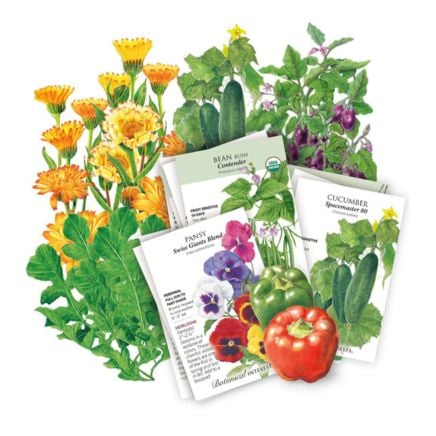
The Container Collection Seed Bundle
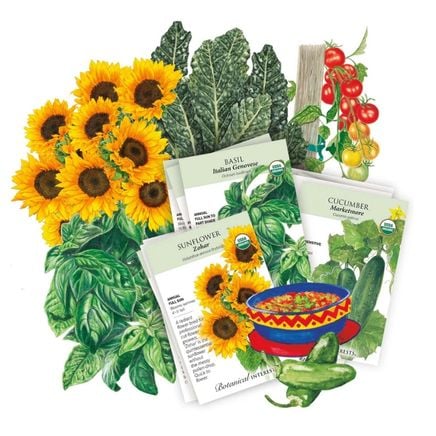
Small Space, Big Harvests Starter Mix
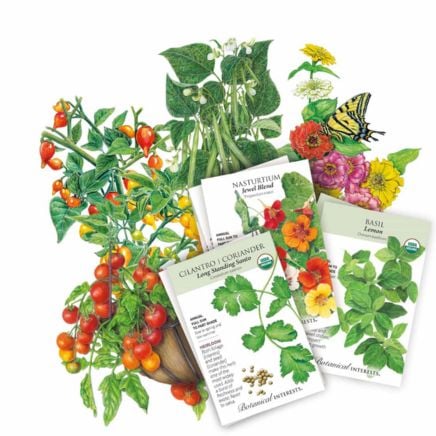
Small Space, Big Harvests Starter Mix
Step 1: Assess Your Space

The first thing to do is consider how much space you have. Is it a raised bed you’re working with, or are you using containers to practice companion planting? Small garden beds and containers are absolutely grounds for trying out some pairings that will boost each other in some way.
For raised beds, make a grid that outlines each square foot. In containers, note their size and volume. If you’re already growing a few plants and they’re awaiting transplant, make note of how much space they generally need. Large, indeterminate tomatoes, for instance, need at least 10 to 15 gallons for adequate growth.
Compare the plants you want to transplant into your garden with the amount of space in your raised bed, and locate some containers to accommodate any that won’t fit in the bed. In a completely container-based garden, find more containers at thrift stores, buy nothing groups, and nearby nurseries if needed.
Step 2: Use the Square Foot Method

One of the best methods for companion planting was developed by Mel Bartholomew, one of Epic founder Kevin Espiritu’s teachers, who wanted to figure out how to maximize the space in a community garden he worked in. Instead of rows, Mel used square feet to design the garden. He even developed a tried and true soil mix that gardeners all over use along with his method.
The square foot method is perfect for small raised beds. You can find free guides on how to use the method to plant effectively as well, but if you can find the book at your library, it’s worth a read. Take time to develop the grid that will guide how many plants can grow within the bed, and you’ll maximize your space without overfilling.
Step 3: Interplant Biointensively
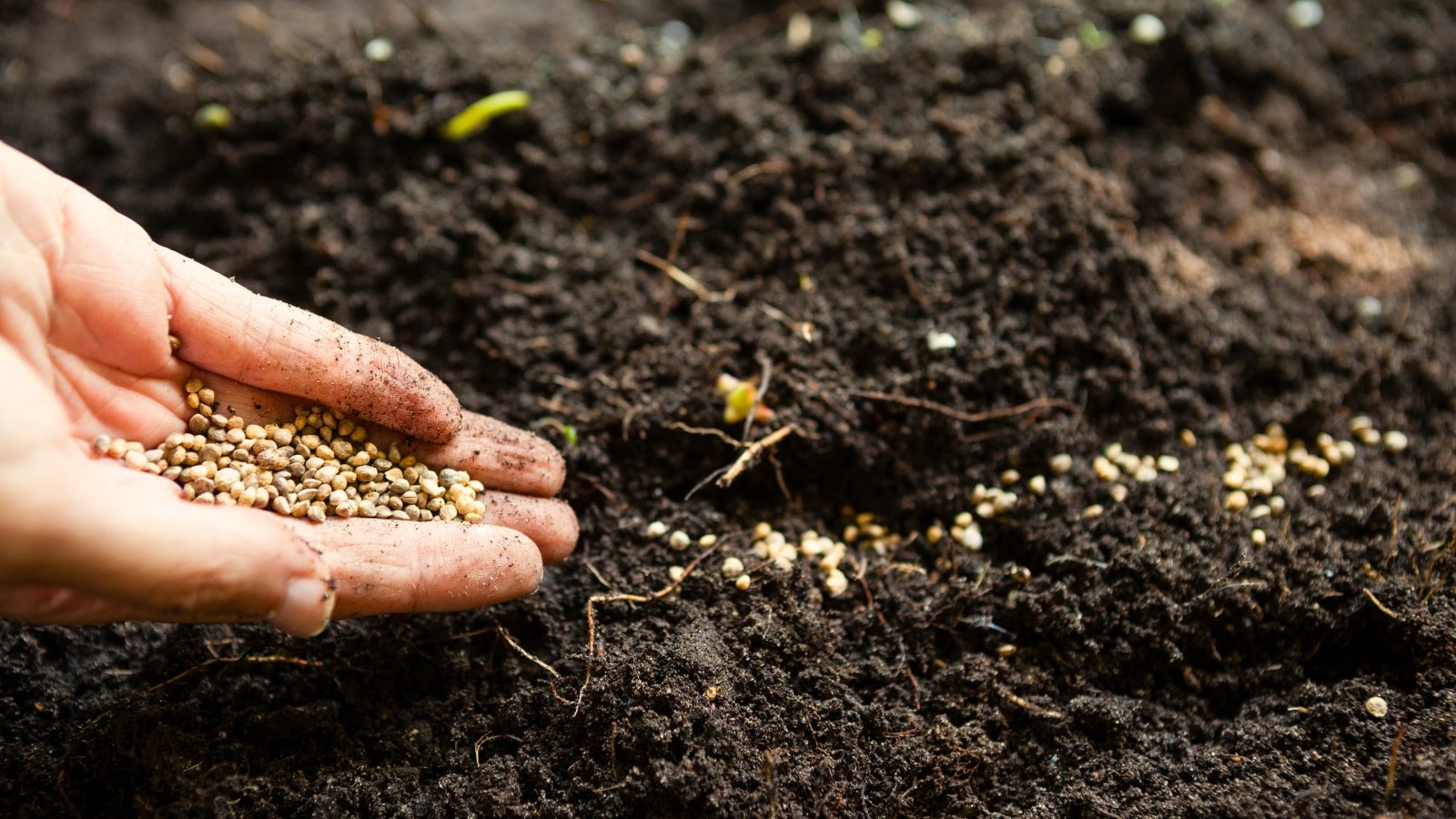
There is much involved in the biointensive school that we can’t cover it all here. But one important principle within that school that assists small-space gardeners is its ideas about intensive planting. The basis of this idea is to ignore spacing recommendations listed on your seed packets and instead plant every plant the same distance apart.
The square foot method, when combined with principles of biointensive farming, pushes the efficiency to the limit. Both methods will be even more effective for companion planting. Small garden beds can produce so much more than you’d think when you think about things biointensively. The combo is powerful.
If you do this, and you notice certain plants are getting crowded out or they take on diseases associated with overcrowding, simply move them. Throw them in a container, or give them to friends who want to grow more food. If you have a better spot, plant them there.
Step 4: Rotate Crops
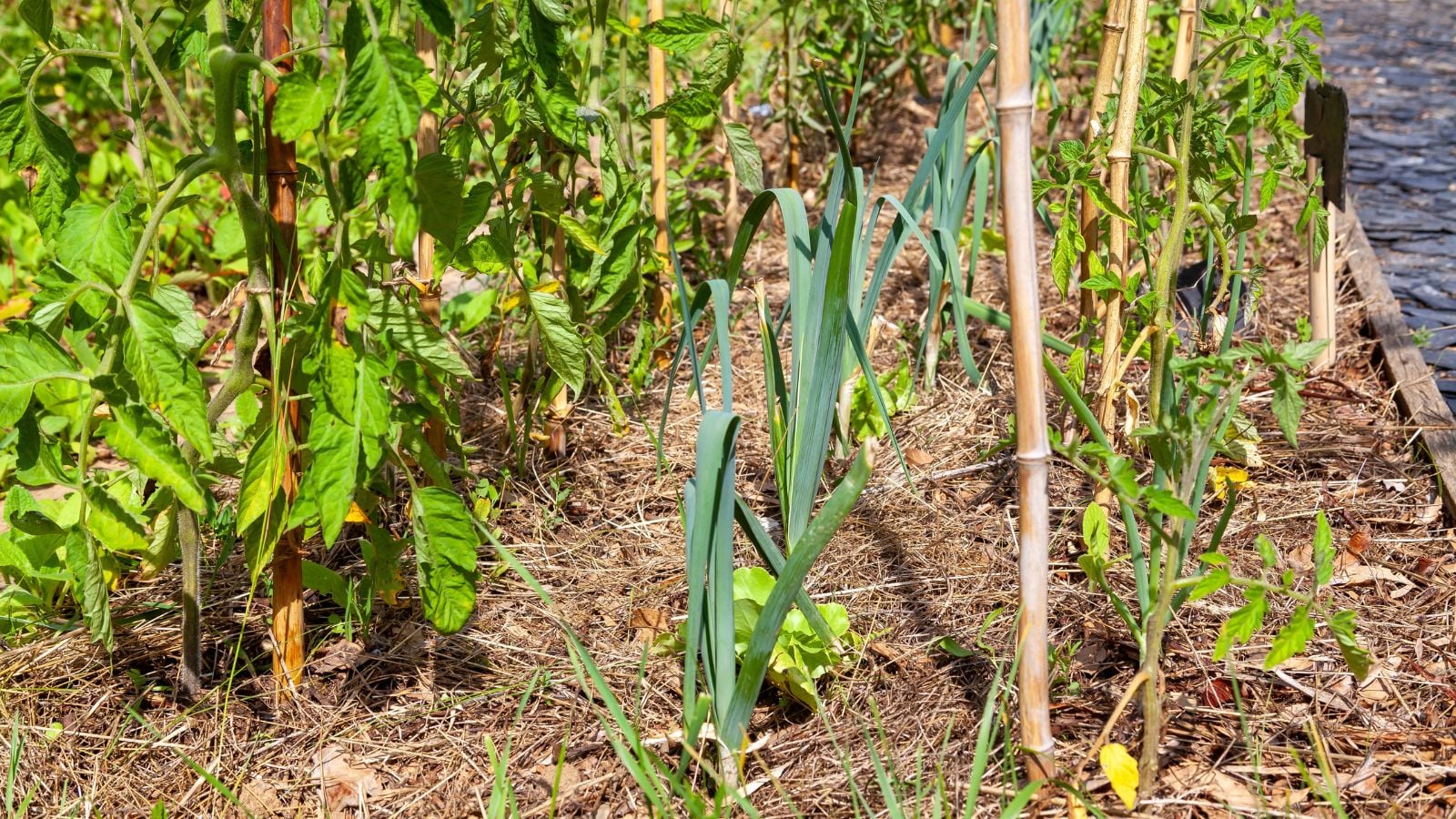
Plants mature at different rates. Industrial-scale farms rotate crops of corn with soy, which enriches the soil and also provides better yields of the subsequent soybean crop. Of course, this is different in a home garden where you’re practicing more sustainable modes of companion planting. Small gardens still benefit from rotations, though.
When you’ve exhausted a harvest from one plant, it’s time to plant something else. If you planted brassicas, throw in nightshades, like tomatoes. Plant alliums and root crops after tomatoes to break up the soil and eliminate pathogens that may have congregated there. Make sure the plant you want to plant won’t crowd out others.
Even though you abandoned the seed packet for tighter spacing, it’s best to use it to determine if the maturation time of the plant in question meets the boundaries of your first or last frost date, depending on whether you’re planting in spring or summer, or fall, respectively. As long as the plant can make it through the season and reach maturity, you’re at max production.
Step 5: Utilize Containers

This year, I decided to keep most of my tomatoes and tomatillos in containers. Instead of just planting them alone, I added a marigold to each of the containers, along with one or two bean plants. This is one way you can really push the companion planting as far as it can go. All three plants work together to improve root development, deter pests, and produce tons of food for me.
Note that larger plants like tomatoes need large containers. Find grow bags that are at least 10 to 15 gallons to ensure you’re giving each plant adequate space. You’d be surprised what you can fit in that smaller size. Up your container volume, and you’ll be able to include even more plants.
Experiment with this. I’ve seen people use multiple 50-gallon grow bags to grow multiple sets of a three-sisters garden. It has been done! Go vertical if you need more room to grow without spreading the garden horizontally. One other tip: if you’re growing in raised beds, it doesn’t hurt to add a few grow bags or hefty containers to the mix as long as your space allows it.
Step 6: Include Flowers

Most companion planting guides focus solely on the veggies you should grow together. But they often leave out the most important companions of all: flowers! Flowering plants bring in pollinators that boost production. They also attract beneficial insects that control pests for you by eating them.
I’ve found that native flowers tend to do double duty. Nearby plantings of yarrow, asters, and bee balm have kept my garden strong for years. Many natives will grow in containers as well. If they overcrowd the planter by the end of the season, you can divide them and give them to friends.
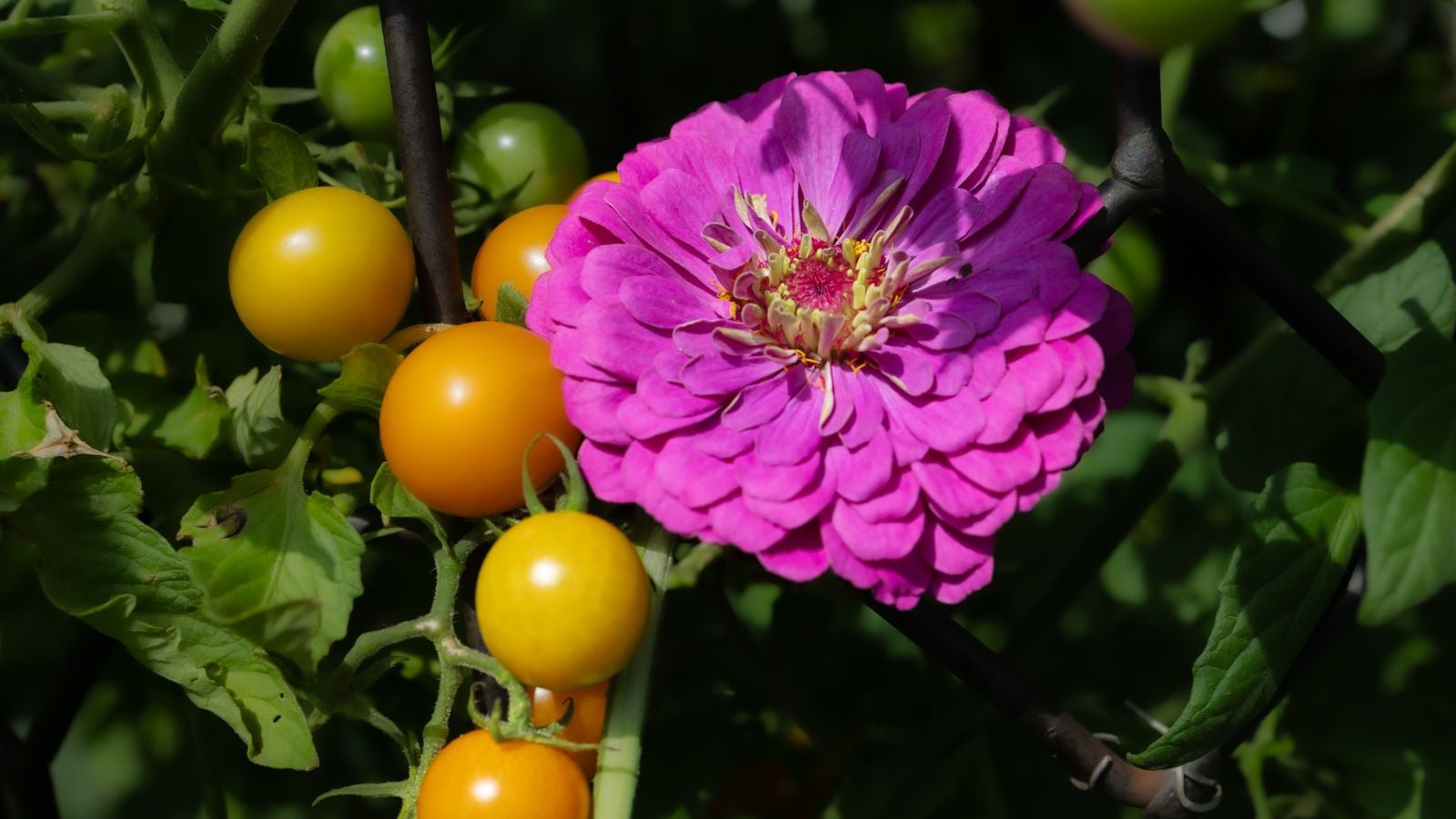
You don’t have to just grow natives. Flowering dill, chamomile, zinnias, and celosia are a few examples of easy annuals to pop into empty spaces. These all improve pollination and contribute to an integrated system that allows you to skip the chemicals for the most part.


