The 7 Best Magnolia Varieties for Small Yards
Full-sized magnolias are spectacular, but they can quickly overwhelm a small garden. Gardening expert Madison Moulton shares seven compact varieties that deliver the flowers and fragrance without taking over the yard.

Contents
Magnolias have a reputation for being large, spreading trees that need room to grow. And for many species, that’s accurate. A mature Southern magnolia can reach 60 feet tall with a canopy to match.
But the genus is much more diverse than most people realize, and there are compact varieties that top out at ten to fifteen feet and fit comfortably in a courtyard, a narrow side yard, or a front garden.
Some magnolias for small yards are evergreen, some are deciduous. Some bloom on bare branches in early spring, others flower through summer. Understanding what each variety offers (and what it needs) helps you pick the one that makes the most sense for your space.
My best tip for someone wanting to keep their magnolia small is to grow one of these varieties in containers. This is the route I chose for both of my ‘Little Gem’ trees, and the limited room naturally restricts the size, so you don’t have to worry about them outgrowing the garden.
‘Baby Doll’
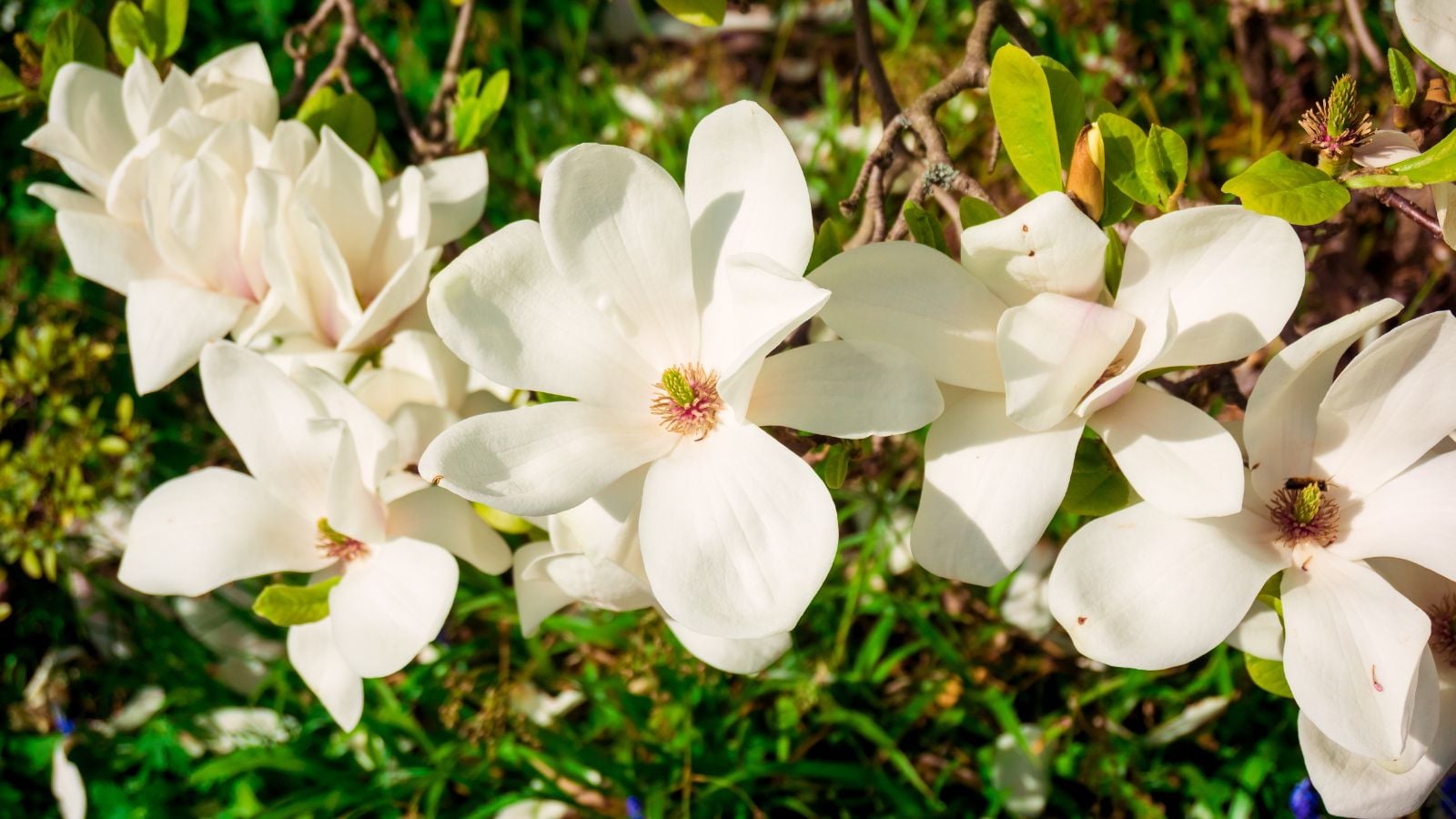
This is a compact form of the Southern magnolia (Magnolia grandiflora) that gives you the classic look on a much smaller frame. ‘Baby Doll’ matures at around ten feet tall, which is a fraction of the size of a standard Southern magnolia.
The flowers are slightly smaller than those of a full-sized grandiflora, but they’re still substantial and appear from summer into fall, giving this variety one of the longest bloom seasons on this list. The dense, glossy foliage makes ‘Baby Doll’ useful as a screen or hedge when planted in a row. It looks equally good as a standalone tree.
It’s less commonly available than ‘Little Gem’ (which fills a similar niche), so you may need to order from a specialty nursery.
‘Nigra’
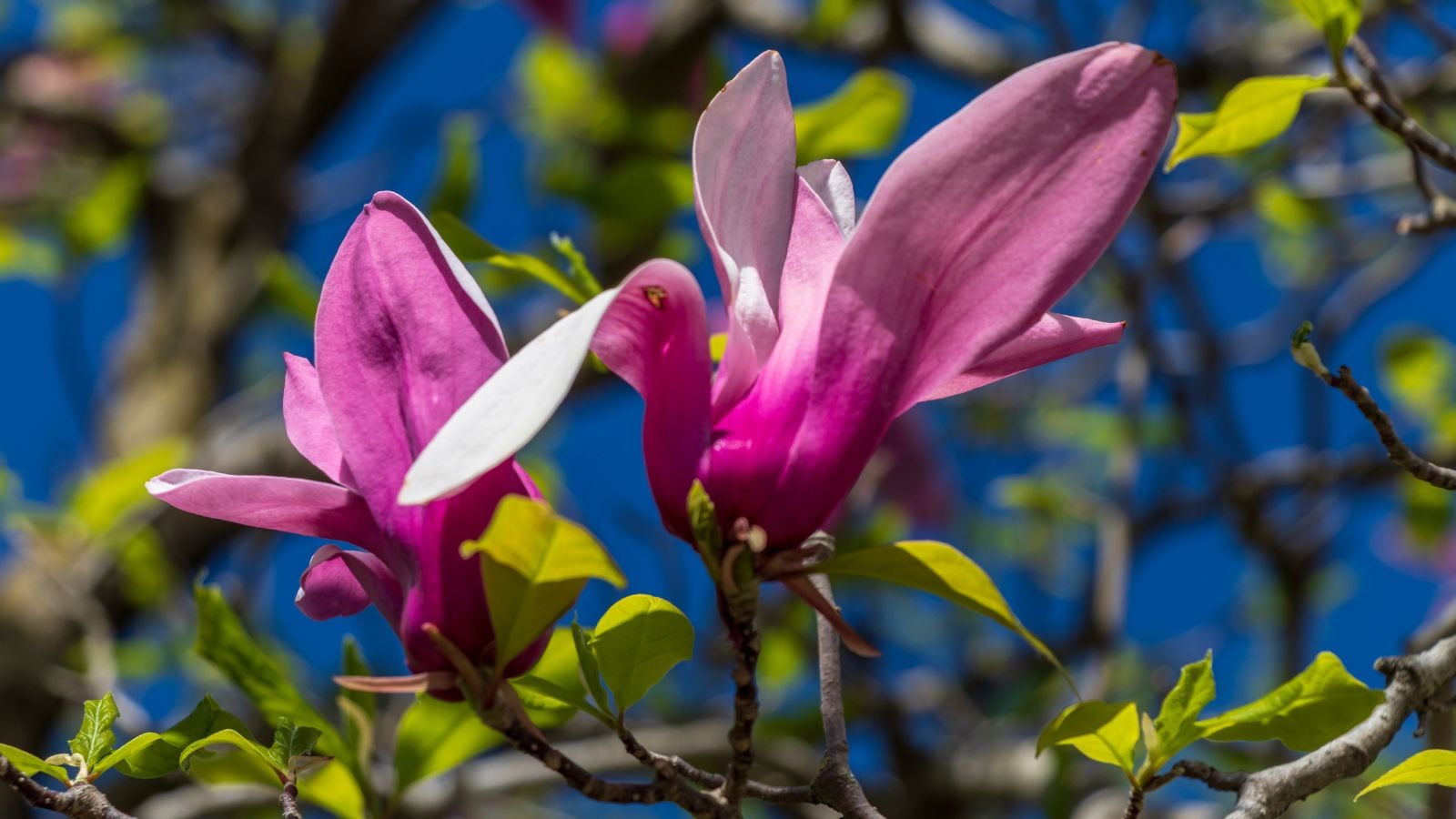
Most magnolias bloom in white or pale pink. ‘Nigra’ is a different story. This lily magnolia (Magnolia liliiflora) produces deep reddish-purple, tulip-shaped flowers that open to reveal pale purple interiors. The contrast between the dark outer color and the lighter inside is striking, and the flowers appear later in spring than most magnolias, which means they’re less likely to be damaged by a late frost.
‘Nigra’ grows as a multi-stemmed deciduous shrub, reaching about eight to twelve feet tall and wide over time. It’s slow-growing and naturally compact, so it rarely needs pruning to keep its shape. After the main flush of spring flowers, it tends to bloom sporadically through summer and into early fall.
It holds the RHS Award of Garden Merit and is hardy in zones 5 through 9, making it one of the more cold-tolerant options on this list. Plant in moist, well-drained, slightly acidic soil with shelter from cold winds.
‘Gail’s Favorite’
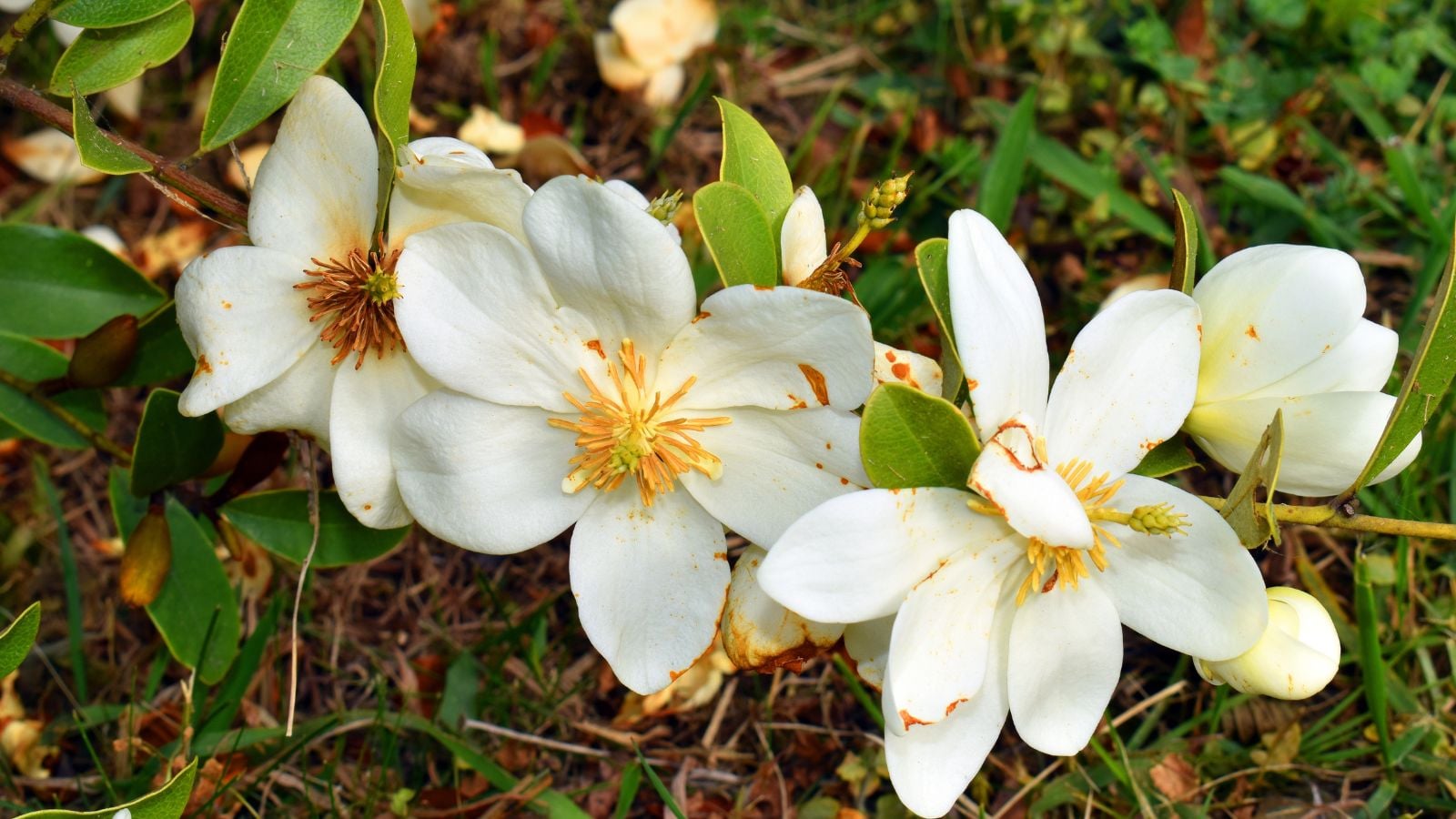
If you want the evergreen presence of a Southern magnolia but don’t have the space for even a compact grandiflora variety, ‘Gail’s Favorite’ offers the look on an even smaller scale. It’s a fast-maturing evergreen with leathery dark green leaves and white flowers that are fragrant and produced generously from spring through early summer.
‘Gail’s Favorite’ establishes and starts flowering quickly. Some magnolias for small yards take years before they produce their first blooms. This one tends to flower young, which is a significant advantage if you don’t want to wait half a decade for the payoff.
The growth habit is dense and upright, making it well-suited to both city gardens and smaller suburban yards. It works as a specimen tree or a screen if you want some extra privacy.
‘Petit Chicon’
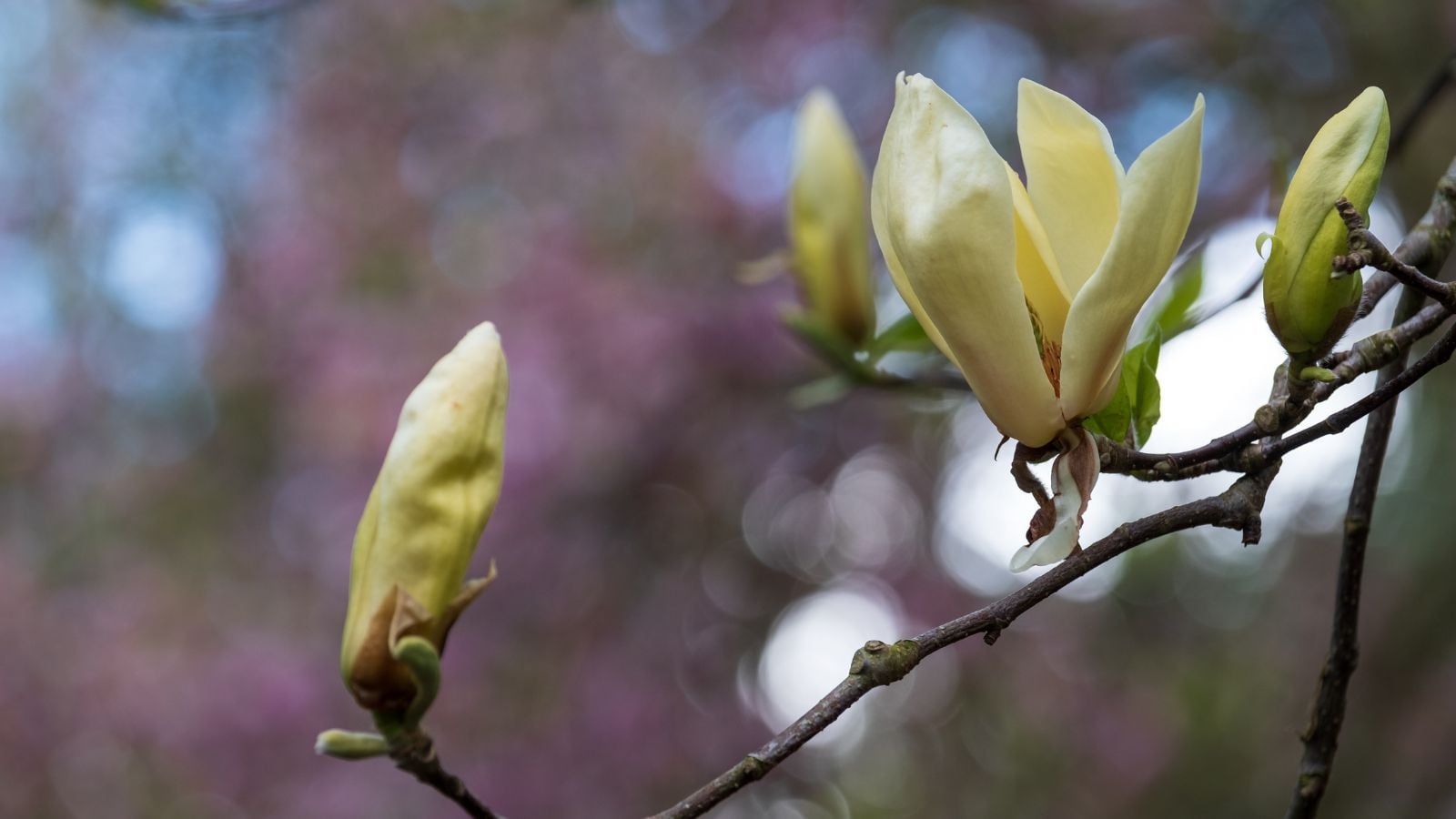
This is the earliest-blooming yellow-flowered magnolia you’re likely to find, and it’s compact enough for a small garden at around 13 feet tall. The flowers are a pale creamy yellow with green coloring at the base of the petals.
‘Petit Chicon’ is deciduous, and because it blooms early, it flowers on bare branches before the leaves emerge. The blooms are frost-resistant, which is unusual for an early magnolia and an advantage in unpredictable spring weather.
This magnolia can be trained as either a large shrub or a small tree, depending on how you prune it in its early years. It’s a good choice if you’re drawn to magnolias for small yards but want something less common than the standard white or pink options.
‘Royal Star’
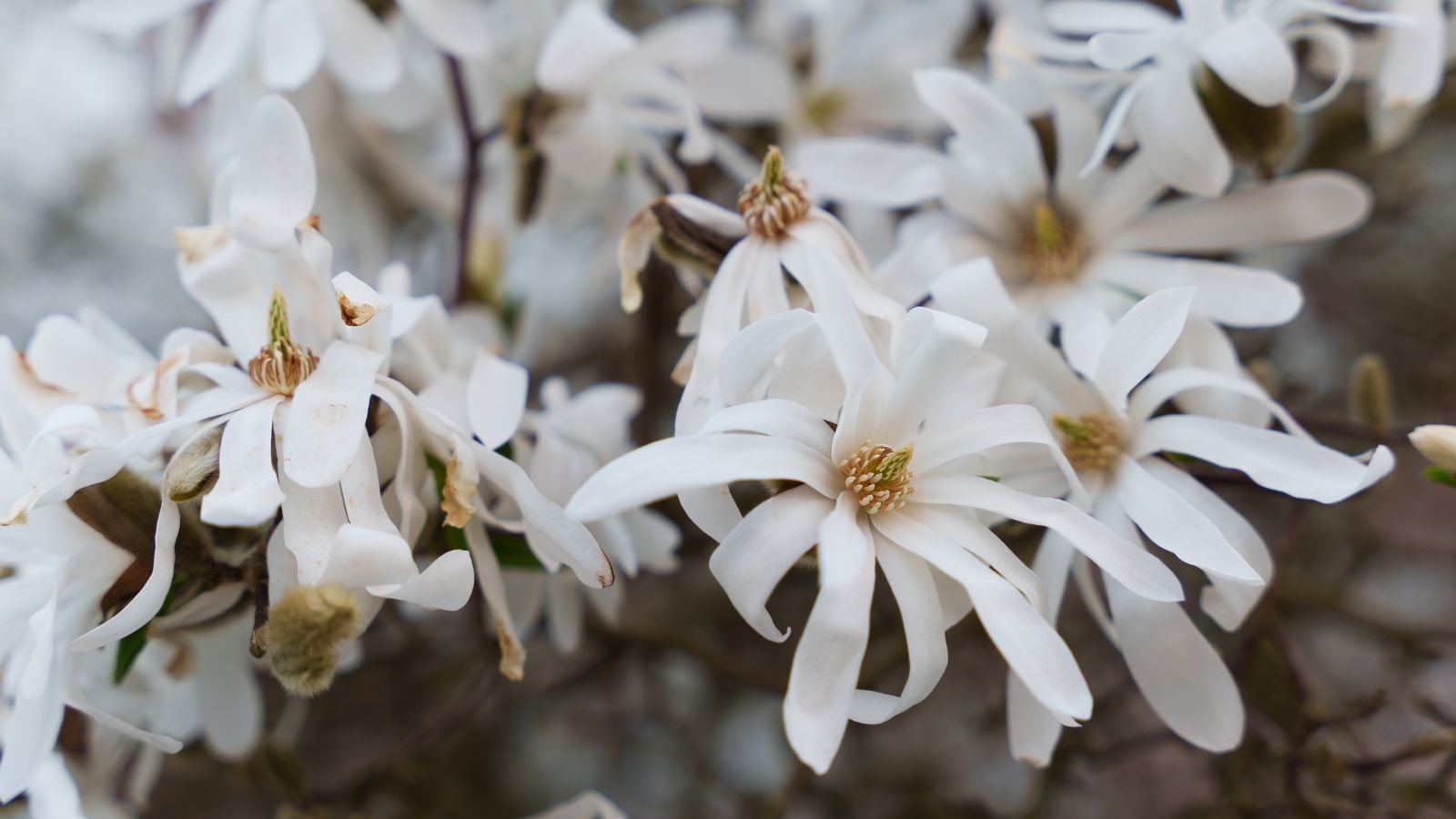
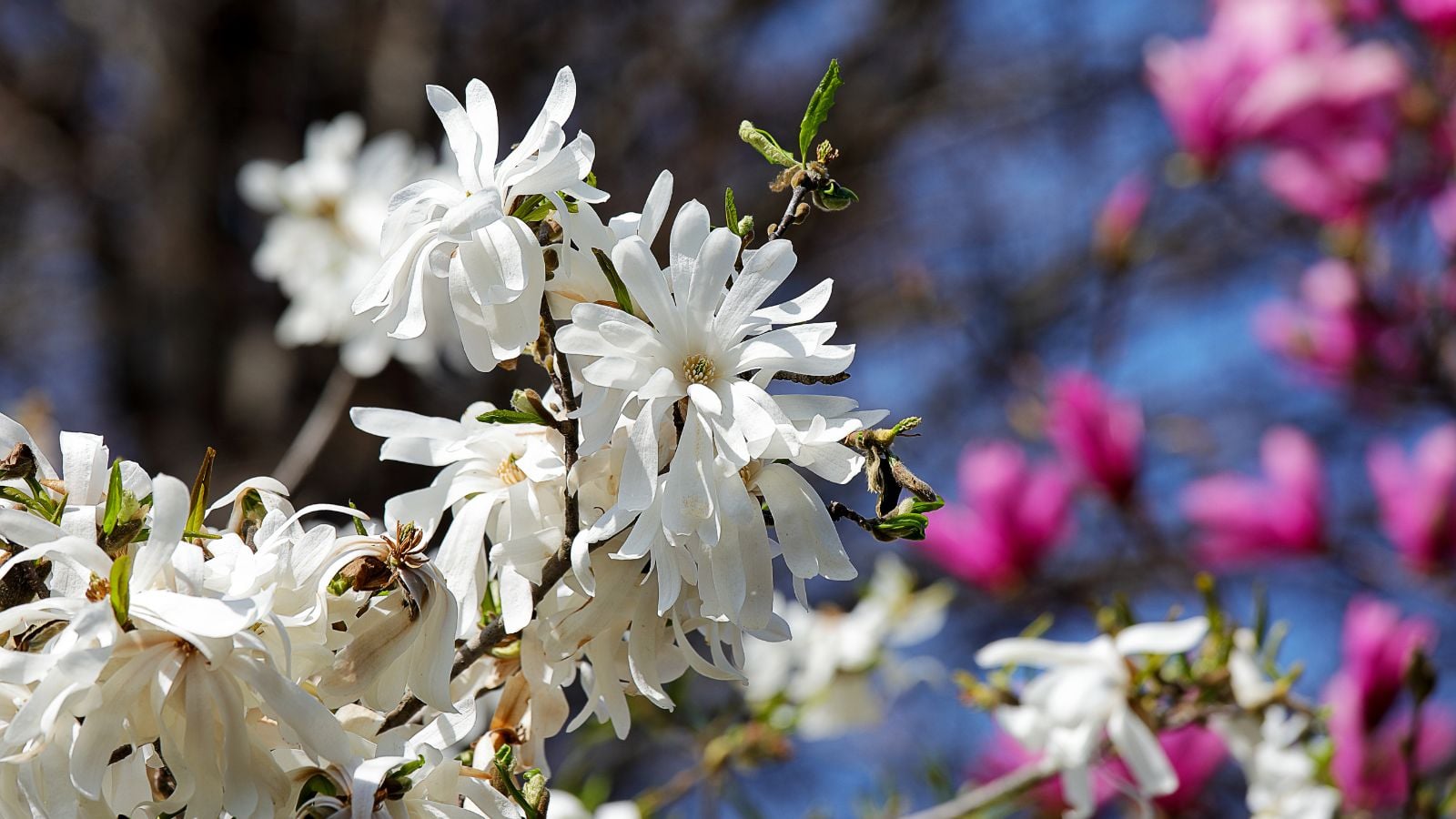
Star magnolias are among the best magnolias for small yards, and ‘Royal Star’ is one of the finest cultivars of the group. It produces large, fragrant white flowers (about four inches across) packed with narrow, strap-like tepals that create a starburst effect.
The tree itself grows to about 15 feet tall and wide with a rounded, spreading form. It starts out upright and oval when young, then broadens and mounds with age. ‘Royal Star’ blooms at a young age, so even a recently planted specimen should flower within a year or two.
Hardy in zones 4 through 9, it’s one of the most cold-tolerant magnolias available. The main risk is late spring frosts damaging the early flowers, so planting in a sheltered spot (near a south-facing wall or protected from cold winds) helps preserve the blooms.
‘Little Gem’
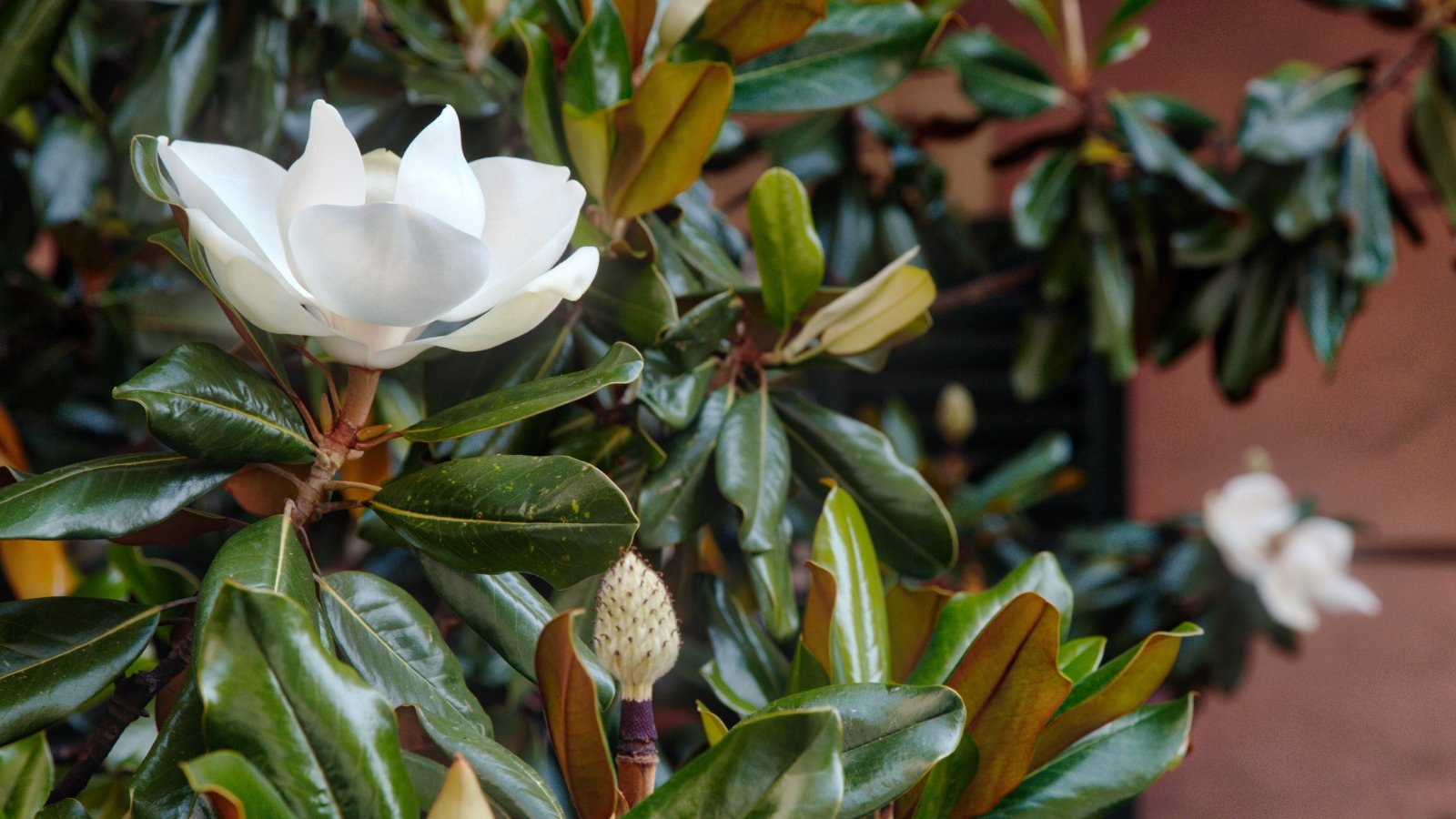
‘Little Gem’ is probably the most widely planted compact Southern magnolia, and for good reason. It reaches about 15 to 20 feet tall with a narrow, columnar form that fits into tight spaces. The glossy evergreen leaves have the characteristic brown-felted undersides of a grandiflora, and the fragrant white flowers appear from late spring through summer.
One of ‘Little Gem’s best qualities is that it blooms at a younger age than most grandiflora varieties. You don’t have to wait years for the first flowers. It’s also versatile enough to work as a privacy screen when planted in a row, an accent tree in a small front yard, or even an espalier trained flat against a wall.
Hardy in zones 7 through 9, it prefers full sun and tolerates a range of soil types. It’s widely available at nurseries and garden centers, which makes it the easiest variety on this list to find.
‘Centennial Blush’
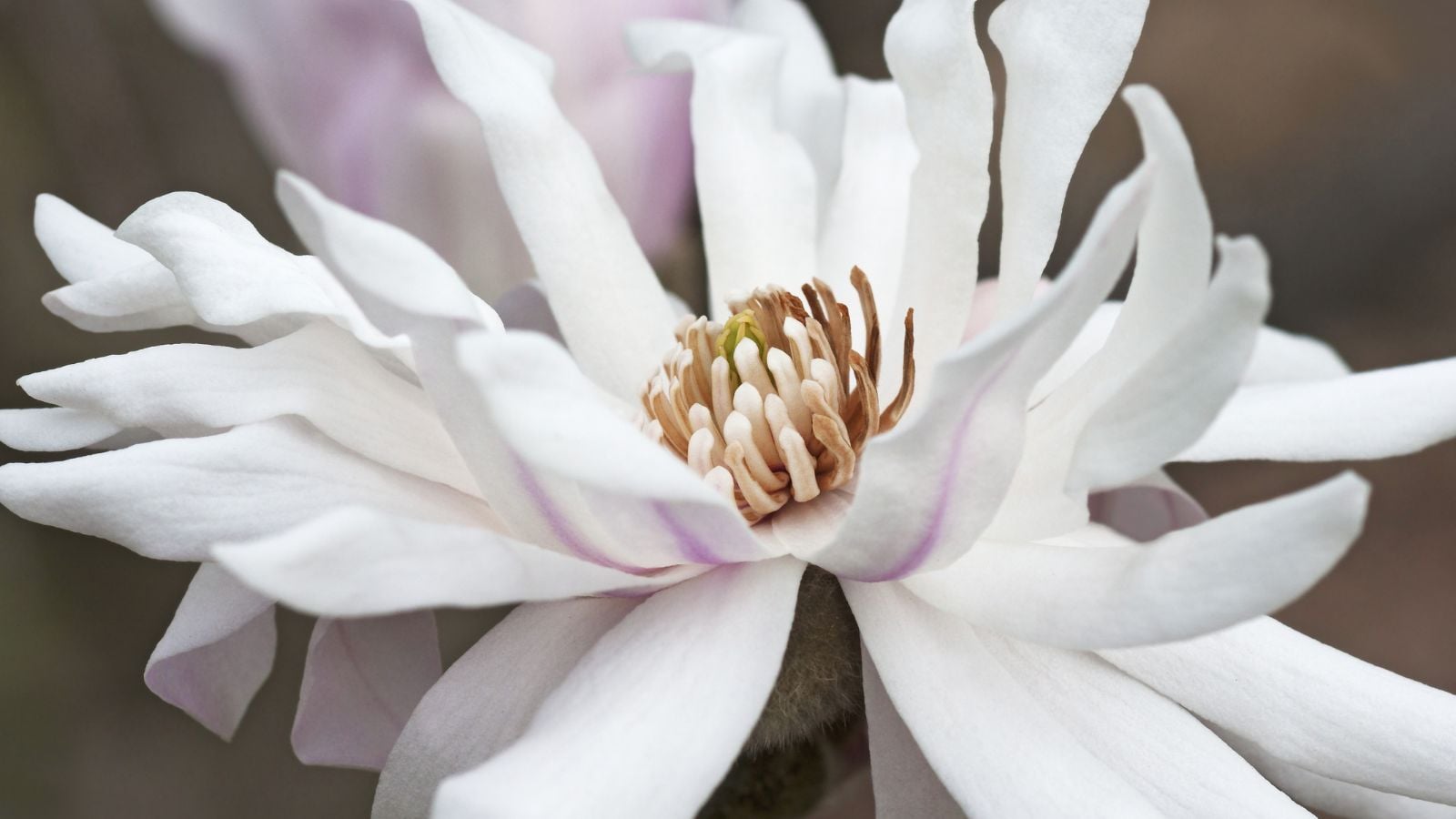
The soft pink, star-shaped flowers of this small magnolia variety have slender tepals, and they cover the entire plant so densely in early spring that the branches almost disappear beneath them. The blooms are lightly fragrant and last about two to three weeks.
This is a deciduous variety that grows to about 12 to 18 feet tall with a compact, oval form. After the flowers fade, medium green foliage fills out the canopy and turns warm shades of yellow and bronze in fall. In winter, the bare branching structure and fuzzy flower buds add their own quiet interest.
‘Centennial Blush’ is hardy in zones 4 through 9 and begins flowering as young as two to three years old. For gardeners in colder climates who want a magnolia that delivers reliably without the risk of winter damage, it’s one of the safest choices available.