How to Plant, Grow, and Care for ‘Totally Tangerine’ Geum
For a spring through fall peachy-orange profusion, grow ‘Totally Tangerine’ geum! This lovely herbaceous perennial is a stunning addition to rock gardens and cottage gardens alike. Experienced gardener Sarah Jay talks about how to cultivate this cute plant.

Contents
There’s no geum like ‘Totally Tangerine’ geum. For one thing, this variety has larger blooms than others. It’s a low-maintenance addition to cottage gardens, rock gardens, and areas where you want something that really pops but doesn’t require a ton of attention and coddling.
This small to mid-statured plant is a wonderful cultivar that thrives in a wide range, as long as conditions are right. Plant multiples for the full effect, or use them here and there to add pops of vibrant color to your garden. In the winter, let the seed heads form for cold-season interest.
It’s not hard to grow this plant, and you won’t have to do much to keep yours happy. Just ensure its base conditions are correct, and look for the flourish in spring. Then watch the pollinators enjoy them just as much as you do.
‘Totally Tangerine’ Geum Overview

|
Plant Type
Herbaceous perennial
Family
Rosaceae
Genus
Geum
Species
PP22041
|
Native Area
Garden origin
Exposure
Full sun to partial shade
Height
1-3’
Watering Requirements
Average
|
Pests & Diseases
Sawfly larvae, no serious issues
Maintenance
Low
Soil Type
Chalk, loam, sand
Hardiness Zone
5-9
|
What Is It?
Geums are cute little plants in the Rosaceae family, which includes roses, apples, blueberries, and more. These rosette-forming perennials are popular in perennial gardens, rock gardens, and cottage gardens. They have multiple forms, sometimes with single or multi-petaled flowers.
‘Totally Tangerine’ geum was developed by plant breeder Timothy Crowther in 1999 at Walberton Nursery in the United Kingdom. He did this by crossing Geum rivale and Geum chiloense ‘Mrs. Bradshaw’. What resulted is a large geum with sterile seeds that was originally called ‘Tim’s Tangerine’.
Characteristics
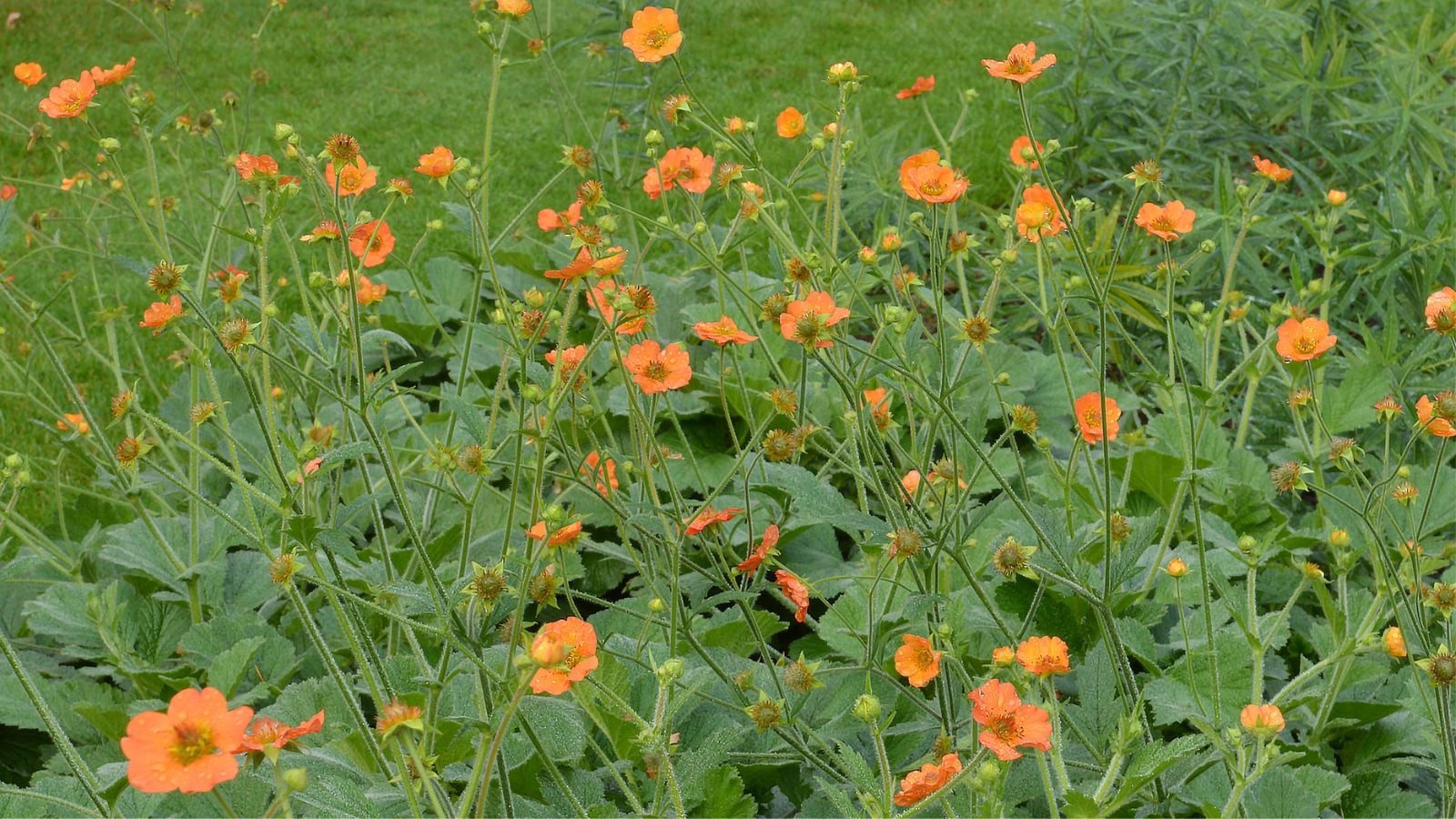
This geum has a width of up to two feet and a height of up to three feet. This is a larger stature than other geums. The leaves are serrated and grow in rosette formation. They are slightly hairy and range from light green to slightly silvery green. They are semi-evergreen to evergreen, depending on where they’re grown.
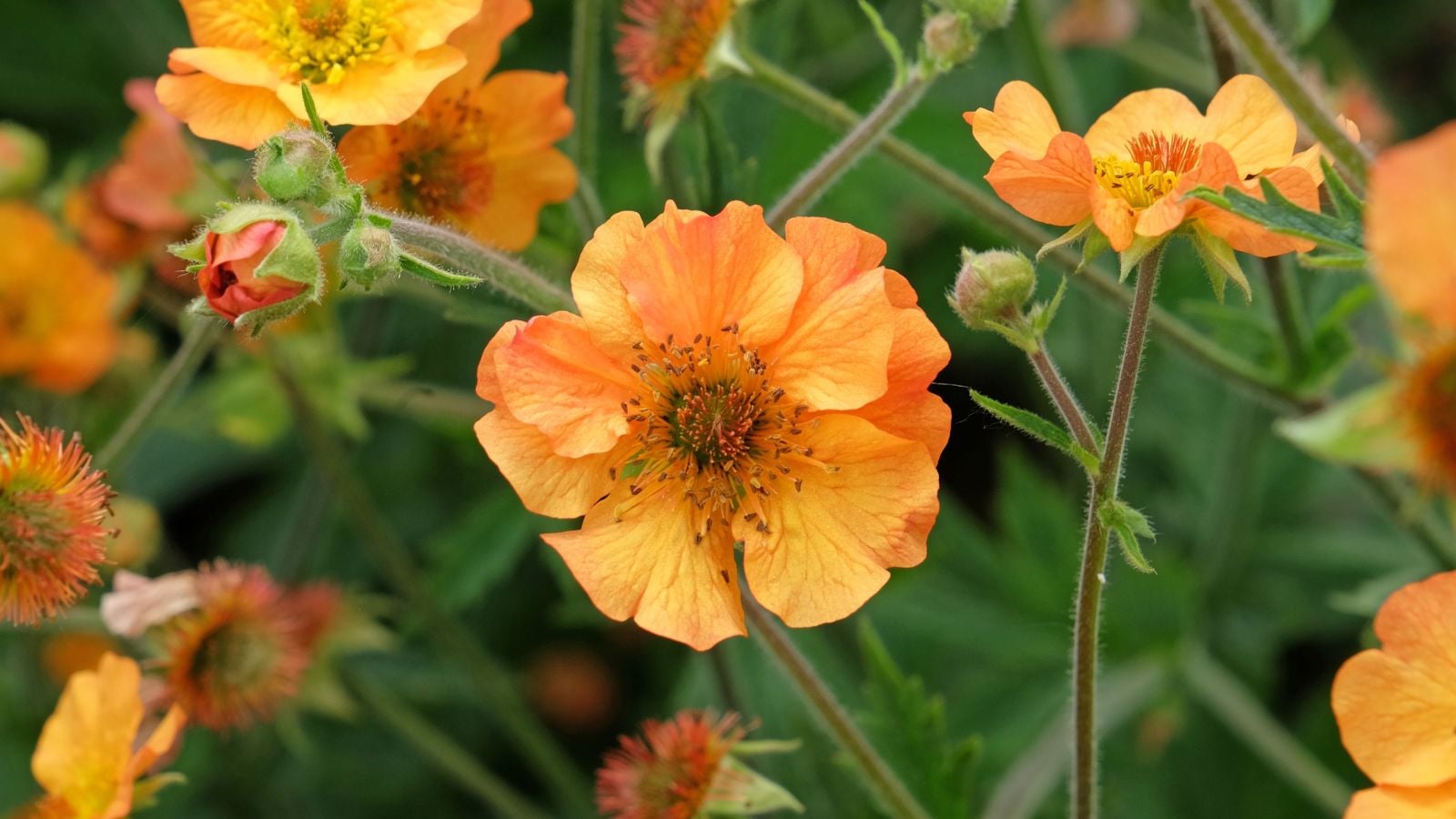
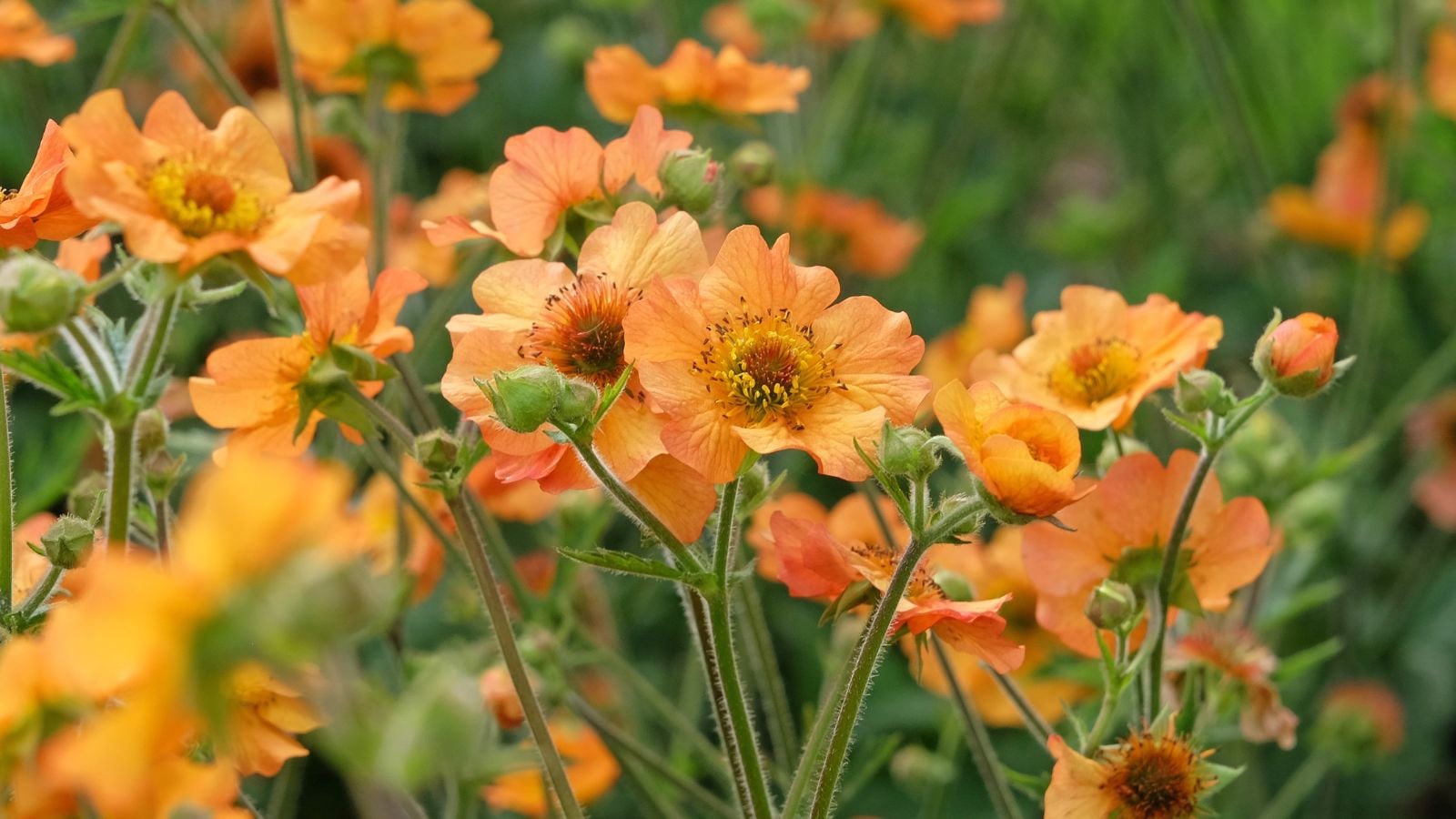
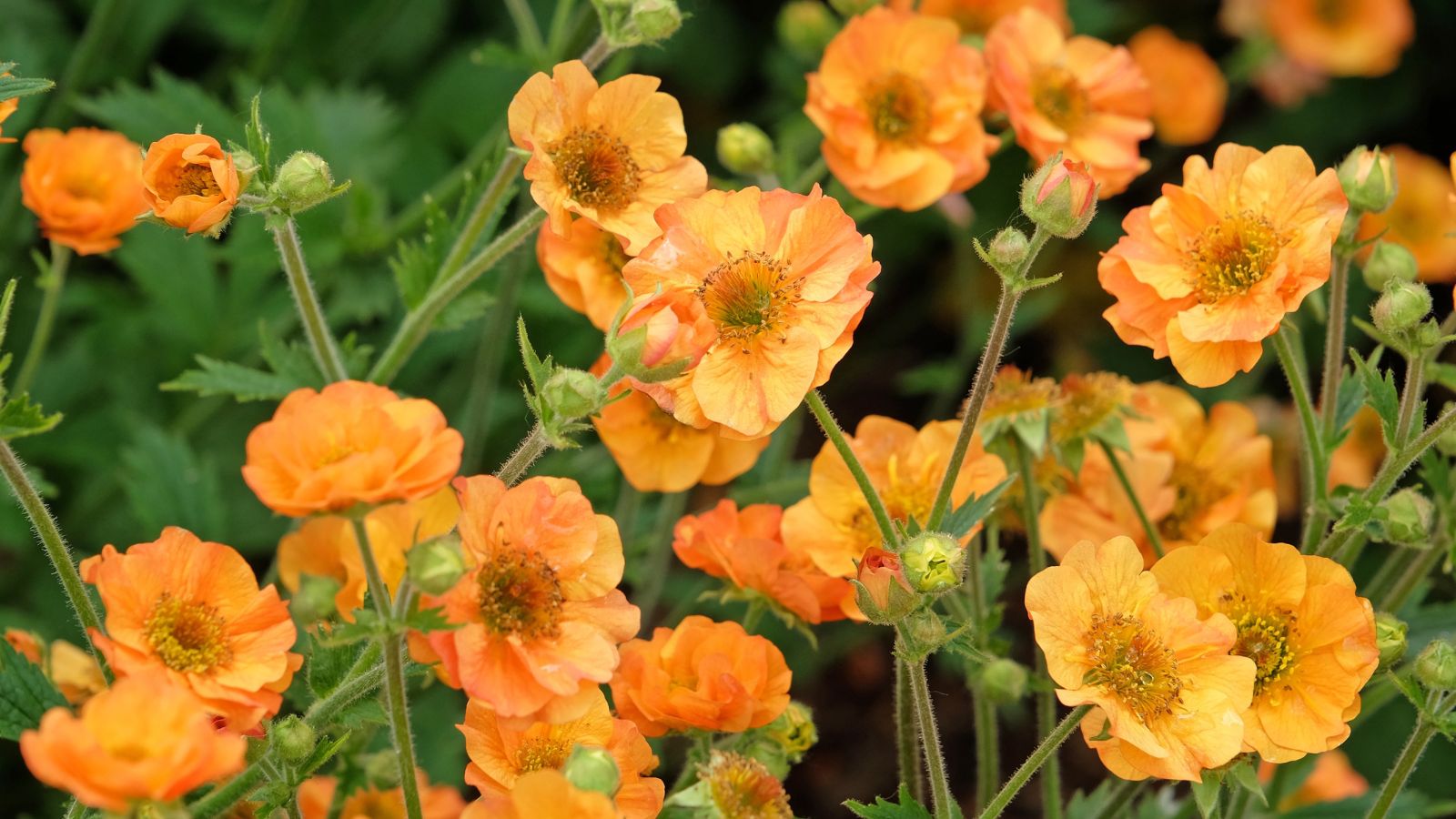
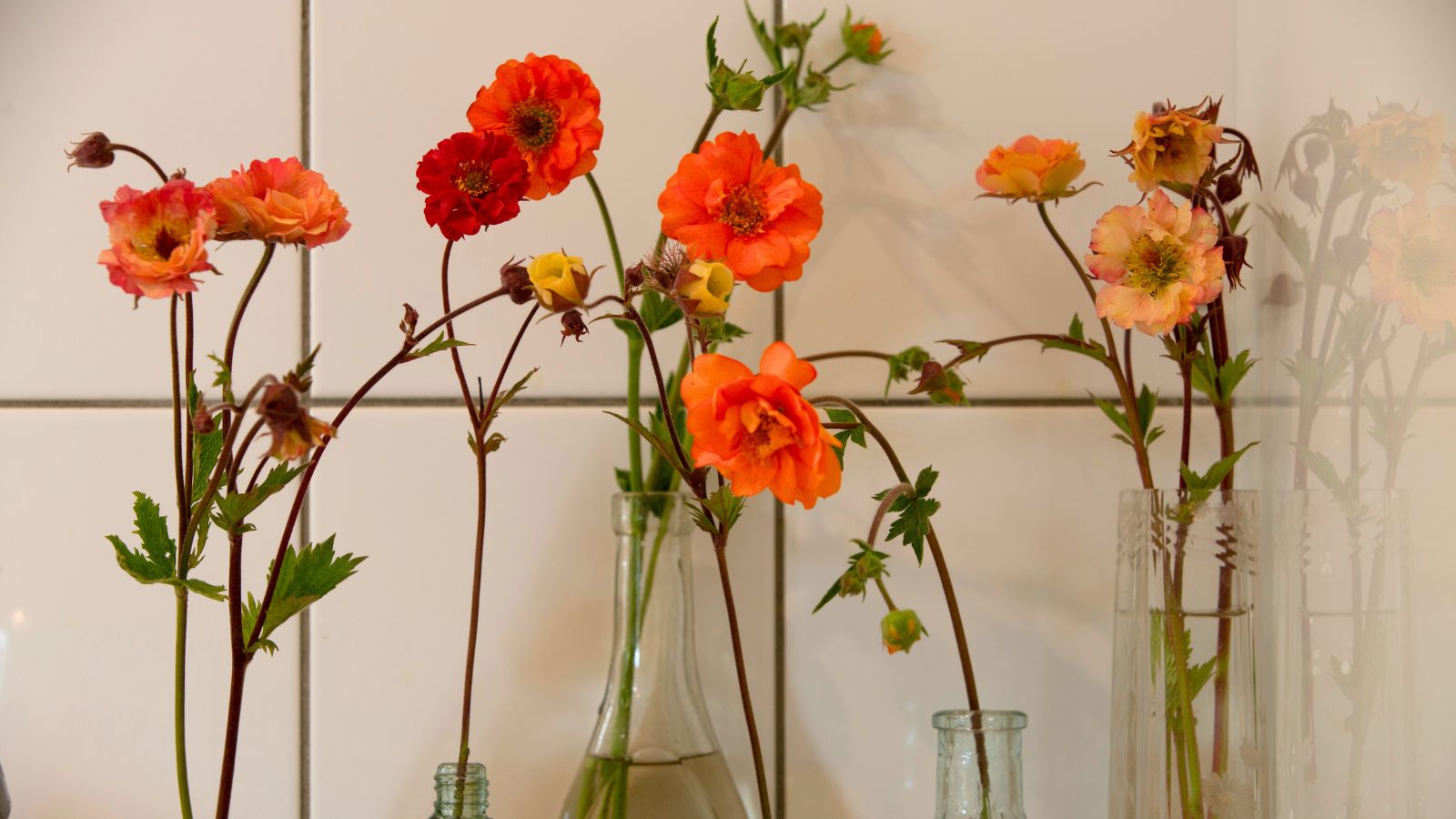
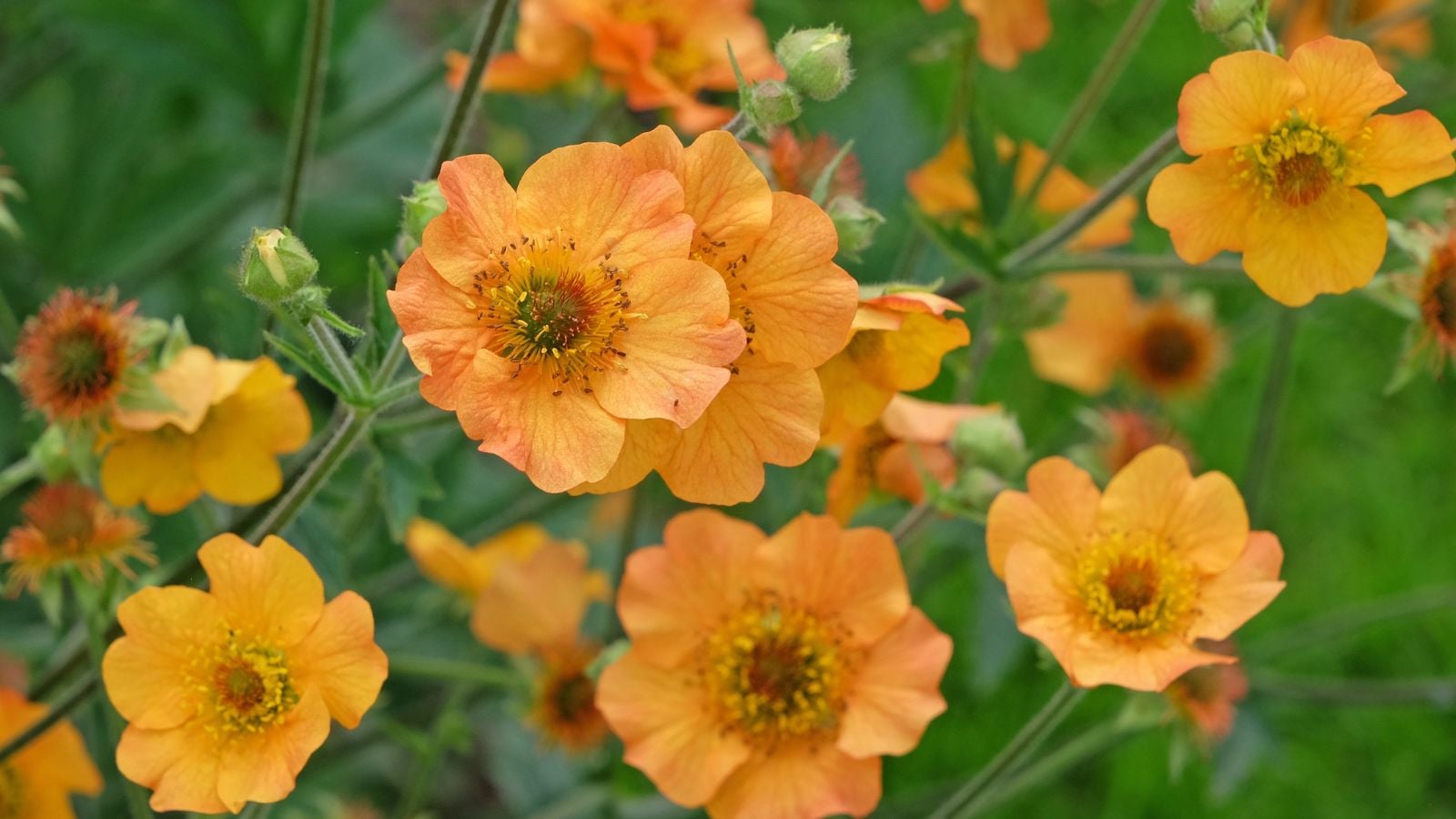
‘Totally Tangerine’ geum flowers face upward and outward. True to their name, their double petals are orangey-peach and have bright yellow stamens that dot their centers. These start blooming in spring and last until the first frost. When the flowers fade in fall, interesting puffy seedheads remain.
Planting
Wait for a mild spring or fall day to plant your ‘Totally Tangerine’ geum plant. You won’t find seeds for this variety like you would for other varieties, as it is sterile. Instead, look for transplants. You’ll need a space that has well-draining soil and full sun. If you’re planting multiple, space them at least 12 inches apart.
Dig a hole as wide and deep as your transplant’s nursery pot. You can place the container with the plant still in it in your planting hole to ensure it’s the right size. Then gently remove the transplant from the container and lower it into the planting hole.
Fill in the sides with soil. Press the edges of the root mass into the ground to make contact with the soil. Water it in, and top off any divots with more soil. Use this same process for container-grown plants.
How to Grow
This is seriously one of the easiest plants to grow, as long as it’s in a sunny spot with well-draining soil. You’ll find you don’t have any issues with ‘Totally Tangerine’ geum once it takes off.
Light

Give your geum plenty of full sunlight if you live in a cooler climate. If you’re on the edge of its hardiness range in zones 7 through 9, ensure there is at least some afternoon shade to protect the plants from harsh sunlight. If you’re growing in a container, it should be easy to locate an ideal spot for this plant. Otherwise, use structures and shade canopies to protect in-ground plantings where necessary.
Water

‘Totally Tangerine’ geum needs an average amount of moisture. Give it at least one inch of water per week. In areas where rain is plentiful, you don’t need to supplement. However, in hotter regions, ensure yours gets the supplemental water it needs. Drip irrigation or soaker hoses are ideal.
What this plant doesn’t tolerate is consistently wet soil in winter. Keep the soil free-draining with agricultural grit or agricultural sand where these conditions are present. Don’t overwater in winter, and cut back on water in colder seasons, no matter where you’re growing it.
Soil

This geum grows well in rock gardens, as long as the soil is fertile. Chalk, loam, and sand are all suitable media for it. In containers, use a good potting soil with excellent drainage. In purely sandy areas and those with heavy clay soils, amend with well-rotted compost before planting. Clay soils will also need some kind of grit to assist with proper drainage. Use agricultural sand, grit, or perlite for this.
Temperature and Humidity
Humidity can be an issue for ‘Totally Tangerine’ geum, especially where it’s hot in summer. In these areas, ensure your plant has space to breathe, and remove any leaves that take on damage. Ideal temperatures for this plant range between 65 and 75°F (18-24°C). When the first frost arrives, it will die back, but should remain root hardy in zones 5 through 9.
Fertilizing

Unless you’re dealing with infertile soil, there’s no need to fertilize your ‘Totally Tangerine’ geum. Instead, an annual side-dressing of well-rotted compost is enough. In fertile soils, there’s no need to add any fertilizer at all. You can still side-dress with compost.
Maintenance

Deadhead your first round of blooms to the basal rosette to promote another flush. Remove any damaged leaves or blooms as they crop up. These should be rare. Overall, these are low-maintenance plants, and they shouldn’t require any additional pruning.

Propagation
While in the horticultural industry, ‘Totally Tangerine’ is propagated via cuttings, it’s hard to do this at home. Instead, wait for mild spring or fall days and divide rosettes. Because these are circular in nature, it is easy to locate divisions. You can pot up small divisions into 5” or 3” pots. Then plant them out after they have had time to mature slightly.
For mature rosettes, simply unearth entire plants and untangle individual rosettes. Then plant them in an appropriate planting area based on the conditions needed to grow your geums. If you’re using garden tools to do this, make sure they are sterile.
Common Problems
You won’t have any serious pest or disease problems with ‘Totally Tangerine’. Sawfly larvae can get into the rosettes from time to time. However, it’s easy to see them as they feed from the edges of the leaves inward. Hand pick them if you want to remove them, or live with them. They tend to move on quickly.
Frequently Asked Questions
Does ‘Totally Tangerine’ geum spread?
Yes. Basal rosettes multiply annually, which makes it an easy candidate for dividing.
How big do ‘Totally Tangerine’ geums get?
They are a larger variety of geum that reaches up to 14 inches across and up to 3 feet tall.
How long does a ‘Totally Tangerine’ geum last?
The flowers start blooming in spring and last until the first frost.
Do geum plants come back every year?
In their hardiness range of zones 5 through 9, they will return every year. Otherwise, they are annual.