7 Flower Seeds to Start in March for Overflowing Garden Borders
A border that looks full and lush by summer starts with seeds sown in March. Gardening expert Madison Moulton shares flowers to start from seed now that will spill, spread, and fill your garden edges with color all season long.

Contents
The best garden borders have that effortless, overflowing quality where plants tumble into each other and spill over edges, leaving no bare soil in sight. Getting there from an empty bed takes time if you’re relying on nursery transplants alone, and it can get expensive fast when you need enough plants to fill a long stretch of border.
Starting flower seeds in March solves both problems. Seeds cost a fraction of what transplants do, and sowing in early spring gives plants enough time to establish strong root systems and fill out before the heat of summer arrives. Many border plants are vigorous growers that cover ground quickly once they get going, so a March start translates to full, lush borders by midsummer.
The plants on this list were chosen specifically for their ability to fill space, trail over edges, and create that dense, abundant look that makes a garden border feel complete. Some are low growers that carpet the front of borders. Others are mid-height fillers that knit together and bloom for months. All of them are straightforward to grow from seed and generous enough to fill more space than you’d expect from a single packet.


Sweet Alyssum
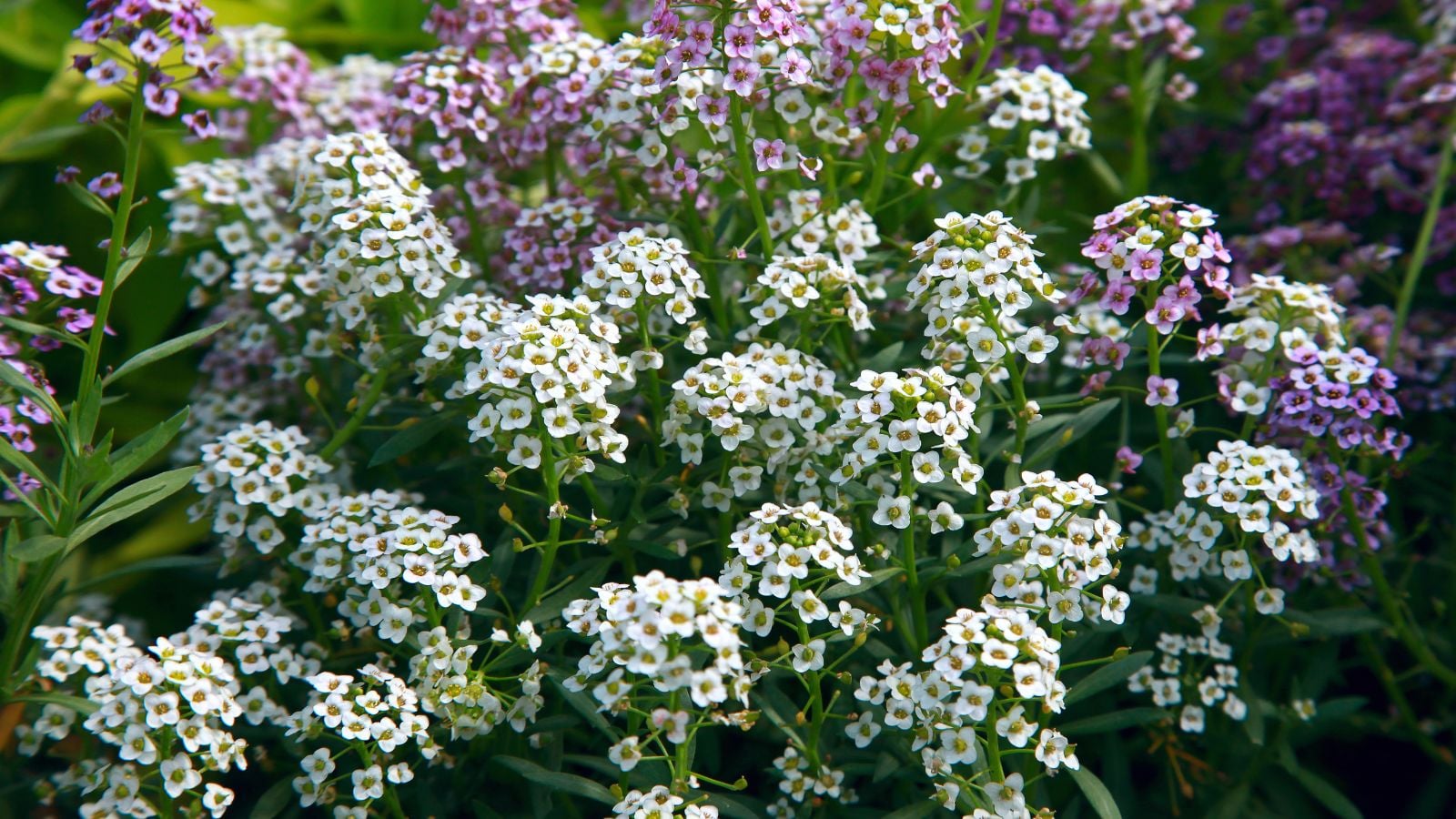
Sweet alyssum is one of the most useful border plants you can grow, and one of the easiest flowers to start from seed in March. It produces clusters of tiny flowers that cascade over edges and fill gaps between taller plants, creating that soft, overflowing look at the front of a border almost effortlessly.
The seeds need light to germinate, so scatter them on the surface of the soil and press lightly. Germination is quick, usually within a week or two. The fragrance is worth mentioning too. A border edged with sweet alyssum produces a light, honey-like scent that you notice every time you walk past.
Sweet alyssum stays low, typically reaching only four to six inches tall, but it spreads to cover a surprising amount of ground. It also handles drought well once established, which means it keeps performing through summer. If it does slow down in the peak of summer heat, a light trim encourages fresh growth and a second flush of flowers in early fall.
Dianthus

Dianthus is a natural border plant. Compact, free-flowering, and neat in habit, it fills the front and middle of borders with dense mounds of blooms that keep going for months. The flowers have a light, spicy-sweet fragrance, and the blue-green foliage looks attractive even when the plant isn’t in bloom.
Start seeds indoors eight to ten weeks before your last frost date. Dianthus seeds germinate best at soil temperatures around 65°F to 70°F and typically take one to two weeks to sprout. Once seedlings are established and hardened off, transplant them into the border at the spacing recommended on the seed packet.
Dianthus tolerates light frost, so you can plant it out a little earlier than warm-season flowers, which gives it a head start on filling its space. It also handles poor soil and dry conditions once established, making it a low-maintenance border choice that doesn’t need constant attention to look good.
Lavender

Lavender is a slower investment than the other plants on this list, but it’s one of the most rewarding. A well-established lavender border is hard to beat for fragrance, pollinator activity, and that silvery-green foliage that looks good year-round.
Germination can be slow and uneven, sometimes taking two to three weeks, and the seedlings grow at a leisurely pace. This is why planting these flower seeds in March helps. Without that early lead time, you won’t have plants large enough to make an impact by the end of the growing season.
Lavender won’t give you an overflowing border in its first year. But by its second season, each plant fills out into a substantial mound that knits together with its neighbors to create a dense, fragrant edge.
Moss Rose

If your border gets full sun and the soil tends to be dry or sandy, moss rose is an excellent choice. This low-growing annual produces vivid, rose-like flowers in a range of bright colors and thrives in conditions where many other plants struggle.
Sow directly outdoors after your last frost once the soil has warmed. The seeds are tiny, so mix them with sand for more even distribution and press lightly into the soil surface. They need light and warmth to germinate.
Moss rose stays low, typically reaching only four to eight inches tall, and spreads to create a dense, colorful mat along border edges. It’s one of the most heat and drought-tolerant annuals available, blooming more heavily in hot, dry conditions.
Creeping Thyme

Creeping thyme blurs the line between ground cover and border plant in the best way. It stays extremely low and produces masses of tiny flowers in late spring and early summer that attract pollinators. The foliage is aromatic and evergreen in mild climates, so it provides interest even when it’s not in bloom.
Creeping thyme is another one that’s slow to germinate and the seedlings are small, so starting early gives them the best chance of being large enough to plant out by late spring. Once established, it fills in steadily and becomes more impressive each year.
Creeping thyme works well along the very front edge of a border, between stepping stones, or trailing over low walls. It handles foot traffic to a degree, releasing its scent when walked on. It’s also drought-tolerant and prefers lean, well-drained soil.
As a perennial, creeping thyme is a long-term investment. It spreads a little more each year, filling gaps between other plants and creating a living carpet at the base of your border that ties everything together.
Zinnia
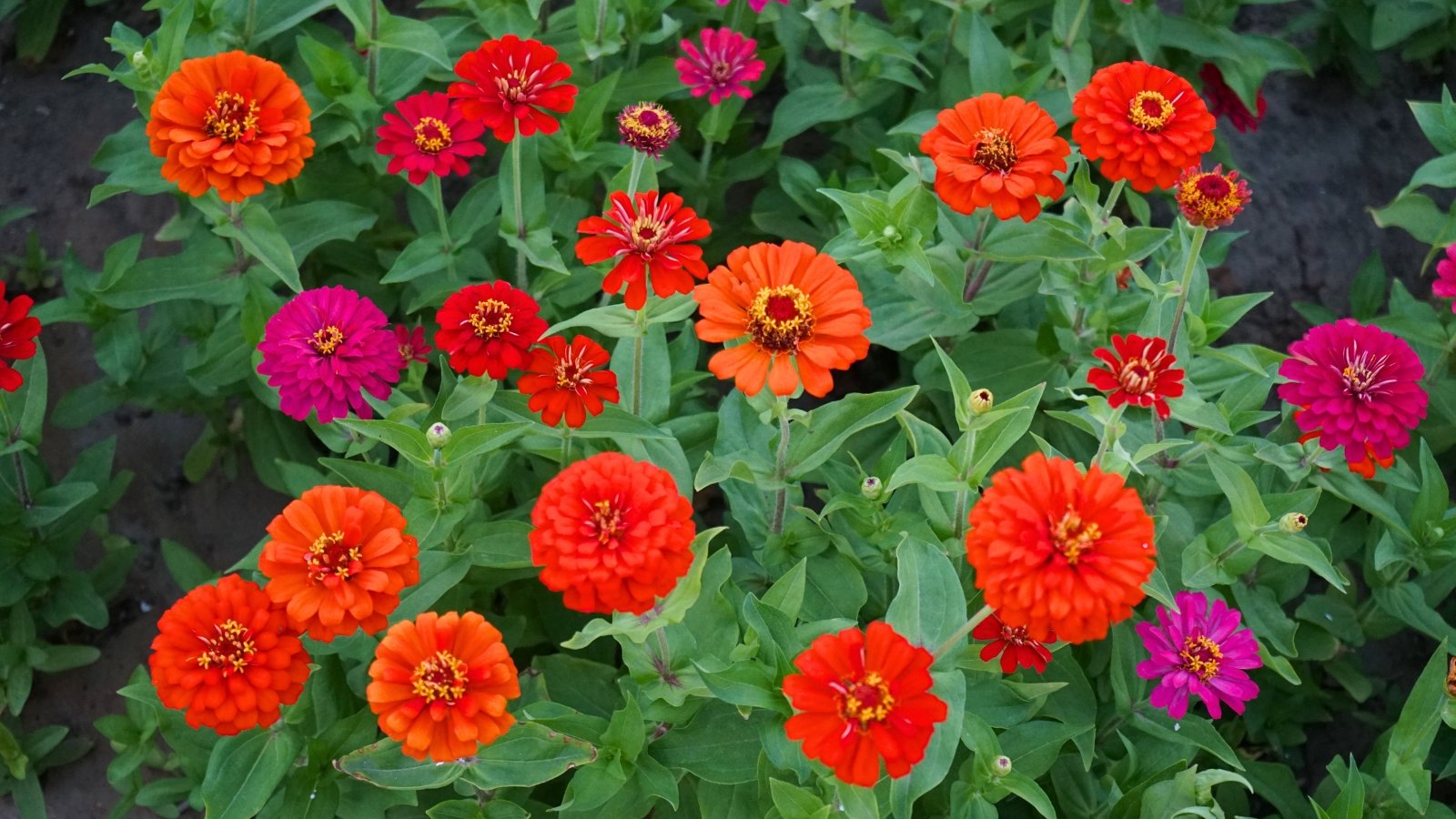
Zinnias keep producing flowers from midsummer right up until the first frost, especially if you deadhead regularly. For sheer volume of color over a long season, few annuals can match them.
Zinnias prefer warm soil, so start seeds indoors three to four weeks before your last frost date or sow directly outdoors a week or two after your last frost. They germinate quickly and grow fast, so they don’t need as much time as many other flowers. If you start the flower seeds in March, you’ll have stunning blooms by summer.
For borders, look for mid-height varieties that fill the middle ground between low edging plants and taller background plantings. The range of flower forms is enormous, from large, densely petaled dahlia types to smaller, simpler blooms with open centers that pollinators prefer.
‘California Giants Blend’ produces large, fully double flowers on tall stems in a range of warm colors. If you want something more compact for the front of a border, ‘Thumbelina‘ offers smaller, button-shaped blooms on shorter plants that stay tidy without staking.
Coreopsis
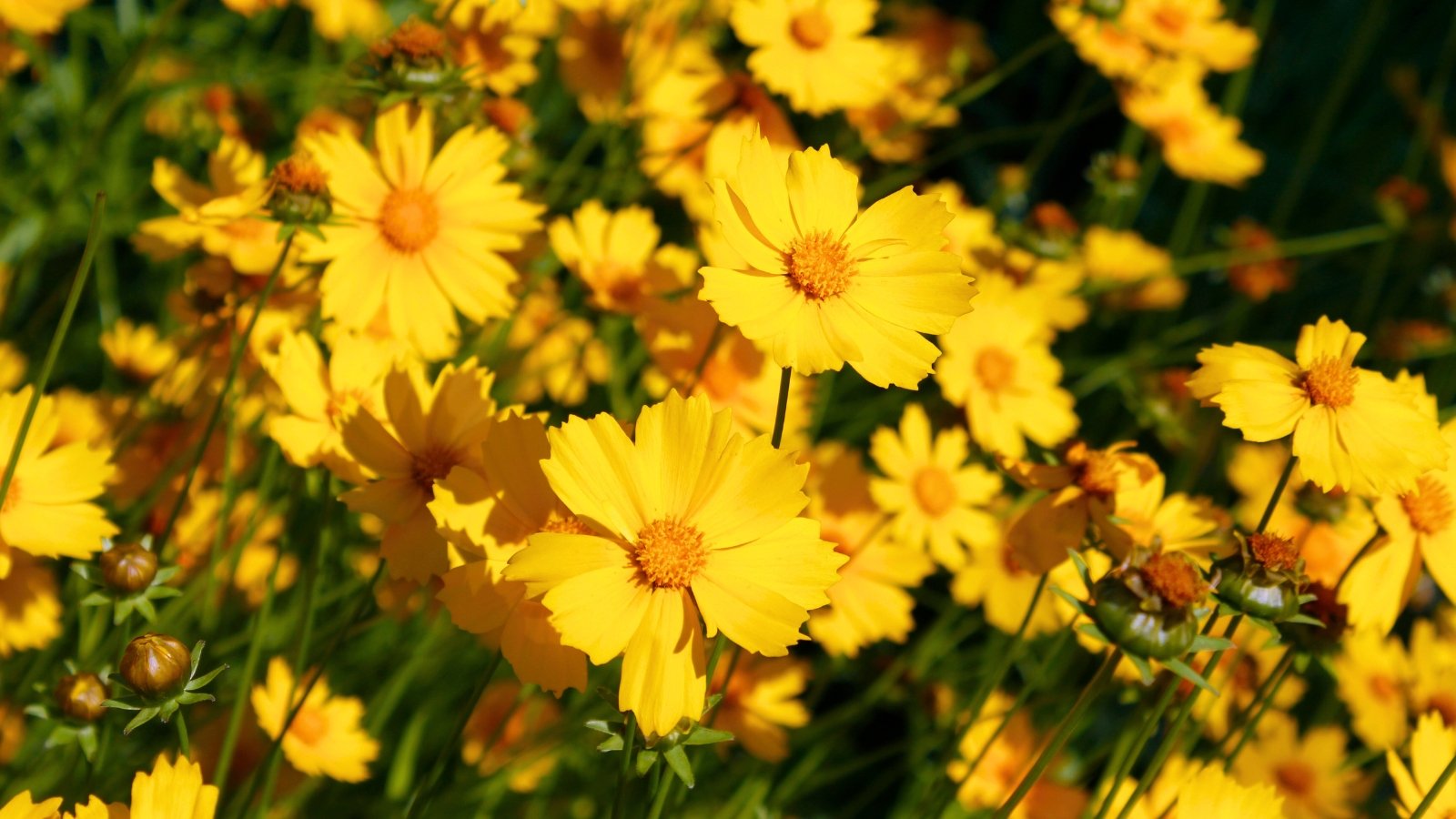
Coreopsis is sometimes called tickseed, which does the plant no favors, because the flowers are some of the brightest, cheeriest blooms you can grow in a border. They produce masses of daisy-like flowers that bloom for months with minimal care.
Coreopsis germinates easily and grows quickly, often blooming in its first year from seed when started early enough. This is true of both annual and perennial varieties, though perennials will establish more fully and bloom more heavily in their second year.
Coreopsis fills the mid-height zone of a border and combines well with other sun-loving plants like salvias, lavender, and zinnias. It’s drought-tolerant and doesn’t need rich soil to perform, making it one of the lower-maintenance options for a busy border. Deadheading encourages continuous blooming, but even without it, coreopsis is a prolific flowerer.


