How to Grow a Cottage Garden in Pots and Containers
You don't need a sprawling backyard to capture the charm of a cottage garden. Gardening expert Madison Moulton explains how to recreate that abundant, overflowing look using pots and containers on a patio, balcony, or small outdoor space.

Contents
Although the cottagecore trend is on its way out, the traditional cottage garden is not. This timeless garden design style is beloved for its embrace of abundance, without the effort required to keep it up. These gardens have layers of plants beautifully blending together, but needing little intervention to thrive.
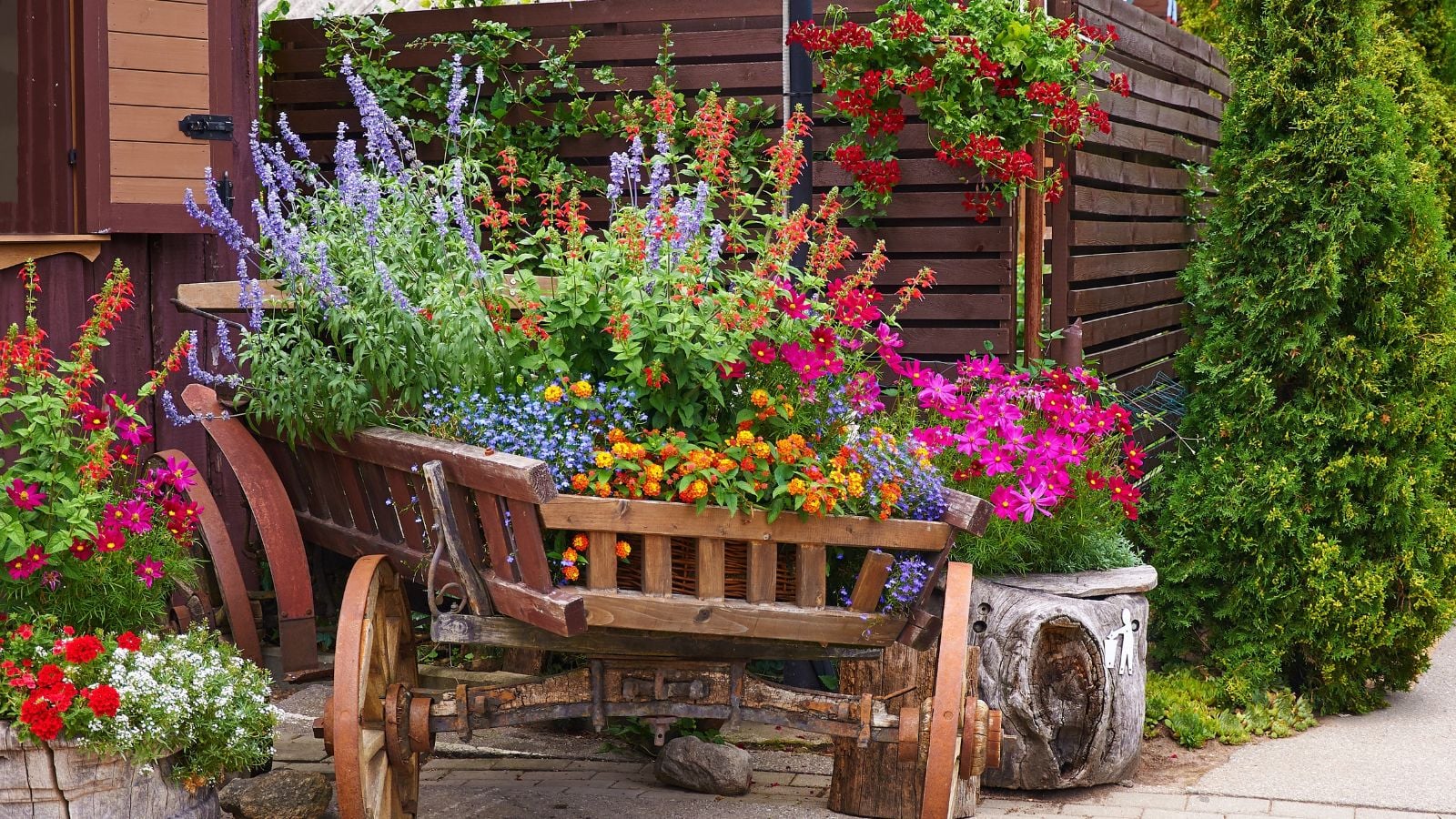
But what if you don’t have the space to pull it off? Whether you have limited bed space or no in-ground planting room at all, pots can capture the same cottage garden feel on a much smaller scale. Even if you’re working with a patio, a balcony, or just a few spare square feet near your front door, you can create that classic feel with a few easy steps.
Despite how effortless it may look, this does take some planning upfront. But once you have everything planted and growing, a cottage garden in pots is surprisingly easy to maintain and gives you the flexibility to rearrange, swap out plants seasonally, and experiment without the commitment of a full garden bed.

Pick Your Plants
To start a cottage garden in pots, you need to decide what you want to grow. Plant selection makes or breaks a container cottage garden, not only in look, but also in how difficult it will be to maintain.
The style depends on a specific kind of abundance, so you can’t just grab whatever is on sale at the nursery and expect it to come together. You want plants that bloom generously, look good alongside each other, and thrive in pots.
Cottage Garden Staples
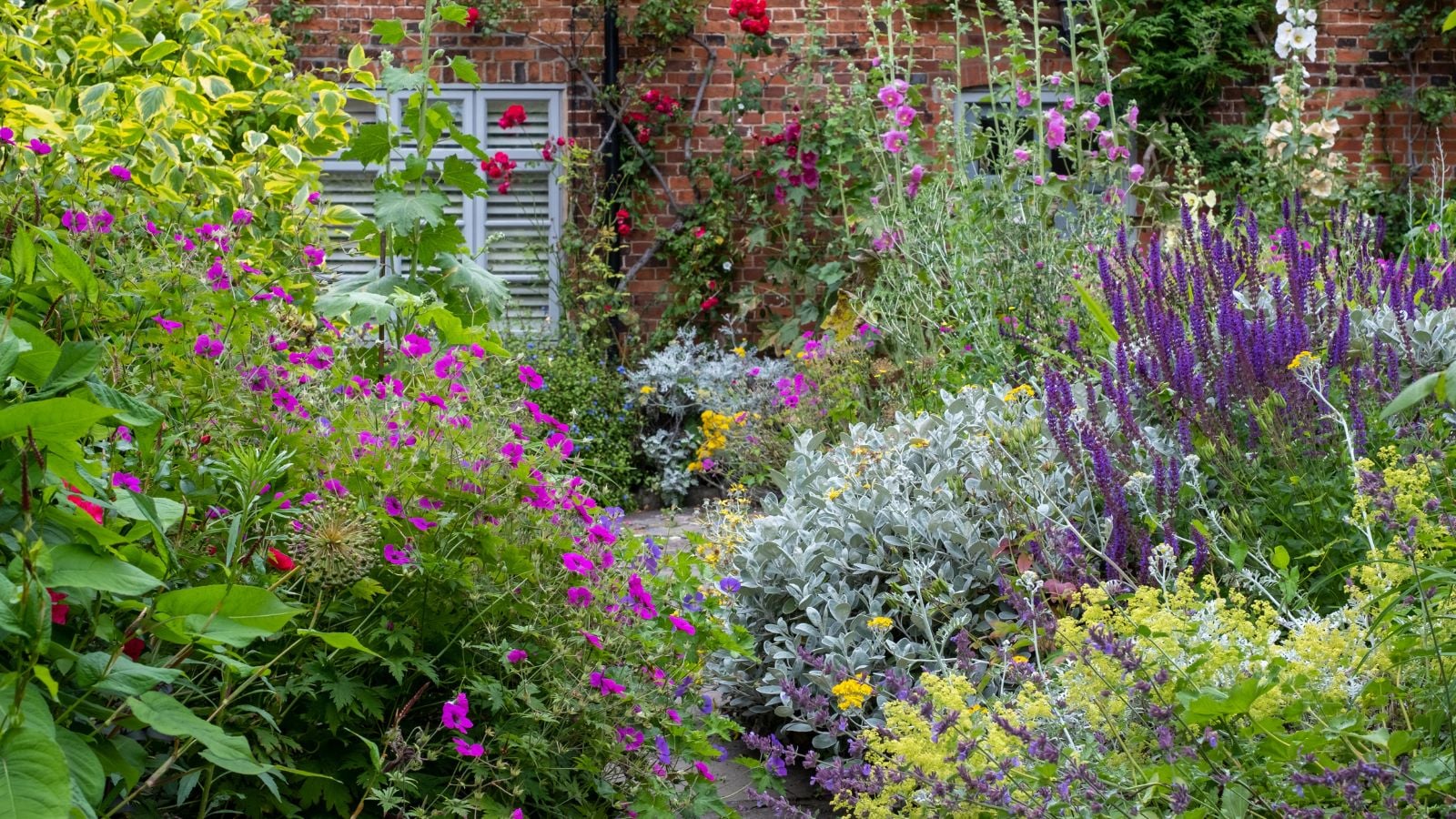
Some plants are practically synonymous with cottage gardens, and most of them grow well in containers with a little attention.
Lavender is a natural starting point. It’s compact enough for pots, blooms for weeks, and adds both fragrance and that classic cottage garden color. English varieties tend to do better in containers than larger French types, especially in cooler climates.
Sweet alyssum is another essential. It spills over container edges beautifully and fills gaps between taller plants, creating that overflowing look that cottage gardens are known for. It also self-seeds, which means it can return the following year if conditions are right.
Beyond those, consider cosmos, foxgloves, snapdragons, geraniums, and salvias. For foliage interest, herbs like rosemary, thyme, and sage are options you can use in the kitchen, too.
Climbing plants like sweet peas or nasturtiums trained up a small obelisk or trellis in a pot add vertical interest and contribute to that lush, abundant feel. Also think about filling shady spaces, not just areas in full sun, to balance the garden.
Focus on Variety

A cottage garden works because no single plant dominates. There’s always something different to look at, with contrasting shapes, heights, textures, and bloom times creating visual interest from every angle.
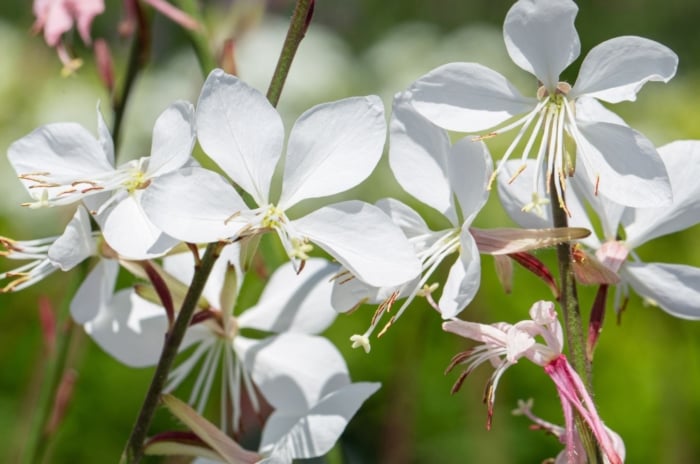
When selecting plants, think about mixing flower shapes. Spiked flowers like salvias or foxgloves next to round blooms like dahlias or zinnias create the kind of contrast that makes the eye move around. Add in something airy like cosmos or gaura to get that effortless layered quality you want in a cottage garden in pots.
Also think about bloom timing. If everything flowers in June and then stops, you’ll have a stunning display for a few weeks, followed by months of green foliage. Choose a mix of early, mid, and late-season bloomers so there’s always something in flower from late spring through fall.
Color is personal preference, but traditional cottage gardens tend toward soft pastels mixed with occasional bold accents. Purples, pinks, and whites are popular choices, but you can make any color palette work.
Consider Potting Combinations
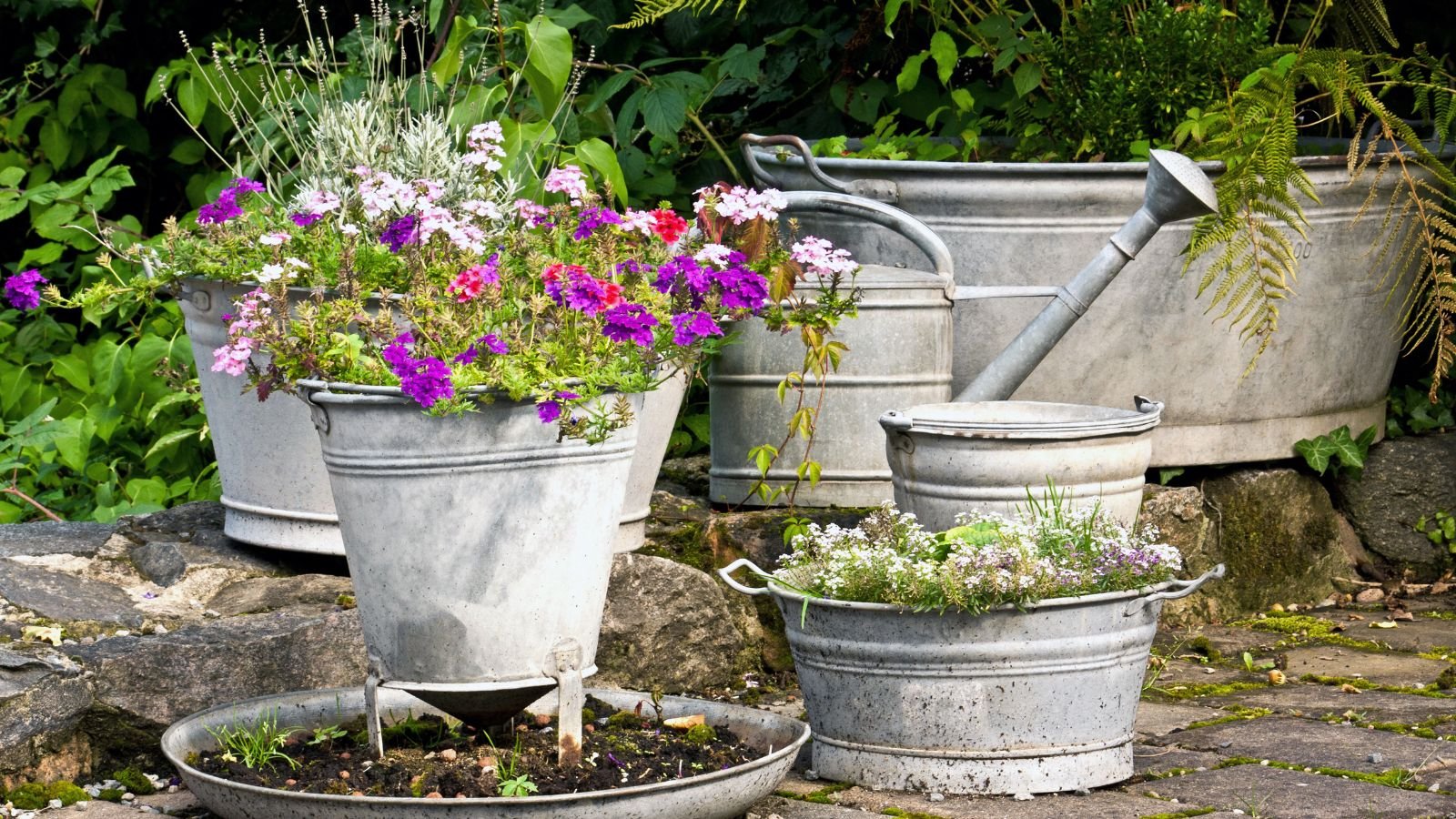
Part of the cottage garden charm comes from plants growing into and around each other. Rather than planting one species per pot, combine several in larger containers for a fuller, more naturalistic look.
A reliable option is the thriller-filler-spiller method. Place a taller, eye-catching plant in the center or back of the pot, surround it with mid-height plants that fill the space, and add trailing plants around the edges to cascade over the rim. For example, a foxglove or salvia as the thriller, geraniums and herbs as fillers, and sweet alyssum or trailing nasturtiums as spillers.
Not every container needs a combination planting. Some plants, like a large lavender or a climbing sweet pea on a trellis, work well on their own. The overall effect comes from how the containers relate to each other as a group, not from cramming every pot with multiple species.
When combining plants in a single container, make sure they share similar water and light requirements. A sun-loving lavender and a shade-preferring fern in the same pot will leave one of them struggling, regardless of where you place it.
Pick Your Containers
The pots themselves contribute as much to the cottage garden aesthetic as the plants inside them. Matching containers in uniform sizes arranged in a neat row will look tidy, but it won’t look like a cottage garden. You want something more varied.
Vary Sizes

Use a range of container sizes to create visual interest and mimic the layered planting you’d see in a traditional garden bed. Large pots anchor the arrangement and give you space for combination plantings, while medium and smaller pots fill in around them with single specimens or smaller groupings.
As a starting point, one or two large containers paired with three to five smaller ones in a cluster works well for most spaces. You can always add more over time as you find pots you like or as plants outgrow their homes.
Vary Textures
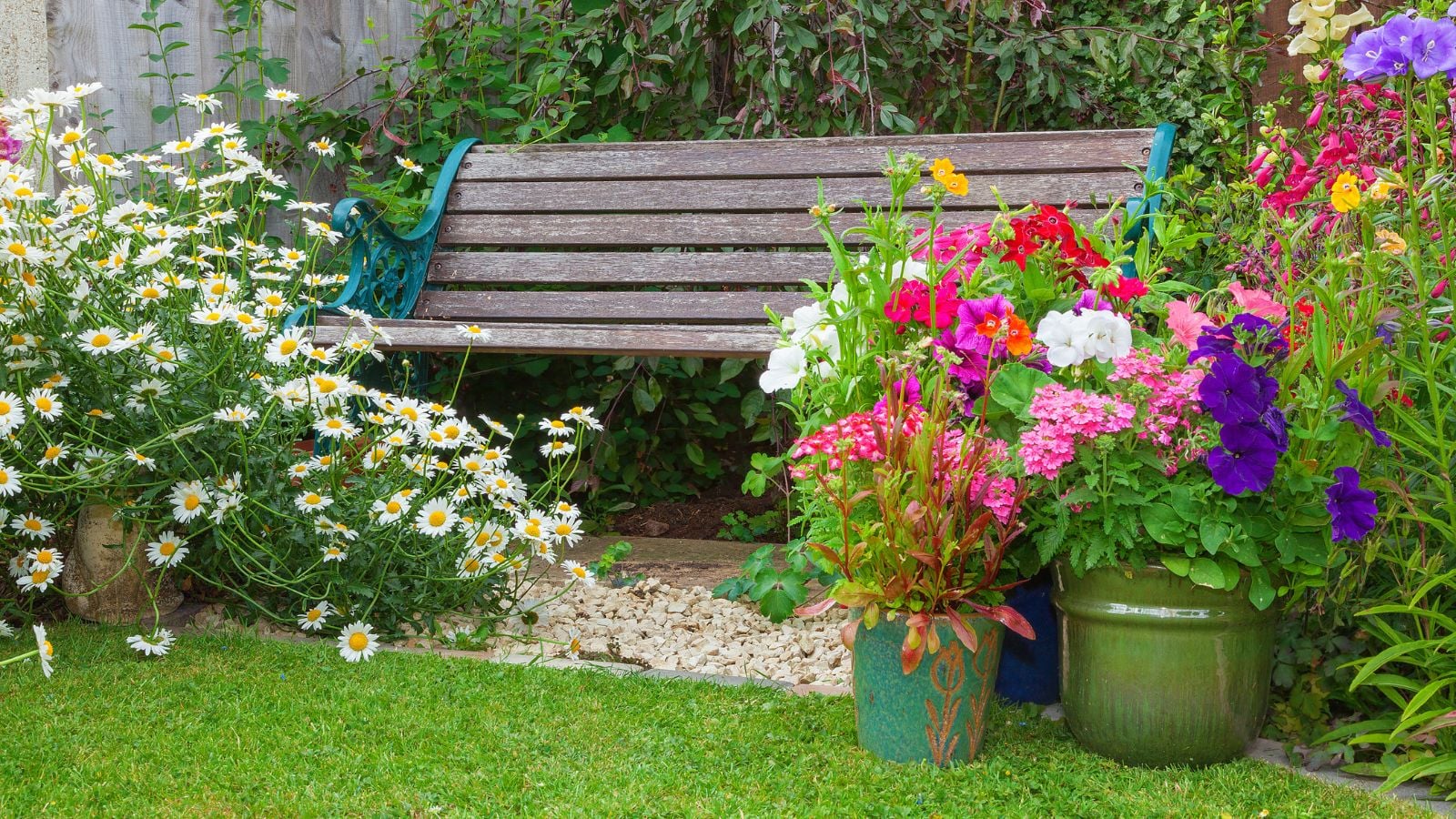
Mix container materials rather than sticking to one type. Weathered terra cotta, glazed ceramic, galvanized metal, and even wooden crates or baskets all contribute to the relaxed, collected-over-time feel of a cottage garden.
That said, you still want some visual coherence. Tying the containers together through a shared color tone or a repeated material helps the arrangement look intentional. Two or three different materials in complementary tones are usually enough variety without looking too chaotic.
Terra cotta is a natural fit for cottage garden pots and ages beautifully outdoors. It’s also porous, which means it dries out faster than plastic or glazed pots. If you use terra cotta, you’ll likely need to water more frequently, especially in summer.
Vary Heights
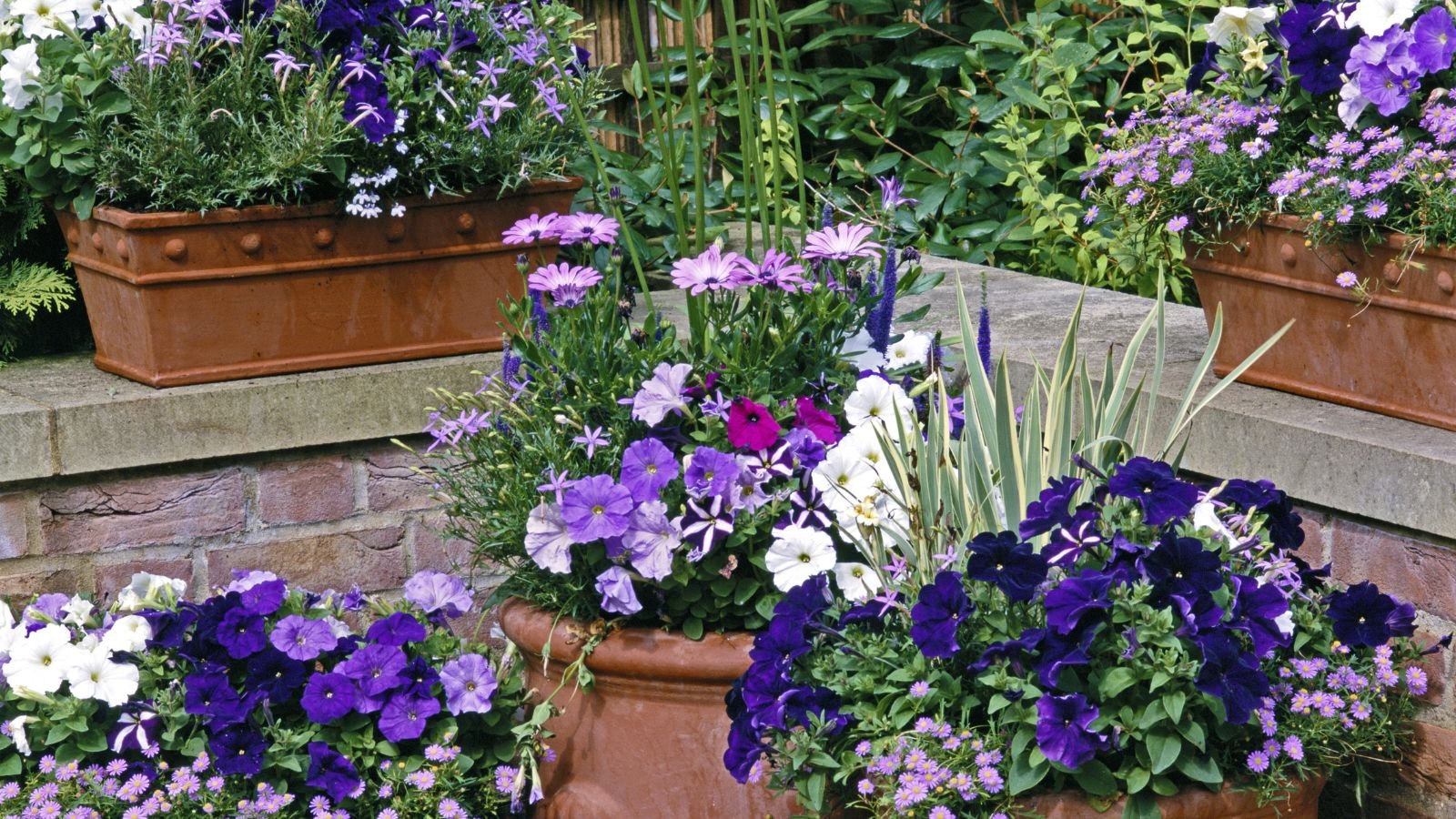
Staggering the heights of your containers prevents the arrangement from looking flat. Place some pots on the ground, raise others on plant stands, upturned pots, bricks, or shelving, and hang a few from hooks or brackets if your space allows it.
This creates depth and draws the eye upward, which is especially important in small spaces where you’re working with limited floor area. A vertical arrangement also makes it easier to fit more plants into a tight space without everything feeling crowded.
Think about how the plants themselves will contribute height as they grow. A tall container on the ground with a low-growing plant inside it might end up at the same visual height as a short pot on a stand with a taller plant. Consider both the container height and the mature plant height together when planning your layout.
Prepare a Soil Mix

Container plants depend entirely on the soil you provide, so it’s essential to get this right. Regular garden soil is too heavy for pots. It compacts over time, drains poorly, and can introduce weeds and disease. A quality potting mix formulated for containers is the better choice.
For most cottage garden plants, a general-purpose potting mix works well as a base. If your mix doesn’t already contain perlite, adding a handful per pot improves drainage, which is important since cottage garden plants like lavender, salvias, and herbs dislike sitting in soggy soil.
Plants that prefer richer, more moisture-retentive conditions, like foxgloves or sweet peas, benefit from some added compost mixed into the potting soil. You don’t need much. A ratio of roughly three parts potting mix to one part compost gives you extra nutrients and moisture retention without making the soil too heavy.
If you’re planting Mediterranean herbs like lavender, rosemary, or thyme alongside showier flowers, keep in mind that these prefer leaner, well-draining soil. In a combination pot, this usually isn’t a problem as long as the overall mix drains freely. But if you’re planting herbs in their own containers, adding extra perlite or grit keeps conditions closer to what they prefer.
Start Seeds or Transplant
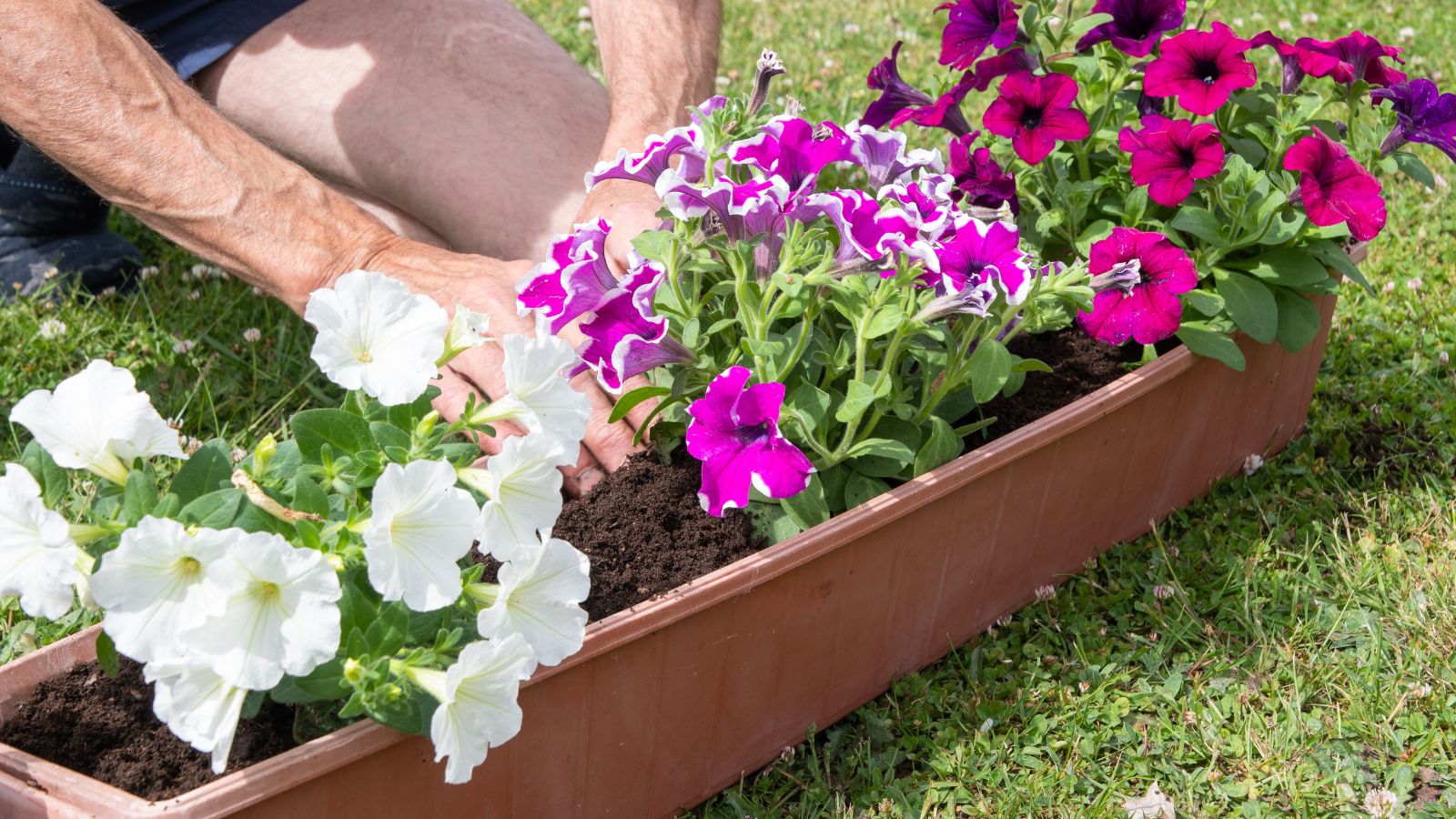
You can start a container cottage garden from seed or from nursery transplants, and there’s no reason you can’t use both.
Starting from seed is the cheaper option and gives you access to a much wider variety selection. Cosmos, sweet alyssum, nasturtiums, and sweet peas all germinate easily from direct sowing into containers. Other plants like foxgloves and snapdragons are better started in trays indoors a few weeks before your last frost date and transplanted into their final containers once they’re a few inches tall.
Nursery transplants give you a head start and instant visual impact. If you want your container garden in pots to look full from day one, transplants are the way to go. They’re also the easier route for plants that are slow to establish from seed or that you only need one or two of.
When transplanting, water the plants thoroughly in their nursery pots an hour or so before planting. This reduces transplant shock and makes it easier to slide them out without disturbing the roots too much. Position plants at the same depth they were growing at in their original pots, firm the soil gently around them, and water well after planting.
If you’re building combination pots, start with the largest plant in the center or back and work outward. This gives you a better sense of spacing and prevents you from running out of room for the smaller plants that fill in around the edges.
Cottage Garden Care
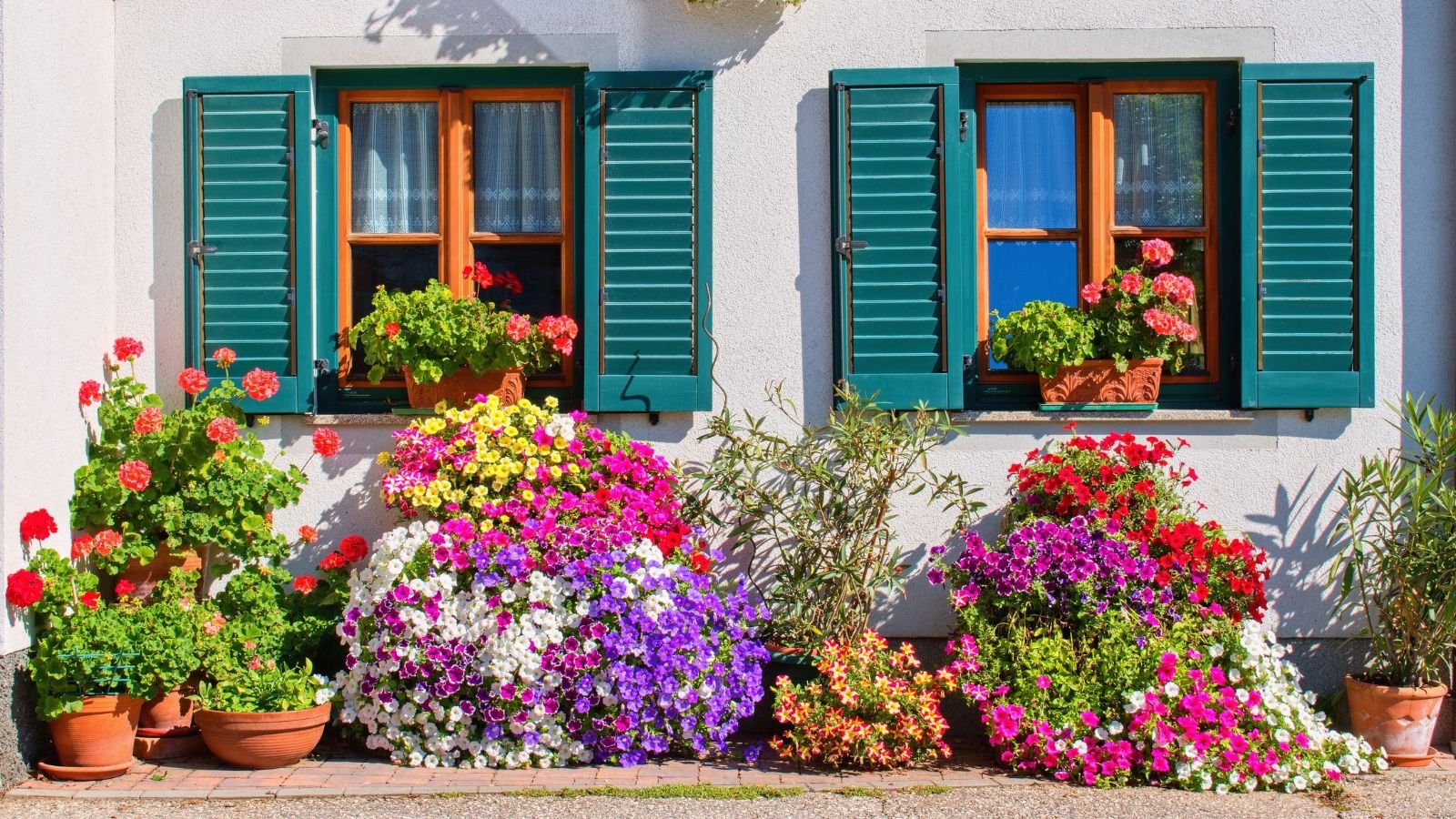
Once planted, a container cottage garden needs regular attention, but nothing that takes more than a few minutes a day.
Watering is the biggest ongoing task. Containers dry out faster than garden beds, especially in summer and particularly if you’re using terra cotta pots. Check soil moisture daily during warm weather by pressing your finger into the top inch of soil. Water thoroughly when it feels dry, letting water run through the drainage holes. On hot days, you may need to water twice.
Feed your plants regularly through the growing season. A balanced liquid fertilizer applied every two to three weeks keeps container plants blooming. Flowering plants in pots use nutrients quickly since there’s a limited volume of soil to draw from, so consistent feeding makes a noticeable difference in how long and how abundantly they bloom.
Deadhead spent flowers to encourage continued blooming. Most cottage garden plants produce more flowers when you remove the faded ones, since the plant redirects energy toward new buds rather than setting seed.
As the season progresses, some plants may get leggy or start to decline. Don’t be afraid to cut them back or swap them out for something new. One of the advantages of container gardening is flexibility. If a plant isn’t working or has finished its season, you can replace it without disrupting everything else.
At the end of the growing season, move any tender perennials indoors if you want to overwinter them. Hardy plants like lavender and rosemary can often stay outside in their containers through mild winters, though you may want to group them together near a sheltered wall for extra protection.