

7 Pretty Bouquet Filler Plants You Can Start From Seed
When you’re seed shopping for your cut flower garden, don’t forget bouquet filler seed. Many lovely foliage and flowering plants fill in the arrangement gracefully and easily. Experienced gardener Sarah Jay covers seven pretty plants you can use to fill in your arrangements.

Contents
It behooves cut flower gardeners to include bouquet filler seed in their shopping list for this year’s flower garden. From foliage plants to herbs, all the way to floriferous additions, there are plenty of choices. Your choice depends on your style and the other cut flowers you’re growing.
Fillers have multiple uses in all kinds of arrangements. As you make your selections, think about the design principles you want to highlight. Consider light, space, and form, along with your desired color palette. Multicolored fillers fit into more monochromatic arrangements, while single colored ones are adaptable to both monochromatic and analogous ones.
While this list does not cover all the filler plants you can buy (nor does it cover all the ones we have at Botanical Interests), it does attempt to touch on the different kinds of fillers out there. Herbs, foliage, and densely floral plants all work to provide repetition and fill in the gaps next to other showstopping plants.

‘Rainbow Blend’ Coleus

|
botanical name Coleus scutellarioides ‘Rainbow Blend’ |
|---|---|

|
sun requirements Partial shade |

|
height 12-36″ |

|
hardiness zones 2-11 |
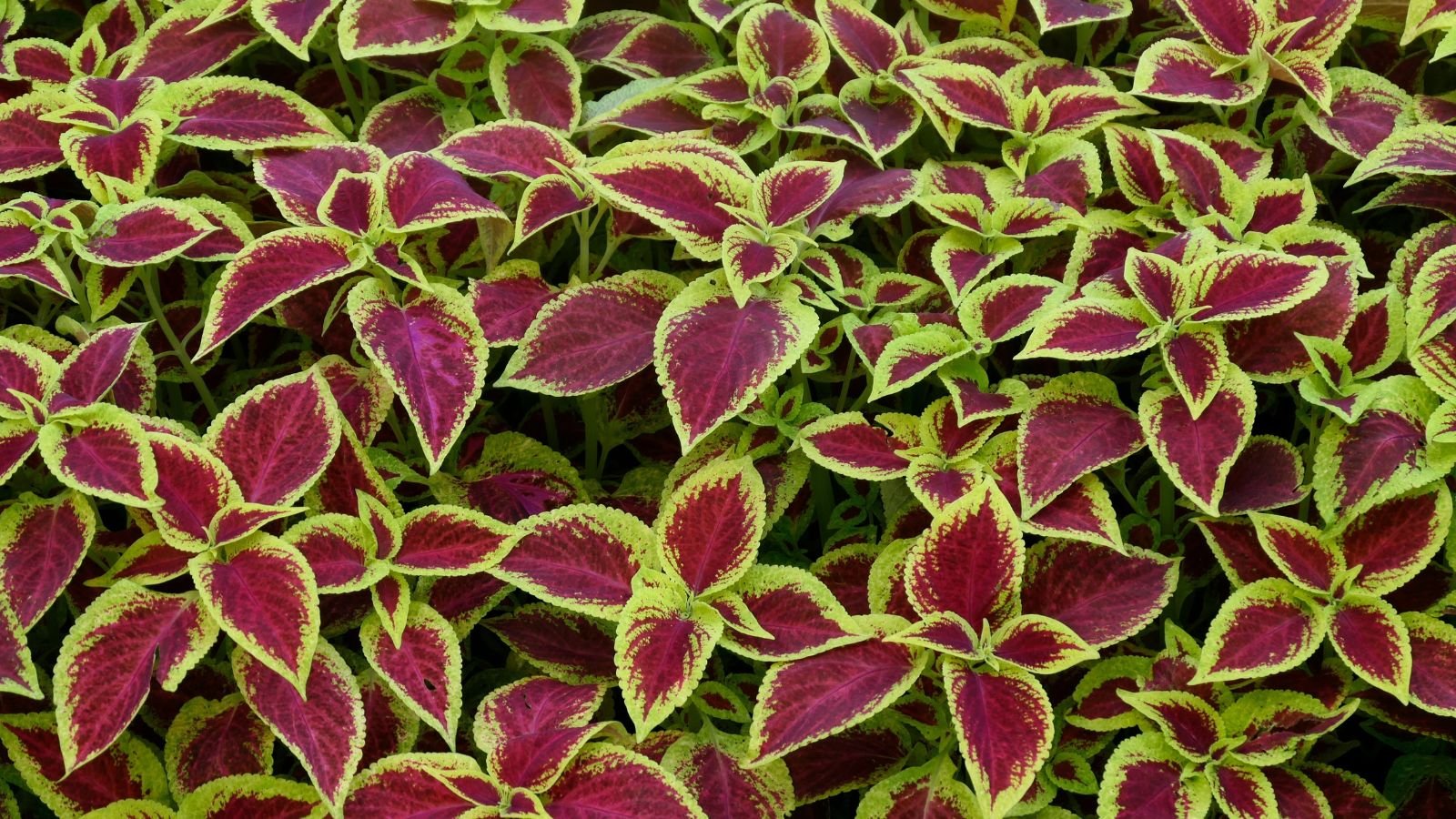
If you like adaptability with your foliage fillers, ‘Rainbow Blend’ coleus has just that. This plant offers colorful foliage in chartreuse, white, bronze, gold, copper, yellow, pink, red, purple, and green. It’s an easy plant to grow from seed, though it takes up to three weeks to germinate.
These are great for sowing indoors, as this is the recommended germination method. They need a heat mat to sprout effectively, as they require 70 to 80°F (21 to 27ºC) soil temperatures. If you are short on space, this is a great container plant. It also thrives in the ground during the warm season and handles heat easily. Just keep it in partial shade.
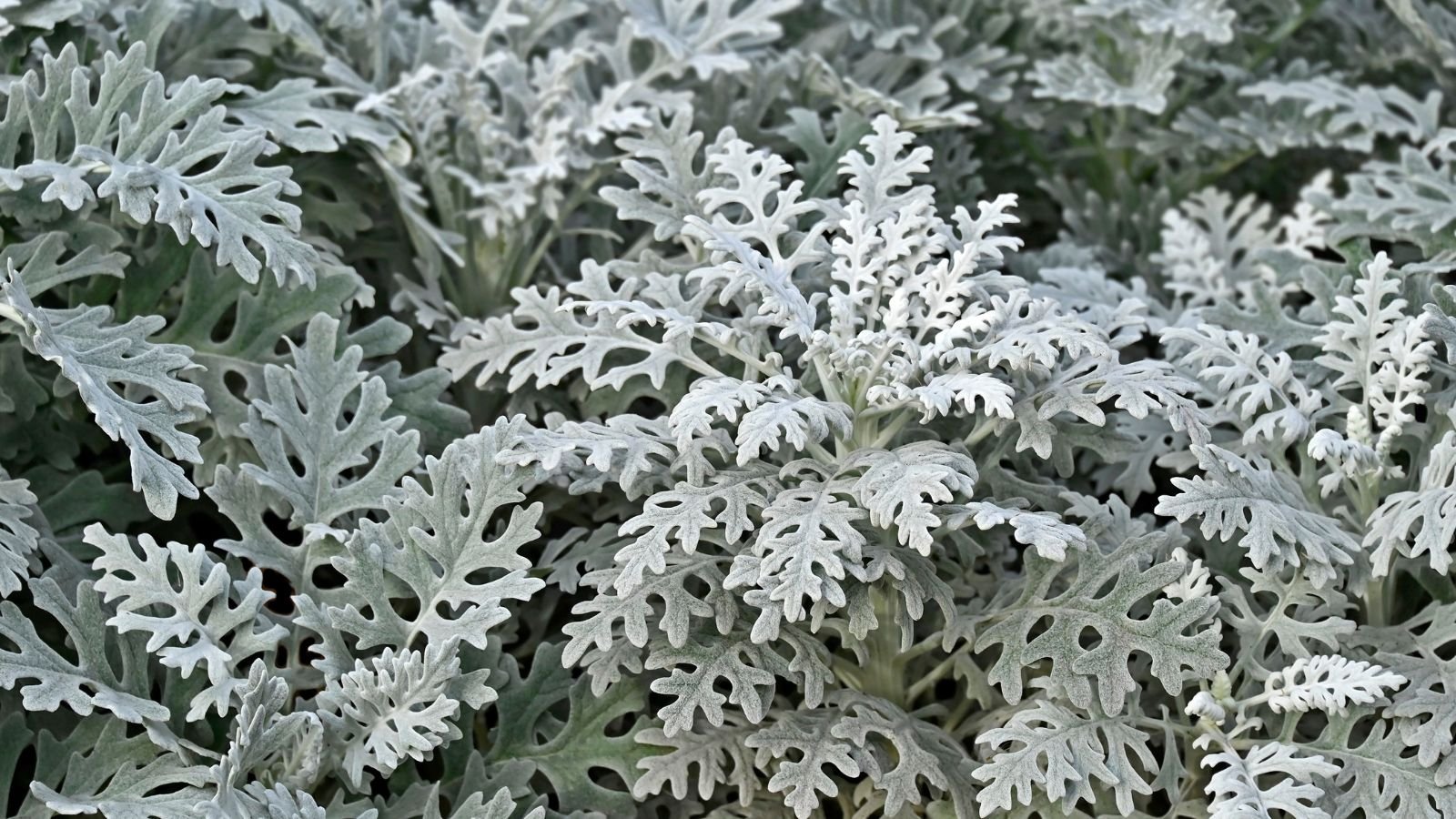
‘Silverdust’ Dusty Miller
|
|
botanical name Jacobaea maritima ‘Silverdust’ |
|---|---|
|
|
sun requirements Full sun to partial shade |
|
|
height 10-12″ |
|
|
hardiness zones 8-11 |
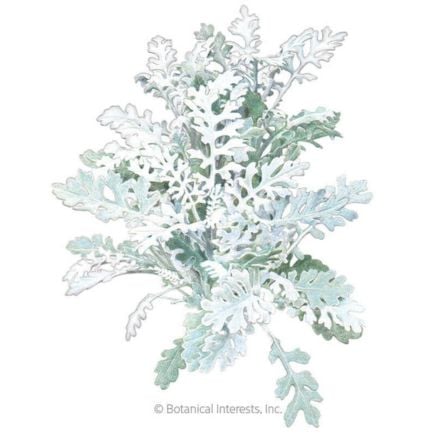
For muted, lobed, silvery fillers, dusty miller is the ideal choice. This plant offers all this, with occasional minute, yellow, compound flowers that pop no matter where they’re included. It’s worth mentioning that Jacobaea maritima varieties of all kinds are lovely in garden beds too.
Sow your seeds indoors up to ten weeks before your last frost. If you live in the hardiness range of zones 8 through 11, your dusty miller will last throughout the year (barring an act of god, like an ice storm). Press these minute seeds into the soil, and watch them sprout within a few weeks.
‘Cardinal’ Basil

|
|
botanical name Ocimum basilicum ‘Cardinal’ |
|---|---|
|
|
sun requirements Full sun to partial shade |
|
|
height 24″ |
|
|
hardiness zones 10 |
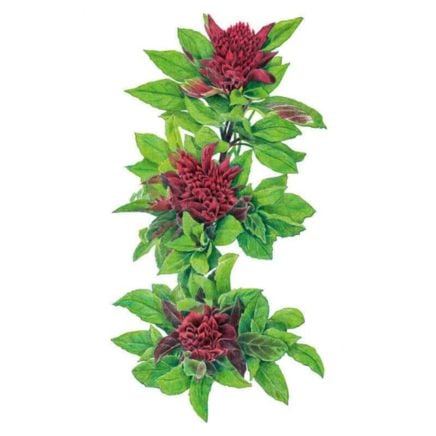
Edible fillers? Yes! ‘Cardinal’ basil is a culinary herb, but it’s typically grown for its dense red flowers. Similar to other basil plants, this is an easy bouquet filler to grow from seed. Sow yours indoors four to six weeks before your last frost, and wait for them to germinate in less than ten days.
Transplant yours outdoors when temperatures are consistently 50°F (10°C) or higher. These red fillers really pop in muted arrangements, and their tightly arranged leaves pack nicely into various designs. If you have a ton, you can even use some in your cooking, though you don’t need much to bring the flavor with this basil variety.
Bells of Ireland

|
|
botanical name Moluccella laevis |
|---|---|
|
|
sun requirements Full sun |
|
|
height 2-3′ |
|
|
hardiness zones 2-11 |
While they’re not actually from Ireland, bells of Ireland resemble the verdant green associated with the Old Country. These unique flowers are dramatically spiked, with pronounced bell-shaped blooms punctuated with green leaves in fan form.
As a filler, these bells work in fresh and dried arrangements. They last a long time when dried, and plantings readily reseed in the area where they’re planted. Unlike the others up to this point, these bouquet filler seeds are best sown directly. They’ll germinate when soil temperatures reach 50°F (10°C) or higher.
‘Dara’ Ammi

|
|
botanical name Daucus carota ‘Dara’ |
|---|---|
|
|
sun requirements Full sun |
|
|
height 36-50″ |
|
|
hardiness zones 2-11 |
Similar to Queen Anne’s lace, ‘Dara’ ammi offers domes of minute flowers, but in pink instead of white. Ammi also doesn’t spread aggressively and invade nearby natural areas, like the Queen. This is a perfect choice for flower gardeners who like a low-maintenance addition to their arrangements.
Sow your ammi seeds outdoors one to two weeks before your last frost. Continue with successive sowings every two to three weeks. You’ll have a continuous supply of this delicate, easy-to-grow flower. If you prefer a green flower instead, grow ‘Green Mist’ ammi.
‘Bouquet Blend’ Sweet Pea

|
|
botanical name Lathyrus odoratus ‘Boquet Blend’ |
|---|---|
|
|
sun requirements Full sun |
|
|
height 8′ |
|
|
hardiness zones 2-11 |
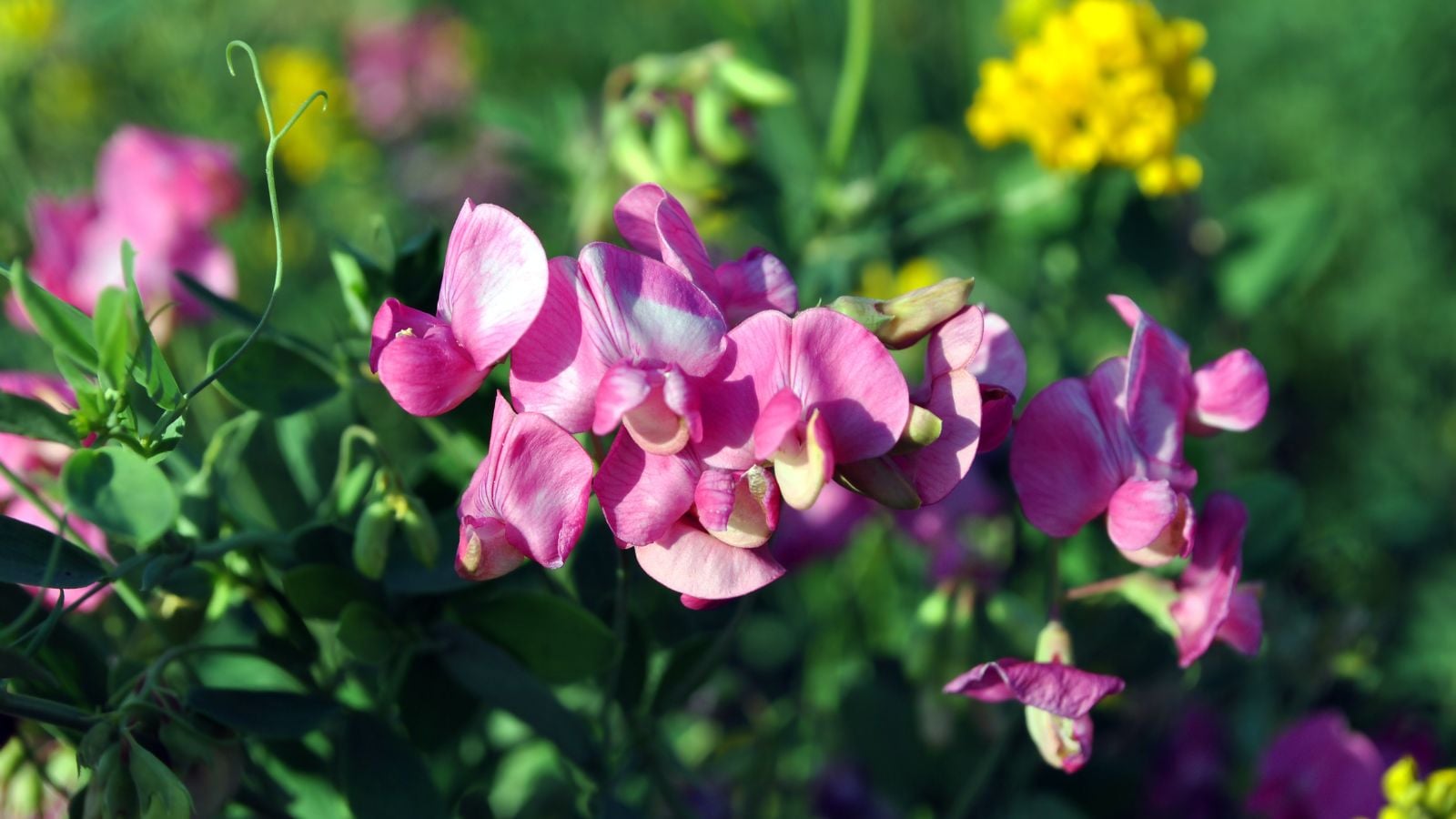
Here, we have another multicolored option, but instead of foliage, we have ruffly double flowers. The ‘Bouquet Blend’ sweet pea offers colors ranging from lavender, magenta, dark maroon, blue, rose, rose pink on white, to pink with white edges. These bring the scent along with the pollinators to the garden, and likewise to the bouquet.
Recommendations suggest sowing these directly outdoors four to six weeks before your last frost. Ensure soil temperatures are 55 to 65°F (13-18°C). Plant these in a border to block deer, who dislike their taste. Keep them away from curious pets and children, as all parts of them are toxic.
Note that these need a trellis to grow most effectively.
‘Bouquet’ Dill

|
|
botanical name Anethum graveolens |
|---|---|
|
|
sun requirements Full sun |
|
|
height 30-36″ |
|
|
hardiness zones 2-11 |
I grow ‘Bouquet’ Dill every year, and not just for my flower garden. This plant is the larval host of the black swallowtail butterfly. Along with the delicious herby nature of this plant, bouquet dill also provides arrangements with umbels of bright yellow flowers with lacy green foliage.
This is such an easy bouquet filler to grow from seed if you get the timing right. Pop seeds in the ground one to two weeks before your last frost. Wait for the soil temperature to reach 60°F (16°C). Seeds take a long time to germinate – up to three and a half weeks – but the wait is worth what it brings to your cut flower garden.


