How to Winterize Your Garden in One Weekend (Even If You’re a Beginner)
With cold weather drawing near, now is the perfect time to winterize your garden. Join farmer Briana Yablonski to learn how to easily and quickly prepare your garden for winter.

Contents
Whether you want to grow throughout the winter or take a gardening break until spring, fall is the perfect time to winterize the garden. Taking a few steps now can help protect your garden during the cooler months and prepare it for spring growing.
If you’re new to the process of winterizing your garden, don’t worry. It’s a simple process that you can complete in a weekend.
I’ll share a few key tasks to help you prepare your growing area for its winter slumber. I’ll also describe a few ways you can extend the growing season and protect plants from cold winter temperatures.
Remove Diseased Plant Material

While it may seem like spring is ages away, it will be here before you know it. Spending a few minutes removing diseased plant material to winterize the garden will help prevent these pathogens from spreading to future plants.
It’s not always possible to tell which plants are diseased, but you can usually spot some obvious signs. Discolored leaves, soft stems, and spots are all common signs of diseases. If you spot any of these symptoms, remove the entire plant from the garden.
While hot compost piles can break down some diseases, backyard piles rarely reach these high temperatures. Therefore, you should dispose of these infected plants or place them far away from your garden area.
If the plants aren’t infected, it’s fine to leave them in the ground into the late fall and winter. The roots will hold soil in place and introduce organic matter into the soil as they break down. Clipping the plants at the soil level is another suitable option if you want to maintain a tidy appearance or prepare beds for spring planting.
Mulch Cold-Sensitive Perennials

Mid to late fall is the ideal time to insulate cold-sensitive perennials to winterize the garden. While trees and hardy shrubs can often survive the winter unprotected, tender and newly-planted perennials usually need extra insulation to make it through the colder months.
Some perennials that benefit from fall mulching include figs, blueberries, coneflowers, and asparagus. You should also add mulch to any trees or shrubs you’ve planted this fall.
You can use many materials to mulch, but some popular and easily accessible options include woodchips, straw, and leaves. Add a two-to-three-inch layer around the base of the plants to insulate the roots throughout the winter. This insulation protects roots from freezing temperatures and prevents soil from heaving during freeze-thaw cycles.
When spring arrives, you can leave the mulch in place. It will continue to suppress weeds and trap moisture.
Set Up and Secure Season Extension
If you want to keep growing into the winter, adding season extension like greenhouses, high tunnels, and cold frames is one of the best options. Even if you already have one of these on your property, you should spend time checking it over and getting it ready for winter.
Inventory and Organize Row Cover

Adding floating row covers over your plants is one of the easiest ways to extend the growing season by a few weeks or months. Agricultural row covers are specially designed to trap heat and let in water and light, so they’re the perfect material for protecting plants from cold. They’re an easy way to protect crops like lettuce, beets, and arugula once nighttime temperatures dip below freezing.
Row covers come in different weights. Heavier materials provide better cold protection, but they let in less light. For most situations, covers that are 0.5 to 1.0 oz/square yard work well to winterize the garden.
Once you have covers in hand, organize them by size and ensure they’ll fit the beds you’d like to cover. Remember that row covers should drape over plants without touching them; extending metal hoops over your plants makes this easy. As you’re sorting, discard any pieces with large tears.
In addition to ensuring you have enough covers, make sure you have enough weights to secure them. Sandbags, concrete blocks, and bricks all work well.
Check High Tunnels and Cold Frames for Leaks

Unheated season extension devices, such as cold frames and high tunnels, trap and hold heat from the sun. Since these structures aren’t well-insulated, keeping them tightly closed to the outdoor air is an essential part of their functioning.
Before cold weather sets in, inspect plastic for tears, and repair any with UV-resistant clear patch tape. Check any doors for leaks, and consider installing foam strips to seal any remaining small gaps. Even small gaps can let in damaging, cold air.
Add a Greenhouse

If you don’t have any season extension in place, it’s not too late to add some to winterize the garden. Many high tunnels and greenhouses take days to assemble, but you can find options that go together in just a few hours.
We love the HAVN greenhouse. It takes one or two people two hours to assemble, making it perfect if you only have a weekend to prepare the garden for winter. The modular design is super easy to fit together, and you don’t need any tools or experience to get started. Plus, you can manage the temperature and humidity levels from your phone.
Although these structures are quick to assemble, they can still withstand wind and snow. They are also easier to move around than more permanent structures to make the most of the available sunlight. Placing plants inside the greenhouse during the winter helps extend their lives, as you can easily control the temperature and humidity.
When spring arrives, the structures will also serve as a warm spot to start seeds for the upcoming gardening season. Starting seeds in a greenhouse keeps the mess out of your home and eliminates the need for grow lights and heating mats.
Drain and Prepare Irrigation Systems

Irrigation systems and simple garden hoses are susceptible to damage from freezing temperatures. Water expands as it freezes, leading to cracked hoses, irrigation fittings, and nozzles.
Since many gardens require little water throughout the winter, you may be ready to pack up your irrigation supplies when you winterize the garden. Drain hoses, sprinklers, and irrigation tubing, then place them in a covered storage area.
If you plan to water throughout the winter, check to see if you’re using a frost-free hydrant. Many home spigots can’t withstand freezing temperatures, but insulating helps protect them from damage. You can use a simple styrofoam cover to protect your outdoor faucet throughout the winter.
Cover Empty Ground

If you don’t plan to grow throughout the winter, you probably have some bare soil. This ground is susceptible to erosion and nutrient leaching, which can harm the environment and future gardens.
Rather than letting this ground sit bare during the colder months, keep it covered. Growing cover crops is one of the best ways to cover the soil, but November is too late to plant these seeds in most of the United States. If you still want to attempt to plant cover crops, cold-hardy winter rye is your best option.
Another option is to cover the ground with a layer of mulch to winterize the garden. Organic mulches like leaves and wood chips will prevent erosion and add organic matter to the soil. When it’s time to plant in the spring, just pull the mulch back from your growing areas.
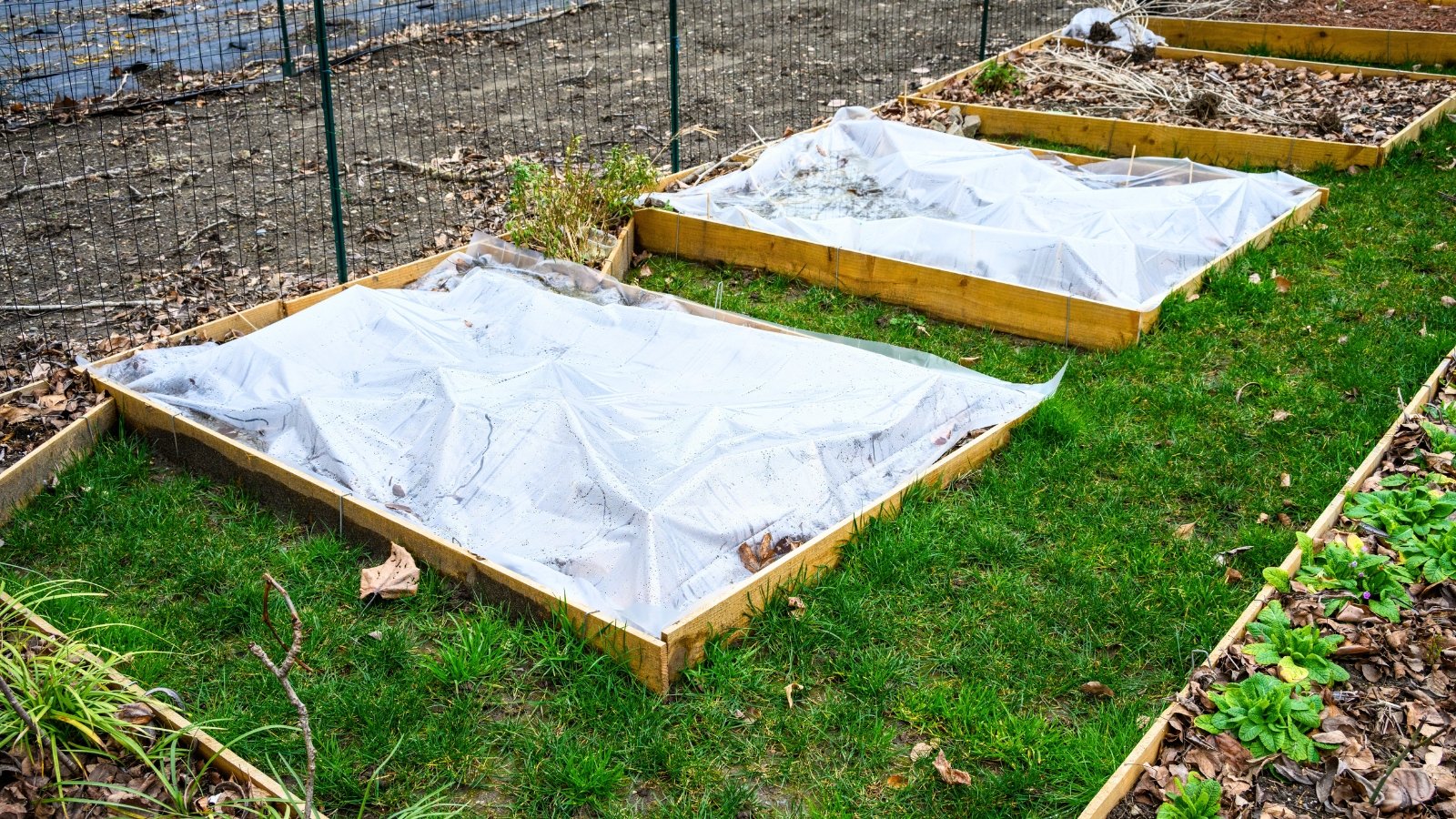
Finally, you can cover the ground with a tarp. UV-resistant silage tarps work great for preventing erosion and weeds. When spring arrives, just peel back the tarps and plant.