

When to Bring Potted Hibiscus Indoors for Winter
Whether you’re growing tropical or hardy hibiscus in pots, the colorful flair continues next season with winter protection. Gardening expert Katherine Rowe outlines when to bring potted hibiscus indoors for successful regrowth and continued enjoyment in spring.

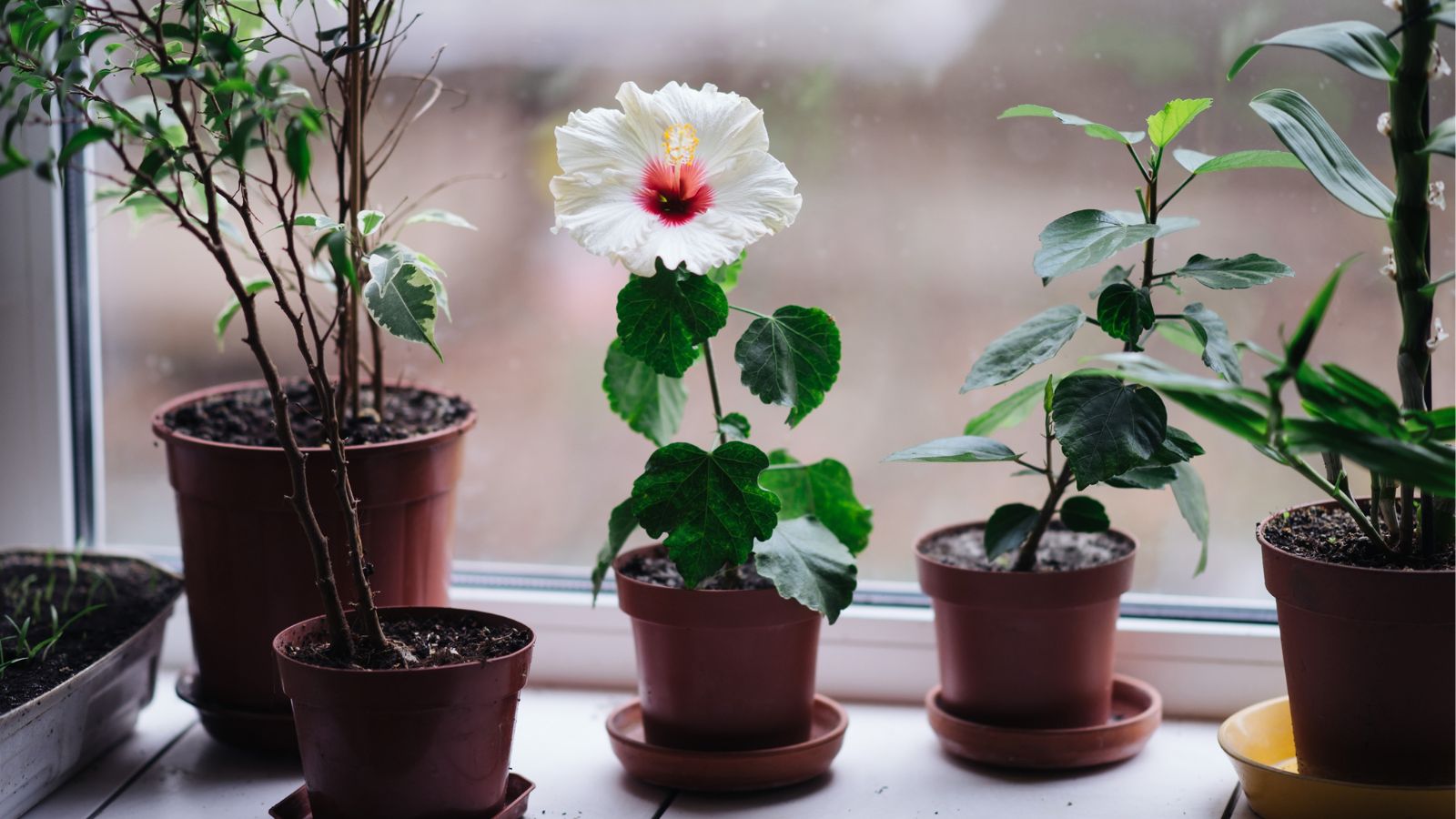
Contents
From tropical hibiscus to hardy perennial species, the big blooms captivate with color in the summer. Well-suited to container culture, the eye-catchers are relatively easy to care for, given ample sunlight and regular moisture.
To continue the show, bring potted hibiscus indoors and offer winter protection to preserve tender and borderline species for another growing season.
Tropical hibiscus bring a lush look to sunny summertime displays. They grow outside year-round in frost-free climates and as annuals or houseplants in colder regions. Hardy species like rose mallow offer years of recurrent color and make a handsome feature in pots or in the ground.
When to bring potted hibiscus indoors relates mainly to temperature and frost. Ensure pots have good drainage and quality potting mix for optimal aeration, moisture retention, drainage, and nutrition. Scout for insects before making the move, and give leaves and stems a good rinse and treatment according to the type of pest (aphids and spider mites are common).
After that, the best care during their houseplant tenure to meet indoor growing requirements brings another round of the booming blooms next summer.
Overwintering Tropical Hibiscus
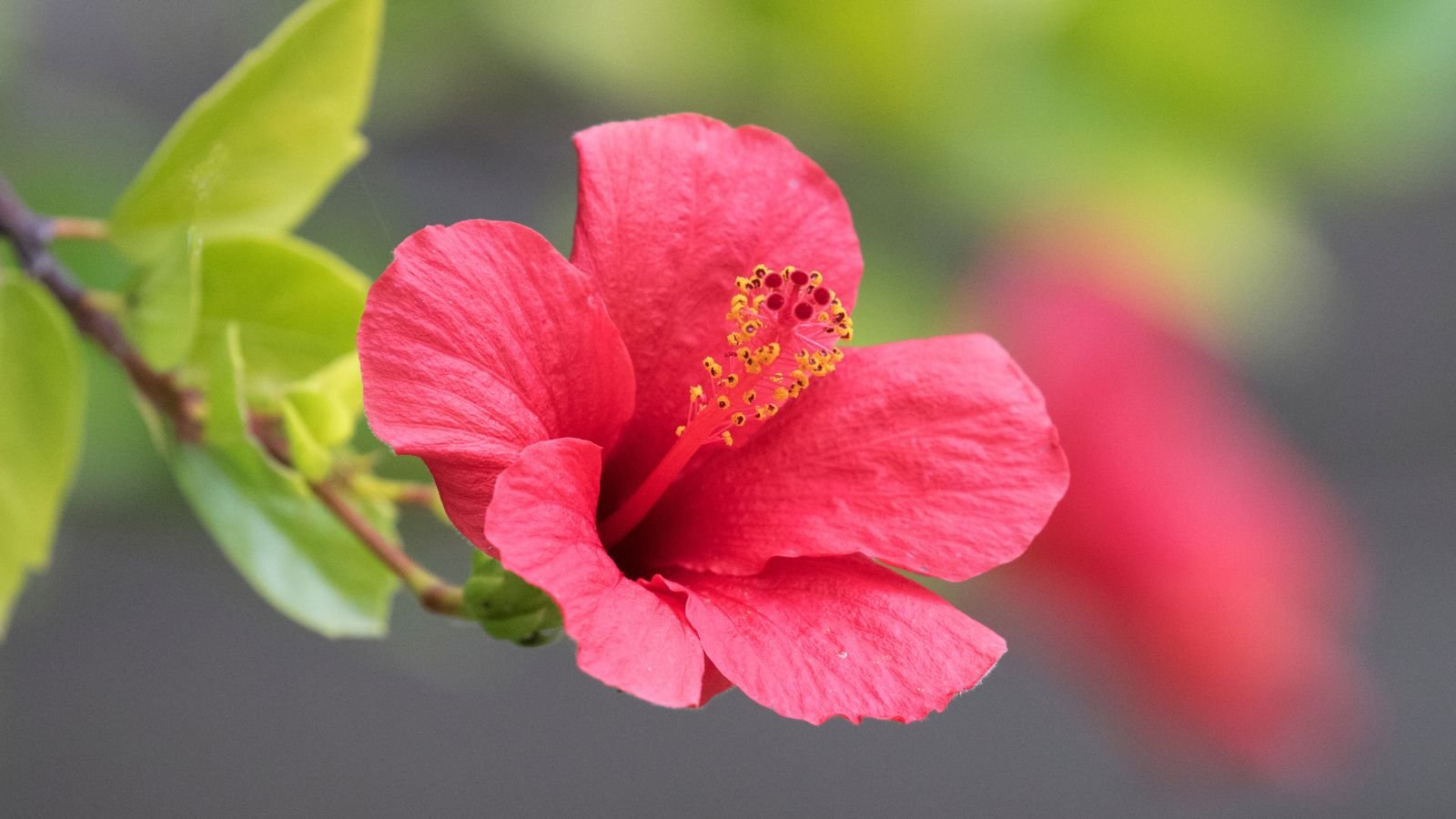
Chinese hibiscus (Hibiscus rosa-sinensis) hails from tropical Asia with a lush display of broad, tissuey blooms in colors that span the spectrum. Glossy green leaves with serrated margins form an attractive backdrop to the upright form and massive disc flowers.
Chinese hibiscus survives winter outdoors in the frost-free climates of USDA zones 9-11. In colder zones, bringing them indoors lets them rest with protection until heading back out in spring. These annual hibiscus can grow as houseplants throughout the year, but they do best spending warm months actively growing outside. When we talk about bringing potted hibiscus indoors for winter, we usually mean these tender types.
Chinese hibiscus usually grows three to five feet tall, with dwarf varieties at only one to two feet. Manageable in containers, portability makes for easy moves indoors. While growth naturally slows in the cool season, they bring a bit of the tropics to our winter interiors.
Overwintering Hardy Hibiscus
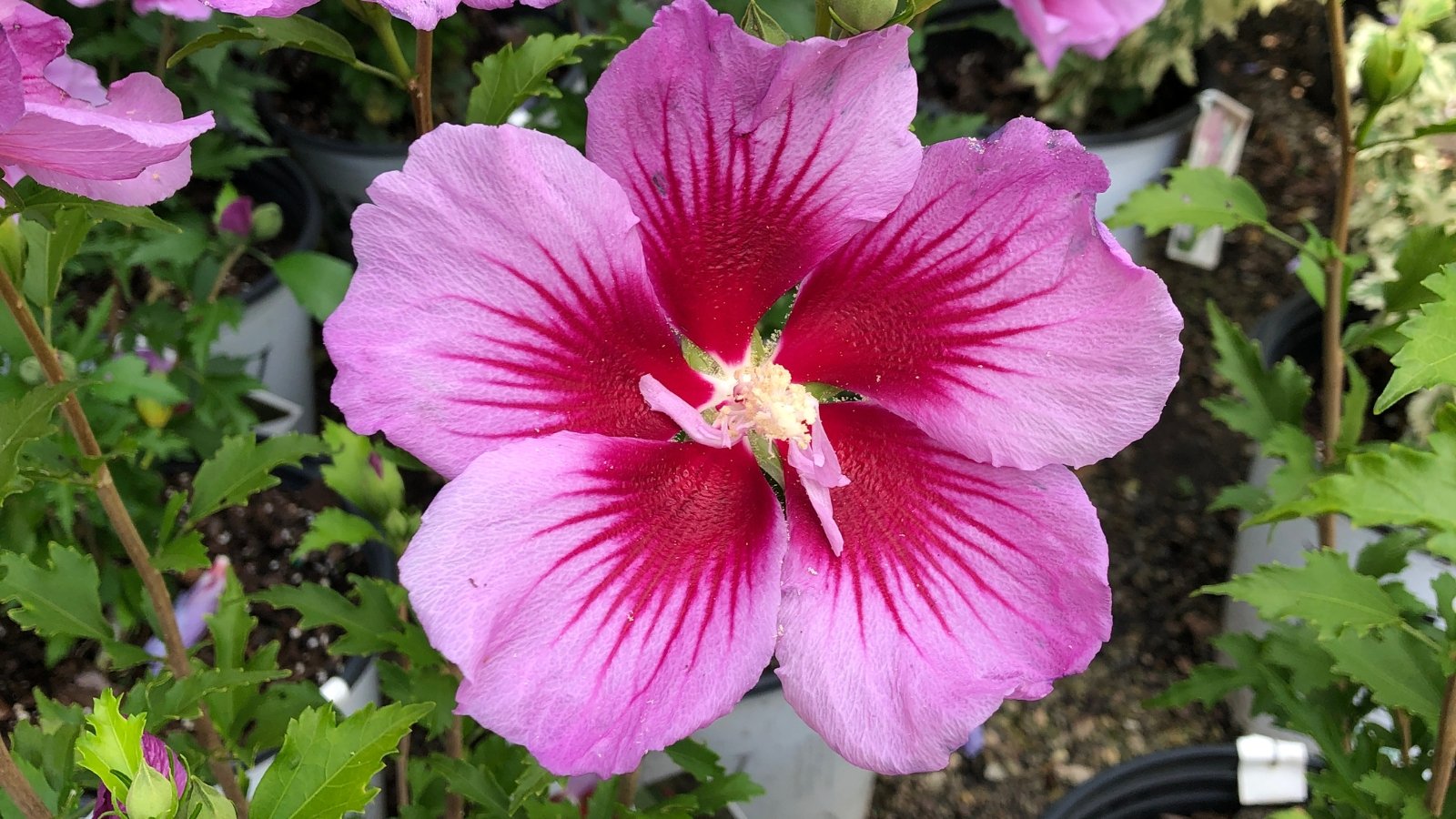
Cold-hardy, perennial hibiscus have a broader growing range, generally perennializing in USDA zones 4-9 for years of show. Hibiscus that come back every year include rose mallow (Hibiscus moscheutos) and rose of Sharon (Hibiscus syriacus).
While different species both fall into the category of “hardy hibiscus,” the term most often refers to rose mallow. Winter treatment of perennial hibiscus in pots differs from their frost-sensitive relatives.
Rose mallow brings the tropical look in perennial form with whirling dinner-plate blooms. Unlike tender tropical hibiscus, hardy hybrids stem from North American native mallows (mainly H. moscheutos, H. laevis, and H. coccineus), with durability, cold hardiness, and unique color blends.
Rose of Sharon (Hibiscus syriacus), from East Asia, is a vigorous shrub with characteristically showy hibiscus blooms. It grows larger than the perennial mallows, with somewhat smaller flowers. Some varieties produce abundant seed pods that readily reseed and become invasive, with sterile or seedless cultivars available to reduce the spread.
When to Bring Hibiscus Indoors
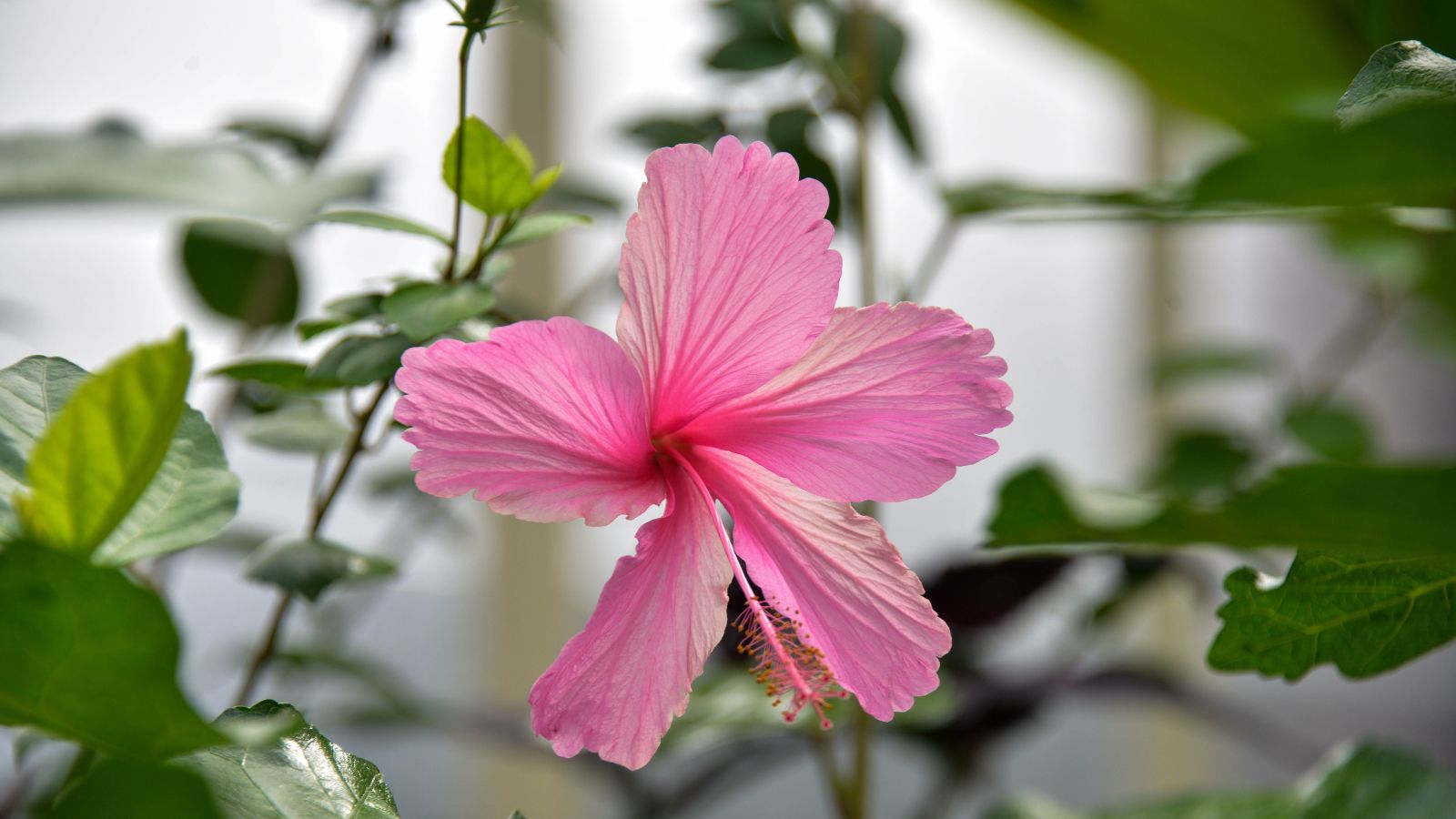
It’s time to bring tropical hibiscus indoors when nighttime temperatures drop below 50°F (10°C). For most growing zones, this is between September and November.
The tender specimens can survive lower temperatures, even as low as 24°F (-4°C), but won’t fare better for it. It’s a good rule of thumb to move most tropical dwellers indoors with nights in the 40s (4°C).
Hardy hibiscus withstands lower temperatures and enters dormancy with winter’s approach. A reliable way to determine whether to leave potted specimens outdoors is their hardiness beyond your growing zone. Plants in pots face greater exposure to cold air temperatures and should be hardy to two zones colder to survive winter outside.
In the ground, rose mallow withstands temperatures as low as -30°F (-34°C). In pots, they need protection before temperatures dip this low. Plan to protect them before temperatures drop below zero (-10°F or -12°C). In-ground rose of Sharon is hardy to -10°F (-12°C), and needs protection before these lows if in pots.
Gauge Hard Frost

Chinese hibiscus are frost-sensitive, and a hard frost can cause cold damage to roots and branches. Plan to bring potted hibiscus indoors before the first anticipated frost date in the fall.
Hardy hibiscus and rose of Sharon tolerate frost and can be brought in for winter protection post-frost, when in dormancy, and as temperatures warrant.
Overwintering Tropical Hibiscus Indoors

To soften the transition when you bring hibiscus indoors, gradually acclimate it to lower light conditions. Move them into more shade every few days over two to three weeks. This acclimation period helps minimize leaf and bud drop and lessens recovery time.
It’s common for hibiscus to drop its leaves in response to shifts in light, temperature, and humidity. After an adjustment period, leaves should reemerge.
Indoors, place the container in a bright location with plenty of open light. A south or west-facing window offers the best sun exposure, optimally with four to five hours daily. An east-facing situation gives good morning sun to sustain energy, particularly in southern climates where afternoon rays may prove too intense. North-facing windows receive the least light; grow lights are an option if levels are too low to support an indoor hibiscus.
Reduce watering as growth naturally slows in the cool season, and roots aren’t absorbing moisture or nutrients as readily. When the soil surface is dry to a depth of one to two inches, water deeply. The pot will feel lighter in addition to dry surface soil when it’s time to water.
Check soil moisture every two weeks or so to prevent roots from drying out completely. Take care not to overwater, which causes roots to sit in soggy situations for prolonged periods. Fungal problems like root rot can develop as a result.
Keep potted tropical hibiscus warm indoors with temperatures above 55°F (13°C). Room temperatures between 65-75°F (18-24°C) are best. Keep them out of heated or cooled drafts to prevent excessive drying. To increase ambient humidity, place the pot on a tray of pebbles filled with water, or opt for a humidifier.
Cold Protection for Potted Hardy Hibiscus

With their hardiness zone determined, there are several ways to overwinter hardy hibiscus in pots. If they’re not hardy to tow zones lower than your own, plan to offer winter protection.
The most reliable way to protect against winter extremes is to move them to an unheated space like a garage, basement, shed, or cold frame. Here, they can experience dormancy without concern about wind and frigid air, and soil temperatures. For potted specimens under cover, check the soil moisture every few weeks to make sure roots don’t dry out completely.
To leave containerized specimens outside while providing extra protection, cluster pots against a wall, add mulch, or surround them with piled or bagged leaves. There are several creative ways to overwinter perennials in pots and to insulate them from deep chill, relative to your climate and selection.
Reacclimating in Spring

For moving potted hibiscus back outside, follow the gradual acclimation process. After the threat of frost passes and nighttime temperatures are above 50°F (10°C), move them to a shaded location like a covered porch or beneath a tree.
Introduce them to more light every few days over two to three weeks. Be mindful of chilly nights in spring, and bring containers in if temperatures dip into the low 50s (around 10°C).
For both Chinese and hardy hibiscus, prune back any leggy branches in late winter to flush as temperatures warm. To manage size and a bushy form, they handle a heavy prune by about one-third of the size. Cut branches back to a leaf node. With a heavier cut, expect budding to delay as new growth flushes first.
If plants are in the original nursery potting mix, repot with a high-quality potting medium in spring. Opt for a pot one to two inches larger than the root ball, and repot after that every few years. For tropicals, begin fertilizing once a month in spring as new growth emerges. Applications of a well-balanced liquid fertilizer (like 10-10-10) diluted to half strength support the heavy feeders.
For rose mallows, new growth in spring is slow to appear. Once it does, it emerges quickly for the ensuing summer foliage and flowering interest. The robust perennials bloom in the heat of summer through early fall. Each hibiscus flower opens only for a day, but with abundant buds, the flowering is continual.


