How to Trim Your Lavender for More Summer Blooms
The first flush of lavender blooms is just the beginning if you prune at the right time. Gardening expert Madison Moulton explains how to trim lavender after flowering to encourage a second round of blooms and keep the plant healthy for years.

Contents
Lavender is a perennial garden staple, with flowers I look forward to every year. Although the leaves are beautiful, we all know the blooms are the star of the show. And if you want to encourage your lavender to bloom as much as possible, pruning is a great tool.
Pruning after the first flush of flowers is the most effective thing you can do to encourage a second round of blooms later in the summer. It’s also essential for the plant’s long-term health. Lavender that isn’t pruned regularly develops woody, bare stems that stop producing foliage and flowers. Eventually, the plant sprawls and becomes impossible to bring back to its original shape.
Regular trimming keeps it compact, productive, and living longer than it would otherwise. Follow these steps to trim your lavender for more summer blooms.
English Tall / Vera Lavender Seeds
English Tall / Vera Lavender Seeds
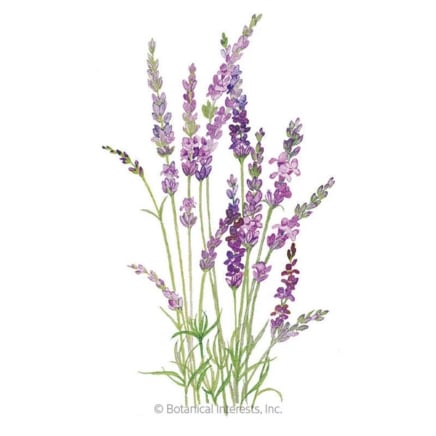
This is the tall, old-fashioned, wonderfully fragrant lavender that is an extremely valuable and easy to use household herb, an important ingredient in fragrance sachets and potpourris, an excellent cut and dried flower for arrangements, and a most useful component of innumerable craft projects.
Buy at Botanical Interests ShopPrune After the First Flowers Fade
The best time to trim lavender for more blooms is right after the first flush finishes. For English lavender, this is usually sometime in early to midsummer. For French types, it can be as early as late spring. The key is to act while the spent flowers are still on the plant, before the stems start to harden and the plant puts energy into setting seed.
If you wait too long after the flowers fade, the plant shifts its focus from growing new shoots to producing seeds. Once that happens, the energy that could have gone into a second round of blooms is spent. The sooner you prune, the better your chances of seeing more flowers.
Trim and Shape
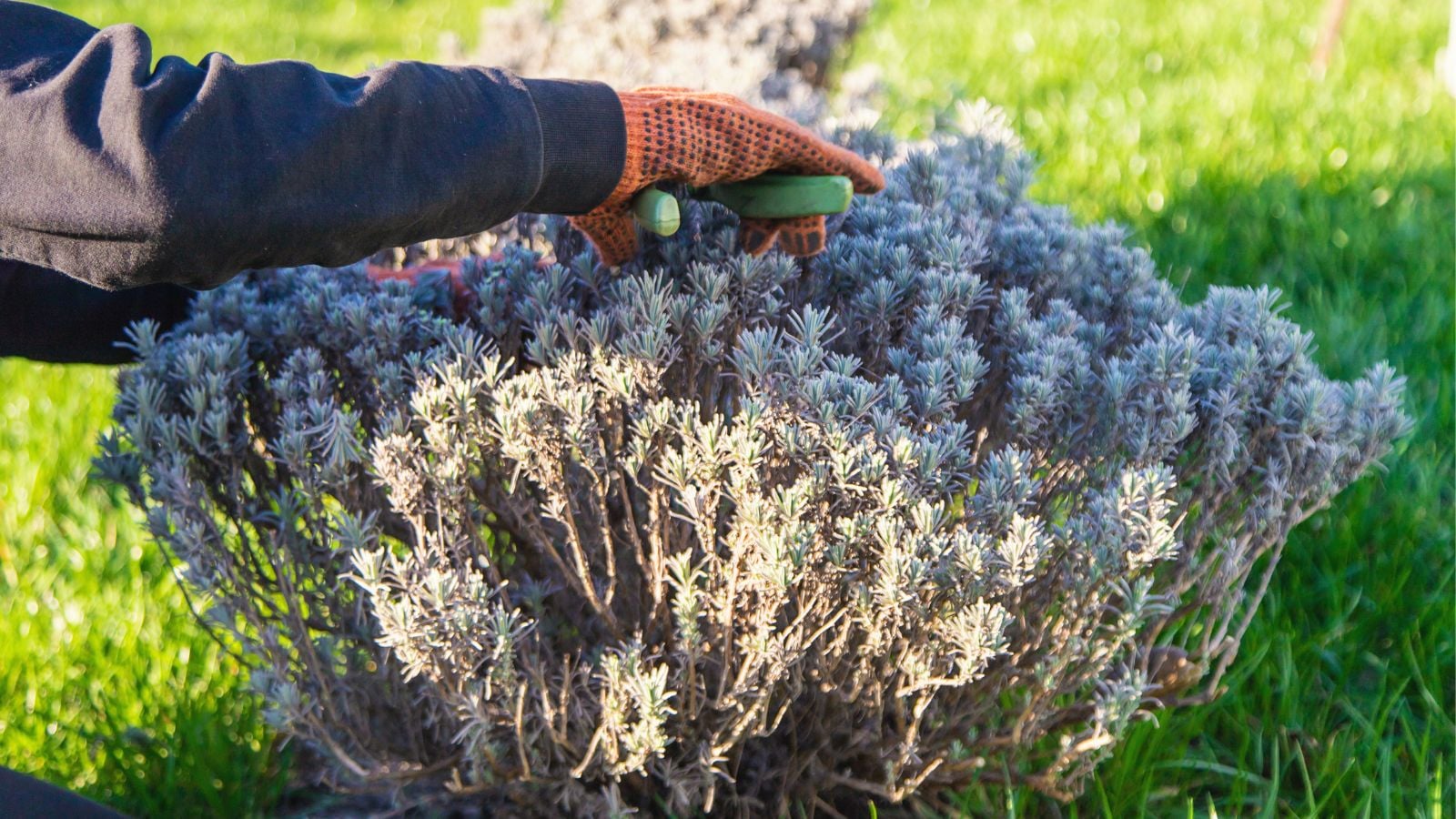
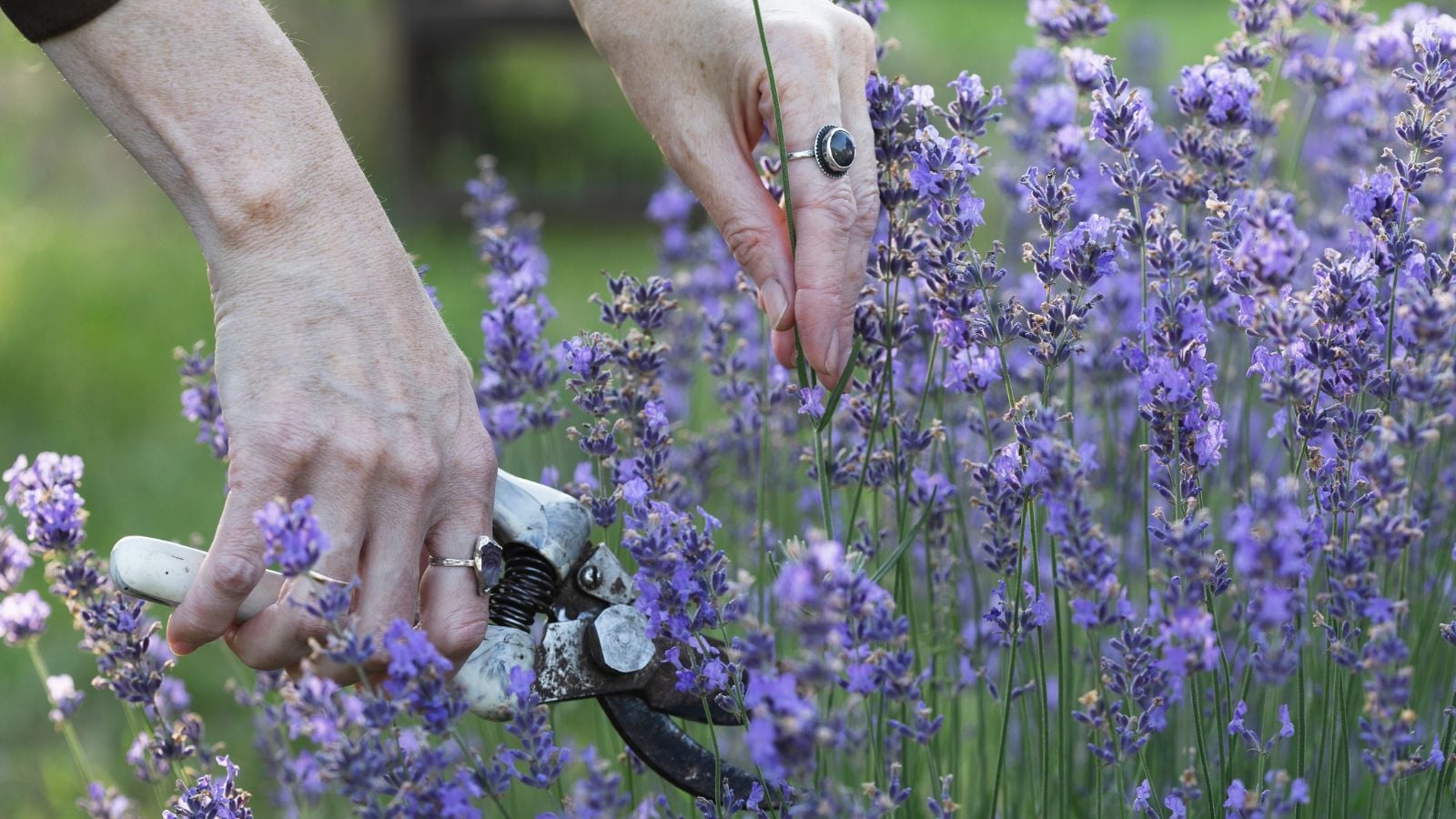
Start by cutting off all the spent flower spikes. Snip each one down to where the green foliage begins, just above a set of leaves. This prevents the plant from wasting energy on seed production and immediately redirects it toward new growth.
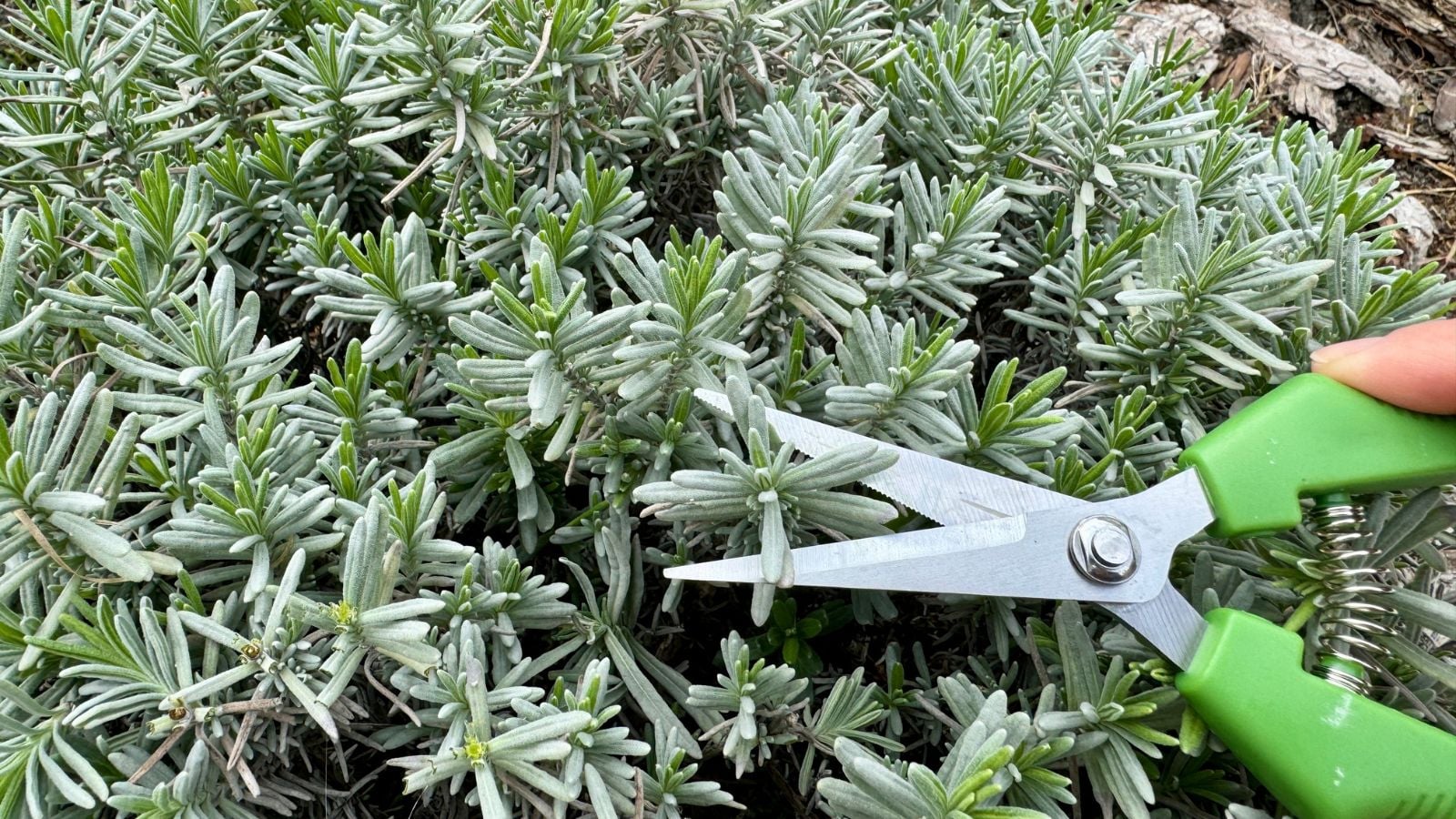
After the flower stalks are removed, give the whole plant a light trim to shape it. Cut about a third of the season’s new growth, working your way around the plant to create a rounded mound. A dome shape encourages even growth and ensures the interior of the plant gets enough airflow, which helps prevent the fungal problems that lavender is prone to in humid climates.
Never Cut Into Old Wood
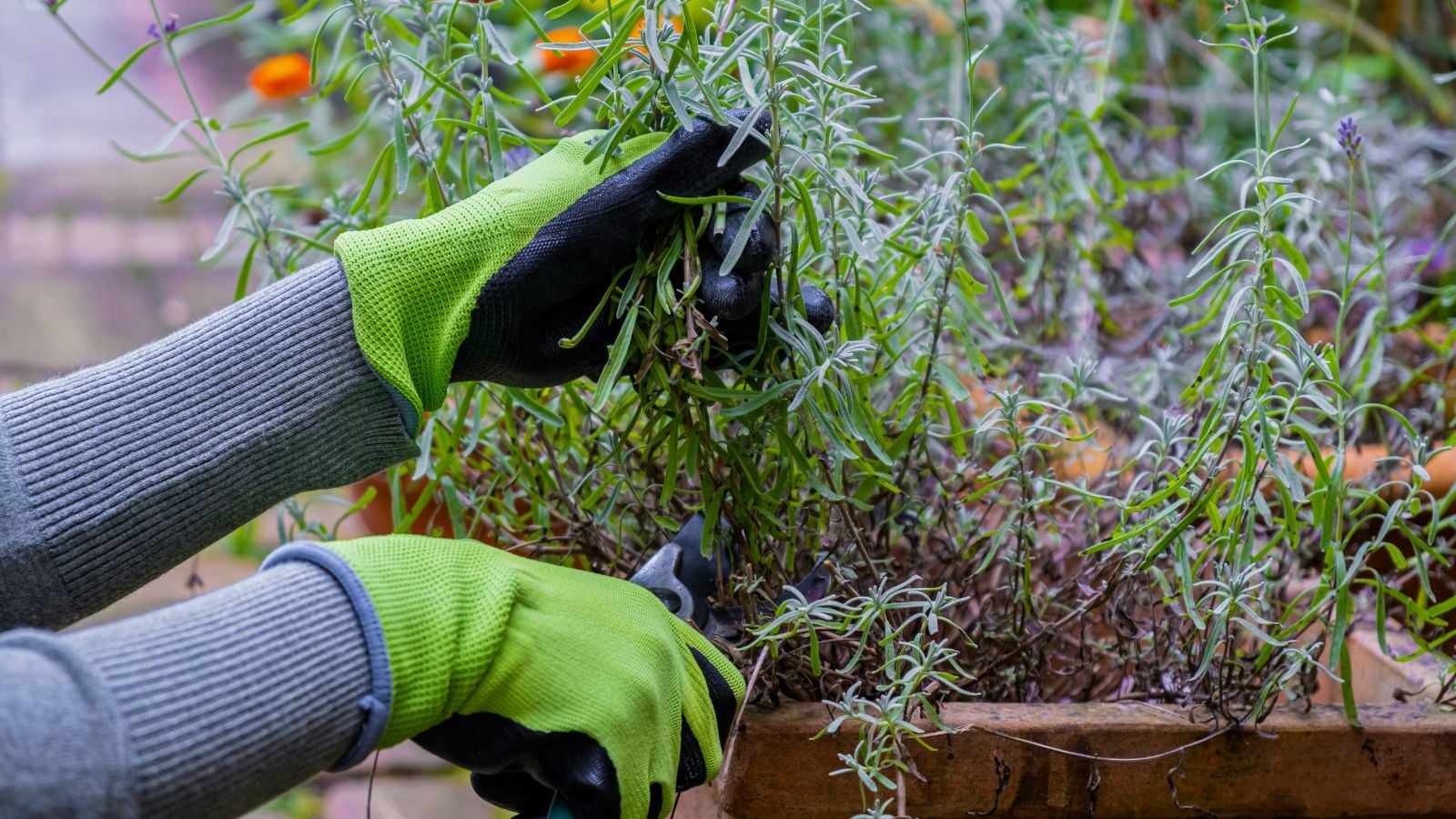
This is the most important thing to understand when you trim lavender for more blooms, and it’s the mistake that kills more plants than any other. Lavender does not regenerate from old, bare, woody stems. If you cut below the green growth into the woody base, the plant probably won’t regrow from that point.
Always cut into the green, leafy portion of the stem. When you look at a lavender plant, you can see the transition clearly. Your cuts should stay well above that dividing line.
This is also why regular pruning matters so much. Each year you skip, the woody base gets taller and the green growth sits higher on the plant. After a few years without pruning, there may not be enough green growth left to cut into without hitting wood, meaning far fewer flowers.
How Much to Take Off
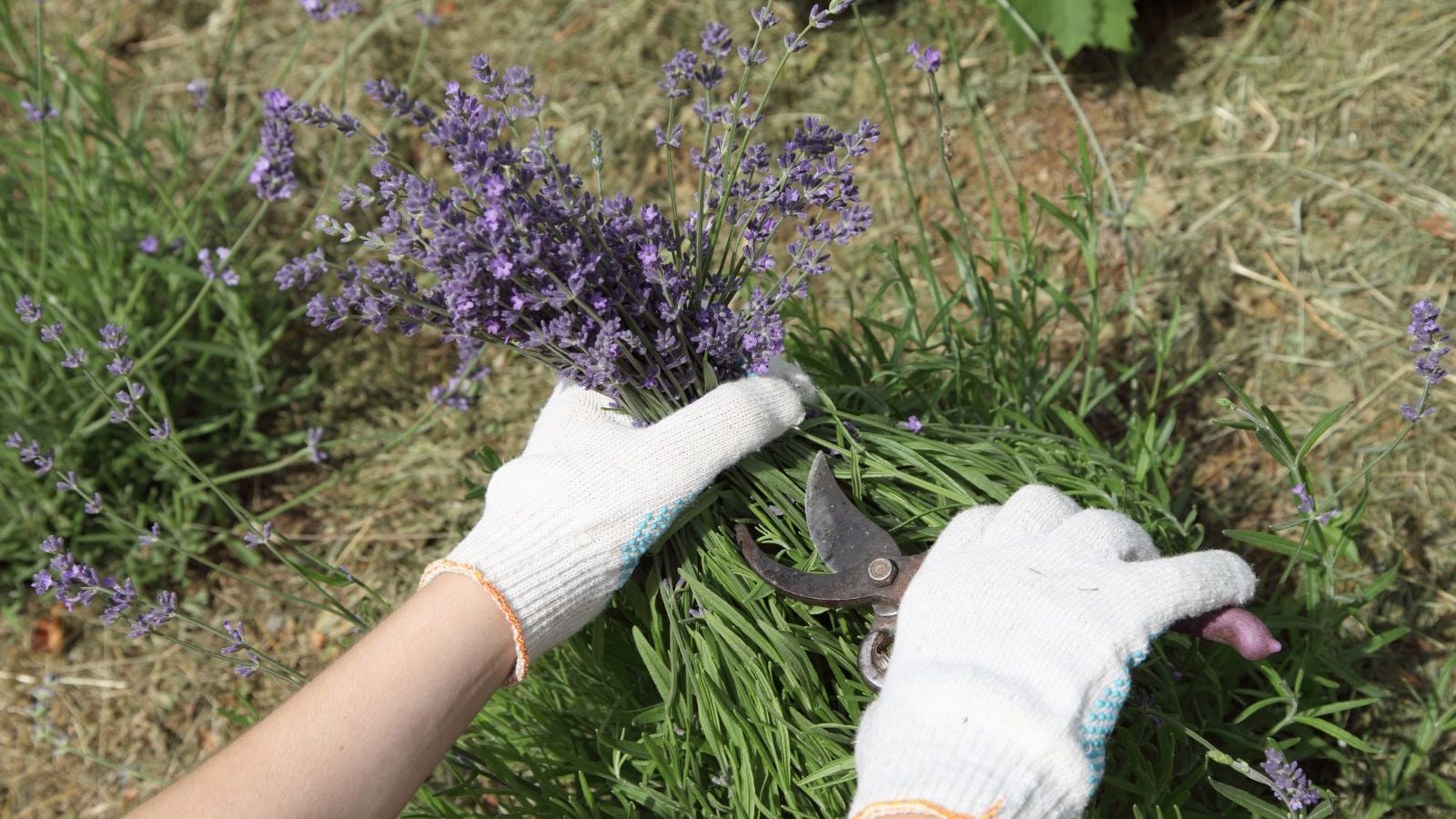
For the summer pruning after the first bloom, you don’t need to trim much beyond the flowers. You’re just tidying it up and removing enough growth to stimulate new flowering shoots.
In late summer or early fall (after a second flush of flowers, if you get one), you can do a slightly more substantial trim. Cut back about a third of the plant’s overall height, again staying above the woody base. This prepares the plant for winter by shaping it into a tight mound that sheds rain and snow rather than collecting moisture in the center.
Don’t prune lavender within about six weeks of your first expected frost. Late pruning stimulates tender new growth that doesn’t have time to harden before cold weather arrives, and those young shoots are the most vulnerable to winter damage.
Young Plants

First-year lavender plants grown from seed shouldn’t be pruned as aggressively as mature ones. The plant is still establishing its root system and building the framework that will support years of growth and flowering.
For young plants, skip the shaping trim and just pinch or snip the flower spikes after they fade. This is enough to encourage branching without pushing the plant too hard. Starting light in the first year and gradually increasing the pruning each season helps the plant develop a dense, compact structure that produces more flowers over time than a plant that was cut back hard from the start.
By the second year, you can begin the fuller pruning routine. From that point on, the habit is set and the plant should respond with strong regrowth and reliable flowering each season.
Use What You Cut

None of the trimmings need to go to waste. The flower stems you remove can be bundled and hung upside down in a dry spot to dry for sachets, potpourri, or arrangements. English lavender varieties tend to hold their scent the longest after drying.
Fresh stems with flowers still intact make fragrant additions to a summer bouquet. And the leafy trimmings from the shaping trim can go into the compost pile, where they break down quickly and add organic matter.
If you want more plants, summer pruning is also a good time to take cuttings. Select healthy, non-flowering shoots about four inches long, strip the lower leaves, and push them into a pot of moist, well-draining mix. With some warmth and consistent moisture, most lavender cuttings root within a few weeks.