5 Best Creeping Thyme Varieties for an Alternative Lawn
If you’ve ever considered replacing turf with thyme, you may wonder what the best creeping thyme lawn varieties are. Experienced gardener, Sarah Jay, covers five of the best cultivars to include in your lawn replacement project, and how to care for them.

Contents
When I’m looking at the areas between stepping stones in my garden, I often wonder what the best creeping thyme lawn would consist of. It would be lovely to have a verdant, vibrant carpet of flowering herbs growing gracefully between each stone, filling in the area and protecting the soil beneath it.
Creeping thyme isn’t the best for cooking, as Thymus vulgaris (common thyme) contains more oils that function best in a culinary setting. But the varieties of creeping thyme (from the species Thymus serpyllum) offer the drought tolerance and quick coverage that make it a good lawn replacement.
Establishing a thyme lawn takes time and effort. But it’s worth it if you want to replace your lawn with a more eco-friendly alternative. Start by removing all the turfgrass, and amend the bare soil with well-rotted compost. Then plant thyme plugs at least eight inches apart, and no more than that. This ensures your plants fill in the empty spaces quickly and blocks any weeds from growing between.
One note before we get started: thyme is toxic to pets and livestock. Plant judiciously if you have curious animals in your vicinity. Use fencing where necessary.
The Straight Species

|
botanical name Thymus serpyllum |
|---|---|

|
sun requirements Full sun |

|
height 1-3” |

|
hardiness zones 4-9 |
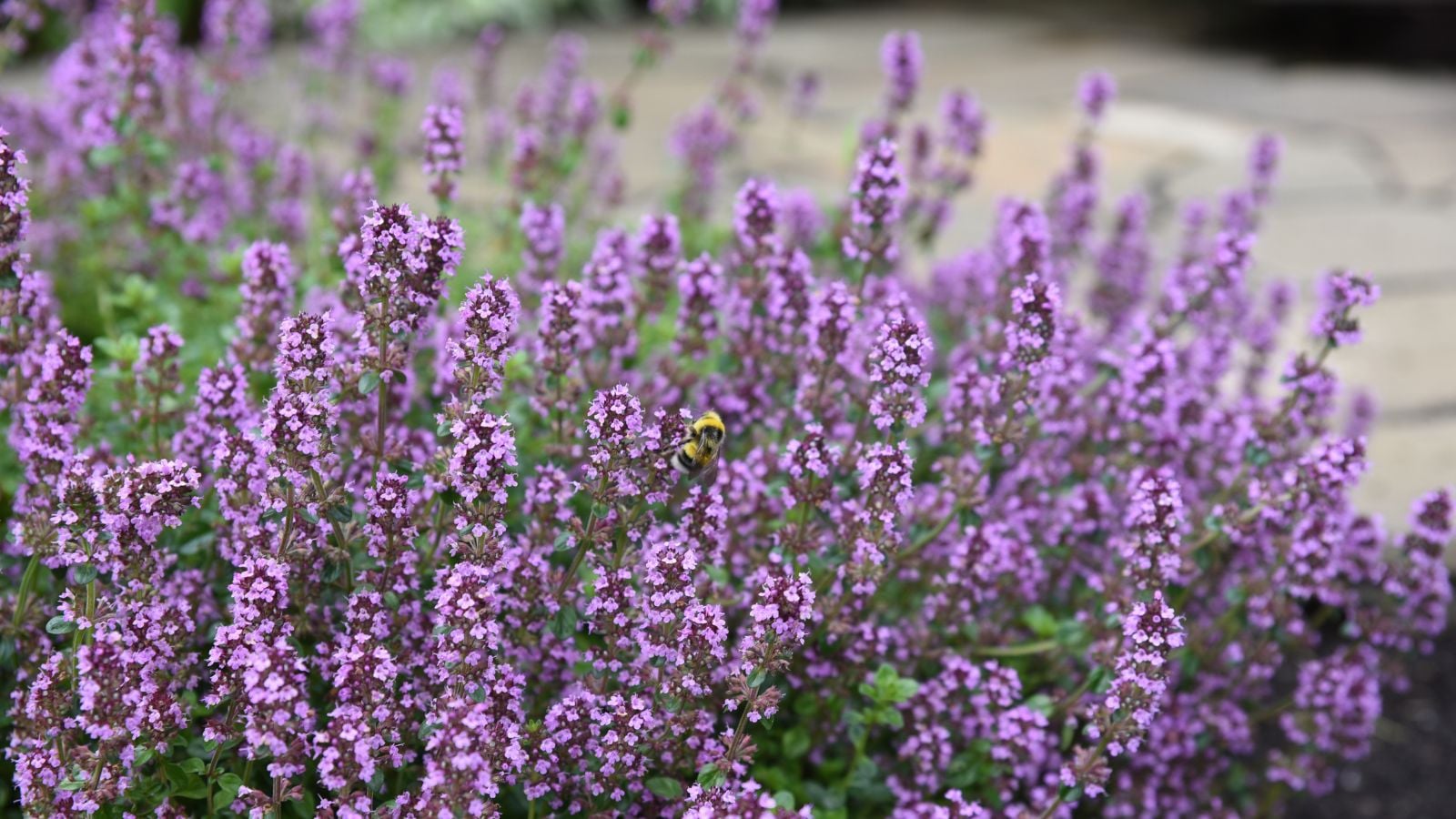
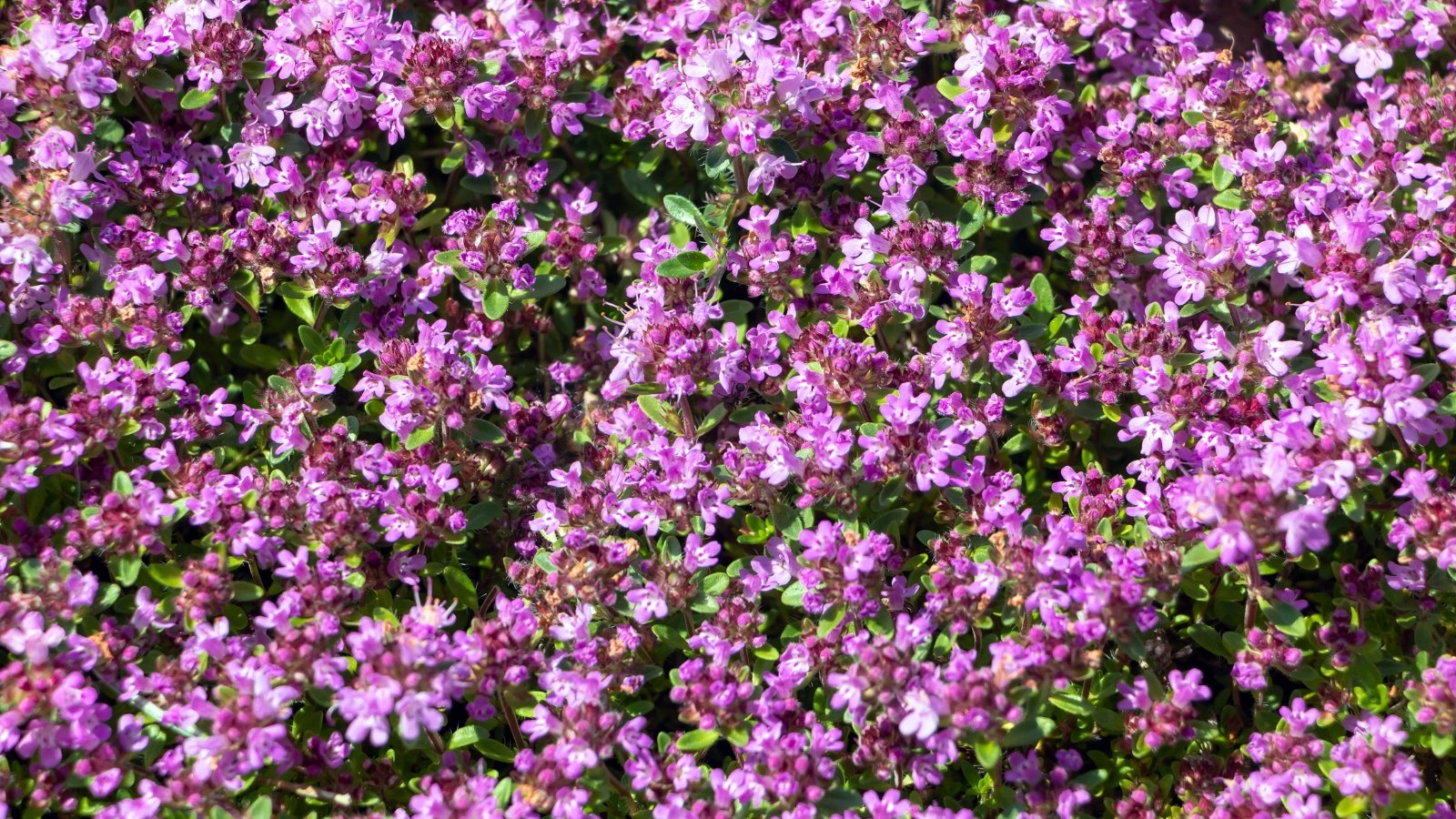
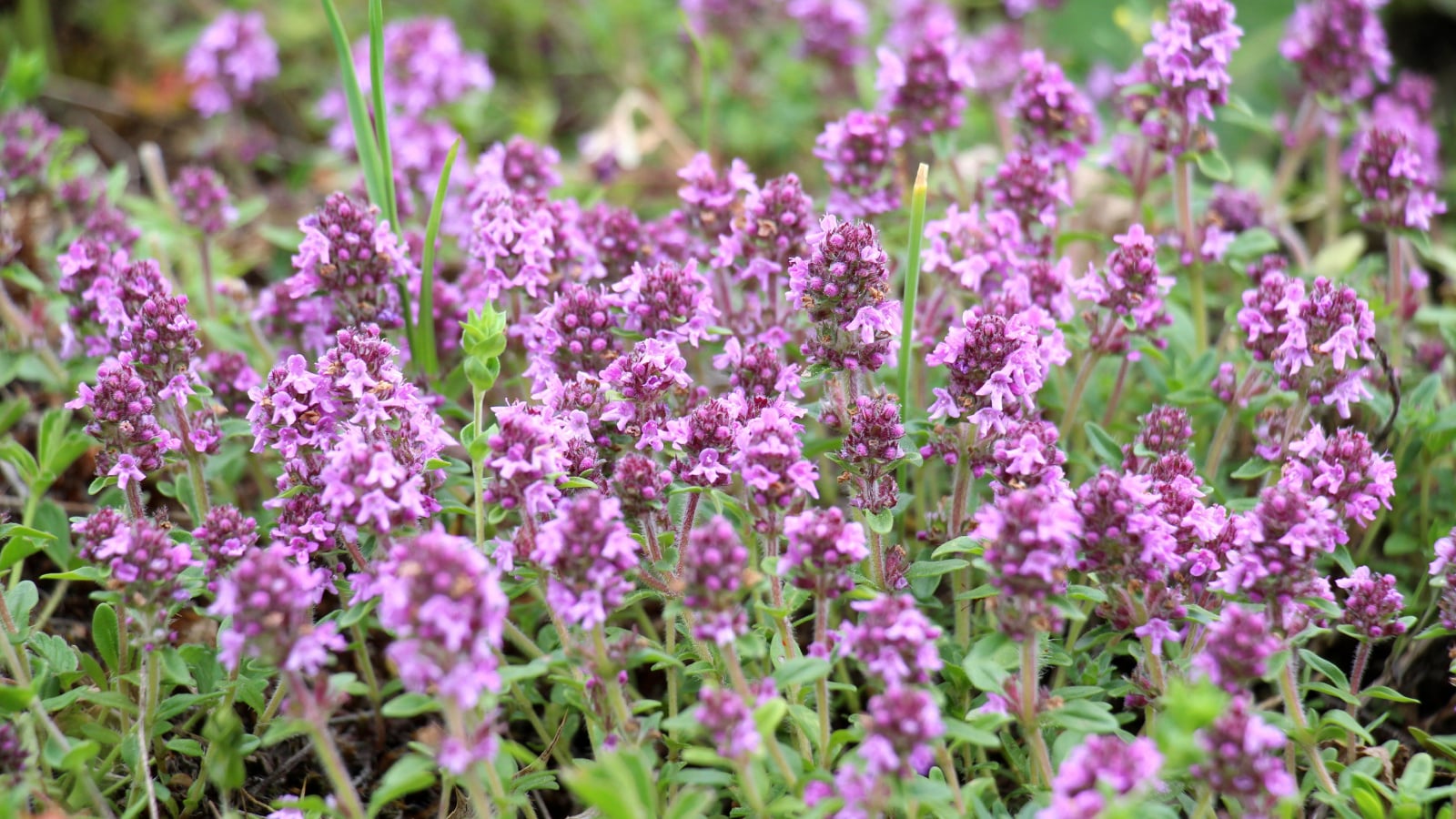
We’ll start with the straight species of common thyme, known botanically as Thymus serpyllum. This Mediterranean herb thrives in rocky and dry areas. It grows low to the ground, no more than a few inches tall, and produces lovely pinkish or lavender-colored flowers in summer. These blooms persist through fall.
The flowers attract bees and butterflies, and provide shelter to other insects. One awesome benefit of all the varieties on this list is their resistance to deer and rabbits, who prefer to feed on less fragrant foliage. In optimal conditions, this species reproduces via layering as stems touch the ground and form adventitious roots.
For this plant, it needs some time (no pun intended) to establish in the garden. Keep it between stepping stones and out of foot traffic areas for the best growth. Stay on top of weeding at first, and you’ll have the beautiful carpet of fragrant flowers and foliage you worked for at the start of the year.
Red Creeping Thyme
|
|
botanical name Thymus (Coccineus Group) |
|---|---|
|
|
sun requirements Full sun |
|
|
height 2-4” |
|
|
hardiness zones 5-9 |
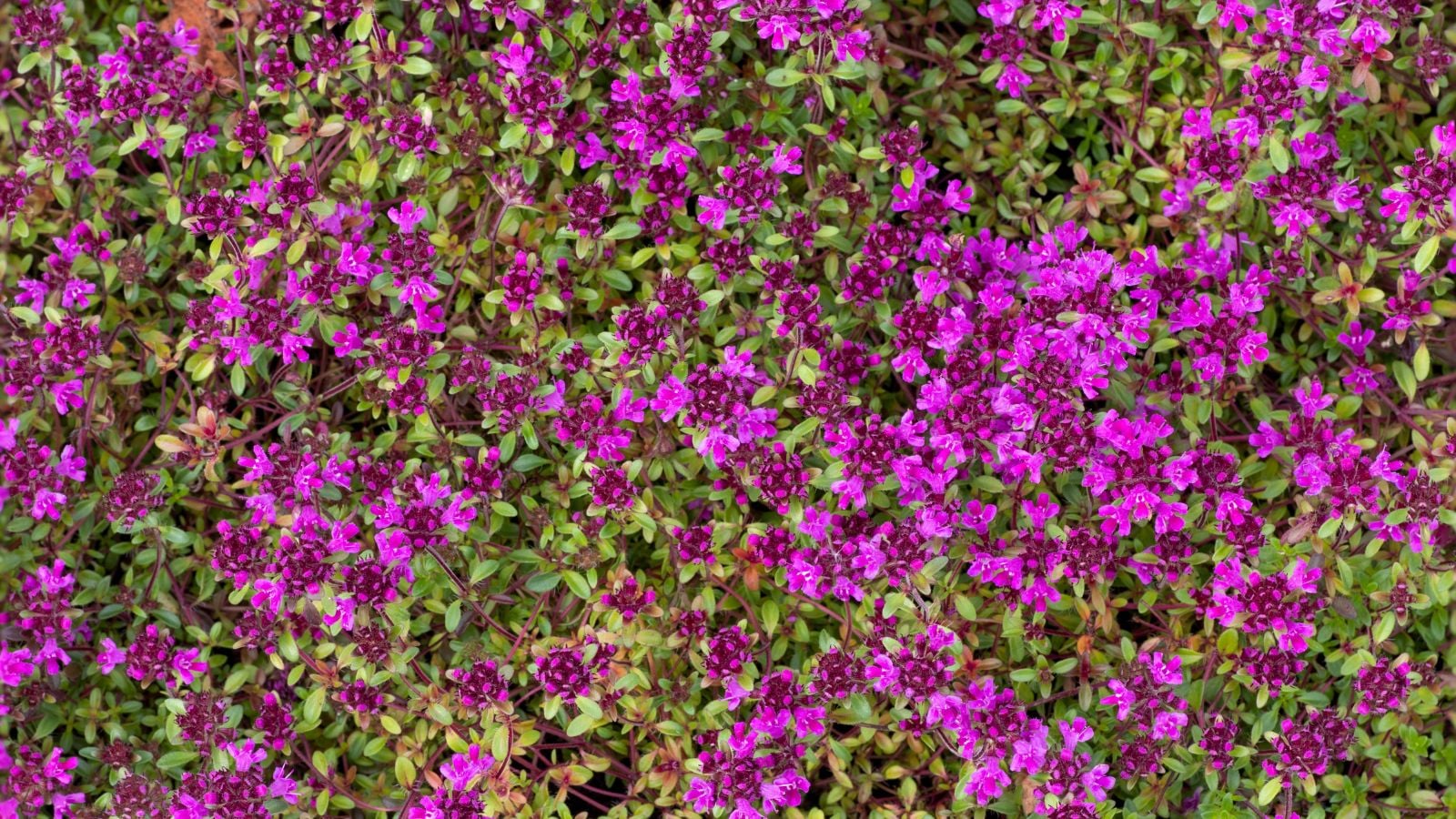
While creeping thyme brings in pink and lavender flowers, red creeping thyme adds a dash of crimson to the yard. It has a similar height to the straight species and offers one of the best creeping thyme lawn alternatives you can find. The dense leaves fill in areas slowly at first, but take off within a year or so.
This recipient of the 1993 Award of Garden Merit from the Royal Horticultural Society brings all the tolerances and resistances of its parent, along with the fragrance and attractiveness to pollinators and beneficial insects. It is especially useful on slopes and banks where erosion is an issue.
Thymus serpyllum ‘Magic Carpet’

|
|
botanical name Thymus serpyllum ‘Magic Carpet’ |
|---|---|
|
|
sun requirements Full sun |
|
|
height 1-2” |
|
|
hardiness zones 4-9 |
If you want something more vivid than regular creeping thyme or red creeping thyme, ‘Magic Carpet’ is a great choice. It’s an exceptional option for rocky, sloped areas that don’t receive a lot of moisture throughout the year. Areas in full sun are best for this hardy and resilient plant.
‘Magic Carpet’ offers blooms that surpass other thymes in that they are absolutely brilliant. The deep fuchsia coloring makes ground cover look spectacular in summer, and this effect remains through autumn.
This one grows lower, too, which is great in areas where too much height creates a need for more maintenance. You can avoid that altogether with this one to two-inch tall beauty.
Thymus serpyllum ‘Pink Chintz’
|
|
botanical name Thymus serpyllum ‘Pink Chintz’ |
|---|---|
|
|
sun requirements Full sun |
|
|
height 1-2” |
|
|
hardiness zones 4-9 |
We’ve covered the bold, but now let’s discuss the more subtle beauties of the creeping thyme world. ‘Pink Chintz’ is among the other best creeping thyme lawn varieties, offering a dash of salmon or light pink that blooms slightly sooner. Instead of a mid-summer flush, flowers emerge in late spring to early summer.
The leaves differ slightly when compared to other creeping thymes as well. Instead of deep green, slightly waxy leaves, ‘Pink Chintz’ provides a touch of silvery green, verging on grey. The leaves are slightly fuzzy, and the plant brings a sense of calm to gardens where bold colors may already dominate.
Thymus serpyllum ‘Elfin’

|
|
botanical name Thymus serpyllum ‘Elfin’ |
|---|---|
|
|
sun requirements Full sun |
|
|
height 1-3” |
|
|
hardiness zones 4-9 |
What sets ‘Elfin’ apart from the others on this list is its tight, compact habit and light pink to lavender blooms that cover the stretch of its growing area. While others may become unruly after they establish themselves in the garden, ‘Elfin’ is easier to contain and remains much tidier.
That makes it a good option for gardeners who don’t want to spend a bunch of time cutting back their alternative lawn. If your climate is much like the native creeping thyme climate, ‘Elfin’ will behave more than others listed here. If you trim yours after its first flush of blooms, it will push out another before the first frost.