7 Beautiful Perennials for New England Gardens
New England perennials enliven gardens and support the local ecosystem at the same time. Include a few of these in your garden if you live in one of the states that make up this American region. If you’re not sure which perennials to start with, follow along as experienced gardener and Master Naturalist Sarah Jay outlines seven of the best ones you can grow.

Contents
As a North Texas gardener and naturalist, it may seem like New England perennials are completely foreign to me. However, that’s not the case! Many of the best perennials for gardens in the region are the same or related to eastern North American natives. My region is just on the edge of this one, and there are plenty of lovely plants I’m familiar with.
It would be wrong to suggest there are no differences between my region and that of New England, though. There are eight climate regions within the area, and much of the soil composition is silt and sand. While the clay may be similar, there are alluvial soils in the northeast that we don’t have here.
With these and the remnants of glaciers, there are a few plants that grow quite well in gardens in Maine, Vermont, New Hampshire, Massachusetts, Connecticut, and Rhode Island. If you’re unsure what to plant, this list will help you get started. Grow these in the ground or in containers. Plant a few of these this year, and watch them return each spring for years to come.


Hostas

|
botanical name Hosta spp. |
|---|---|

|
sun requirements Partial to full shade |

|
height 4-30″ |

|
hardiness zones 3-9 |
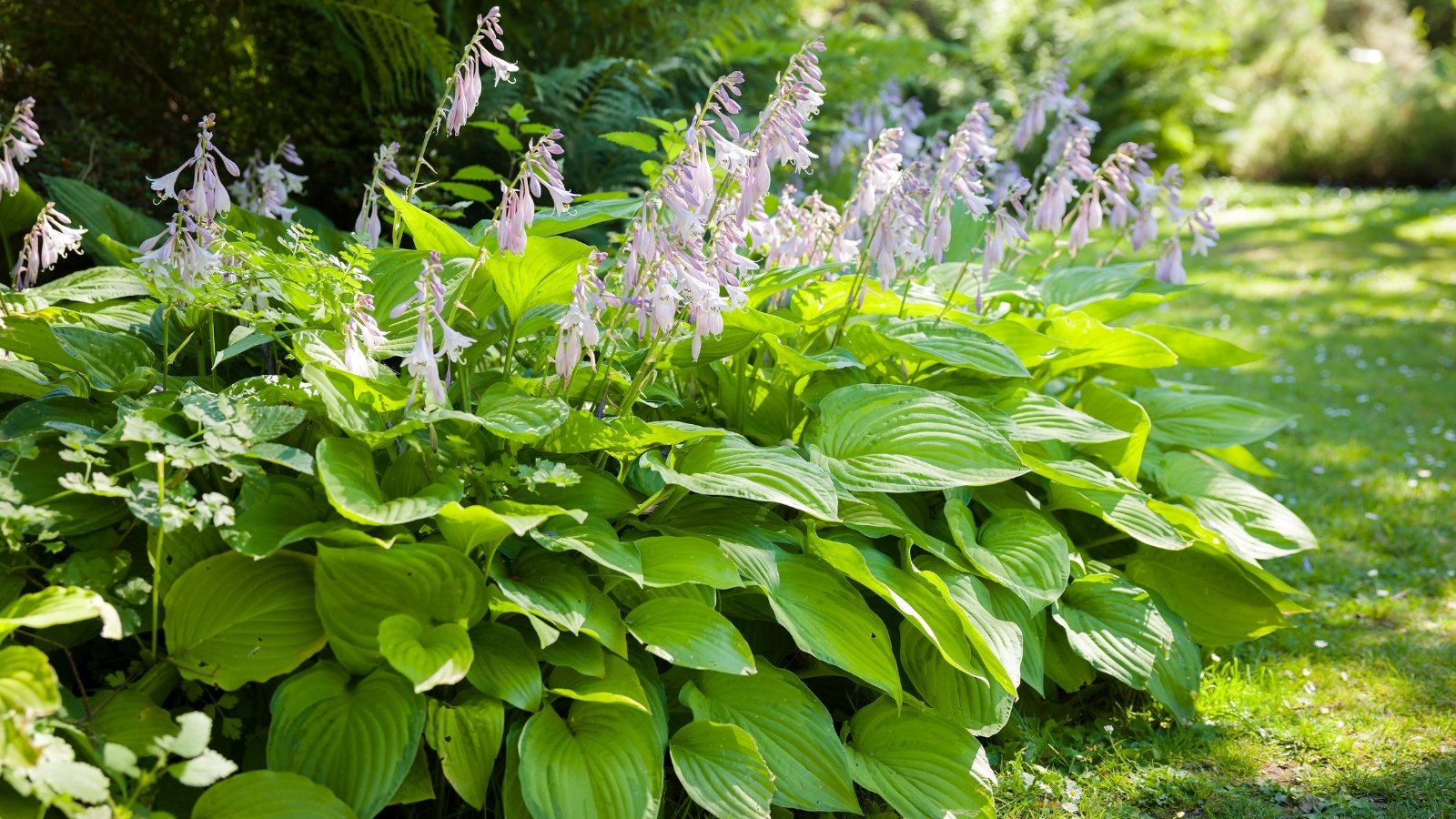
If your garden tends to be shady and moist, grow some hostas! These are some of the best New England perennials, though they aren’t natives. What they offer the garden is a dash of greenery with summer blooms. There are many varieties out there, and some have highly stylized foliage.
Hostas are good for garden borders, planted along stone pathways, or under trees. If you don’t have a spot that’s in partial shade all day, some full sun in the morning is totally fine. As long as the hard afternoon sun doesn’t shine on your plantings, they’ll do well. And with sizes from dwarf (less than four inches) to giant (larger than 28 inches), you’re sure to find something that works in your New England garden.
Black-Eyed Susans

|
|
botanical name Rudbeckia hirta |
|---|---|
|
|
sun requirements Full sun |
|
|
height 2-3′ |
|
|
hardiness zones 3-7 |
These short-lived perennials are some of the most widespread North American native wildflowers, and in that vein, they work well in sunny New England gardens. Indigenous to the region and eastern North America, they are true New England perennials. Not only do these make a great planting for a wild garden, but they’re also perfect cut flowers.
While these may not reliably return from their roots in spring, they self-seed fairly well. If you want to protect your root mass through the cold winter, add some mulch around the base before the frigid temperatures, snow, and ice roll through.
Monarda ‘Jacob Cline’
|
|
botanical name Monarda ‘Jacob Cline’ |
|---|---|
|
|
sun requirements Full sun to partial shade |
|
|
height 3-4′ |
|
|
hardiness zones 4-9 |
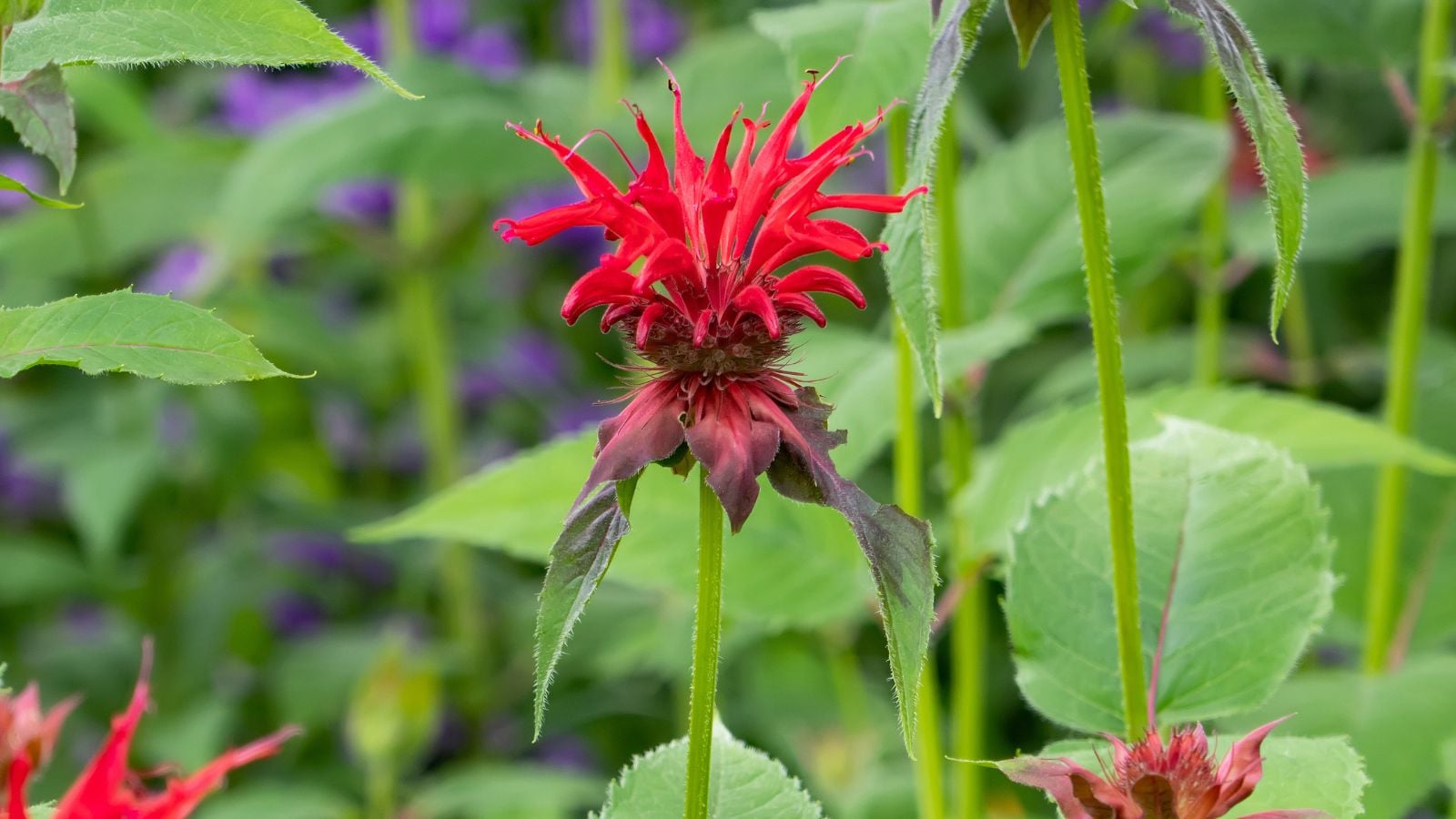
In general, bee balm is an excellent choice among other New England perennials. While some species do better than others in the region, ‘Jacob Cline’ is a standout option. The flower shape it provides is the same as that of a standard wild bergamot, but the color is deep red. It also offers disease-resistance, which is hard to come by in other bee balms.
If you want bees, hummingbirds, butterflies, and other beneficial pollinators to visit the growing space, plant ‘Jacob Cline’. It provides the area with pops of red that return year after year. Plant it en masse for maximum effect, or develop small stands that accent other plants.
Virginia Mountain Mint

|
|
botanical name Pycnanthemum virginianum |
|---|---|
|
|
sun requirements Full sun to partial shade |
|
|
height 2-3′ |
|
|
hardiness zones 3-7 |
Native mountain mints are some of the best New England perennials for attracting native bees. Virginia mountain mint (Pycnanthemum virginianum) is the one specific to the area. Unlike cultivated mints, it has a bushy habit, with pronounced white flowers that go off in summer. This is prime time for ground-nesting and solitary bee species. Honeybees get a kick from it, too.
If your garden tends to remain moist, this plant can handle it. On the flip side, it can handle drought too, but may drop leaves when dryness is persistent. What we mean to say is, it’s adaptable. It grows well along streams and ponds, as well as in gravel and rock gardens.
Eastern Red Columbine

|
|
botanical name Aquilegia canadensis |
|---|---|
|
|
sun requirements Full sun to partial shade |
|
|
height 18-24″ |
|
|
hardiness zones 3-9 |
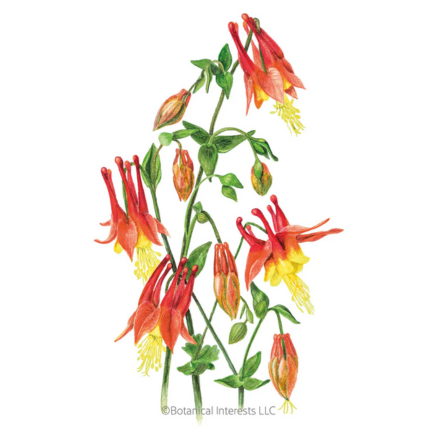
New England perennials like Eastern red columbine are stunning examples of how lovely natives can be. The red and yellow nodding flowers produced by this plant with wide, fern-like foliage are some of the most stunning you’ll see in spring and early summer gardens in the region. These are hummingbird magnets you can plant in multiple places.
It adapts to moist and dry soils and full sun or partial shade. It’s an easy fit for most gardens. Include a small planting in a container or corner of the garden, or grow tons of them, sweeping across a shadier spot. You’ll be surprised to see them return the following year, despite the cold.
Crested Iris

|
|
botanical name Iris cristata |
|---|---|
|
|
sun requirements Full sun to partial shade |
|
|
height 6-9″ |
|
|
hardiness zones 3-9 |
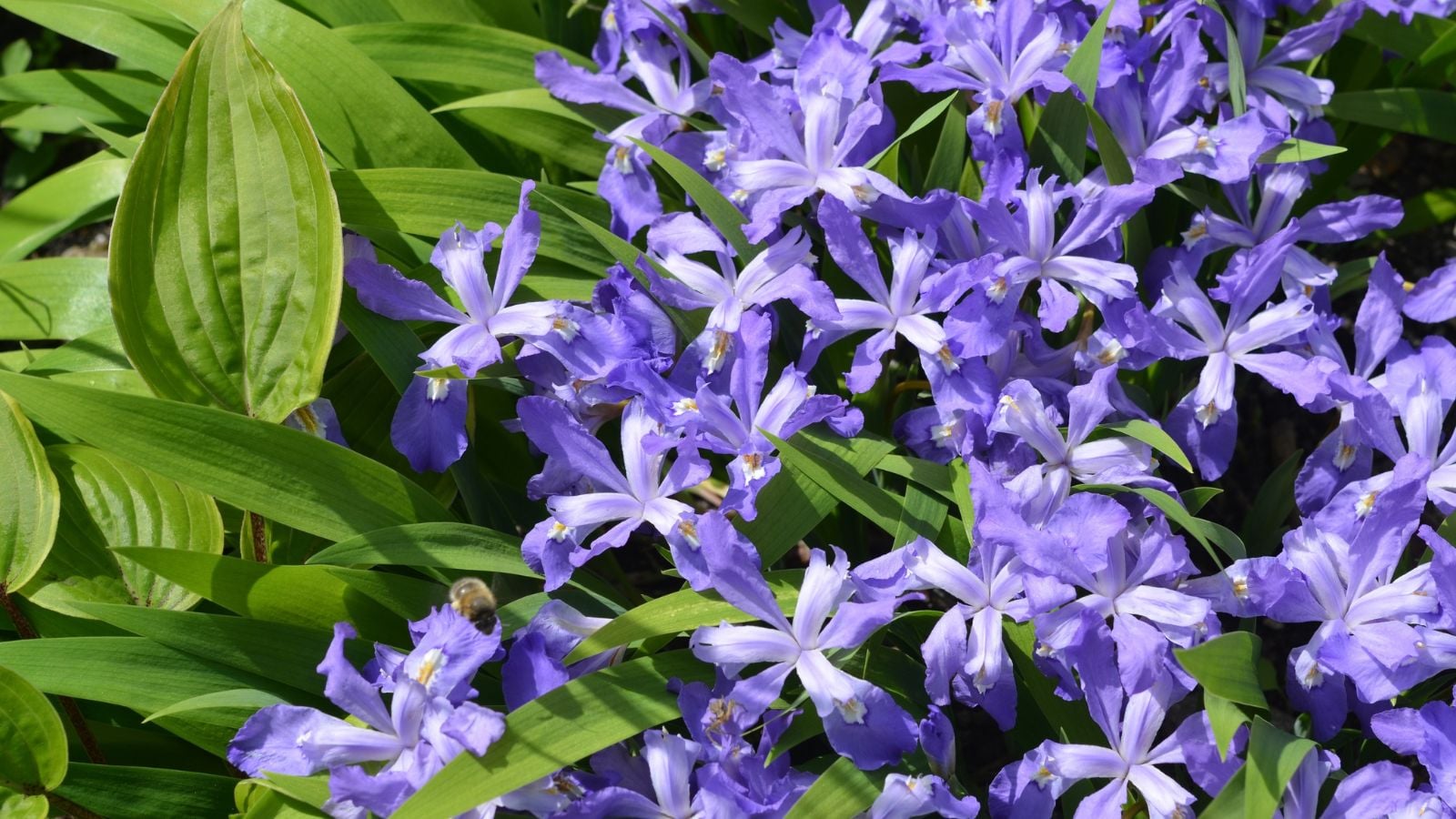
For a stunning bloom that makes a great groundcover, crested irises are a perfect pick for New England gardens. If you have those difficult, dry shade areas in your garden, crested irises offer a spreading habit in those areas that other plants can’t. With their interesting, showy flowers, they herald spring with their blooms.
You’ll find these blooms in their typical purple coloration, as well as white and pink. No matter the color, each bloom has six rays with golden tips or centers. These bring in the hummingbirds and bumblebees, but keep out the deer, even when they’re not blooming. The sword-shaped foliage is present for most of the year, even though flowers are short-lived.
Hairy Beardtongue
|
|
botanical name Penstemon hirsutus |
|---|---|
|
|
sun requirements Full sun to partial shade |
|
|
height 1-2′ |
|
|
hardiness zones 3-9 |
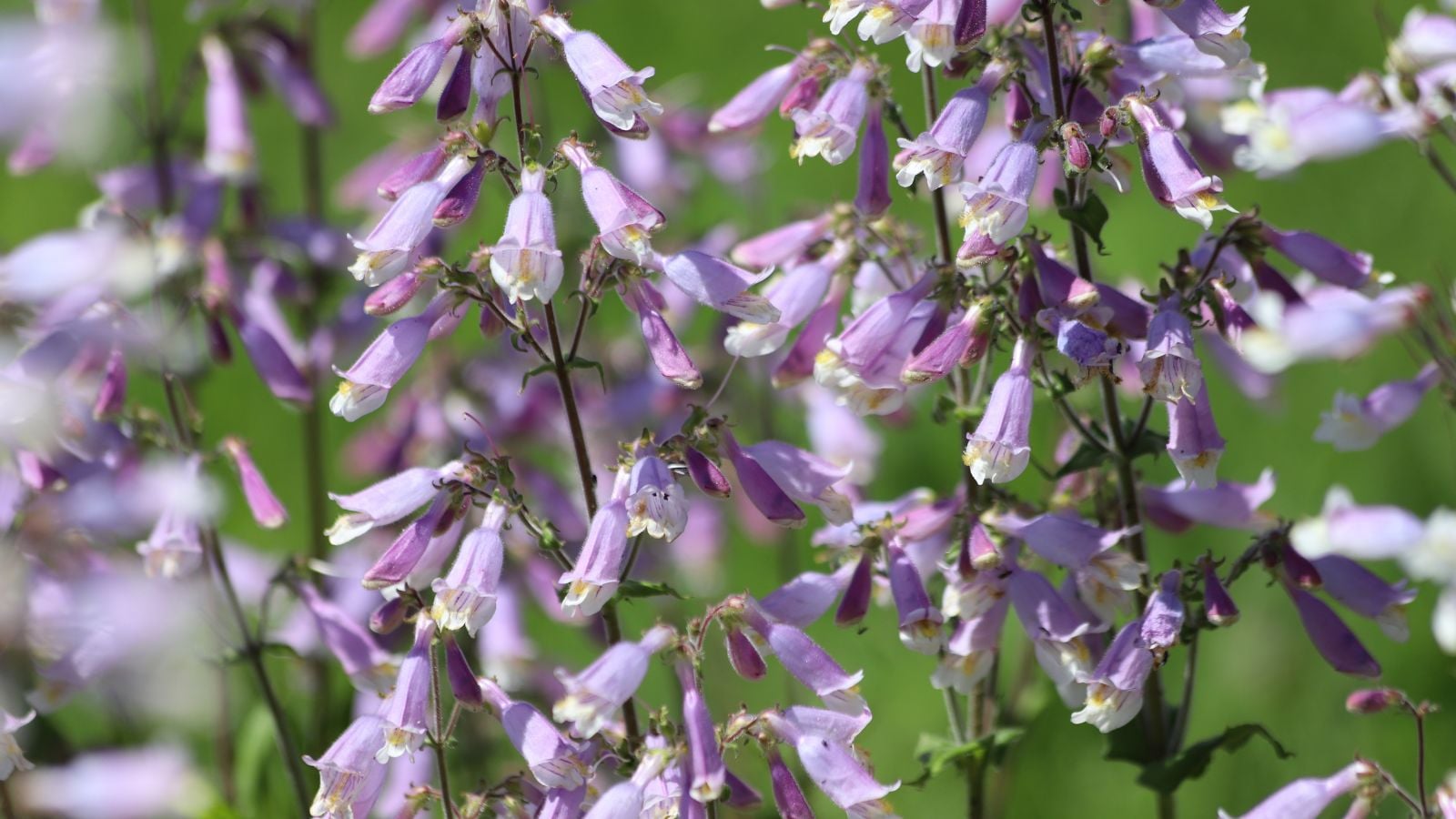
Also called hairy penstemon, this beardtongue is native to Eastern North America from Canada to Virginia. In rocky areas where soils are thin and drain well, plantings of hairy beardtongue thrive. Unlike other beardtongues, this one has a white lip, along with the typical violet, pink, or lavender trumpet-shaped flowers. Bumblebees love these.
After your beardtongue finishes blooming in summer, cut the stem to the basal foliage. This won’t push out another set of blooms, but it will prepare the plant for dormancy and keep it tidy. Keep the area it’s growing in free of weeds through the year, and yours will spread, but not aggressively.