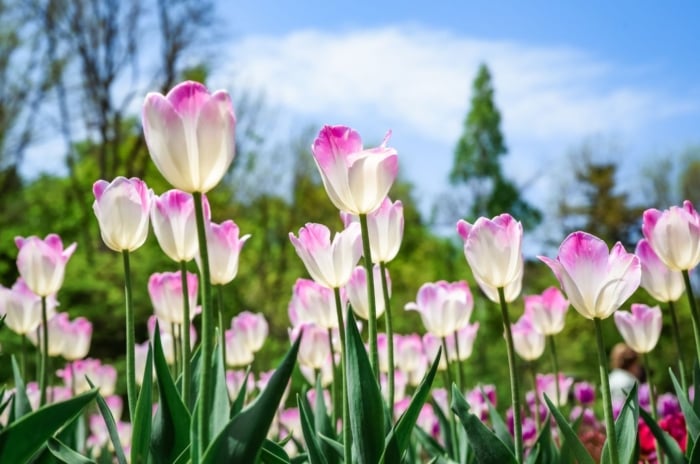
5 Reasons You Have Short Tulips This Spring
If your tulips bloomed this spring but barely reached above the ground, the problem usually traces back to planting or weather conditions from the previous fall and winter. Gardening expert Madison Moulton explains seven common reasons tulips come up short and what to do about it.


Contents
If you’ve been looking forward to your tulips all winter, it’s extremely disappointing to see them appear shorter than you expected. While it’s not the end of the world, it is a problem that you can avoid in future seasons with a few adjustments.
What short means is relative to the tulips you’re growing. Make sure you know the expected size of your variety before you decide whether there is a problem or not.
The causes of short tulips are almost always traceable to conditions the bulbs experienced before they bloomed. Most of them can be corrected for next year if you know what went wrong.
The Winter Wasn’t Cold Enough
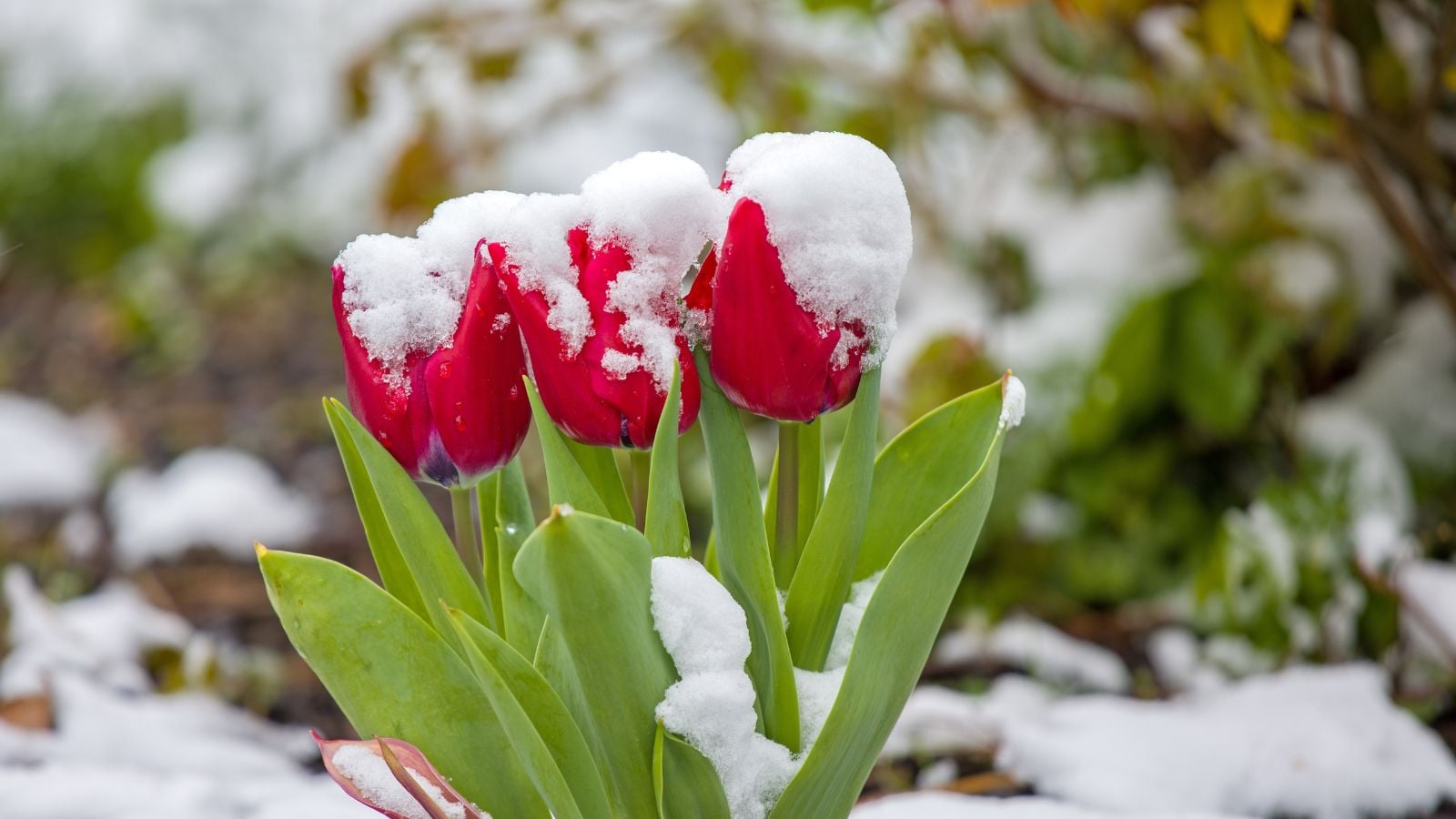
This is the most common reason tulips come up short, and sadly, it’s the one you have the least control over. Tulip bulbs need 12 to 16 weeks of soil temperatures below about 45°F (7°C) to complete a process called vernalization, which triggers proper stem elongation and flower development.
Mild winters, warm spells in the middle of winter, and warm-climate gardens (roughly zone 8 and above) are all scenarios where the chilling period falls short. If this is your situation, pre-chilling bulbs in the refrigerator for 12 to 14 weeks before planting in late fall tends to produce better results. Keep the bulbs away from fruit during chilling, as the ethylene gas that ripening fruit produces can damage them.
There’s nothing you can do to fix short tulips that are already blooming this spring. But leave the foliage in place and let the bulb complete its cycle. If next winter delivers a more typical cold season, the bulbs may perform better.
You Planted Too Shallow

Planting depth acts as a buffer between the bulb and the temperature swings happening at the soil surface. When bulbs are set too shallow, they warm up faster in early spring and can rush into bloom before the stem has had time to elongate. The flower opens, but at half the expected height.
The general rule is to plant tulip bulbs about three times as deep as the bulb is tall. For most standard tulip bulbs, that means the base of the bulb should be about six to eight inches below the soil surface. If you planted too shallow, the lack of insulation is probably part of the problem.
Shallow planting also leaves bulbs more vulnerable to squirrels, freeze-thaw cycles, and drying out. If you suspect depth is the issue, you can carefully dig and replant the bulbs deeper in the fall after the foliage has died back.
Spring Came Quickly

Even bulbs that received a proper winter chill can end up short if spring temperatures spike before the stems have time to develop. Tulips need a stretch of cool weather after they emerge. An early warm spell pushes the flower to open before the stem has caught up.
This is mostly out of your control, but there are a few things that help. A thick layer of mulch (about three inches of straw or shredded leaves) over the bed insulates the soil and keeps it cooler as air temperatures rise, which gives the stems a little more time. Watering the bed deeply during an early warm spell also helps, since moist soil warms more slowly than dry soil.
If you’re in a climate where springs tend to arrive fast and hot, choosing later-blooming varieties can avoid the problem, since they naturally emerge after the worst of the early temperature swings.
They’re Not Getting Enough Sun
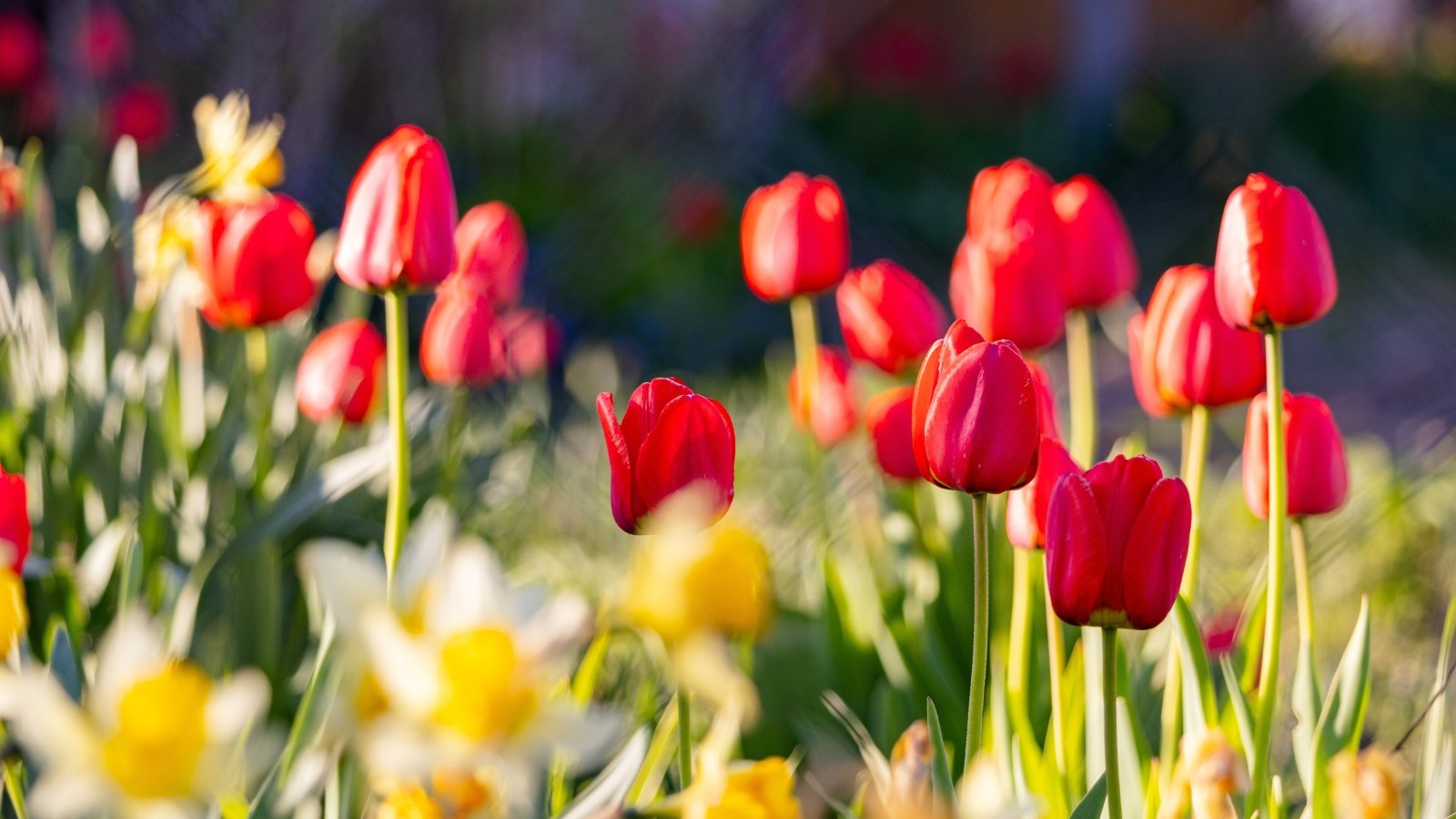
Tulips need at least six hours of direct sunlight per day to produce strong, tall stems. In shade or partial shade, the stems tend to be weaker and shorter, and the flowers may not develop fully. A spot that was sunny when you planted the bulbs in fall can be significantly shadier by the time they bloom in spring if nearby deciduous trees have leafed out.
If your tulips are under trees, the shade from emerging foliage may be just enough to reduce stem height without blocking growth entirely. Moving the bulbs to a sunnier location in fall is the simplest fix.
The Soil Is Heavy or Waterlogged

Tulips evolved in well-drained, rocky mountain soils and don’t perform well in heavy clay or ground that stays wet. Poor drainage can lead to bulb problems, reduced nutrient uptake, and weaker growth, all of which show up as shorter stems and smaller flowers. In severe cases, the bulbs rot entirely before they bloom.
If your soil is heavy, amending with compost before planting improves drainage. Raised beds are another option if the soil just doesn’t drain well enough. Avoid planting tulips in low spots where water collects after rain, even if the spot is ideal.