15 Pretty Flower Bulbs You Can Plant in November
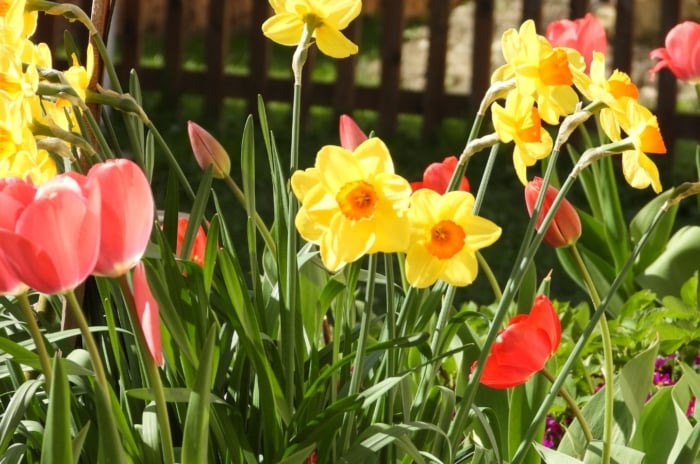
November is the prime time to get our favorite spring and summer-flowering bulbs in the ground. Easy to plant and grow, winnowing down the selection may be the biggest challenge! For a long flowering season that kicks off in late winter, we’ve got showy performers in form, color, and fragrance to grace the display as temperatures warm.

Contents
Fall means bulb-planting time, and an install now yields big rewards come spring. Easy to plant, the happy challenge becomes narrowing down the selection. Whether planting in drifts, dotting the border, filling pockets or pots, spring and summer-flowering bulbs are at the ready to delight and surprise as temperatures warm.
November is the prime time to plant bulbs, and with so many pretty selections, we can tailor the aesthetic. From soft and graceful to bold and energizing, bulbs are easy-going seasonal mainstays. To get the most out of a display, choose perennial selections like snowdrops and daffodils for years of recurrent blooms. Layer with those with a big show in their first year, like tulips and hyacinths.
As long as the soil is workable (and not frozen), bulbs can go in the ground. Planting flower bulbs in November ensures they receive an appropriate chill time that many of our favorites need for blooming. If you live in a warm climate, look for pre-chilled bulbs from the grower. They’ll grow and flower come spring, even after mild winters. Pre-cooled bulbs also make good options for forcing indoors early in the month.
Our list of pretty flower bulbs to plant in November highlights those with dynamic characteristics in color, form, and fragrance. From dainty to exotic, indulge in a mass of a single species or a complementary blend of sweet selections.

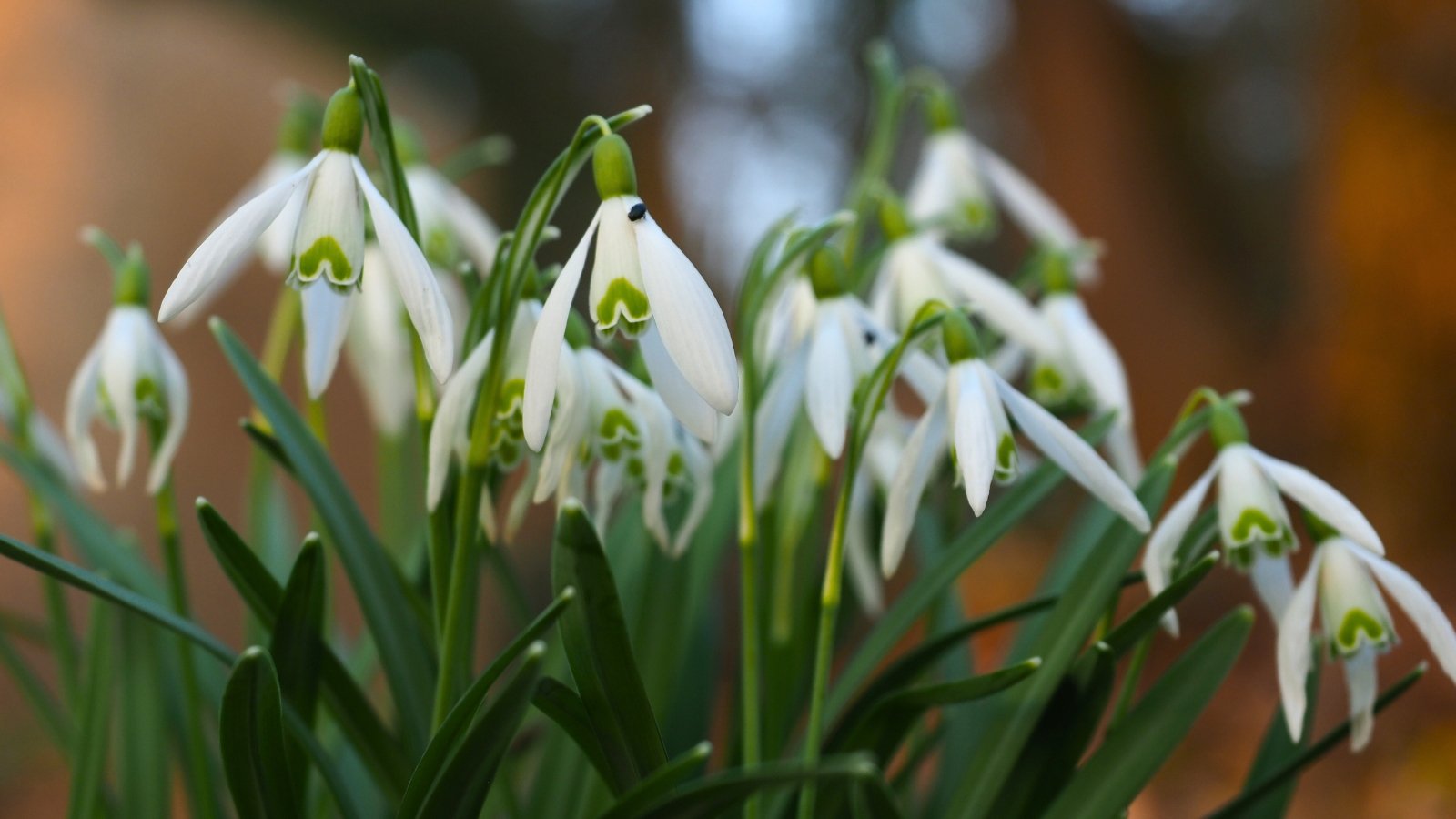
Snowdrop ‘Viridi-apice’

|
botanical name Galanthus nivalis ‘Viridi-apice’ |
|---|---|

|
sun requirements Full sun to partial shade |

|
height 8-10” |

|
hardiness zones 3-7 |
We start our list of flower bulbs to plant in November with the pretty snowdrop. Snowdrops are one of the earliest to flower, even popping up through snow as early as January. The petite perennials feature delicate bell-shaped blooms in crisp white with a light, fresh perfume.
In ‘Viridi-apice,’ white inner petals have green tips. Outer petals have soft green blotches for a fresh, springy look. The variety is also more robust than the straight species.
Plant the little bulbs two to three inches apart and four inches deep. Most impactful in numbers, they’re lovely in woodlands, naturalized settings, rock gardens, and along walkways. Plant them among groundcovers, spring ephemerals, and with other late winter bulbs like winter aconite, glory of the snow, and early daffodils like ‘Tête-a-Tête.’
Snowdrops spread gently to form colonies. Divide clumps if they become crowded to improve vigor, or to expand the collection to other garden areas.
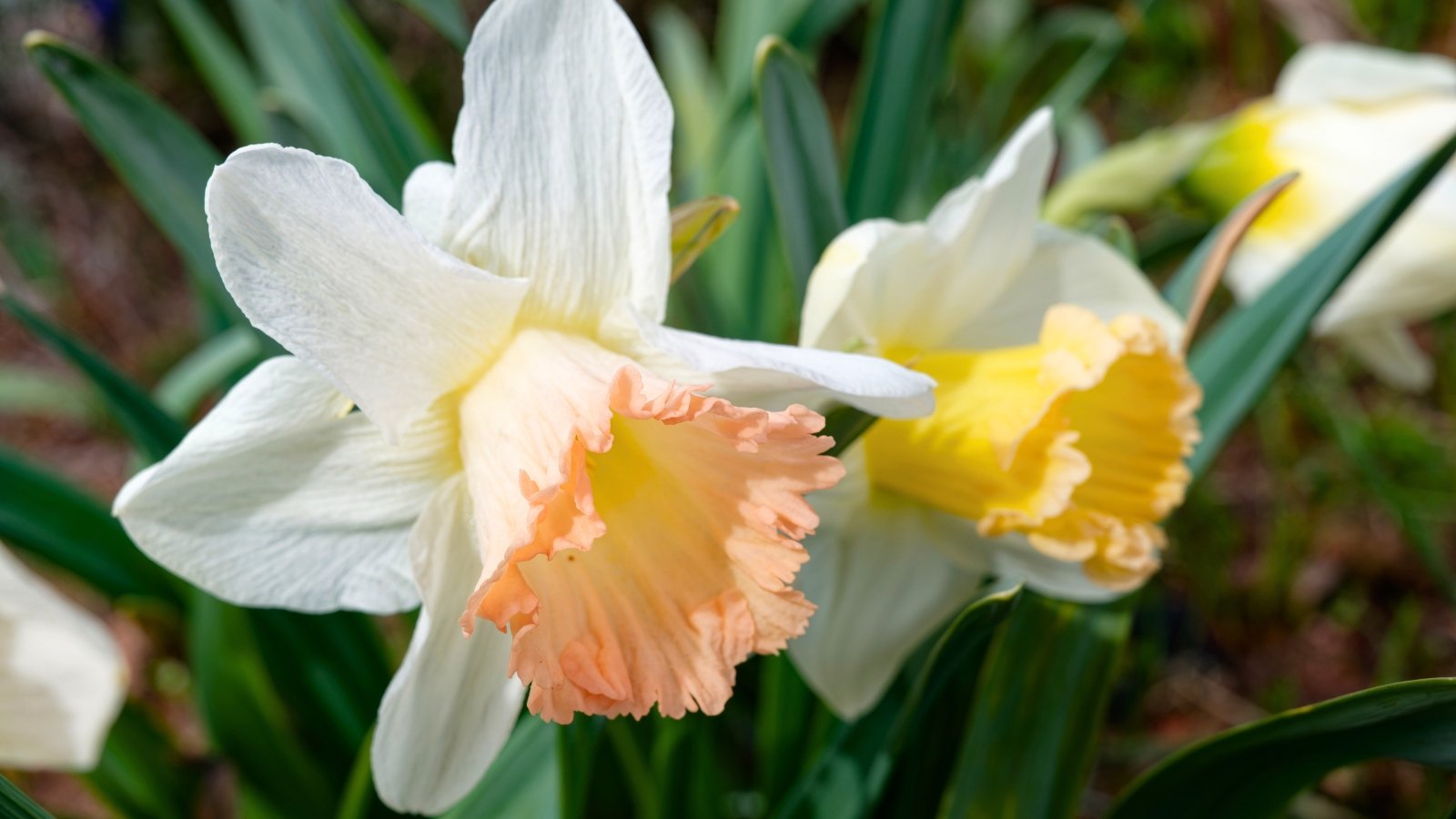
Daffodil ‘British Gamble’
|
|
botanical name Narcissus ‘British Gamble’ |
|---|---|
|
|
sun requirements Full sun to partial shade |
|
|
height 16-24” |
|
|
hardiness zones 3-8 |
Daffodils are cold-hardy, durable perennials that flower reliably and naturalize across a wide range of climates. They bring years of color in their optimal conditions and form offsets to colonize. From miniature to cultivars with extra-large cupped blooms, their trumpets herald spring in the cheeriest of ways.
‘British Gamble’ has large blooms with showstopping appeal on the stem and in the vase. The trumpet-type floral form features oversized, tissuey white petals and a broad coral-toned corona. Warm shades in deep to light rose-apricot line the trumpet’s ruffly edges. The interior of the cup is white with a soft golden glow.
Plant these flower bulbs in November at a depth two to three times the size of the bulb, scattered three to six inches apart. Cover with soil and await their warm springtime welcome.
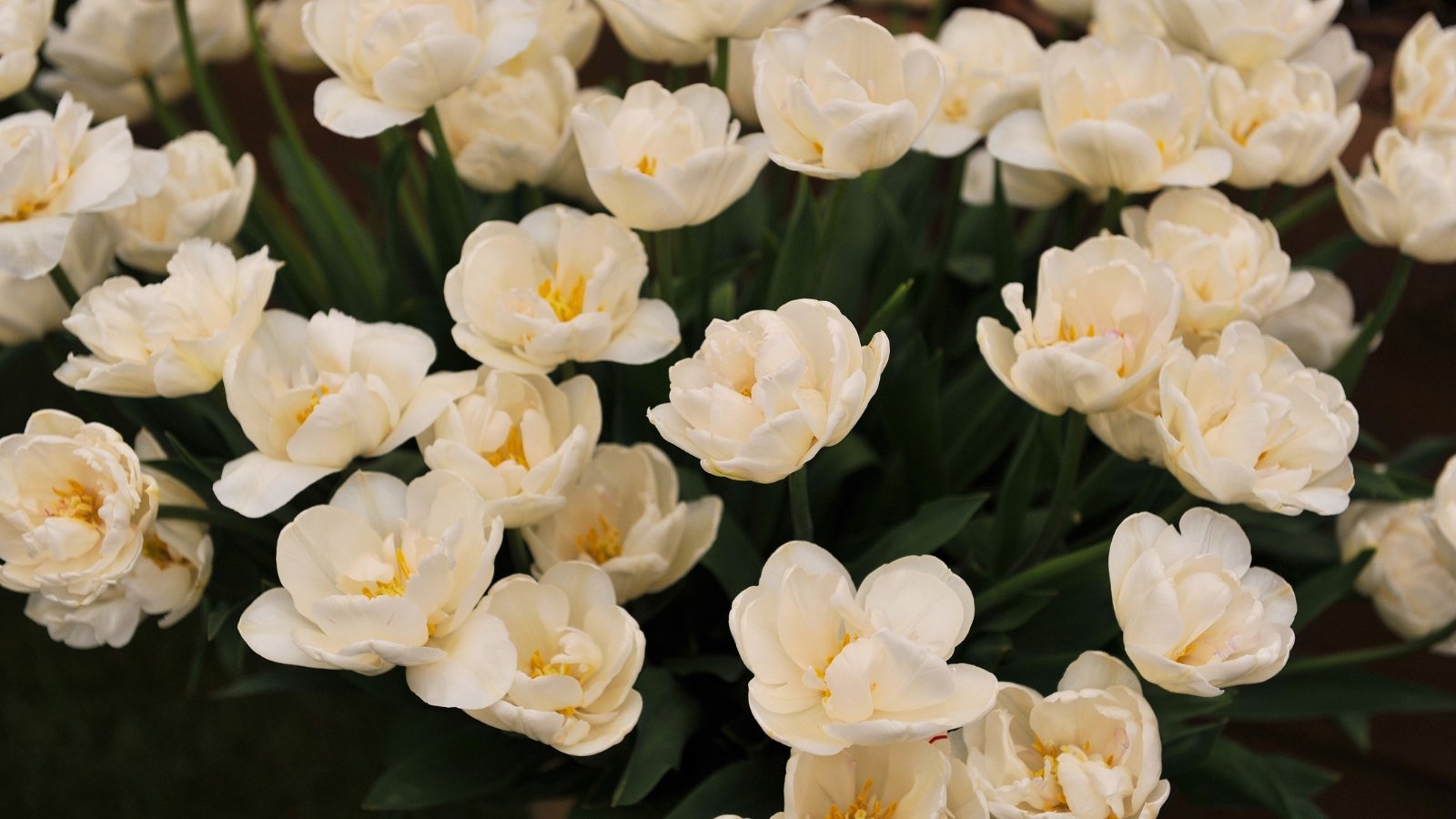
Tulip ‘Mount Tacoma’
|
|
botanical name Tulipa ‘Mount Tacoma’ |
|---|---|
|
|
sun requirements Full sun |
|
|
height 20-22” |
|
|
hardiness zones 3-8 |
Tulips are a spring classic and one of the easiest ways to incorporate color and effortless elegance in a seasonal display. ‘Mount Tacoma’ is a 1924 heirloom tulip with layers of petaled folds in creamy white. The handsome double blooms create a crisp, fresh show for weeks.
As a peony-type tulip on tall stems, ‘Mount Tacoma’ is also a lovely cut flower. A light, sweet fragrance makes it a real indulgence.
Tulips use a lot of energy to produce their gorgeous flowers, and bloom with the most vigor in their first season. While cold-hardy and easy care, they’re less robust in subsequent years. After the initial burst, they may flower for a season or two more before fading.
Many gardeners grow tulips as annuals or short-lived perennials, or transplant older bulbs to a less prominent garden location to fill in the display.
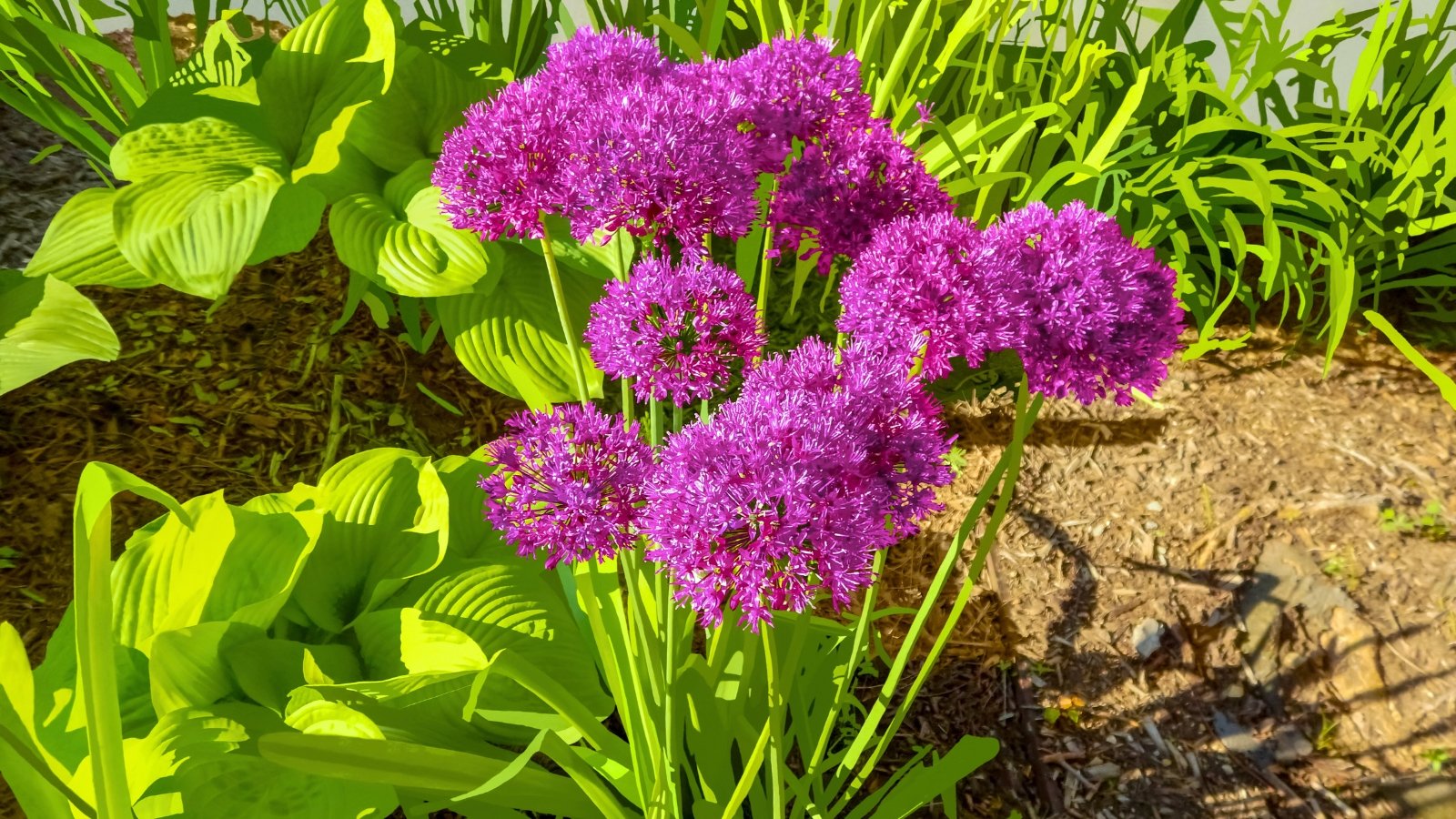
Allium ‘Purple Sensation’
|
|
botanical name Allium ‘Purple Sensation’ |
|---|---|
|
|
sun requirements Full sun to partial shade |
|
|
height 24-30” |
|
|
hardiness zones 4-9 |
Ornamental alliums offer hefty blooms and structure, from giant globes on tall stems to pompon tufts on bladed mounds. Giant flowering alliums feature globes of starry purple florets that stand tall in the border or container. The florets in late spring and early summer attract pollinators and other beneficial insects with their nectar.
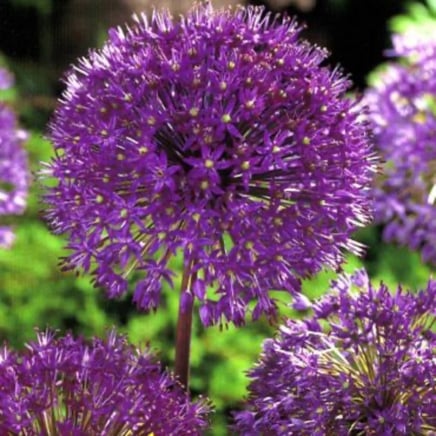
‘Purple Sensation’ is a popular cultivar with velvety royal purple spheres. One of the earliest to bloom of the large-flowered varieties, the four- to five-inch globes offer weeks of color. ‘Purple Sensation’ is compact, making it versatile in beds and planters. Slender blades are attractive and silvery, but best tucked among other perennials as foliage declines after flowering.
For massive globe flowers, look to ‘Globemaster.’ Its deep lavender rounds measure 10 inches across on sturdy stems. The outstanding performer is a Royal Horticultural Society Award of Garden Merit recipient.
Alliums are low-maintenance, disease-resistant, and drought-tolerant. With sulfur compounds in their aromatic leaves, stems, and roots, they deter nibbling deer, rabbits, and some garden pests. In addition to planting new flower bulbs, November is the time to dig, divide, and transplant existing ornamental alliums.
Foxtail Lily ‘Shelford Pink’
|
|
botanical name Eremurus x isabellinus ‘Shelford Pink’ |
|---|---|
|
|
sun requirements Full sun |
|
|
height 3-4’ |
|
|
hardiness zones 5-8 |
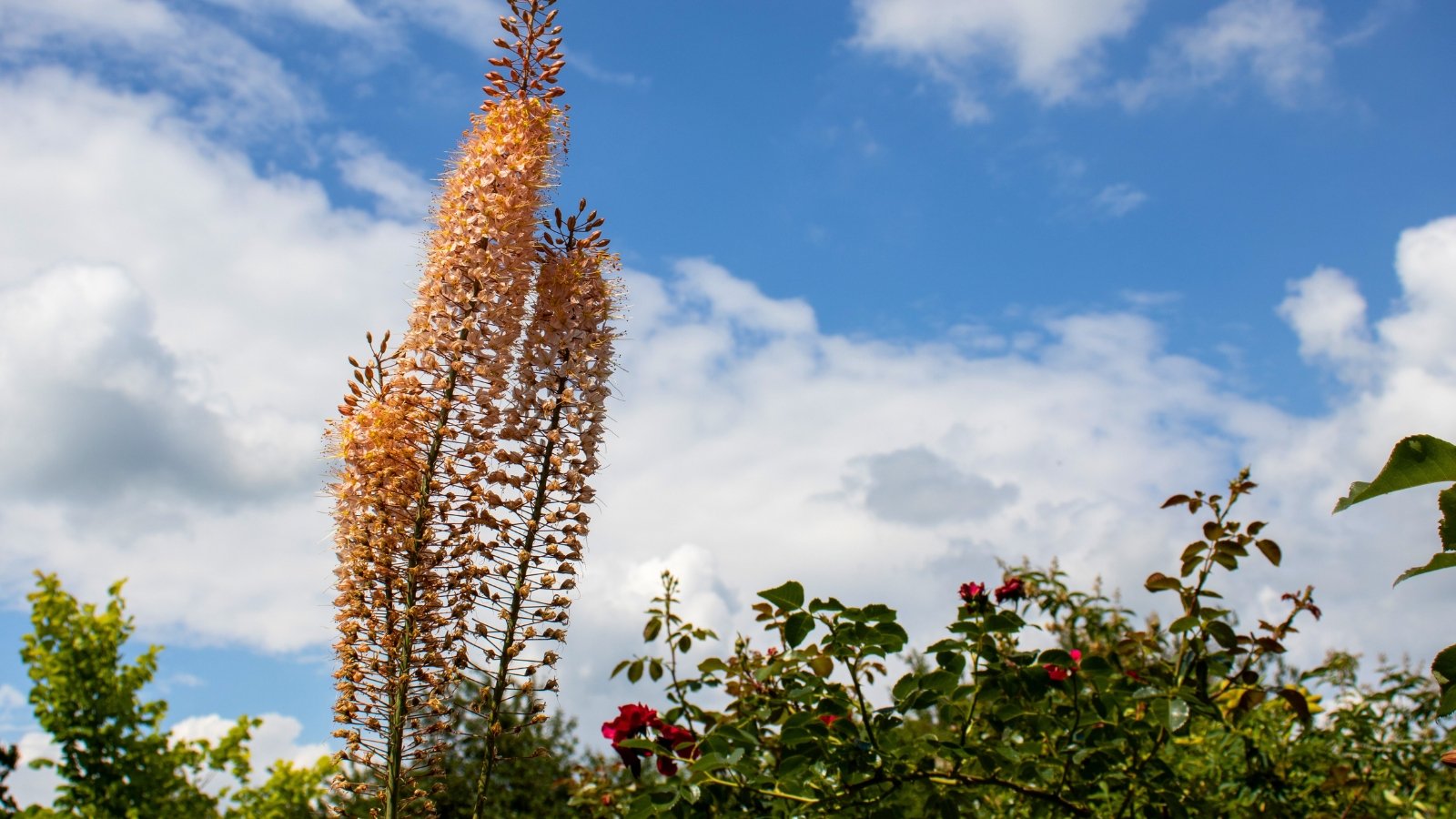
A beautiful pairing with ornamental flowering alliums is the foxtail lily. Both bloom in late spring with dynamic structural forms, with foxtail lilies being narrow, pyramidal, and bushy.
Eremurus spp. is a bulbous perennial whose towering bloom spikes emerge in late spring. Bushy foxtail racemes hold tiny flowers that open from the bottom up. The Shelford hybrids are a set of top-performing cultivars in pink, orange, white, and yellow. ‘Shelford Pink’ shimmers in pale blush for a sweep of elegance.
Strappy blue-green leaves form a basal rosette and enter summer dormancy after flowering. In their lowest growing zones, the lilies benefit from extra mulch as winter protection.
Snake’s Head Fritillary
|
|
botanical name Fritillaria meleagris |
|---|---|
|
|
sun requirements Full sun to partial shade |
|
|
height 1-2’ |
|
|
hardiness zones 3-8 |
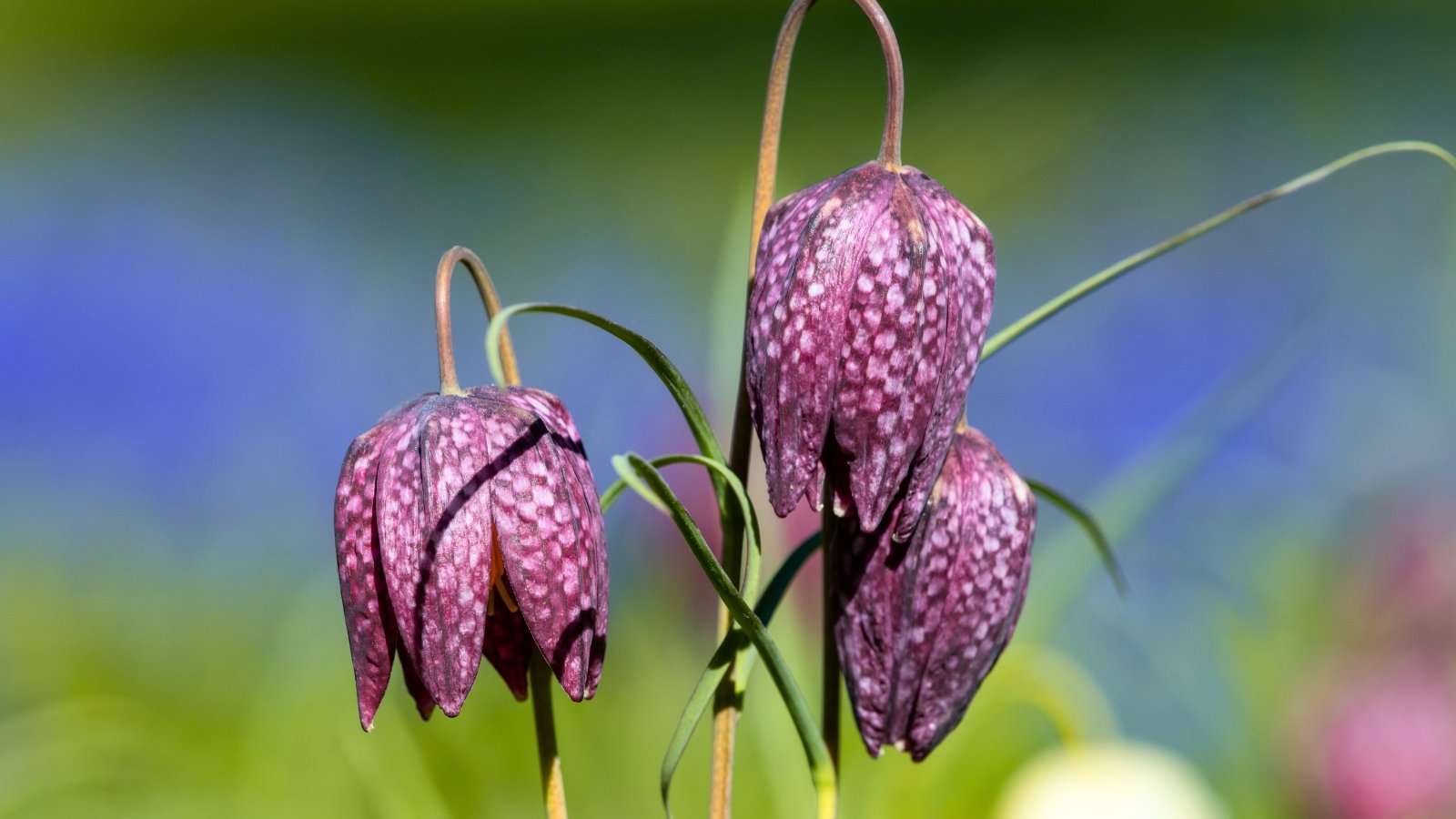
Fritillaria is an underutilized perennial bulb with pendulous bell blooms on slender stems. The nodding blossoms may be solid, checkered, or spotted, in diverse colors and forms. North American native species like F. affinis and F. biflora make unique wildflower and naturalized additions.
Snake’s head fritillary, so named for its rounded, downfacing flower and checkered patterning, is distinct in the bulb lineup. Petals are deep purple and white for an intriguing ornament in spring. The little bulbs nestle easily in naturalized areas and the perennial border for a mid-spring show.
Glory of the Snow ‘Blue Giant’
|
|
botanical name Chionodoxa luciliae ‘Blue Giant’ |
|---|---|
|
|
sun requirements Full sun to partial shade |
|
|
height 4-10” |
|
|
hardiness zones 3-9 |
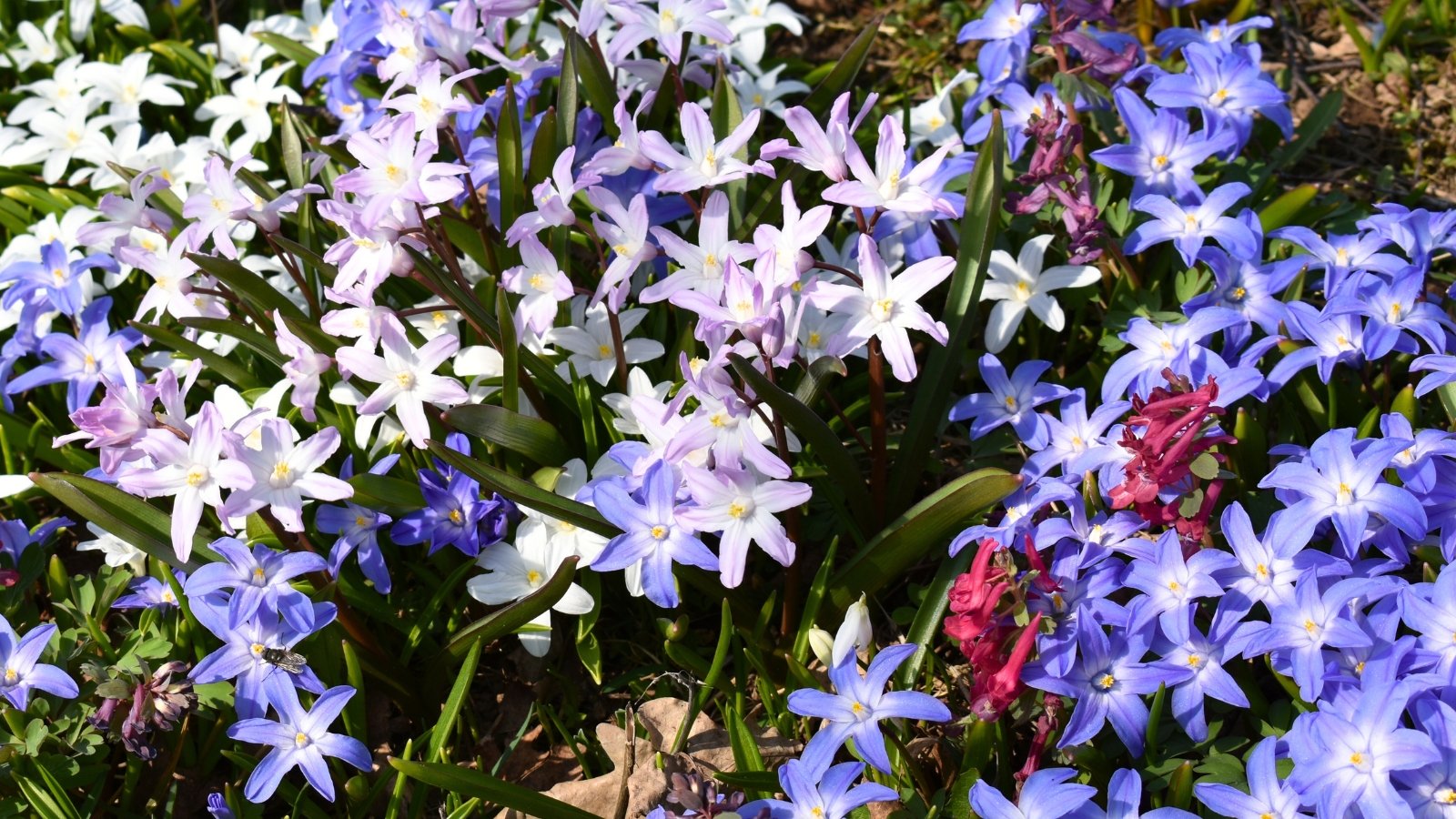
Like snowdrops, glory of the snow sends up fresh green shoots in late winter. C. luciliae boasts large flowers and multiple buds and stems per bulb. The early-blooming variety ‘Blue Giant’ produces starry, six-petaled, periwinkle blooms. The upfacing flowers have bright white centers in the sea of lavender-blue.
Glory of the snow naturalizes readily (though not aggressively) through spreading roots and self-seeding. It makes a graceful ground cover, rock garden, or woodland planting for a spray of color.
Plant the flower bulbs in November with a close spacing at two to three inches apart and three inches deep. Pair them with early daffodils for a simultaneous display, followed closely by early tulips to keep the color going.
Daffodil ‘Replete’
|
|
botanical name Narcissus ‘Replete’ |
|---|---|
|
|
sun requirements Full sun to partial shade |
|
|
height 16-18” |
|
|
hardiness zones 3-9 |
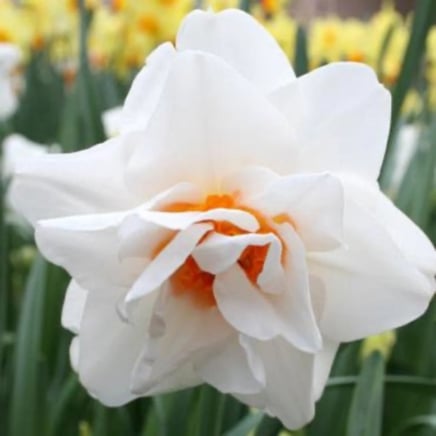
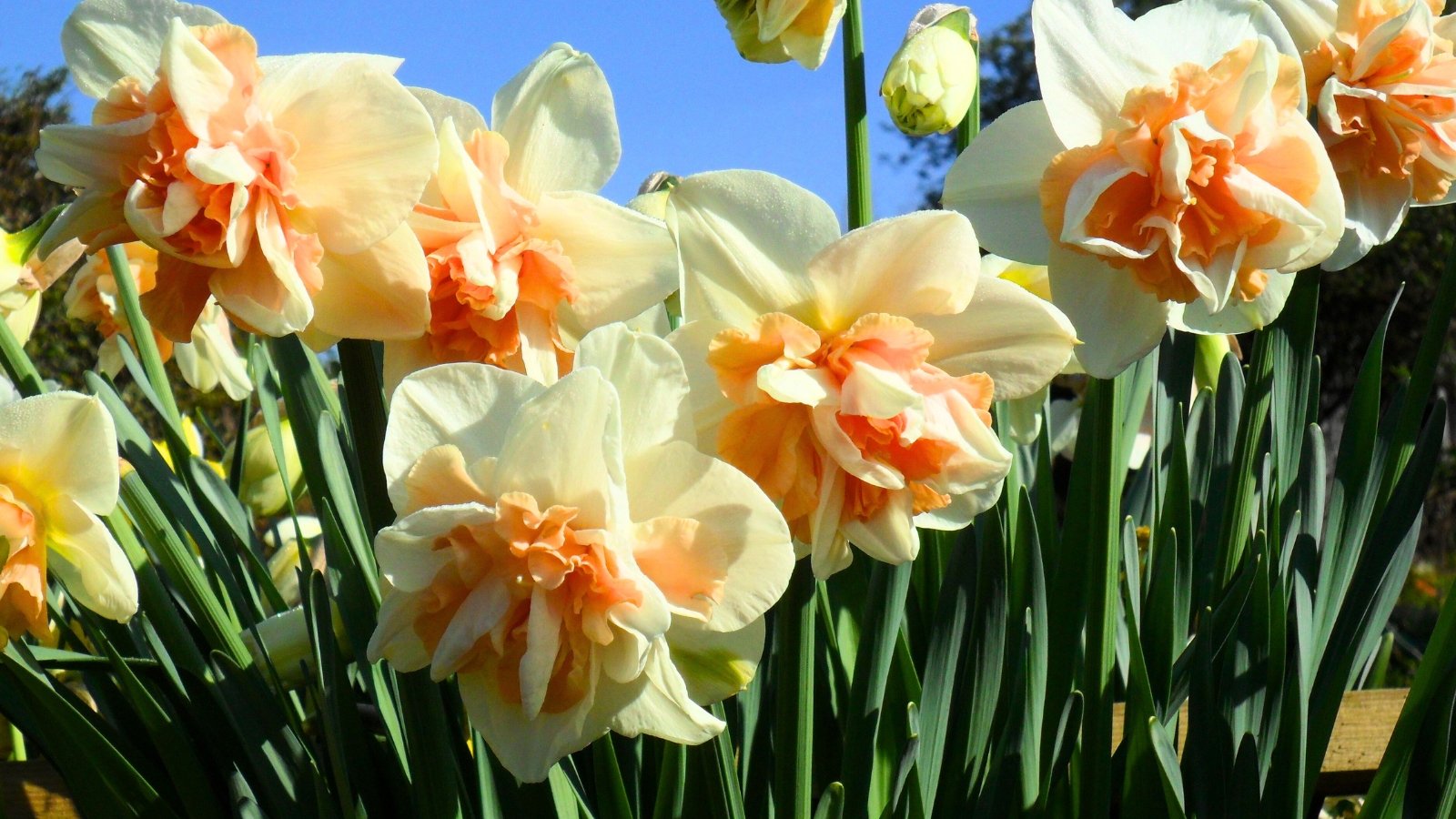
‘Replete’ is a fully double daffodil with creamy white petals and warm, frilly coral-pink centers. The crepey folded blooms are large at four inches across with a slightly sweet perfume.
Easily force daffodil bulbs indoors to bloom earlier than in the landscape. With pre-chilled bulbs and a November potting, they’ll be ready to grow and flower in time for the winter holidays.
Winter Aconite
|
|
botanical name Eranthis hyemalis |
|---|---|
|
|
sun requirements Full sun to partial shade |
|
|
height 6” |
|
|
hardiness zones 3-7 |
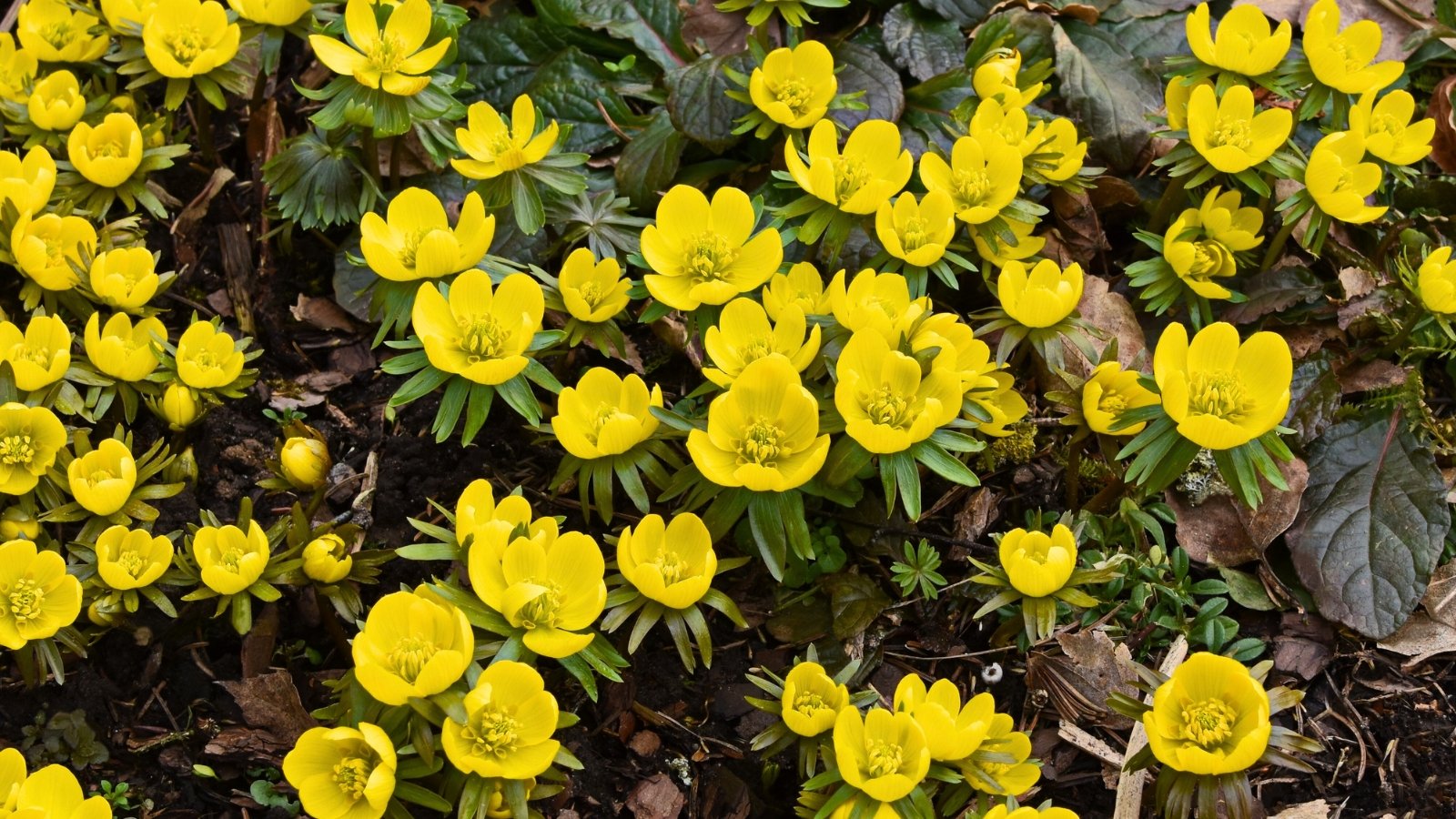
To complement early-season snowdrops and glory of the snow, winter aconite cheers the winter scene with bright buttercup yellow blooms. Flowers emerge on low stems for a blanket of color, even with a snowy backdrop.
Winter aconite makes the most significant impact when planted close together (two to three inches apart) in a drift. Soak the bulbs (actually tubers) overnight before a November planting.
English Bluebells
|
|
botanical name Hyacinthoides non-scripta |
|---|---|
|
|
sun requirements Partial to full shade |
|
|
height 1-2’ |
|
|
hardiness zones 4-10 |
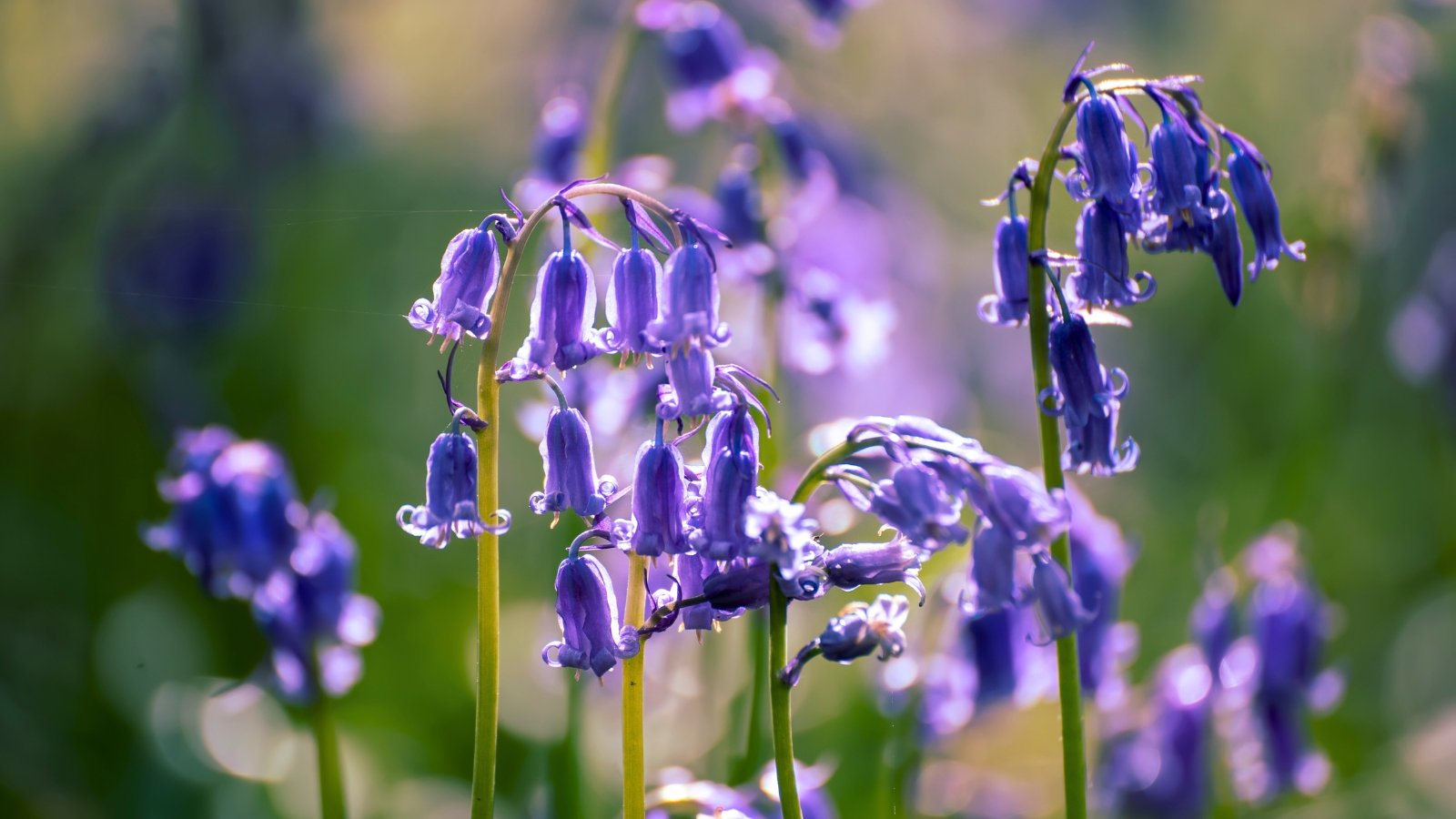
English bluebells add a wave of blue-violet with bell flowers on arching stems. The fragrant blooms suspend above dense, leafy crowns for about five weeks in spring and summer.
Bluebells have a natural habitat of stream banks, wet meadows, and damp woodlands, and do best in moist conditions during the growing season. They need good air circulation to prevent mildew diseases.
As native alternatives, Virginia and mountain bluebells are rhizomatous perennials with a sweet show. Mertensia ciliata, or mountain bluebell, is native to the western U.S. and is tolerant of drought and temperature extremes.
In the eastern region, the Virginia bluebell pops up in the spring, woodland garden with sky-blue tubular blooms for several weeks. Mertensia virginica naturalizes where it’s happiest and also may reseed.
Tulip ‘Orange Cassini’
|
|
botanical name Tulipa ‘Orange Cassini’ |
|---|---|
|
|
sun requirements Full sun |
|
|
height 15-18” |
|
|
hardiness zones 3-8 |
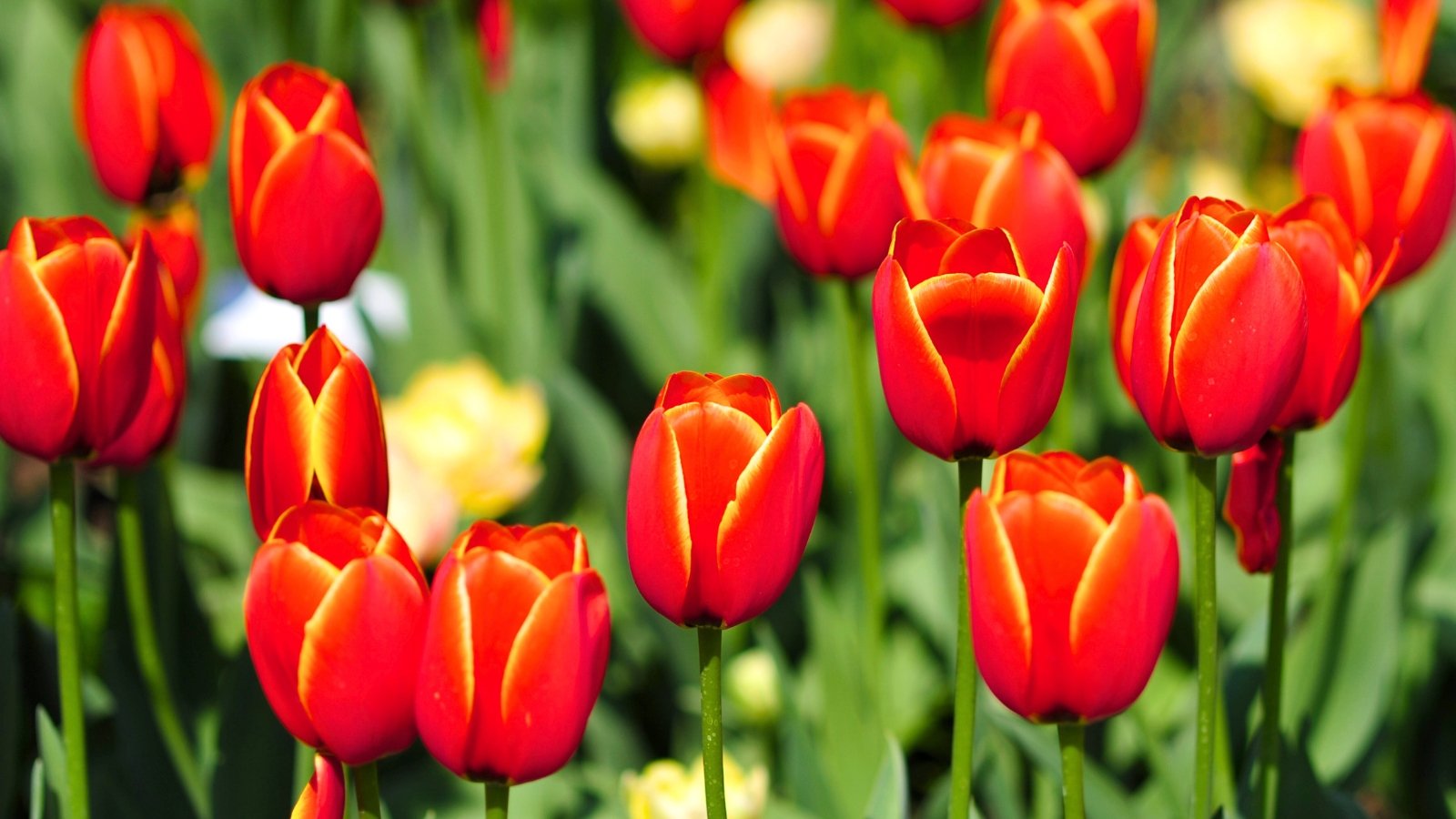
‘Orange Cassini’ tulips glow with copper edges and a satiny blend of coral and pinks set against dark reds. The mid to late-season variety punches up the composition with vibrant cheer.
‘Orange Cassini’ belongs to the Triumph tulip division with characteristically large, rounded, symmetrical, cup-shaped flowers. They’re high performers with reliable blooming and sturdy stems that endure spring’s fluctuating weather.
Amaryllis ‘Apple Blossom’
|
|
botanical name Hippeastrum ‘Apple Blossom’ |
|---|---|
|
|
sun requirements Full sun to partial shade |
|
|
height 26” |
|
|
hardiness zones 8-11 |
While we’re accustomed to enjoying potted amaryllis indoors as winter blooms, November is for planting the flower bulbs in the landscape for warm-climate gardeners. They need exposure to temperatures of 50 to 55°F (10-13°C) for a minimum of eight to ten weeks, with a natural flowering cycle in late spring..
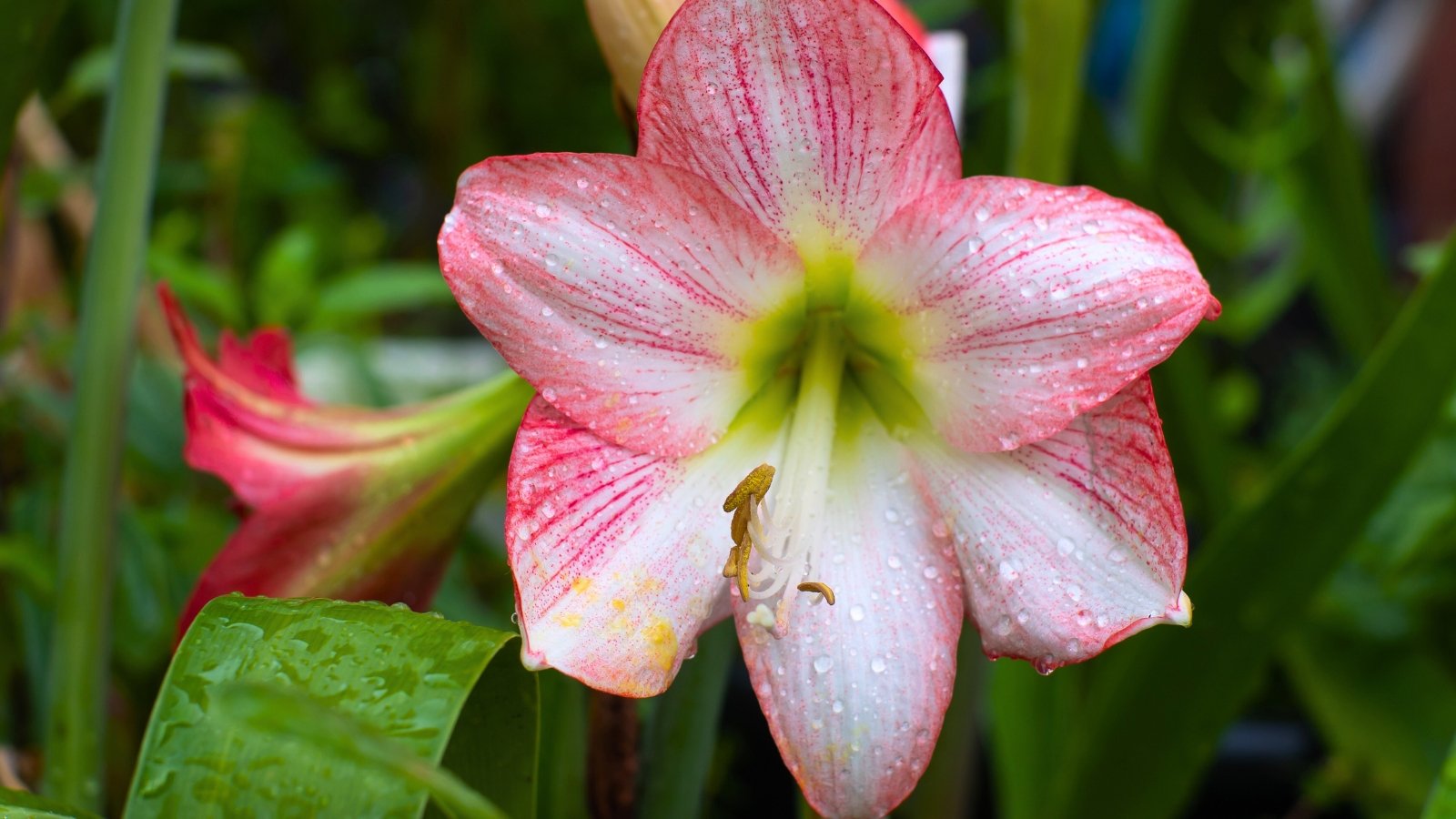
‘Apple Blossom’ is a springy variety with blush pink and white petals and classically large, trumpet blooms. The soft-hued flowers reach a decadent eight inches across.
‘Apple Blossom’ blooms for several weeks. Look for large bulbs, as the bigger the bulb, typically the longer the flowering.
Crocus ‘Remembrance’
|
|
botanical name Crocus vernus ‘Remembrance’ |
|---|---|
|
|
sun requirements Full sun to partial shade |
|
|
height 4-6” |
|
|
hardiness zones 3-8 |
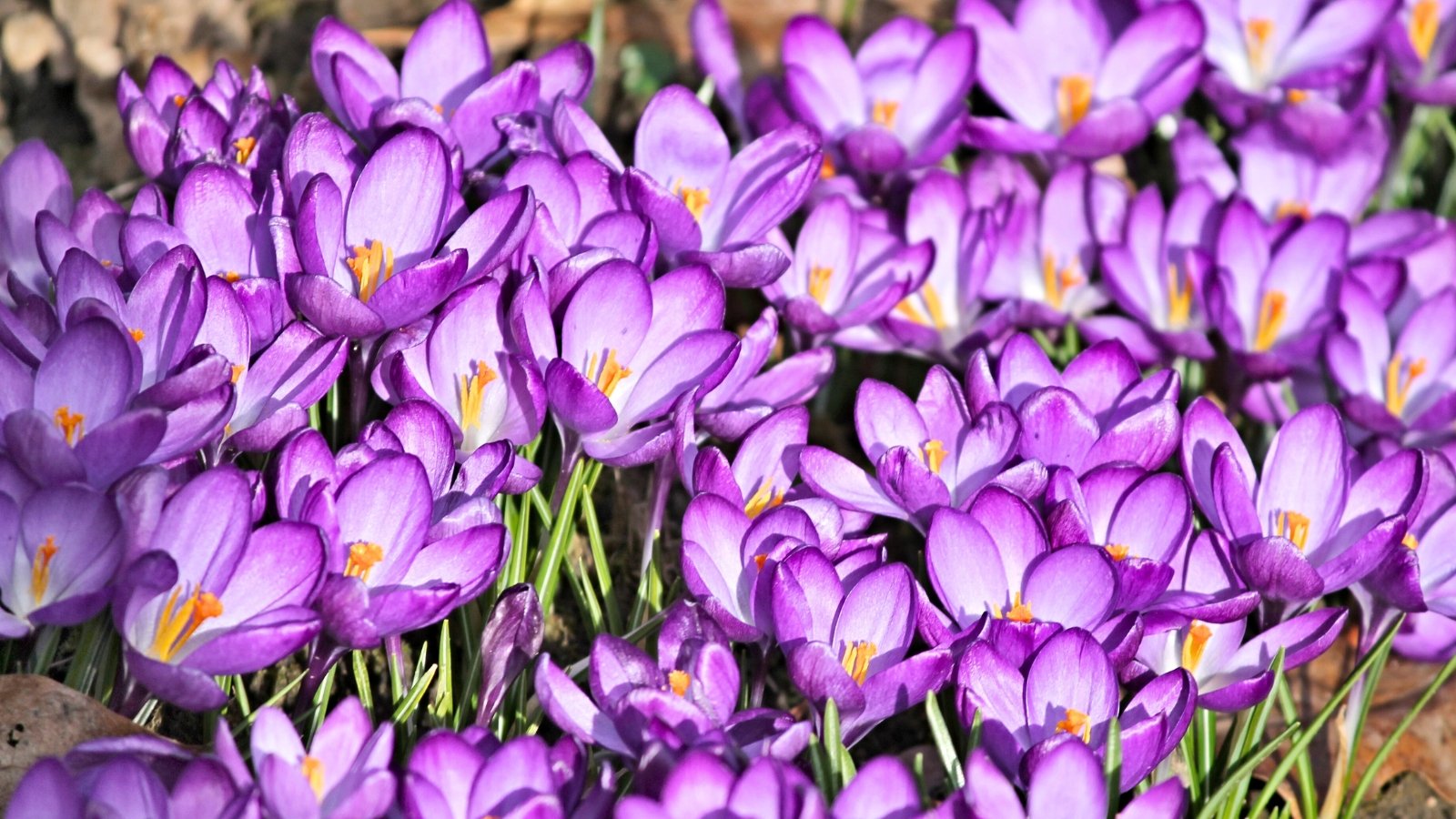
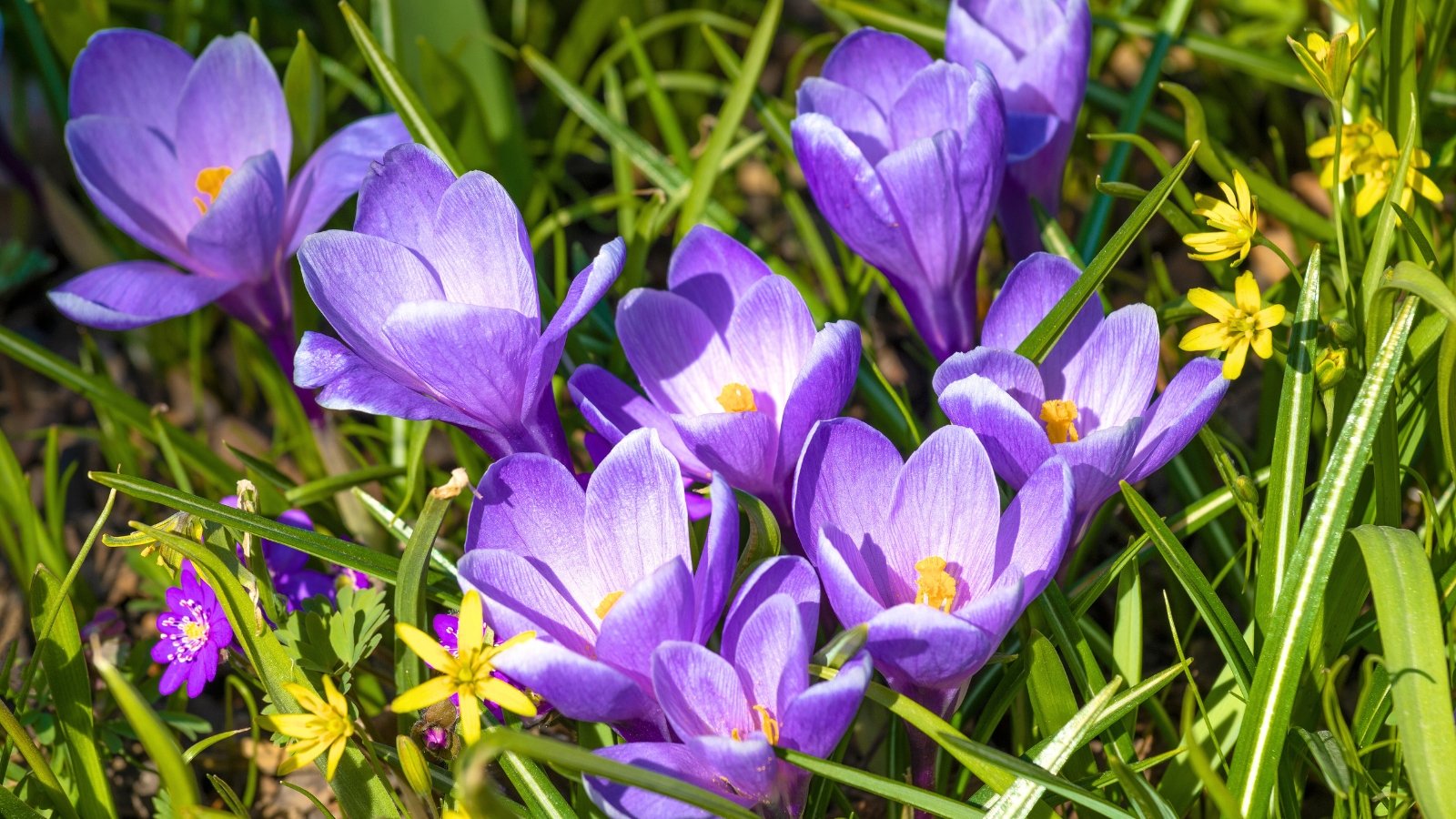
Crocus is quick to flower at winter’s close with cupped blossoms and tufts of fine-bladed foliage. Flowers last for a few weeks, and the genus naturalizes well for years of recurrent color.
‘Remembrance’ is a vibrant cultivar with silvery purple shades and golden centers. The 100-year-old heirloom is a large-flowered selection with showy blossoms on its short stems.
‘Remembrance’ is also an early source of pollen and nectar for pollinators at a time when other blooms have yet to emerge. Perfect along walkways and in grassy areas, the flowers open to greet the day and close at night.
Hyacinth ‘Delft Blue’
|
|
botanical name Hyacinthus orientalis ‘Delft Blue’ |
|---|---|
|
|
sun requirements Full sun to partial shade |
|
|
height 8-12” |
|
|
hardiness zones 4-8 |
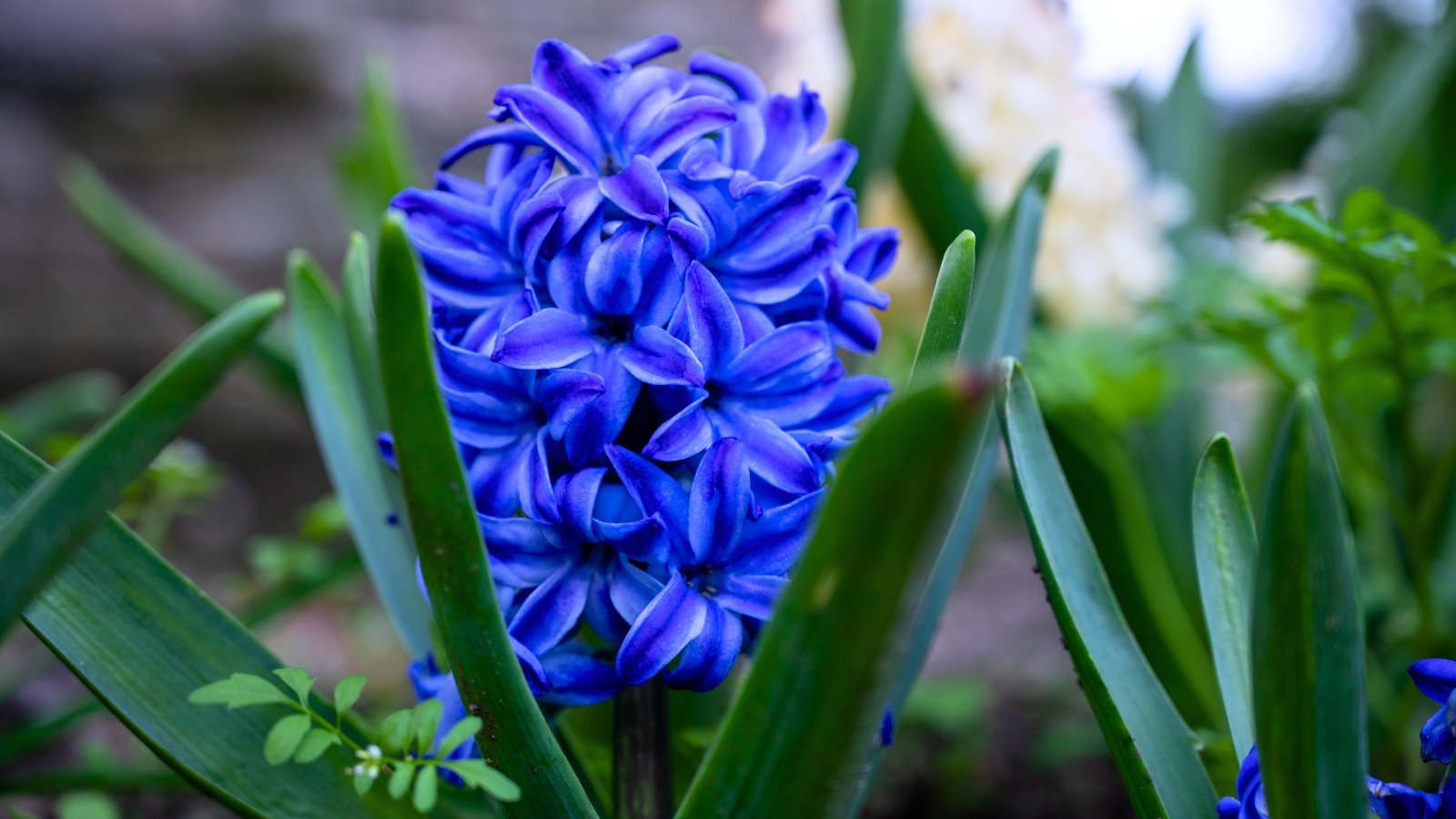
Hyacinths have stiff bloom spikes packed with dense, tubular flowers in purple, blue, pink, gold, and white that rise above bladed foliage. An intensely sweet scent enchants the senses and fills a room with perfume as a cut flower. With few pest and disease problems, the low-maintenance blooms have few demands.
‘Delft Blue’ is a 1944 variety with soft lilac-blue blooms. A reliable bloomer, the Dutch cultivar is an Award of Garden Merit recipient. It flowers for two to three weeks in mid-spring, and makes a good option for early indoor forcing. Look to ‘Blue Jacket,’ too, for dense, royal purple-blue flowers on one-foot stalks.
Anemone ‘Blue Shades’
|
|
botanical name Anemone blanda ‘Blue Shades’ |
|---|---|
|
|
sun requirements Full sun to partial shade |
|
|
height 4-8” |
|
|
hardiness zones 5-8 |
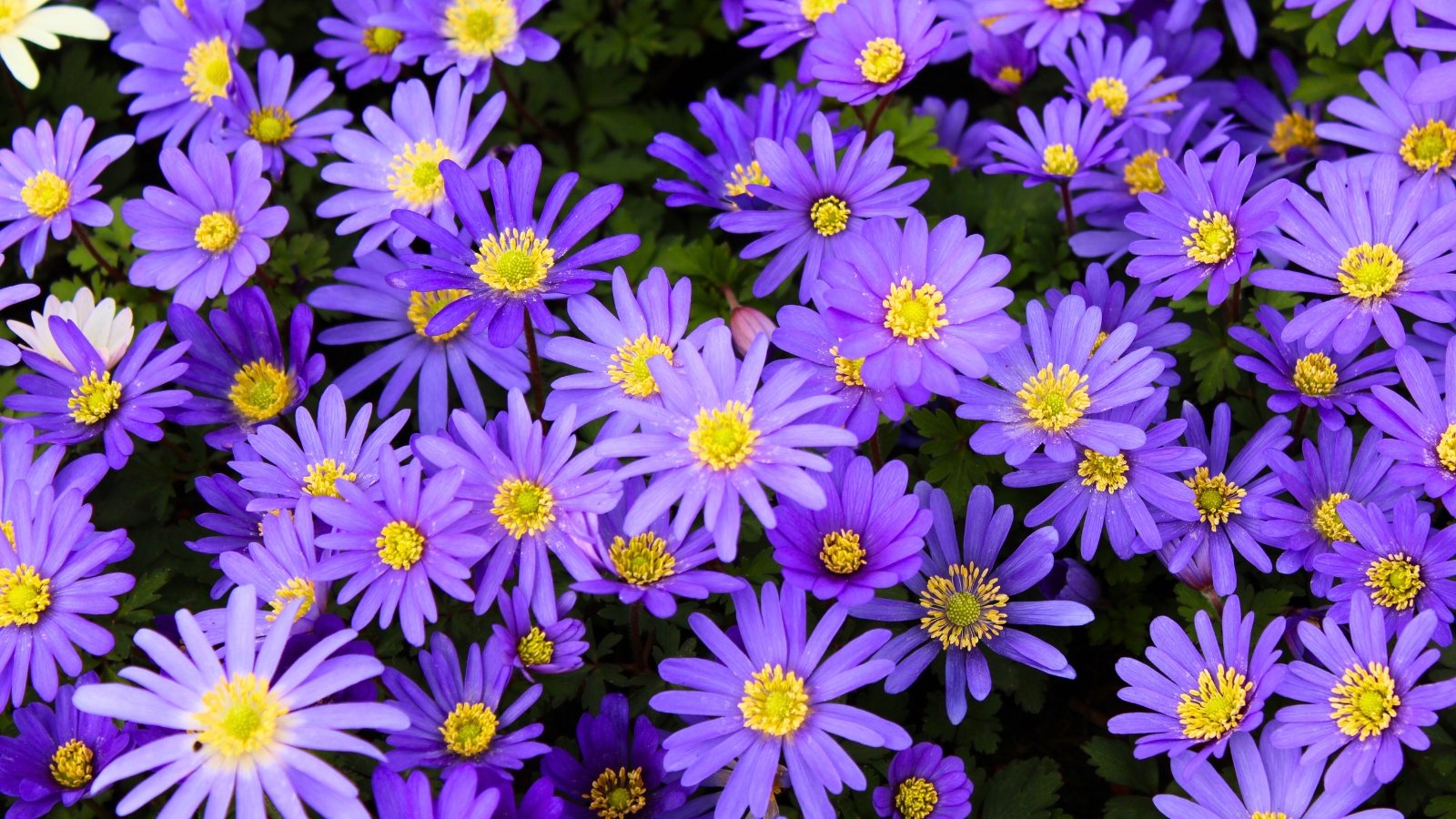
These anemones, also called windflower, create a carpet of lilac-blue blooms. The clump-forming perennial spreads through seeds and rhizomes to form a short groundcover of ferny foliage.
‘Blue Shades’ stands out with rich blue, daisy-ray flowers with yellow eyes. Plant the flower bulbs in November (really tubers) closely for a swath of April blooms.
Windflower requires good drainage and humusy, moist soils (until summer dormancy). Protect the plants from drying winds and sun for the best vigor.