Why Your Potting Soil Keeps Killing Plants (5 Red Flags to Watch For)
If your potted plants keep dying, don’t assume you have a black thumb. Your potting soil may be the problem. Gardening expert Madison Moulton explains the potting soil red flags to look out for.

Contents
Not all potting soil is the same, and even a decent mix can go bad over time. If you’re doing everything right and your container plants are still declining, the soil is worth investigating before you change anything else.
Even in containers, soil is the foundation of healthy growth. If it’s not quite right, or if it declines over time, your potting soil could be killing your plants without you even realizing what the problem is. Whenever a plant has issues, I always like to start with the soil for diagnosis. These are the five red flags I’ve learned to check for.
Lack of Drainage

This is probably the potting soil problem killing the most plants. Potting soil that doesn’t drain properly holds too much water around the roots, and roots sitting in saturated soil suffocate. They need air just like they need moisture, and when the soil stays waterlogged, they rot. You can be extremely careful with your watering and still lose plants to root rot if the soil itself is the issue.
The most obvious sign is water pooling on the surface after you water or taking a long time to soak in. Another sign is soil that’s pulled away from the edges of the pot and hardened into a dense block. This happens when dense peat-based mixes dry out completely. The soil becomes hydrophobic (it actually repels water rather than absorbing it), so when you water, the water runs down the gap between the soil and the pot wall.
A good potting mix should feel light. If it’s heavy, dense, or overly sticky when wet, it’s not draining well enough for container plants. Adding perlite to an existing mix improves drainage, but if the soil has broken down to the point where it’s compacted and waterlogged, you can also try a new potting mix entirely.
No Organic Matter
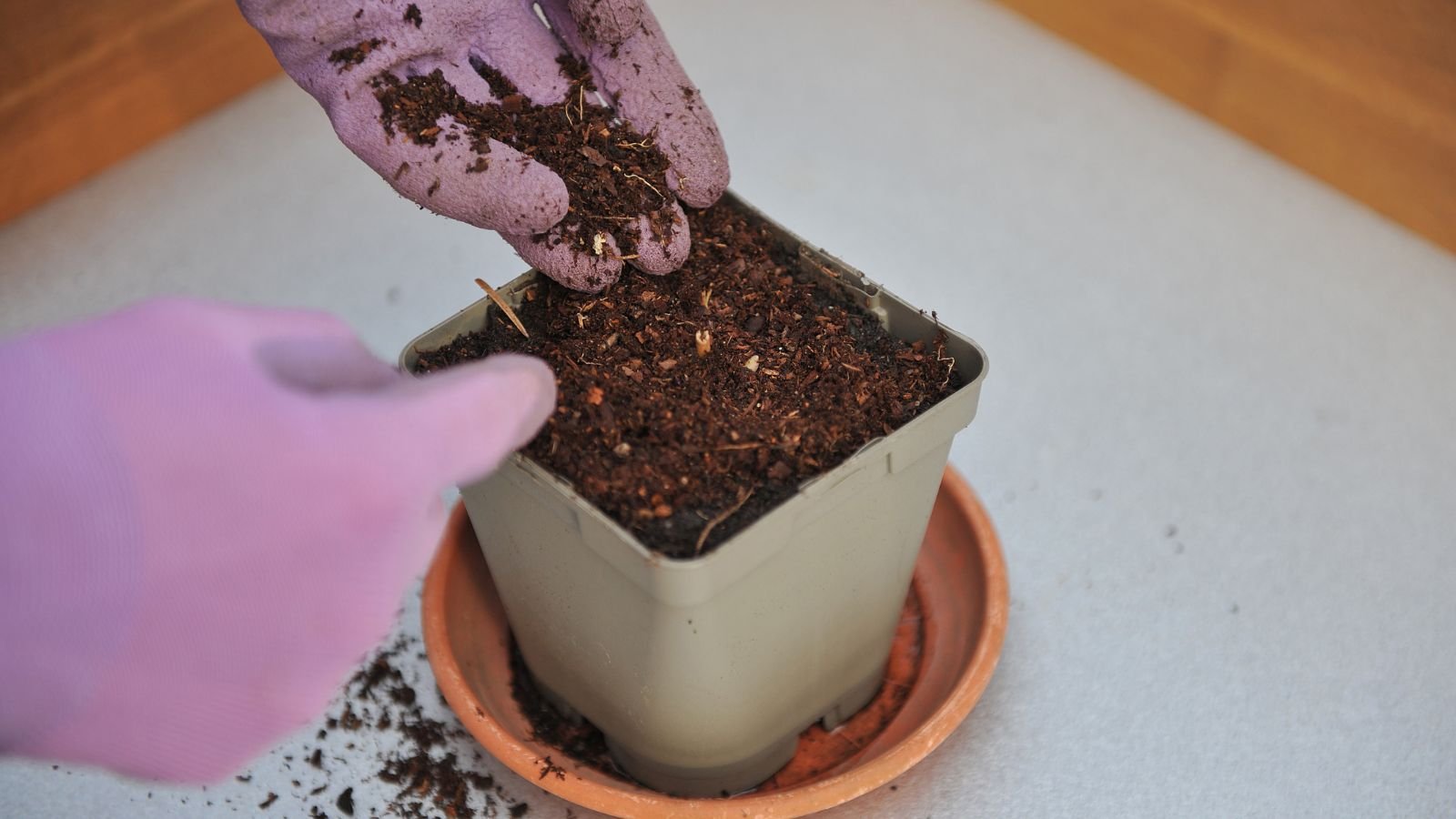
Potting soil gets its ability to hold moisture and support microbial life from organic matter like compost, bark, coco coir, and peat. Over time, those materials decompose. That’s what they’re supposed to do. But it means the soil gradually loses structure, nutrient-holding capacity, and the spongy texture that healthy roots need.
You can tell when a mix has lost most of its organic content because it looks pale and dusty. It won’t hold water well, and plants growing in it will be stunted even if you’re fertilizing regularly.
Cheap potting mixes sometimes start with very little organic matter in the first place. They bulk up the bag with wood chips, sand, or other filler that doesn’t do much for the plant. If you open a bag and it feels gritty, overly heavy, or has large chunks of undecomposed wood throughout, it’s probably not going to give your plants what they need.
Spending a few dollars more on a quality mix with compost, coir, and good drainage material makes a real difference in how your plants perform. Alternatively, make your own so you know what’s going into your mix. And when the current soil starts breaking down over time, replenish it to stop your potting soil killing your plants.
Lack of Nutrients

In the ground, plants access a vast network of minerals and soil life. In a pot, they only have what’s in that small volume of mix. Most fresh potting soils include some fertilizer, usually a slow-release formula that lasts a few months. After that, the nutrients are gone, and it’s up to you to replace them.
The problem is that many people don’t realize how quickly container plants deplete their soil. Every time you water, nutrients leach out through the drainage hole. A plant can be visibly struggling, not because of disease or pests, but because the soil has nothing left to sustain it. Yellowing lower leaves, slow growth, and pale foliage are classic signs.
If you’re reusing soil from last season without amending it, this is almost certainly part of why your potting soil is killing plants. Mix in fresh compost or worm castings, add a slow-release fertilizer, and start a regular liquid feeding schedule during the growing season.
Pests

Potting soil can harbor pests before you ever plant anything in it. Fungus gnats are the most common offender for indoor plants. The tiny flies hovering around your plants live in the top layer of moist potting soil and feed on organic matter. They’re more annoying than destructive in small numbers, but a heavy infestation can damage young plants.
Old potting soil that’s been sitting open is also vulnerable. Gnats, mites, and even ant colonies can move into an open bag or a pot of stored soil over winter. If you’re repotting in spring and using last year’s leftover mix without checking it first, you may be introducing problems right from the start.
For fungus gnats specifically, letting the top inch of soil dry out between waterings disrupts their life cycle. Yellow sticky traps catch adults. For anything more serious, replacing the soil is usually faster and more effective than trying to salvage it.
Diseases

Soil-borne pathogens are the hardest problem to diagnose because you can’t see them. Fungi like Pythium, Fusarium, and Rhizoctonia live in contaminated soil and attack roots, causing wilting, yellowing, and collapse that looks a lot like overwatering. By the time you notice above-ground symptoms, the root system is usually already compromised.
Reusing potting soil from a plant that died of unknown causes is one of the most common ways diseases get passed along. If you lost a plant to root rot or sudden decline and you dump that soil into the next pot, you’ve likely just given the next plant the same problem. This doesn’t mean you can never reuse potting soil.
You can. But it helps to be selective about it. Soil from healthy plants that finished their season normally is usually fine to refresh with compost and perlite and use again. Soil from plants that died or showed signs of disease should go in the compost pile or the trash, not into another pot. When in doubt, starting fresh is best if you want to avoid your potting soil killing plants.