

Why Your Indoor Basil Keeps Dying: 7 Common Mistakes
Indoor basil has a frustrating tendency to die just when you've gotten used to having fresh herbs on hand. Gardening expert Madison Moulton explains the most common reasons basil fails indoors and what to do differently.

Contents
In my experience, basil in a pot from the grocery store lasts maybe a week before declining into a sad, wilted mess. Even with plenty of attention, the leaves eventually start yellowing, and the whole plant suddenly collapses for no obvious reason. Basil is supposed to be easy to grow indoors, so what went wrong?
Indoor basil dies more often than you think, and it’s usually not because of a lack of gardening skills. Basil has specific requirements that don’t match typical indoor conditions. Plus, depending on where you’ve purchased your basil plant from, you may have been doomed from the start (more on that later).
If you’ve experienced the same struggles as I have with indoor basil dying, take a look at this list. Identify which problem is most likely based on your conditions and make the necessary changes to grow better basil indoors this year.


Lack of Sunlight
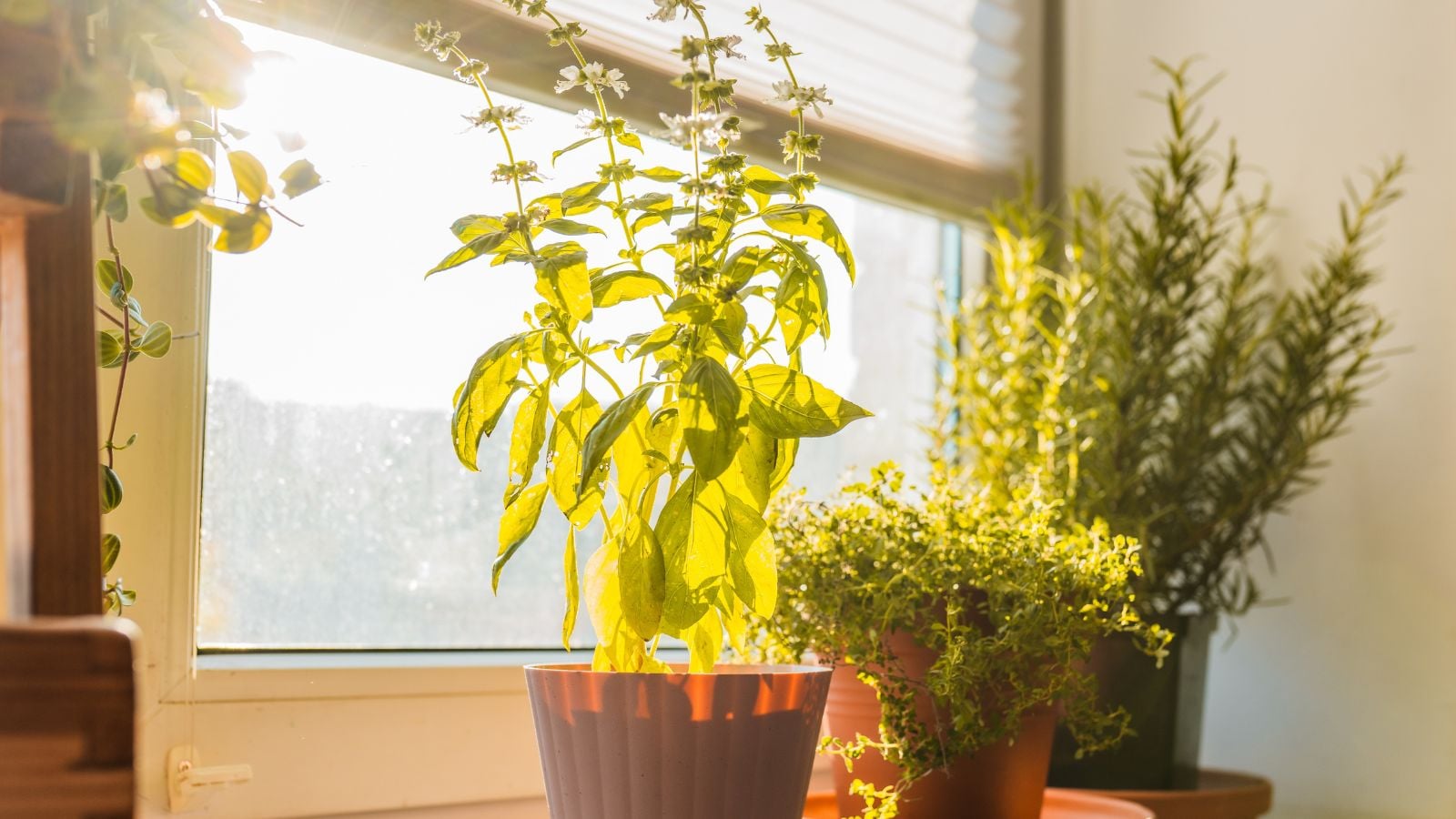
Basil is a full sun herb. It needs intense light to stay compact and produce the dense, flavorful leaves you want for cooking. A windowsill seems bright enough to us, but unless you have an unobstructed south-facing window, it probably isn’t. Even south-facing windows provide far less intensity than outdoor sun, and basil evolved to grow in full sun.
Insufficient light causes the classic stretching problem where stems elongate with large gaps between leaves. The plant reaches desperately toward the window, producing thin stems that eventually can’t support their own weight. Leaves stay small and pale, and flavor becomes weak instead of sweet and aromatic.
To stop your indoor basil dying, moving basil closer to a window helps marginally, but you’re still fighting against fundamentally inadequate light levels. Instead, a grow light positioned directly above the plant solves this completely. With this extra help, your basil will stay compact with large, dark green leaves.
Overwatering
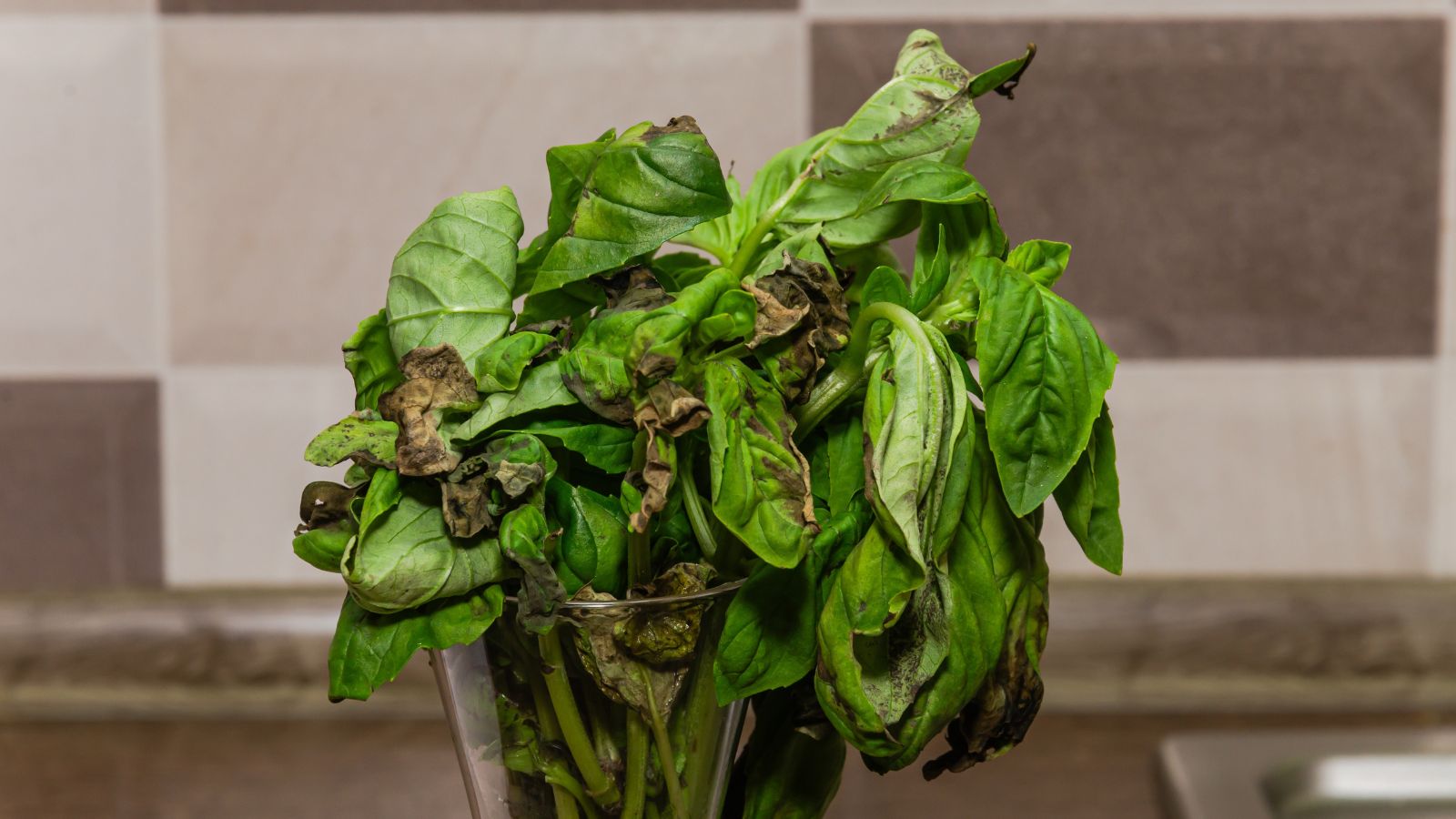
Basil in constantly soggy soil develops root rot, which causes yellowing lower leaves and wilting despite moist soil (which distinguishes it from the next problem). Rot sets in, and the plant dies, even though you’ve been regularly watering.
Many people overwater basil because they’ve heard herbs need consistent moisture. This gets interpreted as keeping soil wet all the time, which basil definitely doesn’t want. The soil should dry slightly between waterings, not stay perpetually damp. The type of container can also have an impact on soil moisture.
Before you water on a schedule, check moisture by sticking your finger into the soil. If the top inch feels dry, water. If it still feels moist, wait another day. Roots need periods of air exposure to function properly.
And when it comes to containers, drainage holes are non-negotiable. Decorative pots without drainage lead to indoor basil dying because excess water has nowhere to go. Either drill holes in decorative pots or use them as pot covers with the basil growing in a properly draining container inside.
Underwatering
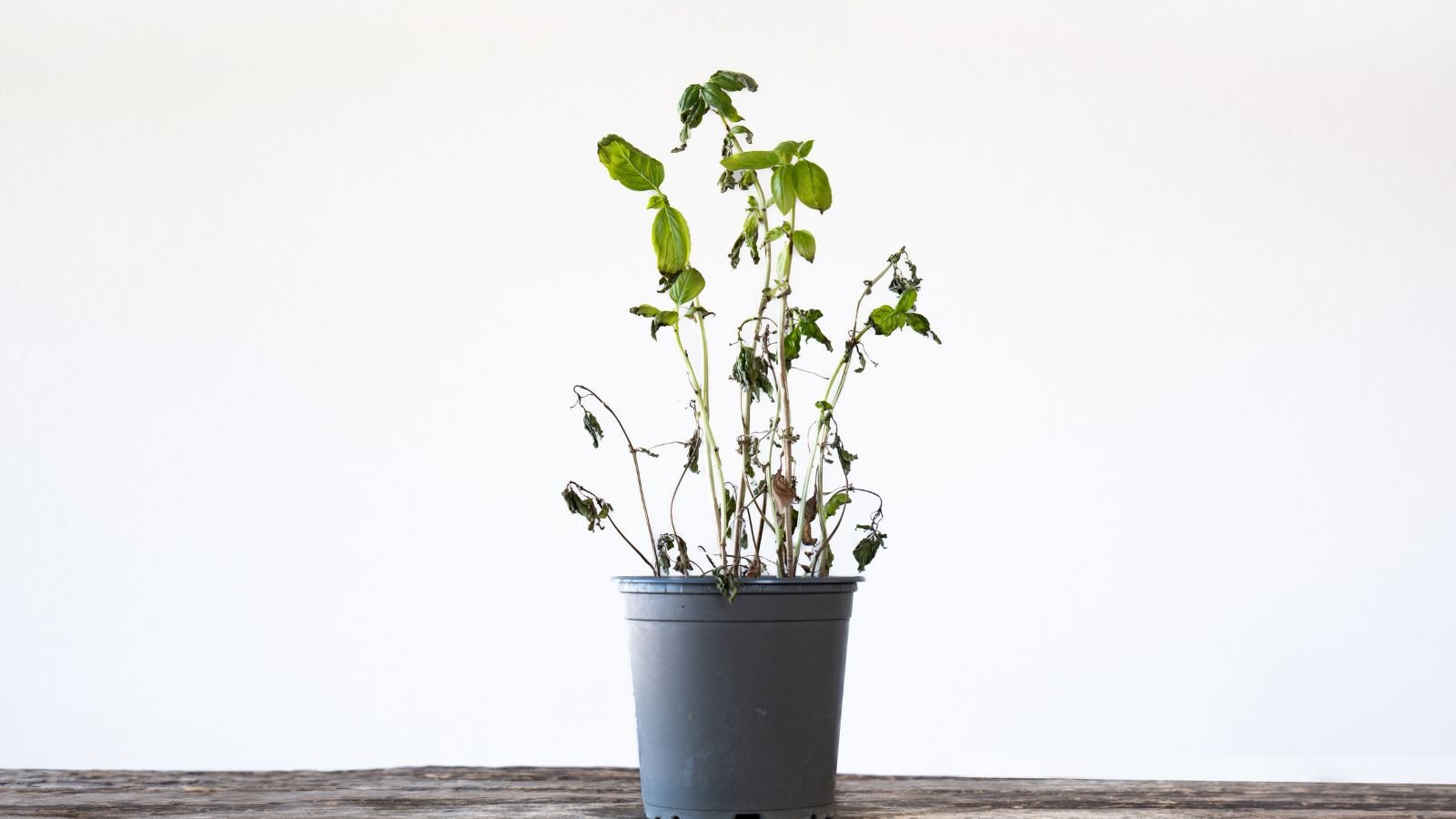
Basil wilts quite dramatically when it needs water, which makes underwatering easy to spot. The entire plant droops and it generally looks miserable, with a dry soil surface and possible soil pulling away from the pot in extreme cases.
The good news is basil usually recovers quickly once watered, though repeated wilting stresses the plant and affects growth. Basil grown in small pots dries out fast, sometimes within a day during warm weather. This happens because there’s simply not enough soil volume to hold adequate moisture for basil’s needs.
Larger pots dry out more slowly and provide more consistent conditions. If you’re constantly battling to keep basil watered in a tiny pot, move it to something bigger. The plant will be happier and you’ll spend less time hovering over it with a watering can.
Self-watering containers help if you travel frequently or forget to check plants daily. These maintain more consistent moisture levels without keeping soil waterlogged, which is exactly what basil wants.
Overcrowding
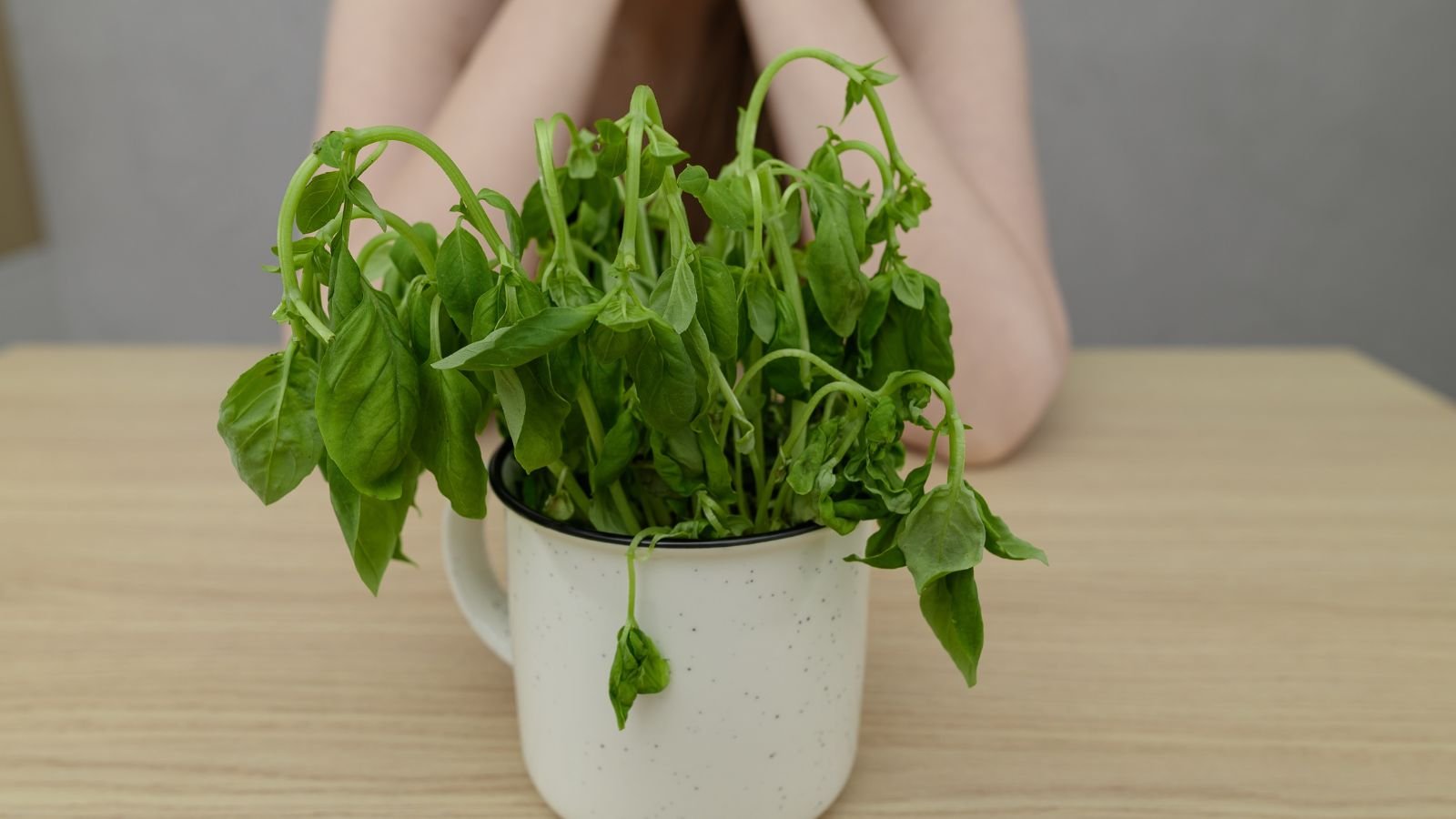
Now onto the issue that I mentioned earlier that sets you up for failure and indoor basil dying. Grocery store basil is usually several seedlings crammed into one small pot. This looks full and lush when you buy it, but it creates huge problems as the plants grow. The crowded stems compete for light and air circulation, and the root systems fight for limited soil and nutrients.
To avoid this problem, separate the basil seedlings into individual pots or at least thin to two or three stems per container instead of the eight or ten that probably came in the original pot.
Beyond competition for water and nutrients, air circulation around stems also matters for disease prevention. Crowded basil develops fungal issues more easily than properly spaced plants because the dense growth traps humidity and blocks airflow. Give them some room and you’ll avoid many problems (plus have more basil plants).
Limited Harvesting
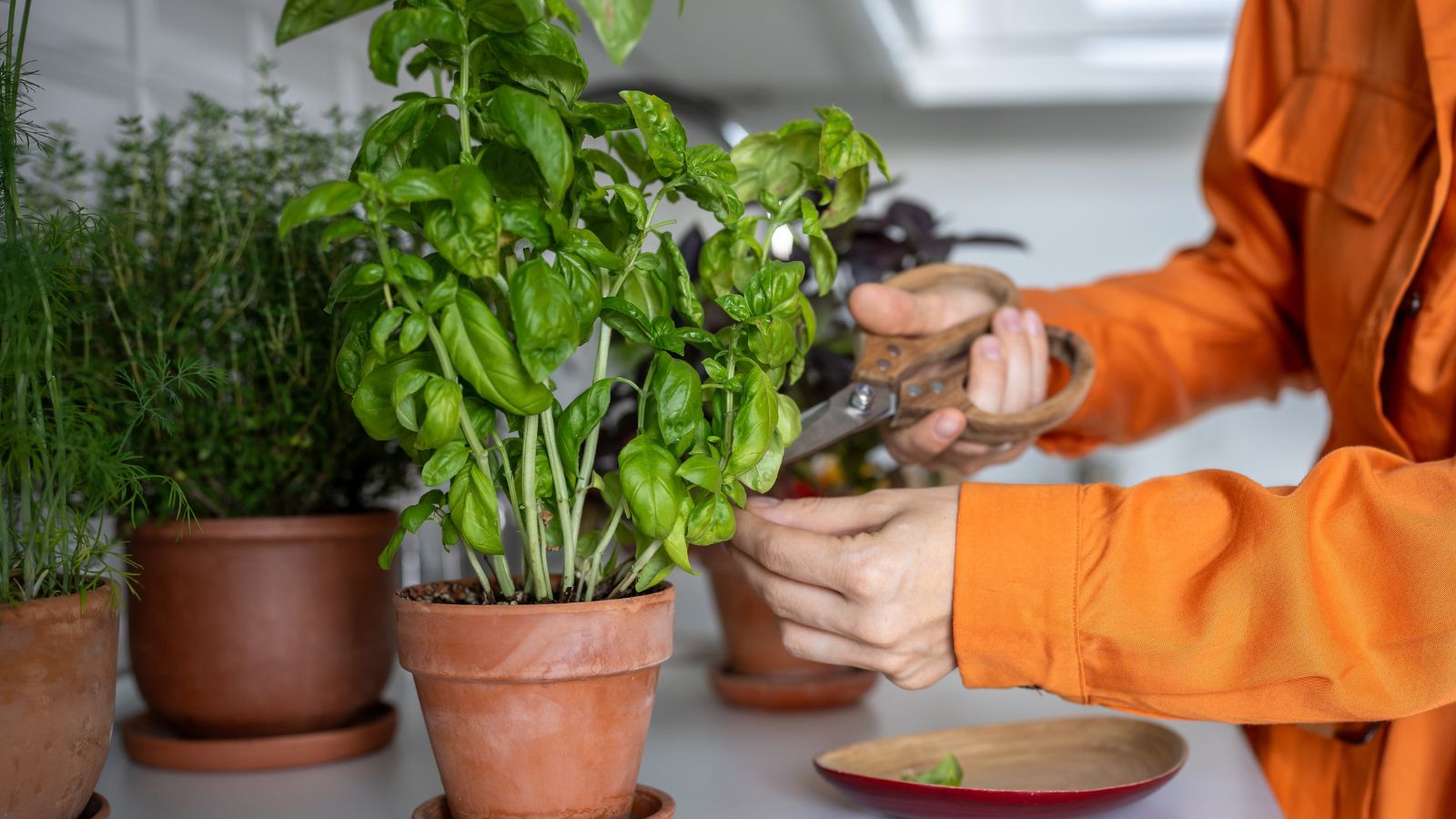
Regular harvesting improves basil growth rather than harming it. Cutting stems forces branching, which creates bushier plants with more harvestable leaves. You’re encouraging it to produce more of what you want.
Start harvesting once plants have at least six leaves. Cut stems just above a set of leaves, and the plant will branch from that point. Keep cutting the growing tips every week or two, and you’ll maintain compact, productive plants that don’t bolt prematurely.
Remove flower buds immediately when they appear (which admittedly doesn’t happen as often indoors). Pinch them off as soon as you spot them forming at the stem tips. This redirects energy back into leaf production and extends the plant’s productive period significantly.
Lack of Nutrients
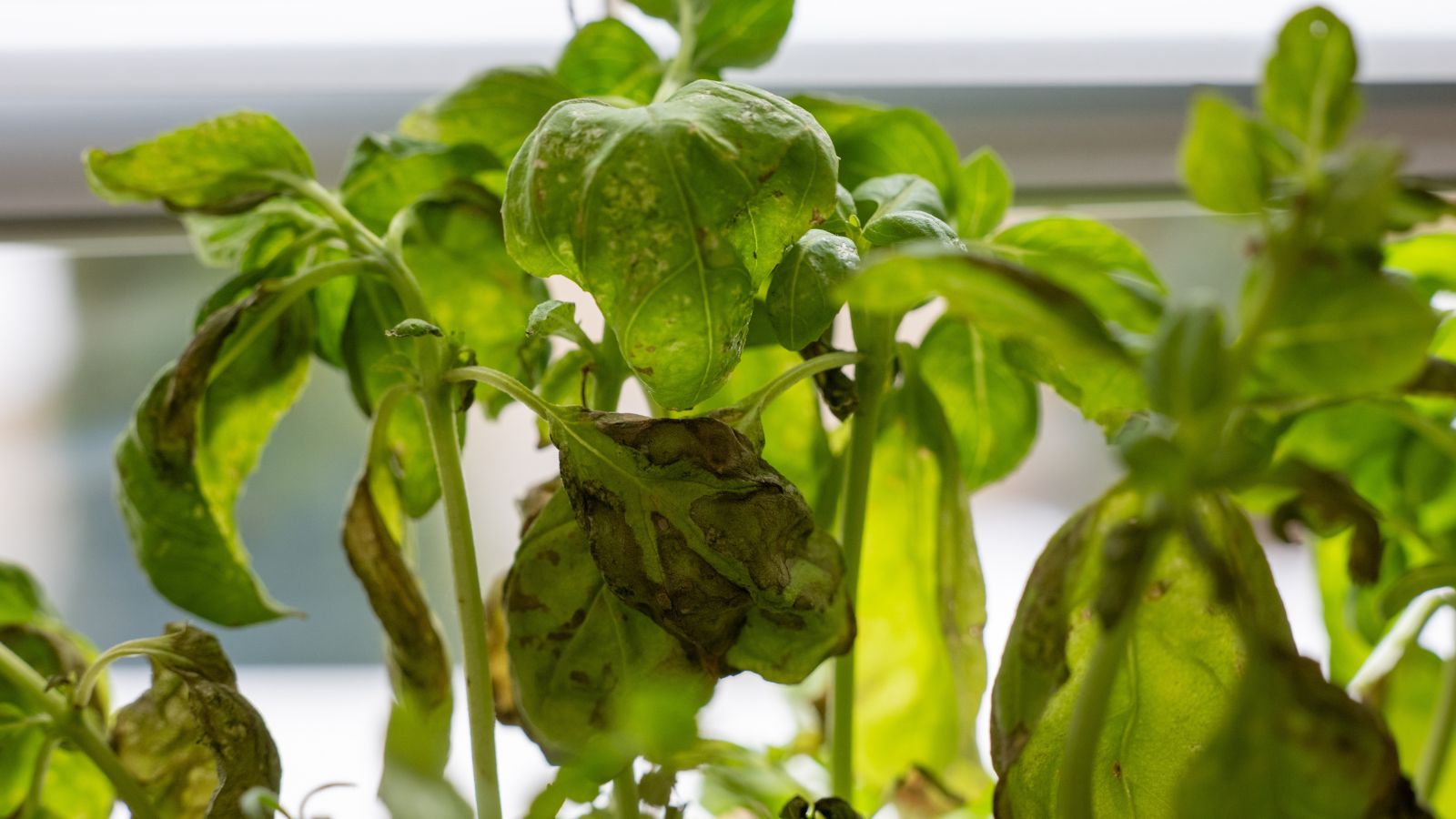
Basil grows fast and consumes nutrients quickly, especially in the limited soil volume of containers. After a few weeks, even a good potting mix becomes depleted. Leaves will often turn yellow in response. Eventually, you’ll see your indoor basil dying.
To combat this problem, fertilize every few weeks with diluted liquid fertilizer. Half-strength applications work better than occasional full-strength feeding due to the smaller size of indoor containers. This will help your basil push out those lush leaves you’re looking for.
Pests
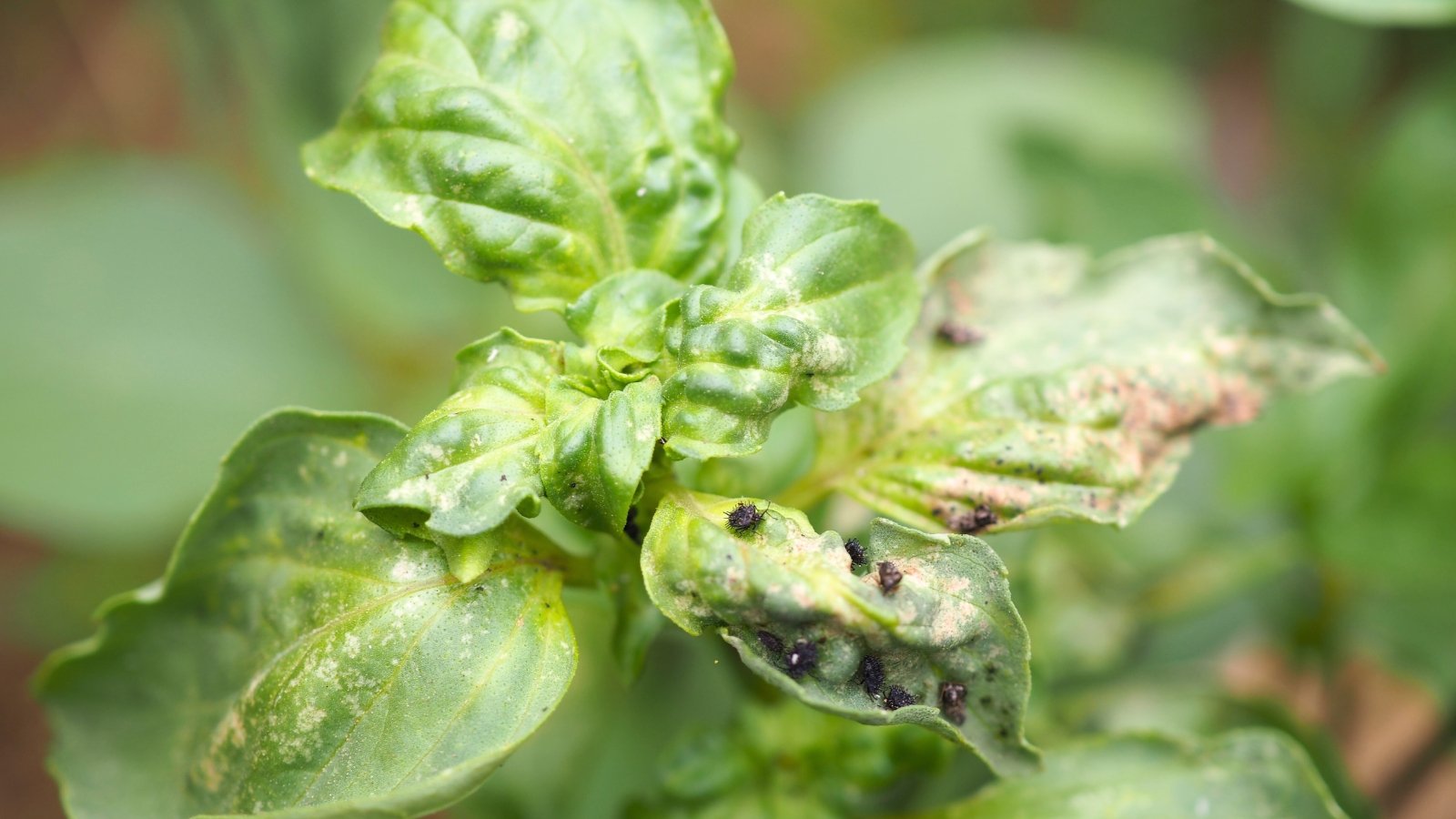
Gardeners often don’t think about pest problems when growing indoors, but they’re not unheard of. Aphids love basil, even indoors where natural predators are absent. These tiny insects can come in from windows (or already existing on the plant), sucking sap and weakening the plant.
Check new growth and leaf undersides regularly to stop your indoor basil from dying. Catching aphids early makes them easier to control. A few aphids can be wiped off with a damp cloth or sprayed off with water. Larger populations might need insecticidal soap treatment.
Fungus gnats are more annoying than harmful, but indicate overwatering issues. The larvae live in wet soil and feed on organic matter and sometimes roots. Letting soil dry more between waterings eliminates the moist conditions fungus gnats need to reproduce.


