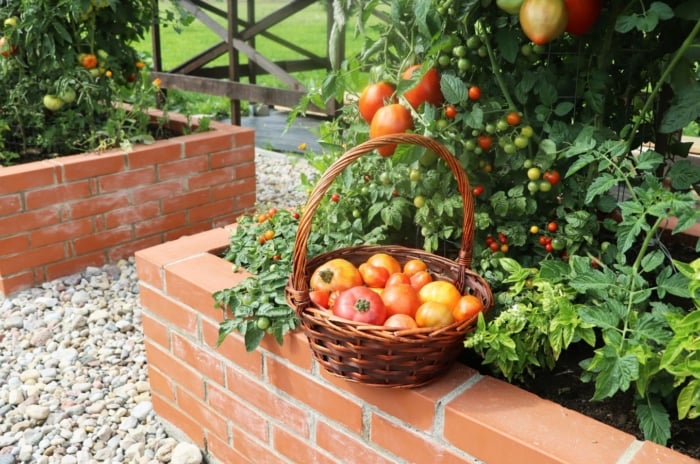
Should you Bury Your Tomato Plants Sideways?
You may have heard to bury your tomato sideways for an even bigger harvest. While that may be the case in certain contexts, there are some caveats to consider. So before you plant your tomato on its side, read what experienced gardener and tomato grower Sarah Jay has to say about it.

Contents
Some benefits come from following the advice to bury a tomato sideways when you transplant it. In the right context, this results in a better harvest. But what if you don’t have the right conditions for higher yields? Well, sideways plantings could actually hamper the crop overall.
In fact, there may be another way to transplant your tomatoes that works best for your region and climate. It’s worth weighing your options, and with growers in many parts of the continent readying their gardens for growing tomatoes, now is a good time to consider if your tomatoes should go in on their sides.
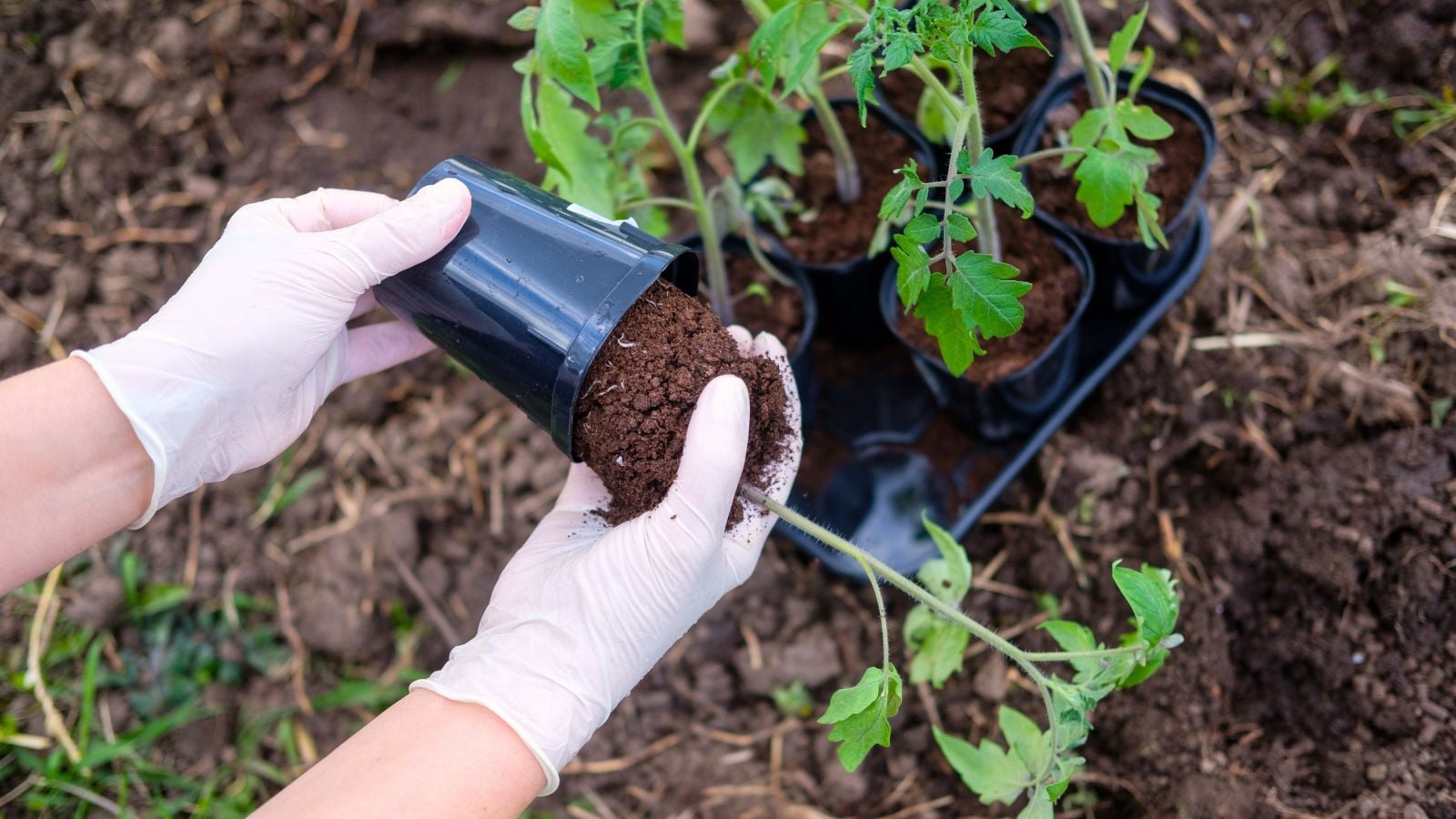
In the Epic Gardening test garden, Kevin transplanted three tomato plants in three different ways. One was planted deeply, one was planted on its side, and one was planted at the depth it was already growing in its nursery pot. The results of this experiment are interesting and reveal why sideways plantings may not be the best for you.


The Short Answer
If you bury a tomato sideways when you transplant, there will be benefits. But whether or not those lead to a bigger harvest is largely contingent on your climate and your growing season. If you have a limited time to produce tomatoes, a different transplanting method may be better.
The Long Answer
Most tomatoes are ready to harvest from about 60 days after you transplant them. In more temperate regions, achieving a harvest in this timeframe is totally doable. However, in limited seasons, it’s not the best option. Weigh the benefits with the pitfalls of sideways planting based on the length of your tomato season, which is the time when daytime temperatures hover around 85°F (29°C), and nighttime temperatures remain above 50°F (10°C).
Benefits
Here are the reasons someone would want to bury a tomato sideways. Note that these benefits are easier for your plants to utilize when the season is the right length, and you have the proper conditions for growing tomatoes from the beginning.
The entire trench method (another name for sideways planting) relies upon the tendency for tomato stems to produce adventitious roots, which are roots that develop on non-root anatomy. You can see this tendency echoed in lots of crops, from eggplants to cucumbers.
Better Root Development
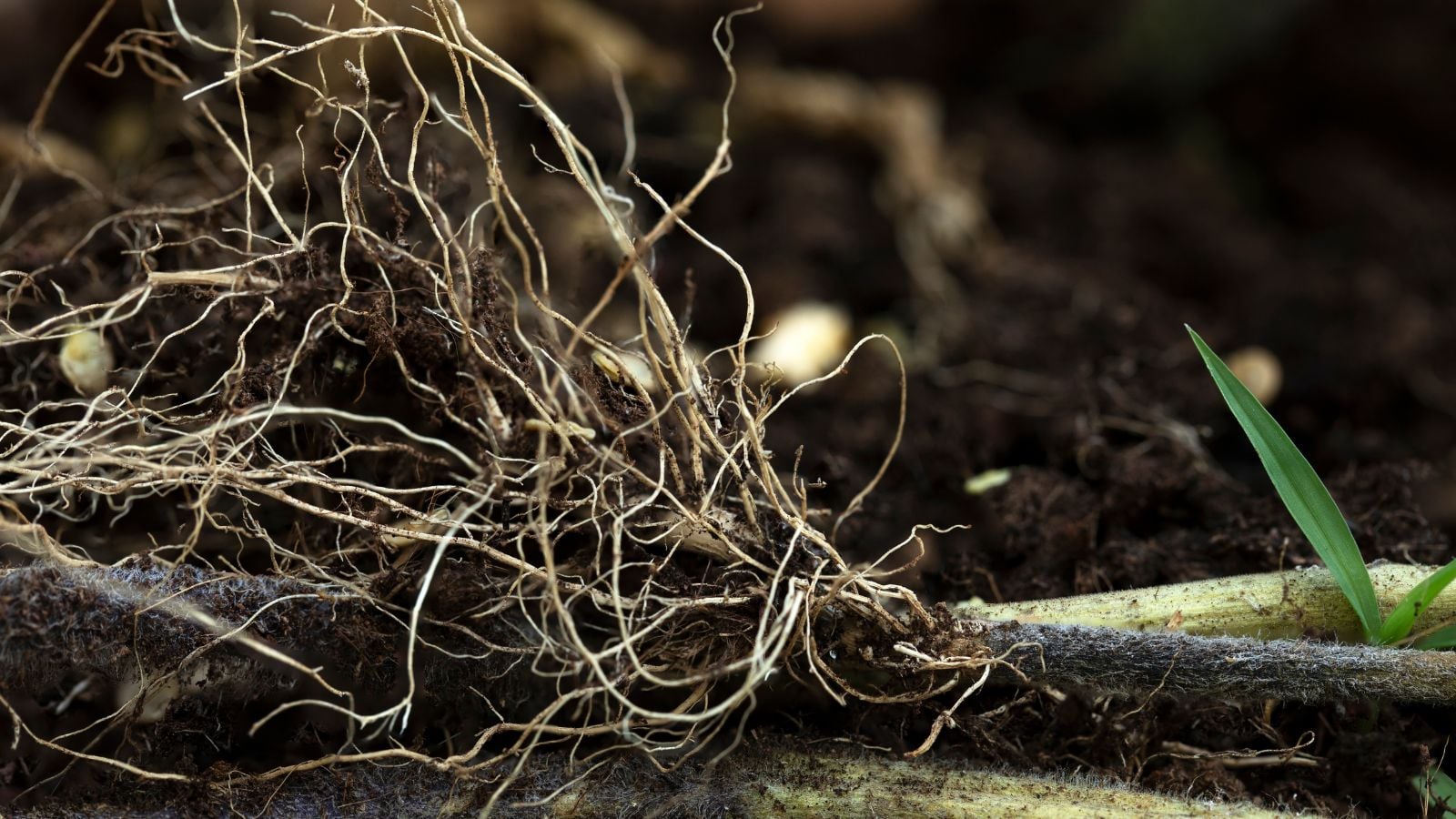
The first advantage of planting your tomatoes using the trench method is better root development. The stem, when buried sideways, has more access to warm soil, which spurs adventitious root growth. A robust root system has more access to water and can retain extra moisture that tomatoes need.
More Stability

Similarly, the trench method promotes better stability for tomato plants. A more developed root system protects plants in areas with common high winds and spring storms. Of course, non-bush varieties still need a stake or trellis, but they’ll have the grip at the root level to weather the extremes.
Higher Yields
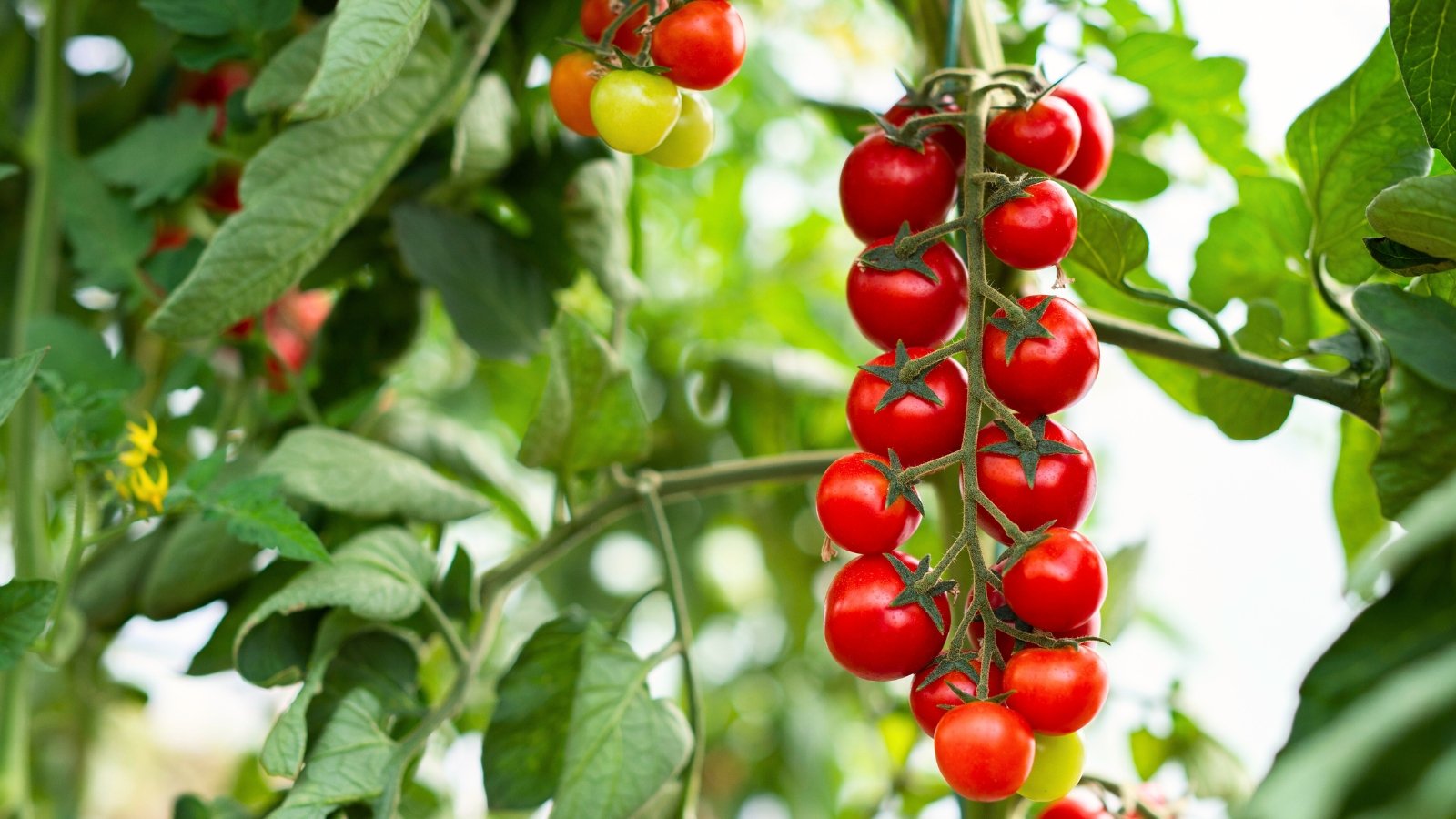
Better stability and access to water and nutrients both lead to higher flowering and fruit production. Warm temperatures spur flowering at a higher rate, and you’ll have plenty of tomatoes at harvest time. As long as your season allows you the time to develop a large root ball, the trench method works.
Potential Problems
Extra root masses are great if there is a period long enough to allow flowering and fruit development after the roots are established. This is the important thing to note about the trench method. If you only have 60 days left in your season when you bury a tomato sideways, you may actually set back your crop. Here’s how.
Less of a Harvest

Roots take time to develop. When you start tomato seeds and nurse them to the transplant phase, you’re putting in weeks of effort just to get to that point. If you trench your tomato in a short season, it may not have time to develop more roots along the sideways stem underground, and subsequently flower and fruit.
Not Enough Time
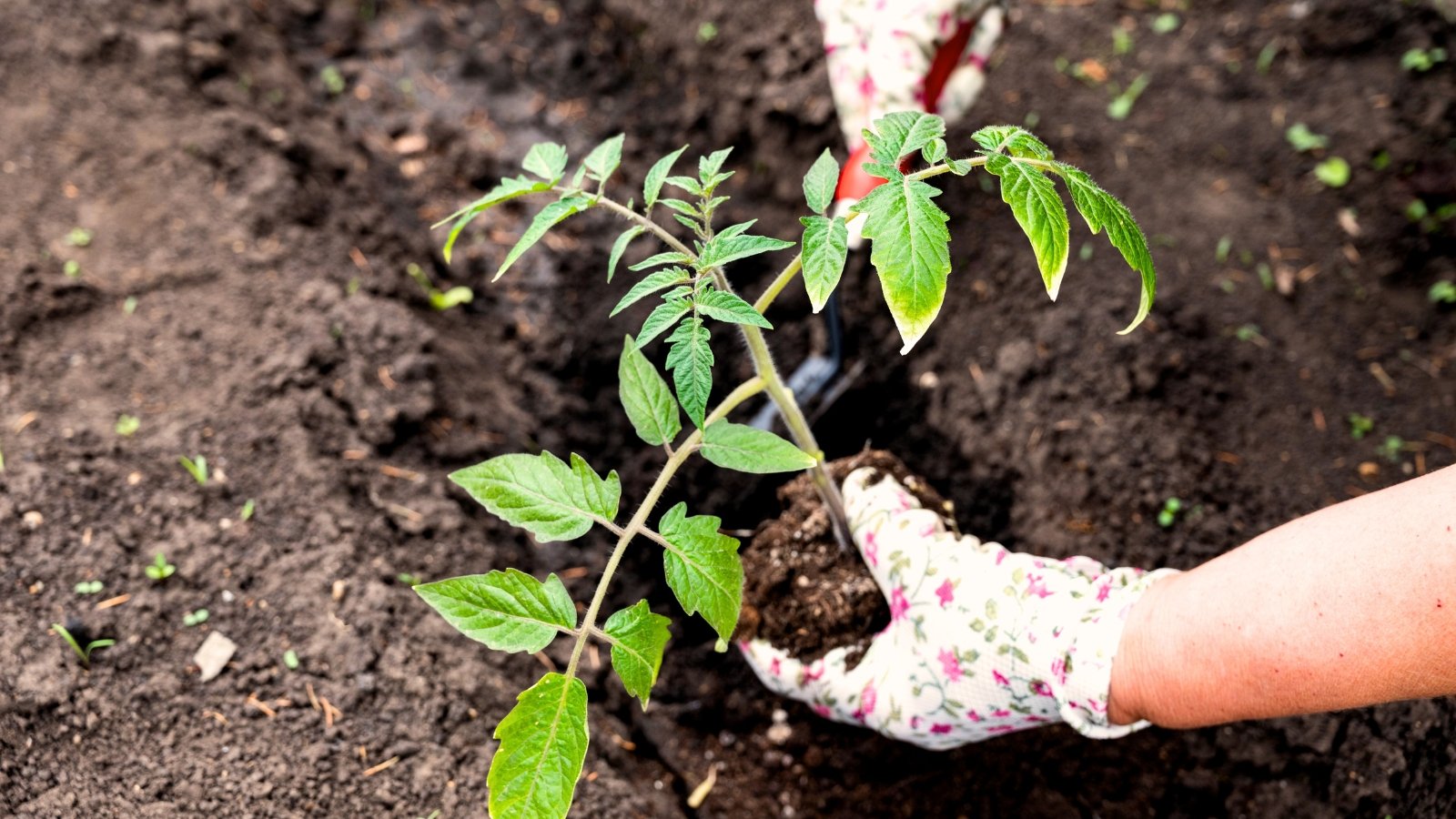
Plants are always growing in multiple ways at one time, but they require different nutrients to develop different parts. The same nutrients can be utilized for foliage and roots, but often the majority of nutrients go to one or the other. Unless you have a long season, with at least a couple of weeks more than 60 days, trenching might not be the best option.
Other Methods

If you can’t bury your tomato sideways, there are other ways to plant them that can result in a good harvest. You can bury the stem deeply and remove the lower leaves to the part of the stem that touches the soil line. This still requires extra time, as tomatoes develop adventitious roots along the buried stem. However, it will not take as long as trenching.
If you’re unsure about timing, you can do the simple thing: plant tomatoes at the soil surface, at the same level they were growing in their nursery pot. As long as you care for them and give them the support they need, you’ll still get a good harvest.
Key Takeaways
Before you bury a tomato sideways, remember that it may not be the best method for you. Here are a few key pointers to take to your tomato transplant:
- Consider the length of your season, and remember that tomatoes need at least 60 days (sometimes more) of temperate weather from the time you transplant to produce fruit.
- In seasons long enough, trenching allows for better root development, easier access to water and nutrients, and, in turn, a larger harvest.
- In short seasons, trenching can hamper fruit development, as plants take more time to develop adventitious roots instead of producing flowers and setting fruit.
- You can use other methods, like burying your tomato deeply or simply surface planting, to ensure you don’t waste time on a technique that isn’t right for your garden.