Should You Buy Bagged Soil?: 5 Risks to Your Garden
Are bagged soil risks worth the cost and convenience? The answer to that question isn’t a simple one, and it’s largely contingent upon your garden and its particular needs. To examine the potential pitfalls, experienced gardener Sarah Jay outlines a few risks so you can decide how to build your own soil.

Contents
When I started gardening, there were things I didn’t know about bagged soil – risks involved in relying solely on it to build my garden. One of the problems that could arise with certain soils did so almost immediately. I bought the wrong topsoil and ended up with the dirt form of concrete in one of my raised beds. Nothing could grow!
It took a couple of years to come back from that. Now, I’m better informed about what could go wrong with bagged soils. And I want you to know about this before you make the same mistake I did, or before something else goes wrong. The truth is, many issues could occur at both the manufacturing and seller levels.
So before you spring for bags and bags of soil that could limit your growing abilities, consider the following. We’ll touch on the problems and the things to look out for before you purchase your bags. All this is in hopes that you’ll avoid some of the common mistakes that come with starting a garden, and you get to do it right the first time.

Soil Builder Peas and Oats Cover Crop

Soil Builder Peas and Oats Cover Crop Seeds
Should You Buy Bagged Soil?
Put simply, there are some risks involved with using only bagged soil to build a garden. It’s hard to know exactly what you’re buying and what kinds of conditions the soil has been stored in. Improper preparation and storage conditions can hamper even the best preformulated soils. In fact, your native soil with a few key amendments may be even better than the soil you can buy in a bag.
Risk 1: You Can’t See It

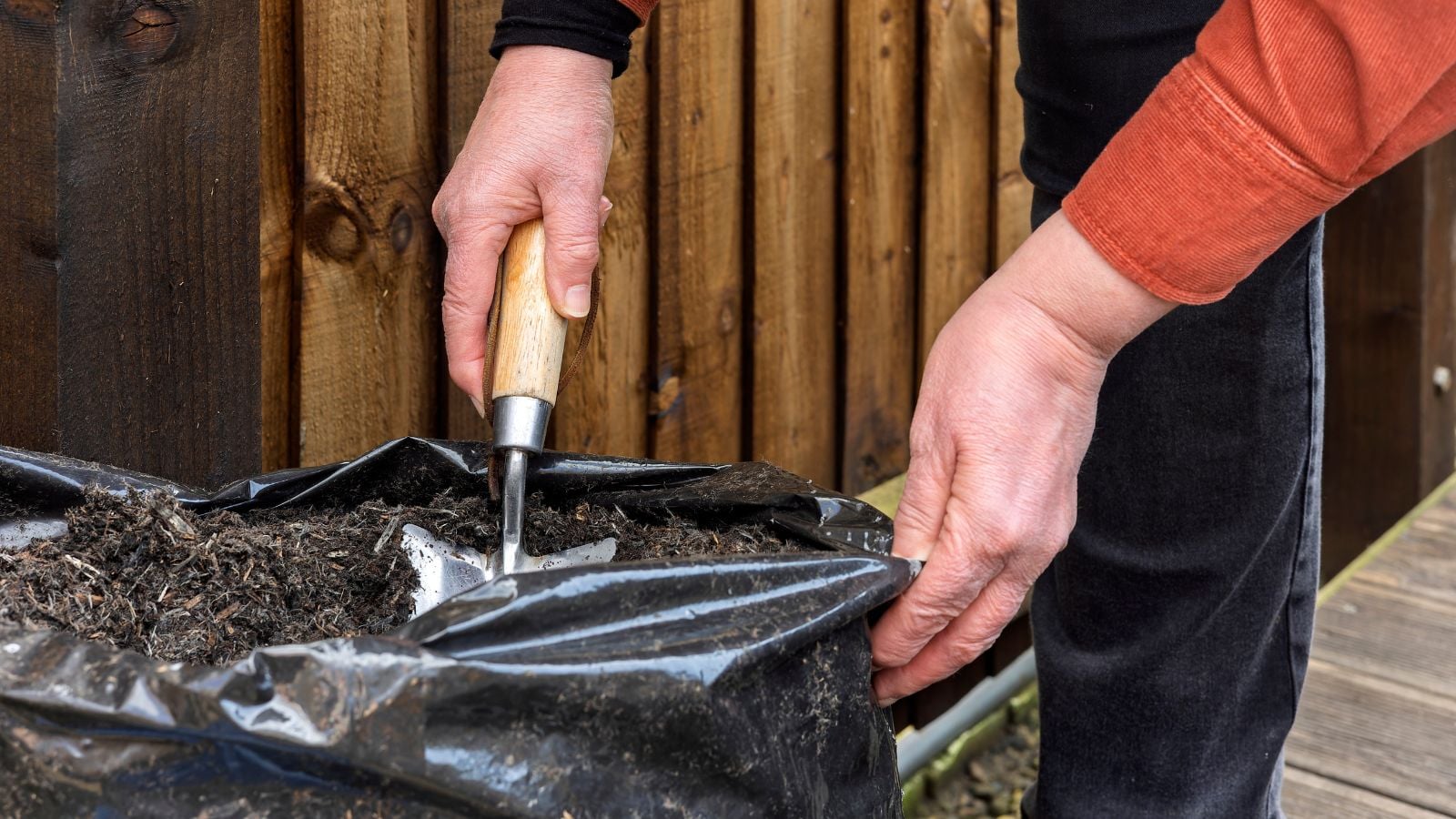
The most obvious of the bagged soil risks is that you can’t look into the bag and see the composition of the soil before you get it home. It’s not until you can open the bag that you’re fully aware of the quality. You may have a good understanding of a certain brand and formulation, but it’s hard to see if there are contaminants present until you open the bag.
The best way to get around this is to start with a reputable brand and a reputable store that you, a family member, or a friend knows of. Secondly, you should know what type of soil you need. Look at the label on the bag, and note its contents. For raised beds, opt for bags labeled garden soil or potting soil. For your own formulation, you’ll need topsoil, compost, peat, perlite, and more. Of course, you’ll need different materials for different contexts.
Another thing to look for is the date on the bag. This is usually the date the mixture was bagged. When stored in an area out of direct sunlight, bags generally retain their initial quality for one to two years. Once opened, they’ll start to dry out, so look for any holes in the bags you choose. You can ask most stores for a discount on damaged bags.
Risk 2: It Doesn’t Last

Another of the bagged soil risks has to do with its limited ability to hold up over time. Not only are there general expirations, or a pattern of decline after the bag is opened, when applied to the garden on its own, it won’t hold up for more than a year. You can always mulch to help the soil retain moisture and nutrients, which would slow the process of quality decay.
Your native soil, unless you’re on a recently cleared lot (one leveled with heavy machinery), might have all the structure and nutrients you need to start the garden. In this case, a few amendments may be all you need. We’ll get more into that later, but know that your bagged soil won’t have the lasting power you may need.
Risk 3: It’s Expensive
When we talk about a good preformulated soil, we’re talking cold hard cash. I personally find that using bagged soil risks depleting my bank account. However, a bag here and there isn’t a huge expense. This is why it’s probably better to start with what you have and determine what you need to build your own soil.
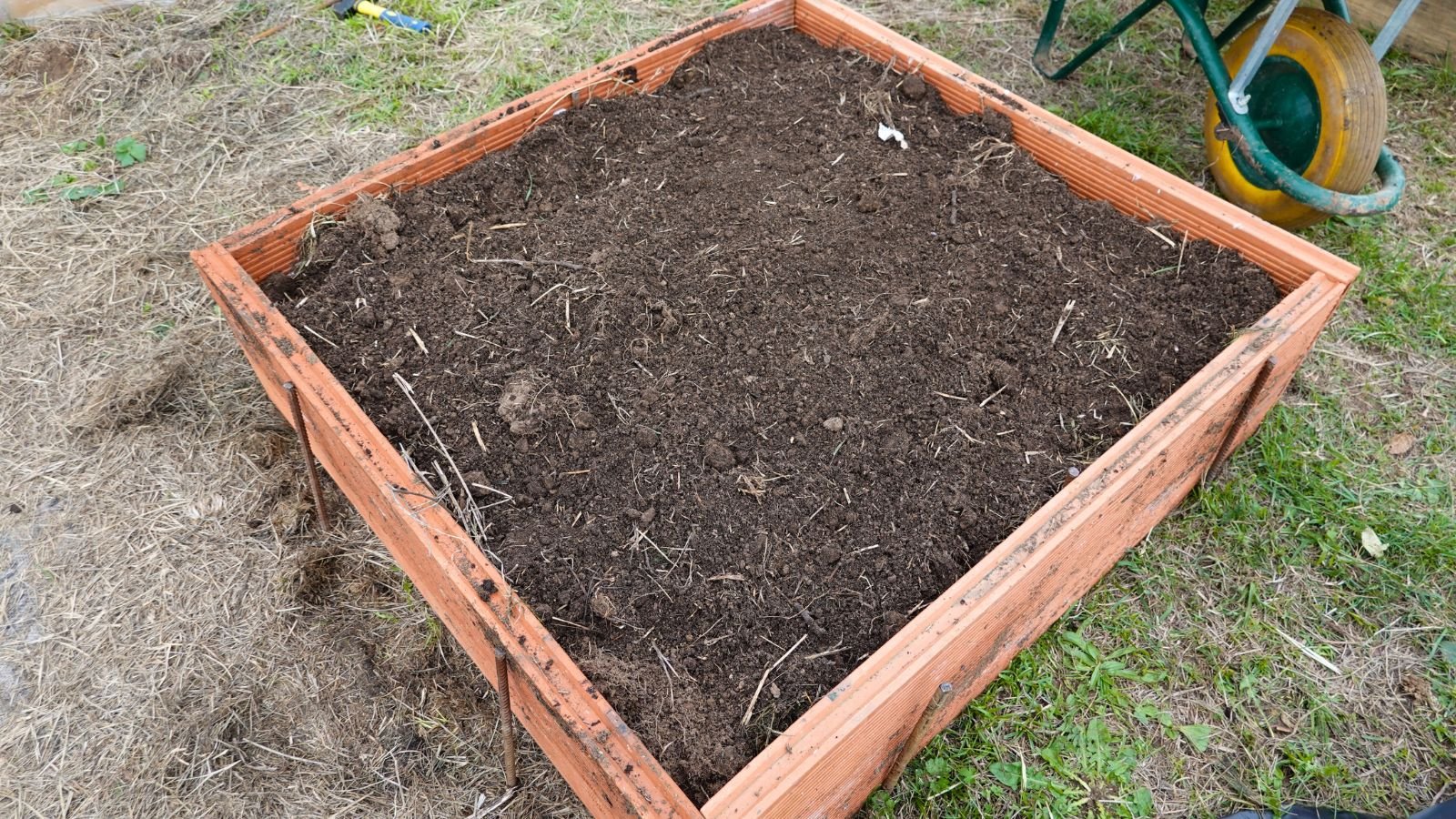
One ten-inch-tall, three-by-six-foot raised bed requires 15 cubic feet of soil. One bag of soil is typically around two cubic feet. That means you’d need about eight bags of soil for one bed, and that can cost a pretty penny if you’re working with a good quality product. If each bag of soil is $25, that’s over $200 just to fill one bed. And you still have to plant it afterward.
Risk 4: It Could Be Contaminated

One of my friends bought multiple bags to fill their grow bags, and found out late into the season that it was full of fungus gnat eggs. It was so hard to get rid of the gnats that my friend gave up for the season and focused on treating the gnats. Similarly, another friend dealt with herbicides in the soil. This is one of the main bagged soil risks. The bags you purchase could be contaminated.
This is not often the case, but it can happen in transport when bags are shipped. They may take on damage that allows insects and pathogens to infiltrate the contents. This is why it’s so important to inspect the bags you purchase and focus on intact bags when you’re just starting.
Similarly, I’ll reiterate to purchase from reputable sellers that keep their bags in good condition, both in terms of their structural integrity and in the way they store the bags. If you know a seller has had issues with contamination in the past, it might not be worth purchasing from them again.
Risk 5: Amended Native Soil Is Better

We’ve been hinting at this the entire time, but often the best way to fill your raised beds, containers, or to build your in-ground bed is to amend your native soil. Your local extension office will have information about what is best for your region. This will give you an overarching idea of how to amend the soil.
Then employ a soil test. This gives you a very specific look at your soil’s composition and how to adapt it for most garden plants. If you’re growing in larger raised beds, you can fill the bottom with mixtures of wood chips, branches, leaves, unfinished compost, and more. What you’ll have after this process is a much more adapted soil that has a more complete nutrient and microbial profile.
While it makes sense to employ bagged soils for plants that need a specific composition, or just to top off soil that needs a slight refresh, bagged soil risks make relying on bags a quick but sometimes poor solution.