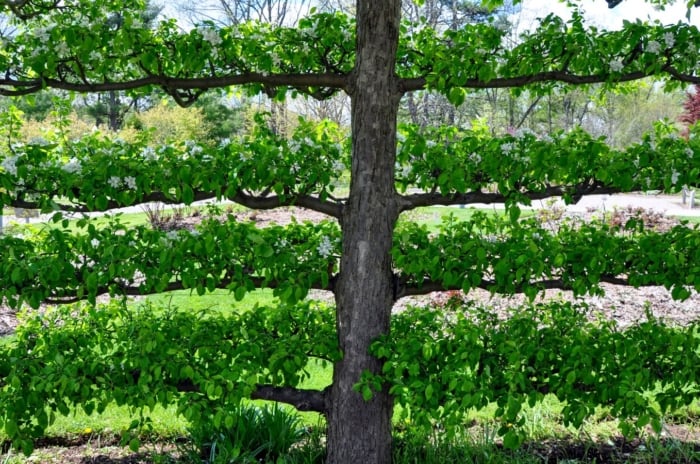
11 Trees With Red Leaves Year-Round
Fall isn’t the only season for red leaves. Some trees have them year-round! Then, the red-leaf trees turn brilliant colors in autumn. Scatter them about the yard to brighten up the space, or use one as a focal point in the garden. Join former nurseryman Jerad Bryant to discover 11 trees with red leaves all year.

Contents
A well-placed tree does wonders for the yard. It’ll add structure and color to the site, creating shade and beauty wherever it grows. A red-leaf tree is doubly impressive. It stands out from all the other green-leaf species in your yard and your neighbors’.
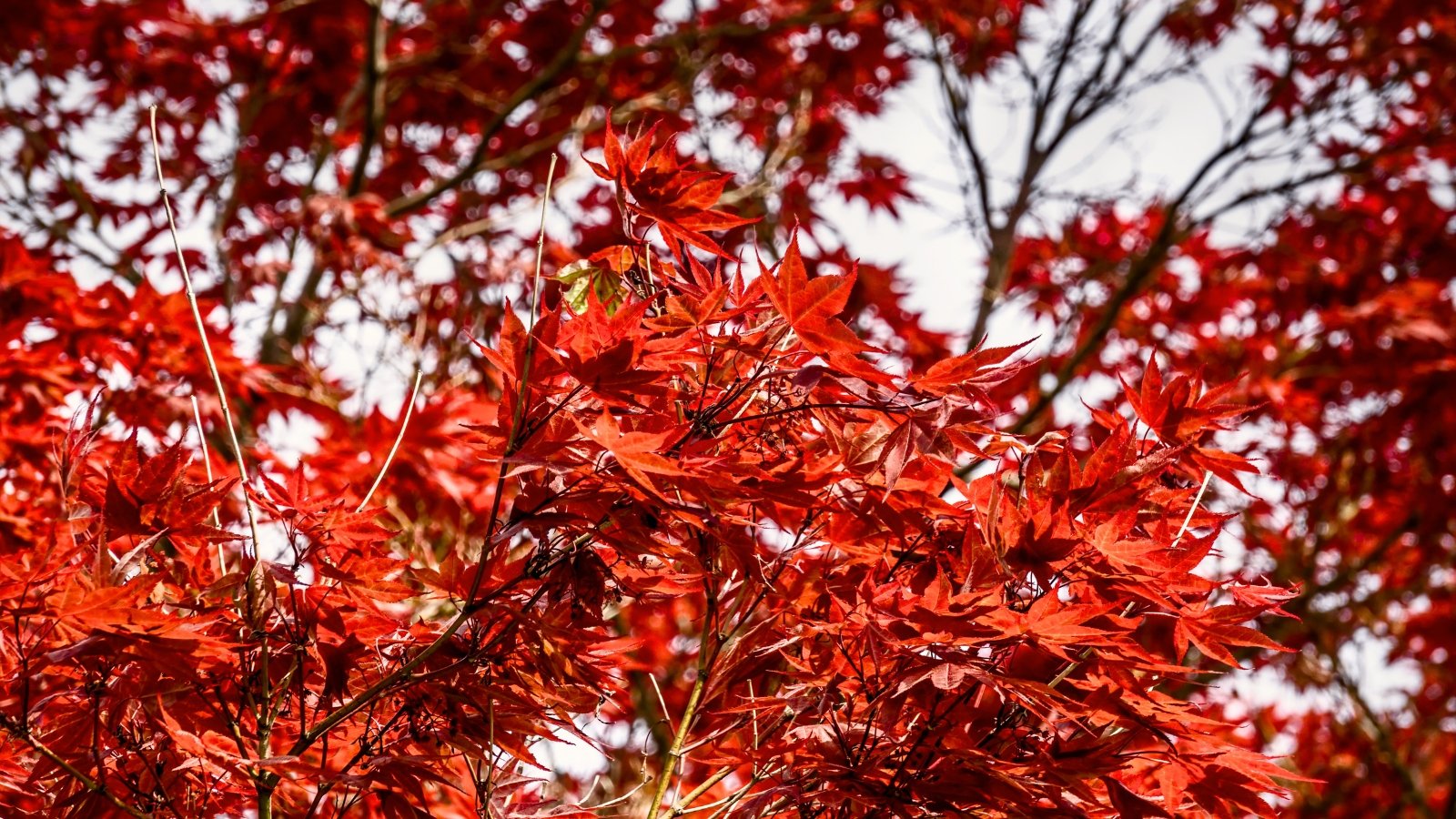
Some are small and stately, while others are tall and majestic. Most trees on this list are Japanese maples, as they’re some of the most colorful trees available. They have hand-like leaves, twisting branches, and stunning fall color in their leaves.
Others are red-leaf varieties of common trees, like hazelnuts and plums. They’ll stun onlookers both with their leaves and their flowers, adding all-season interest to the yard. Start with your favorite type, or get a few for year-round color.
Metal Tree Surround – 8” Tall
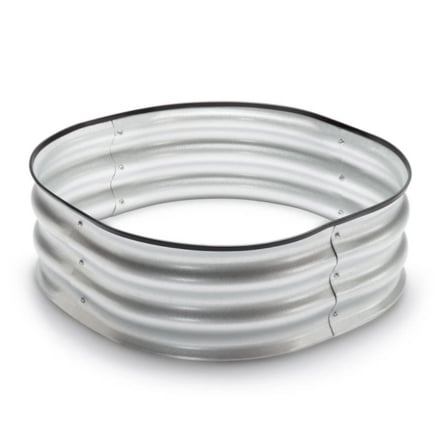
- Durable Aluzinc Steel Construction for 20+ Years of Use
- Directs Water to Roots for Improved Moisture Retention
- Keeps Soil and Mulch Contained, Blocks Weeds
- Stable on Flat or Sloped Ground for Reliable Support
- Quick, Tool-Free Assembly for Easy Setup
Cabbage Tree ‘Atropurpurea’

|
botanical name Cordyline australis ‘Atropurpurea’ |
|---|---|

|
sun requirements Full sun to partial shade |

|
height 6-35’ |

|
hardiness zones 8-10 |
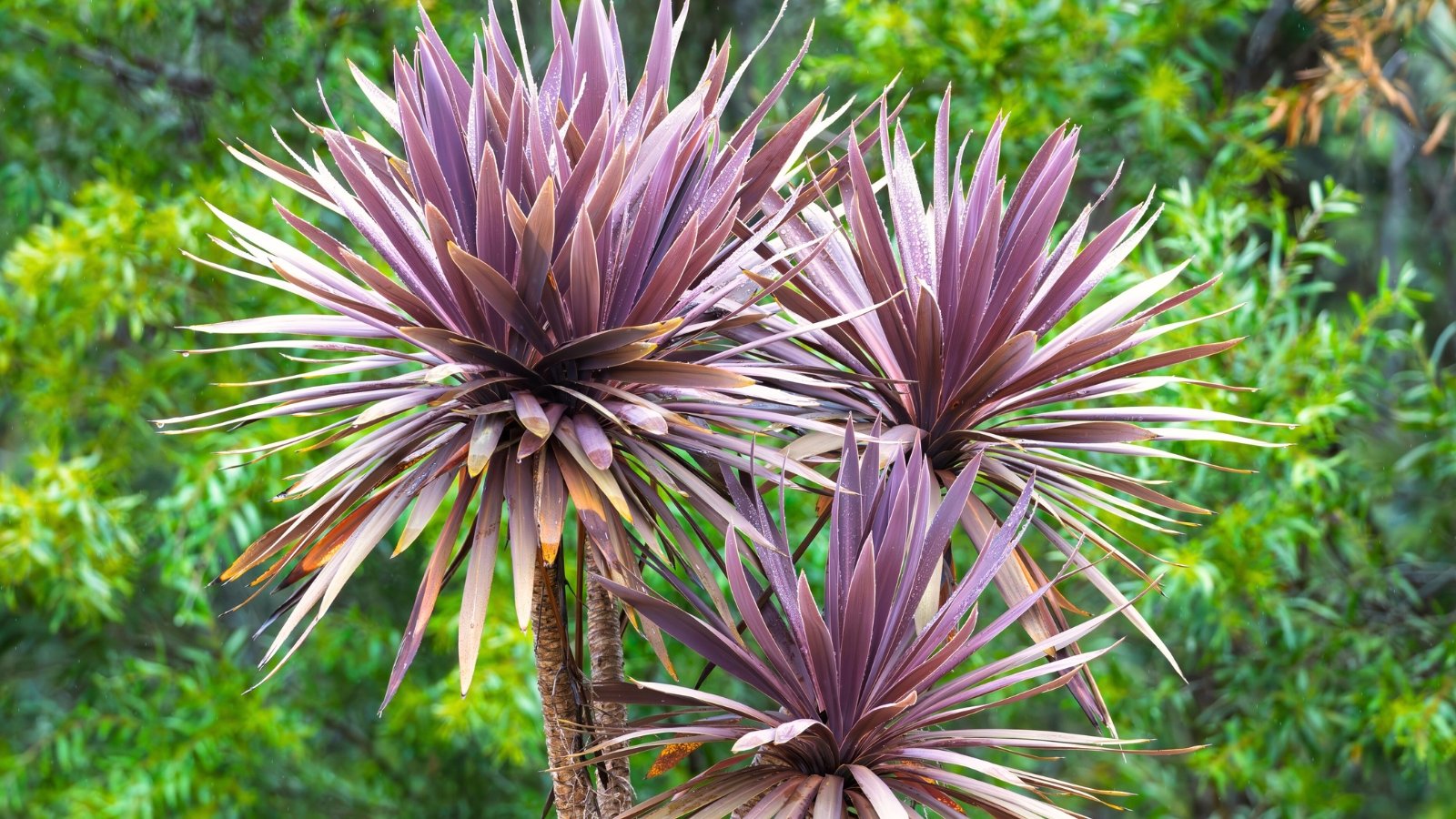
Cabbage trees resemble Joshua trees with long, strappy leaves and bare trunks. This is because the two are relatives!
Cabbage trees prefer warm temperatures to thrive, and they dislike growing in regions with harsh winters. They’re drought-tolerant and long-lived, growing tall and thick outdoors. They’ll work well as houseplants in bright, indirect sunlight.
‘Atropurpurea’ is one of the best cultivars for red leaves on your trees. Also known as bronze dracaena, it features rich, red leaves that retain their color throughout the year. Give it rich soil, regular mulch, and consistent watering during the growing season.
Eastern Redbud ‘Forest Pansy’
|
|
botanical name Cercis canadensis ‘Forest Pansy’ |
|---|---|
|
|
sun requirements Full sun to partial shade |
|
|
height 20-30’ |
|
|
hardiness zones 5-9 |
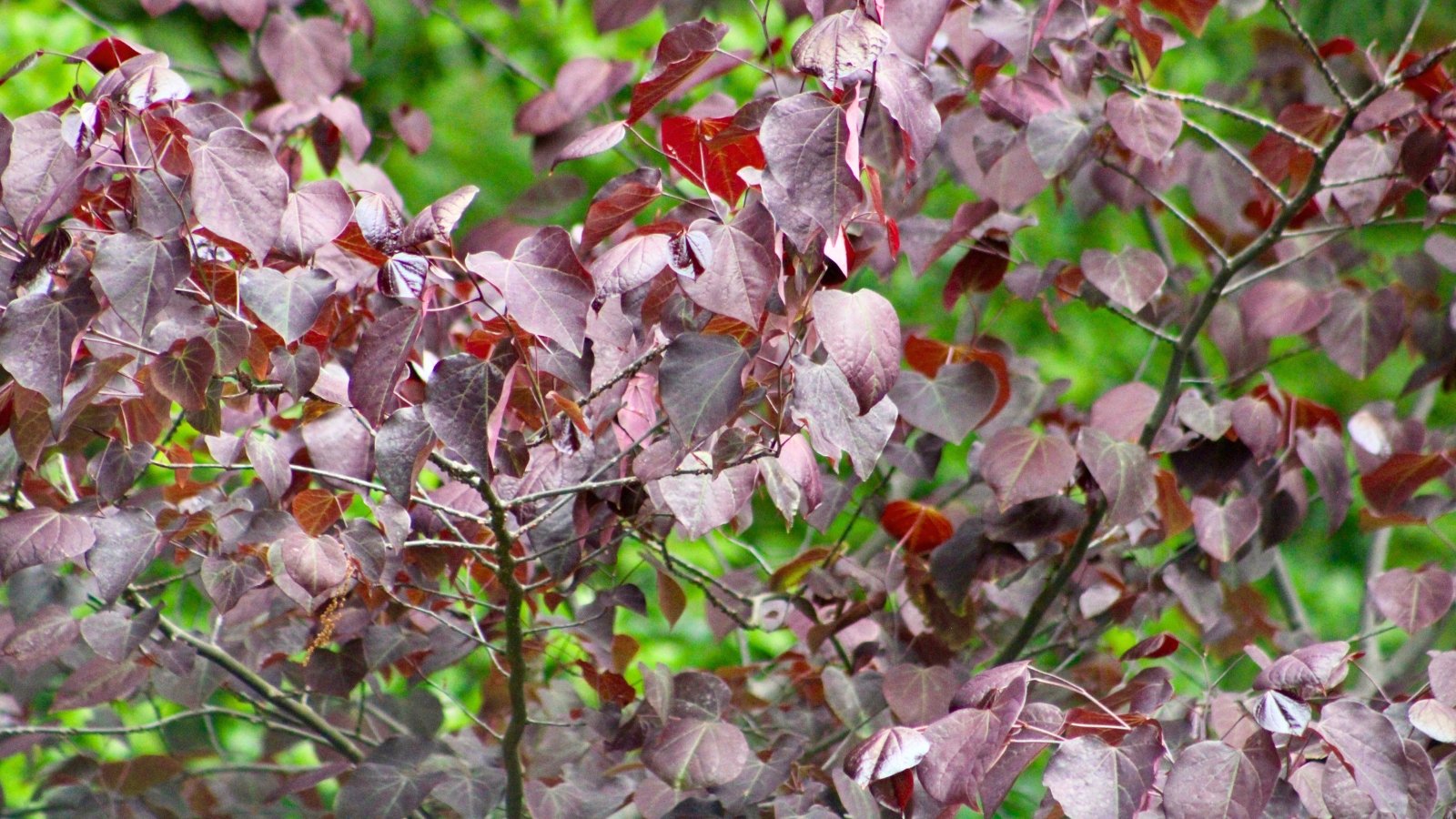
Eastern redbud is a U.S. native tree that thrives in forests near the East Coast. It features bright pink-red blooms in spring. They emerge from naked, leafless branches for a stunning presentation. Heart-shaped leaves sprout shortly after.
‘Forest Pansy’ is a prized cultivar of eastern redbud. Instead of green leaves in summer and fiery ones in fall, it features purple leaves during the growing season. As the cool of fall arrives, the purple leaves turn brilliant shades of red, orange, and yellow.
‘Forest Pansy’ works well as both a multi-trunk specimen or a single-trunk tree. Purchase a young sapling, and prune it accordingly to structure it how you’d like it to look.
European Beech ‘Purpurea Pendula’
|
|
botanical name Fagus sylvatica ‘Purpurea Pendula’ |
|---|---|
|
|
sun requirements Full sun to partial shade |
|
|
height 5-12’ |
|
|
hardiness zones 4-7 |
The European beech works well as a garden or landscape tree, not as a street tree. It dislikes soggy soils or longstanding droughts. Instead, it prefers growing in well-drained soils with consistent moisture.
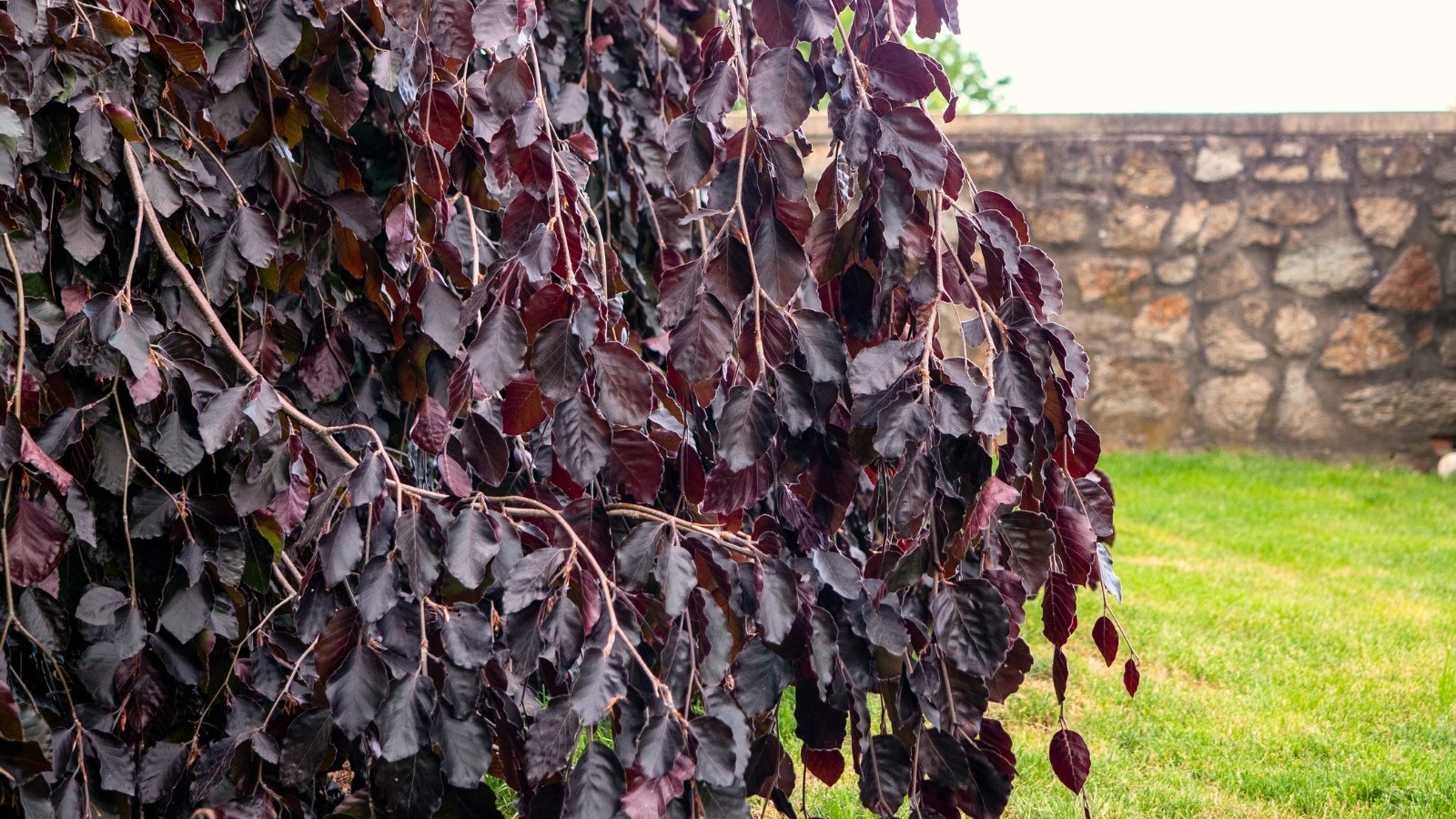
Many beech species exist, but growers love the European species because its leaves turn reddish-brown in autumn. One of the best of these trees is the ‘Purpurea Pendula’ variety.
This cultivar features pendulous branches that cascade to the ground. They don’t grow up like other varieties, as they form a weeping curtain of foliage. The leaves sprout purple-red, and they retain their color year-round.
Flowering Plum ‘Thundercloud’
|
|
botanical name Prunus cerasifera ‘Thundercloud’ |
|---|---|
|
|
sun requirements Full sun to partial shade |
|
|
height 15-25’ |
|
|
hardiness zones 5-8 |
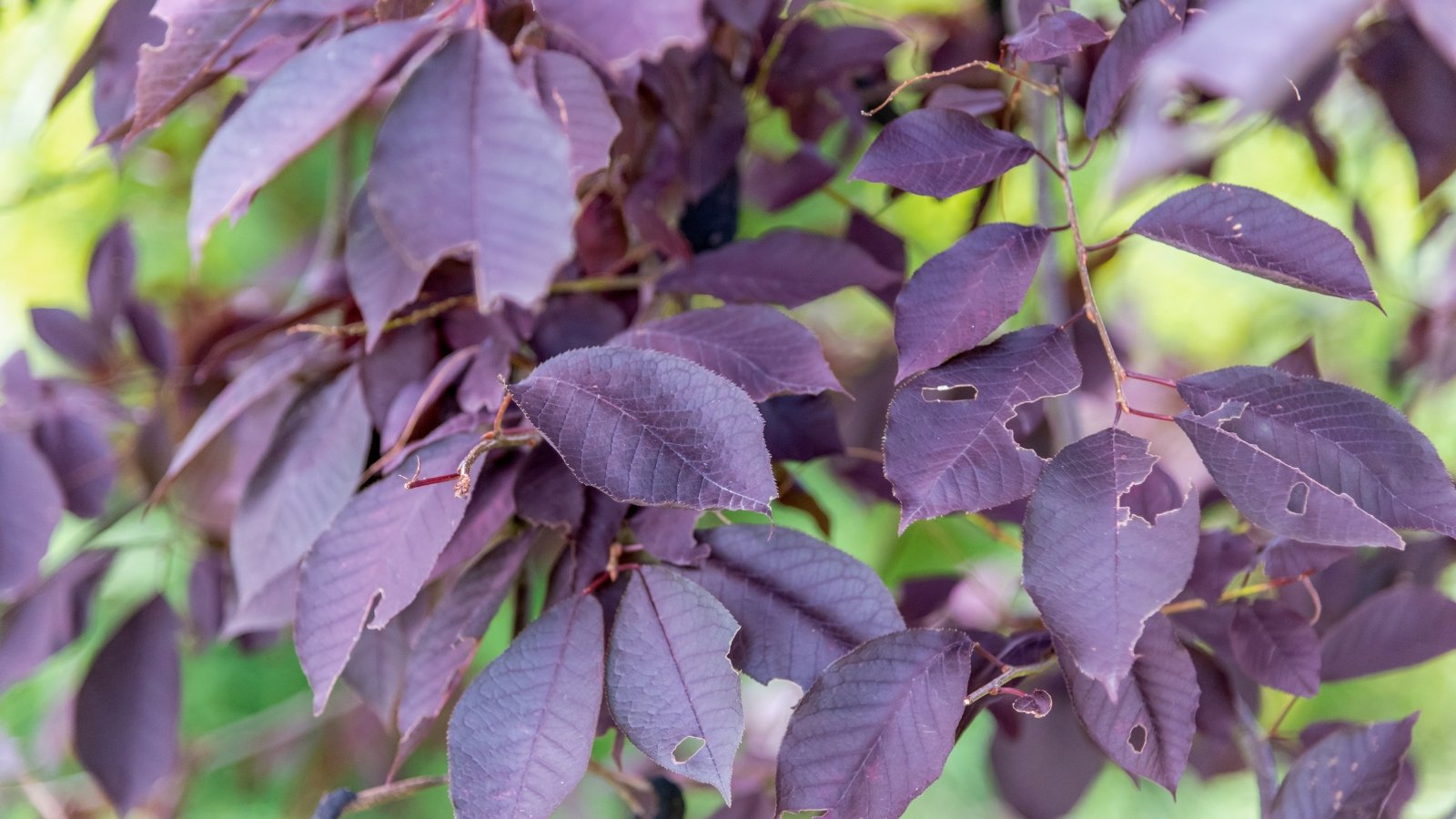
‘Thundercloud’ is one of the most famous flowering plum varieties available. You’ll love its purple-red leaves that turn glossy under the summer sunshine. In spring, pink flowers emerge all over the tree for a spring-blooming spectacle.
Feed pollinators and beautify your yard with ‘Thundercloud’ flowering plum. It’s hardy and tough, and it grows best with plenty of sunlight. Grant it six or more hours of daily direct sunlight to promote the reddest, richest leaves possible.
Hazelnut ‘Red Dragon’
|
|
botanical name Corylus avellana ‘Red Dragon’ |
|---|---|
|
|
sun requirements Full sun to partial shade |
|
|
height 5-6’ |
|
|
hardiness zones 3-9 |
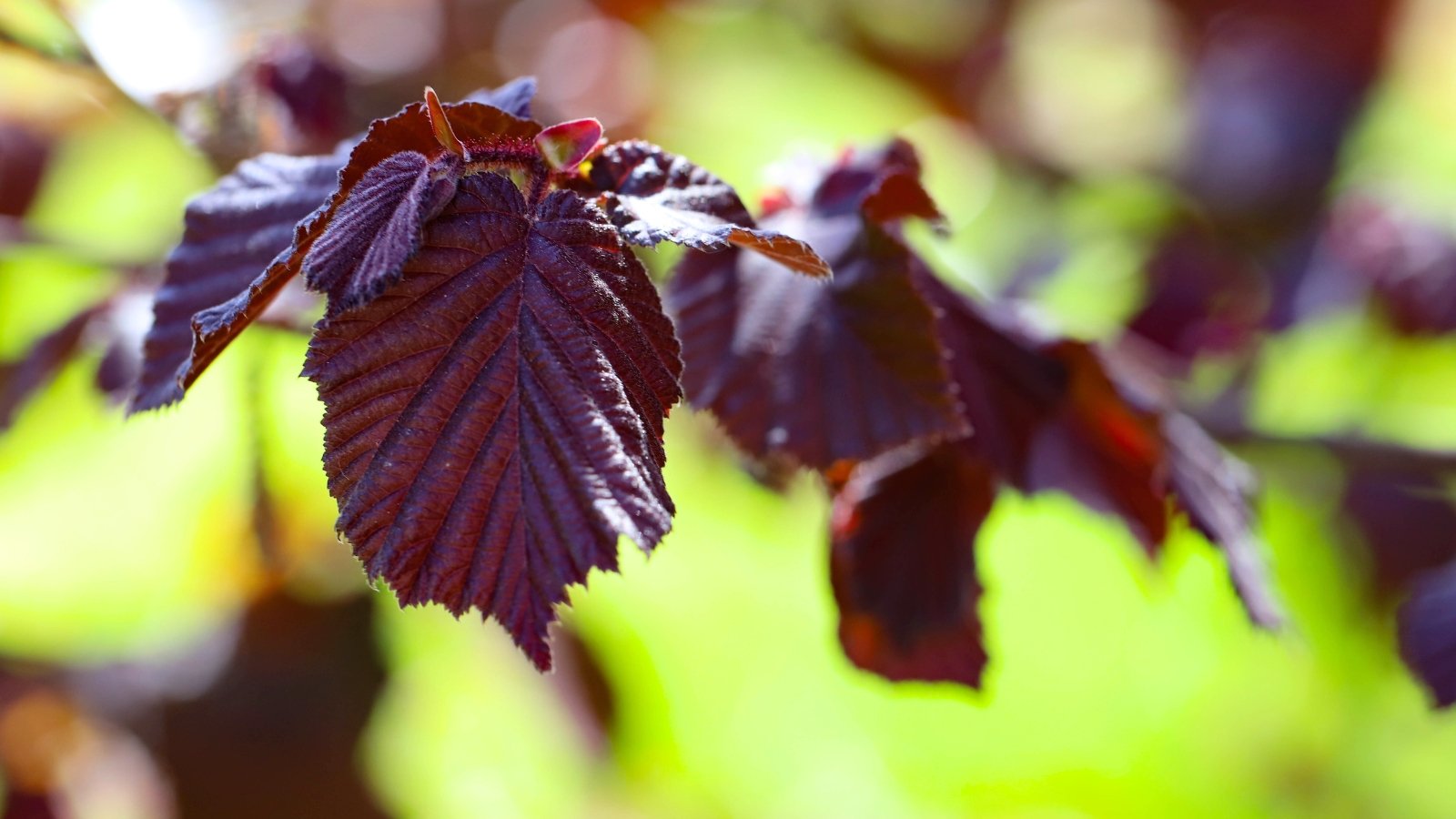
‘Red Dragon’ stays shorter than most other hazelnuts, and it has a unique growing habit that makes it stand out in the garden. It has twisted, contorted branches that grow curved instead of straight. Over time, the tree turns into a wonky specimen that’s unlike any other.
With red leaves on trees year-round and a short stature, this is one of the options that’s perfect for containers and small spaces. It also works well for bonsai. Give it well-draining soil, regular water, and plenty of direct sunlight.
Japanese Maple ‘Atropurpureum’
|
|
botanical name Acer palmatum ‘Atropurpureum’ |
|---|---|
|
|
sun requirements Full sun to partial shade |
|
|
height 15-25’ |
|
|
hardiness zones 5-8 |
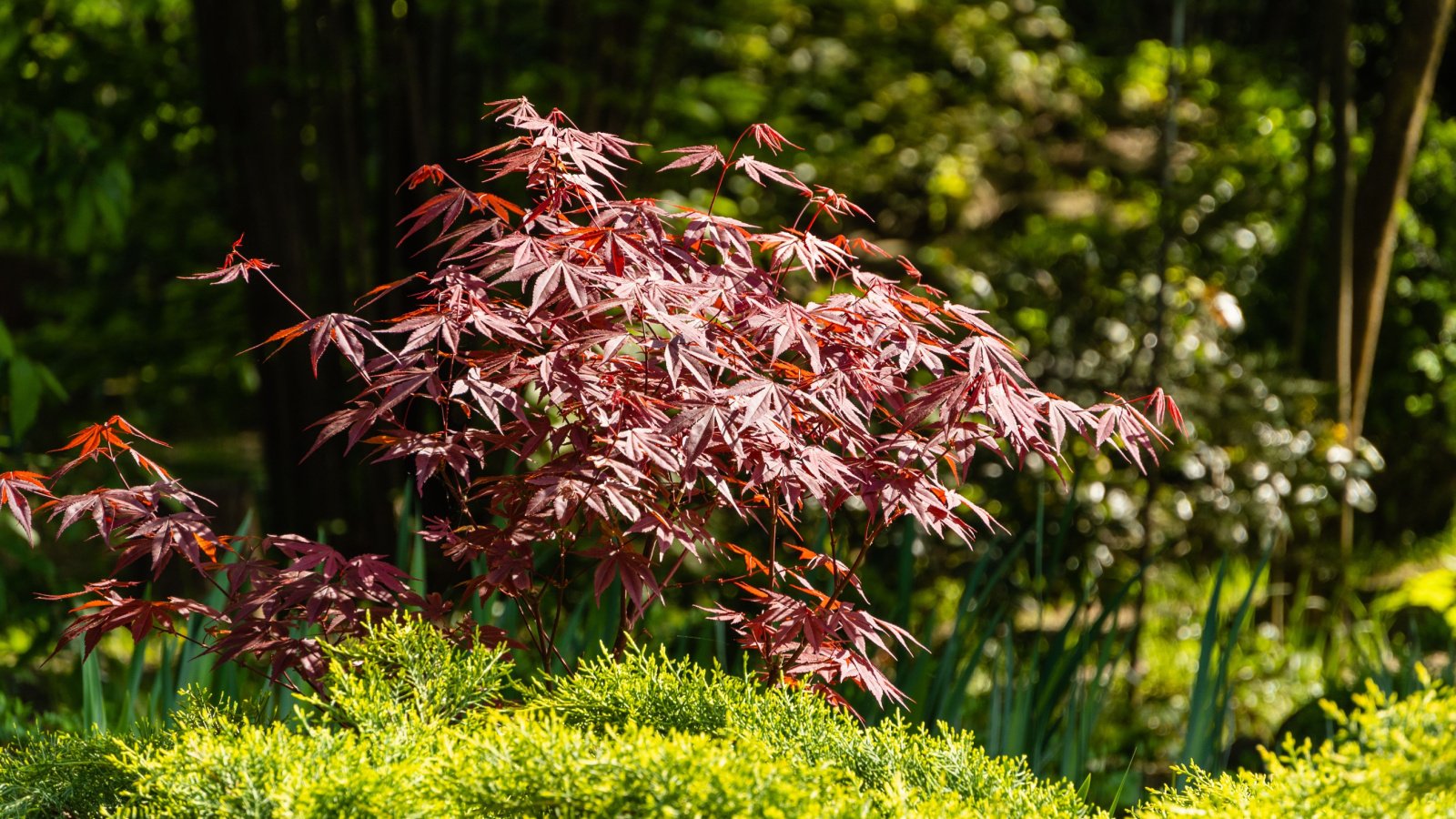
Japanese maples are some of the best trees with red leaves. They’re graceful and stately, and they last for many decades in home gardens. A small sapling will turn into a large, wide-reaching tree in your lifetime.
‘Atropurpureum’ is one of the many red-leaf cultivars available. It stays around 25 feet tall when mature, with a similarly sized spread. The purple leaves turn brilliant scarlet-red in the fall, when temperatures cool and the days shorten in length.
Japanese Maple ‘Bloodgood’
|
|
botanical name Acer palmatum ‘Bloodgood’ |
|---|---|
|
|
sun requirements Full sun to partial shade |
|
|
height 15-20’ |
|
|
hardiness zones 5-8 |
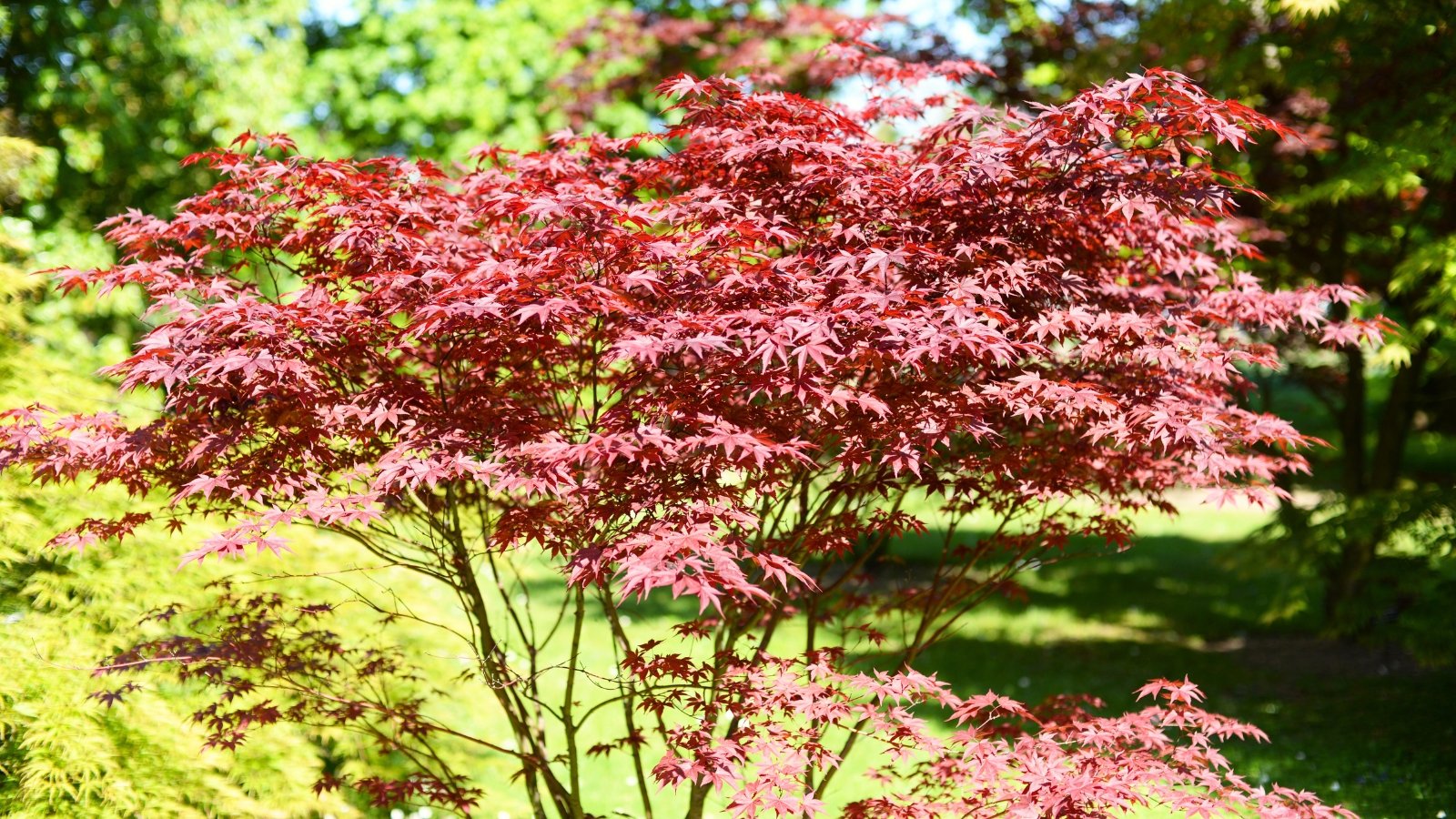
If you talk of red-leaf Japanese maples, most growers will mention the ‘Bloodgood’ cultivar. It’s a favorite because its foliage is less purple and more red than other varieties. It stays blood-red throughout the growing season, and it turns crimson-red in autumn.
‘Bloodgood’ stays a tad shorter than ‘Atropurpureum.’ It’ll grow slowly to 20 feet tall, and it’ll form a wide canopy with many branches throughout. Unlike most maples, Japanese maples tolerate partial or dappled shade.
Plant ‘Bloodgood’ in a partially shady spot if you garden in a warm region. Hot summers can cause the foliage to turn green instead of red, and growing the tree in the shade will promote more redness.
Japanese Maple ‘Red Pygmy’
|
|
botanical name Acer palmatum ‘Red Pygmy’ |
|---|---|
|
|
sun requirements Full sun to partial shade |
|
|
height 3-10’ |
|
|
hardiness zones 5-9 |
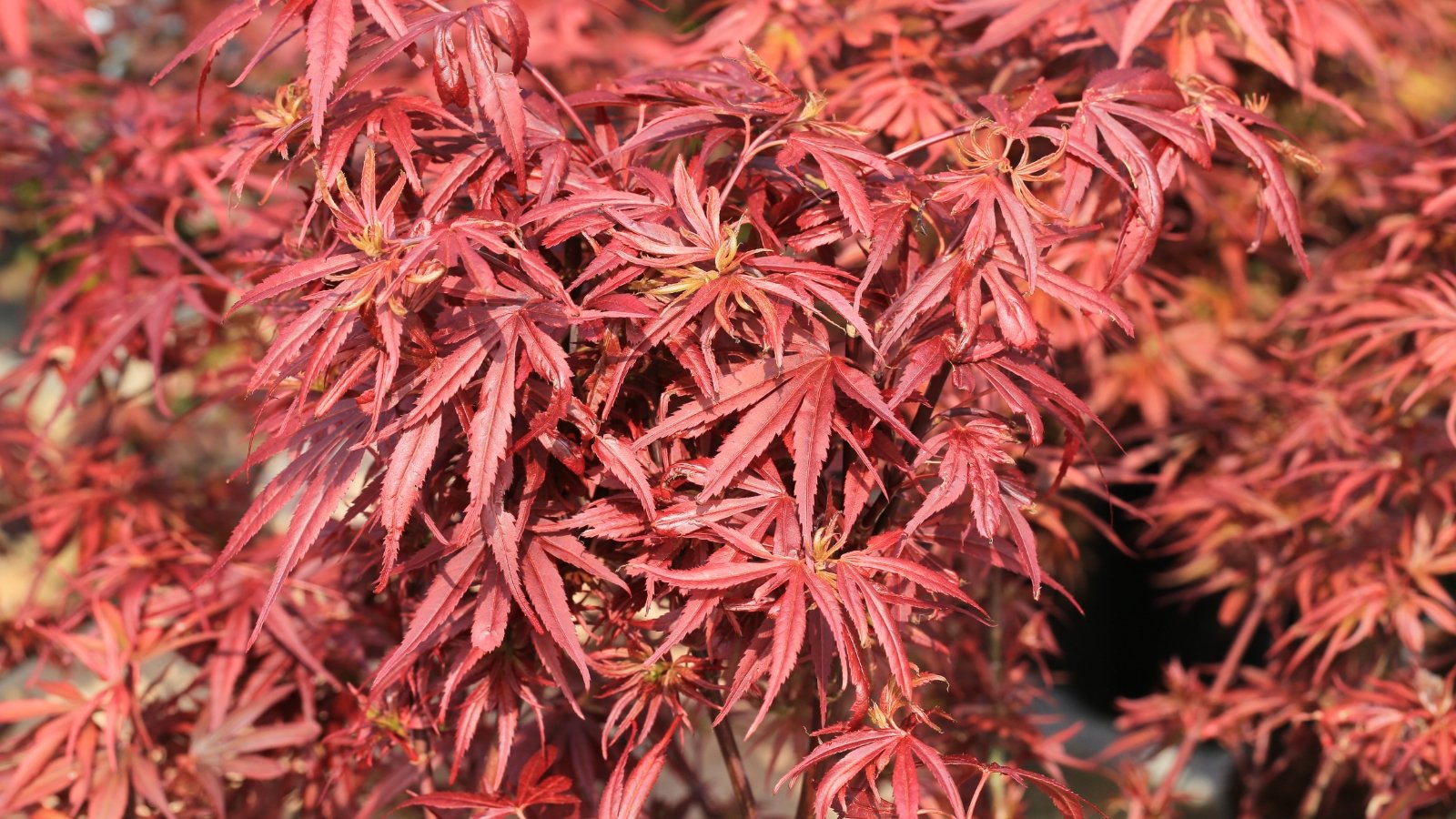
‘Red Pygmy’ stays small. Unlike other maples, it stays short and squat in maturity. The canopy grows rounded and dense over time, creating a round ball full of foliage.
‘Red Pygmy’ foliage is hand-like and thin. Each leaf is deep red and has finger-like points on it. En masse, it creates a stunning presentation in the garden.
Grow ‘Red Pygmy’ in a bed alongside low-growing shrubs and perennials, or grow it in a container. It’ll thrive as a potted tree on a porch, patio, or balcony.
Norway Maple ‘Crimson King’
|
|
botanical name Acer platanoides ‘Crimson King’ |
|---|---|
|
|
sun requirements Full sun to partial shade |
|
|
height 30-40’ |
|
|
hardiness zones 3-7 |
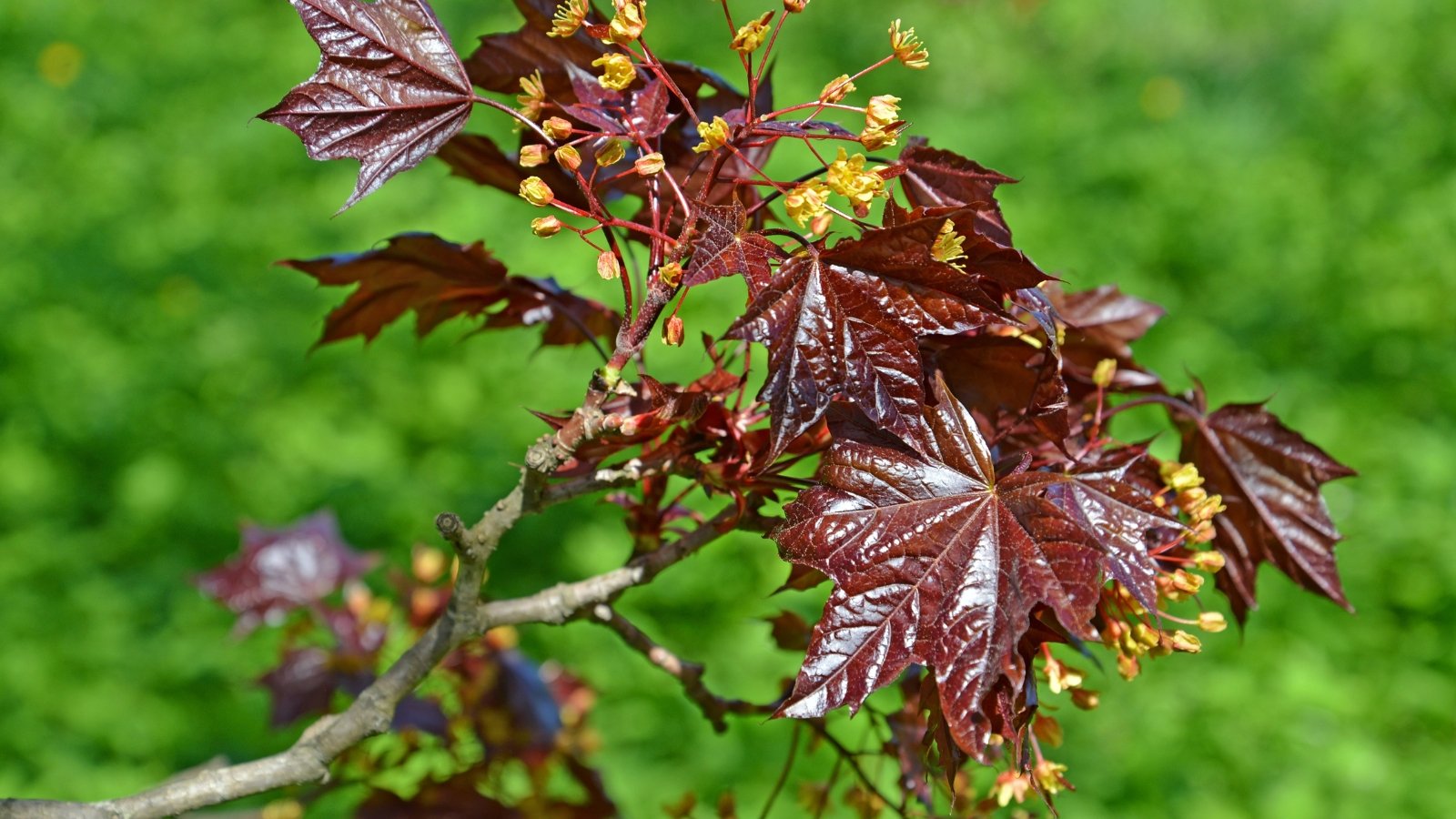
‘Crimson King’ leaves are more purple than red, but they’re beautiful nonetheless. They’re wide, glossy, and deep purple, making them stand out in the landscape.
After flowers appear in spring, seed pods called samaras form. They cascade to the ground like helicopter wings, fluttering in circles on their way down.
‘Crimson King’ is a big tree. Give it plenty of room, and plant it where it has space to grow wide and tall.
Purple Leaf Sand Cherry

|
|
botanical name Prunus x cistena |
|---|---|
|
|
sun requirements Full sun |
|
|
height 7-10’ |
|
|
hardiness zones 2-8 |
The purple leaf sand cherry is a Prunus hybrid. It’s a cross between the purple-leaf flowering plum P. cerasifera ‘Atropurpurea’ and the native sand cherry P. pumila. Together, the two species create a short, shrubby tree with purple foliage year-round.
Purple leaf sand cherry thrives in well-drained soil, and it needs six or more hours of daily direct sunlight to thrive. Avoid growing it in shady sites, as the leaf color can diminish in the shade.
Smoke Tree ‘Royal Purple’
|
|
botanical name Cotinus coggygria ‘Royal Purple’ |
|---|---|
|
|
sun requirements Full sun |
|
|
height 10-15’ |
|
|
hardiness zones 4-8 |
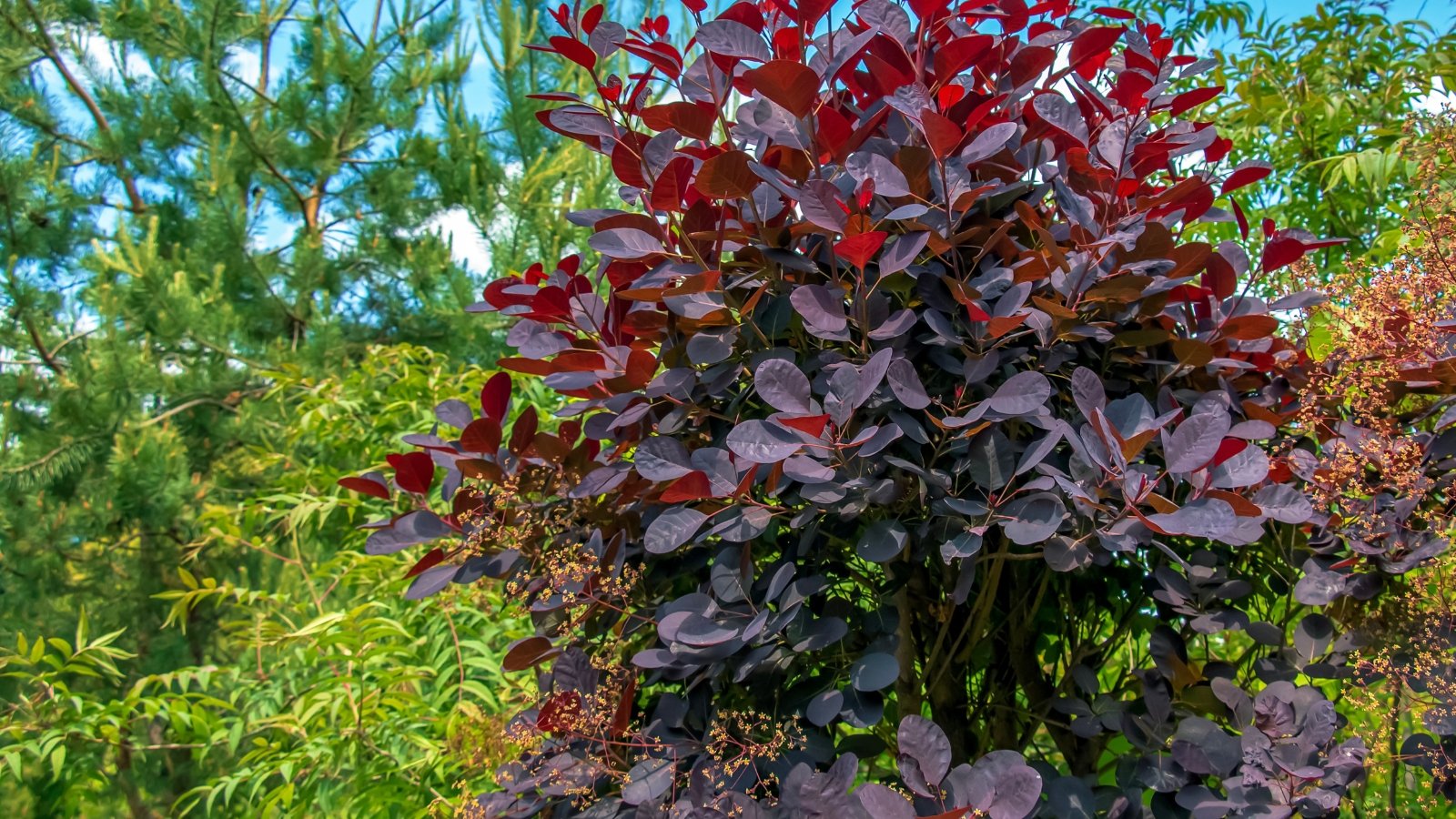
No garden is complete without a smoke tree! The shrub receives its name because of the way the spent flowers resemble smoke arising in the air. They’re light, thin, and airy. En masse, they look like a cloud of smoke.
‘Royal Purple’ is one of the most famous smoke trees, as it has rich purple foliage during the growing season. Grow it in a large container on a sunny porch, or plant it in your front yard as a focal point.