How to Plant, Grow, and Care For ‘Limelight’ Hydrangea Trees
’Limelight’ hydrangea trees bring the classic huge creamy white-to-green blooms in a standard form. With a single trunk and a canopy of flowers, the dreamy specimens punctuate the border and container arrangement. Garden expert Katherine Rowe explores the appeal of big-blooming ‘Limelight’ hydrangea trees and how best to grow them.

Contents
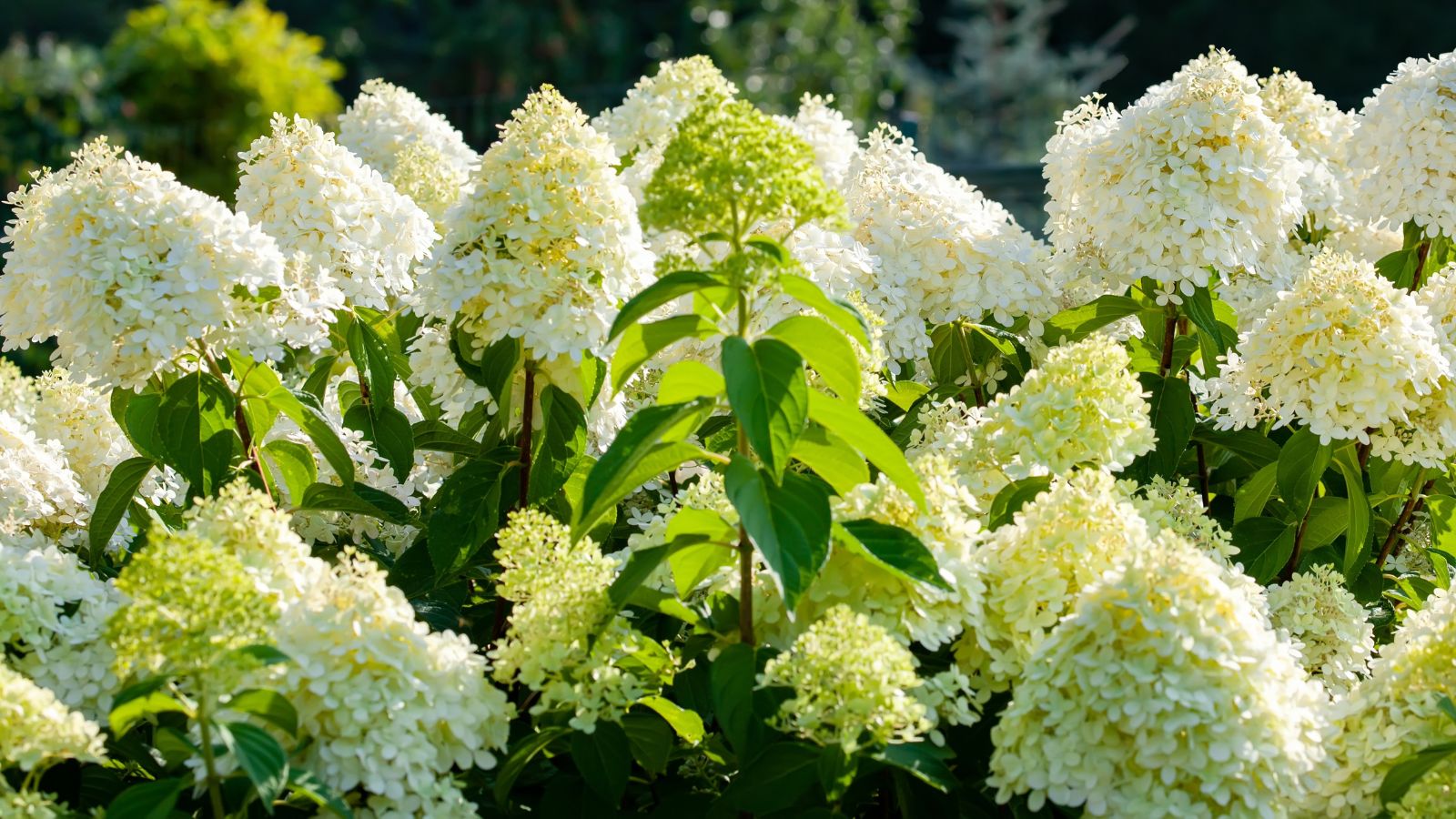
‘Limelight’ hydrangea trees showcase masses of fluffy greenish-white bloom clusters on a single trunk. This is one of our favorite panicle hydrangeas, simply trained into a standard form with a leafy crown and summertime flowers.
‘Limelight’ is a reliable and adaptable hydrangea, cold-hardy and resilient. The species is more sun-tolerant than other hydrangeas, and they thrive in summer heat and humidity.
The tree form brings a pretty twist to the cultivar as a specimen to feature in borders and containers. With some of the largest blooms among the group, ‘Limelight’ trees stand out near and far in full flower.
‘Limelight’ Hydrangea Tree Overview

|
Plant Type
Deciduous shrub
Family
Hydrangeaceae
Genus
Hydrangea
Species
paniculata
|
Native Area
China and Japan
Exposure
Full sun to partial shade
Height
6-8’
Watering Requirements
Average
|
Pests & Diseases
Aphids, spider mites, leaf spot, rust, and powdery mildew
Maintenance
Low
Soil Type
Average
Hardiness Zone
3-8
|
What are ‘Limelight’ Hydrangea Trees?

Hydrangea paniculata ‘Limelight’ can be pruned and trained into a small tree with careful maintenance. The compact standard form holds a single trunk and branching crown with the characteristic fresh green leaves and mossy chartreuse and white petals.
‘Limelight’ is among the most popular panicle hydrangeas. The award-winning cultivar stuns with its floriferous nature, lasting into fall for an extended show. In tree form, the dwarf branches display the bold blooms that steal the show.
‘Limelight,’ with its reliable blooms and durable landscape performance, is a recipient of the Royal Horticultural Society Award of Garden Merit. The low-maintenance, easy-care hydrangea tolerates various soils, withstands pollution, and thrives in urban settings. While tree form is not its natural habit, basic pruning keeps it in tip-top shape.
Characteristics

In tree form, ‘Limelight’ hydrangeas have a single stalk that gives way to a rounded canopy. They stand at about six feet tall with a crown spread of four to five feet at maturity.
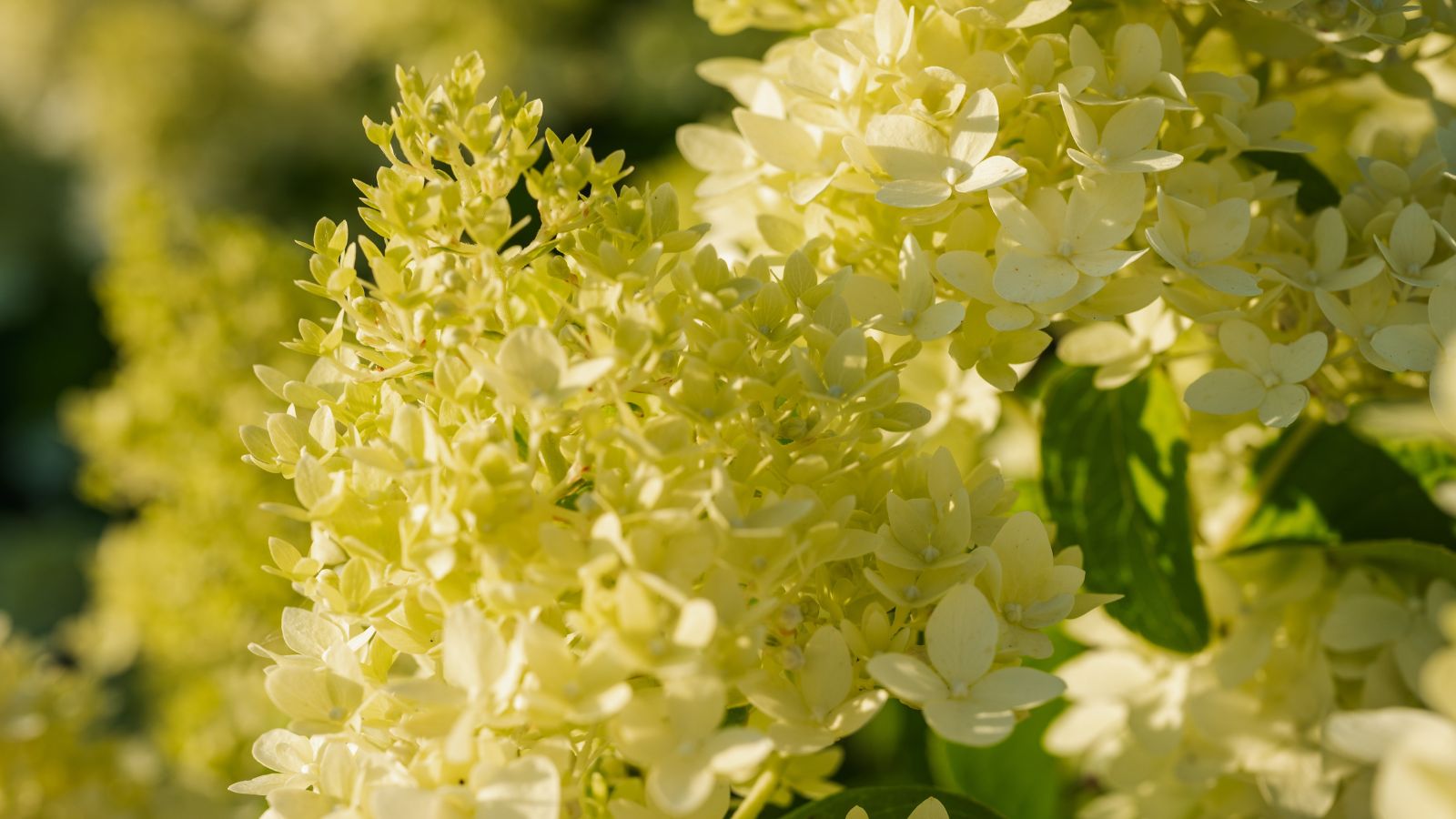
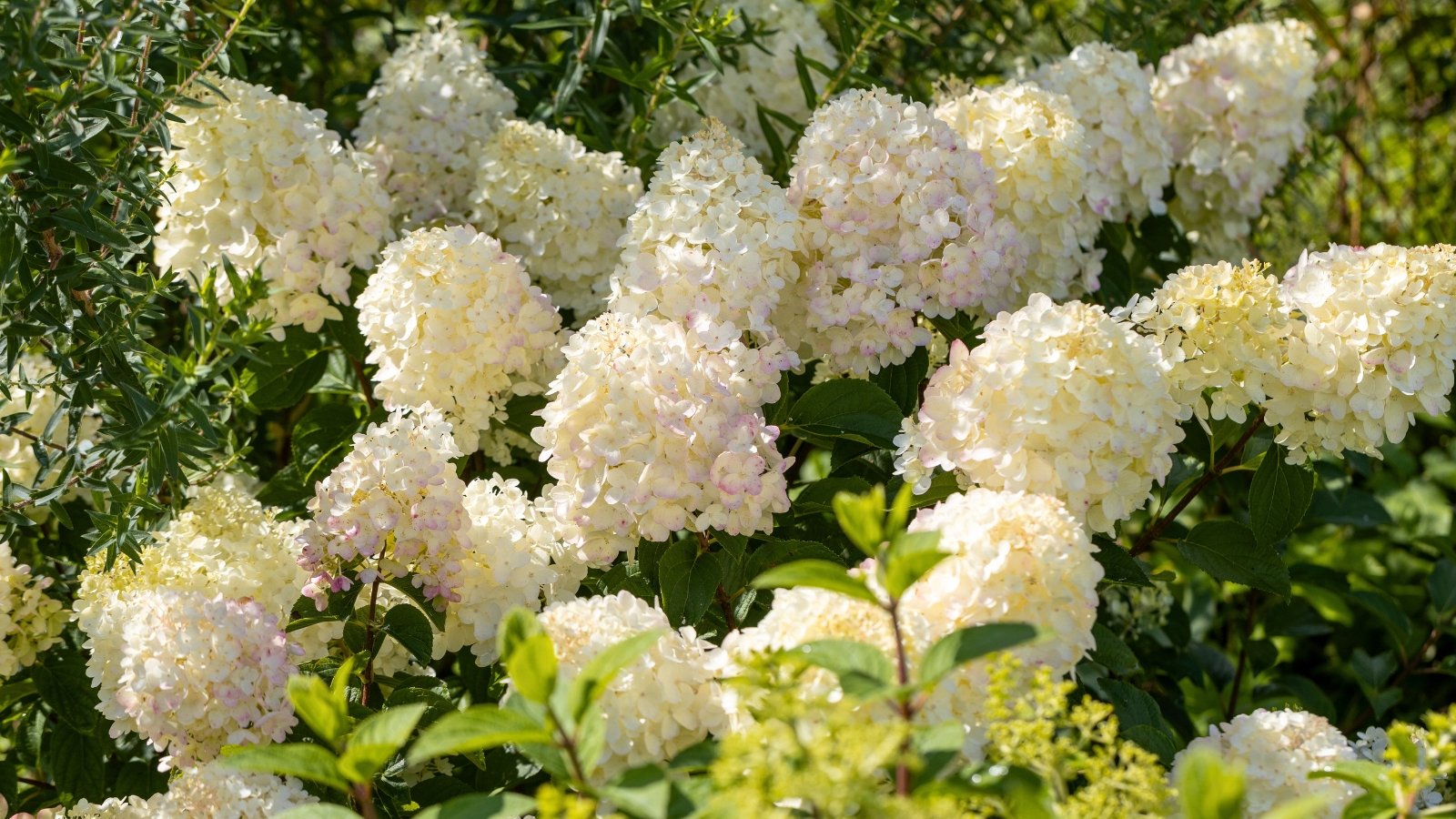
The captivating quality of ‘Limelight’ is its bundles of tightly packed conical blooms that emerge from mid to late summer and into early fall. Usually appearing in July through October, the pyramidal panicles begin as pinkish-red buds. Creamy white flower clusters gain a lime tint as temperatures warm in summer. As they age, petals take on pink, rose, and burgundy shades in fall.
Leaves are plentiful in medium green, slightly serrated, and with a pointed tip. Foliage extends the fall interest in shades from gold to bronzey red before it drops.
Panicle hydrangeas grow across a wide range of conditions and temperatures. ‘Limelight’ is winter hardy to USDA zone 3 with an upper-temperature range to zone 8 and borderline in 9. Buds set on new wood (the current season’s growth), ensuring summer flowering even after harsh winters. Since buds develop on fresh spring and summer growth, they’re not susceptible to winter freezing like hydrangeas that bloom solely on old wood.
The panicle blooms on ‘Limelight’ trees reach up to 12 inches long. They last well into fall and eventually turn a buff tan. Flowers left on the stem persist in dried form into winter. Add them to fresh floral arrangements, or dry them at season’s end for a lasting display.
Hydrangea paniculata contains irritants that may cause skin allergies. They are toxic to dogs, cats, and horses.
Native Area

‘Limelight’ hydrangeas are a cultivar of the parent species native to cool, temperate, and subtropical regions of Asia. H. paniculata grows wildly in Japan, Korea, China, and Russia’s Sakhalin and Kuril Islands.
These hydrangeas grow in a range of habitats, from woodlands and thickets to rocky outcrops at varying elevations in the mountains.
Planting

The optimal time to plant ‘Limelight’ hydrangea trees is in late winter and early spring before new growth emerges. Fall is also prime for planting, with mild temperatures and adequate moisture for the least stress on new plants as they develop roots ahead of winter.
While mostly disease-free, panicle hydrangeas benefit from ample air circulation to stave off fungal problems. Allow four to six feet between plants to account for mature growth. This hydrangea spacing keeps the compact canopies from becoming overcrowded. Consider their placement near walkways, whether in a bed, pot, or foundation planting, leaving room for maximum growth without encroaching.
At planting, dig a hole twice the width of the root ball and as deep. Loosen the surrounding soil. While tucking the roots in, hold the trunk straight. Backfill and tamp the soil as you go. Plant only as deep as the top of the root ball, maintaining the soil level as it was in the nursery pot.
Hydrangeas grow and flower best when their crown is level with the soil, rather than planting too high or settling low. Water the new standards thoroughly.
New ‘Limelight’ hydrangea trees may need staking to keep the central stalk straight as they establish roots. A soft strap anchored to a sturdy stake away from the trunk does the job.
Transplanting

H. paniculata has shallow roots and transplants relatively well. If you need to move a hydrangea to another garden location for better light or placement, do so when the plants are dormant. Late fall, even after frost, and late winter/early spring are ideal.
Dig a wide berth around established plants to capture the bulk of the roots for transplanting. Water deeply after relocation.
How to Grow
‘Limelight’ hydrangea trees, with their compact forms, are versatile in the garden. Low maintenance, they tolerate sun and occasional dry spells better than other species. Grow them in large containers with a quality, well-draining potting mix, checking soil moisture regularly during the warm season.
Keep in mind that tree forms are more susceptible to wind damage than their shrub forms, so protect them in known windy zones with a buffer of other shrubs, structures, and/or stakes.
Light

‘Limelight’ trees grow best in four to six hours of sun. In climates with hot summers, morning sun and afternoon shade or dappled sunlight offer cooling shade and protection against sunburn.
Water

The flowering shrubs, even in tree form, grow and flower best with consistent moisture throughout the growing season. Water hydrangeas when the soil is dry to a depth of two inches.
Generally, one inch of water per week is sufficient, with more during hot and dry spells to maintain soil moisture and keep up with evaporation. Water through frost for turgid roots and stems heading into winter dormancy.
Watering deeply, rather than frequently and shallowly, is best for root growth and moisture uptake.
Soil

Hydrangeas thrive in organically rich, well-draining soils. ‘Limelight’ tolerates various soil types, from loam to clay to sand. Amend poor soils like clay and sand with compost to improve aeration, moisture retention, drainage, and nutrition.
Unlike blue or pink hydrangeas, soil pH doesn’t affect bloom color in these hydrangea trees.
Temperature and Humidity
Because of their shallow roots, mulch protects the specimens in summer and winter by regulating soil temperatures and increasing moisture retention. Maintain a two to three-inch layer of compost, bark chips, leaf litter, or straw, keeping it away from the central stem.
Northerly climates with cool summers can grow the specimens in more sun, given ample moisture, while cooling afternoon shade is best in southern zones. Offer plenty of air circulation in humid growing areas.
Fertilizing

With organically rich soils, ‘Limelight’ hydrangea trees don’t need additional fertilizer to grow and flower. To give a boost, an early spring fertilizer application supports development through the warm season. A balanced granular 10-10-10 slow-release or one with higher phosphorus, like 10-30-10, promotes flowering.
Take care not to overfertilize panicle hydrangeas, as too much nitrogen produces quick, weak growth with less flowering. Refrain from fertilizing in the fall as active growth slows and plants prepare for winter dormancy.
Pruning

Pruning ‘Limelight’ hydrangea trees can be a bit daunting, as we want to preserve the featured form. Fortunately, cutback is a relatively straightforward practice. Proper pruning promotes a flush of new growth in spring and improves branch strength to support the hefty panicles.
Plan to prune for shape and branching in late winter/early spring before new growth begins. Because ‘Limelight’ flowers on new wood, the cutback and flushing growth generate more buds and blooms.
Clip off any low growth along the main stem (the “trunk”). For the canopy, cut the branches back by one-third, or to as many as two or three leaf nodes. Make a clean cut ¼ inch above a node, where leaves and buds emerge along the stem. Heading cuts at a 45-degree angle help redirect new growth.
Prune out dead, weak, or crossing stems any time of year. Keep an eye out for winter-damaged stems to clip in late winter or early spring with regular cutback.
Propagation
The ‘Limelight’ plant patent (#PP12,874) met its 20-year expiration date in 2022, so propagation is legal. Hydrangea trees propagate most easily through stem cuttings. Take cuttings in spring, summer, or fall from pliable growth, ideally from leafy stems without flowers.
Cuttings

Here are simple steps for taking cuttings:
- Cut a four-to six-inch piece of healthy stem.
- Remove the foliage from the bottom section of the cutting, keeping one to two upper leaves intact. Cut large leaves in half to reduce moisture uptake and evaporation. Keep the cuttings moist until ready to pot.
- Optionally, moisten the cutting and generously coat the lower stem with rooting hormone. Tap off any excess rooting powder.
- Plant the cutting in at least two inches of moist, well-draining potting mix. Cover one-half to two-thirds of the stem, including at least two leaf nodes.
- Place the pot or tray in a bright, warm location out of direct sunlight.
- Mist or water as needed to keep the soil evenly moist.
- When the cutting resists a gentle tug (generally two to four weeks for hydrangeas), roots are in place, and cuttings are ready to be repotted.
- Plant the cuttings in four-inch pots and move them outside in mild conditions. New plants will be tender. With a fall cutting, plan to overwinter them indoors.
Common Problems
The tough hydrangeas are generally pest and disease-free, but occasionally experience aphids and spider mites, and fungal issues like leaf spot, powdery mildew, and rust. The best prevention for pests and diseases is ensuring proper cultural conditions through even watering, air circulation, and healthy soils.
Pests
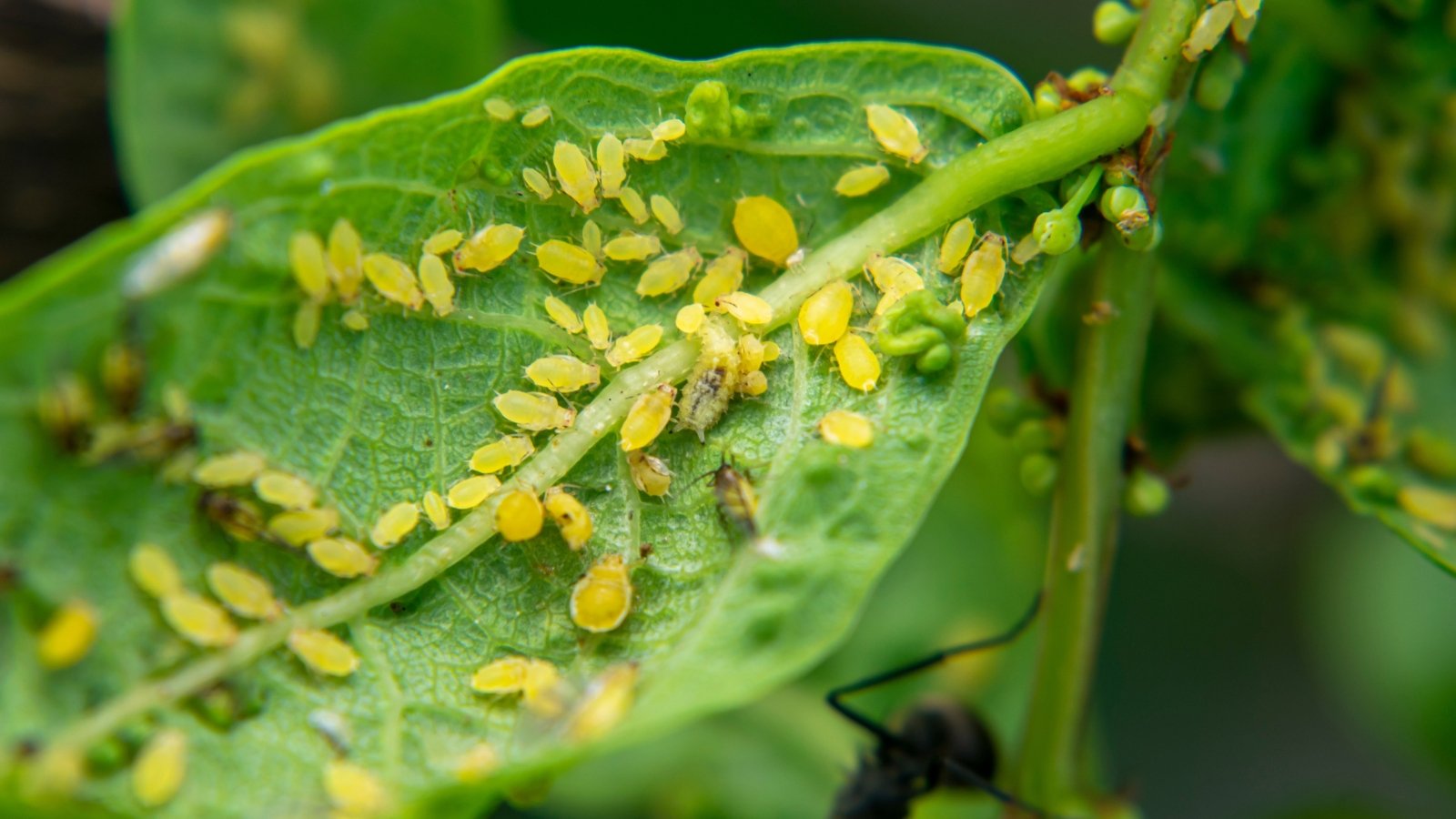
Aphids are common sap-feeding insects that feed on a wide array of plants. They don’t often pose a severe threat, but they can stress plants and leave behind sticky honeydew that can lead to unattractive black, sooty mold. Signs of stress include curled leaves and stunted growth. You’ll spot the pear-shaped, soft-bodied insects in groups underneath leaves and along stems.
Spider mites, also sap-suckers, congregate on the undersides of leaves. They’re tiny insects, but their webbing and light yellowing of leaf surfaces give them away. They occur in dry and dusty conditions, particularly in plants experiencing drought stress.
Beneficial predatory insects like ladybugs, green lacewings, and predatory mites help control aphid and mite populations. Grow a diversity of flowering plants to attract the most species of pollinators and predators to contribute to a balanced garden system.
If you detect insect infestation, spray the canopy with a strong stream of water early in the day to deter and displace them from the leaves and stems. A simple horticultural soap or oil can rid severe outbreaks, but follow label directions, as these affect many insects.
Diseases

Common fungal diseases may crop up with water fluctuations or with humid conditions in hot climates.
Cercospora leaf spot commonly affects bigleaf, smooth, panicle, and oakleaf hydrangea types. Rainfall and overhead watering promote the spread of this fungal disease, visible by brown dots on leaf surfaces. Cercospora rarely kills an established hydrangea, though heavily impacted plants may show a decline in blooming and vigor.
To prevent the spread of Cercospora, remove affected leaves from the plant during the growing season, and those that fall to the ground.
Powdery mildew is another potential fungal problem that appears as a gray-white powdery substance on leaves, stems, and buds. Leaves may distort and drop. As with Cercospora, remove affected plant parts and any fallen leaves.
Rust is most likely in hot, humid climates. Powdery spores appear on the undersides of yellowing leaves. If you suspect rust, cut off the infected leaves. Spores spread readily, so make sure to destroy the infected plant parts.
Horticultural oils like neem can treat fungal diseases early on. Removal is the best option for any severely impacted hydrangea trees in steady decline.
Frequently Asked Questions
Are ‘Limelight’ trees as robust as the shrubs?
The natural shrubby form of ‘Limelight’ hydrangeas has more vigorous growth than a trained tree form. Pruning and shaping maintain the crafted form and a rounded canopy, contained to upper growth. In optimal conditions, trees bring a recurrent display for years of enjoyment. In shrub form, they can live for decades.
Should I clip out thin, spindly stems?
Remove weak stems to promote the development of more substantial branches. Clip them back to the trunk, and cut off any lower growth that springs from the central stem. The best time to prune ‘Limelight’ trees is late winter and early spring, with a rejuvenating cut back by one-third. The cut fosters flushing new growth and bud set.


