How and When to Trim Dry and Brown Hydrangea Flowers
Whether you’ve got new blooms in spring or old ones in the fall, some light trimming keeps your hydrangea shrubs vigorous and productive. Learn how and when to trim the dry and brown flowers alongside seasoned landscaper Jerad Bryant.

Contents
Why trim hydrangea flowers? Trimming them promotes more blooms, and it keeps your shrub neat and tidy. It also prepares the plant for the upcoming winter season.
There are many different reasons to trim hydrangea blooms, though the cause often depends on the season. Fall care gets the woody stems ready for winter, while spring care promotes a longer flowering period.
Or, you might not want to trim the flowers at all! They’re ornamental during the winter, as the leaves fall off the shrub and the dead flower heads remain.
No matter what you decide to do, we’ll cover how and when to trim hydrangea flowers. Grab some pruners and put on some gloves.
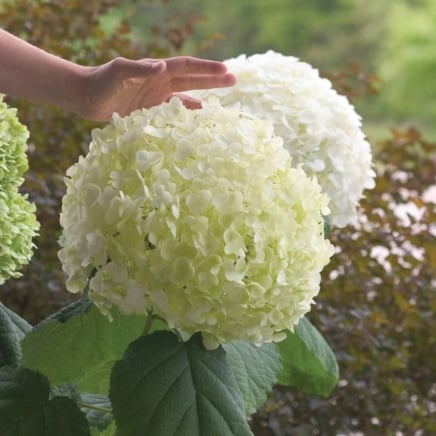
When to Trim Hydrangea Flowers
How you should trim hydrangea flowers differs throughout the year. To further complicate things, different species bloom in separate ways. Old wood bloomers flower on last year’s wood, while new wood bloomers flower on new growth. When to trim them depends on the season and the type of hydrangea.
Spring Growth

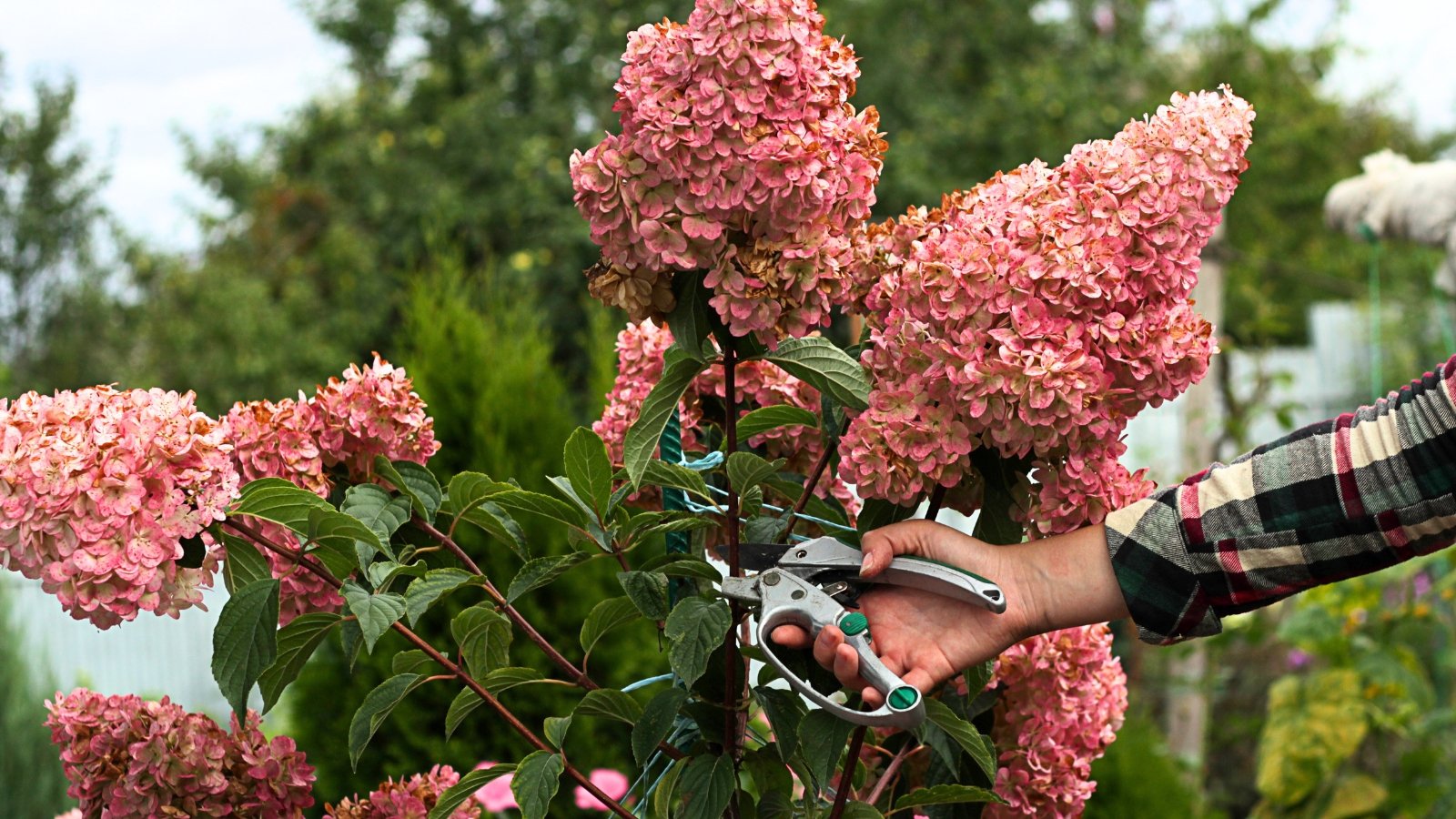
The only reason to prune a hydrangea in spring is if it’s a new wood bloomer. These species tolerate pruning on new growth, while old wood bloomers must bloom on last year’s stems. You may trim hydrangea flowers that bloom on new wood, like smooth and panicle hydrangeas, to a foot tall in the spring.
It’s best to let a species that blooms on old wood flower first before beginning the pruning process. Then, after the first round of blooms appear, you may deadhead the flowers as necessary. Remove dead, damaged, or diseased wood at any time.
Another reason to trim in the spring is because of late spring frosts. These weather conditions kill forming flower buds, causing them to wither and brown. Trim the dead growth off to make way for the shoots that survived the frost.
Deadheading

Deadheading is the best way to promote more blooms. Done right, it encourages reblooming varieties to produce another round of flowers. Varieties that don’t rebloom will appreciate the cleanup, though they won’t grow more flowers until next year.
Deadheading also works to keep your hydrangea shrubs looking their best. It’s unnecessary for most types, except reblooming species. Trim hydrangea flowers if you’d like a tidy shrub. Otherwise, let the faded flowers stand through the growing season.
Fall Care

Fall trimming is rare for hydrangeas. Leaving the old, dry blooms protects the stems from frosts during the winter. Additionally, fresh cuts made in autumn can open the shrub to cold damage when temperatures drop below freezing.
If you dislike the look of the dry and brown hydrangea flowers, snip them off at their base. Leave the rest of the stem to overwinter. If frost damage occurs, you’ll know which stems to trim next spring because they won’t have new growth.
How to Trim Hydrangea Flowers
How to trim hydrangea flowers depends on the goal at hand. Deadheading is quite simple, while pruning differs for different species. Learn how to do both, and you’ll know exactly how to handle your hydrangeas this season.
Post-Bloom Pruning

The best time to trim a hydrangea is after it finishes blooming. This rule stands for both old and new wood blooming hydrangeas. If you’re unsure what kind you have, simply wait for it to flower.
When the flowers turn dry and brown, decide whether you want to do a light trim or a heavy pruning. Rejuvenate large, overgrown shrubs by thinning non-productive stems and shortening others. Remove any old flowers, and cut the plant back to a foot tall.
You won’t need to do major pruning every year. Most years, all that will be necessary is some deadheading and light trimming.
Snip Spent Blooms

If you’d rather not prune the shrub back, simply snip the dry flowers when they turn brown. Use pruners or snips, and cut the stem back to the nearest growth node, where two leaves emerge from the stem. New shoots will grow from below the cut.
Some hydrangea flowers change colors as they fade, like the Tilt-a-Swirl® hydrangea! Its flowers shift their petals from pink to green as they age. Wait for them to change color, then snip them off once they turn brown and dry.
Other Options
You don’t have to trim hydrangea flowers if you don’t want to. It’s perfectly normal to leave the dead flowers through the winter. Or, snip them off and use them for floral arrangements!
Leave Flowers Be

Brown hydrangea flowers are like pom-poms. They dance in the wind, and they decorate bare hydrangeas after they lose their leaves in the fall. Let them be to have them decorate your garden during the cold months.
Then, in the spring, trim the dry flowers off to make way for new blooms. Deadhead them by cutting them back to the stem’s nearest growth node.
The exception is for areas with snow and ice. The bloom clusters will grow heavy and crack under the weight of snow. Snip them off if your area receives hard freezes during the winter.
Trim Flowers for Bouquets

Don’t throw those brown flowers out! They make superb dry flowers for floral arrangements and bouquets. Mix them with other dry flowers like yarrow and sweet Annie.
To make the flowers stand, trim them off with more stem attached. Instead of cutting to the first growth point, snip them back to the second node.
Dust the flowers off outdoors, then bring them inside for decorating. Use your design skills to make the perfect arrangement, and decorate your holiday table with it!
Key Takeaways
- Trimming differs depending on the season. If you’re unsure what to do, begin pruning after the blooms fade from your hydrangea.
- Avoid heavy pruning in the fall; it’ll expose your shrub to harsh weather.
- Trim the dry blooms anytime after they turn brown.
- Do major renovations and rejuvenations immediately after the shrub finishes flowering.
Frequently Asked Questions
What month should I deadhead hydrangeas?
The month will differ depending on the species. Don’t trim by month, but by sight instead. Snip them off once they turn brown.
Where is it best to trim hydrangea flowers?
Snip them back to the nearest growth node, where two leaves emerge from the stem.
What happens if you don’t deadhead hydrangeas?
Nothing! They’ll eventually fall off as the stems sprout new growth over the year. The one exception is for gardeners in cold climates; deadhead the blooms to prevent snow damage in winter.