9 Beautiful Shrubs to Plant in October
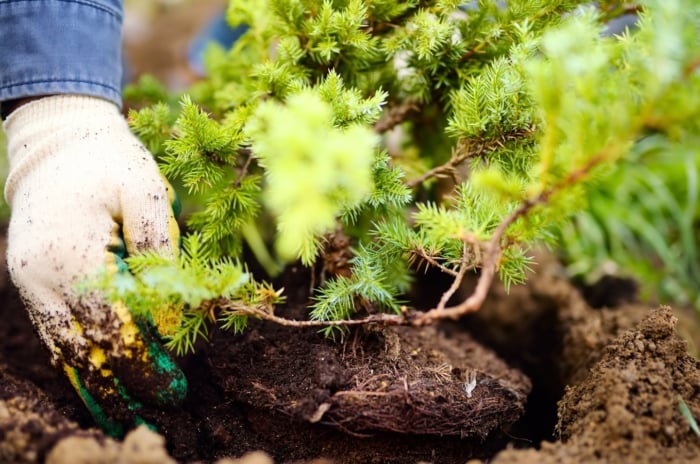
If you live in a warmer location, October is the perfect time for planting shrubs. Join farmer Briana Yablonski to learn about some shrubs that will help beautify your landscape.

Contents
By the time October rolls around, you may be ready to pack up your tools and put the garden to bed. But putting in a bit of extra work this fall will make next year’s growing season even better.
Fall is the perfect time to plant shrubs. The cool days mean less heat stress, and the long winter allows the plants to settle into their new home before the following spring. Planting your shrubs four to six weeks before your first fall frost is ideal, so October is a prime planting month for gardeners in zones seven and above.
If you’re looking for inspiration on shrubs to plant in October, I’ve compiled a list of some of my favorites. Not only are all of these plants beautiful, but many are native plants that provide ecological benefits and require little care.
Red Twig Dogwood

|
botanical name Cornus sericea |
|---|---|

|
sun requirements Full sun to partial shade |

|
height 5-10’ |

|
hardiness zones 2-7 |
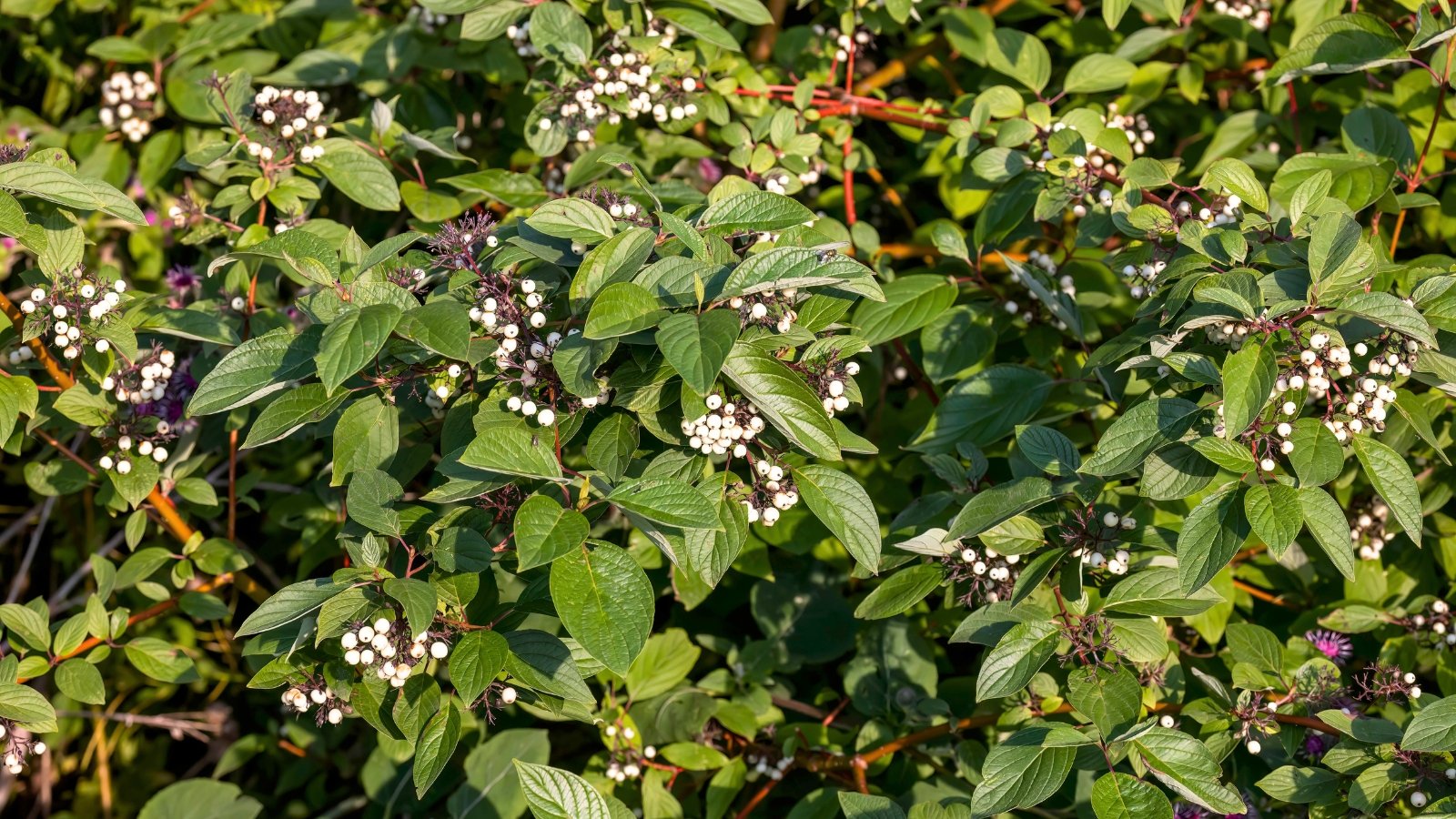
Unlike many other dogwood species, the red twig dogwood grows as a branching shrub rather than a tree. The plants produce numerous bright red stems that grow between six and ten feet tall, making them a great shrub for winter landscapes.
During the spring, the plants produce broad, ovate leaves and clusters of tiny white flowers. The blooms turn into white berries in the fall, and combine with the red twigs to form a beautiful display.
This dogwood species is native to many temperate regions of the United States, so it makes an excellent addition to native plant gardens. If you don’t care about planting a straight species, you can find cultivars like ‘Midwinter Fire’ that provide brilliant color.
Buttonbush
|
|
botanical name Cephalanthus occidentalis |
|---|---|
|
|
sun requirements Full sun to partial shade |
|
|
height 5-8’ |
|
|
hardiness zones 5-9 |
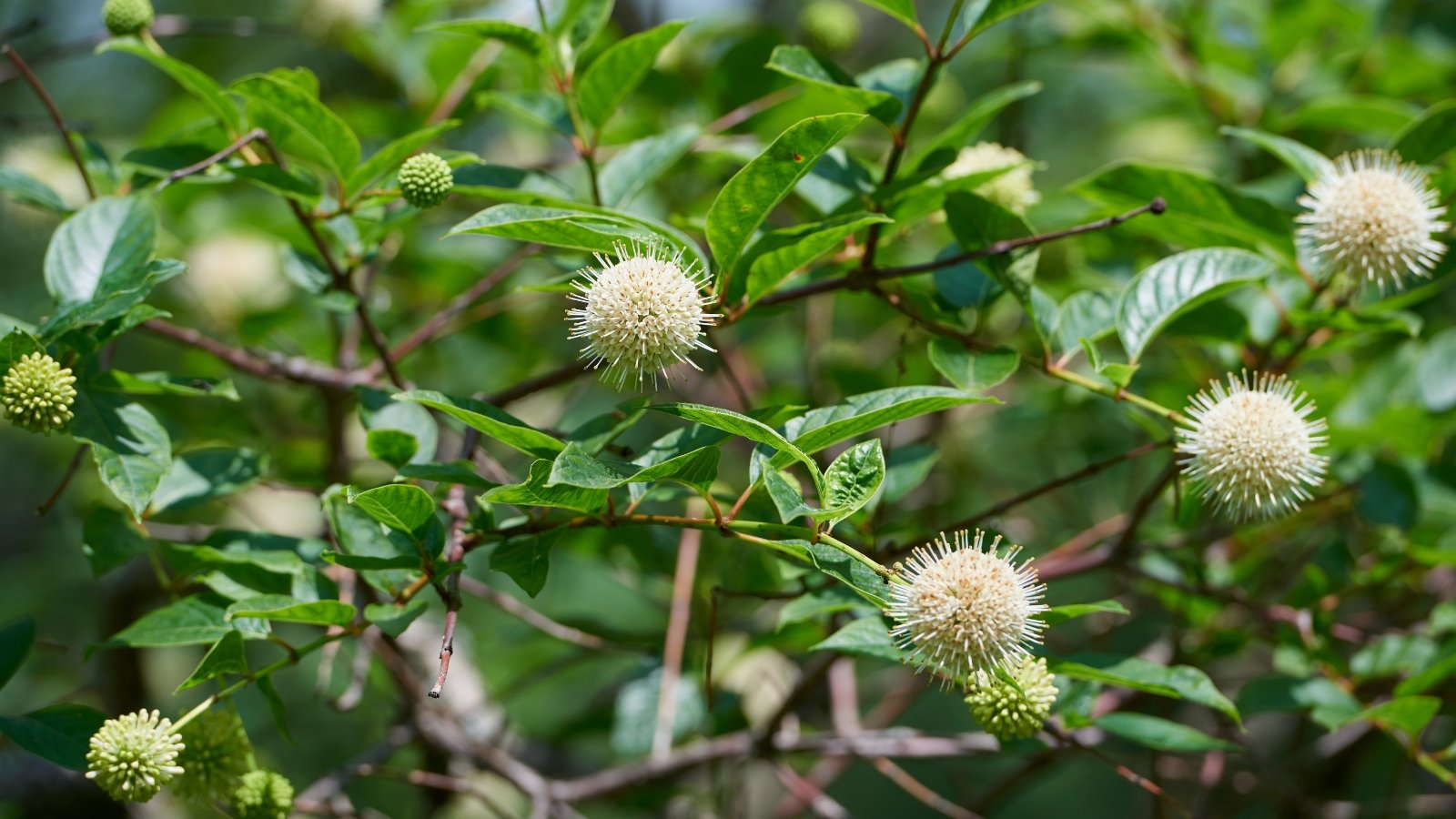
Buttonbush is one of my go-to plants for adding a whimsical touch to moist gardens. The shrubs produce spherical clusters of tiny white flowers. If you don’t know what you’re looking at, it appears like the plant is covered in small Christmas balls. The flowers turn into round, red seed clusters in the fall.
These shrubs are native to most areas in the eastern United States, where they thrive in moist soil. You’ll often see them growing beside rivers and lakes, or in low-lying areas that remain damp. If you want to plant one of these shrubs in October, be sure to select a damp area.
The shrub’s numerous tiny flowers make it an excellent plant for pollinators. It also serves as a host plant for numerous sphinx moths.
Winterberry
|
|
botanical name Ilex verticillata |
|---|---|
|
|
sun requirements Full sun to partial shade |
|
|
height 3-15’ |
|
|
hardiness zones 3-9 |
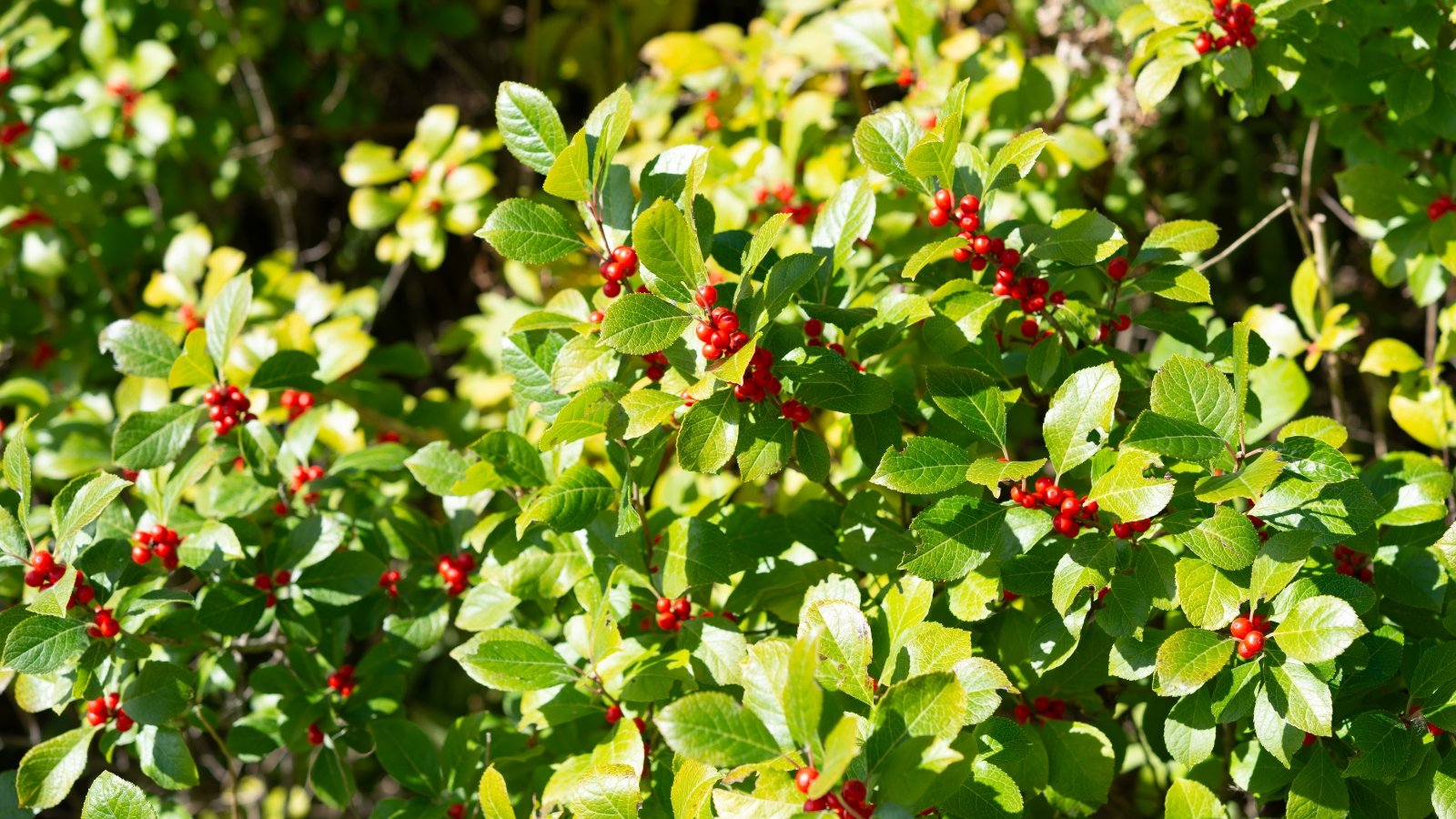
You can find many different native holly species, but winterberry is one of my favorites. The plants produce leathery, green leaves commonly found in the Ilex genus, but they drop their foliage in the fall. Once the leaves are gone, the berry-covered stalks are in full display.
Winterberry plants produce tiny white flowers in the summer, but they’re so small and close to the stem that you barely notice them. Still, they attract tiny bees and other insects that pollinate the flowers, causing them to develop into their bright red berries. These berries remain on the plant into the winter, providing beauty to the garden and food for hungry birds and mammals.
If you want to add these plants to your list of shrubs to plant in October, be aware that the shrubs produce male and female flowers on different plants. Only female plants will produce berries, but they require a male plant to set fruit.
Ninebark
|
|
botanical name Physocarpus spp. |
|---|---|
|
|
sun requirements Full sun to partial shade |
|
|
height 4-8’ |
|
|
hardiness zones 2-8 |
If you live in the United States and are looking for a native shrub, ninebark is hard to beat. These hardy plants can tolerate a wide range of growing conditions and produce year-round beauty. Gardeners in the eastern or central United States should opt for common ninebark (Physocarpus opulifolius) while those in the western states should choose Pacific ninebark (Physocarpus capitatus).
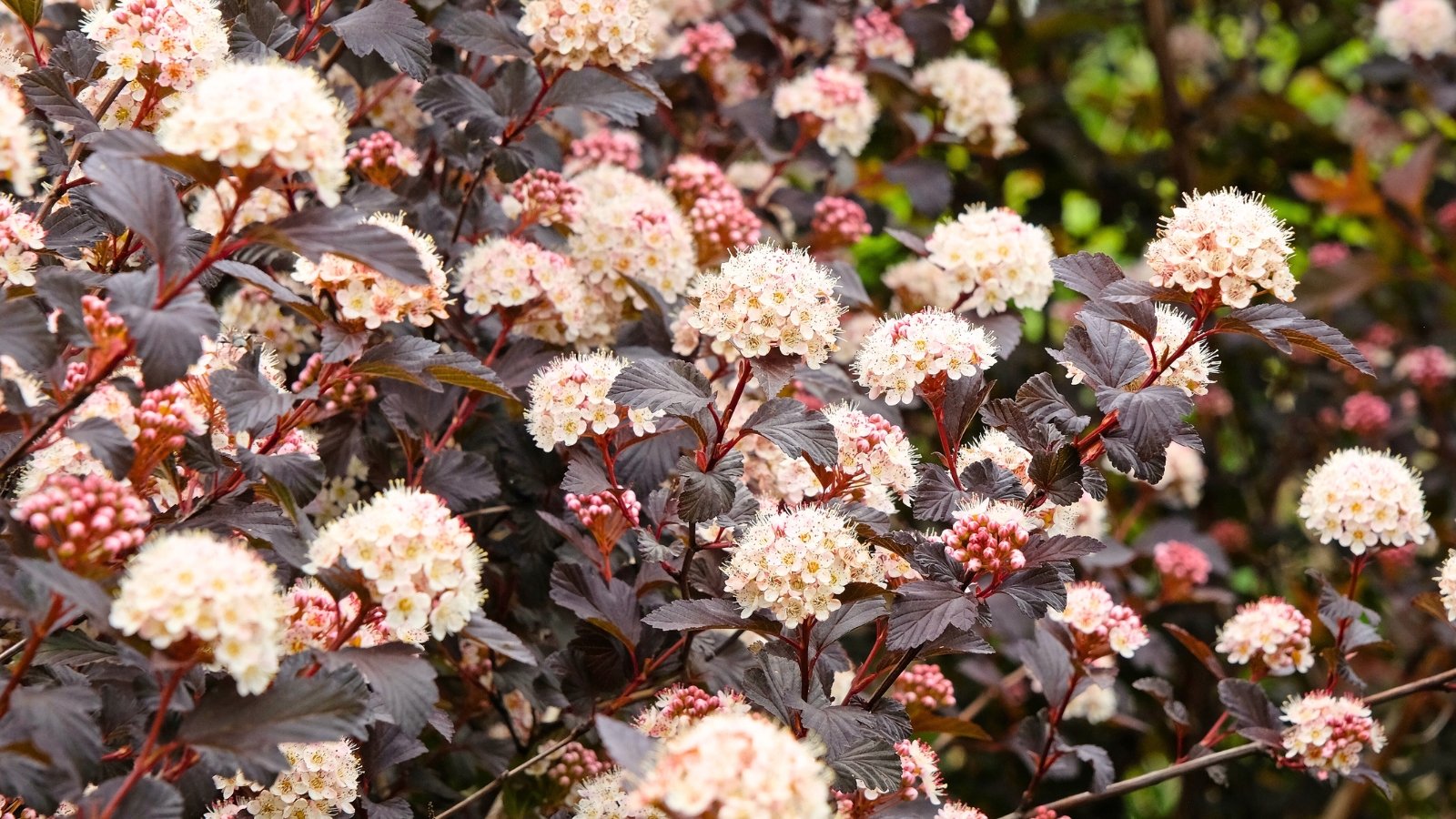
Although these plants have different native ranges, they have similar characteristics. Both plants feature bark that gently peels away to reveal shades of red, brown, and gray. They also grow maple-like leaves and produce clusters of small flowers at the ends of their branches. Straight species feature green leaves, but modern cultivars with deep maroon foliage add a unique pop of color to otherwise green landscapes.
You have several options when planting this shrub in October. Individual shrubs mix well with other perennials in native plantings, and spacing a line of shrubs five to six feet apart creates a beautiful and ecologically-friendly hedge.
Elderberry
|
|
botanical name Sambucus spp. |
|---|---|
|
|
sun requirements Full sun to partial shade |
|
|
height 5-12’ |
|
|
hardiness zones 3-10 |
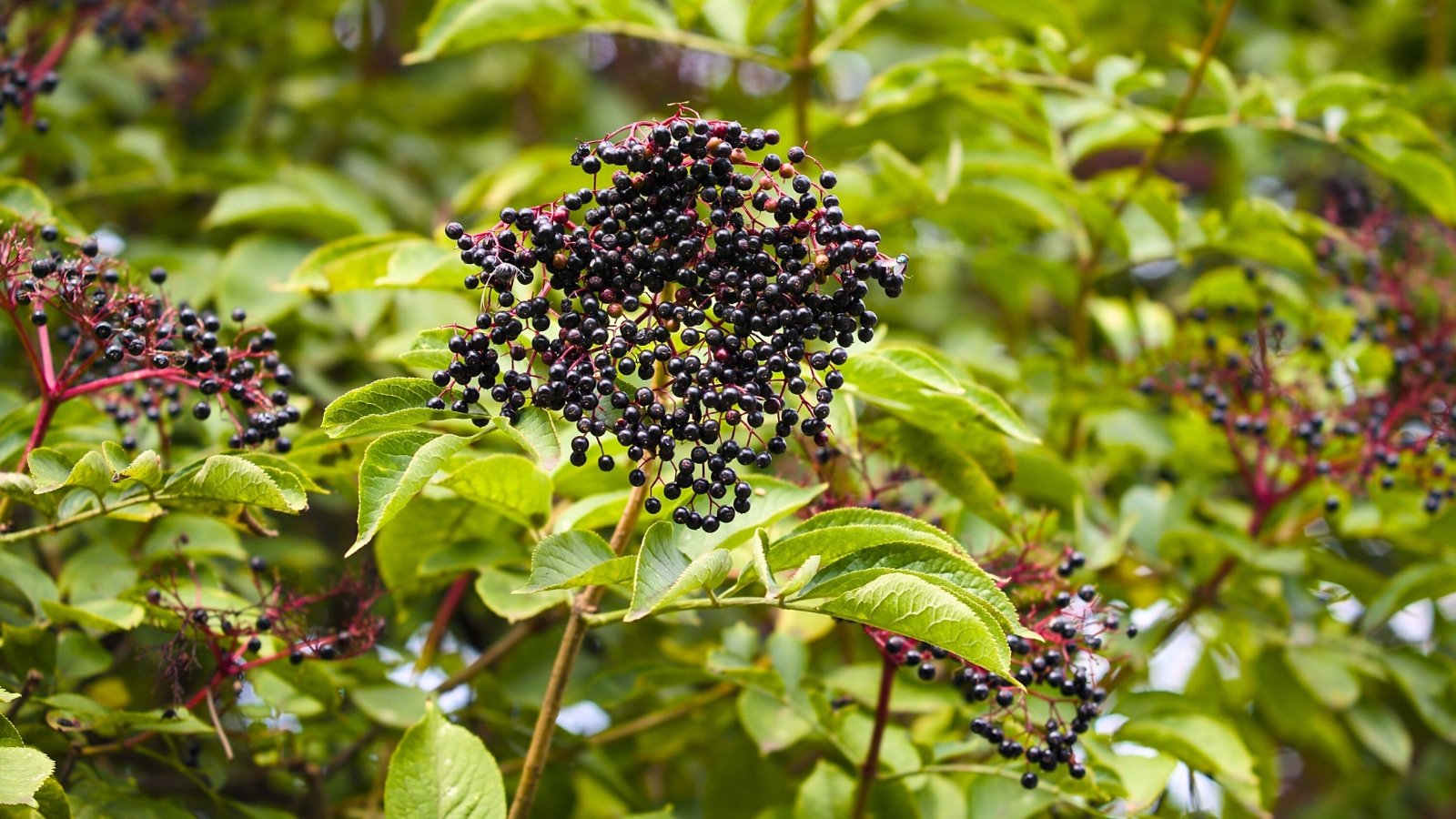
You can find numerous elderberry species that are native to the United States, as well as hybrid varieties developed for their berry production. Regardless of which shrub you plant in October, you can expect to enjoy branching stems and clusters of white flowers followed by tiny berries.
American elderberry (Sambucus canadensis) is the most common and well-known type of elderberry, largely due to its widespread distribution. You can find it growing on roadsides, pond edges, and other sunny spots throughout the eastern half of the United States. Gardeners in the western US should consider planting their native blue elderberry (Sambucus cerulea).
Elderberries are enjoyed by wildlife, and their high antioxidant content makes them valuable to humans. Raw fruits contain cyanogenic glycosides that make them toxic to humans, but cooking renders these compounds harmless and makes the berries safe to consume. Making elderberry syrup is one easy way to safely enjoy these powerful fruits.
White Meadowsweet
|
|
botanical name Spiraea alba |
|---|---|
|
|
sun requirements Full sun to partial shade |
|
|
height 3-4’ |
|
|
hardiness zones 3-8 |
Spirea is a common shrub throughout the United States, but many of these plants are non-native species that originate in Asia. While they’re beautiful, they’re known to escape gardens and become an invasive species that interferes with other plants. But that doesn’t mean you have to give up on spirea entirely.
White meadowsweet is a type of spirea that’s native to the eastern United States. You can often see it growing beside streams or rivers, or in boggy areas. At home, it makes an excellent addition to moist areas of the garden.
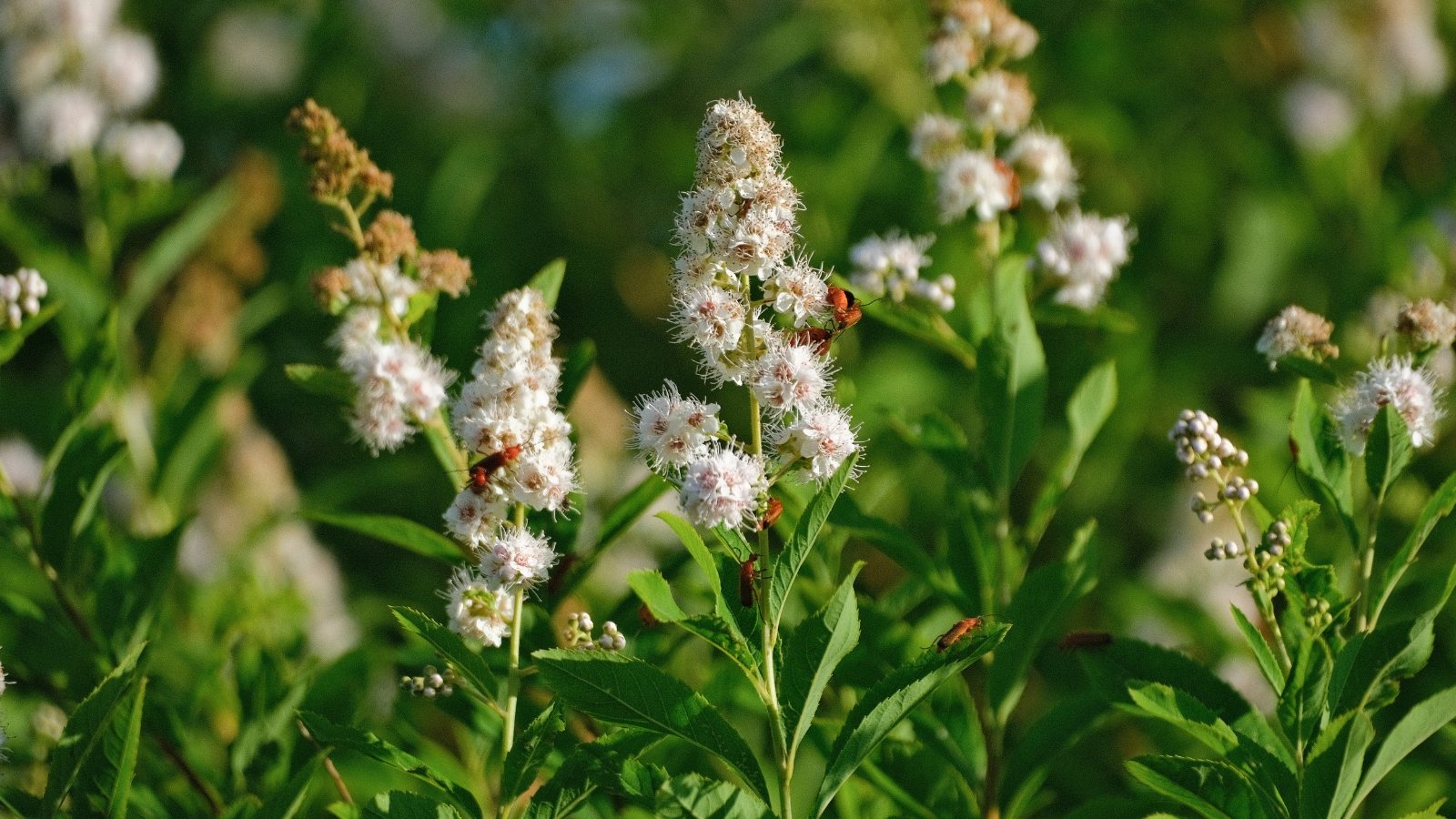
The plants produce elongated stems covered with lanceolate leaves. In the spring, the ends of the stems produce clusters of small white flowers that attract a range of pollinators.
Mock Orange
|
|
botanical name Philadelphus spp. |
|---|---|
|
|
sun requirements Full sun to partial shade |
|
|
height 2-15’ |
|
|
hardiness zones 4-9 |
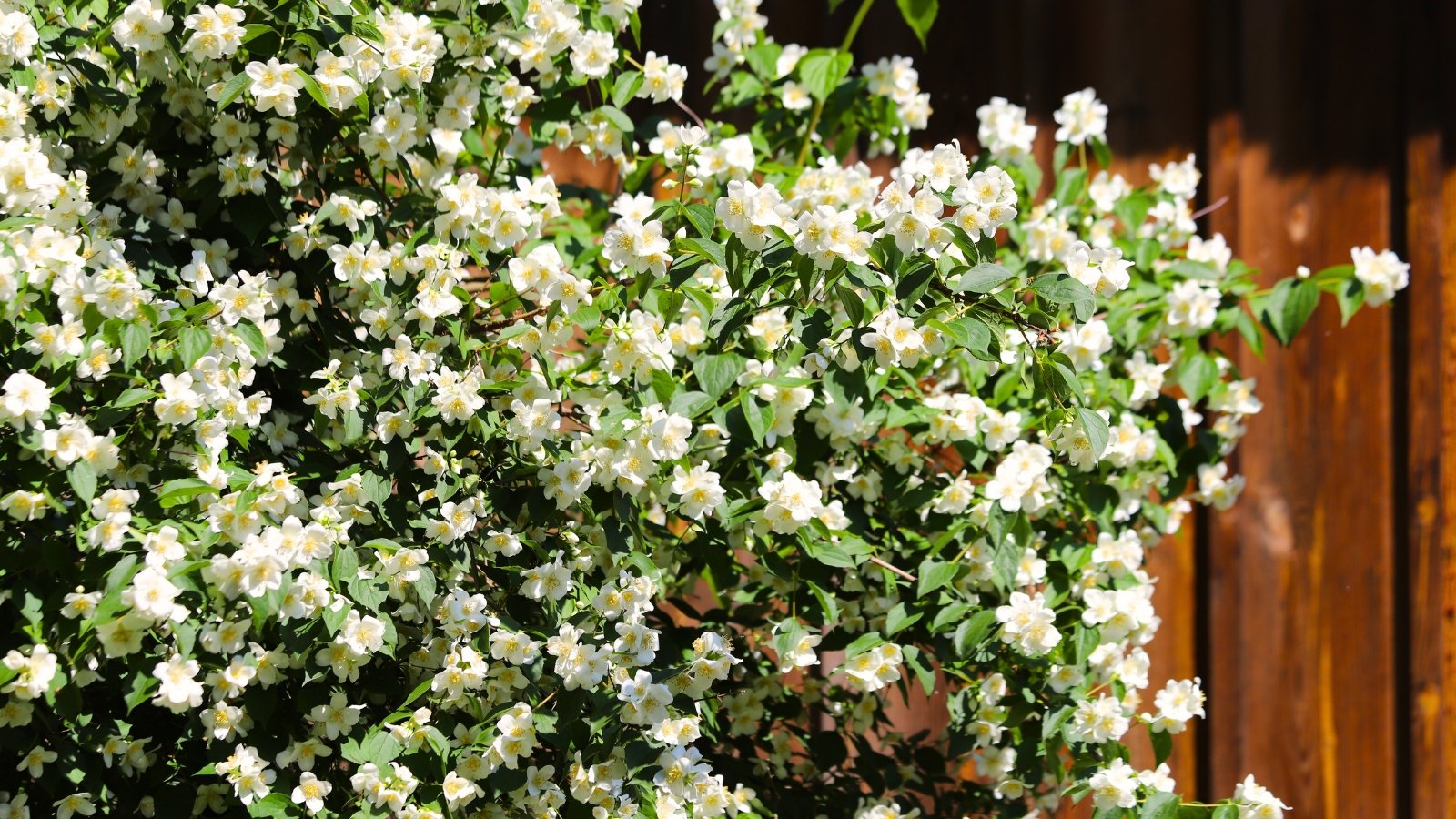
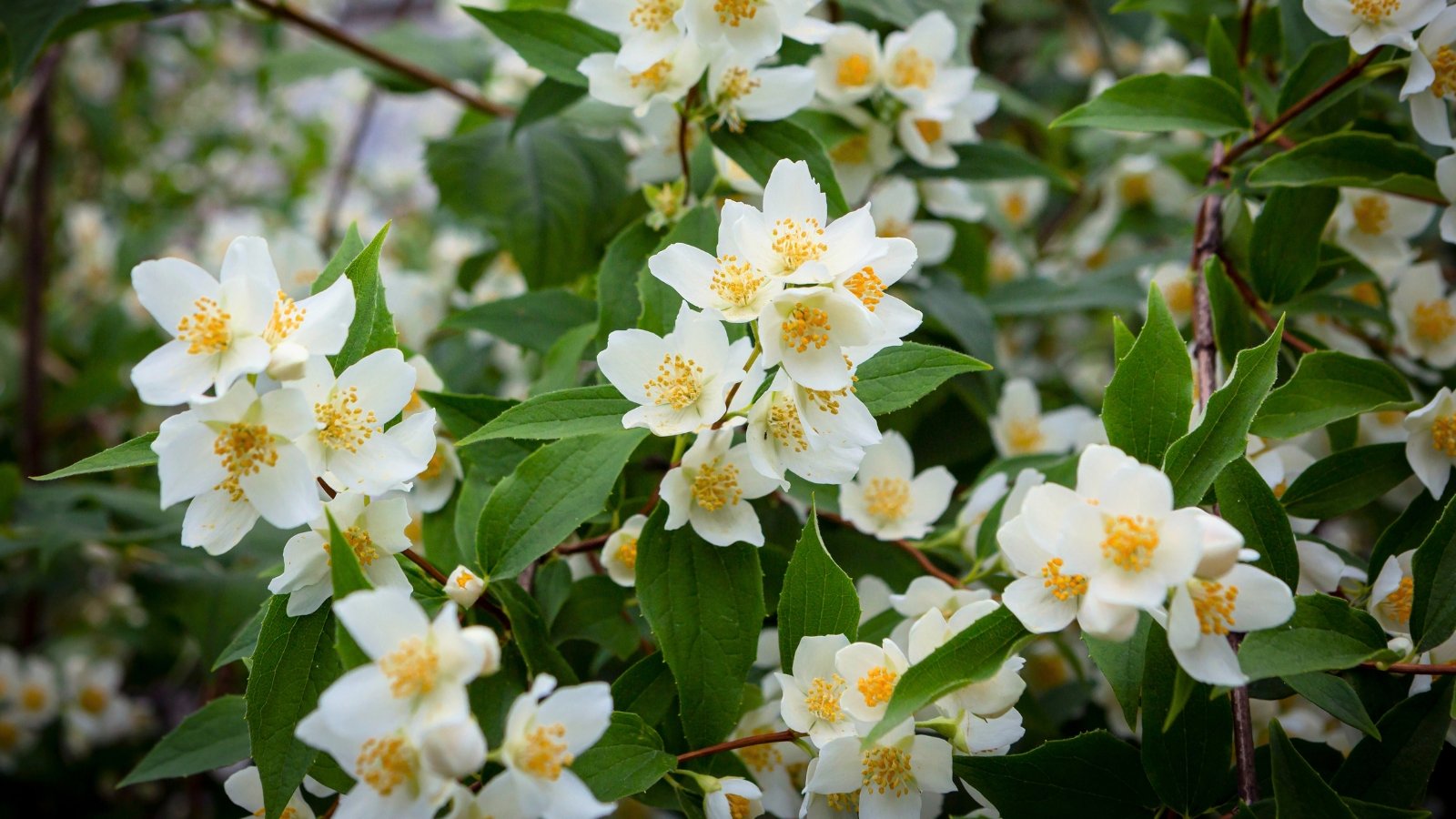
You can find numerous mock orange species, but many people use this generic name to refer to sweet mock orange (Philadelphus coronarius). Although this plant is beautiful and fragrant, it is not native to North America and can become invasive in ideal growing conditions. Planting a native mock orange like Lewis’ mock orange (Philadelphus lewisii) or hoary mock orange (Philadelphus pubescens) is a better alternative.
All mock orange species are deciduous shrubs with vibrant green leaves and simple white flowers. The blooms have a sweet, citrusy fragrance that mimics that of orange blossoms. I had no idea that mock orange plants existed until their strong fragrance made me do a double-take on a hike.
The ideal habitat varies by species, but most mock orange plants grow well in full sun to partial shade. They can tolerate a variety of soils but will thrive in well-draining, yet moist, ground.
Hydrangea
|
|
botanical name Hydrangea spp. |
|---|---|
|
|
sun requirements Full sun to shade |
|
|
height 3-15’ |
|
|
hardiness zones 3-9 |
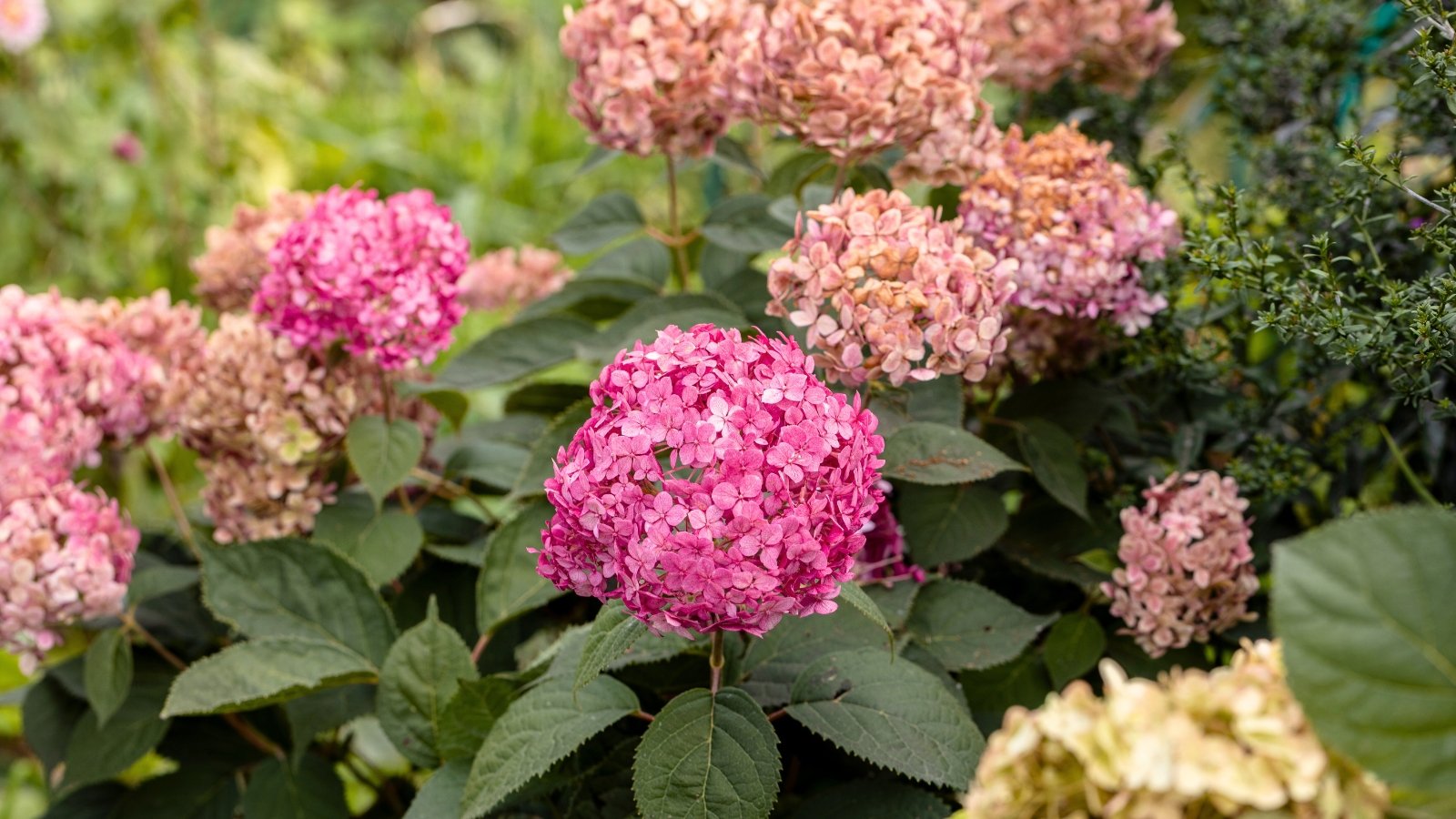
No matter where you live and what type of flower you like, you can find a hydrangea you love. These shrubs are renowned for their large flowers and their ability to blend seamlessly into landscapes ranging from English country gardens to wild, native woodlands.
If you’re looking to stick with native plants, you can choose from species like the oakleaf hydrangea or smooth hydrangea. And if native status isn’t a concern, you can check out new cultivars like ‘Endless Summer®’ and ‘Pee Gee.’
Before you select a hydrangea, recognize that these shrubs differ in their size, light requirements, and soil preferences. Rather than choosing a plant and then finding the correct location, decide where you want to plant this shrub in October, then pick a variety that will thrive.
Coralberry
|
|
botanical name Symphoricarpos orbiculatus |
|---|---|
|
|
sun requirements Full sun to partial shade |
|
|
height 2-5’ |
|
|
hardiness zones 4-8 |
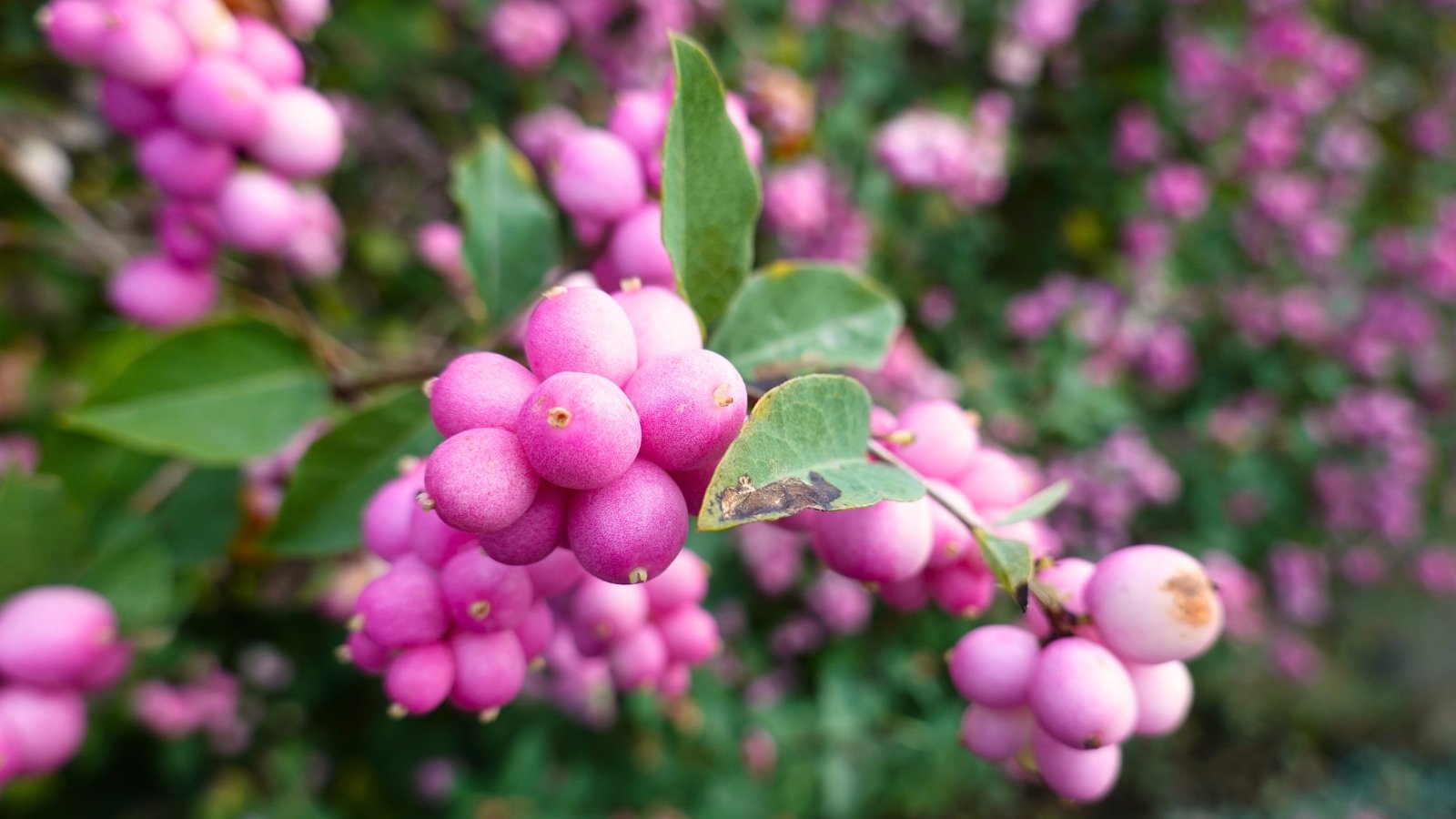
Coralberry is the type of shrub that will brighten the winter landscape after leaves have fallen. The plants produce clusters of small berries along their stems, adding beauty to your garden long after flowers have faded. These berries are typically bright pink, but you can find modern cultivars with white or pale pink fruits.
Coralberry is native to the eastern US, where it thrives in forest understories and woodland edges. The plants may grow as single shrubs, but their stems can root when they come into contact with the ground, resulting in large thickets.
Not only are the plants beautiful in the garden, but they also make a great addition to arrangements. The berries add pops of color to winter bouquets, and the green leaves serve as filler foliage in the spring and summer.