How to Tell If Your Hydrangeas Bloom on Old Wood (Before You Cut)
Understanding the blooming habit of your hydrangea is vital to pruning and flowering success. Prune at the wrong time, and you'll miss out on a lot of flowers! Join gardening expert Melissa Strauss to determine whether your hydrangea blooms on old wood, and what that means in terms of pruning.


Contents
Hydrangeas are wonderful flowering shrubs that have unparalleled fame in home gardens. Their large, lush clusters of soft, pastel blooms are spectacular in a way most shrubs don’t come close to. Getting an abundance of those flowers depends greatly on when you prune them.
There are 70 to 80 different species of hydrangea, though most of the ones we grow in our gardens fall into one of six. Each of the species has numerous varieties, which is what gives us a wide range in color and plant size.
The way your hydrangea blooms and the care it needs hinges on the specific species. Each has distinct features that affect their needs, appearance, and blooming time. Their blooming time is the most significant trait to pay attention to when you need to prune your hydrangeas. Some hydrangeas bloom on old wood, and others on new wood.


Old Wood vs New Wood: What’s the Difference?
So what is the deal with hydrangeas blooming on old versus new wood? The difference between the two is the time of year that the plant forms its flower buds. It’s specifically concerned with this in relation to the specific species’ growth cycle.
First, let’s talk about blooming on old wood. Hydrangeas that bloom on old wood form buds on the stems that grew in the previous season. The green growth from this past year is where the flowers will bloom next season.
For these species, the buds form before winter. They remain dormant until spring, and then open into flowers. The reason this affects pruning time is that if you cut too late, you can remove the buds. Then you end up with a disappointing bloom cycle next spring.
On the other hand, plants that bloom on new wood form buds on growth from the present season. These buds form faster, as they go from start to finish in one season. There are no overwintering buds. These will grow new stems in the spring, and those stems will flower in the same year.
Pruning time hinges on this characteristic and determines the amount and quality of flowers in the spring. As you might guess, hydrangeas that bloom on new wood are more easygoing when it comes to pruning time. Old wood bloomers require more patience.
Old Wood Bloomers

Hydrangeas that bloom on old wood will form their flower buds during the previous growing season. It usually happens in late summer, but it can occur earlier or later depending on your climate and weather. During the winter, these buds are dormant.
This means that the flowers you see these species produce were actually forming in the previous year. Because of this factor, hydrangeas that bloom on old wood are more difficult to prune. They need time to set buds, and if you wait too long, you may end up removing those buds.
Species
The main types of garden hydrangeas that bloom on old wood are bigleaf (Hydrangea macrophylla), mountain (H. serrata), and oakleaf (H. quercifolia). Gardeners love these for their large, colorful blooms and attractive foliage. Here are some characteristics of the various types. If you don’t know which one you have, this should help you make that call.
Bigleaf hydrangeas (H. macrophylla)
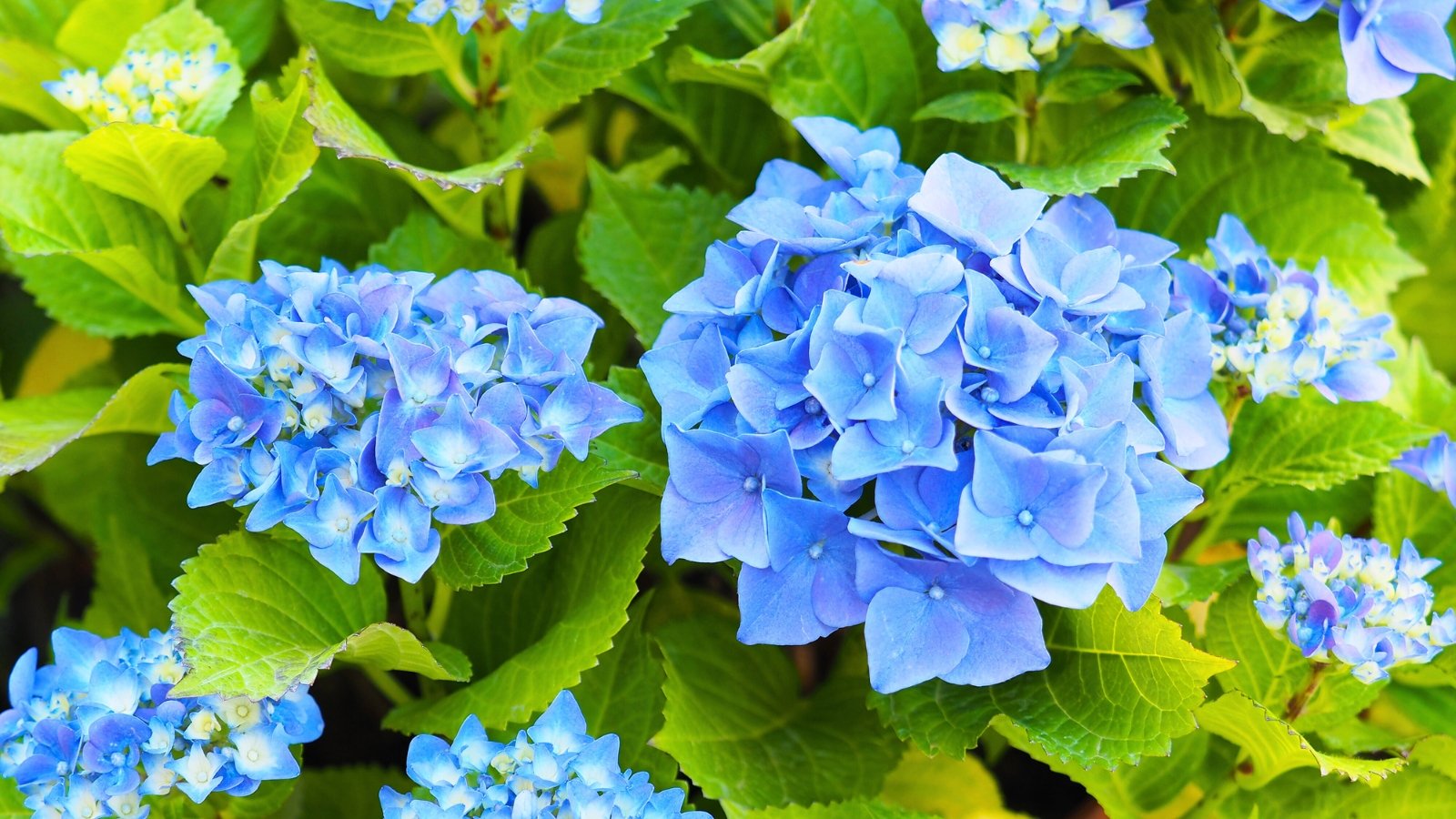
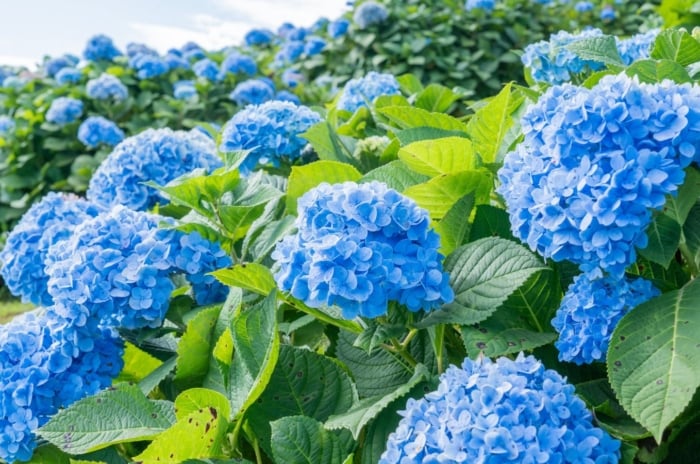
Among the most popular for gardens, bigleaf is recognizable for its dark, glossy leaves and large, round flower clusters. When I think of a classic hydrangea, this is the type. Bigleaf has large, rhomboid-shaped foliage that grows dense and lush. They form their buds on old wood during the previous growing season.
The flowers on bigleaf come in two forms. One is a mop head, which is a large, ball-shaped cluster. The other is a lacecap. These have more delicate flowers. They are flat and lacy in the center with a ring of more substantial florets around the perimeter. The flowers are usually pink, white, purple, or blue, and change with the acidity of the soil.
Mountain hydrangeas (H. serrata)
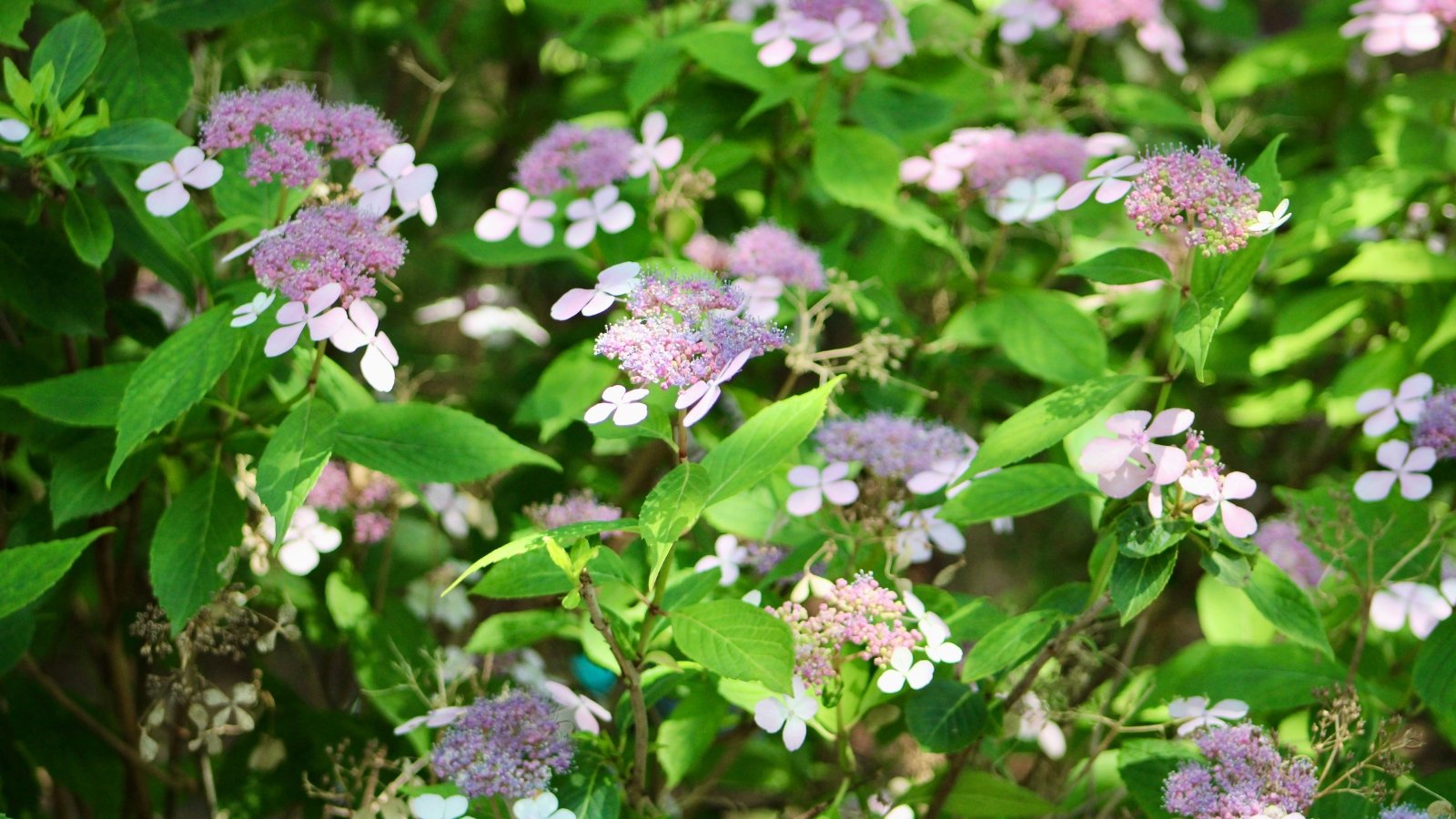
These are similar to lacecap bigleaf types. They tend to be smaller and more delicate, but also hardier and more adaptable to harsh conditions. Their leaves are narrower, with a finer texture. Their flowers are flatter with the lace-cap style formation.
Like bigleaf, mountain hydrangeas form their flowers the prior season on old wood. These have excellent cold tolerance, and their colors are also influenced by the pH of your soil. In acidic soil, they produce blue flowers. In alkaline soil, the flowers are pink.
Oakleaf hydrangeas (H. quercifolia)

This is the most common native species that you’ll find at local nurseries. They are distinctive and quite different from the other old wood bloomers. They have large, striking, lobed leaves that resemble oak leaves.
If you’re on the fence about which species to choose, oakleaf is wonderful. Because it’s native, it requires less care. They grow quite large, and though their flowers aren’t as colorful, they are no less showy. The blooms on this species are large, cone-shaped clusters that start out white and take on a rosy hue as they mature.
Another wonderful characteristic of oakleaf cultivars is their fall foliage. Those large, striking leaves change to shades of red, burgundy, and bronze. They create a dramatic effect in the landscape through three seasons.
How and When to Cut

Pruning old wood bloomers is more complicated than pruning new wood bloomers. It requires good timing and a gentle approach. Pruning too late in the year will result in a significantly reduced bloom in the coming year.
The best time to prune these is right after the flowers fade. This will be in mid-to-late summer in most cases. This is when you should do any shaping and remove the spent blooms to help the plant redirect its energy. It gives your hydrangea several months to set those buds before it enters dormancy.
Focus on light, selective thinning of these species. Open up the interior to allow air and light to reach farther into the center. Snip off the flower heads, and remove any dead or damaged wood. If your plant needs some rejuvenation, you can remove one or two of the oldest, thickest stems.
New Wood Bloomers
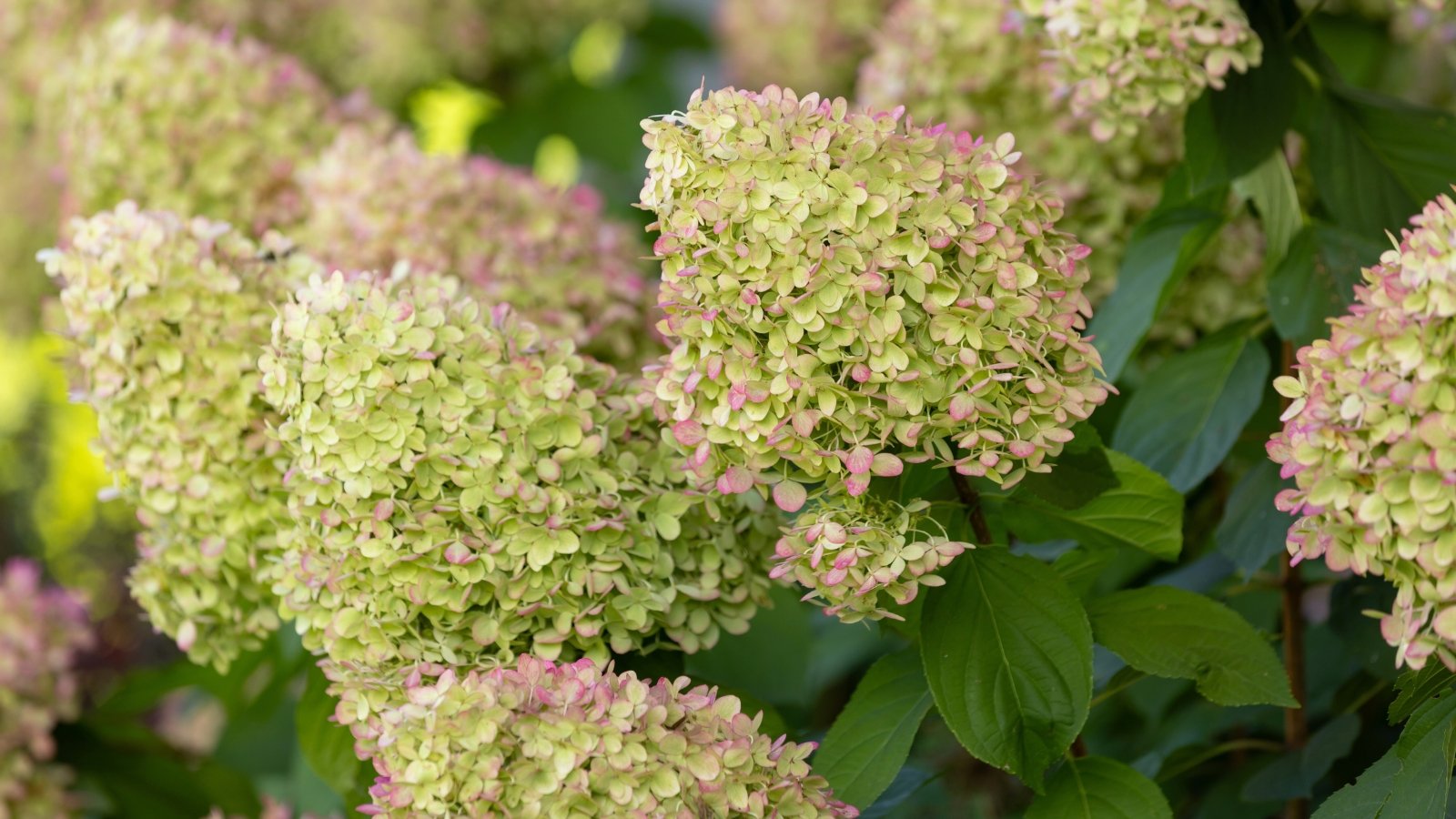
Hydrangeas that bloom on new wood form their flower buds on branches that grew in the same season. The new growth in spring will also produce that year’s flowers.
These are far more forgiving in terms of pruning. They tend to be reliable and tolerate winter cold and hard pruning much better than old wood types. In climates with harsh winters, and for gardeners who like a more low-maintenance plant, these are great.
Species
The two main species of new wood bloomers are smooth (H. arborescens) and panicle (H. paniculata). Both types tolerate full sun, while the others are less sun-tolerant.
Smooth hydrangeas (H. arborescens)

The smooth hydrangea is exceptionally cold-hardy and adaptable. These grow well in the widest range of climates and conditions. From early to late summer, these form large, rounded clusters of greenish-white florets.
Panicle hydrangeas (H. paniculata)
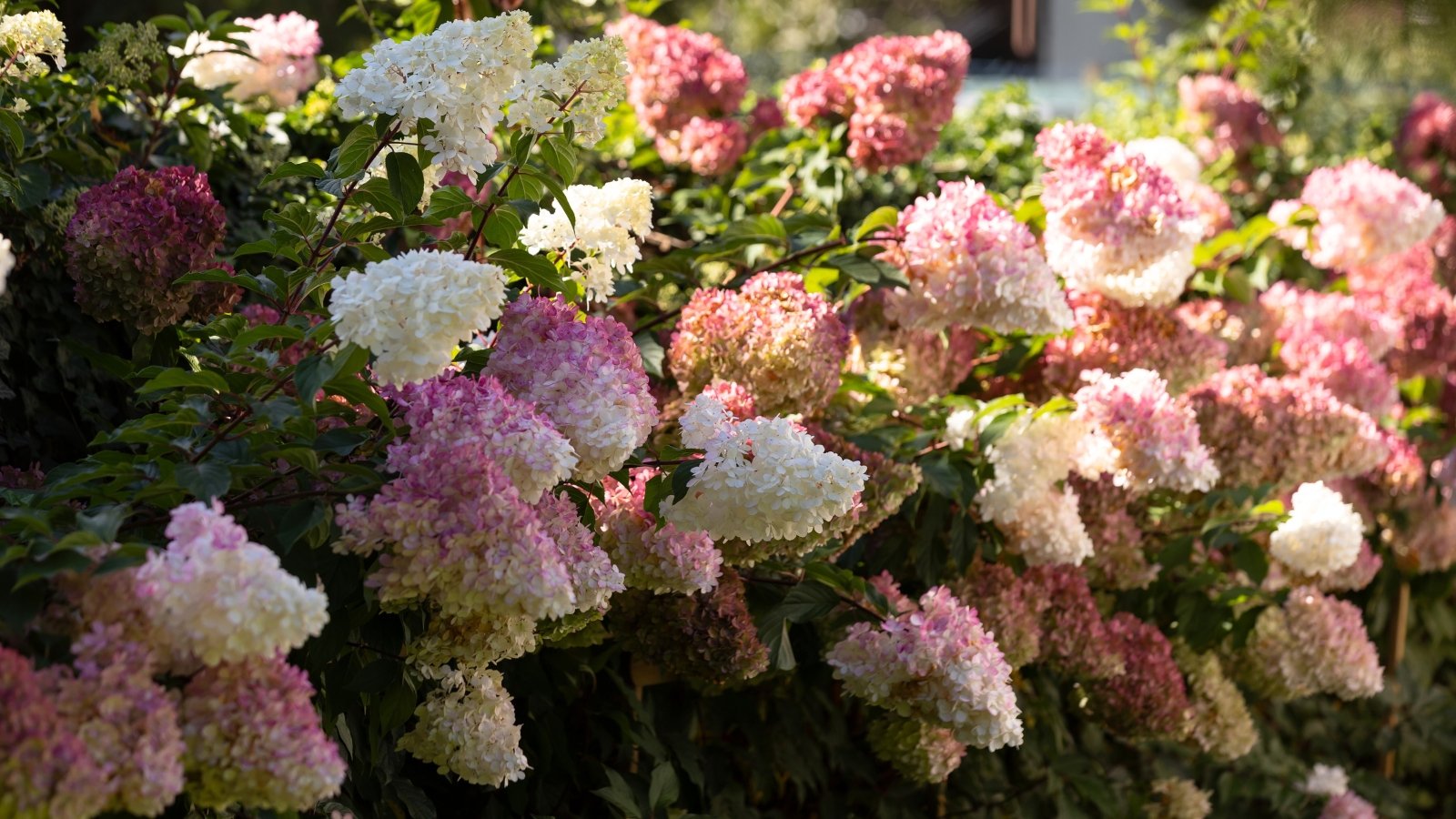
These panicle hydrangeas are popular for their sun tolerance, resilience, and large, cone-shaped flower clusters. They bloom from summer into early fall.
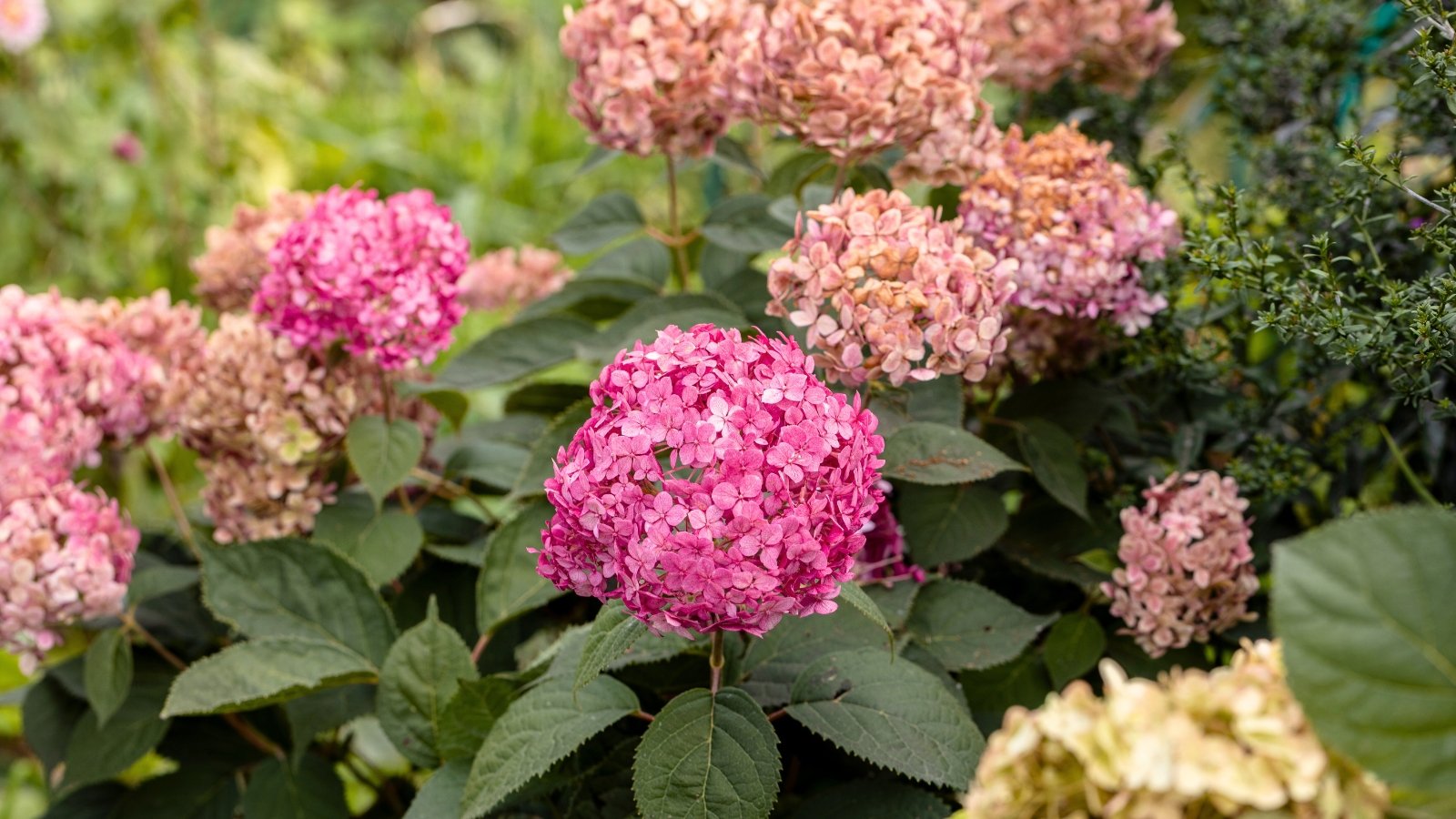
The flowers open in a pale green to creamy white color. As the summer goes on, they mature to a range of warm tones. Some will take on a blush while others may change more dramatically to deep burgundy.
How and When to Cut

Because these bloom on new, green branches, it’s easier to prune them. There is less concern about cutting off buds, so they tend to be more reliable bloomers. They are also the most drought-tolerant species.
I like to wait for late winter to work on these. The old branches act as a buffer, protecting these shrubs from cold damage. This way, in late winter or early spring, you can cut them back and remove any cold damage at the same time.
These are also much more forgiving when it comes to hard pruning. A lighter pruning in late winter will result in strong stems and tons of flowers. Cutting it back harder will result in fewer flowers, but they will be larger.