9 Heirloom Daffodil Varieties You Can Grow
If you love bulbs, throw a few heirloom daffodil varieties into your garden this spring. These blooms have been passed down for generations, and many have interesting forms and coloring. Experienced gardener Sarah Jay highlights nine of them you can grow this year.

Contents
Growing daffodils is a fun spring activity that can give you blooms before other plants even set buds. Heirloom daffodil varieties offer the garden the same early flowering with some of the most interesting shapes and color patterns. It’s also wonderful to have a chance to continue their legacy.
These bulbs aren’t just unique, they’re also resilient. They’ve managed to survive generation after generation, holding up to the elements, insects, and diseases. Several varieties carry with them a lovely scent that standard types can’t match.
While you’re perusing catalogs – whether online or physical – consider the following heirlooms. We’ll detail their features, their scents, and their ideal growing conditions. Plant them in fall among your other delightful blooms. Don’t forget to divide them in the fall, and save some to give to friends as holiday gifts.
Barrii Conspicuus

|
botanical name Narcissus ‘Conspicuus’ |
|---|---|

|
sun requirements Full sun to partial shade |

|
height 13″ |

|
hardiness zones 3-9 |
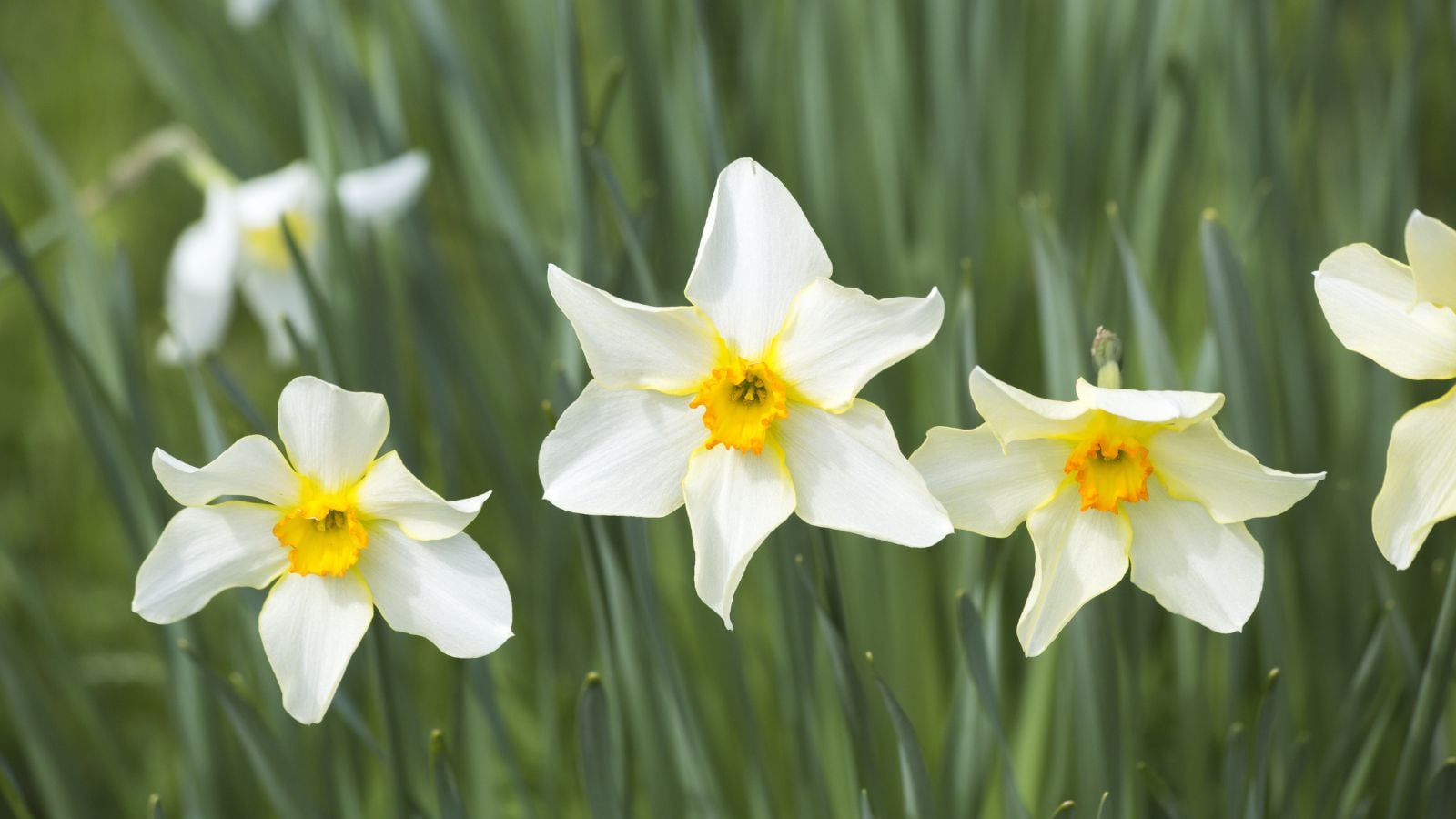
This dwarf is one of the prettiest heirloom daffodils, in my opinion. The outer star-shaped petals are bright white to yellow with a small, canary corona that is fringed with orange. It hails from the Victorian era. The flower heads tend to nod slightly, but will sometimes maintain their usual appearance.
Like other daffodils, these are perfect for planting along borders to block out deer and rabbits. They bloom in the middle of the season to late in spring. Their mild color palette offers a cooling effect in more vibrant plantings, as long as you consider their bright inner cup.
Argent
|
|
botanical name Narcissus ‘Argent’ |
|---|---|
|
|
sun requirements Full sun to partial shade |
|
|
height 14-16” |
|
|
hardiness zones 4-7 |
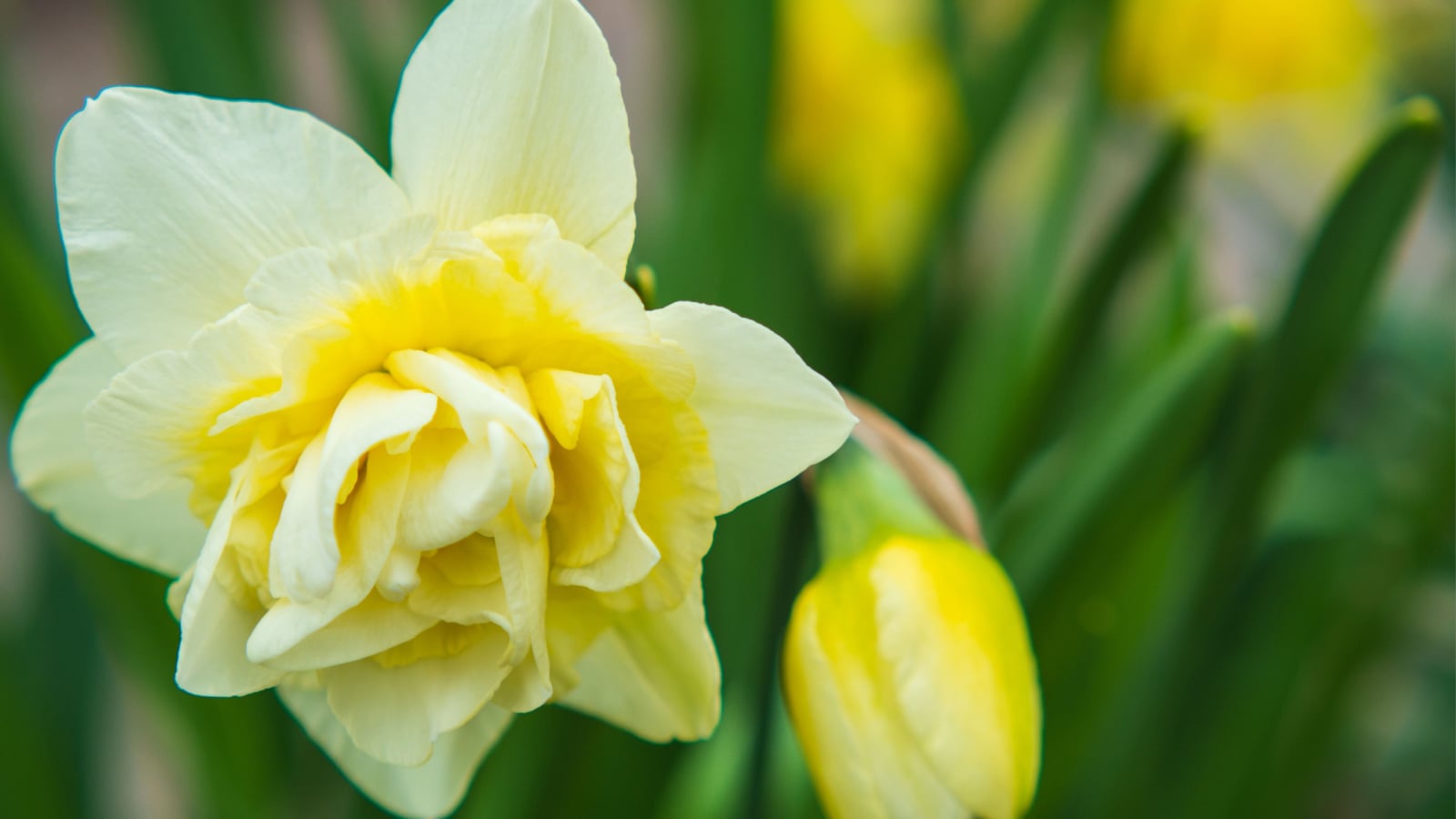
This double daffodil is a luscious, creamy yellow and white with what British horticulturist E.A. Bowles deemed a “particularly graceful outline”. The stark outer petals are moonlight colored, and the inner corona is a golden-yellow, which opens late in spring. This is one of the heirloom daffodils that is over 100 years old, originating in 1902.
‘Argent’ was bred via a cross between ‘Ornatus’ and ‘Van Sion’, the latter of which we detail below. Plant this one in your garden for a burst of spring vitality. Note that it won’t be great for pollinators, but its form is stunning enough to plant next to single-petaled varieties.
Van Sion
|
|
botanical name Narcissus ‘Van Sion’ |
|---|---|
|
|
sun requirements Full sun to partial shade |
|
|
height 14-16” |
|
|
hardiness zones 3-7 |
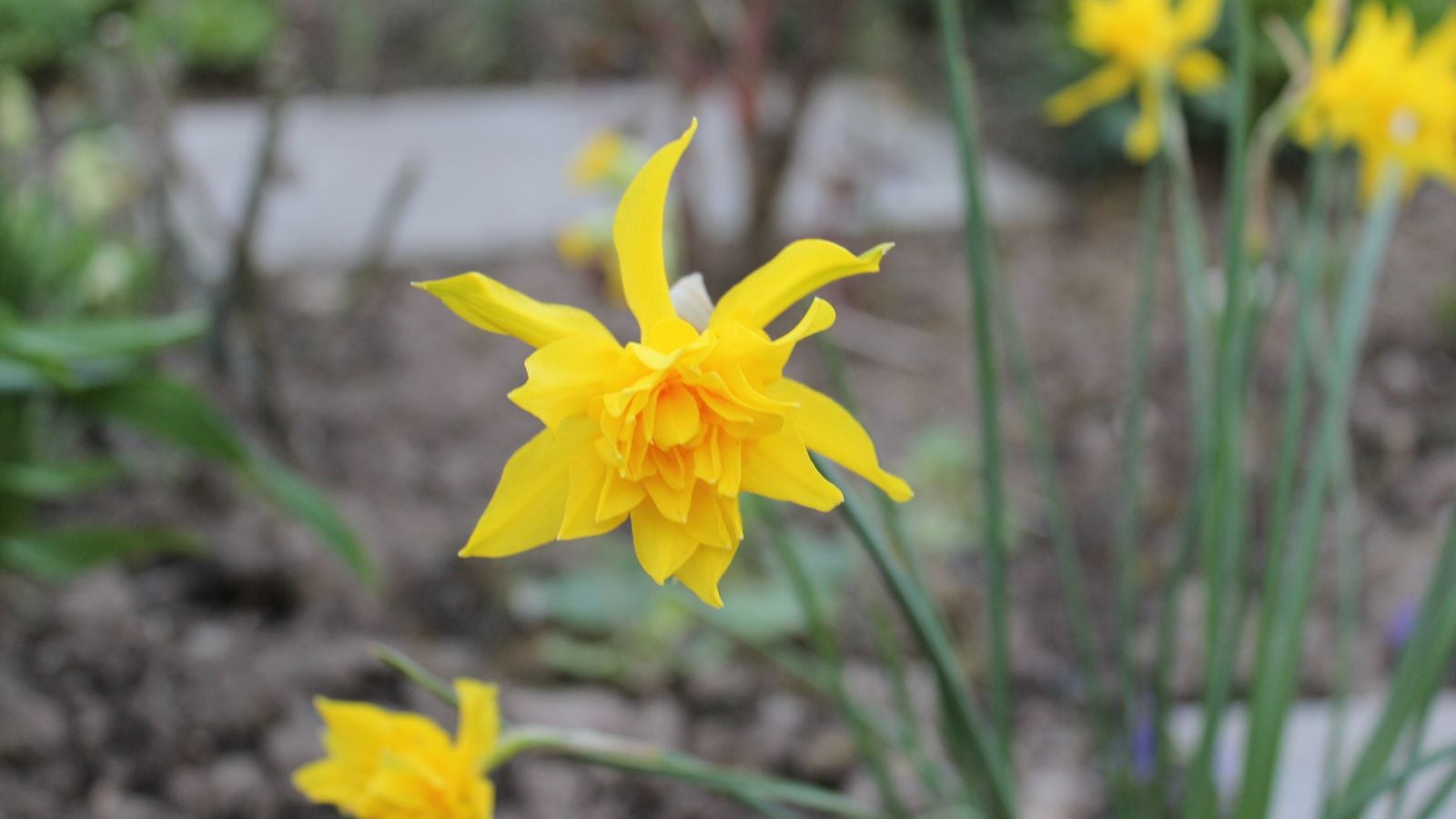
As a parent to ‘Argent’, you can expect the same exuberant double flowering from ‘Van Sion’. However, the coloring is much more purely yellow, rather than creamy. And the double petal form – which emerges super-early – is arranged along the outer petals, rather than ruffled together roundly. Its inner corona takes on a little bit of green too, offsetting the stunning, sunny yellow that dominates this bloom.
There’s no other daffodil like this one, and it’s one of the longest-standing of all the heirloom daffodils, at least 400 years old. While you may see a defined trumpet on some blooms, others will be obscured by petals. Its age means it’s a variable bloom, but it will reliably bloom despite its multiple forms.
Westward

|
|
botanical name Narcissus ‘Westward’ |
|---|---|
|
|
sun requirements 10-16” |
|
|
height Full sun to partial shade |
|
|
hardiness zones 4-7 |
Now, if a more uniform bloom is what you need for your garden, look to the double-flowered ‘Westward’. This is a new heirloom, with origins that reach only as far back as 1962. We have Irish daffodil breeder, J. Lionel Richardson, to thank for this white and yellow double-petaled beauty.
There is no visible trumpet on this daffodil, but there is a profusion of alternating straight, white, and ruffled, golden petals that come as it blooms in the middle to late in the season. The stems are strong and hold the dense blooms with ease. This is a great choice for gardens that need reliable form.
White Marvel
|
|
botanical name Narcissus ‘White Marvel’ |
|---|---|
|
|
sun requirements Full sun to partial shade |
|
|
height 12-14” |
|
|
hardiness zones 4-7 |
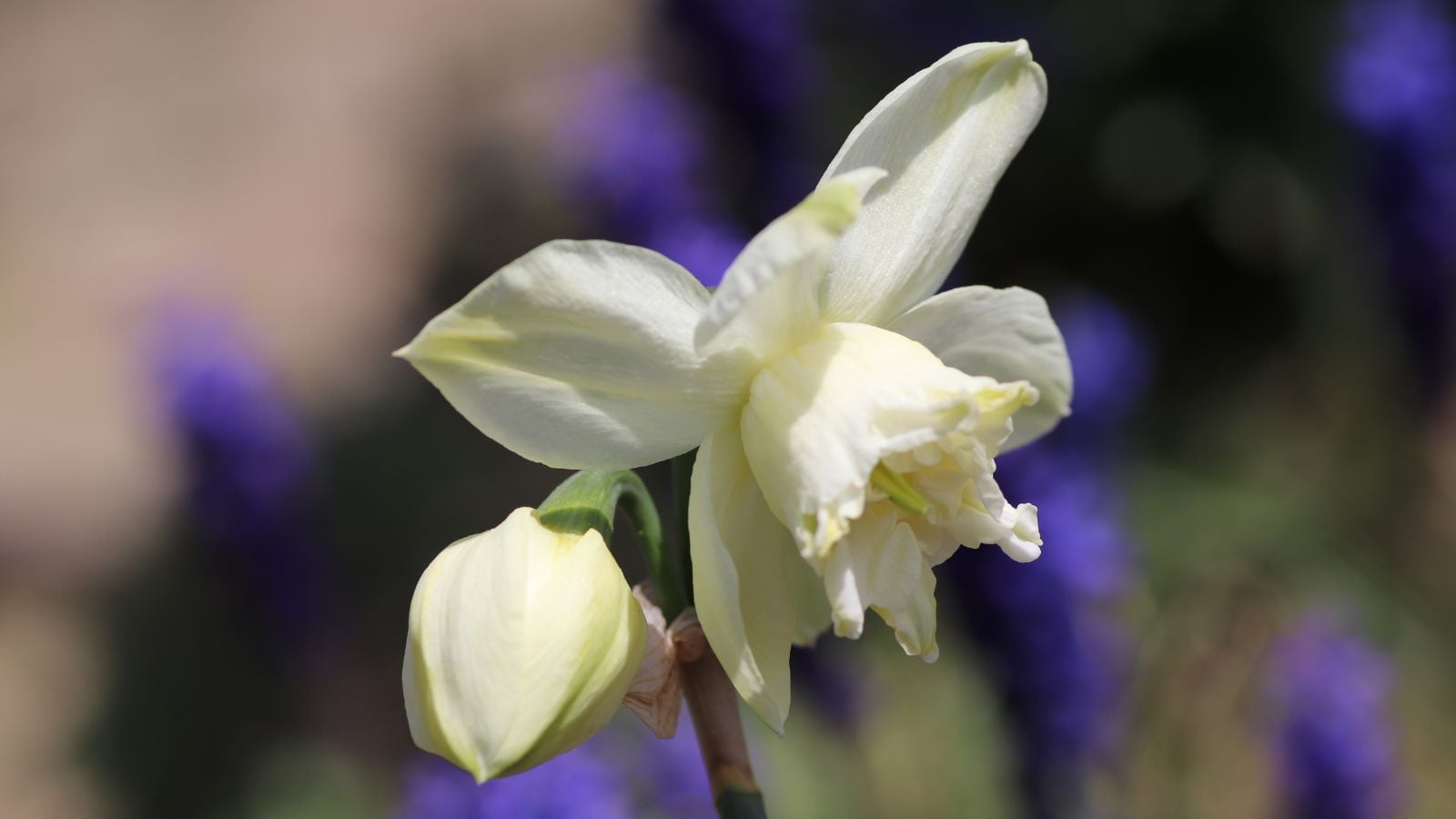
Why is this variety called ‘White Marvel’? Well, it’s because it produces two to three porcelain white flowers on one stem. The form is marvelous too. The outer petals are single and have rounded tips, while the inner trumpets are multi-petaled. It’s a unique flower that neutralizes beds, but still offers a brilliant aesthetic.
‘White Marvel’ was developed in 1950, and it blooms late in the season, offering a love letter to spring as it passes. The trumpet is typically referred to as a petticoat, which is totally what it looks like.
Parisienne
|
|
botanical name Narcissus ‘Parisienne’ |
|---|---|
|
|
sun requirements Full sun to partial shade |
|
|
height 18-24” |
|
|
hardiness zones 4-9 |
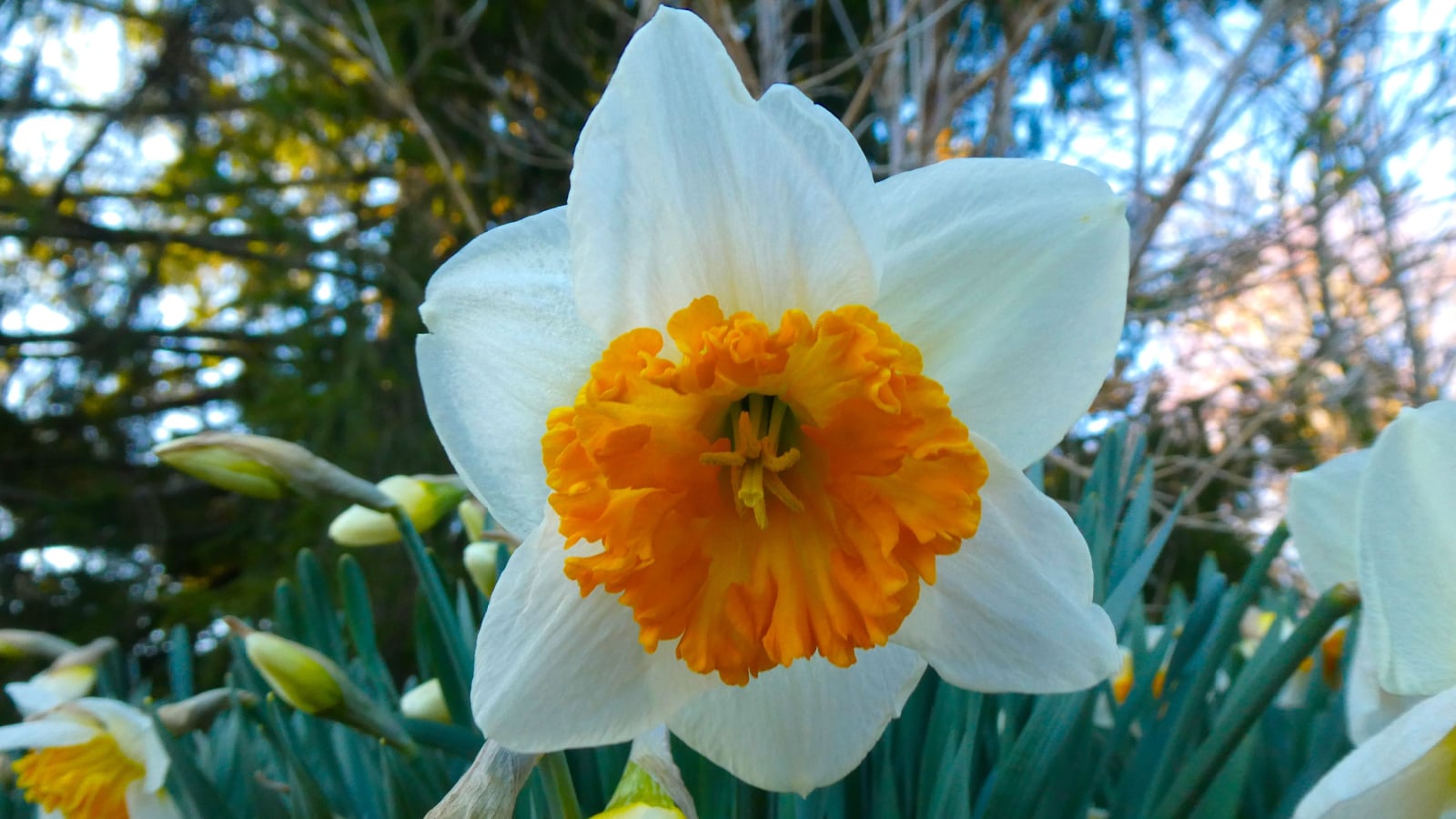
Just like a real-life Parisian, ‘Parisienne’ brings the style to the garden. In mid to late season, the white stars open to reveal pumpkin-orange inner cups. This is a relatively new mid to late-season bloomer that originates in Holland.
While the centers of these flowers are dense, they are still open enough that pollinators can access the stamens. Because this is a taller variety, it’s best planted behind shorter ones for maximum effect.
Maximus
|
|
botanical name Narcissus ‘Maximus’ |
|---|---|
|
|
sun requirements Full sun to partial shade |
|
|
height 14-16” |
|
|
hardiness zones 5-7 |
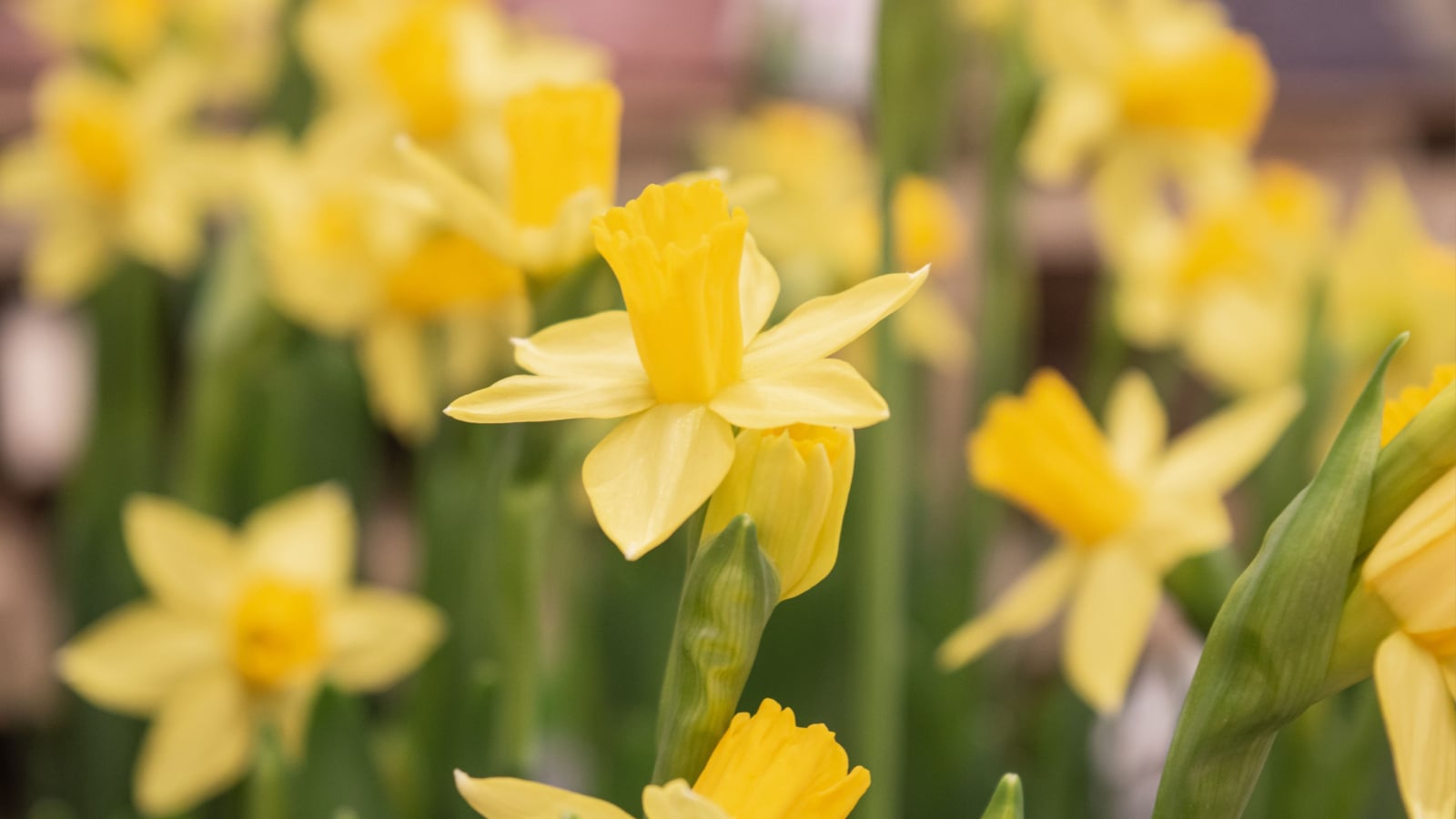
Also called ‘Trumpet Major’, this single-petaled all lemon-yellow bloom has been in cultivation for over 400 years. The sharply-tipped outer petals are the same color as the frilled center, which is frilled on its edges. It’s a standout among other heirloom daffodils due to its tendency to face upward, worshipping the sun.
Plant this one among your bulbs that bloom later, as ‘Maximus’ is one of the first to open in spring. If you want a piece of Renaissance history in your garden, this is the perfect choice, as it was first developed in 1576.
Kinglet

|
|
botanical name Narcissus ‘Kinglet’ |
|---|---|
|
|
sun requirements Full sun to partial shade |
|
|
height 14-18” |
|
|
hardiness zones 6-9 |
We’ve covered a lot of white and yellow daffodils up to this point, but none so yellow and orange as ‘Kinglet’. Hailing from 1959 and developed by American daffodil breeder Grant Mitsch, ‘Kinglet’ can produce up to three flowers per stem. It’s one of the Bird series, which features striking forms and colors.
These blooms are backed by bright golden outer petals, which flank a small, yet pronounced orange trumpet. These are fragrant daffodils, and they tend to bloom in the middle or late in the season.
Inglescombe
|
|
botanical name Narcissus ‘Inglescombe’ |
|---|---|
|
|
sun requirements Full sun to partial shade |
|
|
height 14-16” |
|
|
hardiness zones 4-8 |
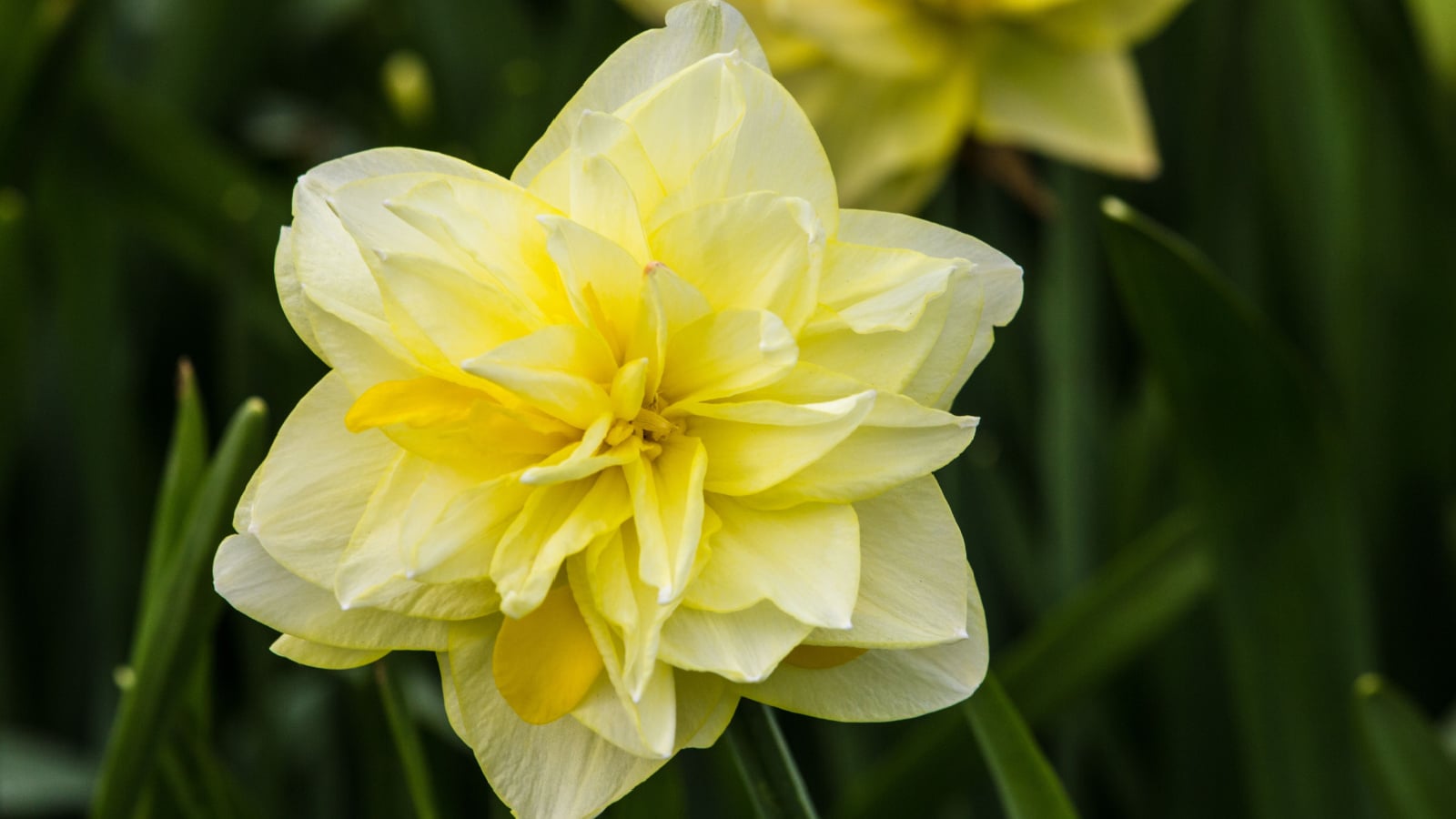
Fully lemon-cream-pie-colored ‘Inglescombe’ is the grand finale in our list of heirloom daffodils. This is another that is over 100 years old, with origins back in 1912. It’s a double-petaled beauty that blooms early to mid-way through the season.
Lightness and freshness is what you can expect from ‘Inglescombe’. The petals are arranged casually, but they don’t seem chaotic or overly ornate. This one is unique, so plant it in a raised bed, in-ground, or in a container where you can showcase its beauty in early spring.