How to Freeze Your Garden Herbs for Holiday Cooking
Are you worried that those wonderful fresh garden herbs you've spent all summer growing won't make it to the holidays? No need for concern, frozen herbs are just as tasty! Join gardening expert Melissa Strauss for tips on freezing them for your holiday cooking.

Contents
For many of us, holiday meals are the most anticipated of the year. It’s the time to break out our favorite recipes, both new and handed down. For a menu so special, fresh herbs are definitely in order.
You spend all summer growing big, beautiful, aromatic herb plants, but now winter is quickly approaching. For some herbs, a bit of frost won’t hurt, but even the most cold-hardy can take a hit in a hard freeze. Speaking of freezing, if you beat the weather to the punch, it’s a good idea to freeze garden herbs to keep them fresh for use during the holidays.
There are several ways that you can preserve your fresh herbs in the freezer. Before we get to the how, let’s talk about why freezing is superior to other methods of preservation.


Why Freeze?
Freezing your garden herbs, as opposed to drying or refrigerating, is a superior method of preservation. While drying can change the flavor and aroma of your herbs, freezing them locks them in their freshly picked form. It’s the same way with fruits and vegetables, and even meat. Fresh frozen is superior to every other state except freshly harvested.
When you freeze garden herbs, you preserve the quality and potency of their essential oils. These oils are the part that infuse your food with those wonderful aromatic and flavorful qualities. Drying them doesn’t preserve nearly as much, and refrigerated herbs degrade quickly.
Freezing also limits food waste. It’s something that you can do all year, not just in preparation for the winter. Any time you harvest more than you can use, you can freeze a batch of garden herbs without having to go through a grand production.
Frozen garden herbs retain their color and flavor better. It’s easy to freeze them in small, usable portions so that you avoid waste in this way as well. Freezing works for most herbs, especially the more common ones we use in our holiday meals.
Method 1: Dry Freeze Whole or Chopped
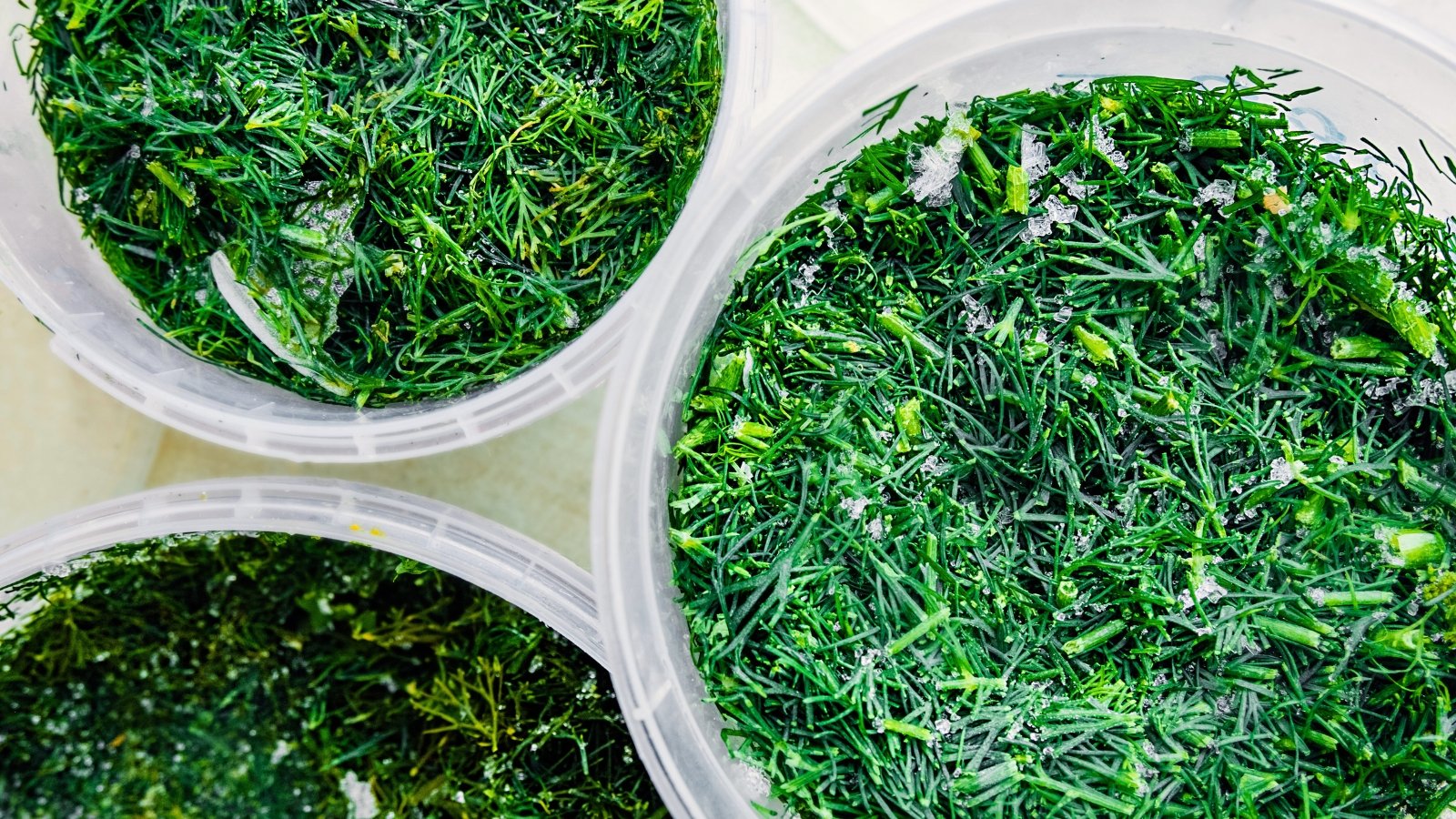
This first method to freeze garden herbs is easy and quick. You’ll need parchment paper and a baking sheet. Also, gather together a ziplock bag and a couple of paper towels. A hand towel works, also. You’ll want some harvesting snips, but that is true for all methods.
Freezing your garden herbs whole is best for hardy types like thyme, sage, oregano, and rosemary. These have sturdy leaves that stand up to the cold and won’t turn to mush during the thawing process.
How to Do It:
- After you harvest, wash your herbs thoroughly and lay them out on your towels to dry. I like to let them dry for an hour or two.
- Strip leaves away from their woody stems and discard the stems; these aren’t the best part anyway.
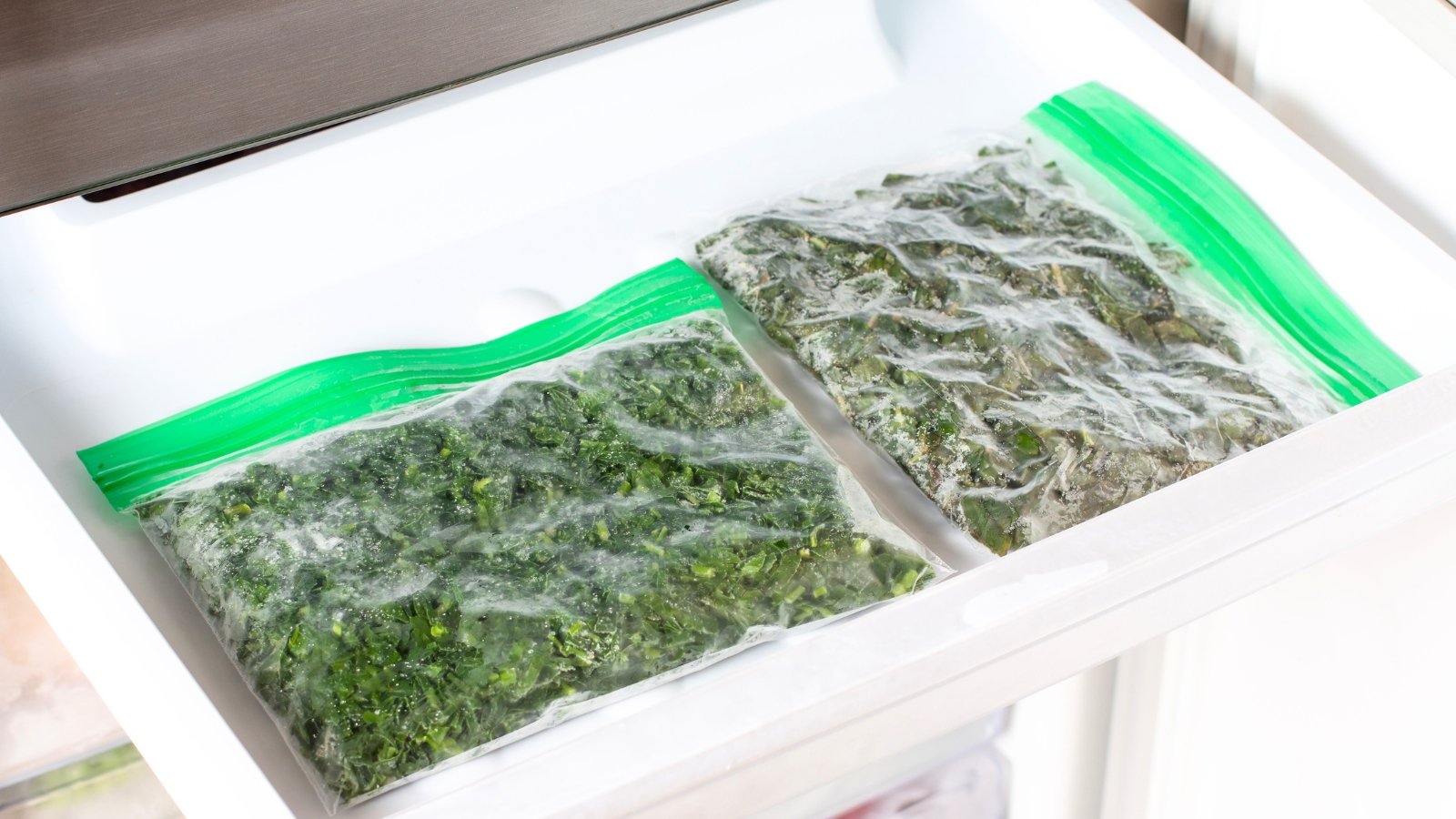
- Cover your baking sheet with parchment paper. Spread your herbs in a single layer on the parchment paper and lay it flat in the freezer.
- Freeze your leaves for one to two hours, until they’re solid.
- Transfer your herbs into an airtight bag or container, label them, and pop them back in the freezer.
How Long Does It Last?
Your herbs will store for about six months in this manner.
Method 2: Ice Cube Method (Oil or Butter)
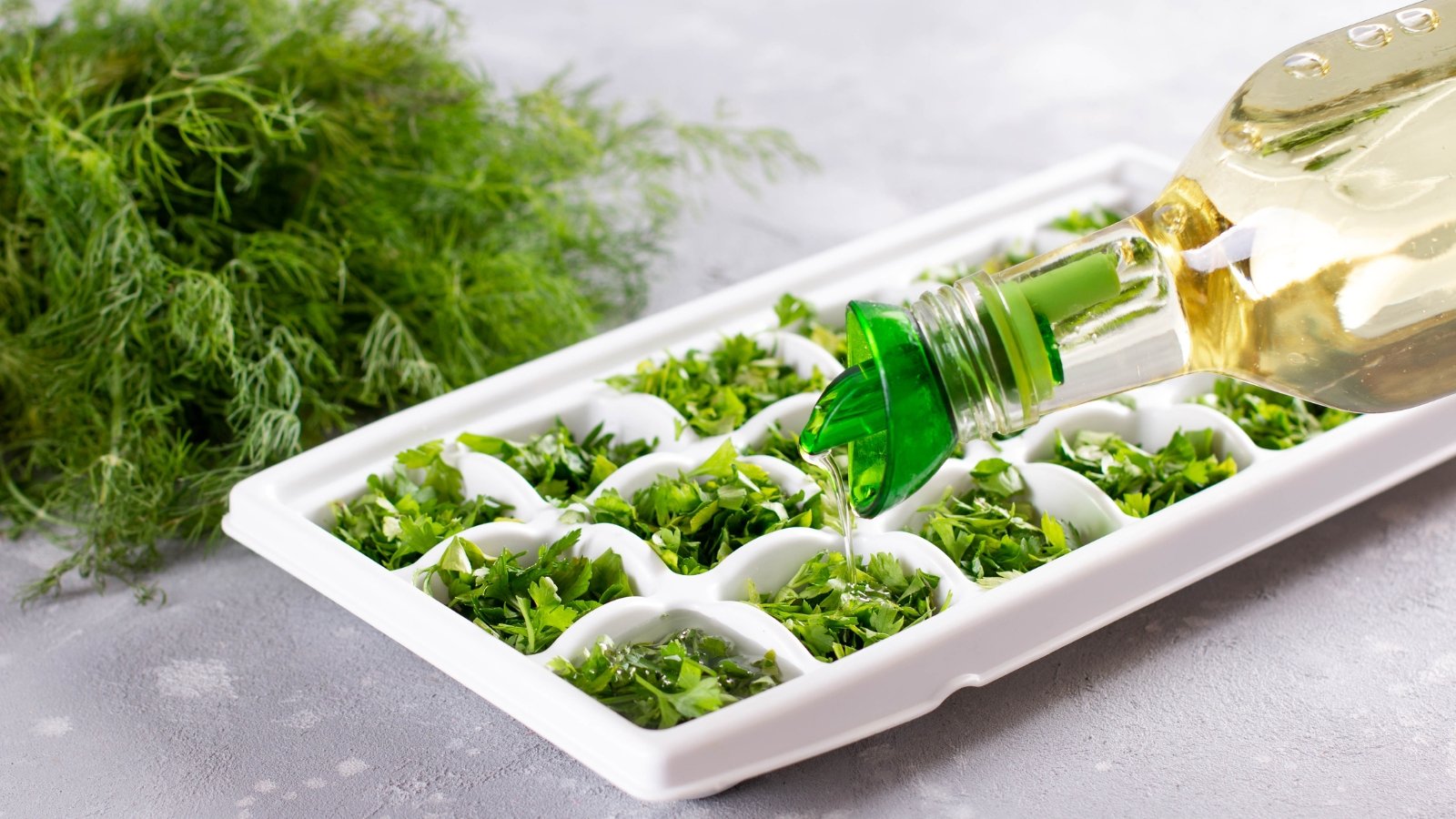
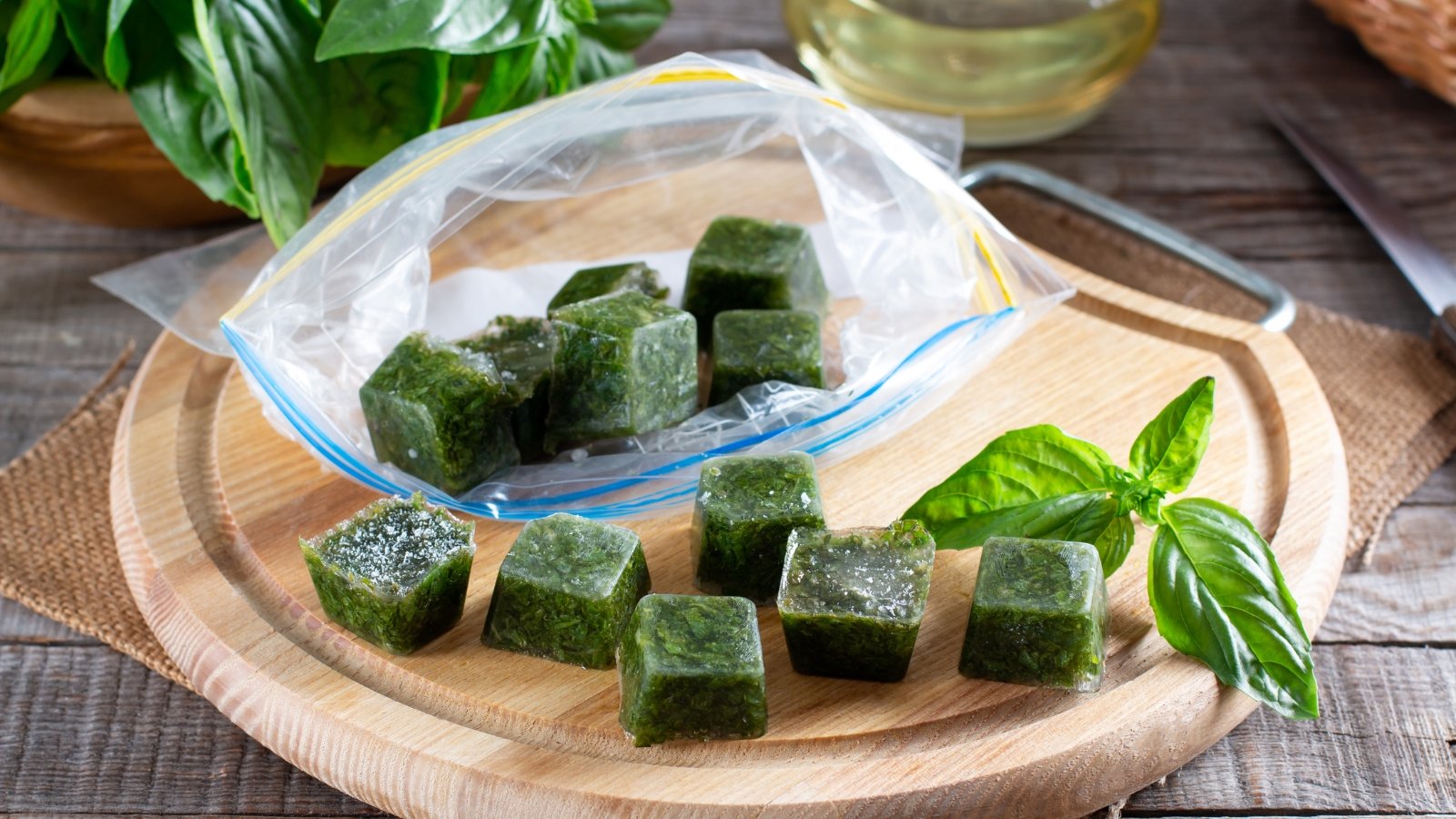
This method is great for softer garden herbs like basil, cilantro, mint, chives, parsley, and dill. You won’t want to use these raw after you thaw them, so only use this method for herbs you will cook with.
You’ll need your fresh herbs, an ice cube tray, and some butter or oil. Whichever you prefer will work fine.
How to Do It:
- Wash, dry, and chop your garden herbs. It doesn’t matter if you chop them coarse or fine. That’s completely a matter of preference. You might want to do a bit of both so that you can choose according to the recipe.
- Fill the spaces in your ice cube trays about two-thirds of the way with your chopped herbs.
- Pour olive oil or an oil of your choosing, or melted butter that is warm but not hot, on top. Use enough to cover them.
- Freeze the cubes overnight. You want them fully solidified.
- If you want to make more or store them in a bag, pop the cubes out and put them in an airtight bag or container that is freezer-appropriate.
When you’re ready to use these, there is no need to thaw them out. Just drop a cube into your pan or whatever you are preparing. The oil will preserve those essential oils well, and also absorb some flavors itself!
How Long Does It Last?
These should last at least six months. This is when they will be at their best. However, you can leave these in the freezer and continue to use them for about a year.
Method 3: Ice Cube Method (Water)
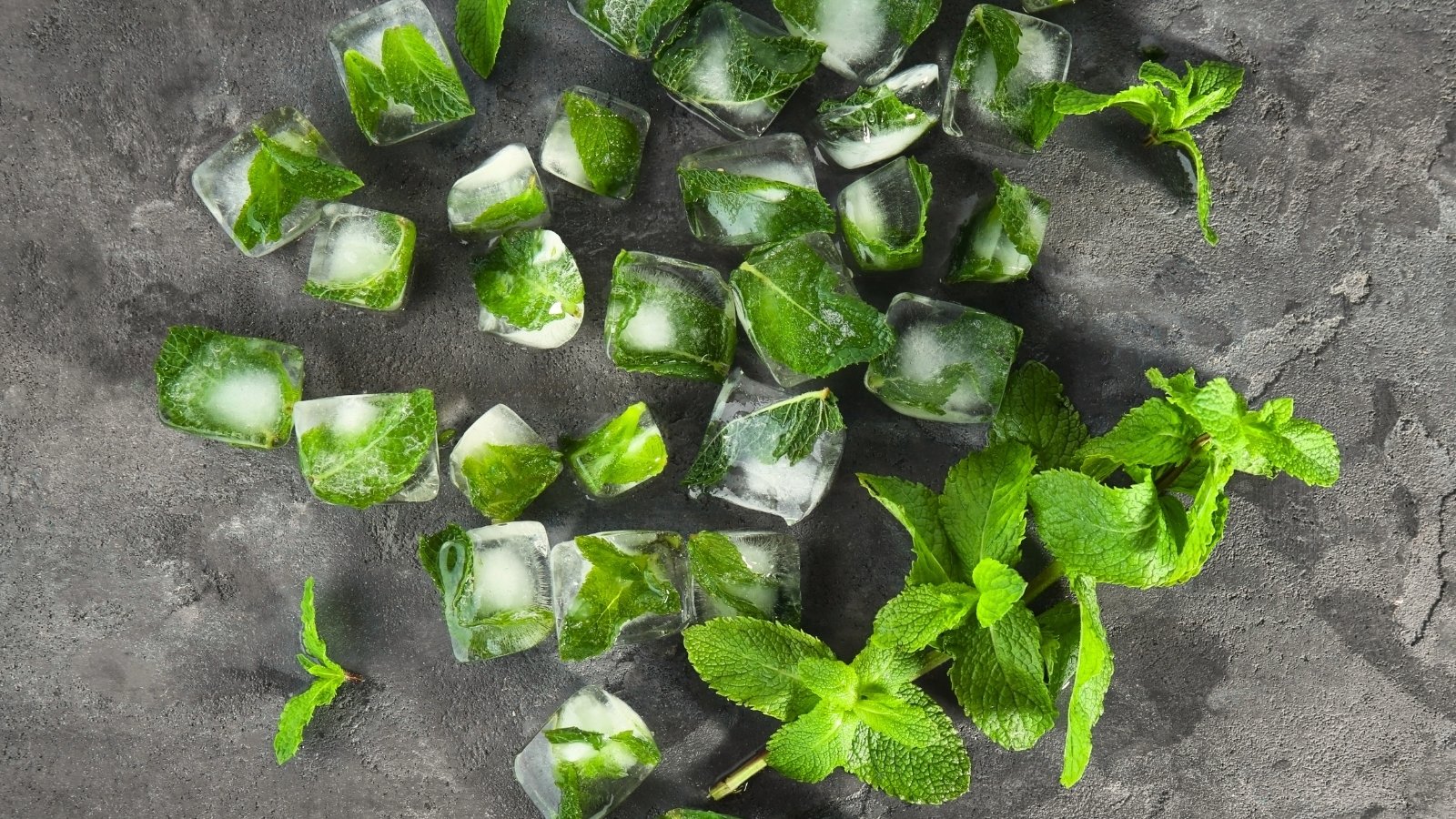
This method to freeze garden herbs is similar to the last, except that you use water in place of oil or butter. It’s good for garden herbs that you intend to add to drinks, teas, soups, stews, and any other recipe that would call for water over oil.
Soft ones work better this way than woody ones. You can also use chicken stock or a stock of your choosing for extra flavor.
How to Do It:
- Chop your herbs, or leave them in sprigs, depending on the size of cubes your trays make.
- Fill the trays, and then top with water to cover them.
- Freeze them overnight to make sure they are good and solid.
- Pop the cubes out of the trays and store them in a freezer-safe bag or container. It’s also a good idea to label them if you are working with more than one type.
How Long Does It Last?
You can store these for about a year. However, they will be at their best in the first six months. After that, they will begin to lose some flavor and may taste a bit dull or watery.
Method 4: Puree
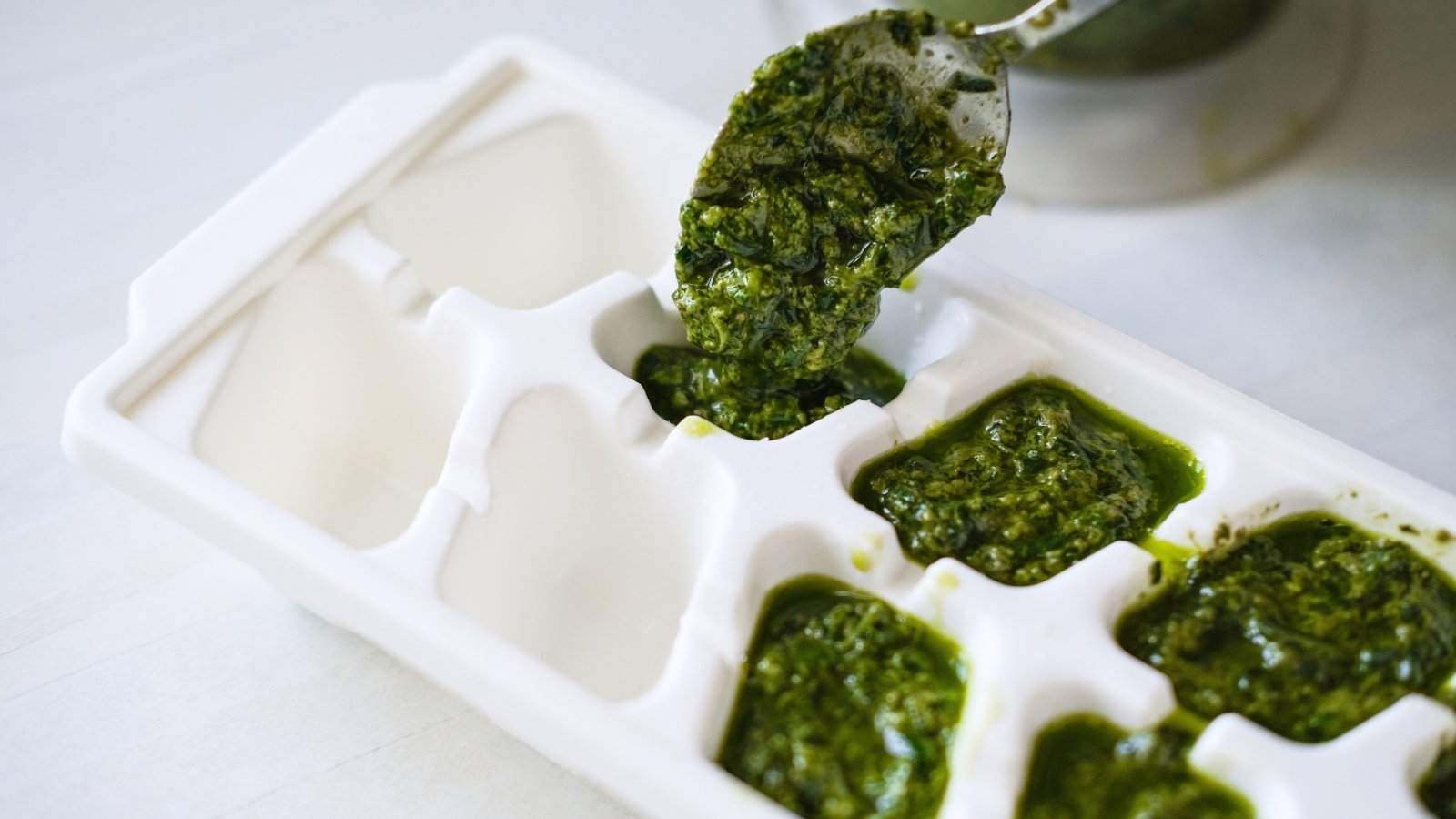
Freezing your garden herbs as purees is another great way to preserve their freshness and flavor for later use. This is best for soft herbs like basil, dill, cilantro, parsley, chives, and mint. If you’re a pesto lover, this is an excellent way to store your basil for later use.
How to Do It:
- Choose a base liquid. You’ll need some liquid in your puree, and there are a few options based on what you’ll want to use them for in the future. A little water works, and is good for soups and sauces. Butter or oil both work if you’re going to use them to cook or make dressings. You can also use a bit of salt and lemon juice for added preservation, but this does alter the flavor a bit.
- Wash and dry your herbs thoroughly.
- Add just enough liquid, along with your garden herbs, to your blender or food processor and blend until smooth.
- Portion your puree into ice cube molds or freezable silicone molds.
- Freeze until solid and then transfer the cubes into freezer-friendly bags or containers.
How Long Does It Last?
- In water: 4-6 months
- In oil (similar for lemon juice): 6-12 Months
- Refrigerated: up to 5 days