

How to Plant, Grow, and Care For ‘Caramel’ Coral Bells
The dynamic foliage of ‘Caramel’ heuchera makes it a delicious accompaniment in borders, beds, and containers. With warm apricot and honey hues, it takes the display into fall to complement blooms like asters, chrysanthemums, and pansies. Join gardening expert Katherine Rowe in exploring the versatility of easy-care ‘Caramel.’

Contents
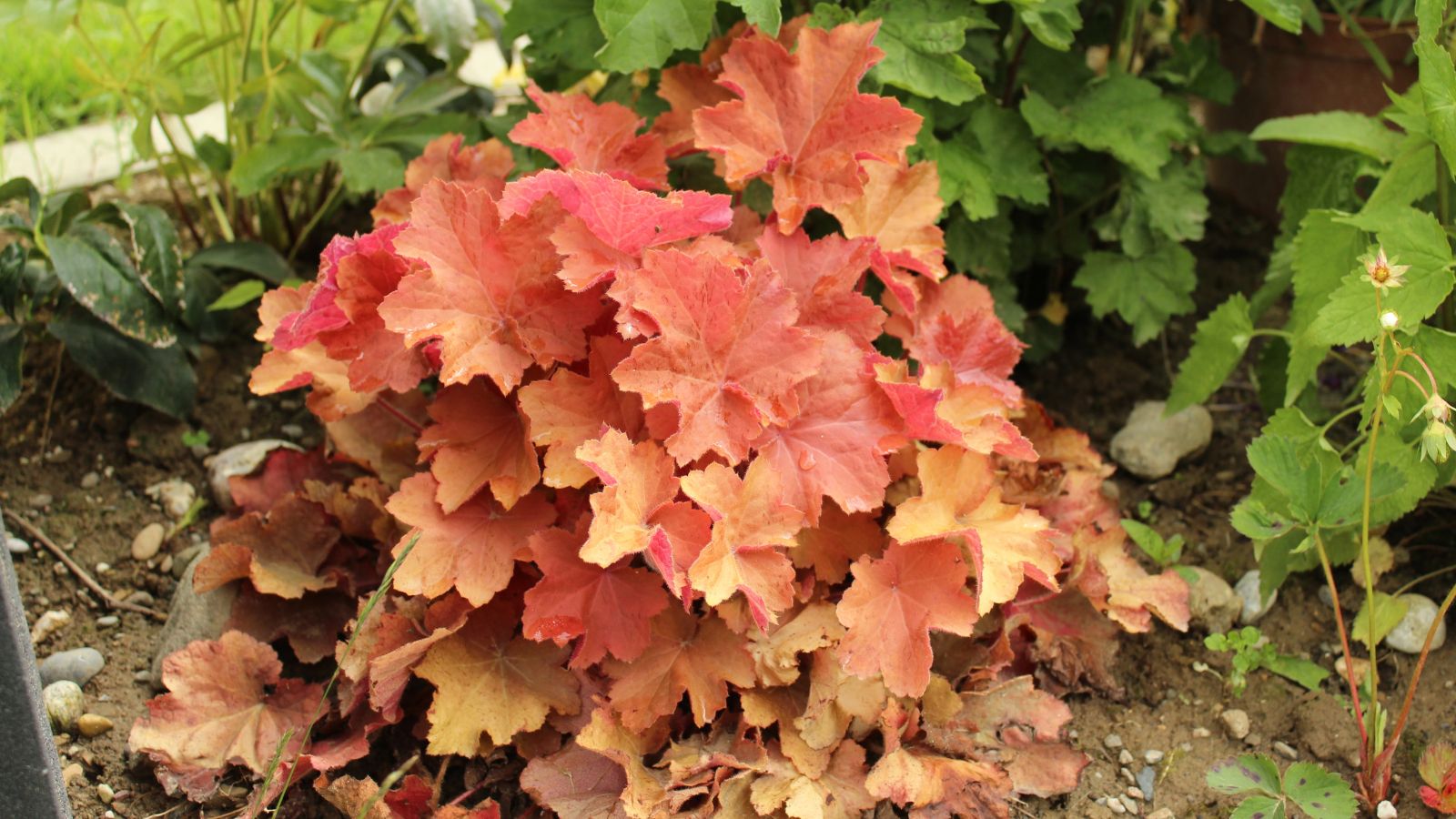
‘Caramel’ coral bells bring delicious apricot tones to the perennial display. A favorite for its warm neutral tones, foliage is dense and vigorous with full, leafy crowns. The compact perennial is hardworking, ornamental, and versatile.
Heuchera are North American natives with colorful, shapely leaves. Cultivars in lime, purple, bronze, black, and red often show mottling and venation. Coral bells heighten visual interest and contrast in the front of the border or container.
‘Caramel’ enchants with multiseason interest and easy care, shining into fall in autumnal tones. The low-growing perennials are lovely en masse or as specimen plantings to brighten shady zones and to highlight other foliar and flower colors. Here are the tips you need to successfully grow and care for them.
‘Caramel’ Heuchera Overview

|
Plant Type
Herbaceous perennial
Family
Saxifragaceae
Genus
Heuchera
Species
spp.
|
Native Area
Garden origin / North America
Exposure
Full sun to full shade
Height
8-10”
Watering Requirements
Average
|
Pests & Diseases
Pest and disease-resistant; possible vine weevils, nematodes, powdery mildew, root rot
Maintenance
Low
Soil Type
Average
Hardiness Zone
4-9
|
What is ‘Caramel’ Heuchera?
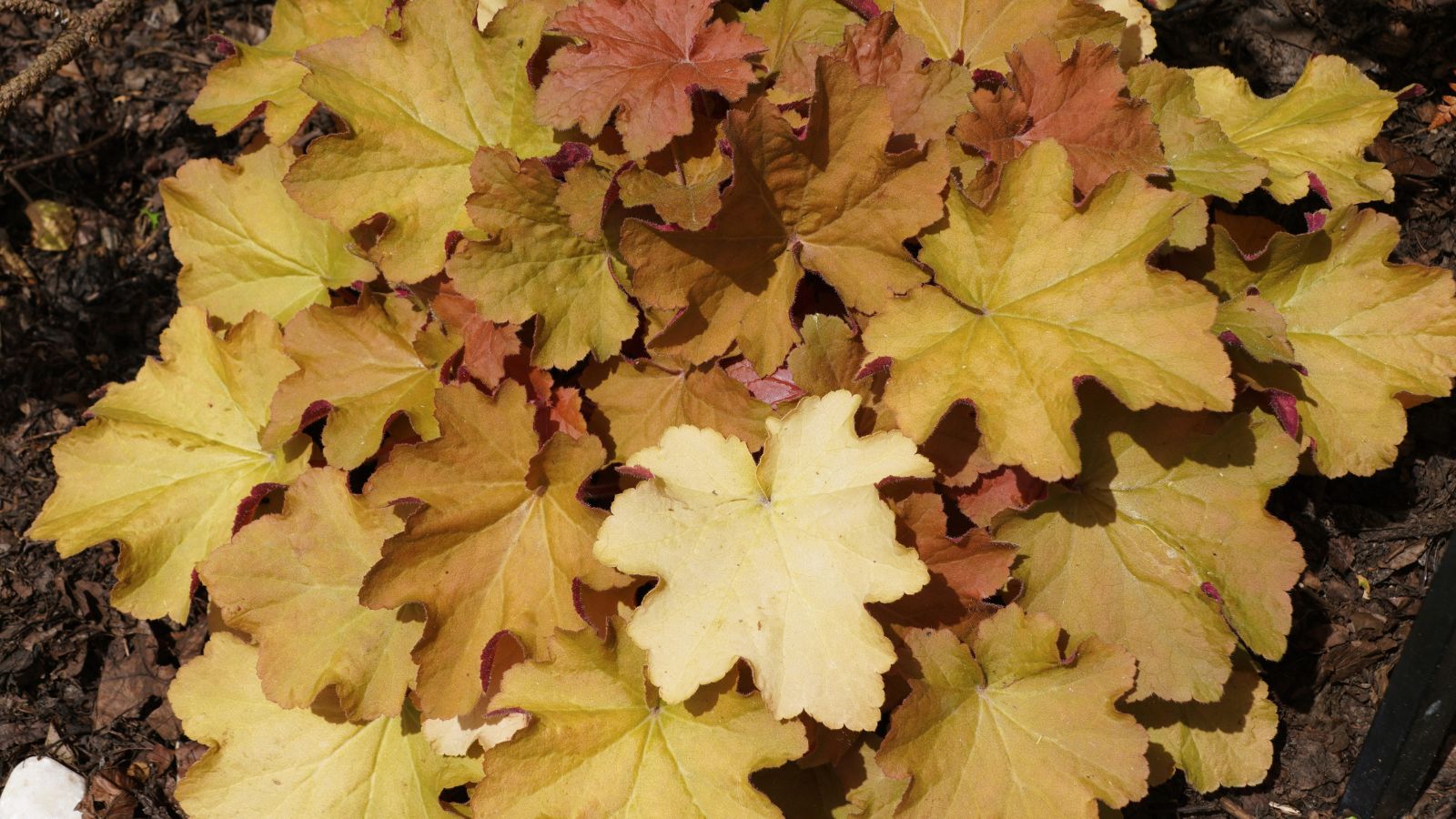
‘Caramel’ coral bells is a robust cultivar of the North American woodland native species. Fuzzy, softly lobed leaves feature a blend of shades from light peach and yellow to deeper rose and amber.
Discovered in France in 2002 as a chance seedling, the parent species is unknown. ‘Autumn Pride’ is a possible parent, and characteristics resemble ‘Amber Waves,’ with tawny leaves with red hues. ‘Caramel’ coral bells is more vigorous, vibrant, and heat-tolerant, with less ruffling to the leaves.
Growers also attribute the cultivar to H. villosa, a southeastern American species with good heat and humidity resistance. H. villosa is prized for its large, colorful leaves.
The herbaceous perennial is durable, and the glowing foliage excites shaded zones but also shows good color with more sun exposure. It’s a fit for woodland edges, borders, along walkways, in groups, and as container specimens.
Pair it with other shade-loving perennials like hosta, astilbe, geranium, and epimedium for multi-season combinations. Underplant ‘Caramel’ coral bells with spring-flowering bulbs in blue, purple, and white; its foliage will conceal declining bulbs later in the season.
Characteristics
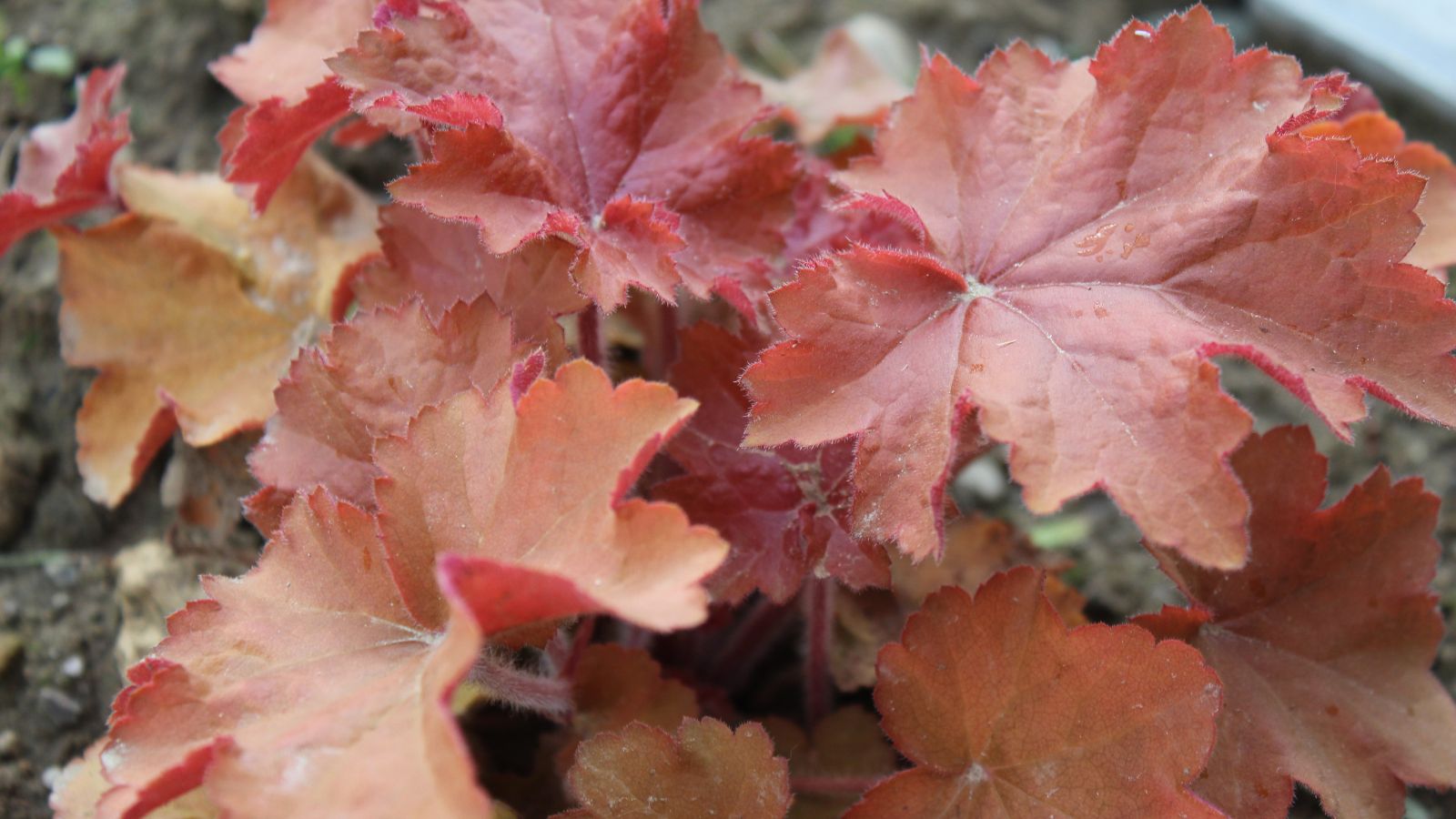
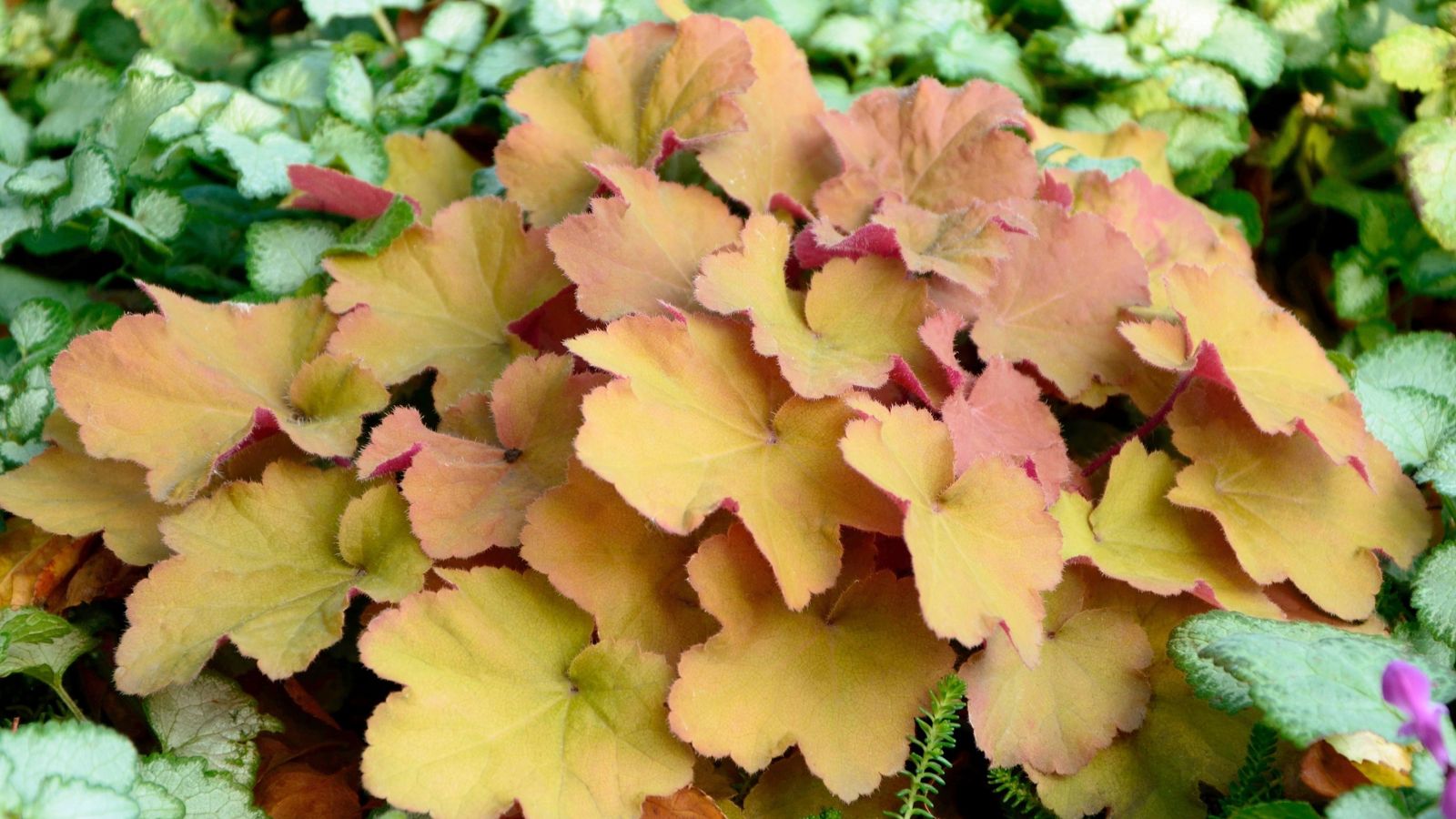
‘Caramel’ coral bells are evergreen in areas with mild climates and semi-evergreen or deciduous in colder regions, depending on winter conditions and temperatures. They show a fresh flush of foliage in spring, when new leaves emerge grayish-gold and transition to warm yellow and green for an amber glow. Purple-red undersides add another layer of visual interest.
The rounded, scalloped leaves create a mound of dense foliage with a spread of one and a half feet. In early summer and later than most heucheras, sprays of petite blooms in light pink appear above foliage. The slender, wiry stems rise 18 inches tall and wind above the leaves. ‘Caramel’ doesn’t always bloom, and the foliage is the main draw.
Coral bells need little tending in the right situation. They tolerate dry spells, shade, and salt, and resist deer, rabbits, pests, and diseases.
Native Area
Heuchera species are native to North America and grow in a variety of habitats, from woodlands to prairies to rocky outcrops and mountainous regions. Some cultivars like ‘Caramel’ tolerate sun, heat, and humidity better than others, depending on their parentage.
Planting
At planting, space ‘Caramel’ coral bells about 18 inches apart for a closer planting and up to two feet to allow for mature growth.
The cultivar makes a beautiful container planting and “filler” component. Use an organically rich, well-draining potting mix and pair them with other perennials for a lasting arrangement. They also anchor annual displays, staying put during changeouts for foliar interest.
Transplanting
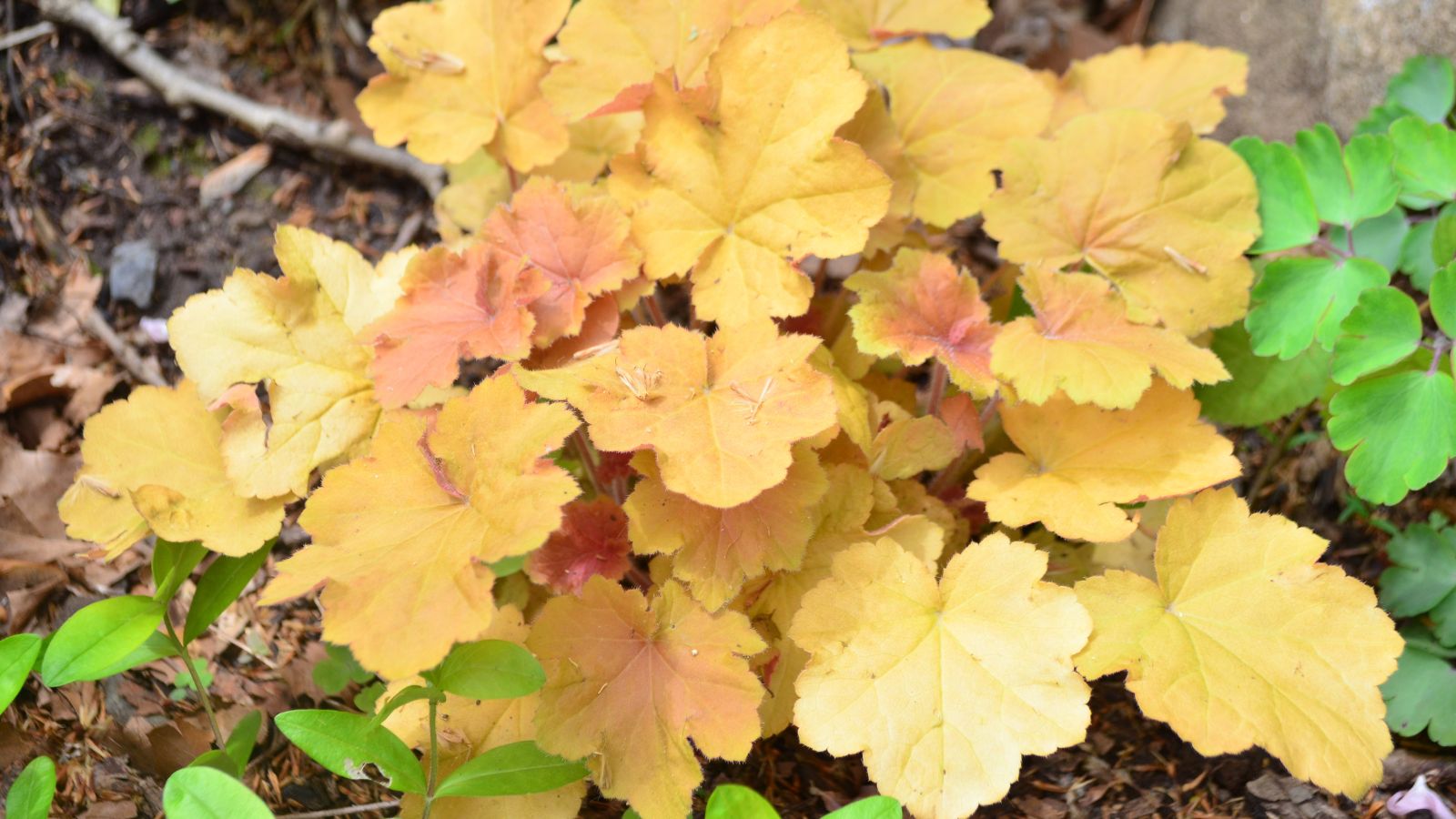
Like most perennials, coral bells do best with planting in the moderate conditions of spring and fall. Cool temperatures and seasonal moisture give roots time to establish before winter or summer fluctuations. They can go in the ground any time of year, avoiding frozen or waterlogged conditions and extreme heat or drought.
How to Grow
‘Caramel’ is beautiful under a tree canopy or as a border to shrubs, growing in varying sun exposures and moisture conditions. Mostly carefree, ensuring a few specific cultural requirements is best to optimize their natural vigor.
Light
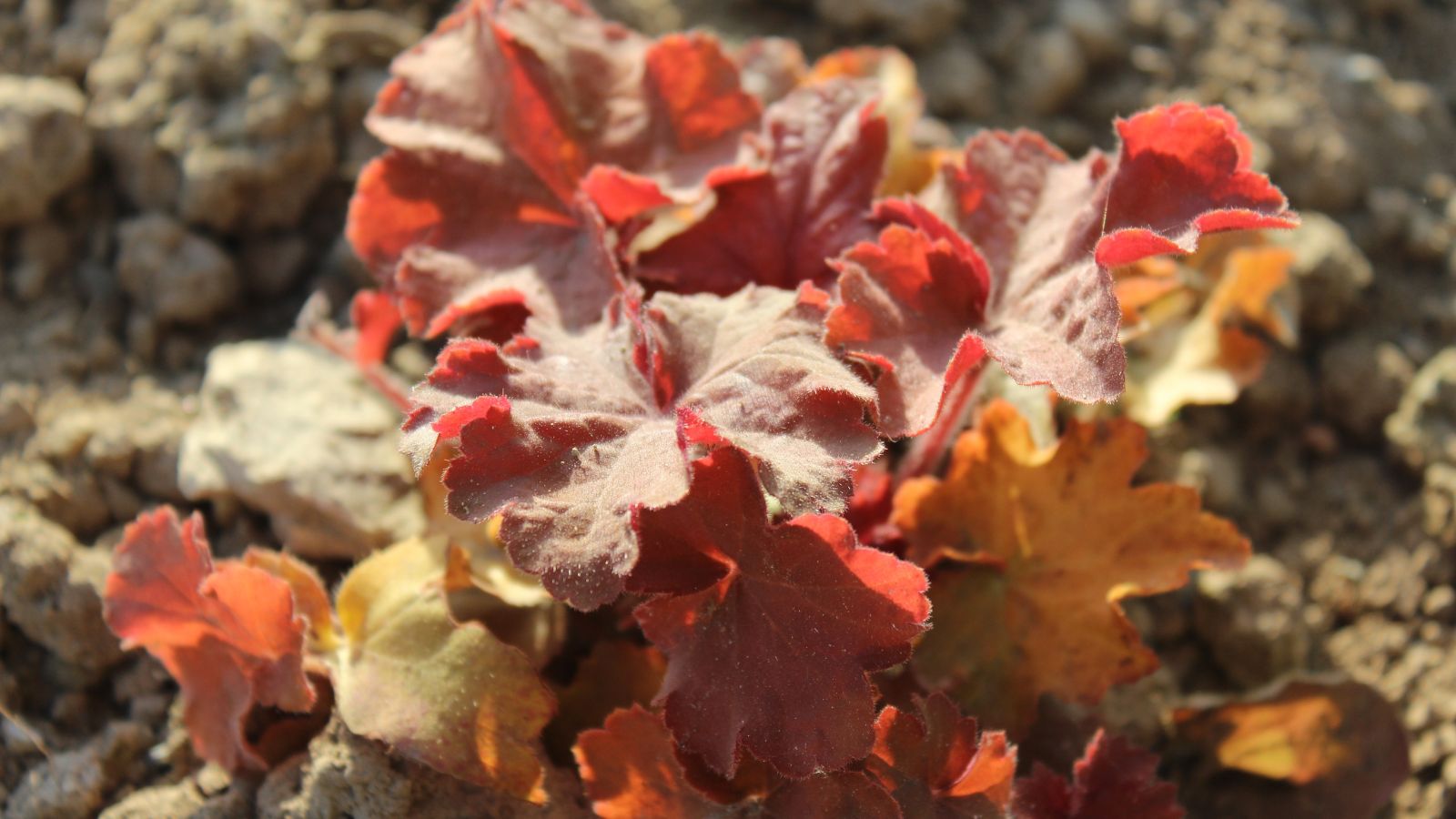
‘Caramel’ coral bells tolerates full sun to full shade, with the best performance in partial shade (about four hours of sunlight daily). They tolerate full sun in cooler climates, as long as they receive regular moisture. Morning sun and afternoon shade protection is best in hot climates. Intense afternoon rays can scorch leaves.
In deep shade, ‘Caramel’ shows less vibrant leaf color and slower, less dense growth. Allow some sun to experience its full glow.
Water
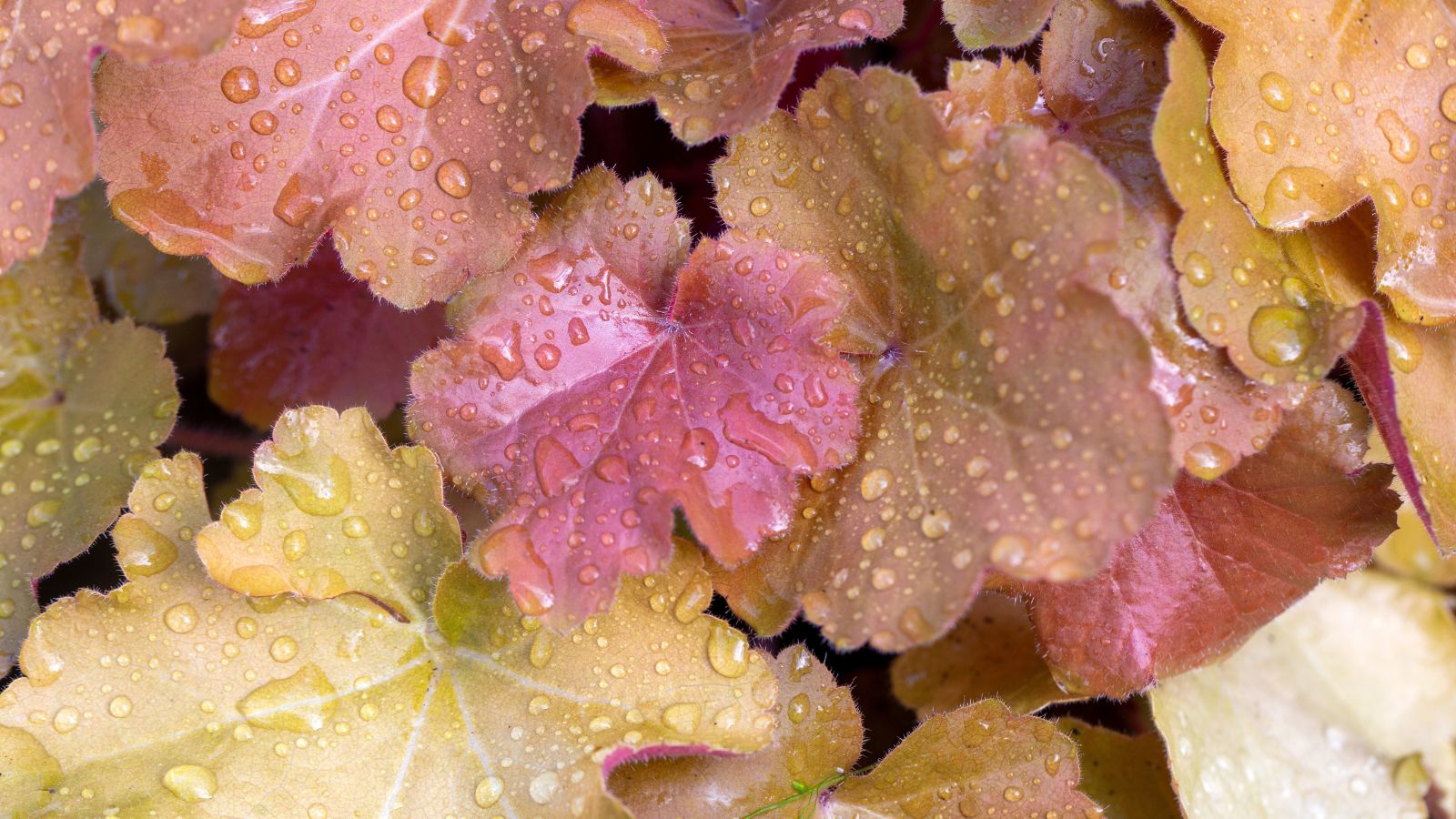
The sturdy cultivar tolerates dry spells once established, but performs best in soils with regular moisture. Consistent moisture, especially in more sun, helps protect against scorch.
Avoid overwatering and prolonged saturation, as soggy situations can lead to root and crown rot.
Check the soil moisture for potted specimens regularly during the warm season, as containers dry out more quickly than in-ground plantings. Reduce watering sessions in the fall when the active growing season slows. Water in the winter only when the soil feels dry to the touch about an inch deep (every few weeks or so, if needed).
Soil
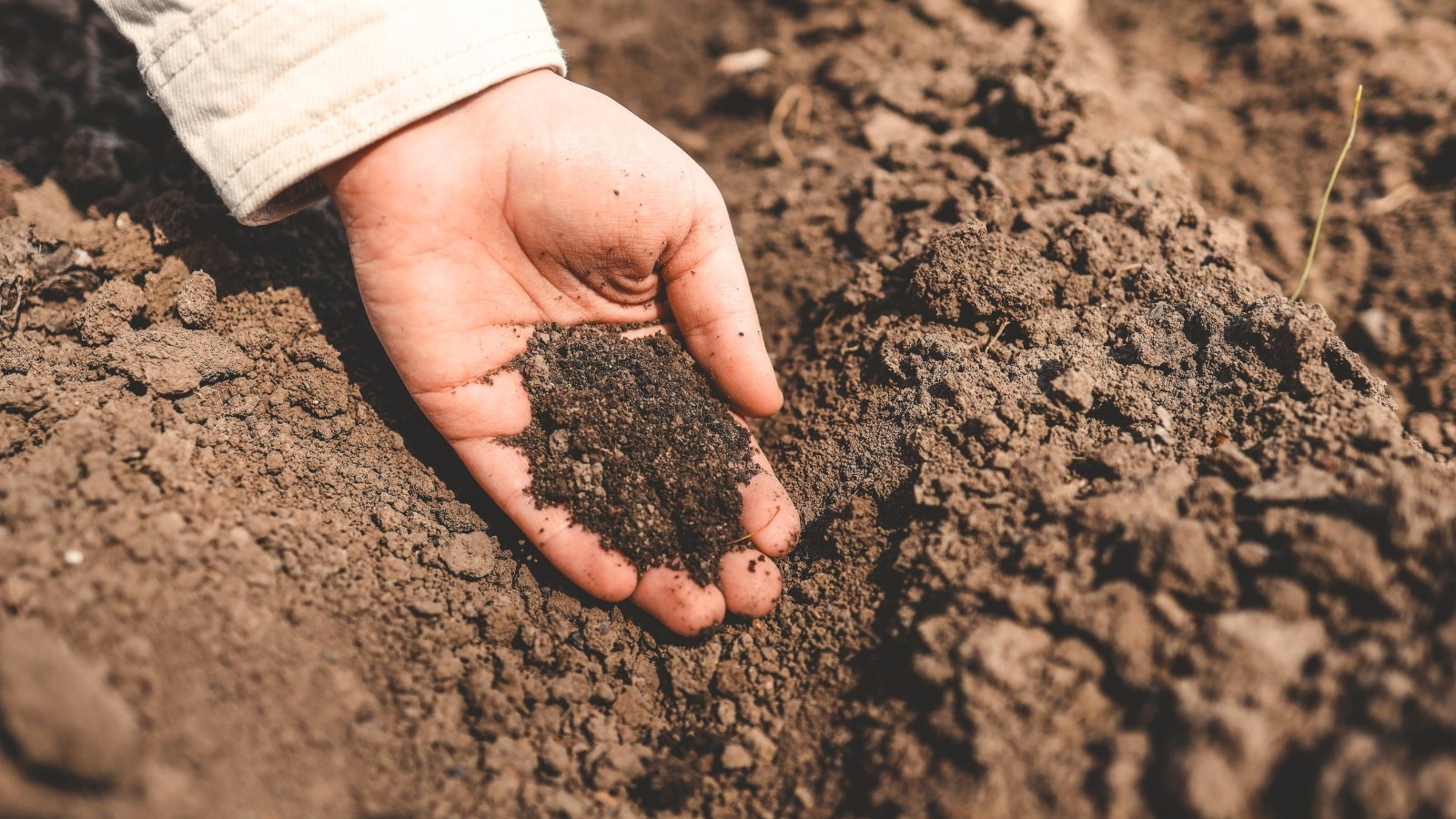
Heuchera does best in rich, organic, well-drained soils. In lean or heavy compositions like sand or clay, amend with composted organic material to improve the existing soil.
Compost helps with aeration, moisture retention, drainage, and nutrition. Adding a compost layer to the garden bed or container each winter or spring refreshes these benefits for the growing season and offers insulation.
Temperature and Humidity
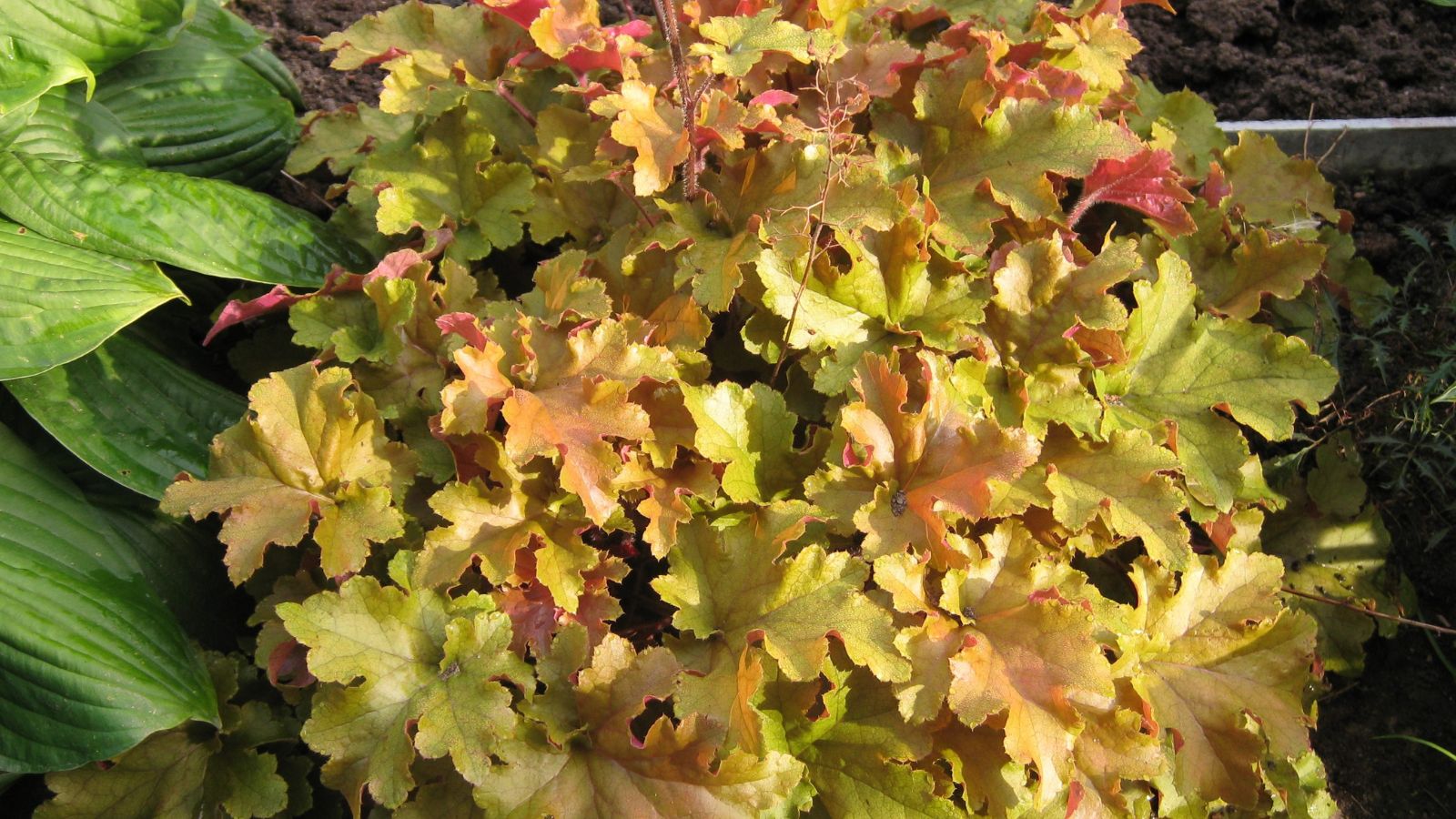
‘Caramel’ coral bells is cold-hardy and heat-tolerant, making it a win across growing zones 4 through 9. In climates with cold winters, a compost or mulch layer after frost helps protect roots against damage from frost heaving as soils freeze and thaw. Mulch has summer benefits, too, by keeping roots cool and retaining moisture as evaporation increases.
In containers, they’ll benefit from protection from cold winter winds. Overwinter pots in a sheltered space like a garage or basement for the best success.
While able to withstand heat and humidity, good air circulation with proper spacing promotes the best disease resistance. Moist, but not overly wet soils, support overall health.
Fertilizing

With rich, fertile soils, coral bells don’t require additional fertilizers to thrive. If giving a nutritional boost to beds or containers, apply a balanced fertilizer (like 5-5-5) in early spring before new growth emerges.
Maintenance

In addition to their dynamic foliage, their low-maintenance nature is another pleasing quality of ‘Caramel’ coral bells. To expand the colony and reduce crowding, divide the clump after three or four years.
If your ‘Caramel’ flowers, deadhead aged blooms to tidy the overall look and promote healthy foliage. If mature leaves get worn and ragged at season’s end, cut back or shear plants in late winter before new growth emerges. Leave them intact through cold winters to insulate the crown.
Propagation
A 2006 plant patent (PP16,560) prohibits propagation of ‘Caramel.’ Plant patents expire 20 years from their filing date.
Heuchera species propagates easily through plant division. Coral bells, with its clump-forming habit, transplants by dividing the crown.
Division

Over the long term, division can prevent overcrowding and promote air circulation. After three seasons of growing, mature plants are ready for division to expand the collection with new plantlets.
Divide plants after flowering or in early fall. Dig the entire clump and separate the rooted segments from the mother plant. Use a spade, serrated blade, or tease them apart to capture sections of roots with stems attached. Plant the new divisions in their garden location, keeping them watered through frost as roots develop.
Divisions that are small benefit from winter protection. Grow tender new plants in a protected cold frame or container for overwintering before transplanting to the garden in spring.
Common Problems
‘Caramel’ coral bells is usually pest and disease-free, but may experience vine weevils, nematodes, rot, rust, and powdery mildew. The best control is prevention through maintaining optimal cultural requirements.
Growing a diversity of species helps attract beneficial insects to the garden to aid in natural pest management.
Weevils
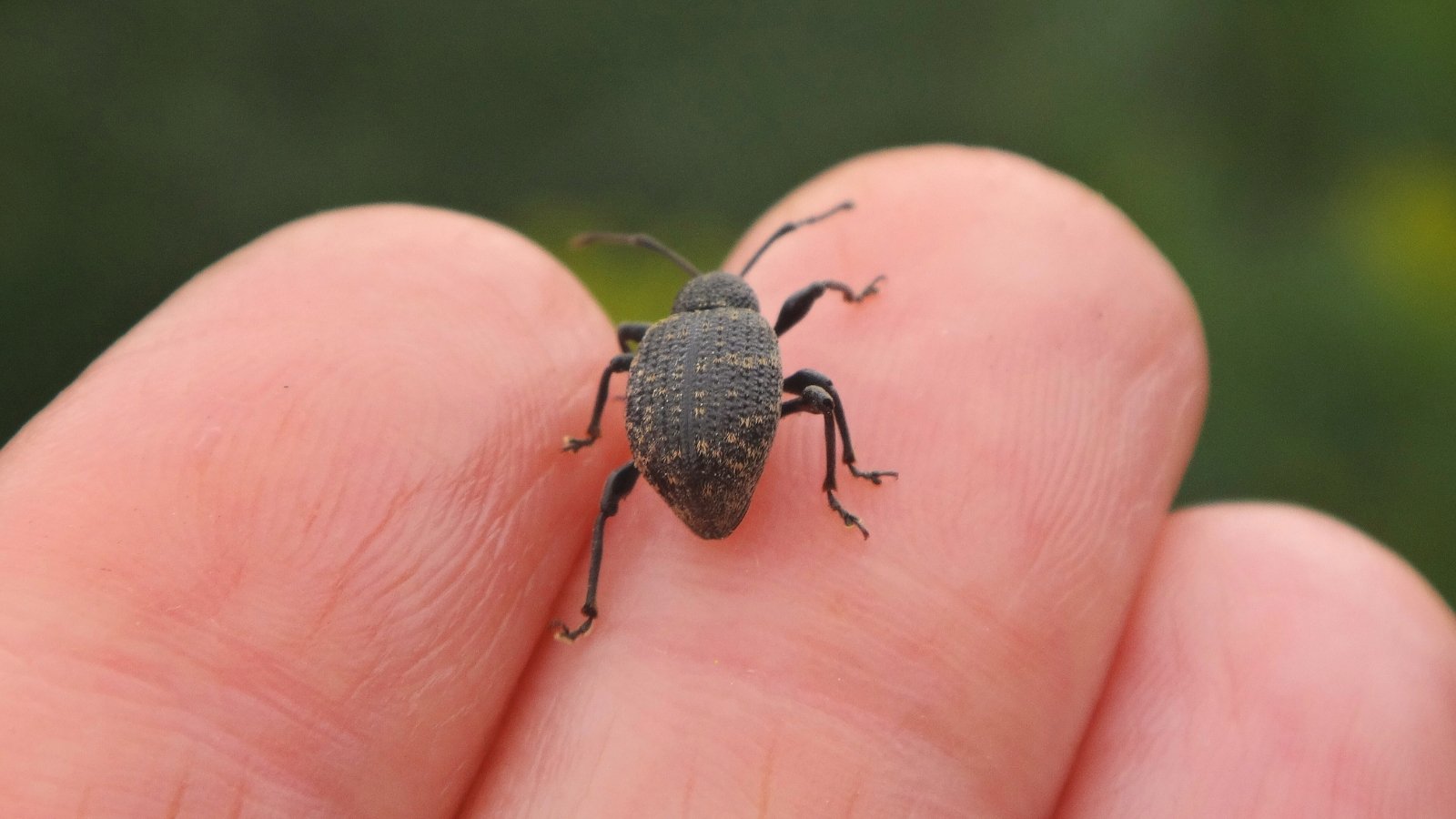
Vine weevils are beetles that feed on roots in the grub stage and on leaves in the adult stage. They favor Heuchera species, and while leaf damage from the adults in spring and summer is unsightly, it’s the grub phase that is most damaging.
Grubs are active in fall and winter when they burrow into the crowns to feed on roots. Their continual feeding causes damage, weakness, and an eventual inability to thrive.
Signs of weevil infestations include wilting stems between fall and spring and irregular leaf margins. If you suspect a problem, dig the plants to inspect the roots. You’ll see the white grubs, curved in a “C,” between the roots.
To displace adult beetles and reduce the larval population, try handpicking them off stems and leaves when they’re active in the evening. Or try shaking the plants gently at dusk over cardboard to displace and remove the insects.
An application of beneficial nematodes in the summer feeds on larvae. Available commercially, water the nematodes in to activate the microorganisms while temperatures are still warm but not yet hot. Offer the treatment from early to late summer at three-week intervals.
Nematodes
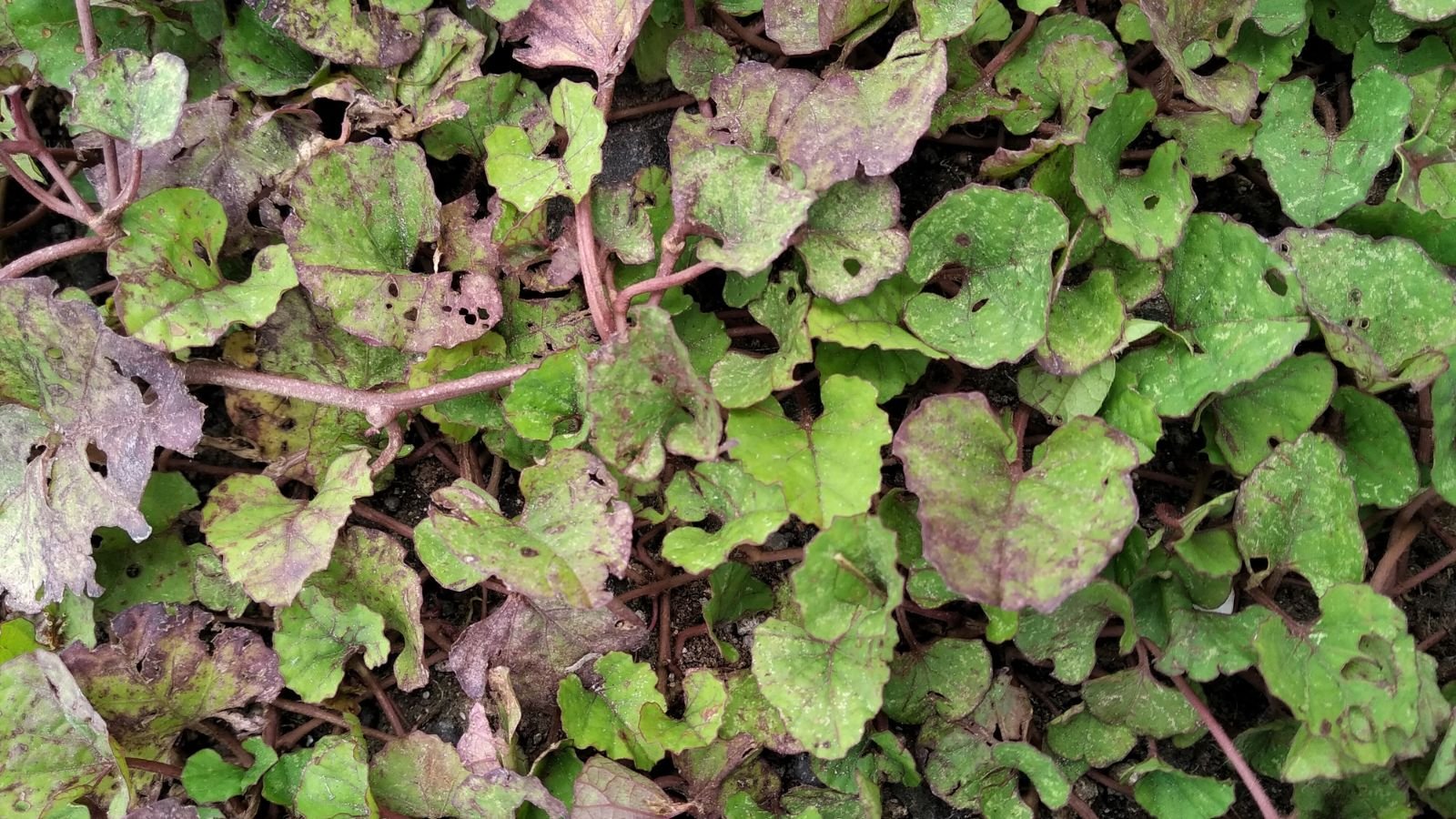
Foliar nematodes (not the beneficial ones) are slender roundworms that damage upper growth and spread quickly. The first sign is yellow-brown lesions on the leaves between veins. These spots start on the lowest leaves and work their way up, eventually covering the entire leaf. The leaf dries and drops prematurely.
Foliar nematodes climb or swim up stems with rain and irrigation, using the water channels to travel up for feeding on the leaves. Their damage may kill coral bells, and it’s tricky to distinguish their damage from disease symptoms.
Nematodes overwinter in the soil and debris from affected specimens. Good garden cleanup is the best practice to prevent harboring the pests. Mulch around the plants helps prevent water from splashing onto stems and leaves, lessening access for the nematodes. Water at the soil level when feasible.
Insecticidal soap may be useful as a treatment. In severe cases, spray surrounding plants, too, to catch nematodes before they spread. It’s best to remove severely infected specimens. Dig out the surrounding surface soil, too, and dispose of the material away from the garden and compost pile.
Diseases

Fungal root rot causes plants to decline as it impacts feeder roots, preventing them from uptaking water and nutrients. Leaves and stems appear drought-stressed and may turn yellow as they wilt. Check for rot slightly below the soil line. If rot is an issue, the roots will be brown and mushy rather than healthy white.
If caught early, clipping the affected roots can prevent the spread. Take care not to overwater and watch for rebounding growth. If in severe decline, removal is the best option.
Powdery mildew is another common fungal disease, this one indicated by a gray-white powdery substance on leaves, which may distort and drop.
Rust is another possibility for coral bells and is most likely in hot, humid summer climates. Powdery spores appear on the undersides of yellowing leaves. If you spot rust, cut off the infected portions. Horticultural oils like neem can prevent the spread of powdery mildew and rust early on, but only on healthy tissue. First, prune away damaged areas without taking more than one-third of the foliage.
Frequently Asked Questions
Where is the best spot to plant Heuchera ‘Caramel’?
To maximize the warm glow of the amber leaves, ‘Caramel’ prefers a sunny to partially shaded location. Four hours of sun show the best color, with the cultivar tolerating more in cooler climates. In hot, southern climates, it appreciates protection from the afternoon sun. ‘Caramel’ is easy care in the ground, in pots, and in raised beds.
What other varieties go well with ‘Caramel’?
The apricot tones of ‘Caramel’ are fresh from spring into fall, when their warm tones shine. Pair them with lime green ‘Dolce Apple Twist’ and deep purple ‘Plum Pudding’ for a delicious (at least a feast for the eyes) show.


