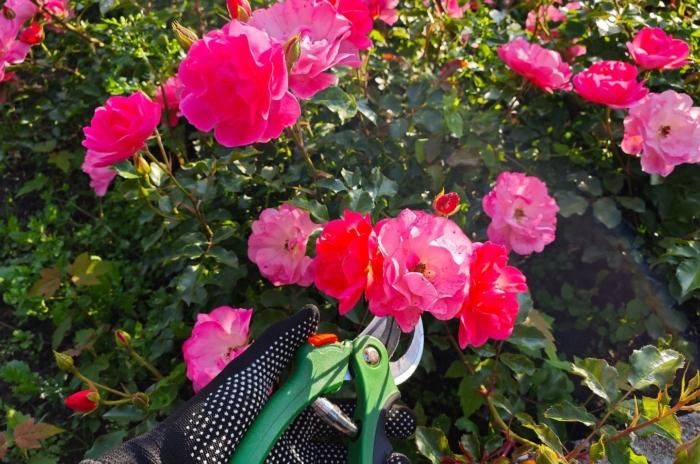
April Rose Care: Pruning, Feeding, and Pest Prevention
April rose care is all about supporting your climbers and shrubs as they experience the growth spurt that comes with the warming weather. Experienced gardener, Sarah Jay, walks rose growers through the care process and includes some tips to help roses thrive.


Contents
April rose care isn’t just a few snips. It’s a change in the way you’ve cared for your rose through the winter season. Roses are warm-weather dwellers, and though they will survive through winters, they aren’t actively growing at that time. This is the dormant period that many plants enter when temperatures are cold, and day length is typically shorter.
Once the weather starts to warm, certain types of roses set buds and begin to bloom, while others wait for summer. Some continuously bloom from spring to fall, while others have a set period. For gardeners who want blooms year-round, shrub roses are perfect, but several old garden roses offer enchanting scents. If you want scent and tons of blooms, plant a variety!
While it may seem like these facts are diversions, they’re actually the basis of your care regimen. The roses you grow directly influence how best to prune, feed, and water them. Your regional climate is another part of that foundation. In April, most gardeners are in the spring. But some are still waiting for the last frost to pass.



Step 1: What Type of Rose?

Start with the type of rose you have. There are three main classifications with numerous underlying categories. These are modern roses, old garden roses, and wild roses, or species roses. Modern roses repeat bloom from spring through summer. Old garden and species roses typically bloom in late spring to early summer. Some bloom in the fall, depending on the climate.
You need to know which roses you are growing, because it dictates how you should feed and prune. You don’t want to prune an old garden rose heavily in early spring and lose all your blooms in summer. So start here, then make a plan.
Step 2: Feeding
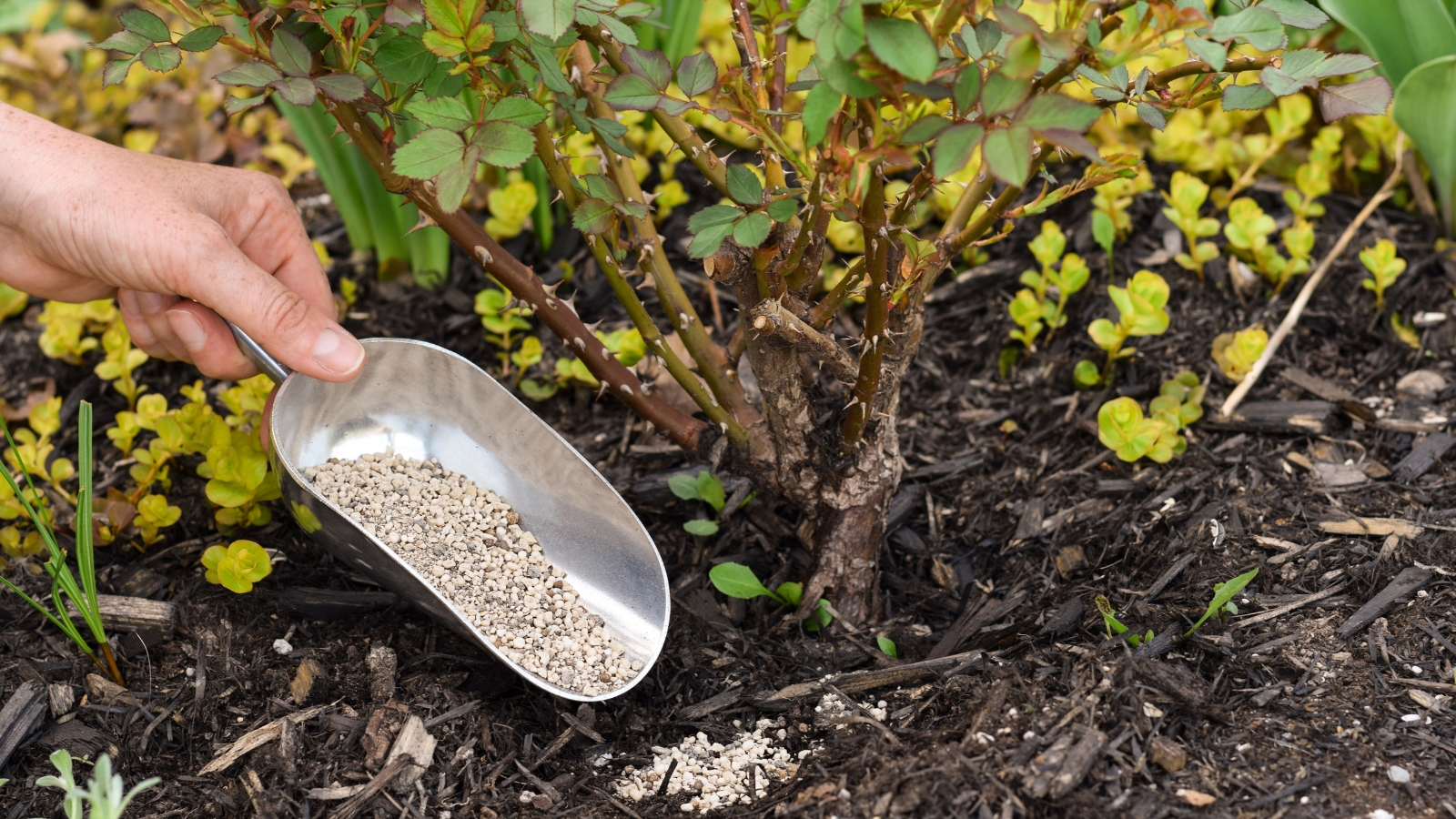
If your rose is a year old or less, you don’t have to feed as much as you would an older one. Wait for the first leaves to show in spring to add fertilizer. Start with fish emulsion. Then every three to four weeks throughout the season, use an organic fertilizer. Rose-specific fertilizers are great, as they’re formulated to promote the best blooms.
For established roses, you can start with a rose-specific fertilizer and apply it around the base of the plant as soon as leaves start to form. Many parts of the continent are mild and rainy enough that April is a perfect time to begin or continue a regimen.
Continue fertilizing throughout the season every three to four weeks. Then, about six weeks before your first frost, stop fertilizing. Always water before and after fertilizing. If the soil is already moist, a little water after applying is fine.
Step 3: Pruning
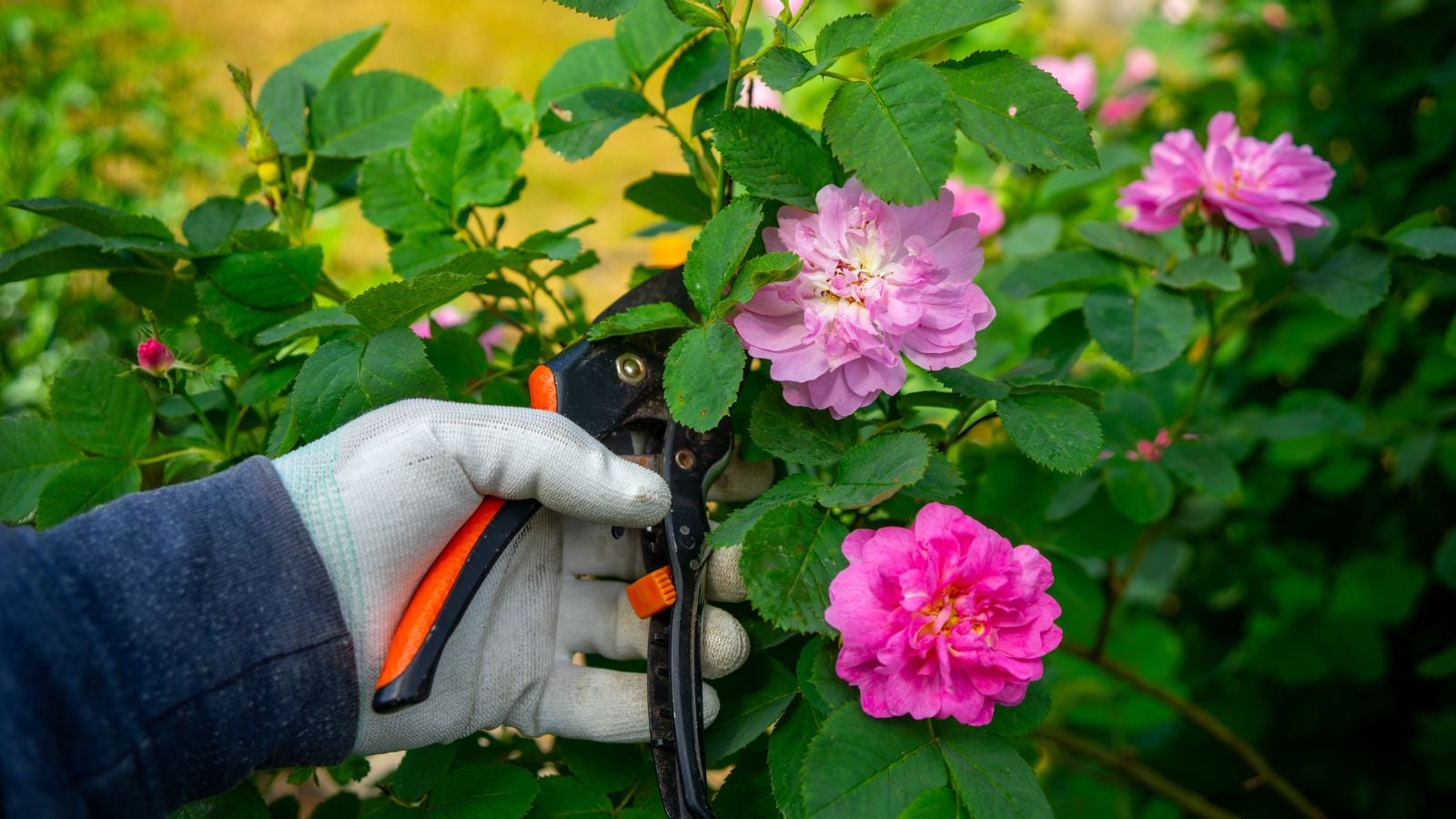
Here is where the most important of the particulars arise. While it’s never a bad time to remove dead, diseased, or damaged canes, how you prune outside of that is different depending on the type of rose. Aside from light shaping, it’s best to reserve the harder pruning for specific ones. Of course, if you already did this in March, there’s no need to do it again.
Hybrid tea and grandiflora types should be pruned to one to one and a half feet above the soil line. Deadhead them to promote reblooming. Floribunda roses bloom in clusters, so remove interior canes for airflow. Then cut them to two to three feet tall. Deadhead climbers, and train any canes that have developed since you last trained them.
Don’t cut old garden roses until they bloom in late spring to summer. Mini roses could benefit from light shaping and root pruning. Shrub roses have a more involved pruning schedule, and if you haven’t done that yet, use the schedule for Knockouts to guide you.
Always use sterile, sharpened tools. This prevents the spread of diseases.
Step 4: Common Pests

April rose care also includes scouting for pests and diseases. Not all will be present right at the beginning of the season, but several overwinter in soil and emerge as soon as conditions allow. Aphids may congregate on leaves and stems. Use a strong stream of water from a hose to blast them off the plant.
Flea beetles are early spring pests, and they may cause some damage, but they don’t stick around long enough to harm established roses. Mini roses and young roses need some extra care in areas where they’re prevalent. Use covers to keep them out.
Mites and scale are also around at this time, especially if it’s warm. Mites prefer dry conditions, so water deeply, and wash the plant early in the morning to prevent the dust they like. Pop rose scale off the plant with a 70% rubbing alcohol solution applied to a cotton swab.
Step 5: Common Diseases

The most common rose diseases include leaf diseases like black spot, rust, and powdery mildew. During your April rose care process, prune away heavily damaged areas. For black spot, an annual application of copper fungicide can help. Always follow the label to determine how to apply. Rust and powdery mildew are generally prevented through pruning for airflow.
Canker is treated similarly. Prune the damaged area two to three inches below, and follow up with preventative copper fungicide.
There are two deadly rose diseases to look out for. Rosette and rose mosaic virus can devastate a plant and require removal to prevent spread to other susceptible plants. Look out for the characteristic “witch’s broom” and bright red coloration to ID rosette. Rose mosaic virus causes yellow mottling on leaves.
Rose mosaic virus can spread to other plants in the Rosaceae family. These include peaches (all stone fruit) and apples, as well as pears.
Key Takeaways
April rose care is easy to do once you’ve done it a time or two. Your roses will thank you with tons of lovely blooms if you remain consistent. Here are a few key points to remember as you get started.
- Start with a solid foundation of understanding your climate and the type of rose you have. If it’s not yet warm enough to feed and prune, do some research and make a plan.
- Feed roses once the first leaves form. How you feed is dependent on the age of your rose. Younger ones don’t need as much food as quickly, while established ones do.
- Prune based on the type of rose you have. Note that removing dead, diseased, and damaged branches is always okay. Use sterile pruners.
- Scout for pests and diseases, and do preventative treatments in areas and on roses susceptible to them.