Don’t Prune Your Roses too Early: How to Tell It’s Time
For gardeners in many areas, it’s time to prune roses, and for some, it’s still too early. Giving your roses a snip at the wrong time can cause complications as the growing season ramps up. Experienced gardener Sarah Jay discusses when to prune and how to do it effectively.

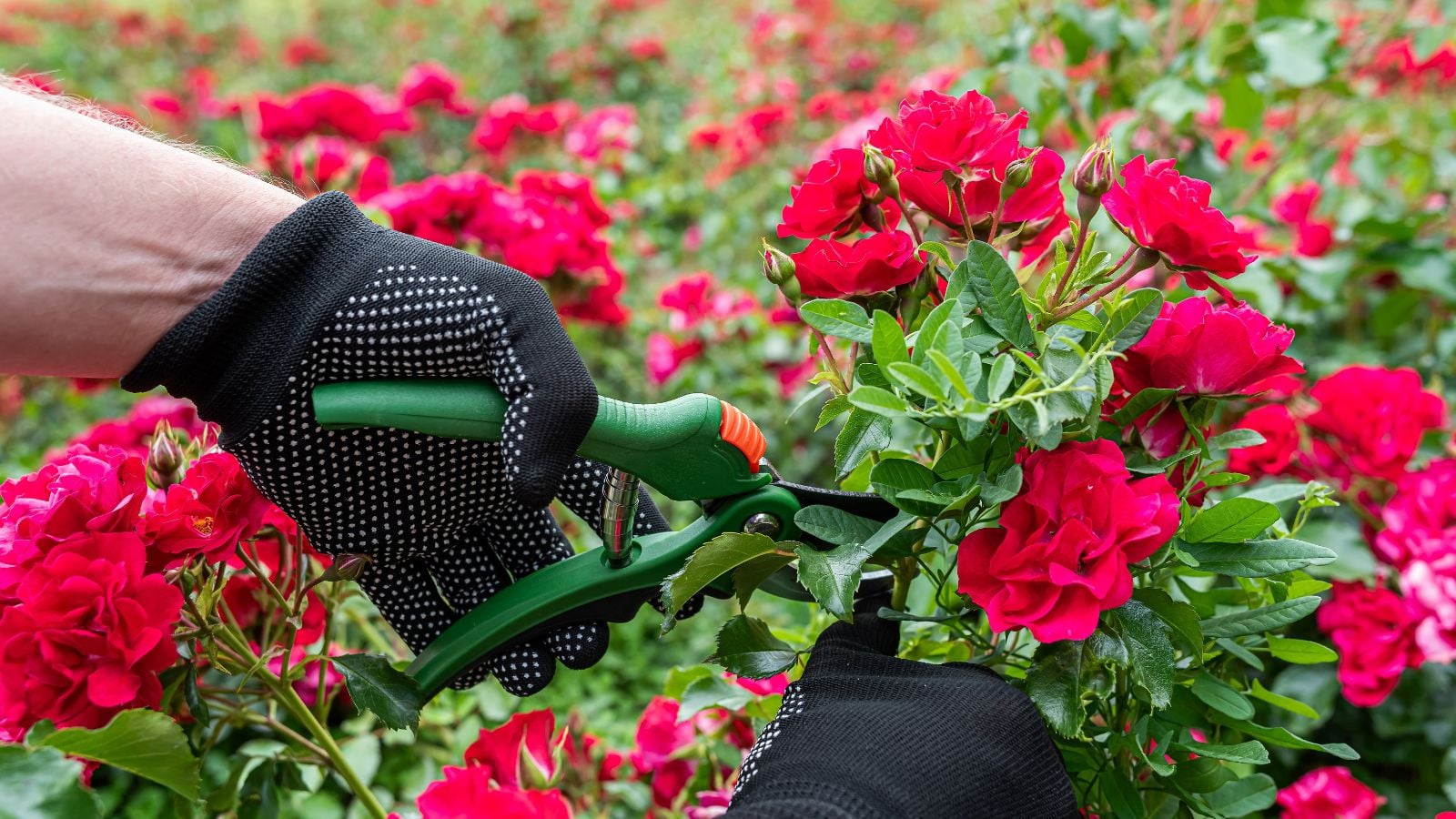
Contents
When it comes to roses, it’s hard to know the right pruning time. You can prune roses lightly all year round, but annual pruning has a specific timing that general shaping sessions don’t. It’s important to carry out heavier cuttings when roses need them most.
The timing is largely dependent on the climate you live in and the types of roses you grow. Each has a heavy bearing on how and when to prune. Keep to a regular schedule and look for the signs that roses are ready, and you’ll have a thriving rosarium year after year.
The beauty and scent of roses in the middle of summer are unforgettable. It would be a shame to maintain them at the wrong time and inadvertently cause damage in the process. So before you cut your roses, determine if this is right time to prune roses.


Know Your Type

Different types of roses require varying levels of maintenance. Floribunda and hybrid tea roses need significant structural pruning during dormancy. Old garden roses only bloom once per year and don’t need heavy pruning annually. Miniature roses need light shaping every year.
Start by checking out which type of rose you have to determine your pruning time. Prune roses by their age as well. If your rose is less than three years old, skip rejuvenation prunes, even if the type suggests you should. Roses over three years old, with limited blooms and a generally unhealthy look, need some attention during dormancy.
Consider Your Climate

Another important consideration is your last frost date. Use this to give you a general idea of when pruning should commence. If you know your last frost date has passed, you can get started. The best time to prune is shortly after this date, when budbreak occurs. We’ll drill down into the particulars of what bud break is in the next section.
You can continue to prune throughout the growing season as long as there is time during the growing season for your shrub to recover. Give it at least one month, and preferably two or more.
Look For Signs It’s Time
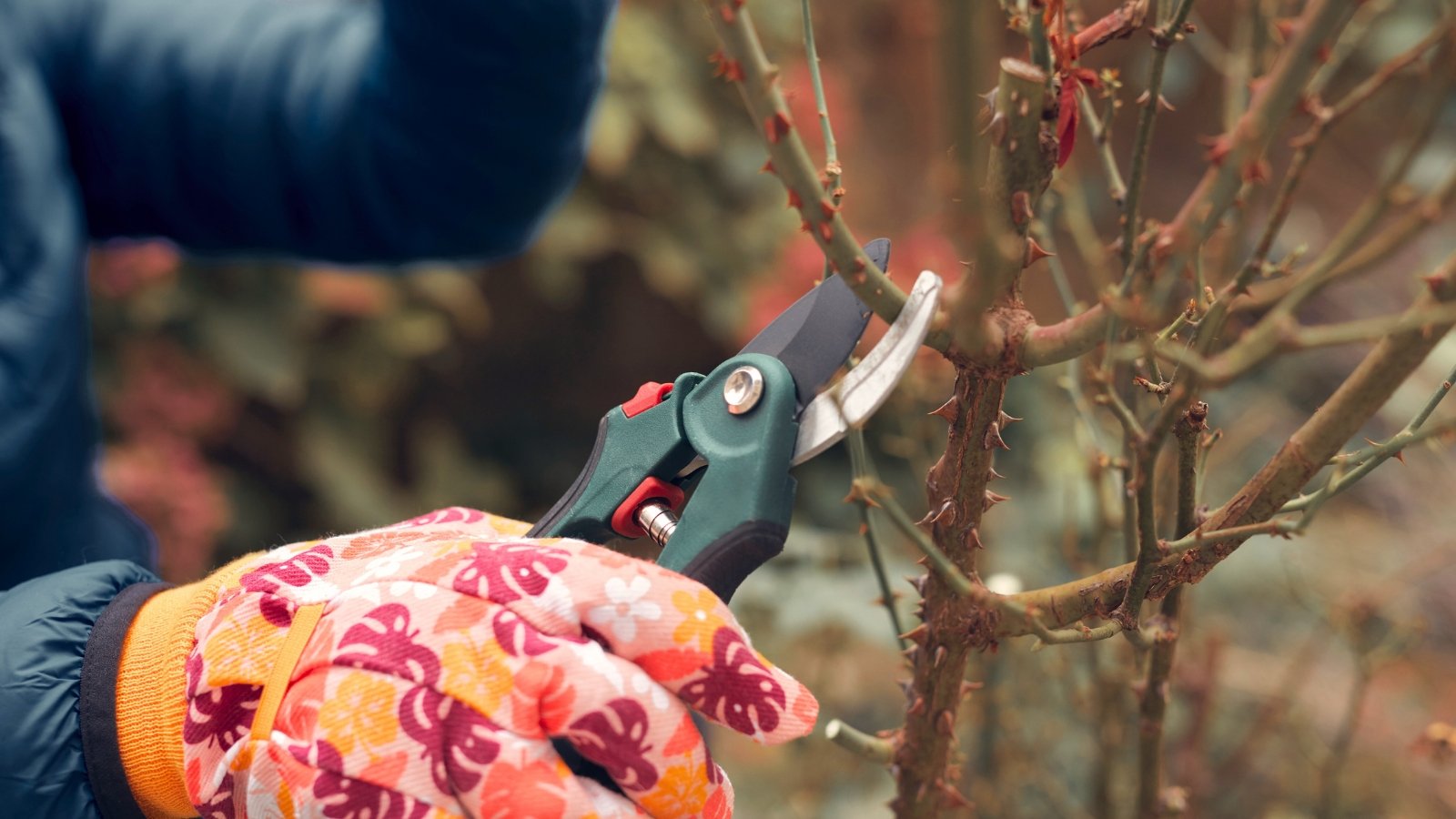
Here’s where we discuss the right time. Prune roses when their buds begin to swell. This occurs on the edge of dormancy. In warmer areas, bud swell (or bud break, as it is also called) occurs in mid-February. In others, it does not occur until mid-June. This growth phase is typically situated in the transition from winter to spring.
Light pruning can also occur in the fall, ahead of bud swell. If you’re planning a more drastic rejuvenation prune, or your rose needs a lot of attention due to dead, damaged, and diseased branches, wait for the bud swell period.
How to Prune
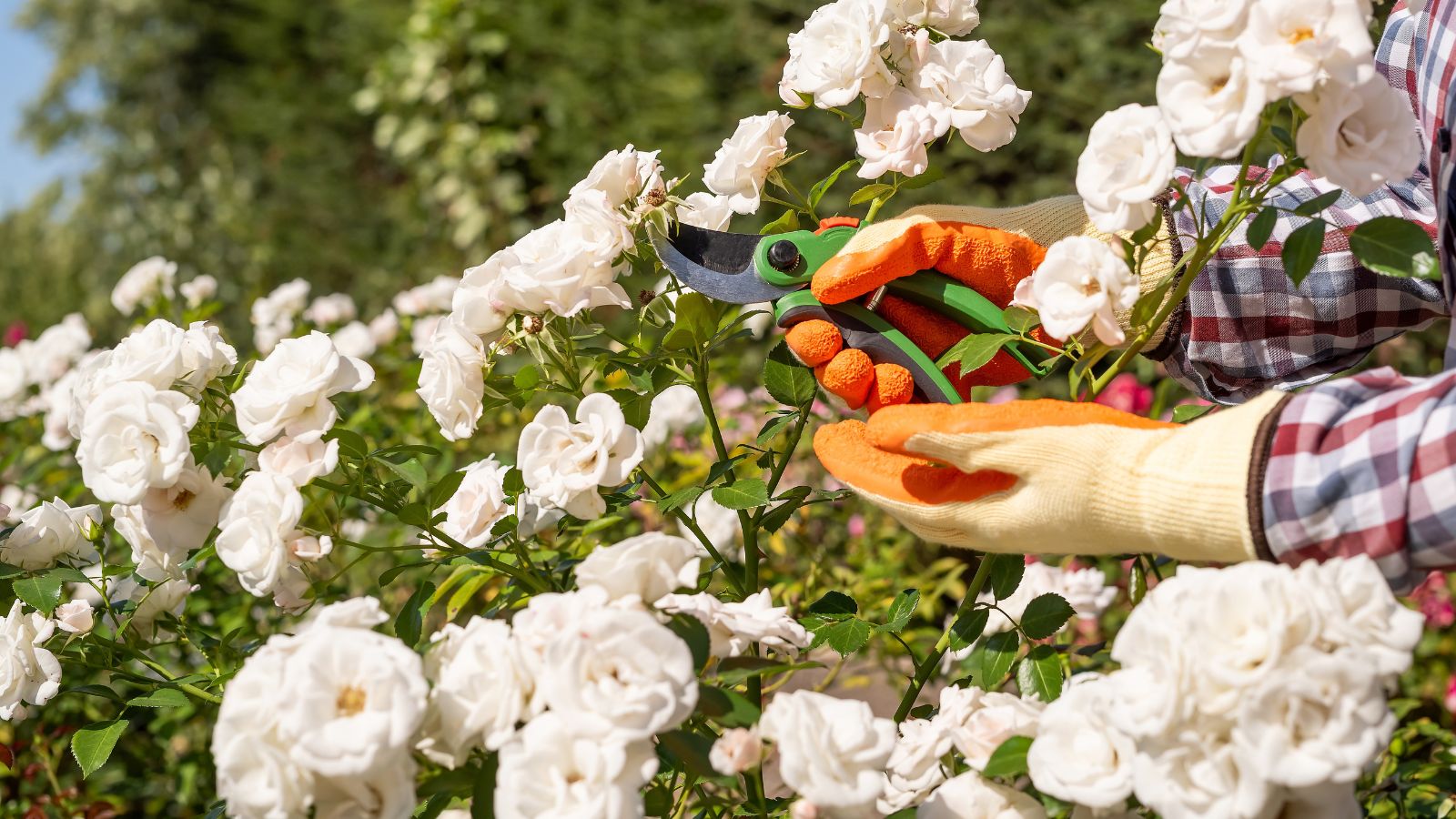
No matter the type of rose, for dead, damaged, and diseased branches, it’s always the right time. Prune roses to remove these during this session, and remove any you notice throughout the growing season as well.
As you shape your roses, prune for airflow. You want to open the crown of your shrub by pruning away all but the outer canes. Remove any crossing canes that could create lesions that open your roses up to diseases and boring pests.
If you want your roses to spread outward, cut them back to just above buds that face outward. Take out any suckers that emerged from the soil around the plant, and any that have grown below the graft point, if you’re growing grafted roses.
For roses that have overgrown their space, cut them to ⅓ their size. Any prunings that aren’t diseased can be cut down and composted. Canes infected with diseases and pests should be thrown away. Train any climbing roses, and avoid pruning once-blooming roses until after they’ve bloomed in spring.
Follow Up in Spring

After you prune, your roses should bounce back and produce even more blooms in the growing season. When new leaves start to grow, commence watering at one inch per week. This is a good time to start fertilizing as well.
Continue to take out any dead, damaged, or diseased canes throughout the season, and don’t forget to deadhead.
Key Takeaways
As you get your roses ready for their full bloom period, use their bud swell period to do your annual pruning.
- Use your climate and determine your type to give you the best indication of the correct time to prune roses.
- Look for bud swell before you begin any heavy maintenance ahead of the growing season.
- Use the pruning techniques specific to the type of rose you have, and remove any dead, diseased, or damaged canes regardless of the type.
- Wait to prune old garden roses until after they bloom.
- As spring kicks in, irrigate and fertilize your roses, and lightly shape the shrub throughout the growing season.