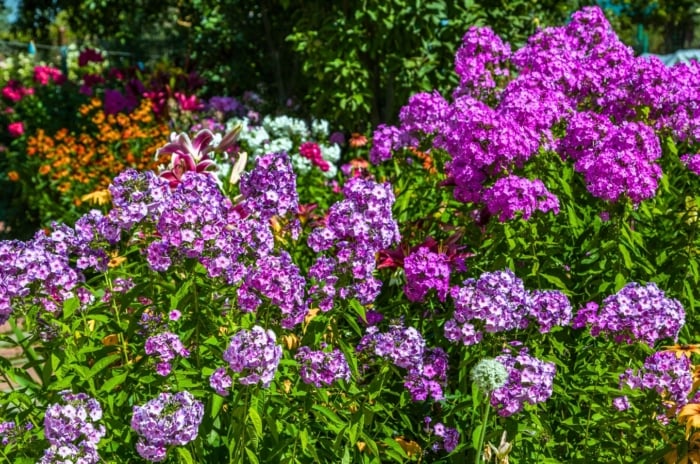
7 Vertical Gardening Systems That Will Change the Way You Grow
Looking to maximize your growing space? Look no further! These vertical gardening systems allow anyone to grow crops regardless of the size of their yard. Tuck these seven systems throughout the garden to change the way you grow crops this year.

Contents
It’s easy to overfill the garden in summer. The growing excitement of the season causes us gardeners to plug every empty nook and cranny with perennials, annuals, and crops. We stand back and realize there’s no room for anything else!
Instead of overloading the garden, try growing vertically. Vertical gardening systems are incredibly diverse. There’s a range of solutions for gardens big and small, and there’s sure to be a perfect system for your space.
Some of these options are pre-made planters that are ready to purchase and use, while others are simple systems you can set up yourself. Regardless of the route you choose, you’ll be satisfied when you stand back and look at your crops growing tall in the sky.
So, let’s get into it! Here are seven vertical gardening systems that will change the way you grow, for the better.


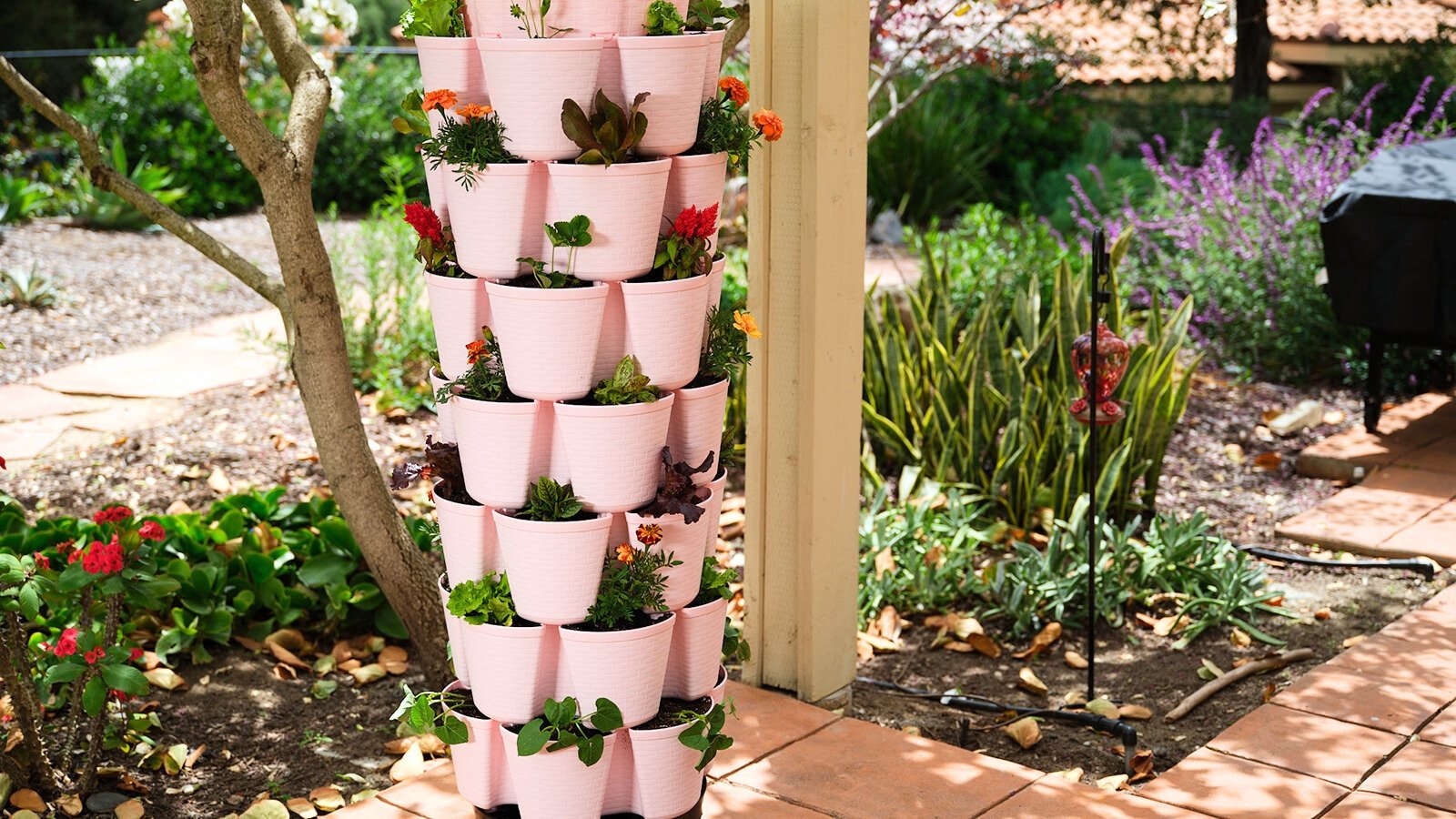
GreenStalk Planter
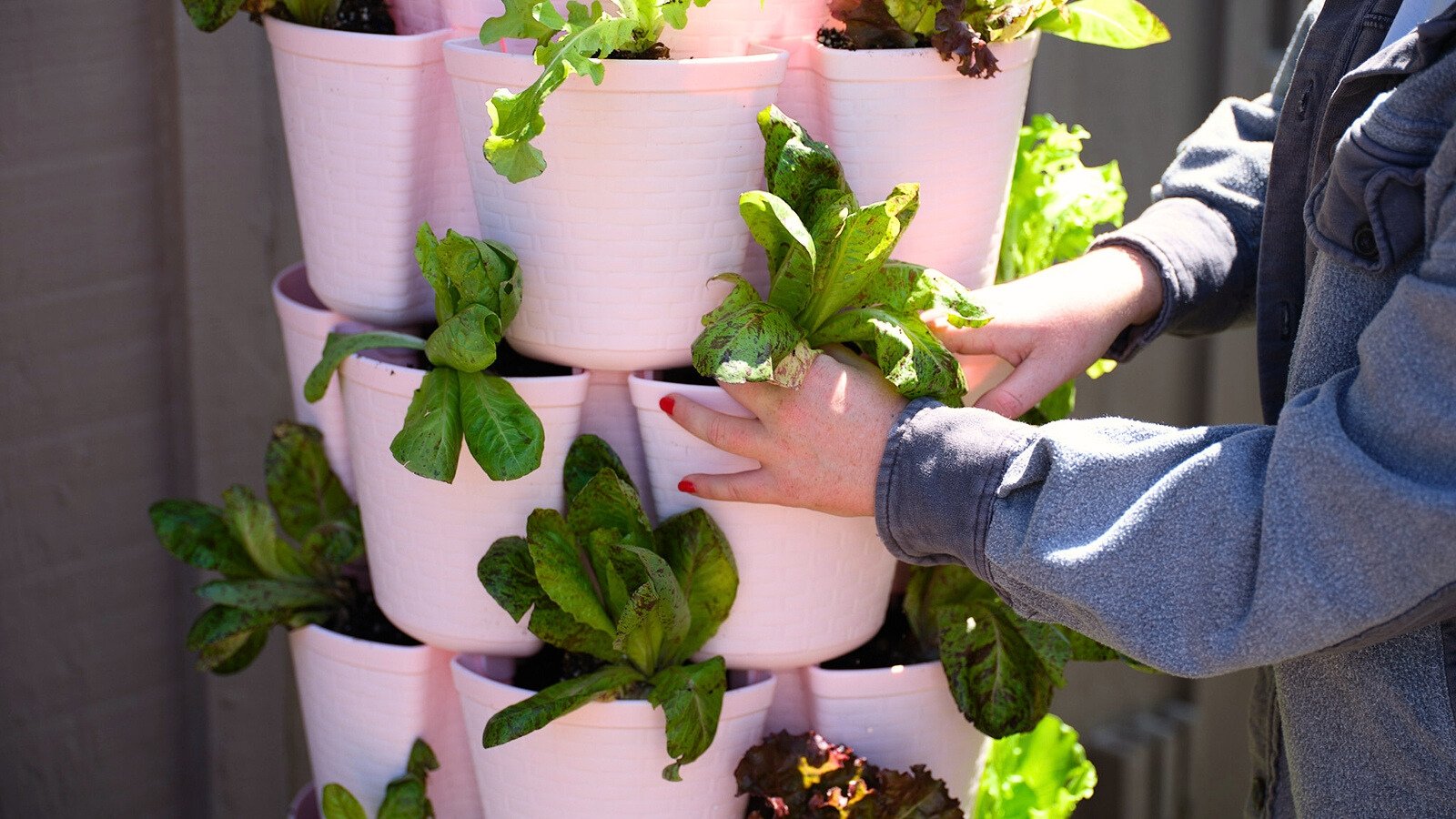
What’s a GreenStalk, you say? It’s a modern invention that takes vertical growing to new heights! It’s a stackable system with multiple pots. There’s a range of options, from three layers at three feet tall to seven layers at five feet.
Each pot in the vertical gardening system has a deep groove that allows deep-rooting plants to stay healthy and secure. With rollers underneath, the system is easy to transport from one section of the yard to another. Move it for more light, water, or shelter.
Home gardeners love their GreenStalks. They’re perfect for growing lettuce, herbs, and leafy greens. Some gardeners push the limits and cultivate tomatoes, peppers, and eggplants in them!
Hydroponic Tower
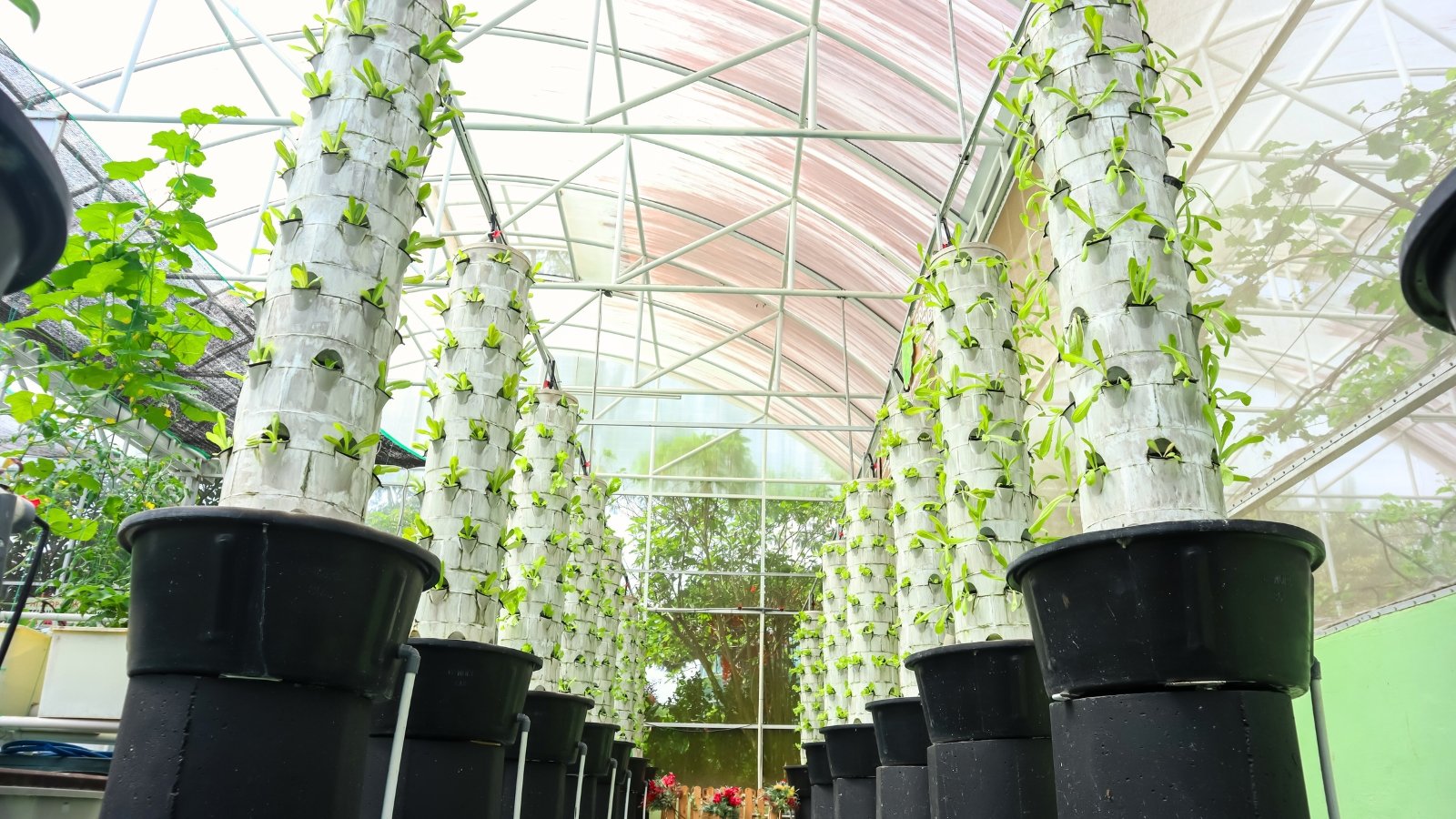
Like the GreenStalk systems, hydroponic towers use stackable mechanisms to fit multiple plants into a single area. Unlike GreenStalk systems, you don’t have to water plants growing hydroponically!
Advanced hydroponics relies on a consistent stream of water with nutrients; a pump filters and distributes the nutrient-filled water throughout the system. Though a system like this requires a lot of work to set up, it’s generally low-maintenance once it gets going.
Because you’re using water on a cycle, you must consider pH, nutrient levels, and temperature. Aim to maintain cool water in your system that has a neutral pH and adequate nutrients.
Delve into hydroponics with a pre-made system or set one up yourself! Many cities have hydroponic growing stores that specialize in these types of systems. If there aren’t any, consider visiting landscaping and irrigation stores, or search online.
Shelves and Grow Lights
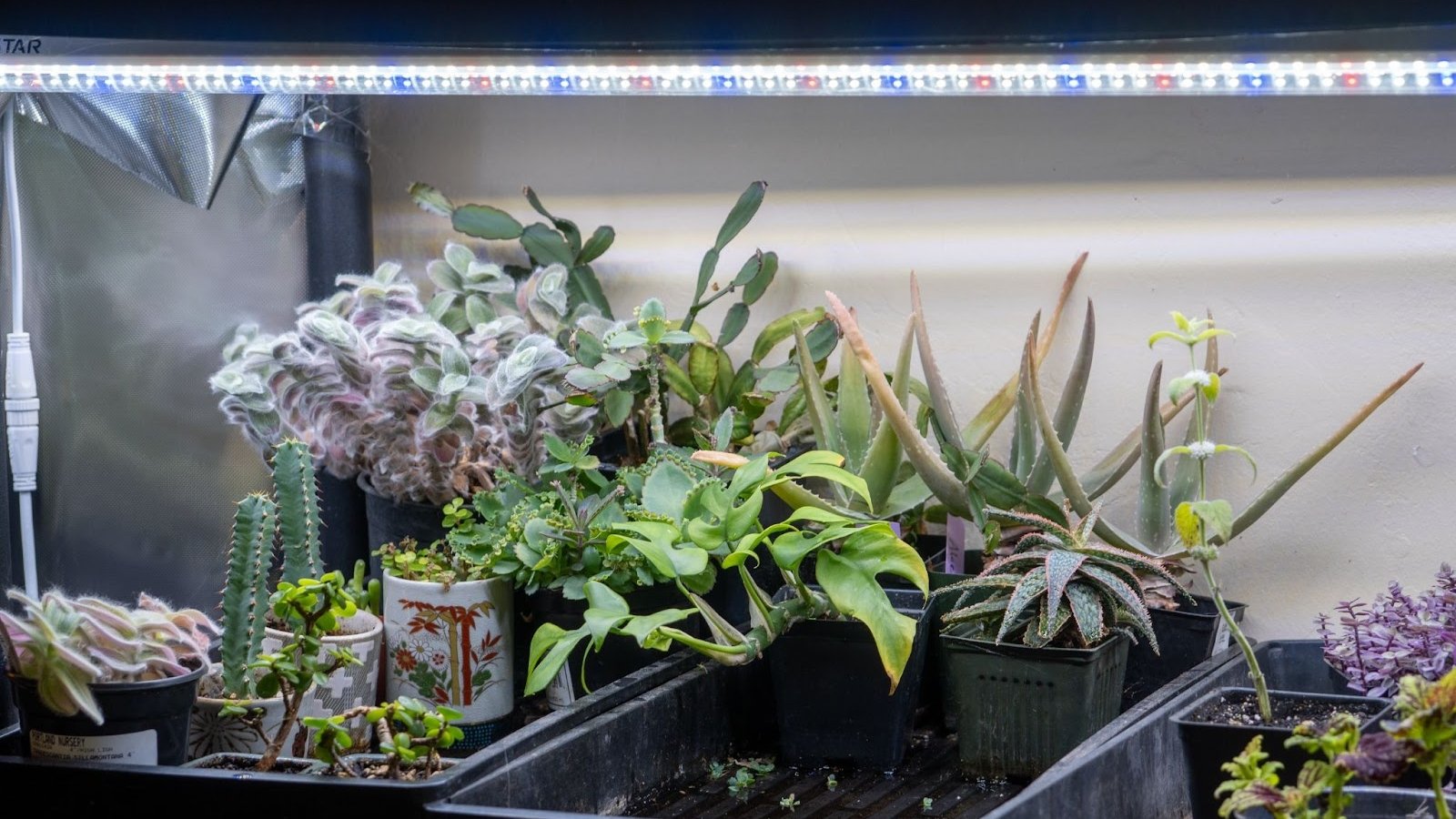
I use this system religiously! With a shelving unit, grow lights, and trays, you can grow plants anywhere indoors, year-round. It’s easy to set up, and it varies depending on the shelves and grow lights you choose.
To install these vertical gardening systems, start by choosing a rack of shelves. You want a sturdy, open unit with lots of vertical space. Crops and herbs like lettuce and basil need vertical space to grow tall, and small shelves will cramp them.
Next, choose your lights! I use LED (light-emitting diode) grow lights that link together in a “daisy-chain” fashion. You may use whatever you like. Fluorescent lights are cheap to purchase but more costly in the long run, as they’re less energy efficient than LEDs.
Set up the unit, arrange the lights, then put trays on each shelf. Inside the trays, place pots with potting soil for your plants. Grow crops, seedlings, or cacti—your imagination is the limit!
Stackable Pots
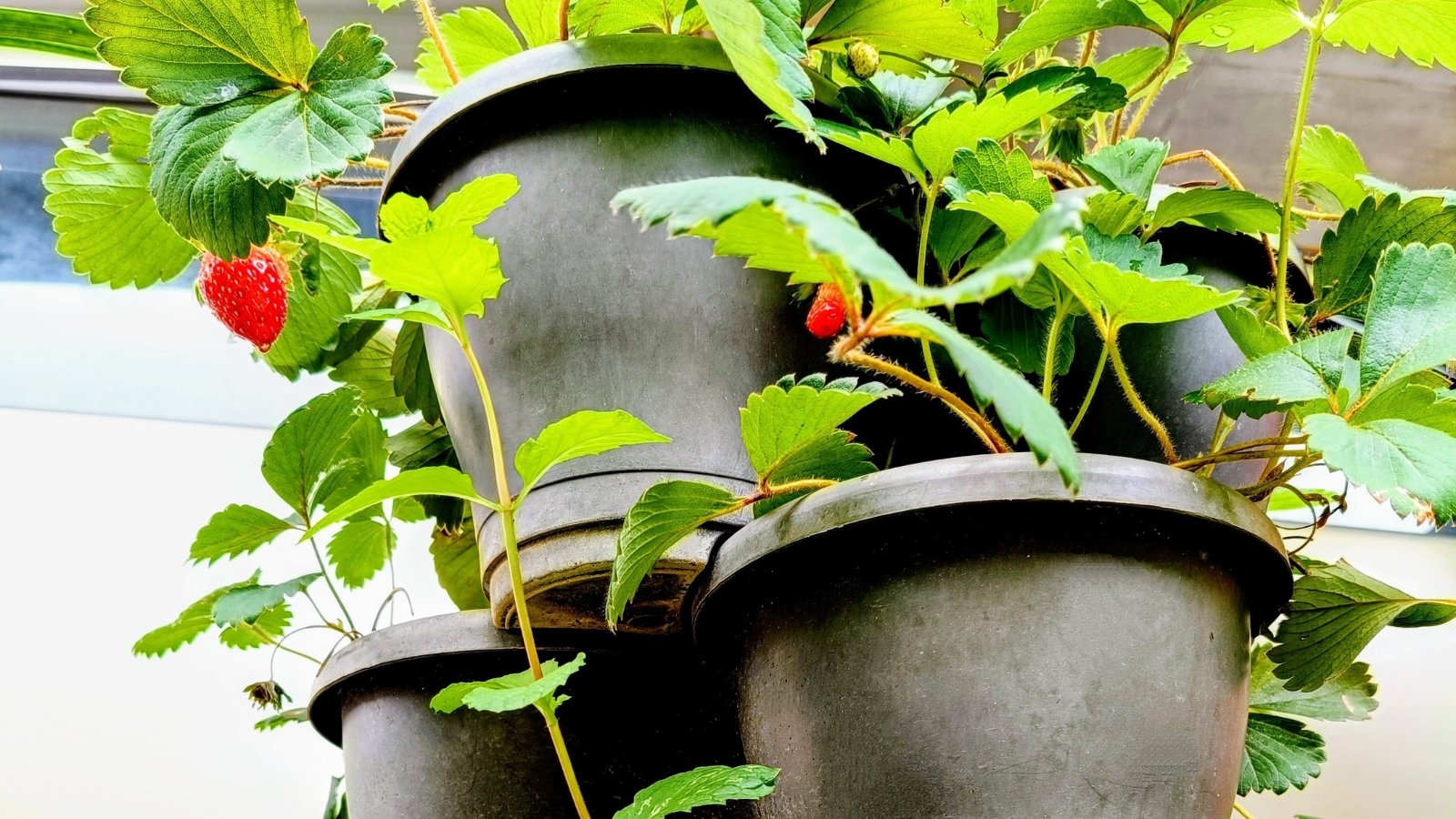
In the same manner as a GreenStalk, you can use circle or square pots to form a tower! It’s best to use all pots of the same size for easy stacking. Start by making a bottom layer in a square or circle, then stack pots on top. Ensure each one has three to four corners underneath it.
Some planters have grooves on their bottoms for easy stacking, while others do not. Use the grooves when you can, and secure the non-grooved pots by placing three to four pot corners underneath each one.
If the system seems top-heavy, take all the pots down and start again. You don’t want your future crops at risk! It’s better to take time and set up a secure tower than it is to be hasty.
A stacked garden is easier to water than a non-stacked one. As you water the top pots, the water drains out of them and falls into the lower ones. Water them with a hose, a watering can, or whatever irrigation system you have.
Garden Tepee
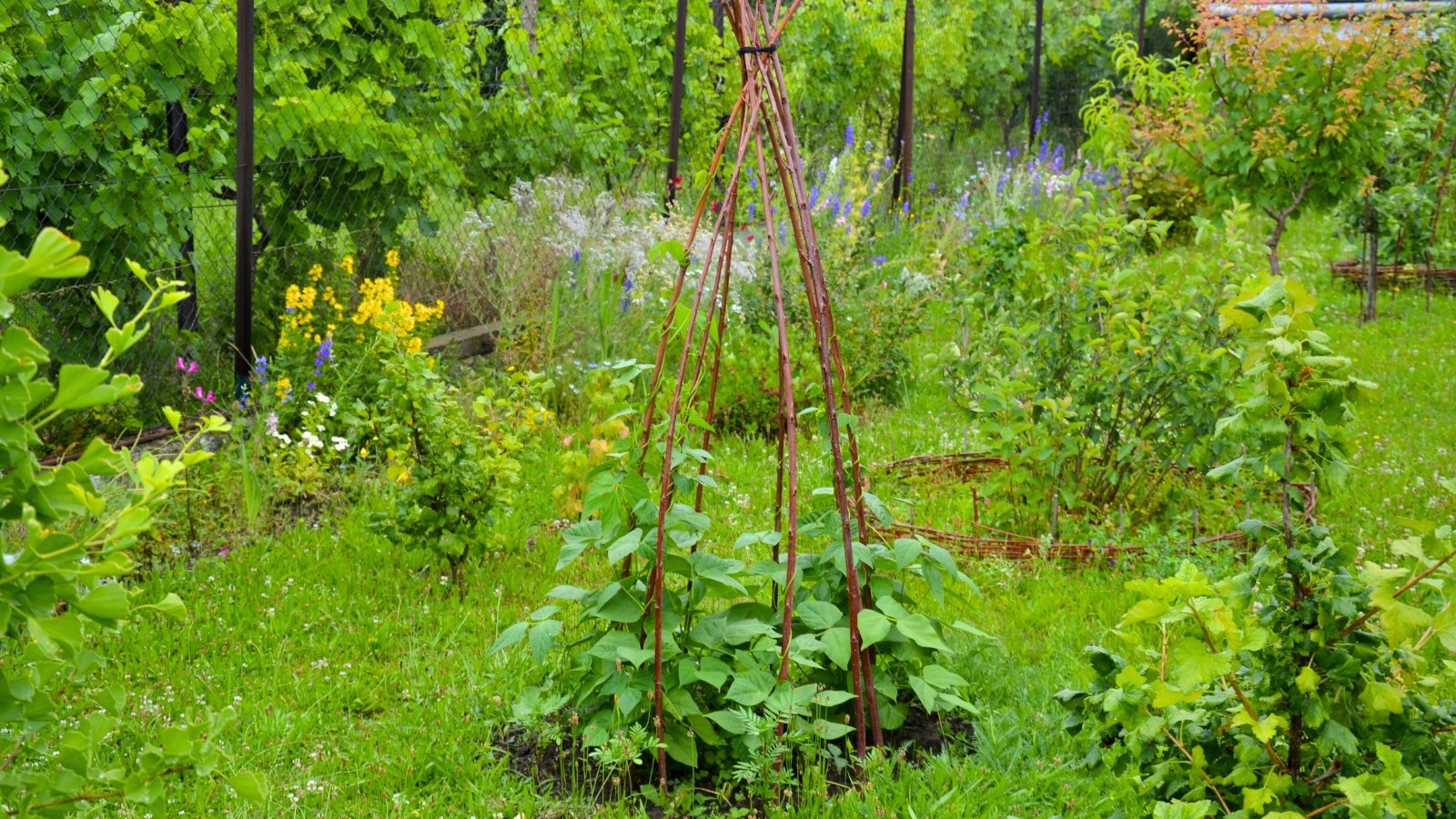
A garden tepee lets bean and pea vines scramble upwards to fall back down. It’s perfect for raised and in-ground beds where your vining crops grow. The plants will latch onto the poles instead of scrambling about the ground.
A tepee forms a conical shape. Poles are arranged in a circle, and the tips are tied together at the top. Plant the crawling crops beneath the poles, and train them onto the tepee as they grow.
A tepee is a great shape for the garden, but it’s not the only one! Make squares, spheres, or whatever shapes you’re dreaming of.
Posts and String
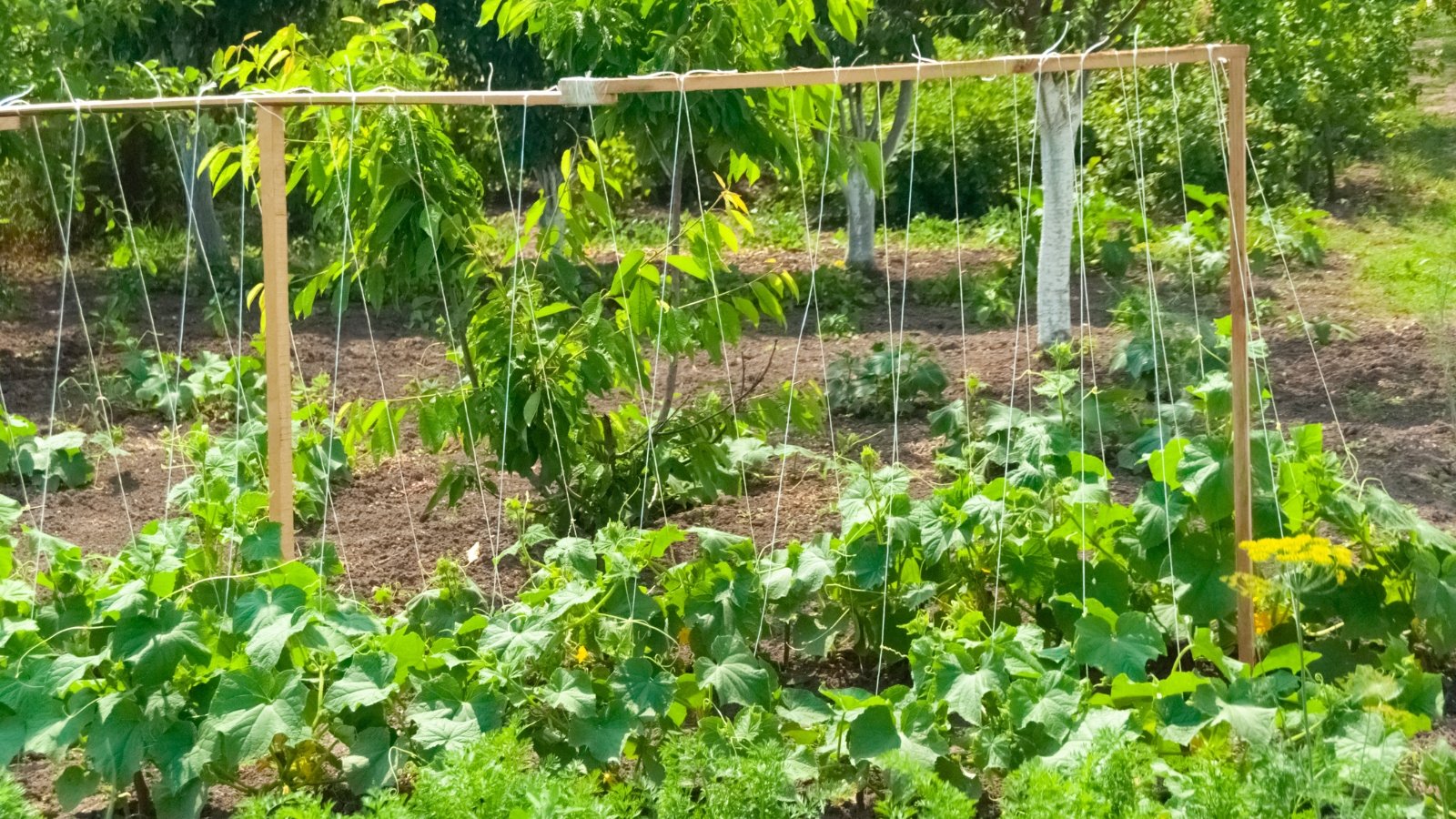
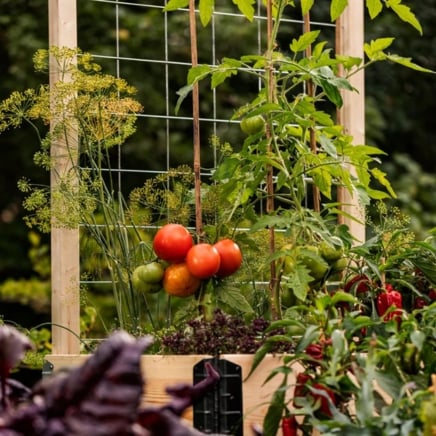
Greenhouse growers are familiar with these vertical gardening systems! It uses upright posts and strings to support tall-growing plants. Tomato growers love this method for their indeterminate pole varieties, though it also works well for peppers, squashes, and melons.
Alongside posts and strings, you’ll need clips or ties to support the stems to the strings. Start by building the structure with posts. Make a rectangle with the wooden posts—set one at the bottom, one at the top, and secure the two together with more posts at regular intervals.
At each plant, attach a string vertically from the top post to the bottom one. As the seedlings mature, attach their growing stems to the strings with ties or clips. They’ll happily grow off the ground, and you’ll see their fruits and vegetables when they’re ready for easy harvesting.
Trellises and Arbors
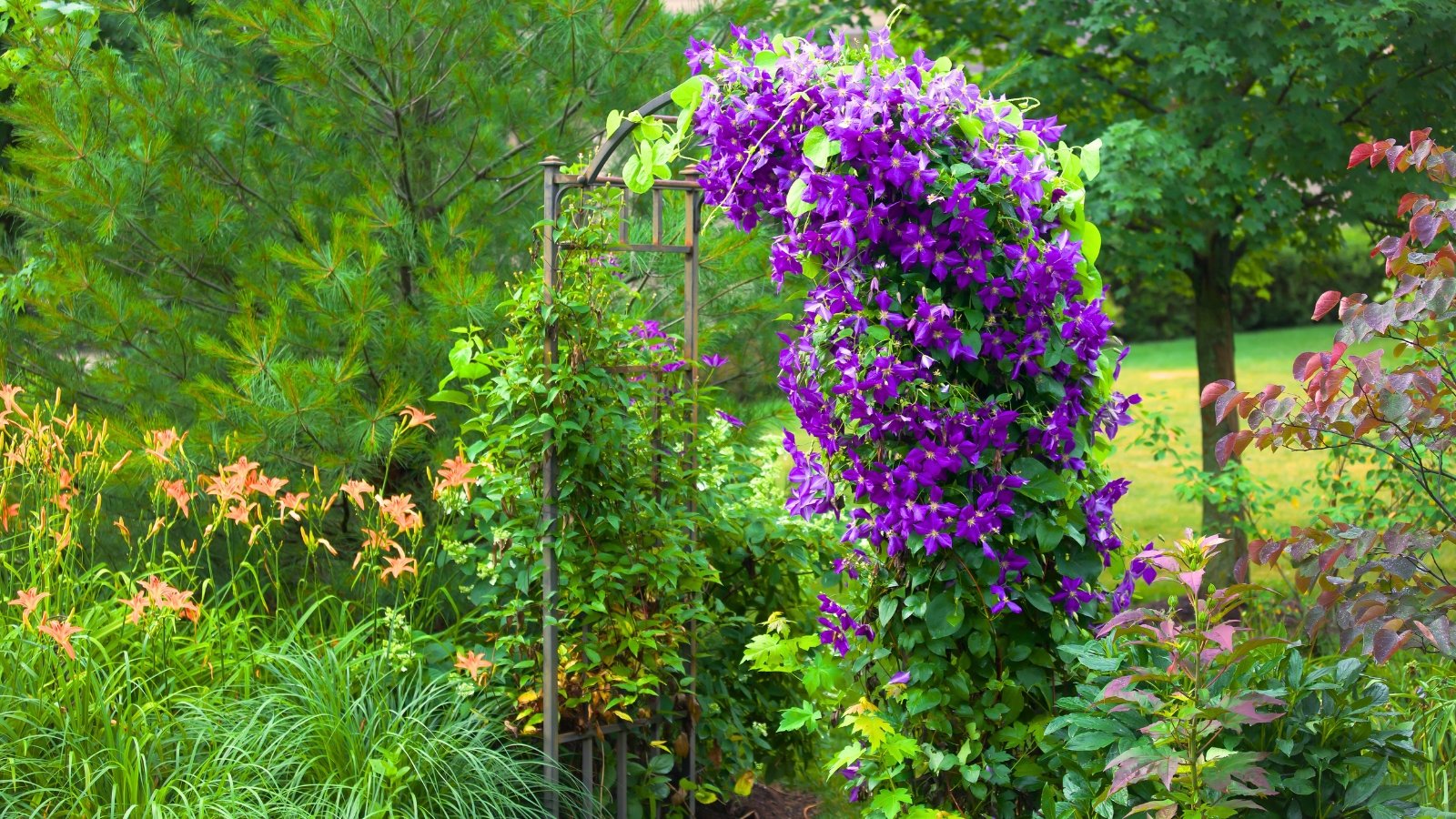
If you’d rather not make something yourself, you’re likely looking for pre-made systems that are easy to set up. Trellises and arbors are great ones to start with. Arbors are superb for ornamental vines, squashes, and cucumbers, while trellises are great for upright-growing plants.
So, what are trellises and arbors? A trellis is a vertical support with stakes that stick into the ground. You stab it near your crops, and the stems grow between the slats. Trellises may consist of wood, metal, or plastic.
Arbors are semicircles that connect two separate spaces. You walk underneath them, and the climbing plants grow above your head. Connect two raised beds, or use it as an entry point on a walkway.