

19 Different Types Of Sage For Any Garden Space
There are many different types of sage, but how do you choose the right one? We've selected our fan favorites, both culinary and ornamental! Horticultural expert Lorin Nielsen shares 19 different sage species to fill any gap in your garden.

Contents
By now, most of us know there seems to be a never-ending variety of sage available at the local garden center. But what exactly are sage plants? Are they all part of the desert landscape, or the sagebrush found on the prairie?
Happily, there’s much more to sage than meets the eye. Many types are flavorful additions to the kitchen, whether used fresh or dried. They’ve also been used in traditional medicines by tribal communities. Beyond their usefulness to humans, many sages are excellent for attracting butterflies and other pollinators, making them staples in pollinator gardens.
There’s no way to cover all forms of sage in a single article due to the incredible diversity of this group. So let’s begin by narrowing the category to one botanical group: the Salvia species, of which there are many.
What Is Sage?
Before you go out harvesting wild sagebrush, it’s important to understand that not everything called “sage” belongs to the Salvia genus. Many plants referred to as sagebrush are actually members of the Artemisia genus and are more closely related to wormwood than to true sage.
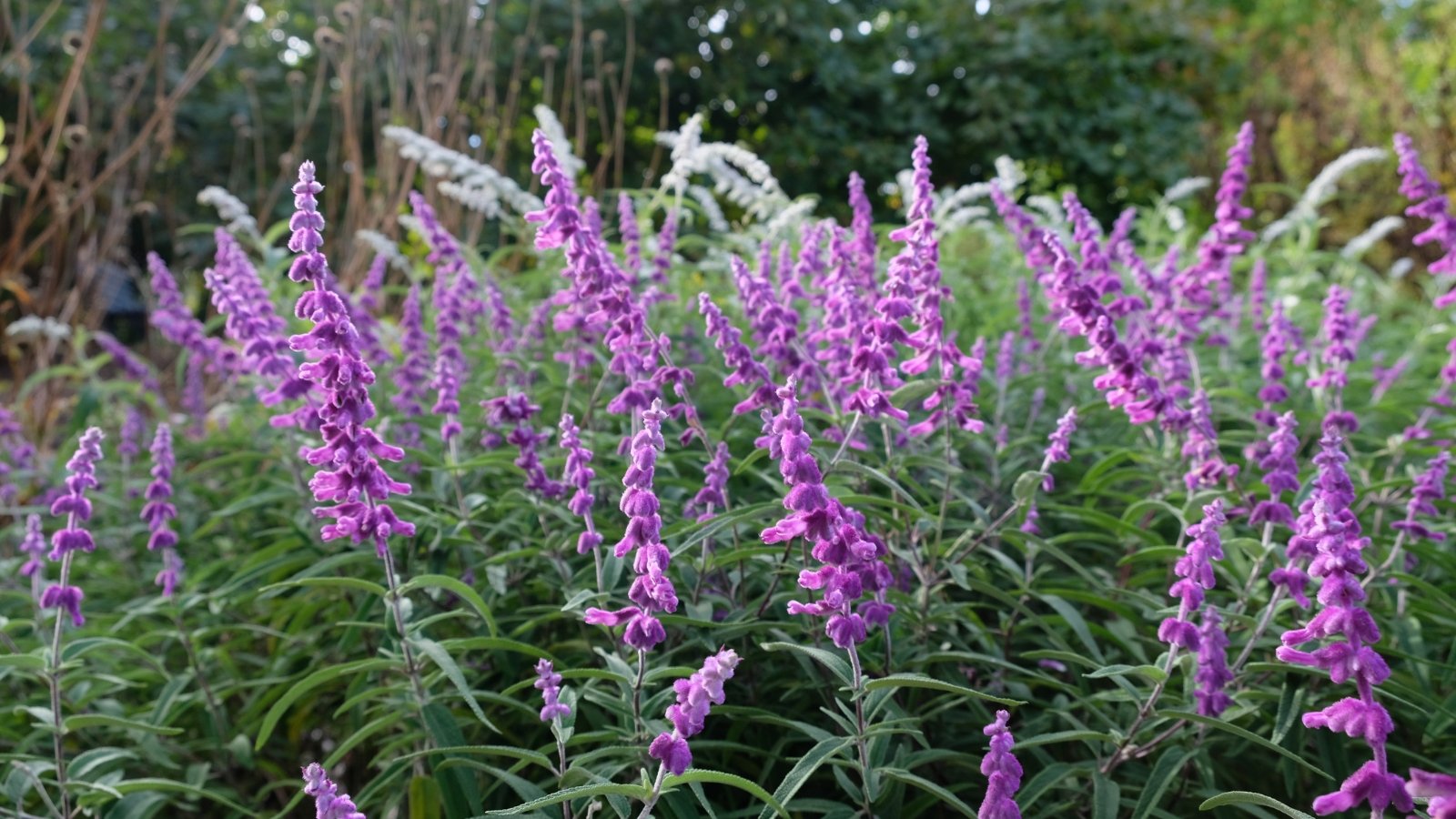
So what exactly is sage? For most gardeners and herbalists, it refers specifically to plants in the Salvia genus—a group of more than a thousand annuals and perennials that range from low-growing herbaceous forms to large, shrub-like specimens. Some varieties stay compact and tidy, while others can grow impressively large, reaching up to eight or nine feet tall and wide.
Not all sages are edible. Some varieties are grown purely for ornamental purposes, and many of these are beloved in pollinator gardens. If you need to attract bees to help pollinate your other plants, adding an ornamental Salvia might be just the trick.
Most of us picture roughly oval leaves with a point, somewhat thick and sometimes fuzzy—that describes the common culinary sage varieties. But the genus is far more diverse. These plants flower in a huge range of colors, and their foliage can be silvery-gray, deep green, purple, or even yellow. Whether grown for their looks or their flavor, sages are outstanding additions to any garden. Honestly, I can’t imagine why anyone wouldn’t want sage in their garden.
Culinary Sage Types
The most commonly known sage is the one referred to as common sage. Salvia officinalis is the species most home herb gardeners start with.
But we’re not limited to just that one. Let’s explore a collection of culinary delights that will treat your taste buds while also adding vibrant beauty to your garden.
Salvia officinalis

When you think of sage in the supermarket’s fresh herb aisle, you’re probably picturing common sage—also known as culinary sage or garden sage. It typically has a light green color, sometimes with the faintest silvery tinge when fresh. Once cut and dried, it looks much like any other herb, and the powdered form has a subtle greenish hue.
But did you know that sage leaves can also be brilliant gold, rich purple, or deep green with white edges? Even better, their flowers are edible and make an excellent garnish or a vibrant pop of color in salads. Of all the types of sage we’ll explore, this culinary staple is one of the most diverse—in the best possible way.
Cultivars
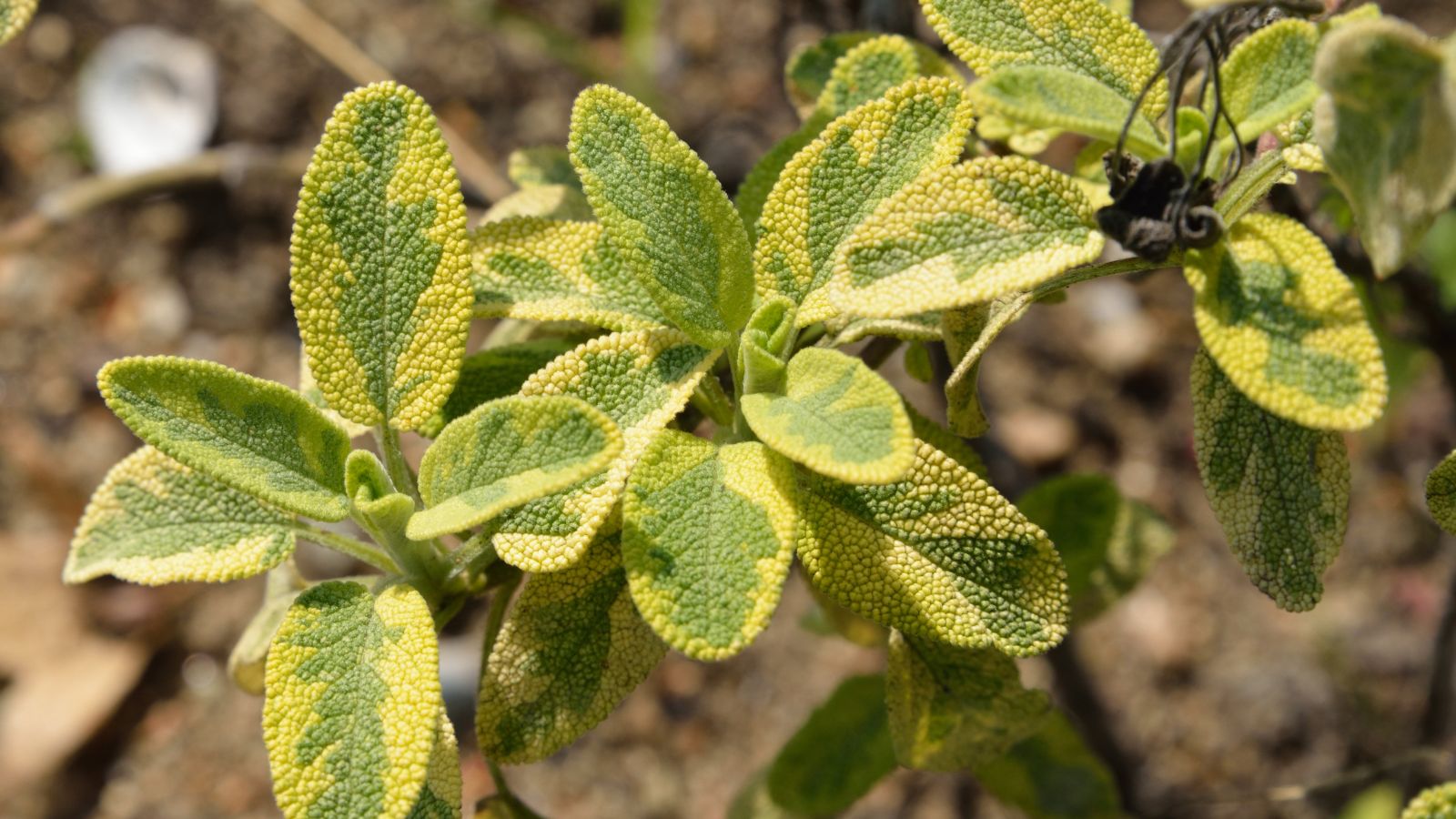
There are dozens of Salvia officinalis cultivars available. With all of these different types of sage, it can be hard to choose, but all of these sage plants are widely available varieties:
- Berggarten: Produces showy whorls of lavender-blue flowers in the late spring.
- Bicolor Icterina: The leaves are bicolored, with cream-colored edges and silvery-green centers.
- Curly: Just as its name might indicate, this has distinctive curly, rippled leaves.
- Dwarf Green: Tightly-compact version of the species, sometimes called ‘Minimus’
- Golden Sage: A golden-leaved variety, also referred to as ‘Aurea’
- Grower’s Friend: Non-flowering, this has red-colored stems and medium-green, upright leaves.
- Holt’s Mammoth: Very similar to the base Salvia officinalis, but with huge leaves.
- Pink Flower: Also called ‘Rosea’, this variety produces pink flowers instead of lavender-blue.
- Purpurea: Also referred to as ‘Purpurescens’ or ‘Purple Sage’, with vivid purple leaves.
- Tricolor Sage: Its leaves are marbled with grey-green, white, and purplish-pink and are stunning.
- White Edged: A deeper-green center of the leaf with stark white edges, very pretty.
- Window Box: Stays under a foot tall, but performs well as a container plant.
There are also a few notable subspecies of Salvia officinalis. One of the most essential, in my opinion, is Salvia officinalis ssp. lavandulifolia, commonly known as Spanish sage. This subspecies has a much milder flavor than many of the cultivars mentioned above and lacks the camphor-like notes typically found in standard Salvia officinalis.
Salvia elegans

Most people know this as pineapple sage. Like Salvia officinalis, this sage species has a range of cultivars that have grown in popularity. They’re most often recognized for their fruity aroma and a hint of citrus-like flavor.
Some varieties feature variegated foliage, while others are prized for their distinctive, edible flowers. All of them are striking and far more unusual than what you’ll typically find at the supermarket.
Here’s some of the different types of sage in the Salvia elegans cultivar collection:
- Elk Sonoran Red: This has the aroma of pineapple, but brilliant scarlet-red flowers.
- Frieda Dixon: Late fall blooms of salmon-pink make this a popular variety.
- Golden Delicious: Crimson flowers over bright golden foliage, very eye-catching.
- Honey Melon: Tubular scarlet flowers and a sweet tangerine aroma.
- Pineapple: Medium-red flowers and a pineapple aroma and flavor to its leaves.
- Tangerine: Citrus-scented with deep red flowers and a very compact size.
Salvia melissodora
Grape-scented sage, sometimes called grape sage, is a lesser-known tea herb. Both the leaves and flowers can be used in teas to add a unique, unexpected flavor. The flowers have a freesia-like aroma and also make a beautiful, edible garnish.
Salvia fruticosa
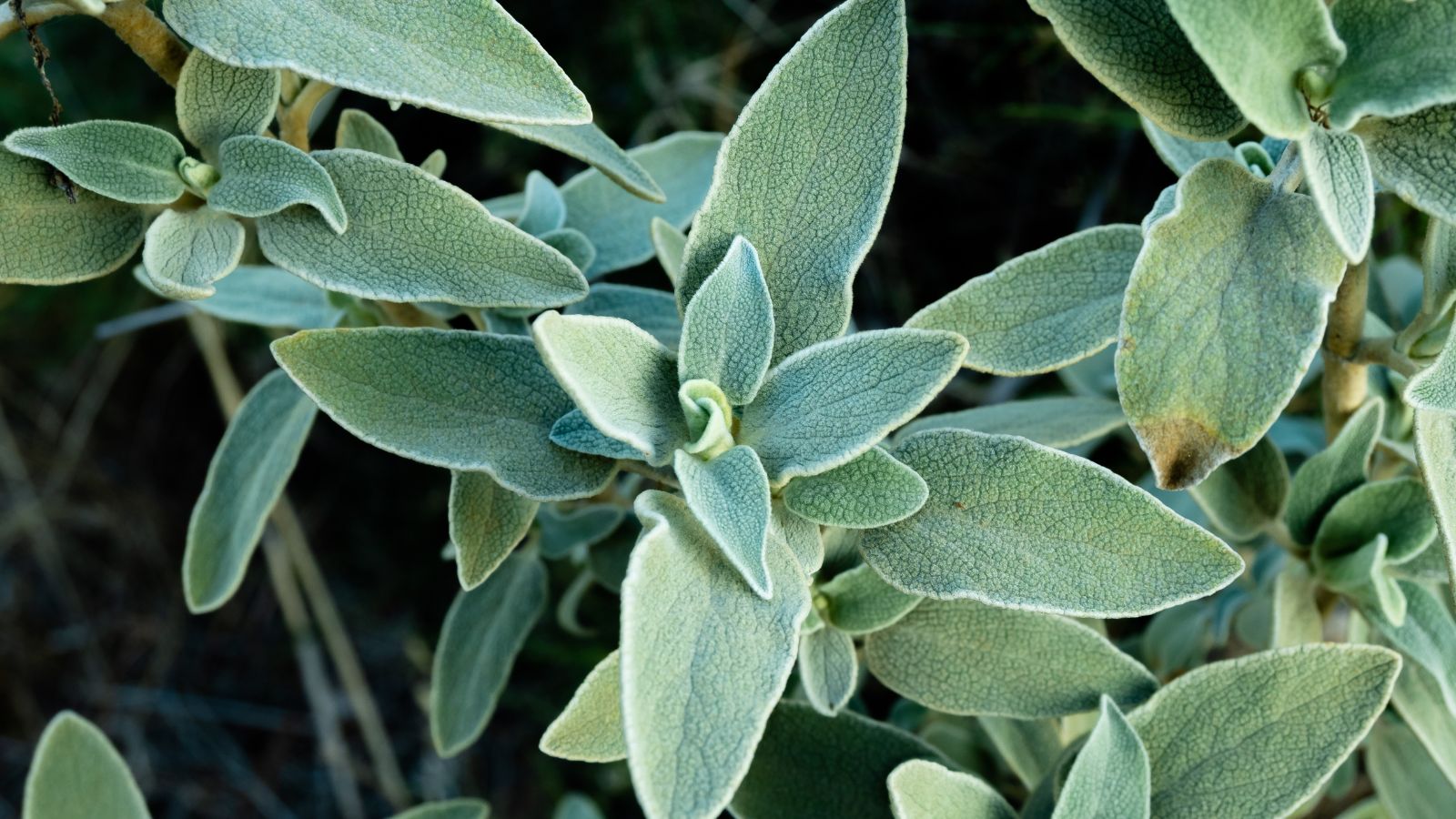
More often than not, if you head to the bulk aisle of your grocery store in search of sage, you’ll find Greek sage. This is the most common form of dried culinary sage available for sale. As you can imagine, this can be confusing for home gardeners when their garden sage doesn’t taste quite like the store-bought version. But now, we can clear up that confusion.
The young, tender shoots or leaves of Greek sage are used to add flavor to food. Like its relative Salvia melissodora, it’s also used in tea production. In many parts of the world, Greek sage is popularly known as Faskomilo tea.
Salvia sclarea

Clary sage has edible flowers and leaves as well, but it’s probably best known as the sage that made your grandmother’s blouse smell so lovely. For centuries, it has been used in dried bundles tucked into dressers or trunks to infuse clothing with its balsam-like fragrance.
Unlike many other sages, clary sage is not drought-tolerant. It prefers consistent, regular watering and cooler growing conditions. It’s usually grown as a biennial, though in cooler climates it may behave like a tender perennial.
Salvia dorisiana
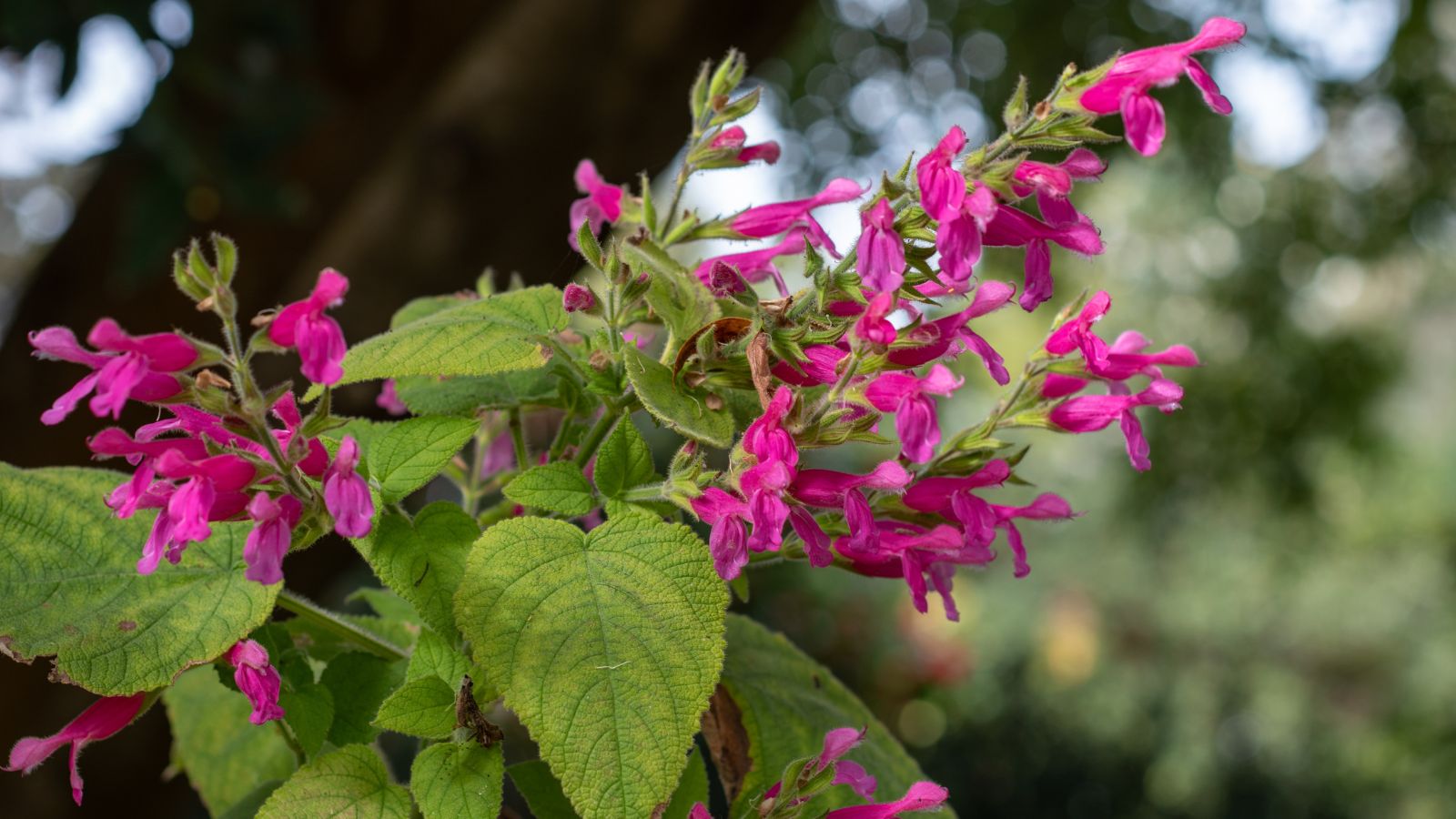
Fruit-scented sage, often simply called fruit sage, originates from Central America. Its fragrant pink flowers are true show-stoppers and are also delicious. The large leaves make harvesting easy and ideal for drying and storage.
Salvia gesneriiflora
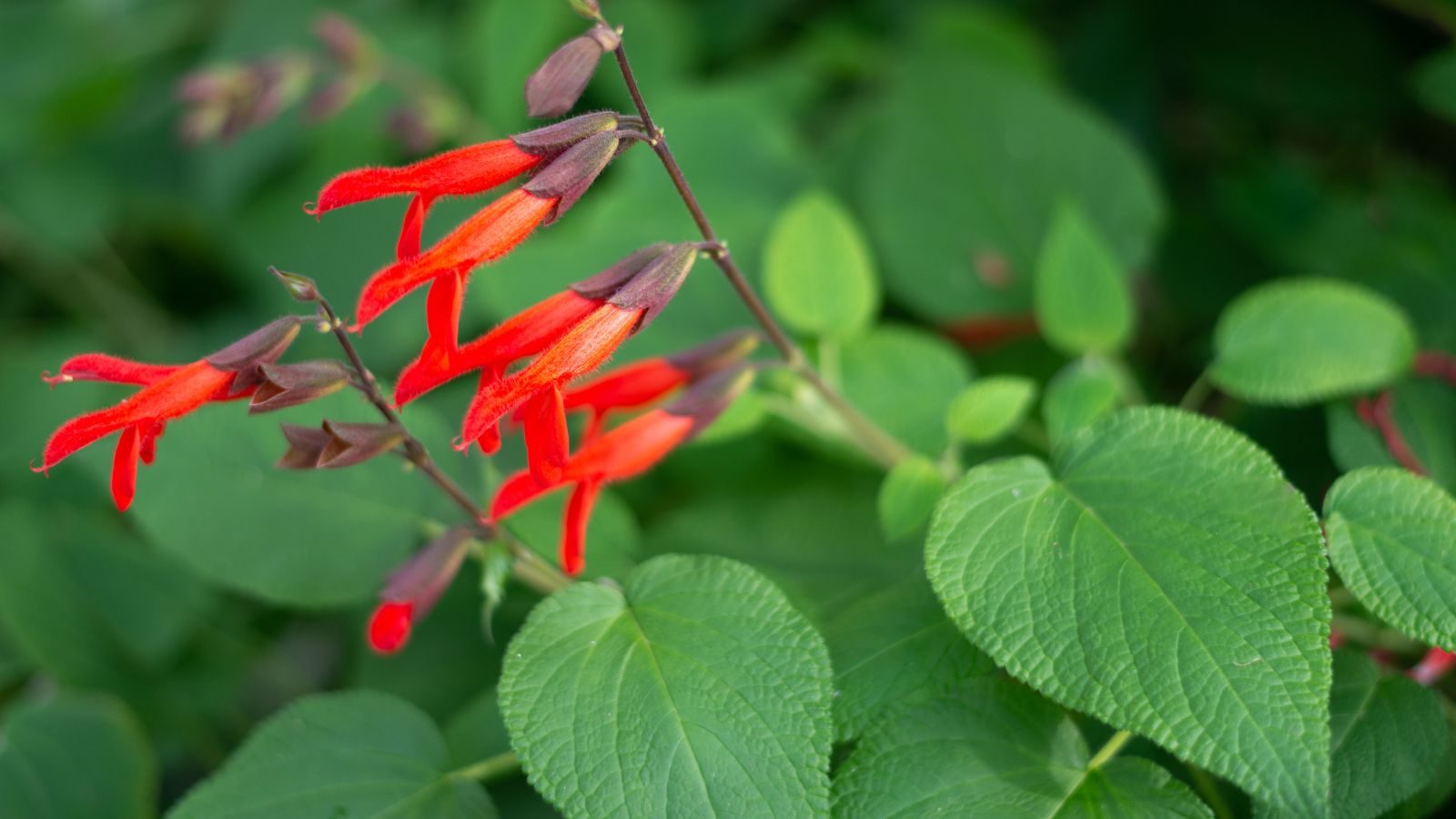
Sure, you could eat the leaves of grapefruit sage if you’d like—they’re quite similar to other culinary sages. But where this variety truly shines is in its flowers. These large, juicy blooms are packed with sweet nectar. Not only do they attract pollinators, but they’re also delicious when picked straight from the plant and eaten fresh.
Salvia lanceolata
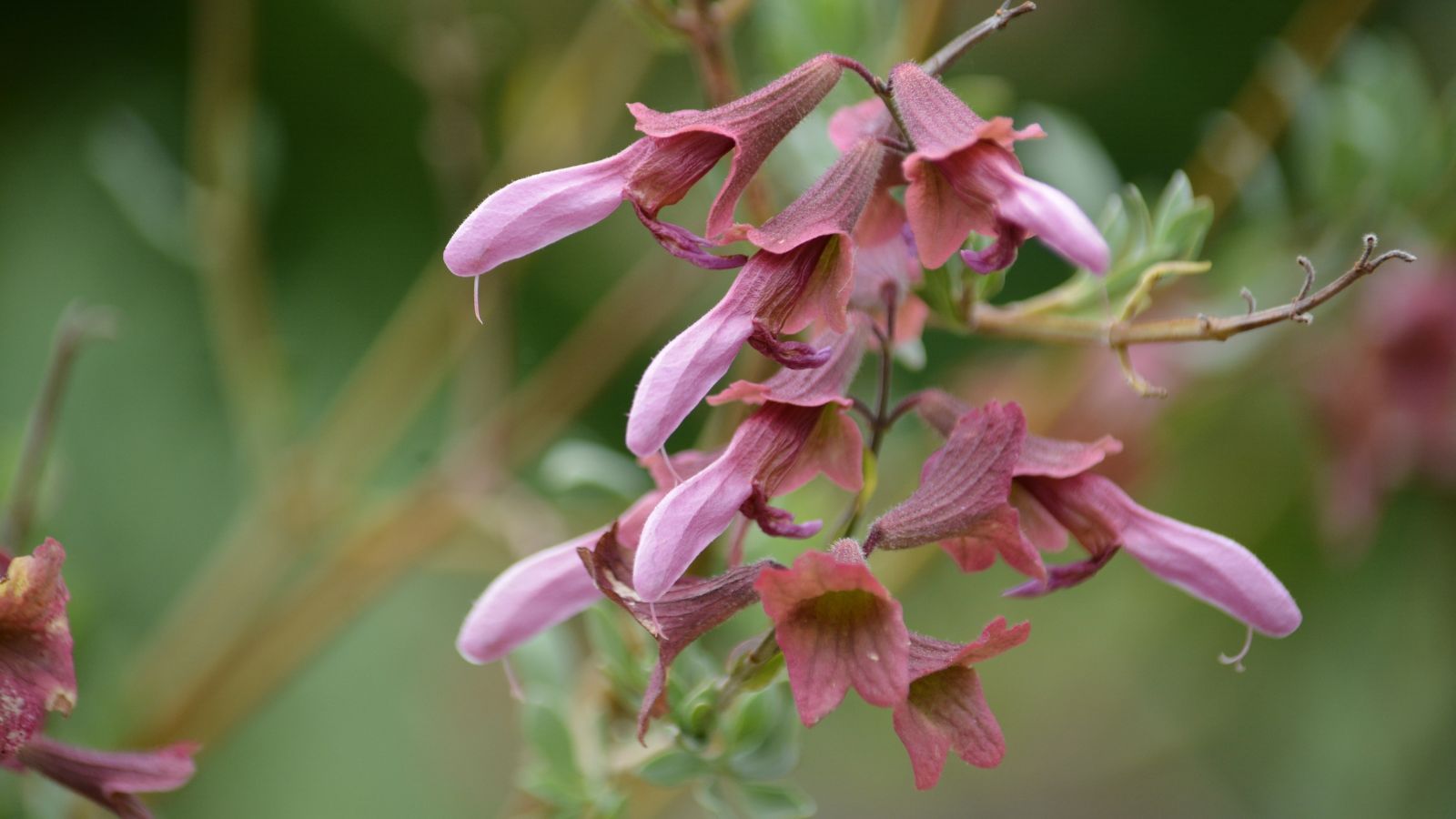
This unique South African sage has a flavor reminiscent of lemon and pepper. Its taste is distinctly different from other sages, making it a perfect complementary spice for seafood dishes.
Salvia microphylla
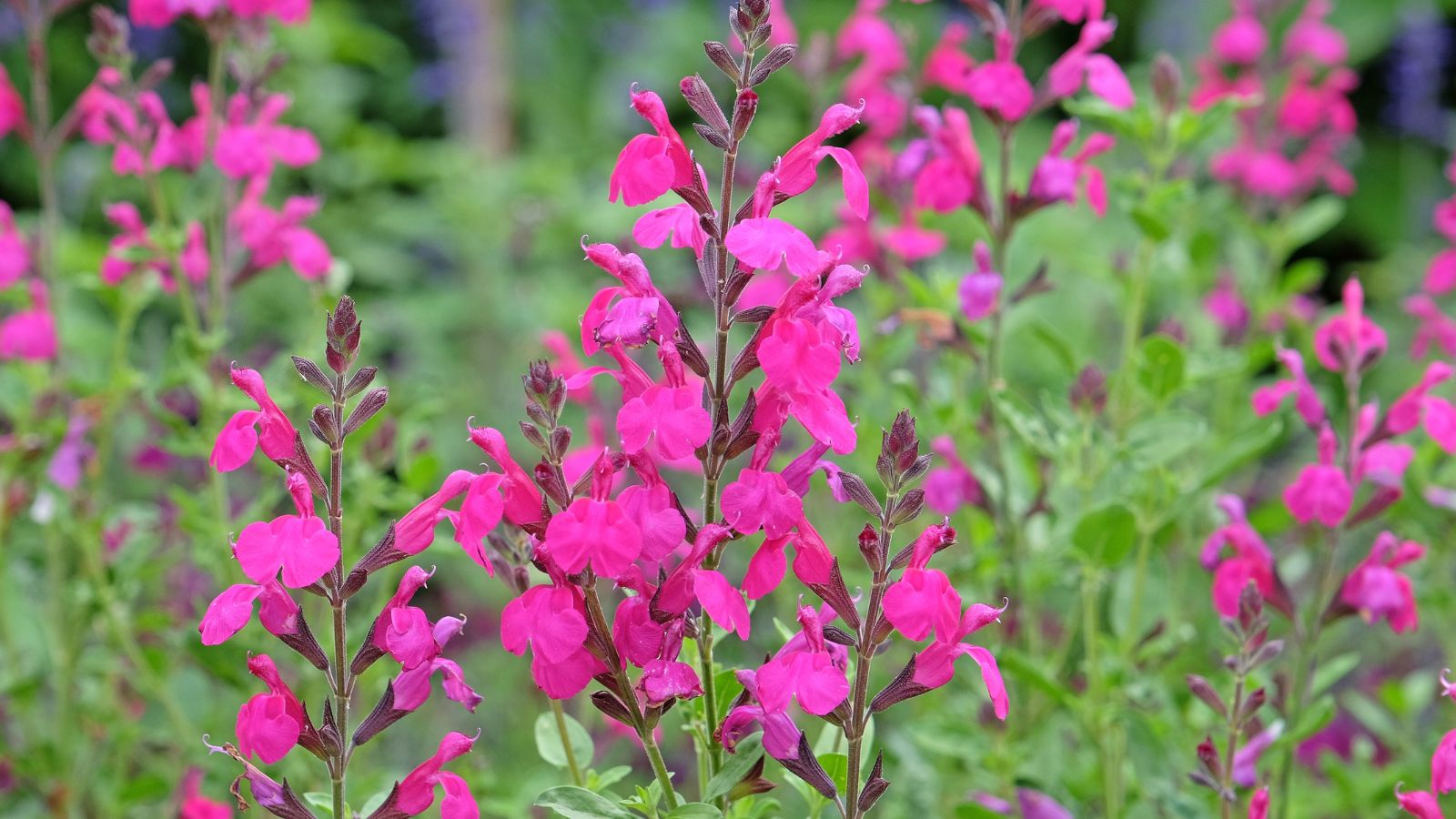
In Mexico, this sage is called mirto de montes, which translates to “myrtle of the mountains.” Elsewhere, it’s known as blackcurrant sage or Graham’s sage. When brewed into a tea, it has a flavor reminiscent of black currants. While it can be used for purposes beyond tea, it’s most often featured in desserts.
Salvia apiana

We’ve covered growing this tribal favorite extensively in the past. But yes, white sage is indeed edible—and it’s delicious. Its flavor is more pine-like than most other culinary sages, making it a unique and worthwhile addition to your herb and spice collection. I personally use it more often than common sage, simply because I’m especially fond of its flavor.
Just remember to plant it in well-draining soil and give it full sun for the best results.
Salvia hispanica and Salvia columbariae
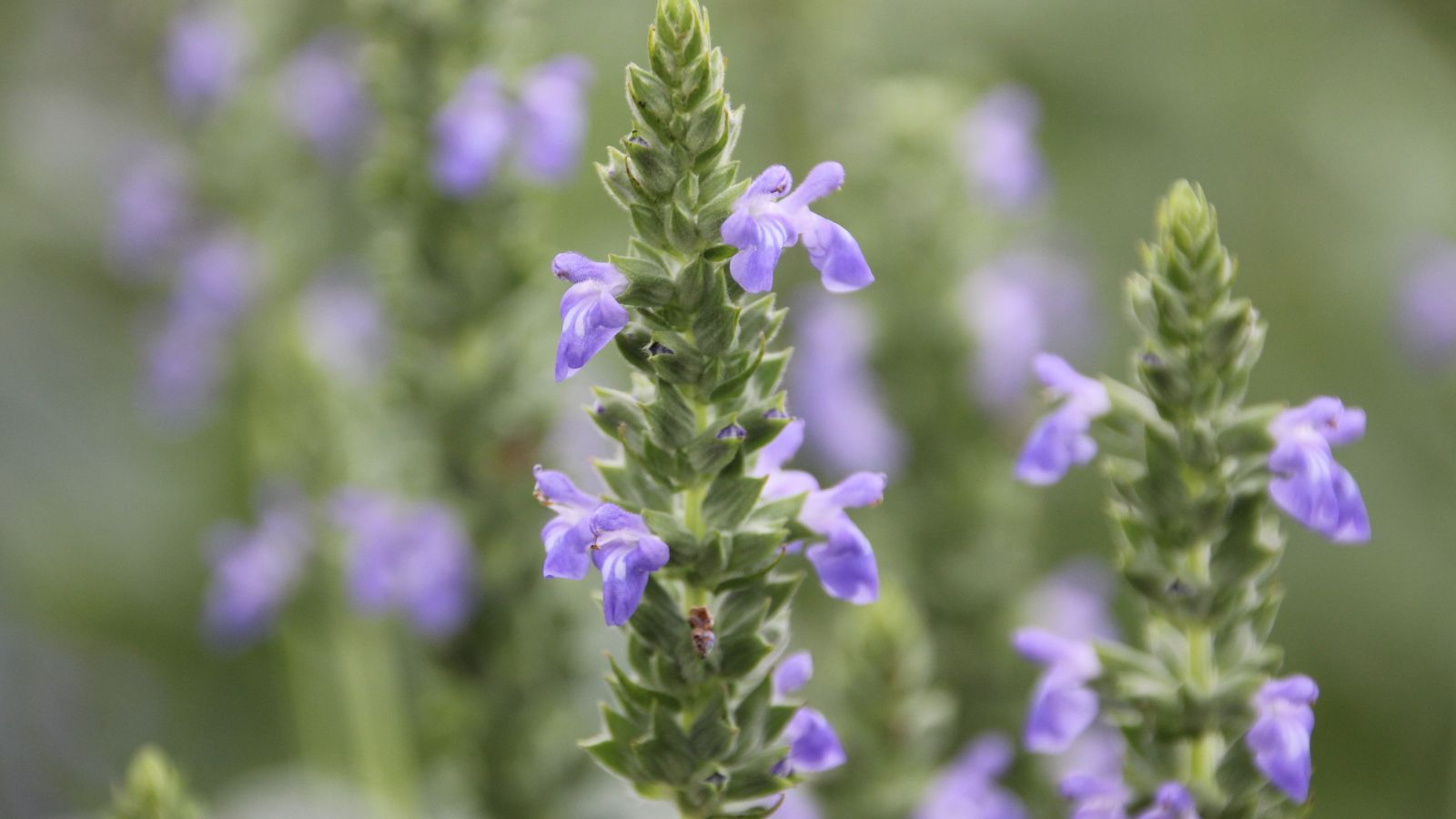
Every time you’ve grown one of those quirky chia heads, you’ve been growing a type of sage. The same goes for the chia seeds we love to stir into overnight oatmeal.
Salvia hispanica, commonly known as Mexican chia, isn’t grown for its leaves but for its hydrophilic seeds. When exposed to moisture, the seeds form a gel-like coating, making them especially popular in overnight oats, smoothies, and other recipes.
Salvia columbariae goes by many names—chia, golden chia, desert chia, or chia sage—depending on who you ask. Also grown for its seeds, this annual thrives in the southwestern deserts of the United States. Chia was an important food source for Native American tribes in the region, each of whom had their own name for it. The Tongva (Gabrieleno) tribe called it pashiiy, while the Ventureño Chumash referred to it as it’epeš. Many other names exist for this versatile and nutritious seed.
There are two known subspecies of golden chia, both used in similar ways to the base variety:
- Salvia columbariae var. columbariae: Often referred to as chia or California sage.
- Salvia columbariae var. ziegleri: Commonly known as Ziegler’s sage.
Ornamental Sage Types
Not all varieties of sage are edible. And while it’s easy to fill your garden with a diverse range of culinary sage plants, there are also many types prized for their ornamental value. From brilliant red, pink, and blue flower spikes to unique foliage, ornamental sages offer a striking visual display. With over a thousand species in the Salvia genus, you’re certainly not limited to the muted tones of the edible varieties.
Let’s take a look at some of the ornamental sage plants that attract beneficial insects, breathe life into your garden, and explode with seasonal color.
Salvia haenkei
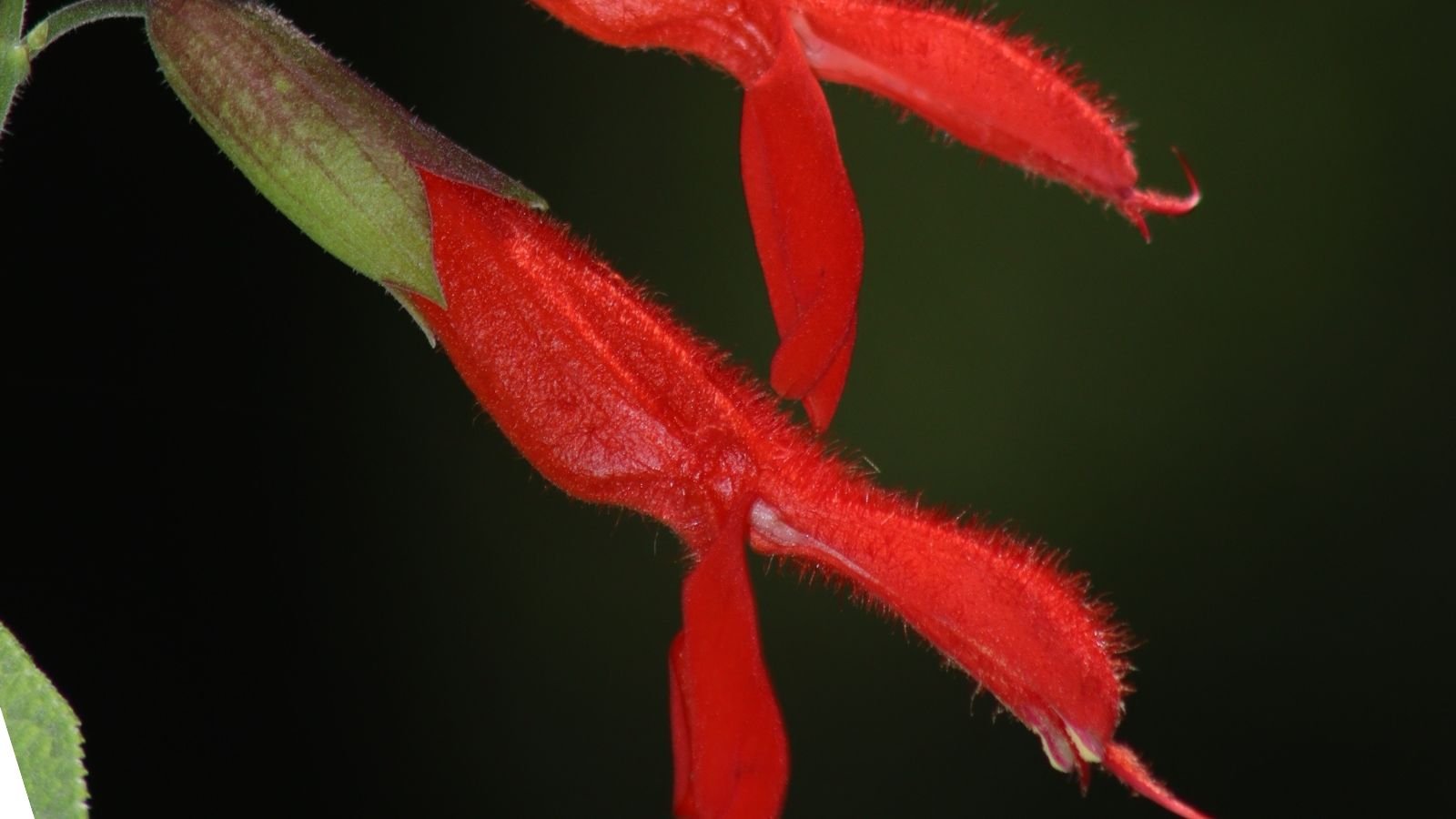
An immense plant, prawn sage can reach up to 8 feet tall and wide. Its name comes from the unusual flowers it produces, which resemble bright red shrimp heads. This fragrant plant blooms from mid-summer well into the fall.
Somewhat challenging to grow, Salvia haenkei is not drought-tolerant. It prefers consistent soil moisture and will thrive when watered regularly. It’s also not cold-tolerant and performs best in USDA zones 9 to 11, ideally in partially shaded locations.
Salvia sonomensis

This California perennial, known as Sonoma sage, is most commonly found in chaparral plant environments. The plant itself rarely grows over a foot tall and is considered a subshrub. However, it sends up striking purple or blue flower spikes that rise above its foliage and is quickly gaining popularity in regions where it naturally thrives.
In the wild, Sonoma sage grows in foothill chaparral and is commonly found along the coast from Monterey to San Diego. It also appears throughout the California coastal range, from Napa County to Siskiyou County, as well as in the Sierra foothills. It performs well in cultivation, and a white-flowered cultivar has been developed in addition to the traditional blue and purple shades.
Salvia greggii

Autumn sage typically thrives at higher elevations, with its natural habitat stretching from Texas into Mexico through the Chihuahuan Desert. In cultivation, it performs well as a low hedge or shrub, usually growing no more than 2 to 3 feet tall.
Its leaves have a pleasant minty aroma, and it produces flowers in a wide range of colors—including reds, pinks, oranges, and purples. It’s a low-maintenance plant that is drought-tolerant, generally free of pests and diseases, and does not respond well to fertilization. Autumn sage prefers well-draining soil and, while it can be used culinarily, it is most often grown for ornamental purposes.
Salvia guaranitica

Full sun to three-quarter sun is ideal for hummingbird sage, sometimes called anise-scented sage due to the distinctive aroma of its leaves. This attractive plant typically performs as an annual in most regions but may act as a tender perennial in warmer climates.
It produces deep blue, tubular flowers with purple-blue calyxes that are perfect for attracting hummingbirds. Dark green leaves grow along squarish, dark green stems that typically reach around 3 feet in length when grown as an annual. If grown as a perennial, the stems can extend to 5 or 6 feet, making this plant a striking focal point in the right garden setting.
Salvia leucantha

Often referred to as Mexican bush sage, this herbaceous perennial is native to the subtropical and tropical regions of Mexico. Somewhat compact in form, its medium green leaves and stems typically extend no more than 2 to 3 feet from the plant’s base.
Salvia leucantha is best known for its long, arching racemes of flowers. These striking blooms feature white tips that descend into tubular lavender calyxes, creating a vivid display that attracts bees, hummingbirds, and butterflies throughout late summer. They thrive in evenly moist soil and put on an impressive floral show when in bloom.
Salvia van houttei

Lovely burgundy or wine-red flowers are the hallmark of this type of garden sage. The plants are adorned with medium green leaves that are deer-tolerant and able to withstand occasional nibbling. However, it’s the stunning, drooping flower spikes in vivid shades of red that steal the spotlight—they are truly magnificent.
Burgundy scarlet sage performs well in lightly shaded environments and grows best in USDA zones 7 and above. It is not drought-tolerant and prefers consistent moisture along with well-draining soil.
Salvia clevelandii
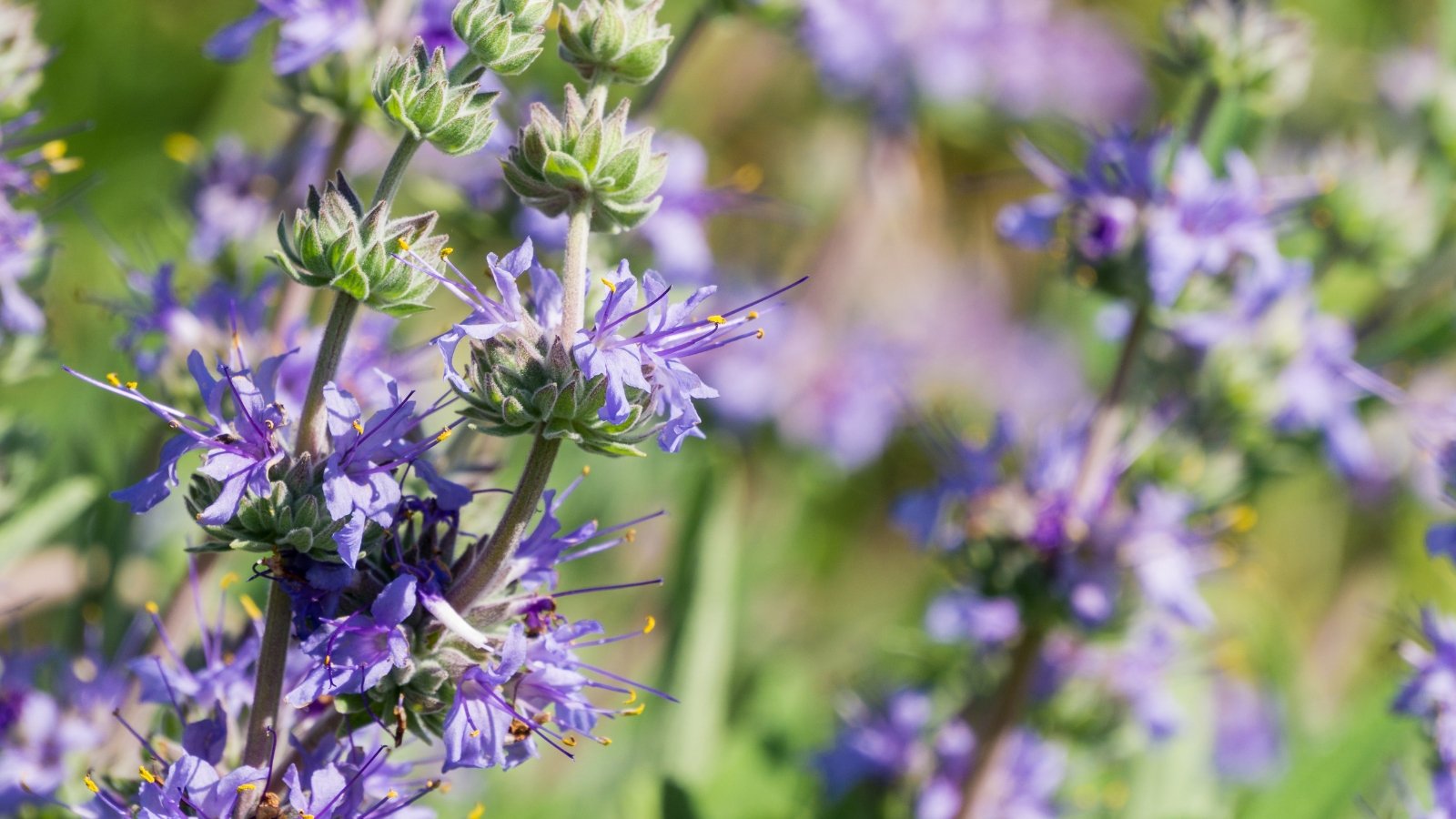
Blue sage, sometimes called Cleveland sage or Jim sage, is a perennial native to southern California. Popular throughout the southwestern United States, it has been in cultivation since the 1940s, with many different types now available. This plant can reach 4 to 5 feet in both height and width, and its ashy green leaves stand out among darker foliage in the garden.
Its flowers bloom in whorls atop tall flower spikes, with tubular lavender or amethyst blossoms emerging in circular clusters. A favorite among pollinators, blue sage thrives in well-draining, slightly sandy soils.
Salvia chamaedryoides

Salvia chamaedryoides, commonly known as germander sage, is also referred to as blue oak sage or Mexican blue sage. It typically grows to 12 to 18 inches in height and spreads 3 to 4 feet wide, making it a popular ground cover in xeriscape gardens. With its striking blue flowers, it also serves as an excellent pollinator plant.


