

29 Native Plants For North Carolina Gardens
Live in North Carolina and need a few native plants for your garden this season? There are a number of native plants will thrive, depending on what part of the state you'll be planting them. In this article, gardening expert Liessa Bowen walks through her favorite native plants for North Carolina gardens!

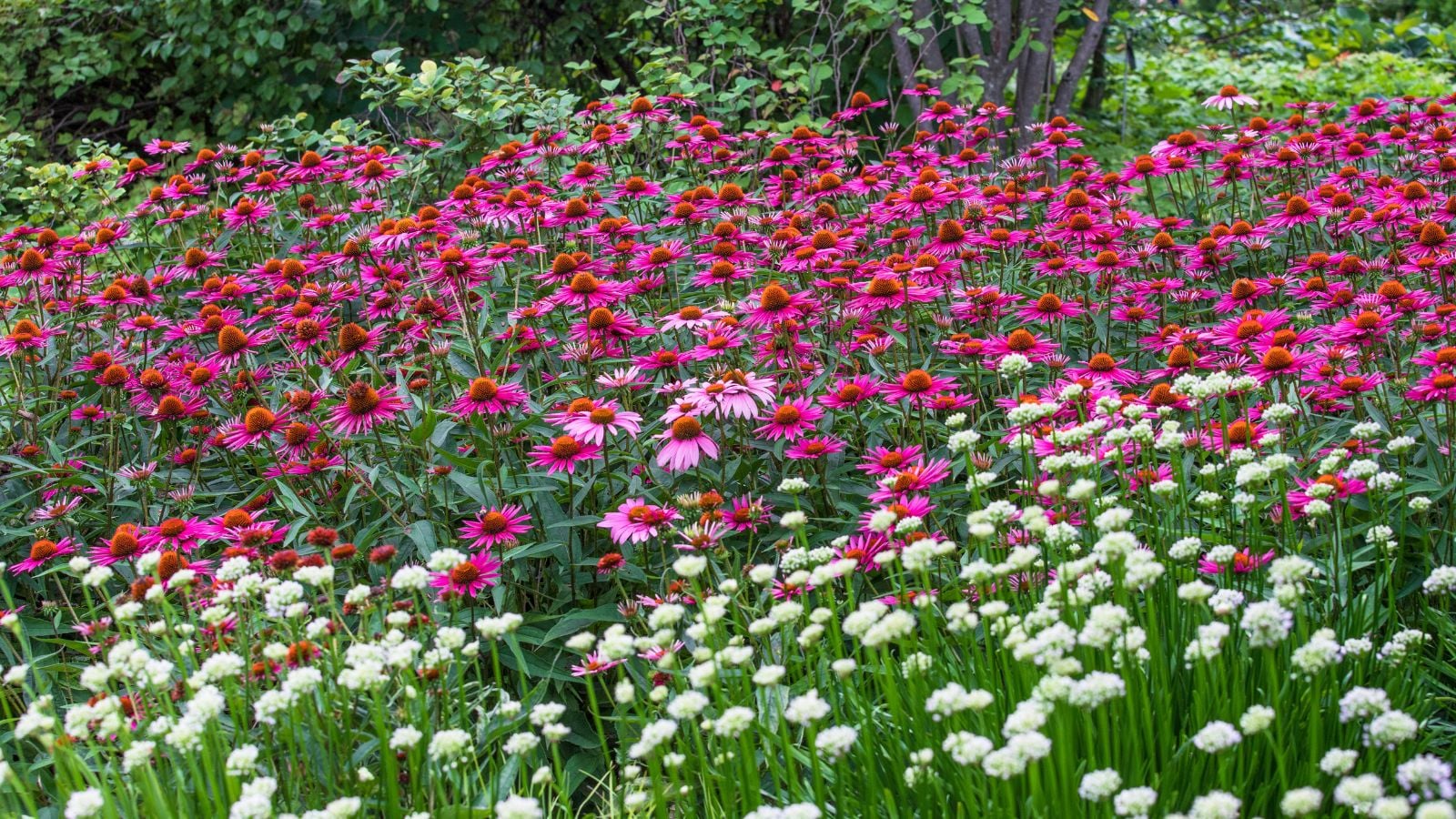
Contents
North Carolina is a fantastic state for gardeners. With four distinct seasons and plenty of rainfall, there are many plants that gardeners can grow with very little extra effort. But what’s even better is that North Carolina is home to a great number of beautiful and easy-to-grow native plants that make excellent additions to your home garden or landscape.
North Carolina native plants are well-adapted to their local growing conditions. Like any plant, pay attention to each plant’s preferred sun exposure and watering needs so you can provide them with ideal conditions. You can choose a few native wildflowers to incorporate into your garden, or you can plant your entire yard with native species; the decision is entirely yours.
If you are looking for native plants to grow, you will have plenty of options, including flowers, ferns, grasses, and shrubs. There are many more native plants not included in this list that would also make excellent additions to a home garden or landscape. If you are having trouble finding a source for native plants, you can try growing them from seed, or seek out nurseries that specialize in natives.
In this article, we will highlight some of our favorite plants native to North Carolina and the surrounding region. These plants can all be easily grown by the home gardener. The hardest part may be narrowing down the list because you probably don’t have space for them all!


Adam’s Needle


|
botanical name Yucca filamentosa |
|---|---|

|
plant type Broadleaf evergreen |

|
sun requirements Full sun |

|
height 2 to 8 feet |

|
hardiness zones 5 to 10 |
Adam’s needle, also commonly called yucca, is a hardy and low-maintenance plant that adds a unique look to the landscape. The leaves are long and thin, forming a large, rounded leafy mass.
The leaves themselves stay green throughout the year. In mid-summer, a tall flower spike appears, covered with a mass of large, showy, white blooms which attract butterflies.
These North Carolina native plants do best in full sun but also tolerate some light shade. They need dry to medium moisture, well-drained soil, although they are not too picky about soil quality. Yucca is a tough plant that is tolerant of drought, deer, and rabbits.
American Beautyberry
|
|
botanical name Callicarpa americana |
|---|---|
|
|
plant type Deciduous shrub |
|
|
sun requirements Full sun to part shade |
|
|
height 3 to 6 feet |
|
|
hardiness zones 6 to 12 |
If you are interested in gardening with North Carolina native plants, don’t forget about native shrubs. There are many native shrubs that make excellent additions to a home landscape, and American beautyberry is the perfect example.
This plant is both attractive and easy to grow. It also looks great when incorporated into a wildlife garden, as a stand-alone shrub, or grown as part of a hedge.
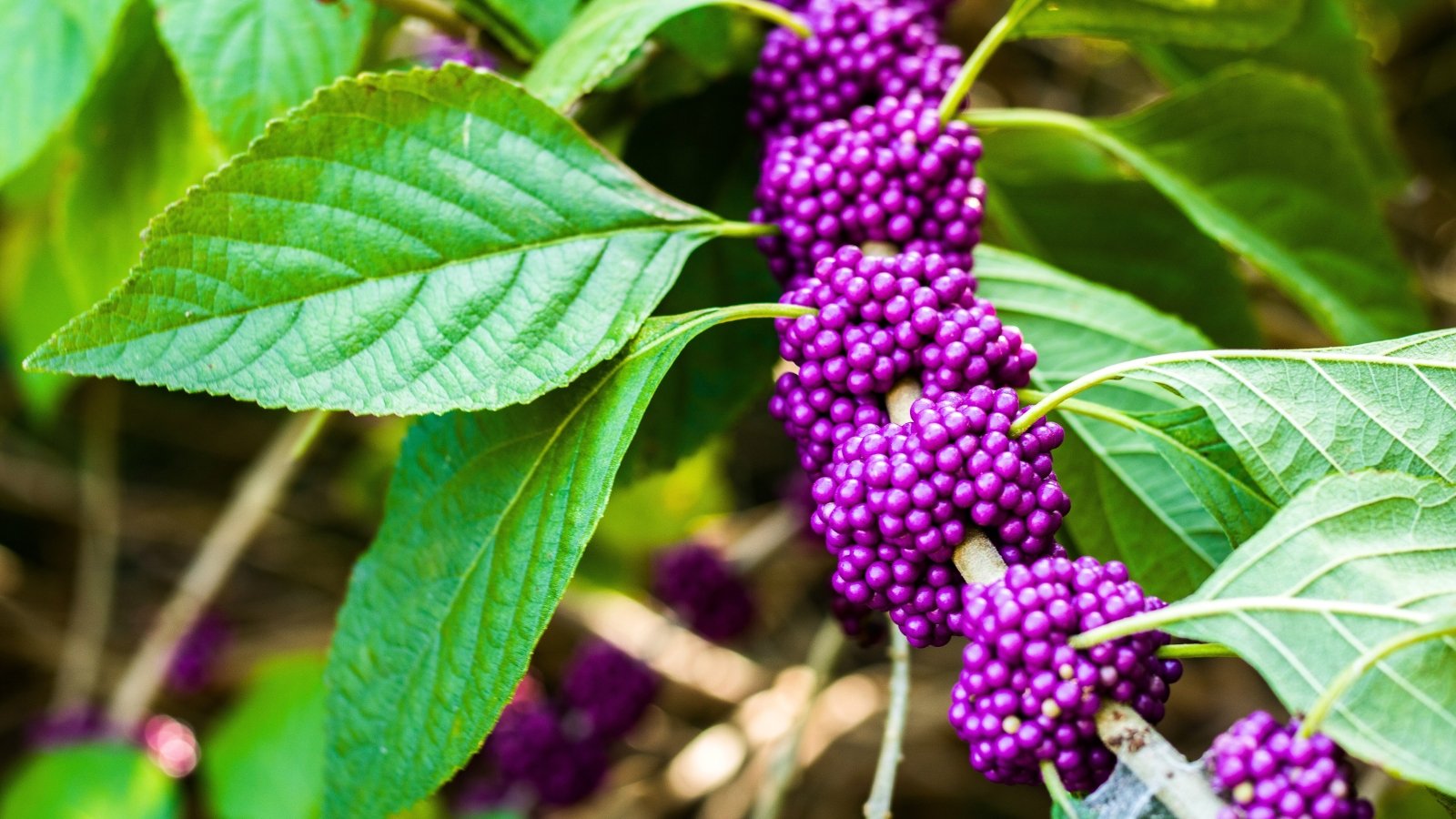
American beautyberry is most prized for its showy pinkish-purple berries that line the stems in bunches from early fall into the winter months. These shrubs grow best in a sunny location but will also tolerate some shade. The plants are not bothered by deer or rabbits and the ripe berries attract fall and winter birds.
Bee Balm
|
|
botanical name Monarda didyma |
|---|---|
|
|
plant type Herbaceous perennial |
|
|
sun requirements Full sun to part shade |
|
|
height 2 to 4 feet |
|
|
hardiness zones 4 to 9 |
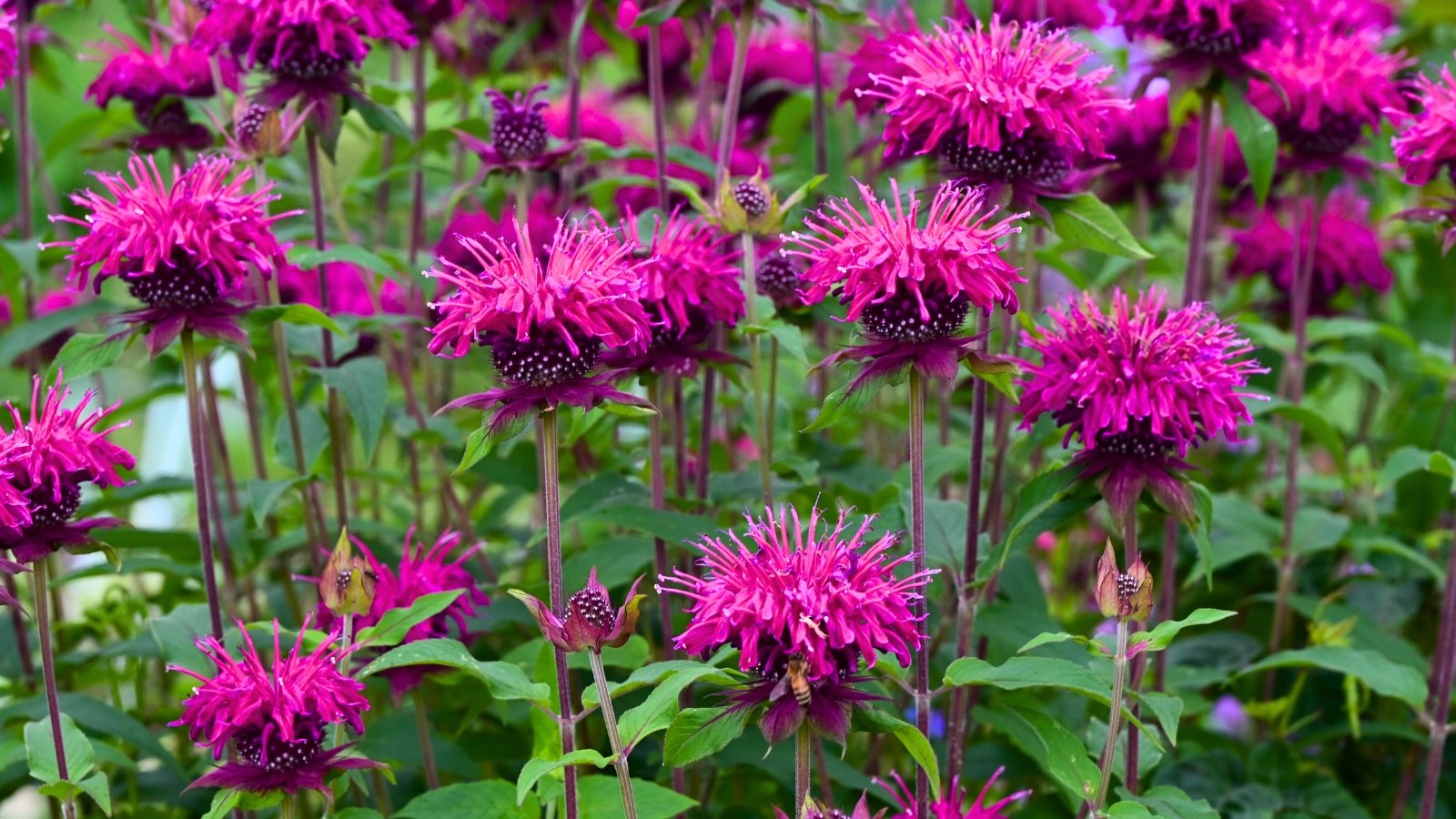
Bee balm is a member of the mint family and like other mints, has a square stem and uniquely fragrant leaves. The flowers are showy and red and bloom during the warmest summer months. Bee balm flowers are thin and tubular, the ideal shape to attract hummingbirds as well as butterflies.
This plant grows best in full sun with rich, moist soil. Bee balm is tolerant of soils that stay moist for extended periods but will do best in well-drained soil.
This plant isn’t bothered by deer and rabbits. Bee balm will spread by underground rhizomes and by self-seeding, so either give it plenty of space and allow it to naturalize or be prepared to do a little annual thinning.
Blazing Star
|
|
botanical name Liatris spicata |
|---|---|
|
|
plant type Herbaceous perennial |
|
|
sun requirements Full sun |
|
|
height 2 to 4 feet |
|
|
hardiness zones 3 to 8 |
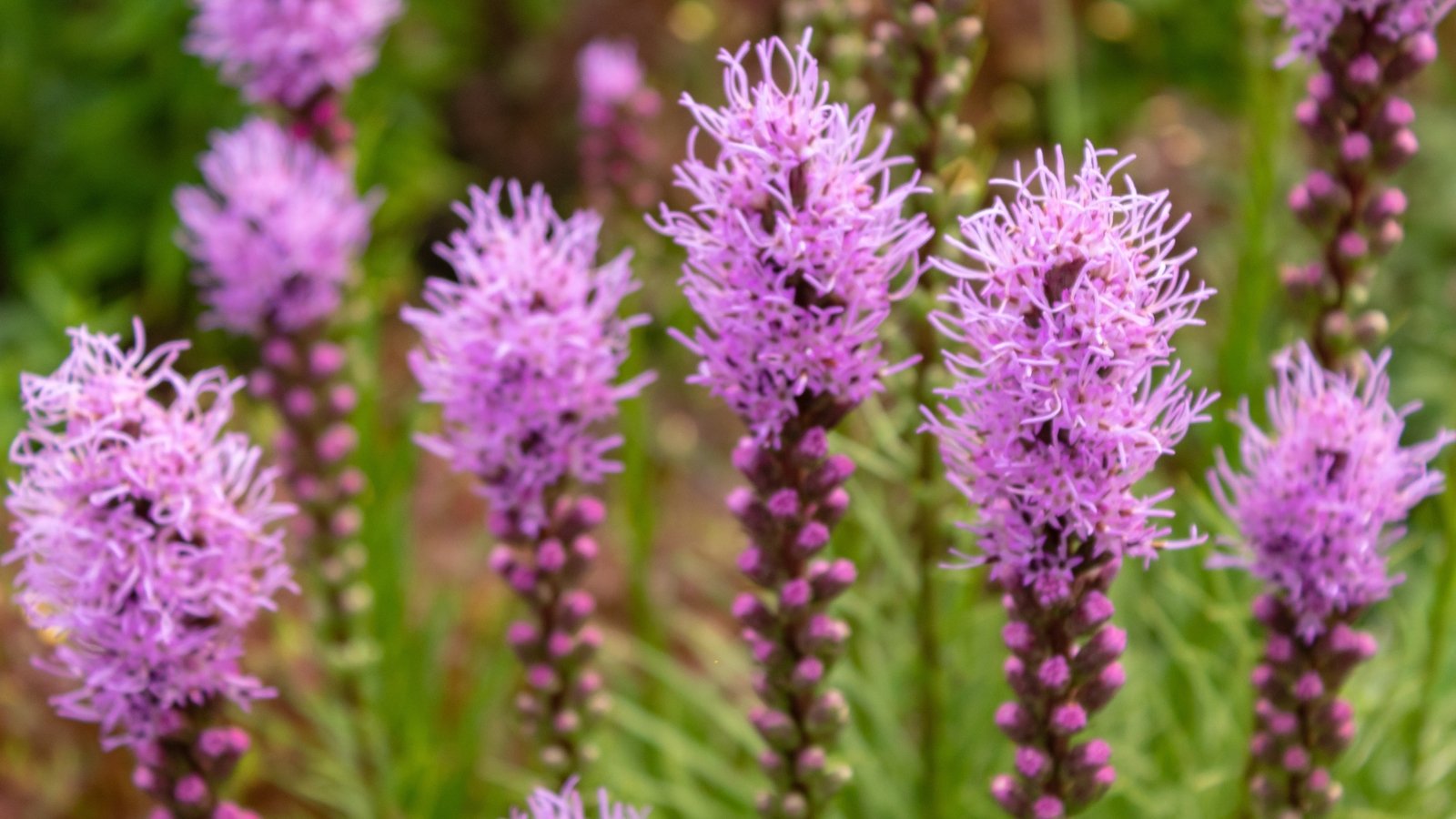
Blazing star is a beautiful native wildflower. The leaves are thin and fine, growing along tall upright stems. By mid-summer, the stems have developed a dense cluster of flowerheads at the top that burst into a literal blaze of showy light purple blooms.
The flowers attract butterflies and bees and are lovely cut flowers. In late fall and winter, the dried flowerheads are also showy and provide late-season interest, while attracting hungry, seed-eating birds.
Blazing star grows best in a sunny location with rich, well-drained soil. These plants look wonderful grown in groups. Incorporate them into a naturalized wildflower garden or give them the starring role in a butterfly and wildlife garden.
Brown-eyed Susan
|
|
botanical name Rudbeckia triloba |
|---|---|
|
|
plant type Herbaceous perennial |
|
|
sun requirements Full sun |
|
|
height 2 to 3 feet |
|
|
hardiness zones 4 to 8 |
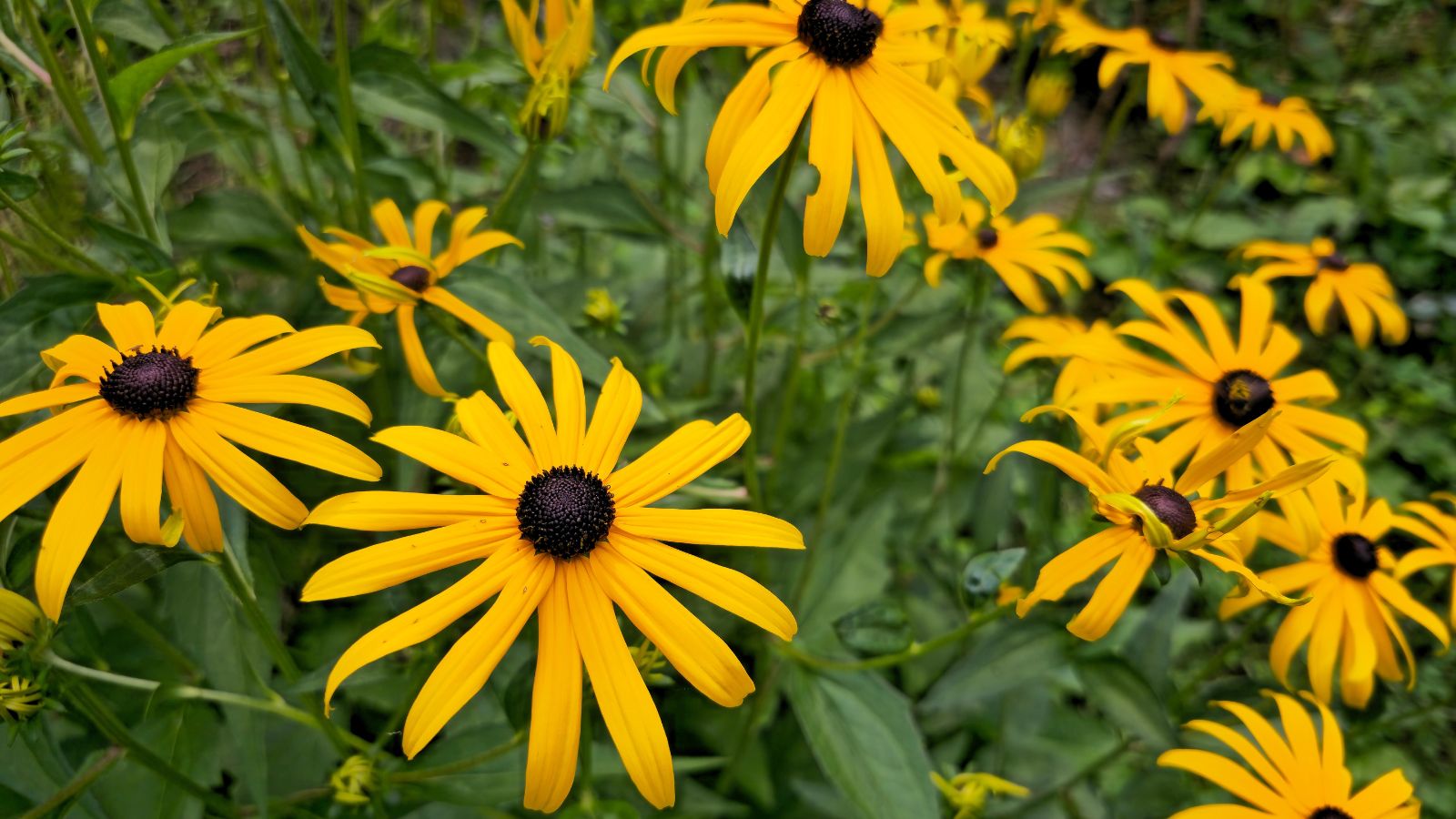
Brown-eyed Susan (R. triloba) and Black-eyed Susan (R. hirta) are familiar wildflowers with similar looks and growing requirements.
Blooming from mid-summer until mid-fall, yellow flower petals surround dark brown or black centers. Flowers attract butterflies and bees, and the seed heads attract seed-eating birds such as goldfinches.
Brown-eyed Susans are easy to grow from seed. They can be started in pots indoors or simply sown directly into the garden. These plants are short-lived perennials, but because they freely self-seed, it’s not uncommon for them to naturalize in a particular garden spot and return year after year.
Butterfly Milkweed

|
|
botanical name Asclepias tuberosa |
|---|---|
|
|
plant type Herbaceous perennial |
|
|
sun requirements Full sun |
|
|
height 1 to 2.5 feet |
|
|
hardiness zones 3 to 9 |
Anyone wanting to attract butterflies should have butterfly milkweed in their landscape. This plant is the larval host plant for the Monarch butterfly caterpillar and is necessary for the conservation of Monarch butterflies.
This native North Carolina perennial is popular with many other species of butterfly, as well as bees and other pollinators. This native plant is low-maintenance and can be easily started from seed. The flowers are bright orange, showy, and bloom from mid to late summer.
If your garden has a sunny location with well-drained soil, you can grow butterfly milkweed. Deer and rabbits tend to avoid milkweeds, so hopefully, the only critters who want to eat your plants are the Monarch caterpillars.
Eastern Bluestar
|
|
botanical name Amsonia tabernaemontana |
|---|---|
|
|
plant type Herbaceous perennial |
|
|
sun requirements Full sun to part shade |
|
|
height 2 to 3 feet |
|
|
hardiness zones 3 to 9 |
Eastern bluestar is an attractive perennial wildflower that is easy to grow in average conditions. It prefers full sun but tolerates some shade. It prefers medium-moisture, well-drained soil but tolerates a variety of soil conditions. Plants are also resistant to deer, so you can grow them just about anywhere!
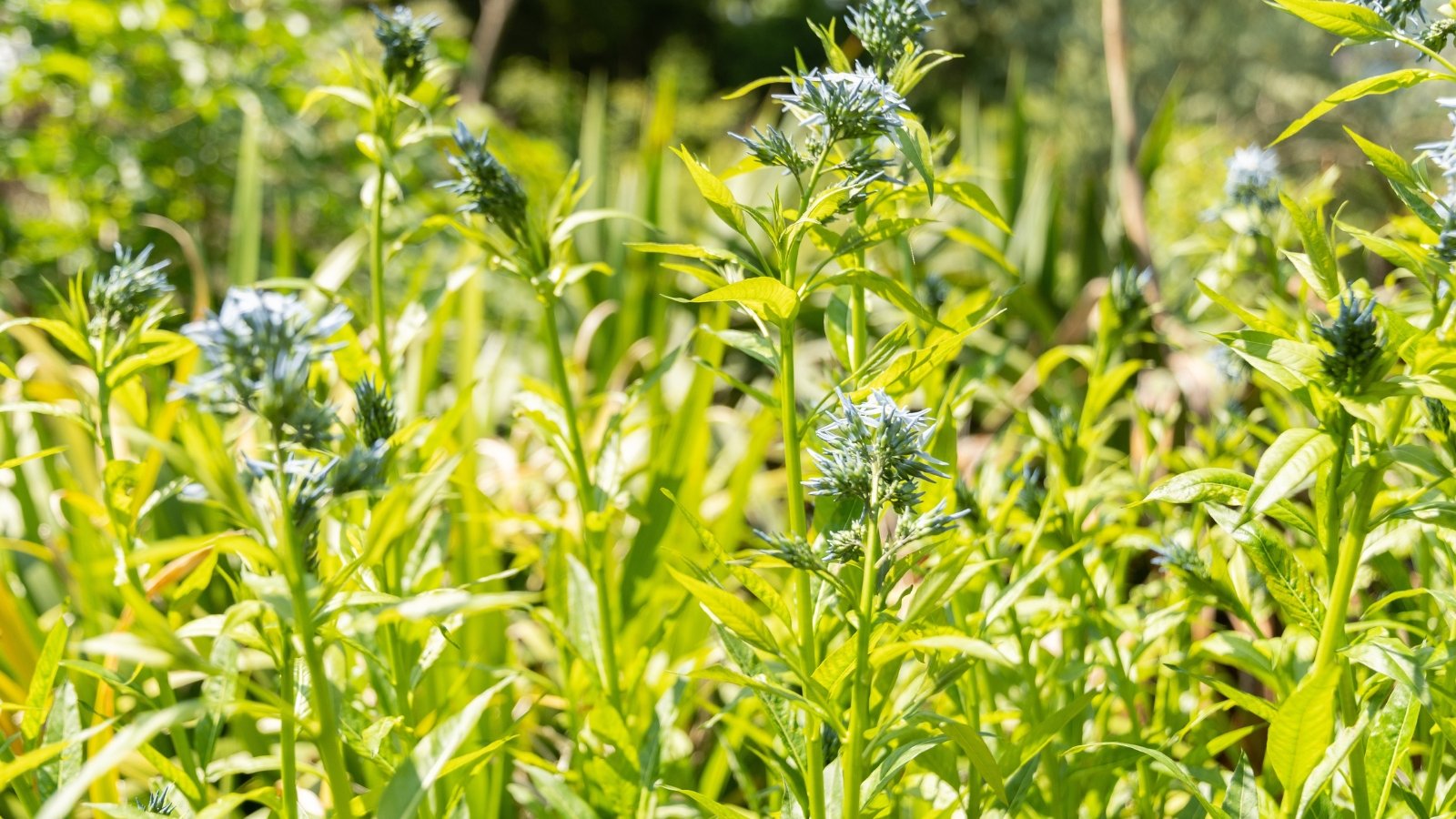
The Eastern bluestar has simple, oblong, pointed leaves that grow along tall stems. Until they bloom, they just look like a clump of leafy green stems.
In late spring, they bloom with loose clusters of pale blue star-shaped flowers. The flowers attract butterflies and other pollinators. If the stems grow too long, they may flop over and need to be staked to remain upright.
Eastern Columbine

|
|
botanical name Aquilegia canadensis |
|---|---|
|
|
plant type Herbaceous perennial |
|
|
sun requirements Full sun to part shade |
|
|
height 2 to 3 feet |
|
|
hardiness zones 3 to 8 |
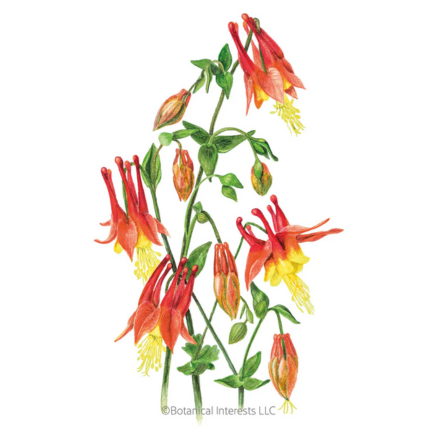
The unusual drooping flowers of the native eastern columbine bloom in late spring and attract hummingbirds. There are several colorful columbine cultivars available, but the slightly smaller, pinkish-red flowers are the native wildflowers.
The delicate, almost fern-like foliage is attractive throughout the growing season, although in warm and sunny areas, it may die back in the heat of the summer.
Columbine can be readily grown from seed, and plants will self-seed in the garden. These North Carolina native plants prefer a setting with partial shade and rich, moist, well-drained soil.
If deer and rabbits are present, they may nibble the tops of the plants, but since columbine doesn’t seem to be a favorite for browsing herbivores, there are usually still plenty of flowers.
Ebony Spleenwort
|
|
botanical name Asplenium platyneuron |
|---|---|
|
|
plant type Fern |
|
|
sun requirements Part shade to full shade |
|
|
height 0.5 to 1.5 feet |
|
|
hardiness zones 3 to 8 |
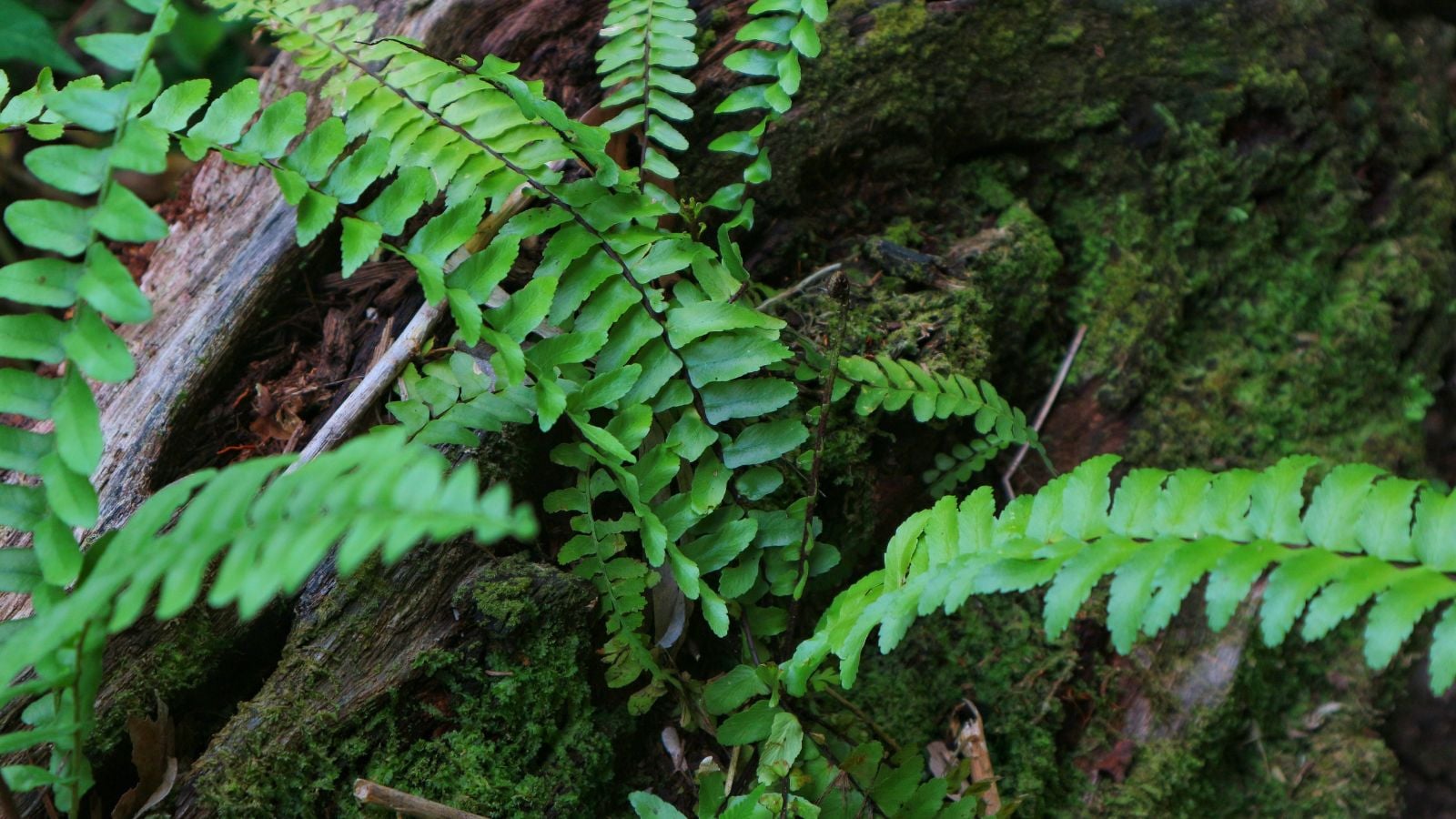
Ebony spleenwort is a common and widespread fern that is fairly easy to grow in the home garden. Give it a shady spot with well-drained soil. In its native habitat, this fern is commonly found in ravines or shady woodlands with rocky areas. Deer and rabbits don’t generally bother ferns.
The ebony spleenwort is an attractive fern that will spread slowly over time in ideal conditions. It would do well in a woodland garden or shady rock garden.
Fern fronds emerge as fiddleheads each spring, unfurling into long upright stems. These ferns stay green throughout the summer months, and their foliage complements other plants nicely.
Green and Gold
|
|
botanical name Chrysogonum virginianum |
|---|---|
|
|
plant type Herbaceous perennial |
|
|
sun requirements Part shade to full shade |
|
|
height 0.5 to 1 foot |
|
|
hardiness zones 5 to 9 |
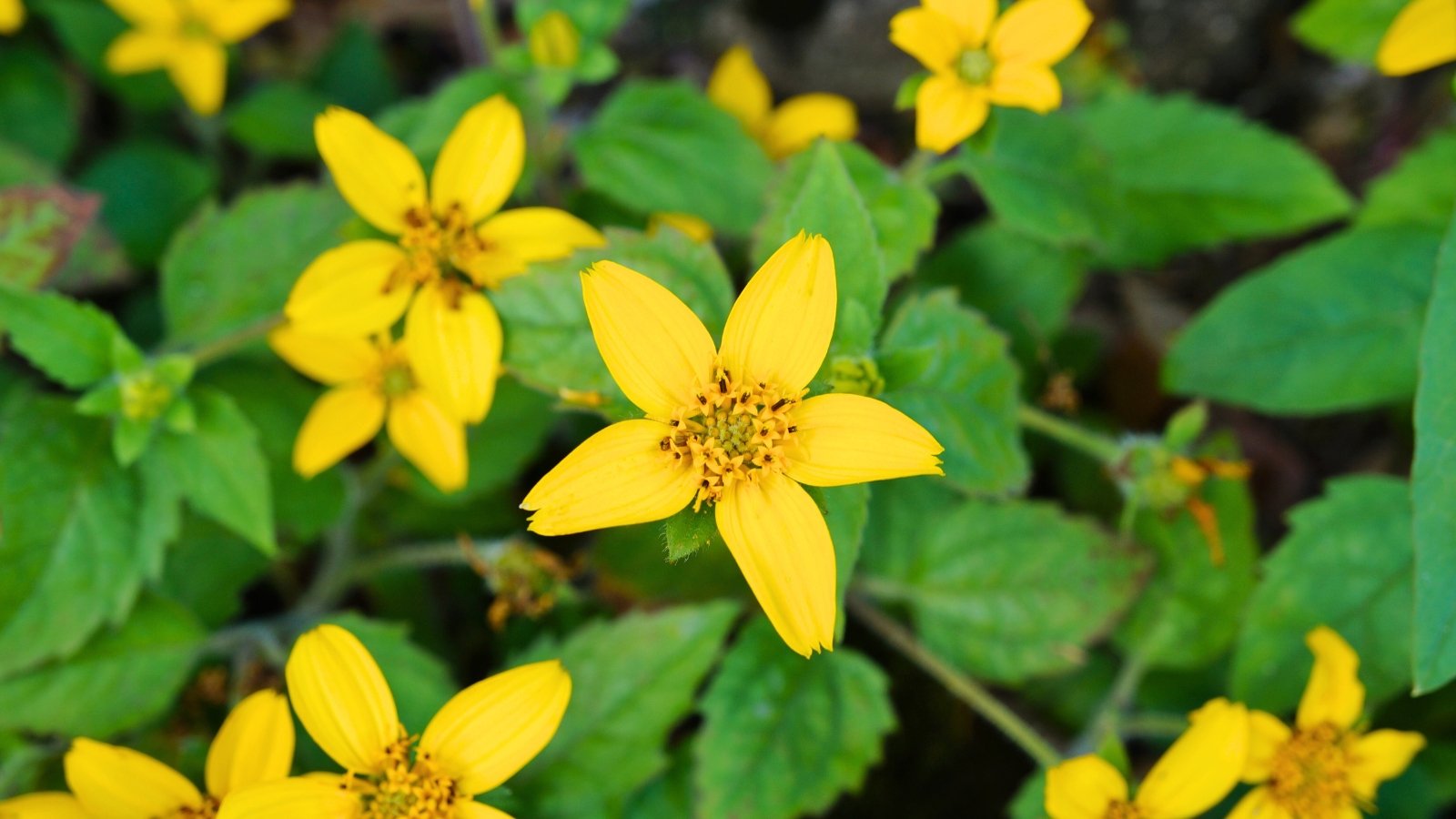
Green and gold is an attractive native flowering plant for a shade garden. If you have a shady spot, particularly one with moist, well-drained soil, this would be an excellent choice. These native plants will form low-growing clusters and bloom throughout the summer months.
The green and gold plant is aptly named. It has rough green leaves and showy golden-yellow flowers. Plants don’t perform well in sunny locations or in the hottest months of summer, but if they are in a cool and shaded location, they will often bloom again in late summer into early fall.
Ironweed
|
|
botanical name Vernonia noveboracensis |
|---|---|
|
|
plant type Herbaceous perennial |
|
|
sun requirements Full sun |
|
|
height 4 to 6 feet |
|
|
hardiness zones 5 to 9 |
Ironweed, or New York ironweed, is a hardy native wildflower that can become quite tall. It grows natively all across the Eastern United States, up through New York and the Northeast coast.
This would be a good plant for a low-maintenance naturalized area or along a moist stream bank or other wetland areas. Ironweed likes full sun and rich, moist soil. In ideal conditions, it will readily spread by self-seeding.
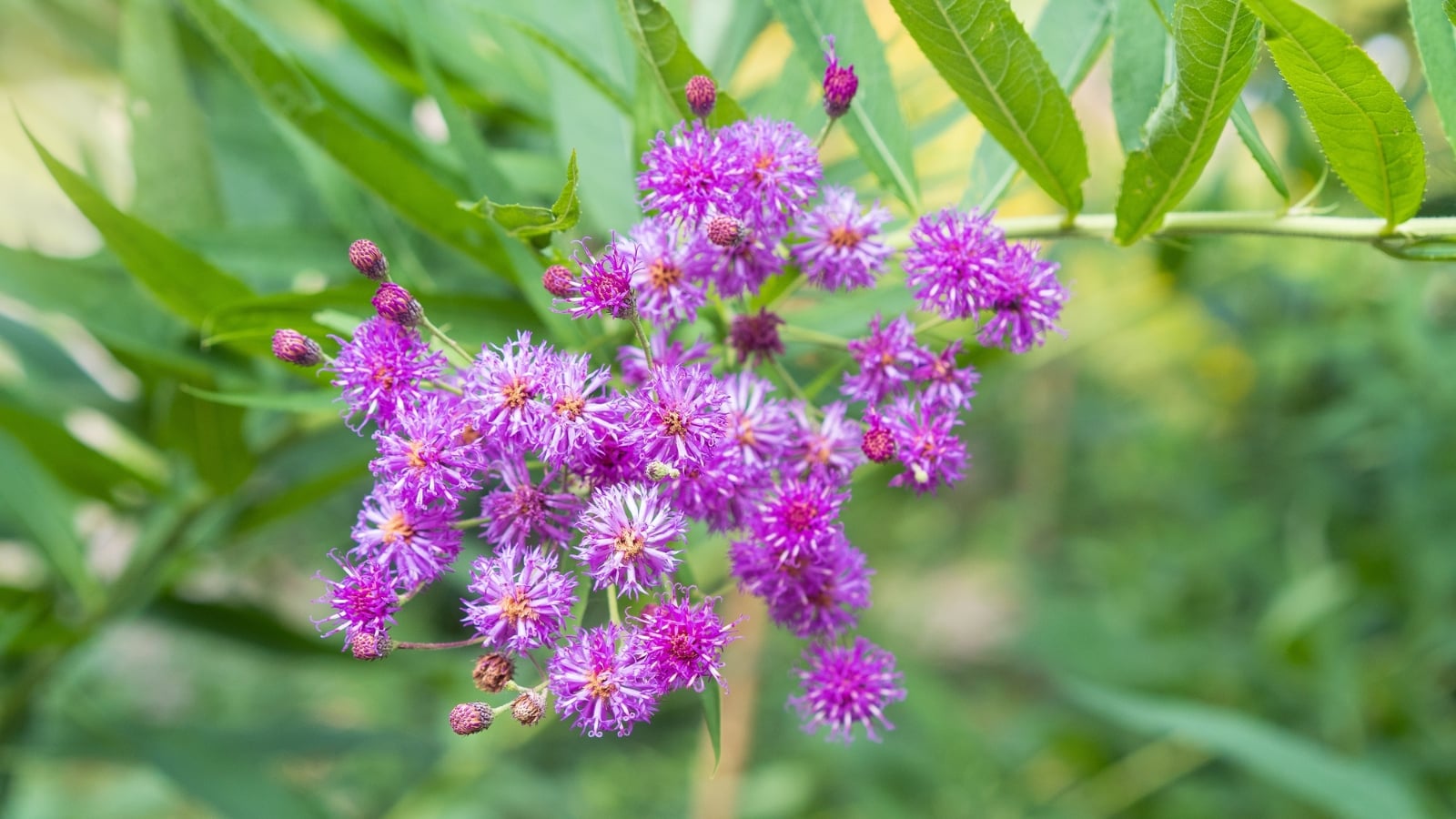
The flowers of these North Carolina native plants are purple and fluffy-looking. They attract butterflies and other pollinators. Flowers develop in loose clusters at the tops of the tall leafy stems. The flowers bloom from late summer into early fall. Deer and rabbits don’t bother ironweed.
Jack-in-the-Pulpit

|
|
botanical name Arisaema triphyllum |
|---|---|
|
|
plant type Herbaceous perennial |
|
|
sun requirements Part shade to full shade |
|
|
height 1 to 2 feet |
|
|
hardiness zones 4 to 9 |
If you have a moist shade garden, Jack-in-the-pulpit would be an excellent plant to grow. Jack-in-the-pulpit is a rather unusual-looking plant. In the spring, stems with 3 leaflets each emerge from the ground in small clusters.
At the center of the leafy cluster, the flower stalk emerges with a prominent and unique tubular green flower with an overhanging lip. By mid-summer, the leaves go dormant again, and only a few single stalks with developing clusters of berries will remain until fall, as the berries change from green to red.
In its native habitat, Jack-in-the-pulpit grows in rich, moist, shaded woodlands. Over time, large colonies form as the plant spreads gradually by self-seeding.
Jack-in-the-pulpit can be grown from seed, but it may take several years from planting until the first bloom. This would be a choice plant for a naturalized shady woodland garden featuring native plants.
Lanceleaf Coreopsis
|
|
botanical name Coreopsis lanceolata |
|---|---|
|
|
plant type Herbaceous perennial |
|
|
sun requirements Full sun |
|
|
height 1 to 2 feet |
|
|
hardiness zones 4 to 9 |
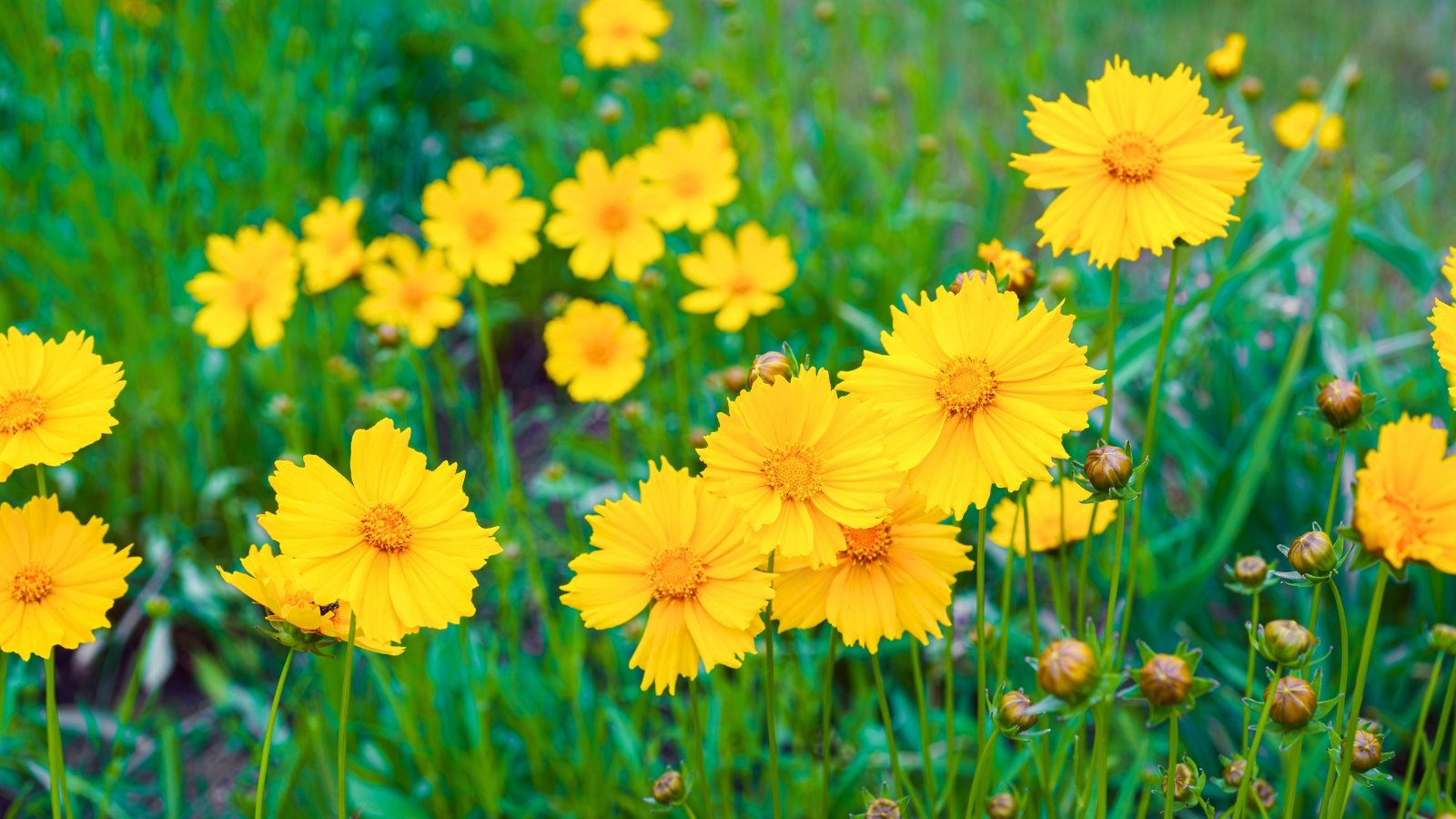
The lanceleaf coreopsis is an excellent plant for a wildflower garden or butterfly garden. The flowers are showy, bright golden yellow, and bloom from late spring through early summer. Deer and rabbits don’t bother this plant, and butterflies and other insects will visit the flowers.
The leaves are thin and bright green and have a tendency to sprawl into a leafy green mass by mid-summer. Spent flowers that are left to develop seeds will allow the plant to self-seed freely and spread.
You can control its growth by deadheading or pulling any unwanted seedlings each spring. Grow these North Carolina native plants in a sunny location with rich, moist, well-drained soil.
Narrowleaf Mountain Mint

|
|
botanical name Pycnanthemum tenuifolium |
|---|---|
|
|
plant type Herbaceous perennial |
|
|
sun requirements Full sun |
|
|
height 2 to 3 feet |
|
|
hardiness zones 4 to 8 |
Mints have a reputation for being aggressive growers and taking over a garden plot. The narrowleaf mountain mint certainly can grow vigorously, but with regular thinning (or planting it in a container), it’s not too hard to control.
This is a valuable plant to include in a native plant garden or naturalized wildflower area. The flowers attract numerous butterflies and other pollinators, and they are not bothered by deer or rabbits.
Grow mountain mint in a sunny location with well-drained soil. This plant has sweetly minty-scented leaves and small white flowers atop tall square stems, characteristic of the mint family. Plants are quite attractive and will eventually form dense clusters.
New England Aster
|
|
botanical name Symphyotrichum novae-angliae |
|---|---|
|
|
plant type Herbaceous perennial |
|
|
sun requirements Full sun |
|
|
height 3 to 6 feet |
|
|
hardiness zones 4 to 8 |
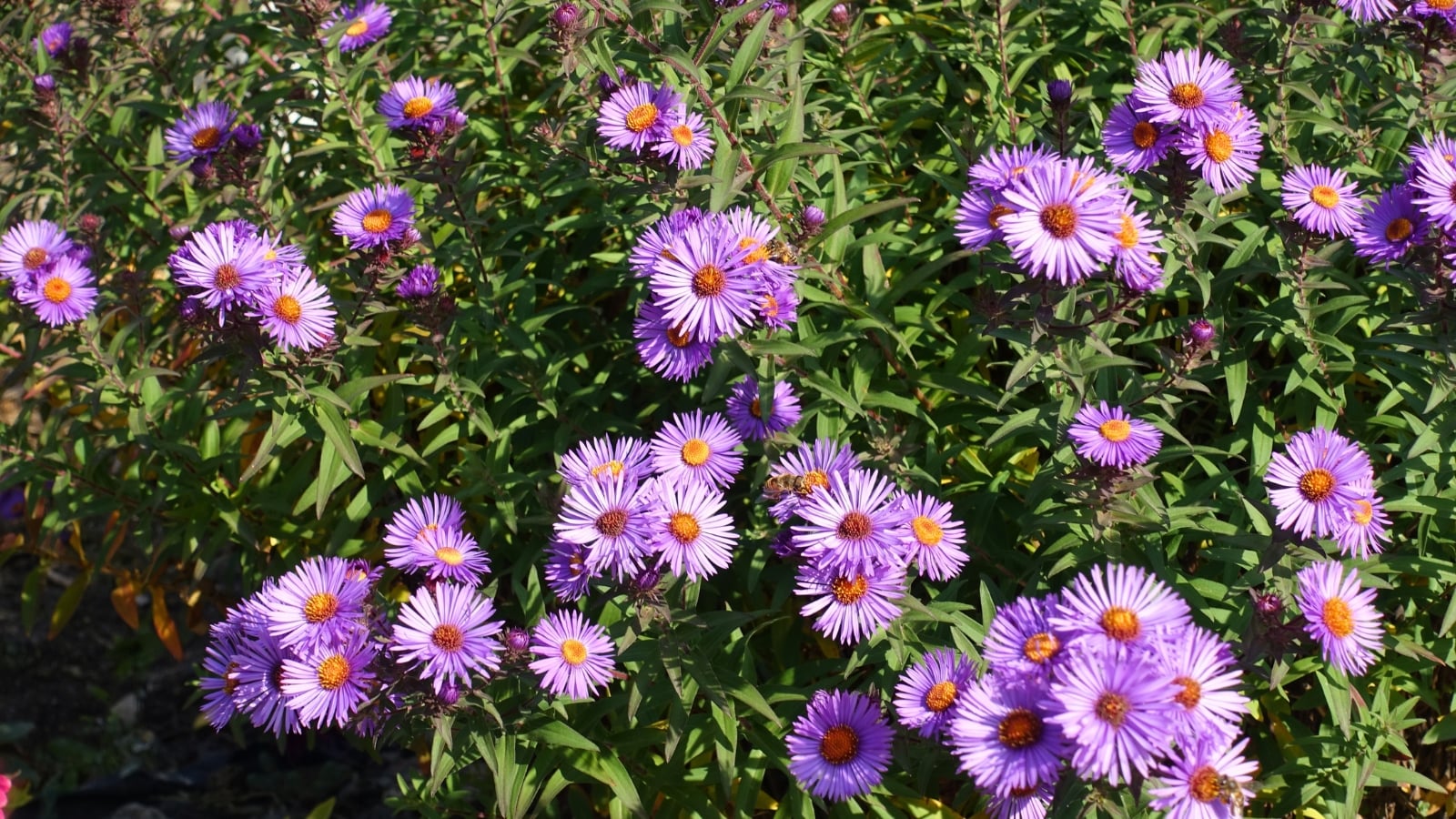
If you have a space for a larger aster plant that will dazzle you with a profusion of showy purple flowers each fall, go with the New England aster.
This plant does well in full sun and rich, well-drained soil. In ideal conditions, it will grow quite large and bushy. Growth can be controlled by pinching back in early summer. Pinching back may delay flowering, but it will also reduce the need to stake this vigorously growing plant.
The New England aster is a variety of native wildflower for a naturalized garden or anywhere you want a larger showy fall flower. The flowers attract butterflies and bees, but the plants are not bothered by deer and rabbits. Plants bloom from late summer until frost.
Nodding Onion

|
|
botanical name Allium cernuum |
|---|---|
|
|
plant type Bulb |
|
|
sun requirements Full sun to part shade |
|
|
height 1 to 1.5 feet |
|
|
hardiness zones 4 to 8 |
The nodding onion is indeed a native variety of onion. It can be easily grown from a bulb or from seed. The leaves are long, narrow, and have a characteristic onion scent.
The flowers are showy clusters of drooping pinkish-purple flowers that attract butterflies and bees. Leaves will die back after flowering, but don’t worry, they’ll grow back again the following spring.
Plant your nodding onion in a sunny location in an herb garden, rock garden, or native wildflower garden. Plants do best in full sun but will tolerate some light shade. Soil should be dry to medium-moisture and well-drained. Deer and rabbits won’t bother onions.
Northern Maidenhair Fern

|
|
botanical name Adiantum pedatum |
|---|---|
|
|
plant type Fern |
|
|
sun requirements Part shade to full shade |
|
|
height 1 to 2.5 feet |
|
|
hardiness zones 3 to 8 |
Ferns are an excellent choice for a moist woodland garden or shade garden. The northern maidenhair fern needs a location with full to partial shade. Give it moist, well-drained soil with plenty of organic matter. Given time, this fern will spread to form an attractive colony, but it won’t take over the garden.
Maidenhair ferns are pretty plants. Thin dark stems emerge from the ground, and the fronds branch out from the top of the stem into a flattened, semi-circular array.
These plants may look delicate, but they’re actually quite tough, as long as they have the right environmental conditions. Ferns are generally not bothered by browsing deer and rabbits.
Purple Coneflower

|
|
botanical name Echinacea purpurea |
|---|---|
|
|
plant type Herbaceous perennial |
|
|
sun requirements Full sun to part shade |
|
|
height 2 to 5 feet |
|
|
hardiness zones 3 to 8 |
Purple coneflower is a familiar and well-loved native plant. It’s also quite easy to grow in the home garden. Plants grow readily from seed, and young plants are often available at nurseries and garden centers.
Coneflowers grow best in a location with full sun and rich, well-drained soil, but they are tolerant of less-than-ideal conditions.
If growing from seed, coneflowers won’t start blooming until their second year. Once they start blooming, expect flowers to last throughout the summer months and bloom each year reliably. The flowers are large and showy and grow on tall stems. The pinkish-purple blooms attract butterflies, bees, and birds, and they also make excellent cut flowers.
Purple Lovegrass

|
|
botanical name Eragrostis spectabilis |
|---|---|
|
|
plant type Ornamental grass |
|
|
sun requirements Full sun |
|
|
height 1 to 2 feet |
|
|
hardiness zones 5 to 9 |
Ornamental grasses can look wonderful in the home landscape. Grasses add diversity and interest to a flower garden or native plant landscape. The purple lovegrass is a good grass for a larger naturalized area with full sun and average, dry to medium-moisture soil.
Purple lovegrass is a clumping grass that makes leafy masses and spreads over time. In mid to late summer, flowers bloom in soft masses, creating the effect of a pale pinkish haze above the grassy leaves.
After flowering, the seed heads turn brown and provide food for browsing birds. These North Carolina native plants continue to provide dense ground cover and erosion control during the winter months.
Rattlesnake Master
|
|
botanical name Eryngium yuccifolium |
|---|---|
|
|
plant type Herbaceous perennial |
|
|
sun requirements Full sun |
|
|
height 2 to 5 feet |
|
|
hardiness zones 3 to 8 |
Rattlesnake master is an unusual plant that makes an excellent addition to the native wildflower garden. Grow it in a sunny location with average, well-drained, dry to medium moisture soil.
Plants can be grown from seed or young plants can be separated from established clumps. Rattlesnake master sends down a long taproot, so only try to dig up small plants that are less well-established.
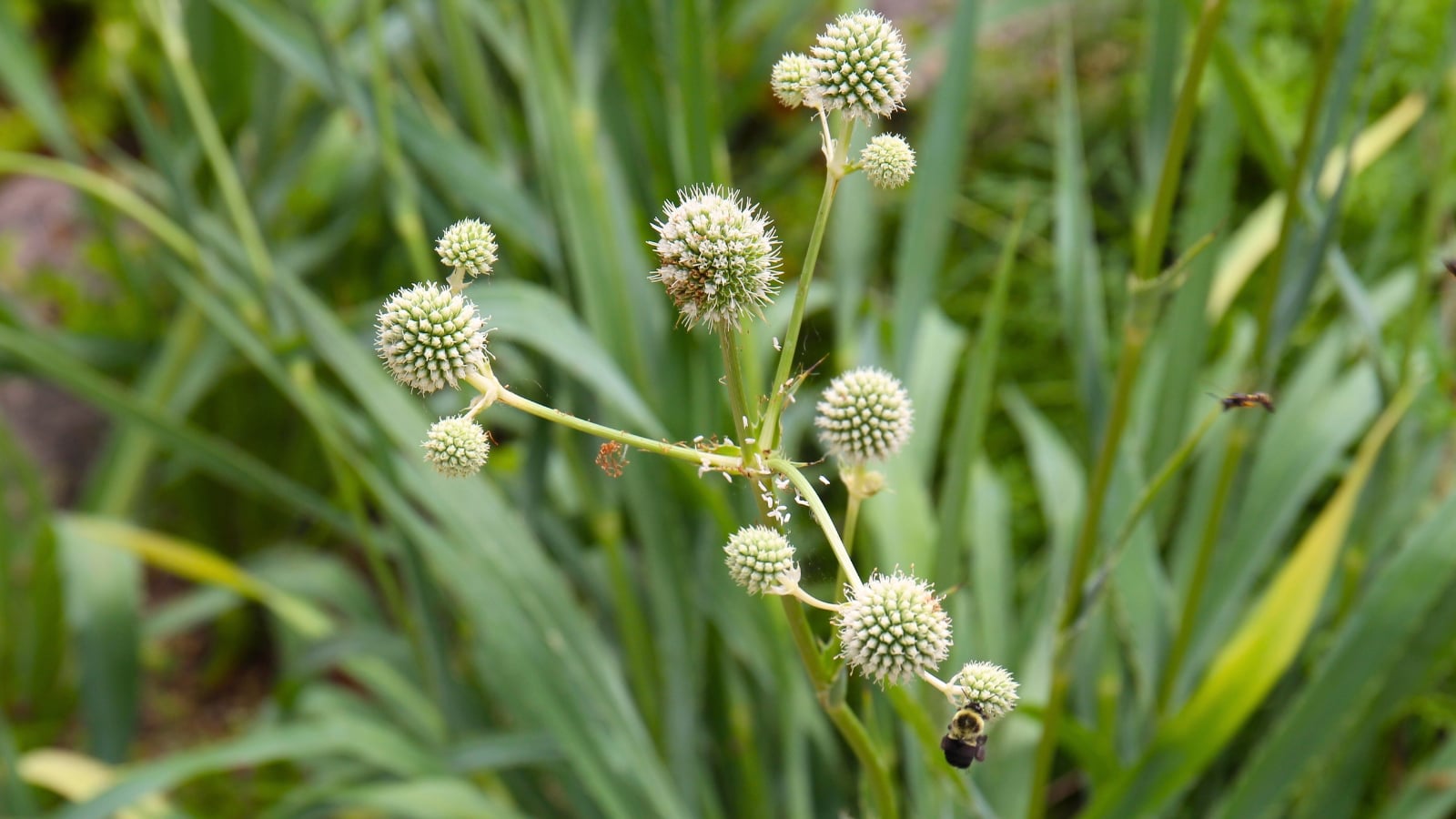
Rattlesnake master has long, thin, stiff, yucca-like leaves that grow in dense clusters. In mid to late summer, mature plants send up a tall flower stem with somewhat bristly-looking greenish-white orblike flowers. The flowers aren’t showy in a traditional sense, but they are interesting and add a unique texture to the garden, plus they attract pollinators.
Stokes’ Aster
|
|
botanical name Stokesia laevis |
|---|---|
|
|
plant type Herbaceous perennial |
|
|
sun requirements Full sun to part shade |
|
|
height 1 to 2 feet |
|
|
hardiness zones 5 to 9 |
If you happen to like purple flowers, you will enjoy the Stokes’ aster. This native wildflower grows best in a location with full sun to partial shade.
Extreme heat and sun may cause the leaves to wither after blooming, and if this is the case, you can trim back any dead foliage as desired. Deer and rabbits don’t generally bother these plants.
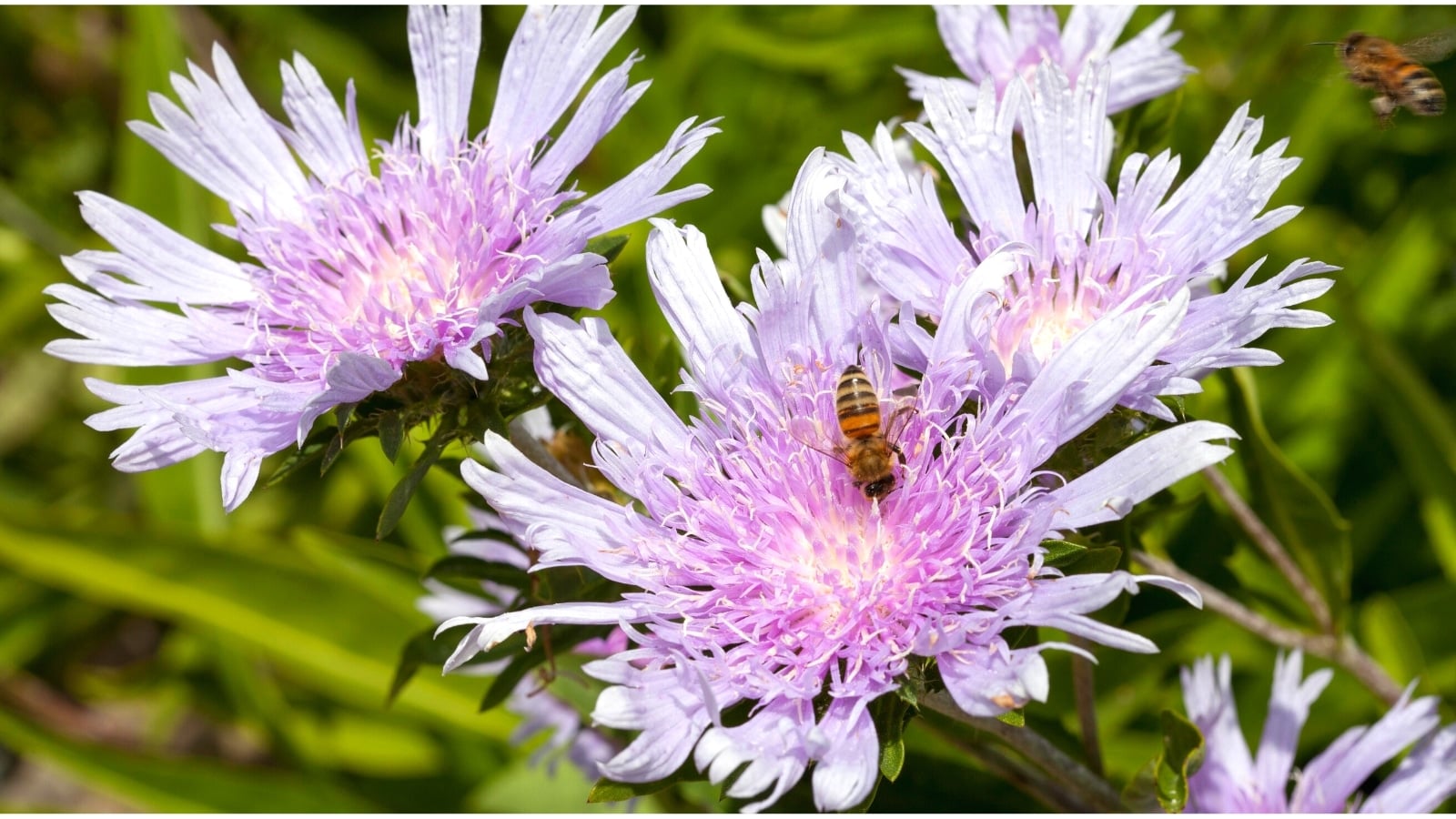
The Stokes’ aster flower is fairly large and showy. Light purple blooms appear from late spring through mid-summer. The frilly petals look delicate, but the plants themselves are hardy and low-maintenance. The flowers also attract butterflies and other insects.
Swamp Rose Mallow
|
|
botanical name Hibiscus moscheutos |
|---|---|
|
|
plant type Woody perennial |
|
|
sun requirements Full sun |
|
|
height 3 to 7 feet |
|
|
hardiness zones 5 to 9 |
If you have a moist sunny area, perhaps near a wetland or any location that stays relatively moist, the swamp rose mallow would be a good choice.
This plant can grow quite large and shrubby. It can be pruned heavily to maintain a more compact and bushy appearance. Although it prefers constantly moist soil, it also does well in more moderate soil conditions as long as it receives regular deep waterings.
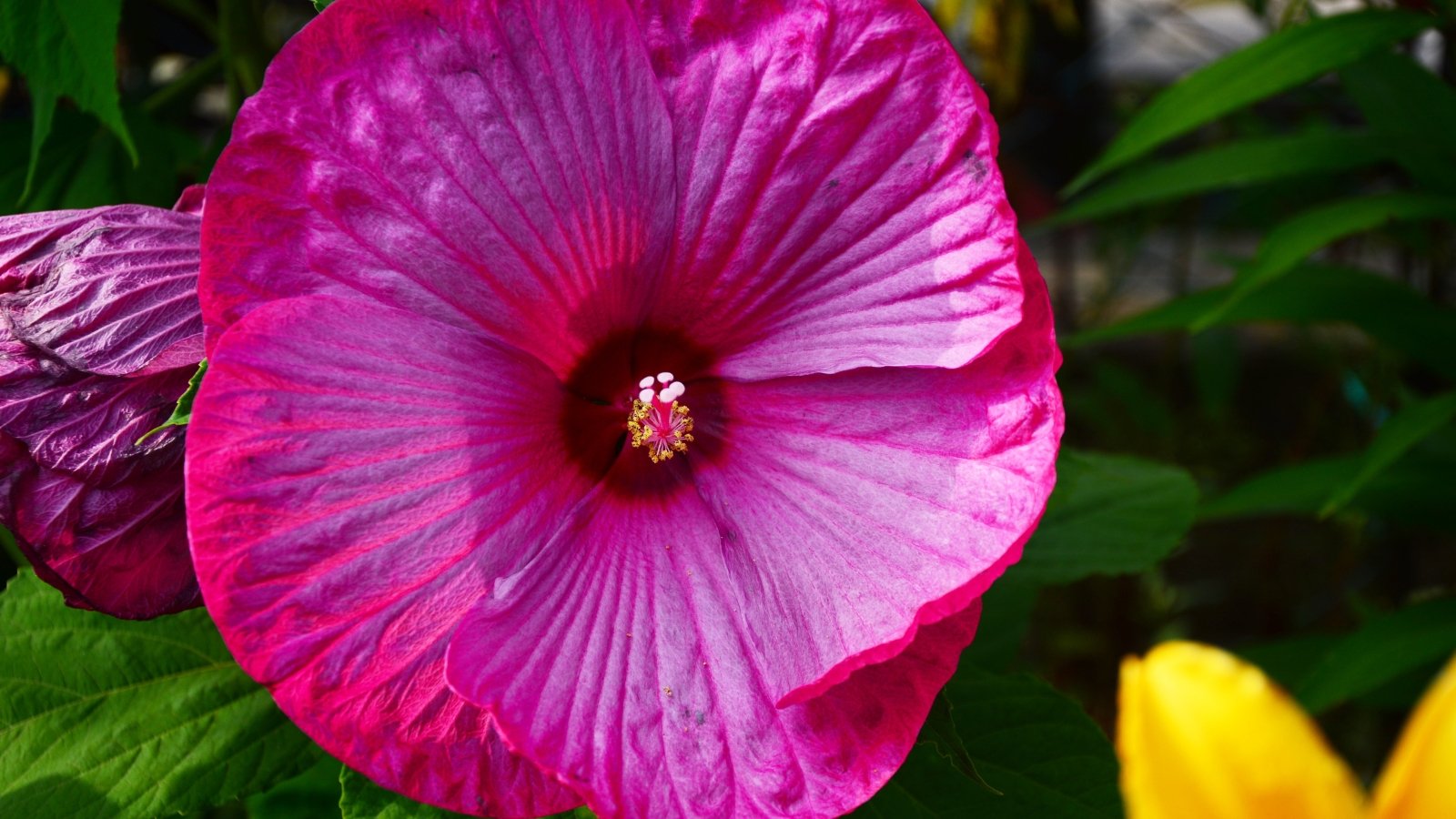
The swamp rose mallow has large leaves and produces many large, showy flowers. The flowers bloom anytime from late summer through early fall and attract butterflies and other insects. Flowers are up to nine inches wide and white to pink, with darker pink centers.
Swamp Sunflower
|
|
botanical name Helianthus angustifolius |
|---|---|
|
|
plant type Herbaceous perennial |
|
|
sun requirements Full sun to part shade |
|
|
height 2 to 4 feet |
|
|
hardiness zones 6 to 9 |
Swamp sunflower, also called narrowleaf sunflower, is a beautiful, showy yellow wildflower. There are several native varieties of sunflower, and any would be a welcome addition to a native wildflower garden.
These North Carolina native plants do best in a location with full sun and moist, well-drained soil, but they will tolerate a range of growing conditions.
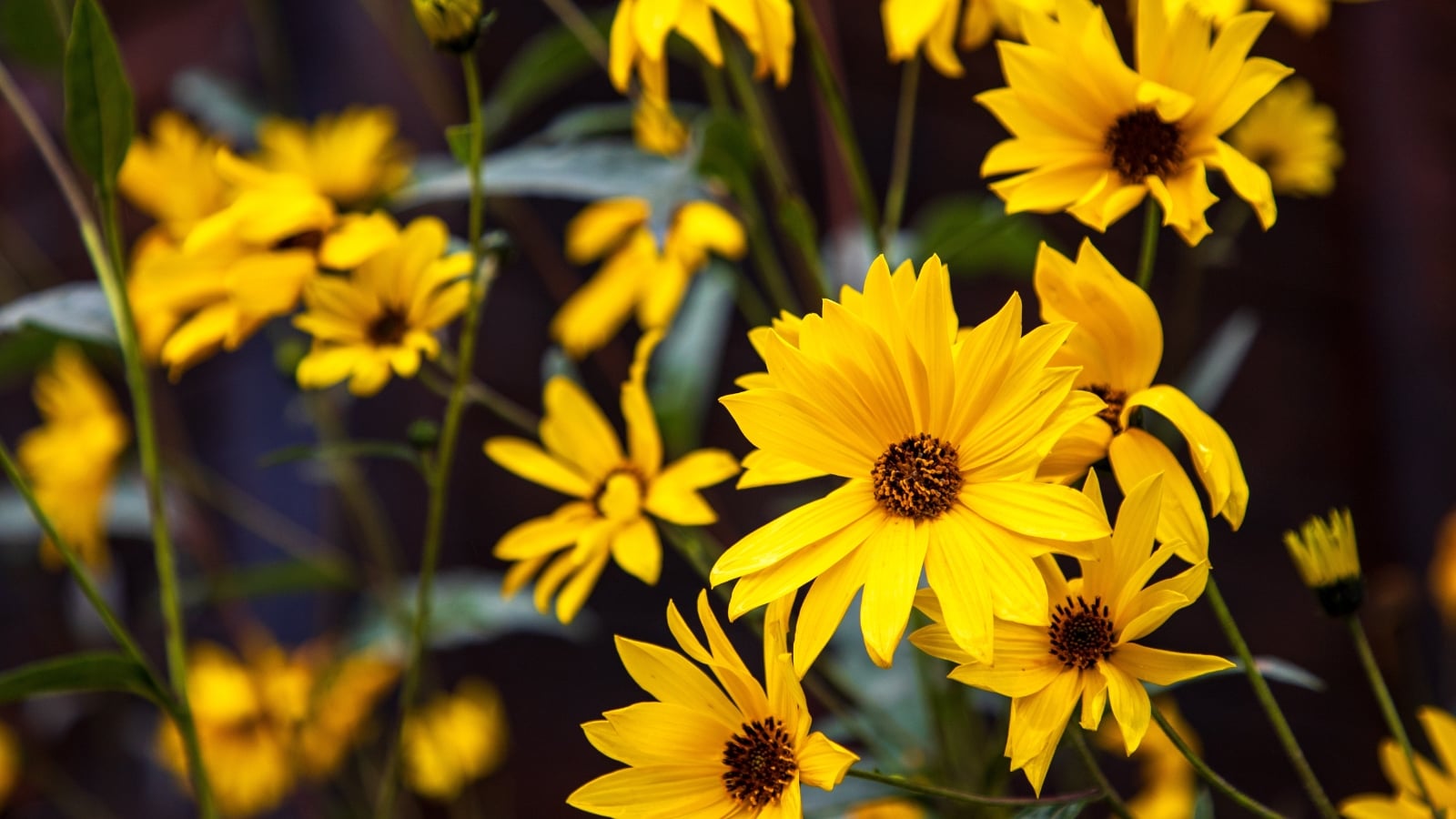
Swamp sunflower can grow into a relatively tall and bushy plant. From late summer into early fall, flowers bloom atop tall stems. Flowers are bright yellow with large dark brown centers. The blooms attract butterflies and other pollinators and also make good cut flowers.
Twinleaf

|
|
botanical name Jeffersonia diphylla |
|---|---|
|
|
plant type Herbaceous perennial |
|
|
sun requirements Part shade |
|
|
height 0.75 to 1 foot |
|
|
hardiness zones 5 to 7 |
Twinleaf is a great little plant for a shade garden location. It’s easy to see how twinleaf got its name. Long stems emerge from the ground with a single divided leaf that, for all appearances, looks like a pair of leaves perched atop a stem. The plant grows in loose clusters and will eventually spread to form an attractive ground cover.
In spring, flowering stems emerge from the ground, producing single, showy white flowers. After flowering, an oddly-shaped little green seed pod develops in place of the flower.
Keep these North Carolina native plants in a location that is both shaded and consistently moist. You may want to give them extra watering during times of drought.
White Turtlehead

|
|
botanical name Chelone glabra |
|---|---|
|
|
plant type Herbaceous perennial |
|
|
sun requirements Full sun to part shade |
|
|
height 2 to 3 feet |
|
|
hardiness zones 3 to 8 |
White turtlehead is an attractive wildflower that does well in a partially shaded location with rich, moist soil. In their native environment, they are frequently seen growing along woodland streams. Try to keep their soil moist and give them a bit of extra water during periods of drought.
The white turtlehead blooms from late summer through mid-fall. Flowers are white to slightly pink atop erect leafy stems. The flowers are showy and attract hummingbirds and insects. Flower stalks can become a bit top-heavy and may benefit from staking if they start to lean over.
White Wood Aster

|
|
botanical name Eurybia divaricata |
|---|---|
|
|
plant type Herbaceous perennial |
|
|
sun requirements Part shade to full shade |
|
|
height 1 to 2.5 feet |
|
|
hardiness zones 3 to 8 |
The white wood aster may not be as showy as some asters, but it is a very worthwhile plant to grow. For starters, it will grow in the shade. Plant the white wood aster in average, dry to medium moisture, well-drained soil. Plants are tolerant of deer and rabbits.
The white wood aster is a low-maintenance plant. From late summer into early fall, it blooms with dainty white flowers that attract butterflies and other insects.
Over time, plants will spread and become an attractive ground cover. During blooming, they will display a loose carpet of white flowers.
Wild Geranium
|
|
botanical name Geranium maculatum |
|---|---|
|
|
plant type Herbaceous perennial |
|
|
sun requirements Full sun to part shade |
|
|
height 1.5 to 2 feet |
|
|
hardiness zones 3 to 8 |
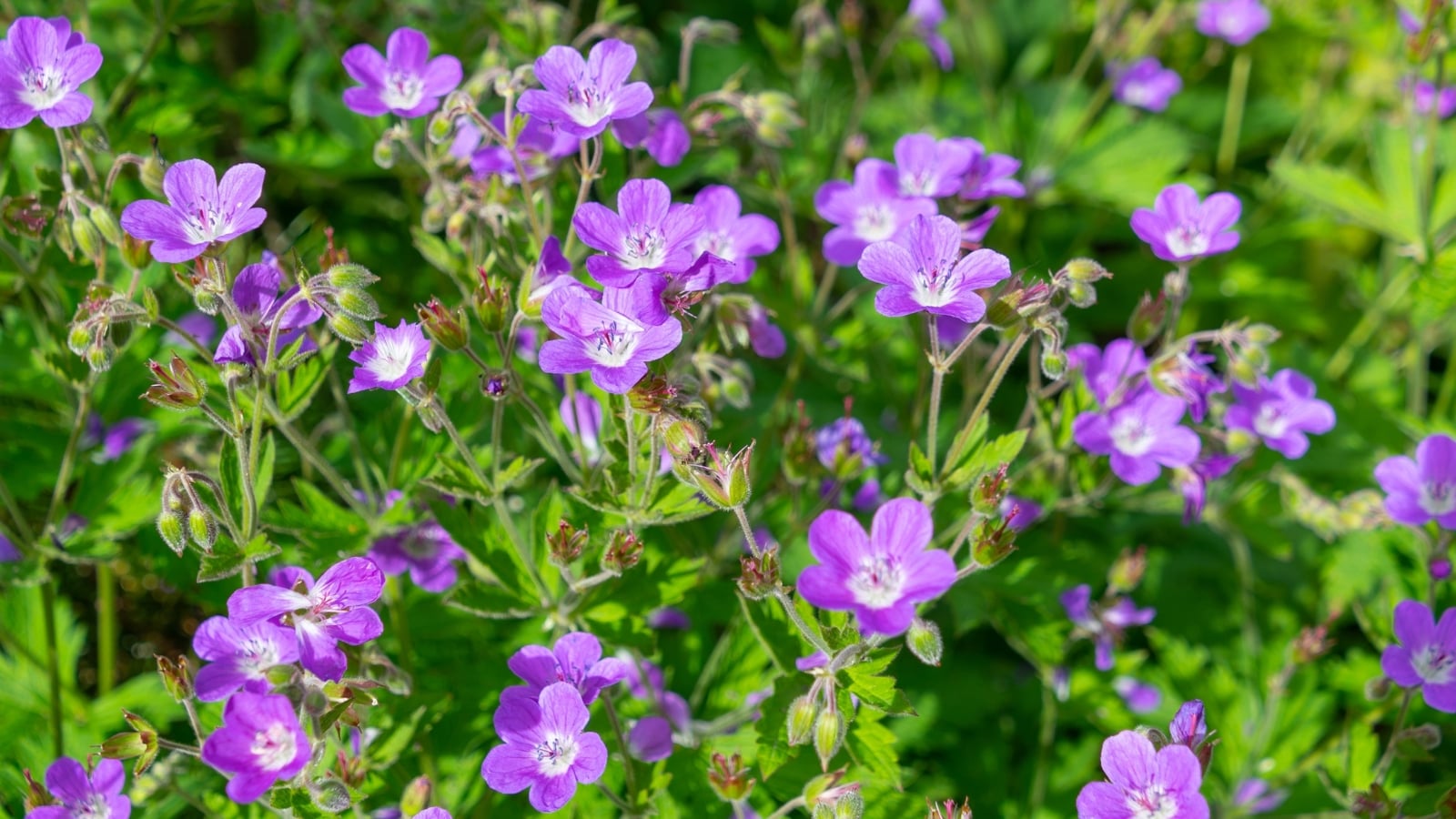
Here is an easy-to-grow, low-maintenance wildflower for your native plant garden or butterfly garden. Wild geranium grows well in full sun or partial shade. Plant it in a location with moist soil and plenty of organic matter. Deer and rabbits don’t bother these plants.
Wild geranium has showy flowers that attract butterflies and other pollinators. The flowers are 1.5 to 2 inches across with pinkish to purplish 5-petaled flowers that fade to white towards the center.
In ideal conditions, wild geranium plants will spread to fill in an area, creating an attractive cluster of plants that look especially stunning during full bloom.
Wild Ginger
|
|
botanical name Hexastylis shuttleworthii |
|---|---|
|
|
plant type Herbaceous perennial |
|
|
sun requirements Part shade to full shade |
|
|
height 0.5 feet |
|
|
hardiness zones 6 to 9 |
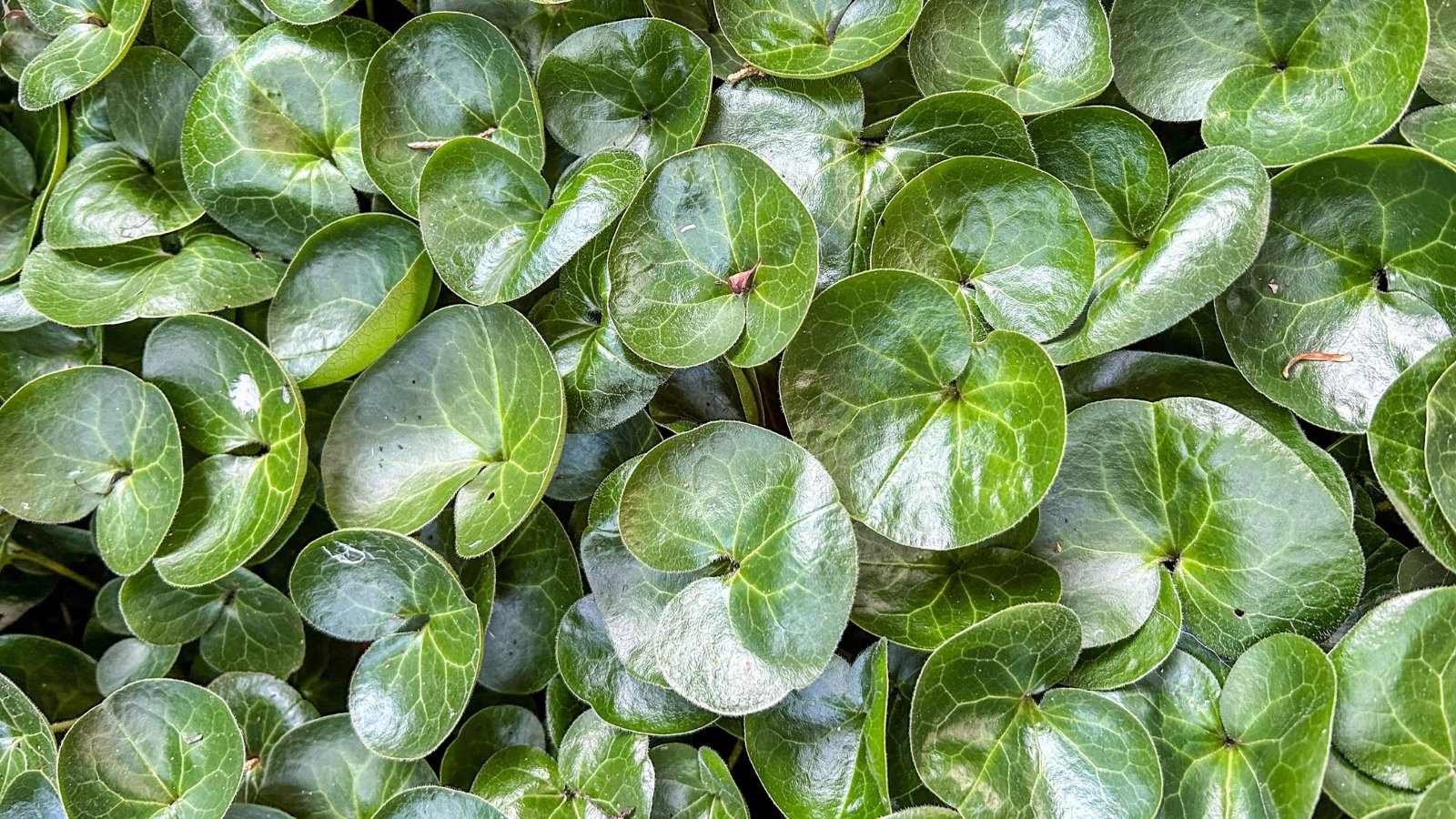
Wild ginger should not be confused with culinary ginger. This plant is a low-growing ground cover that is an excellent addition to a moist, rich shade garden.
The patterned heart-shaped leaves are evergreen and provide leafy interest throughout the entire year. The flowers are at ground level, pinkish or brownish, and inconspicuous, but if you happen to notice them while they are flowering, they are quite interesting!
This plant grows well in the shade, particularly in moist, well-drained soil. They look nice growing with ferns, columbine, and other shade garden native plants. They will slowly spread by rhizomes to form an attractive colony of leafy wild ginger.
Woodland Stonecrop

|
|
botanical name Sedum ternatum |
|---|---|
|
|
plant type Herbaceous perennial |
|
|
sun requirements Full sun to part shade |
|
|
height 0.25 to 0.5 feet |
|
|
hardiness zones 4 to 8 |
This low-growing, thick-leaved plant makes an excellent ground cover. It grows best in full sun but tolerates partial shade. Soil should be of average quality, well-drained, and of medium moisture. Use woodland stonecrop in a rock garden or along borders and edges of a perennial garden, butterfly garden, or native plant garden.
Woodland stonecrop has thickened, succulent-like leaves. In spring, white star-shaped flowers bloom and attract butterflies and other insects.
Woodland stonecrop will spread over time, making an attractive cluster to fill in shady gaps. Woodland stonecrop can grow quickly, but don’t worry about this plant taking over your garden. It is easily thinned by removing any unwanted new growths.


