

How to Plant, Grow, and Care for ‘Jewel Amethyst’ Eggplants
Have you ever wanted to grow tons of tiny aubergines in a small footprint? With ‘Jewel Amethyst’ eggplant, you can! This awesome container plant is great for porches, patios, and even for stuffing into larger gardens. Experienced gardener Sarah Jay outlines how to grow this neat variety.

Contents
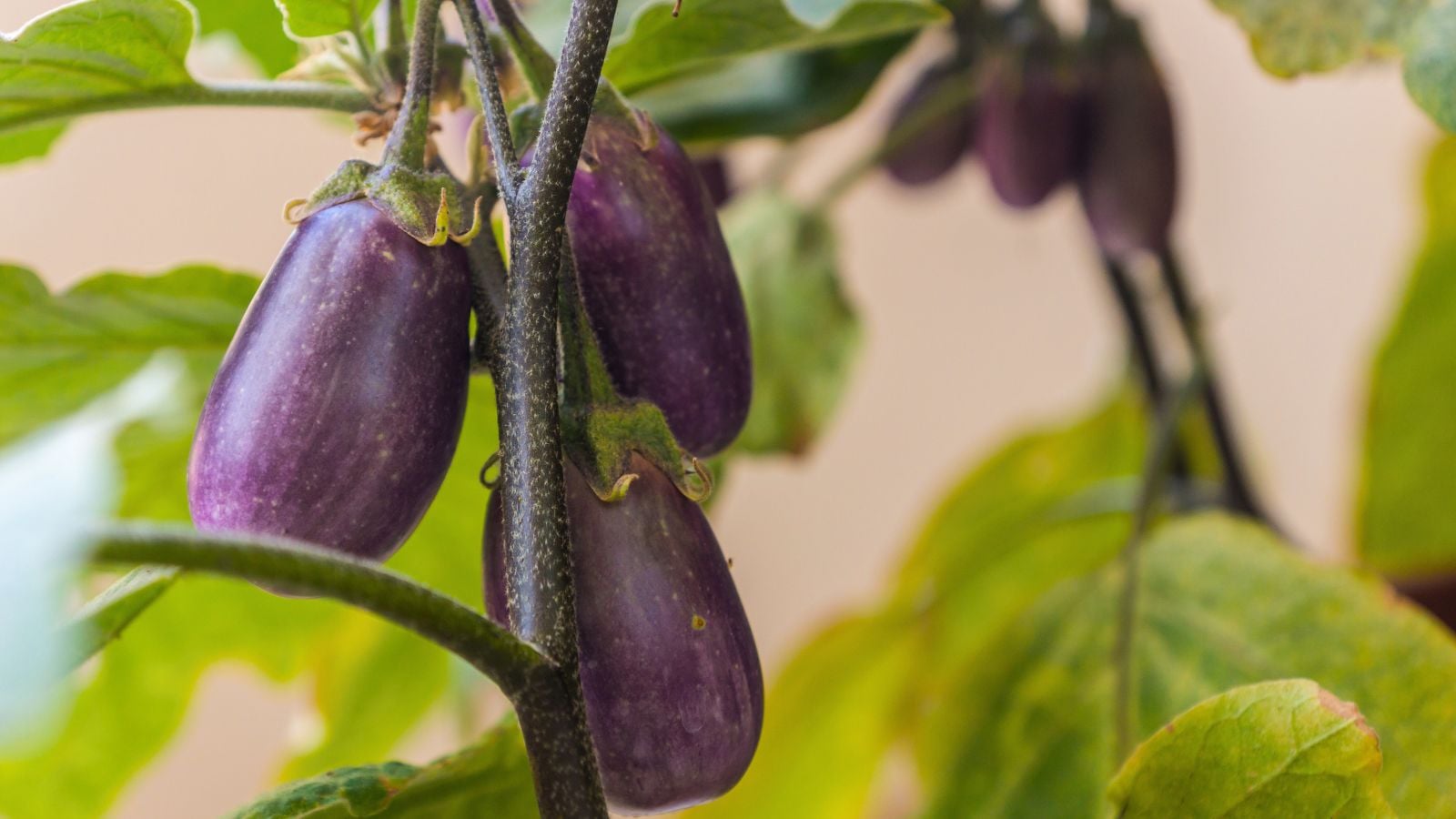
If you’ve had trouble with eggplant in the past, try ‘Jewel Amethyst’ eggplant this year. This small container-lover offers plentiful harvests in a very small footprint. Its ability to be grown in a container allows gardeners to adjust to indoor or outdoor conditions when necessary.
Every year, my eggplants take off just as fall arrives. This is the time when temperate weather and moisture make them happiest. But it also happens to be right on the edge of my first freeze, which eggplants do not appreciate. The resulting harvest is usually not so tasty.
To remedy that this year, I’m going for a smaller variety. ‘Jewel Amethyst’ eggplant gives me an easier mode of growing one of the best crops out there. It gets me closer to the plant, and helps me control the many pests and diseases that sometimes make eggplant-growing difficult. You could try it out too!
Jewel Amethyst Eggplant Seeds

Jewel Amethyst Eggplant Seeds
Jewel Amethyst’ is perfect for containers, with a tidy habit that makes harvesting a breeze. Glossy, oval, purple fruits are best harvested when about 3”–4 ½” long. Harvest regularly from this prolific plant and keep eggplant on the table throughout the season.
Buy at Botanical Interests Shop‘Jewel Amethyst’ Eggplant Overview

|
Plant Type
Annual vegetable
Family
Solanaceae
Genus
Solanum
Species
melongena
|
Native Area
India and Southeast Asia
Exposure
Full sun
Height
22”
Watering Requirements
Moderate
|
Pests & Diseases
Aphids, caterpillars, beetles, wilt, blight, and more
Maintenance
Medium
Soil Type
Rich, well-draining
Hardiness Zone
2-11
|
What Is It?
Like other eggplants, ‘Jewel Amethyst’ comes from the nightshade family, along with tomatoes, potatoes, and peppers. These have origins in the temperate zone and thrive in similar conditions. Jewel is a special variety, bred to have a smaller habit and much more plentiful mini harvests.
Characteristics
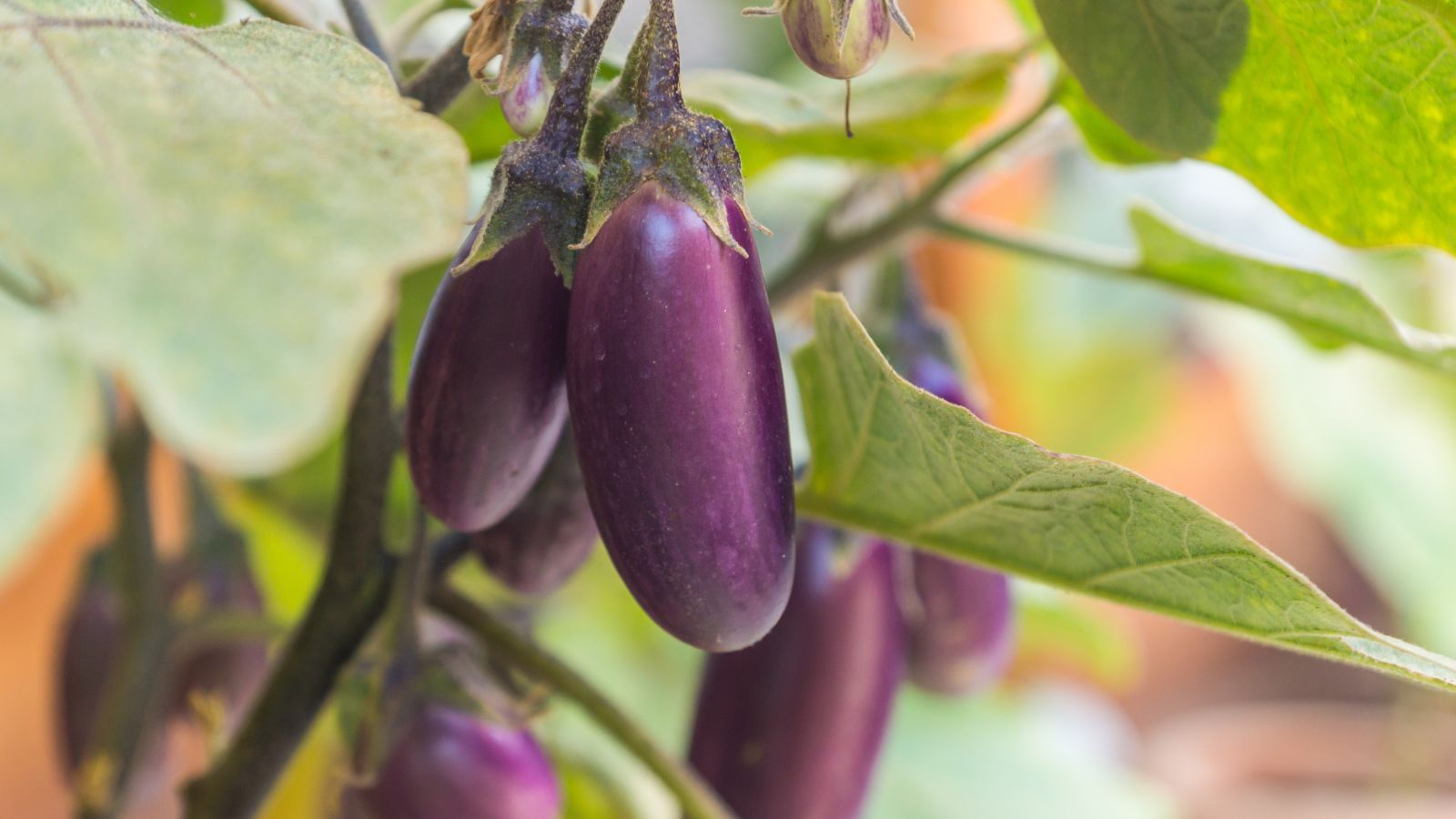
This mostly annual veggie has light green, slightly fuzzy leaves with wavy edges. In mid-summer, purple flowers with pronounced yellow stamens emerge. When successfully pollinated, the flowers form three to four-inch eggplants.
This plant stands out because of its small footprint. Reaching no more than two feet tall and 18 inches wide, it fits into most growing areas. Growers who tend patio gardens and larger gardens alike have enough space for this dwarf.
Native Area
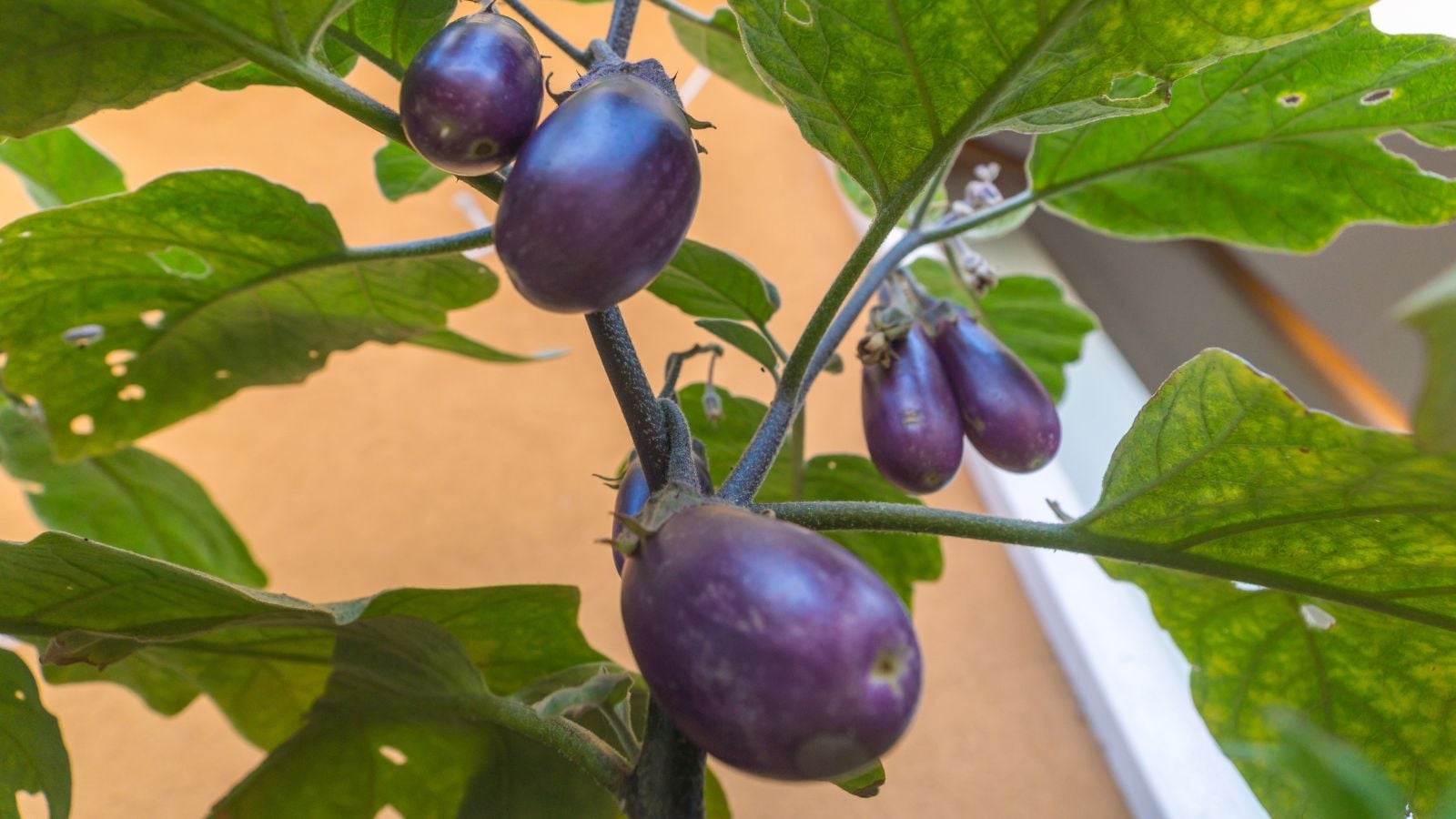
Eggplants originate in India and various areas of Southeast Asia. In the tropical and subtropical climates of these regions, eggplants are perennial, growing year after year. Outside their native range, and those with similar conditions, eggplants are annual and die when the first frost arrives.
‘Jewel Amethyst’ eggplant has its origins in the garden. Other purple eggplant varieties were crossbred to produce a plant with a shorter stature and smaller fruit.
Planting
Eggplants are easy to grow from seed and via transplants, as long as you time your plantings correctly. Clear a small space or grab a container, and let’s get planting.
Transplanting

Wait for one to two weeks after your last frost, when soil and nighttime temperatures are at least 60°F (16°C). To transplant your ‘Jewel Amethyst’ eggplant, fill a container with rich, well-draining soil. Amend in-ground beds with plenty of compost, and add grit to heavier soils. Then dig a hole twice as wide and as deep as the root system of your young eggplant.
Remove your eggplant from its cell tray or starter pot, and gently loosen the root system with your hands. Then plop it down in the hole, and fill in the sides. Press around the base of the transplant to ensure the root system makes contact with the soil. Provide a stake to support the plant through its growth cycle.
Growing from Seed
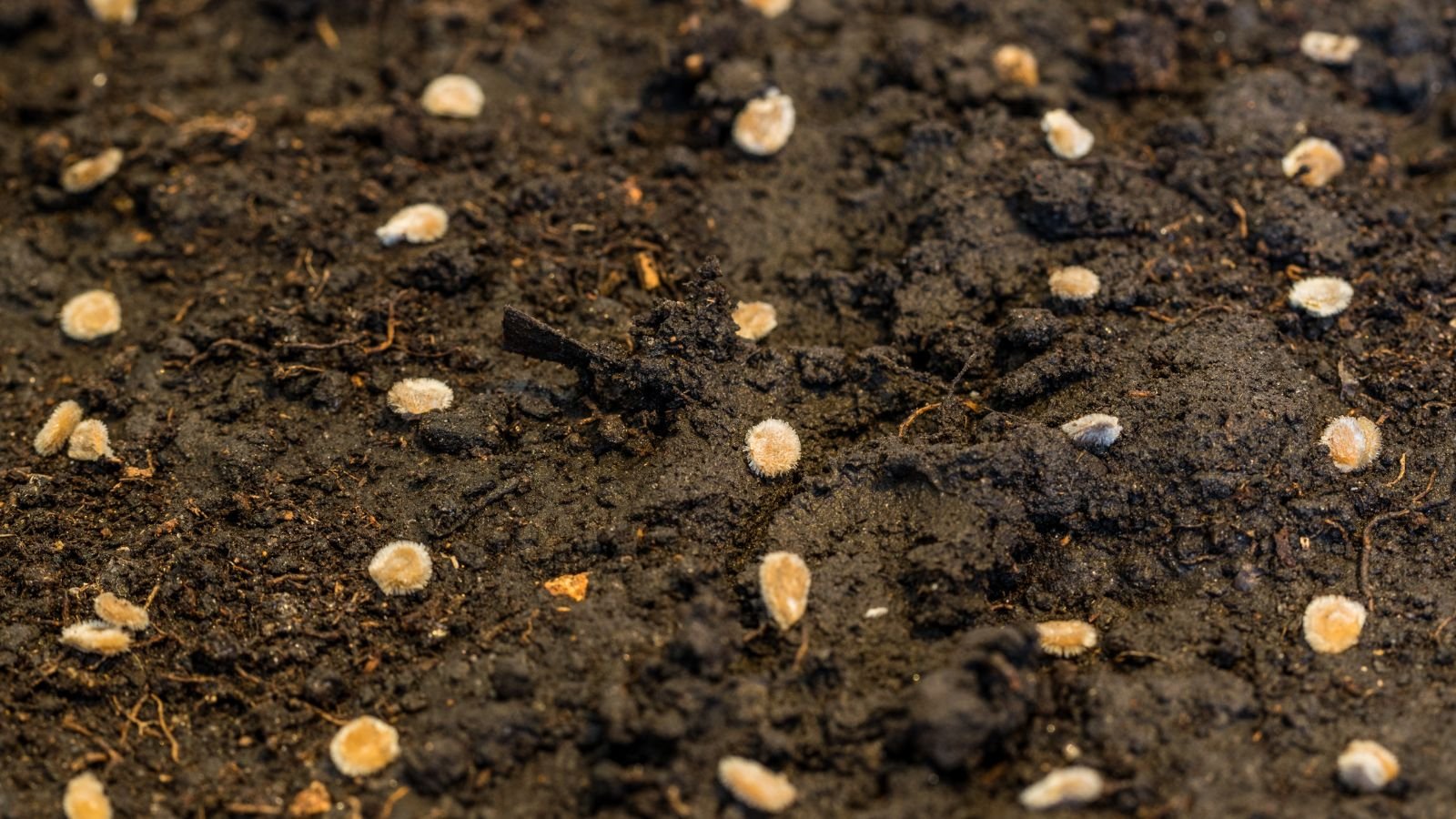
While you can start your eggplant seeds outdoors two to four weeks after your last frost, it’s recommended to grow them indoors 10 to 12 weeks before instead. Sow them at ¼ inch deep. Provide a heat mat for your seedlings to maintain a soil temperature of at least 70°F (21°C). By the time they emerge, they need a grow light as well.
Eggplants take a little time to sprout, so be patient. Expect your seedlings to emerge within 10 to 20 days. If you’re growing in a container, choose one that is at least 24 inches deep and 18 inches across. When transplanting multiple plants, keep them at least 18 inches apart.
How to Grow
‘Jewel Amethyst’ is easy to grow once you get it going. In very hot regions, provide a bit of mulch and some dappled sunlight in the afternoon, and your harvest will be delicious and plentiful.
Light
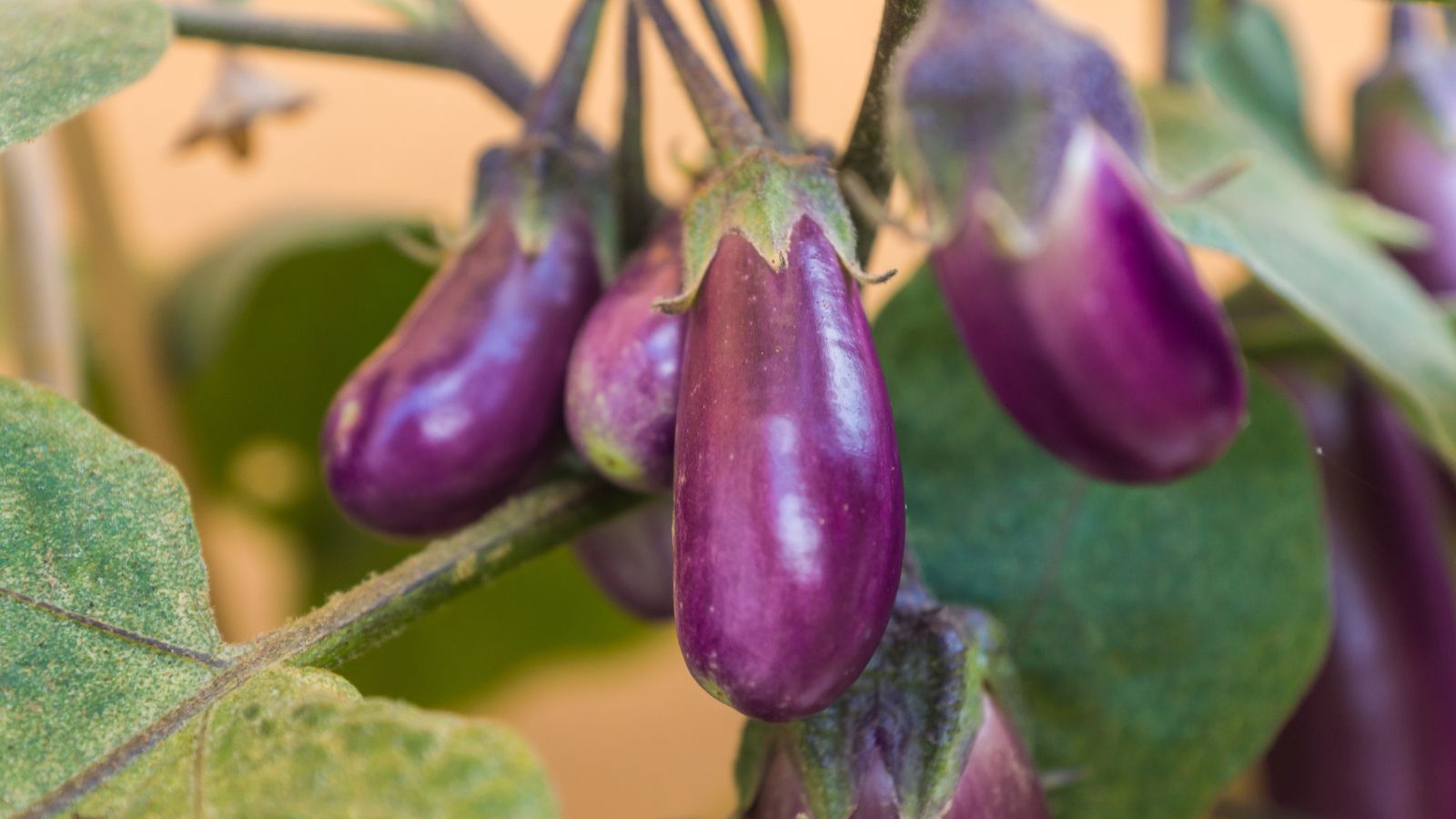
Provide six to eight hours of sunlight per day. If you live somewhere that gets hot in summer, provide a little shade from the harsh afternoon sun. In cooler areas, full sun is essential. If you’re growing fully indoors, use a grow light. Keep it around two feet above your maturing plant.
Water
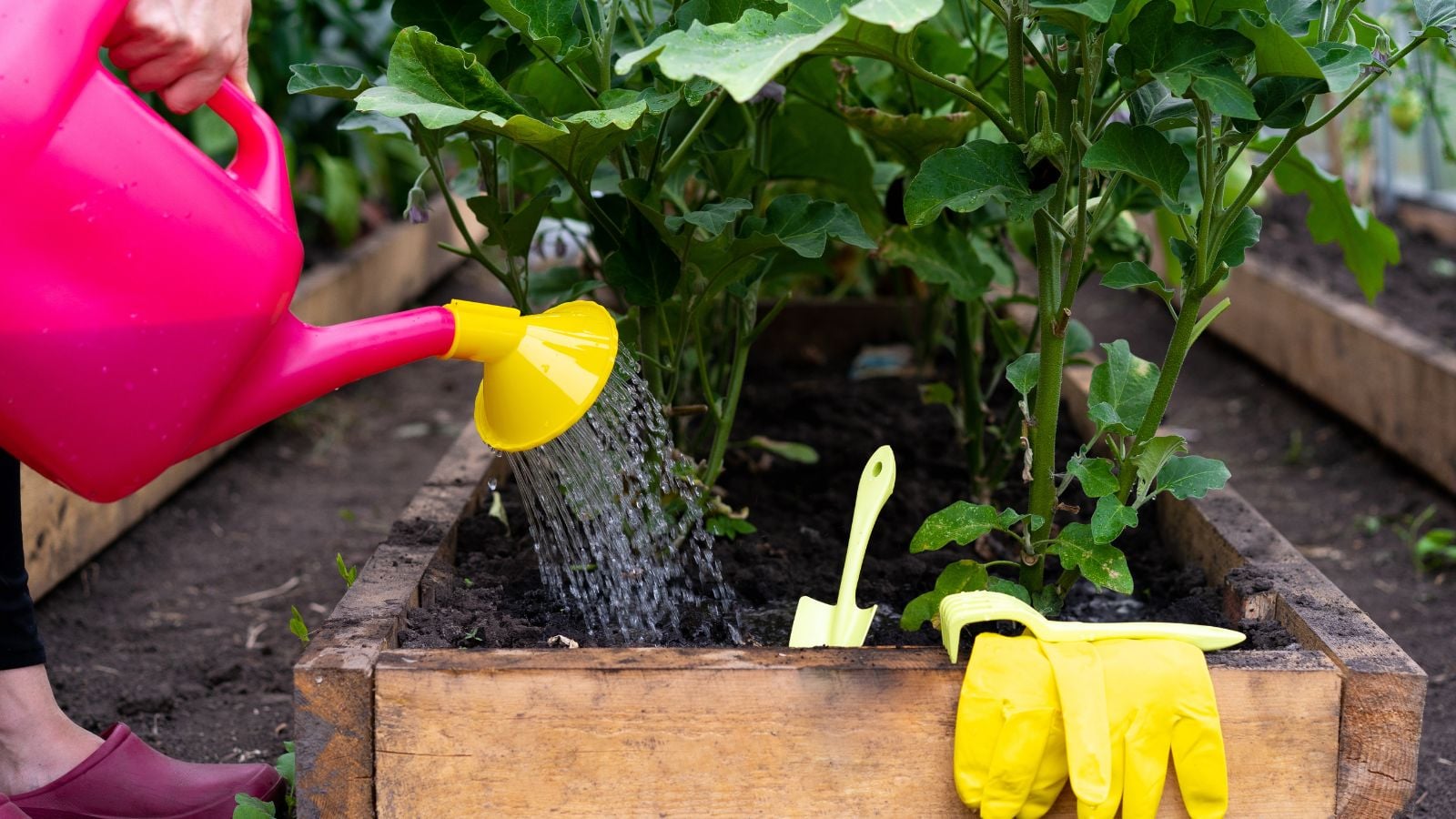
Eggplant soil should remain moist, but shouldn’t veer into waterlogged territory. In hot areas, daily and up to twice daily watering may be necessary. If there is sufficient rain, check the soil before adding more water.
Provide at least one inch of water per week, and up to two inches. Both containers and in-ground beds benefit from drip irrigation or soaker hoses, which water slowly and deeply at the root zone, rather than overhead. Overhead watering can increase the chances of disease.
Soil

Both container and in-ground eggplants need a rich, well-draining soil. A good bagged garden soil enriched with well-rotted compost is a good option. Keep the soil pH between 5.5 and 7.5. Most basic formulated soils already sit within this range.
In heavy soils, amend with agricultural grit or perlite. Ensure the mixture drains quickly by adding water during the preparation process.
Temperature and Humidity
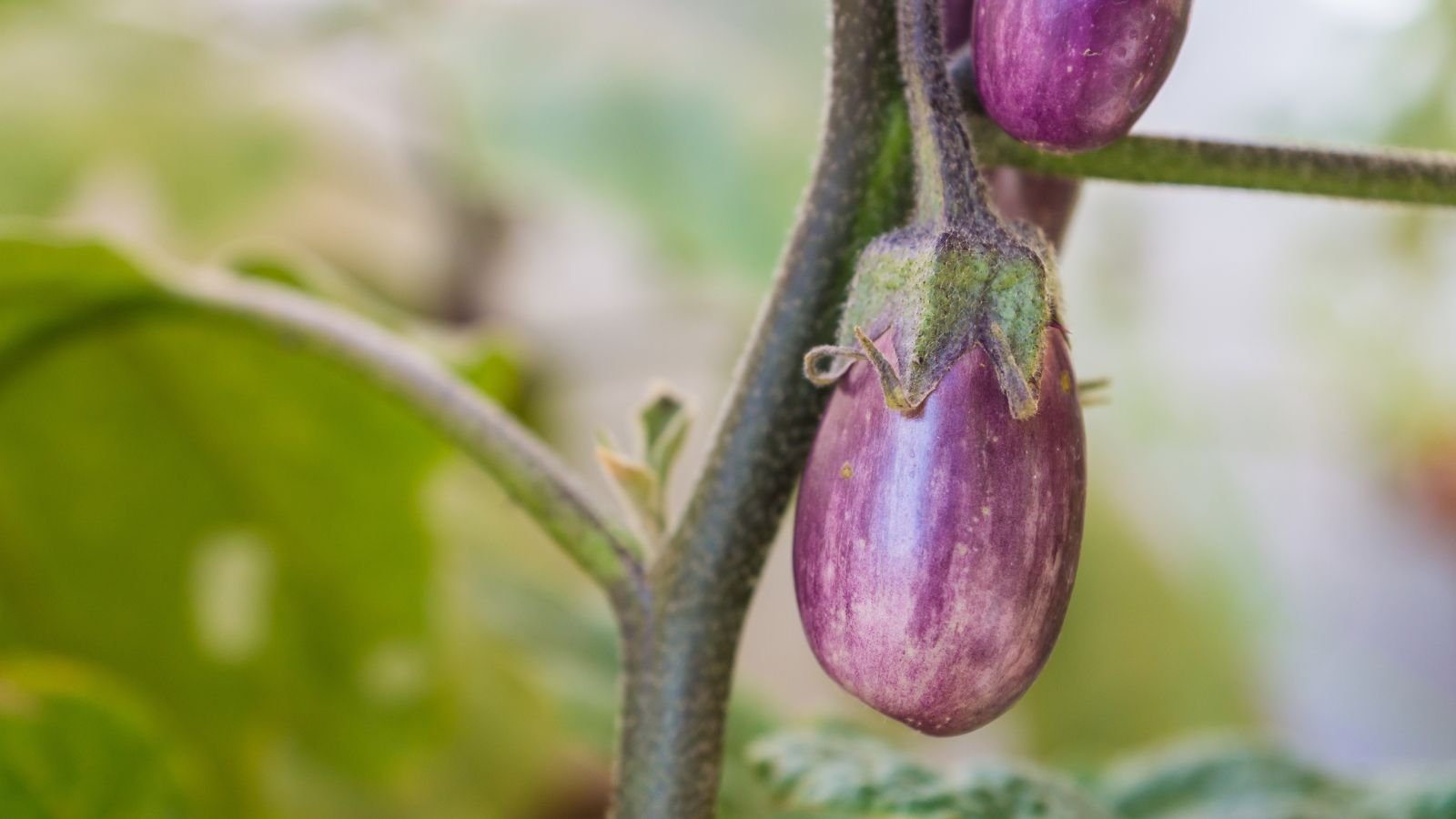
Like other solanaceous plants, eggplant thrives in moderate temperatures between 75 and 85°F (24 to 29°C). When temperatures rise above 85°F (29°C), flowering will slow, and existing flowers may drop. In this time, shelter your eggplant from the heat via a shade cloth, or bring containers indoors.
Under 60°F (16°C), eggplants begin to decline. At this time, bring yours in, or allow it to die back for the year. Then sow more seeds next year. If you’re expecting a cool snap, cover the plant with a light cloth or wrap containers with burlap.
High humidity isn’t a huge issue for eggplants, but in highly humid areas, look out for foliage diseases.
Fertilizing

Eggplants don’t need a ton of fertilizer. Avoid nitrogen fertilizers, as too much can lead to excessive foliage that delays flowering and fruiting.
A little boost to potassium and phosphorus in the planting process is enough. Sprinkle a couple of tablespoons of organic, powdered fertilizer into your soil mix before planting. If necessary, side dress with compost once during the growing season.
Maintenance
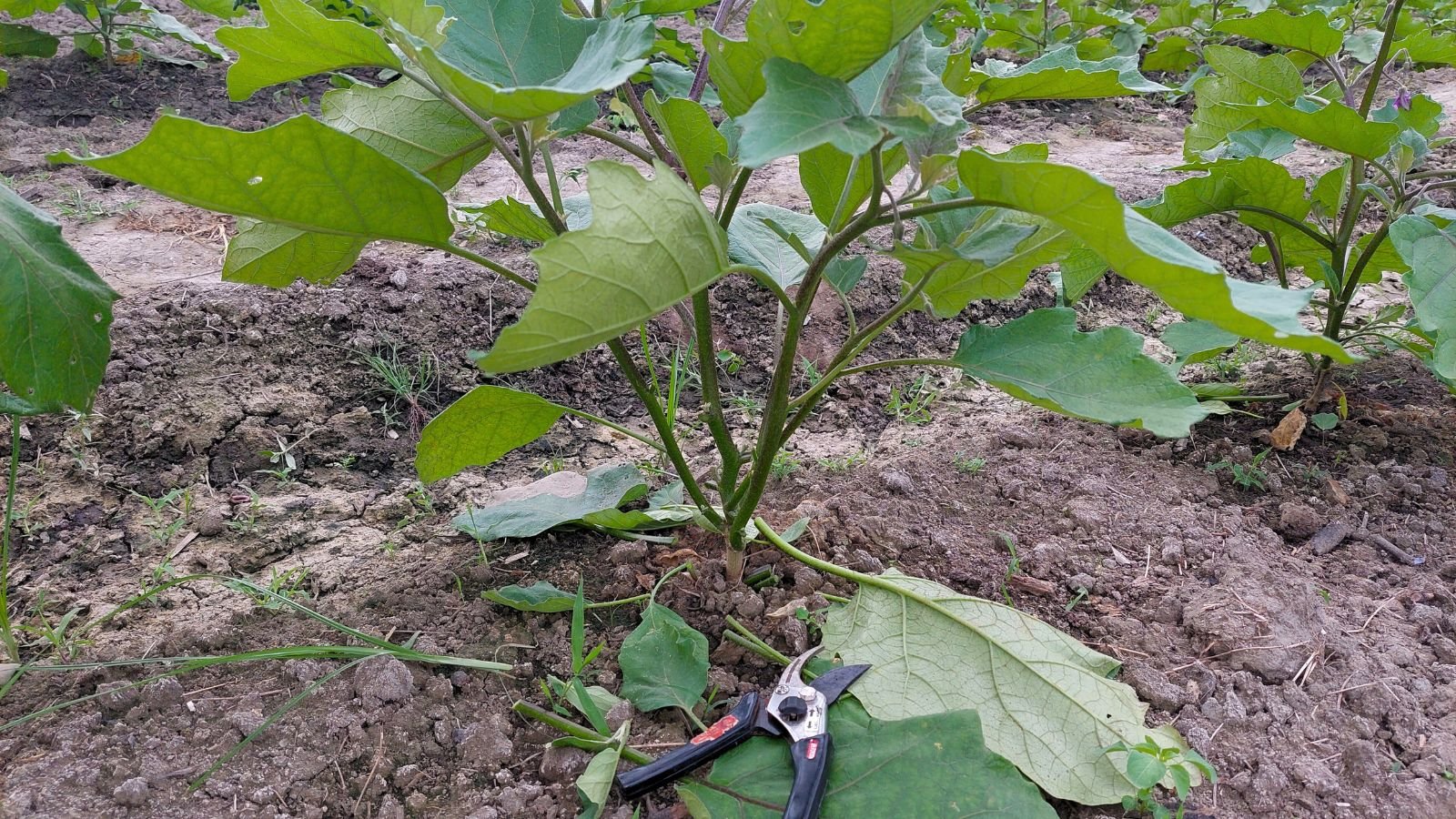
If any damaged or diseased leaves crop up through the growing season, use sterilized, sharp pruners to snip them off. Remove any lower leaves that touch the soil to limit soilborne diseases. Weed continuously, and mulch around your plants to lock in soil moisture and protect plants from the heat.
Harvesting and Storage
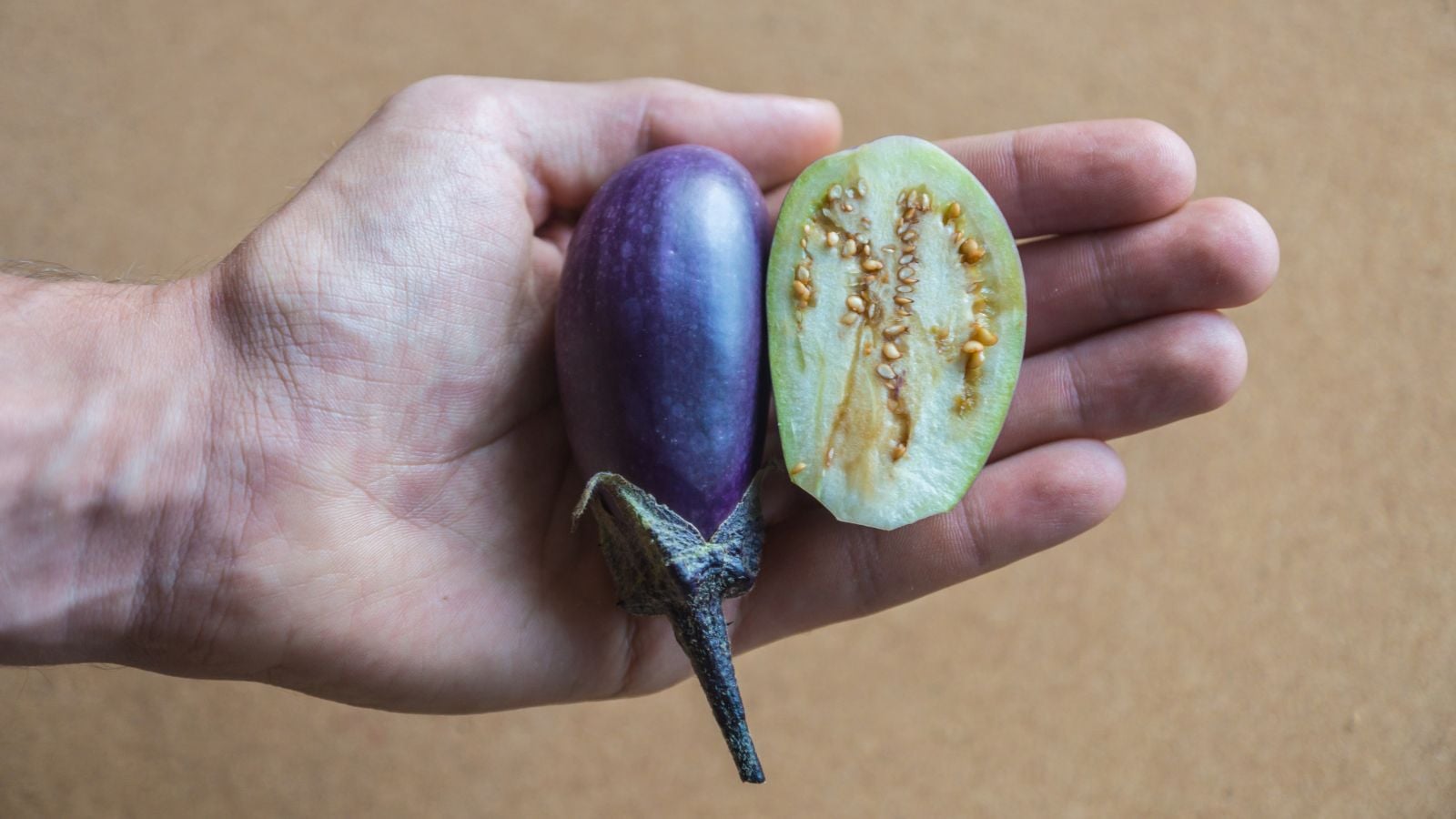
When your ‘Jewel Amethyst’ eggplant produces fruit that is three to four inches in diameter and still shiny, it’s time to harvest. Any that have a dull skin should be removed and used for seed or composted, as they’re overripe. Usually, overripe eggplants turn from their intended color to golden, so look out for the right deep purple coloring as well.
Use a clean, sharp pair of pruners or snips, and cut an inch above the top of your eggplant to leave a bit of stem on. Then use them as quickly as possible, as they don’t like to be stored in the refrigerator. This damages the texture and flavor of your harvest.
If you have to store them, place them in the refrigerator in plastic wrap for up to two days. Eat them only when the stem is still bright green.
Common Problems
As I mentioned in the intro, cool temperatures can change the flavor and consistency of your eggplants. High heat causes flowering and fruiting to cease until more optimal temperatures (75-85°F or 24-29°C) resume. Use the recommendations in the temperature and humidity section to remediate any of these conditions.
While you’re caring for your ‘Jewel Amethyst’ eggplant, scout regularly for pests and diseases. Start with integrated and cultural approaches when dealing with pests and diseases. Then use chemicals as a last resort. Plant diverse flowering plants around your garden to attract beneficial insects that keep most pests in check.
Pests
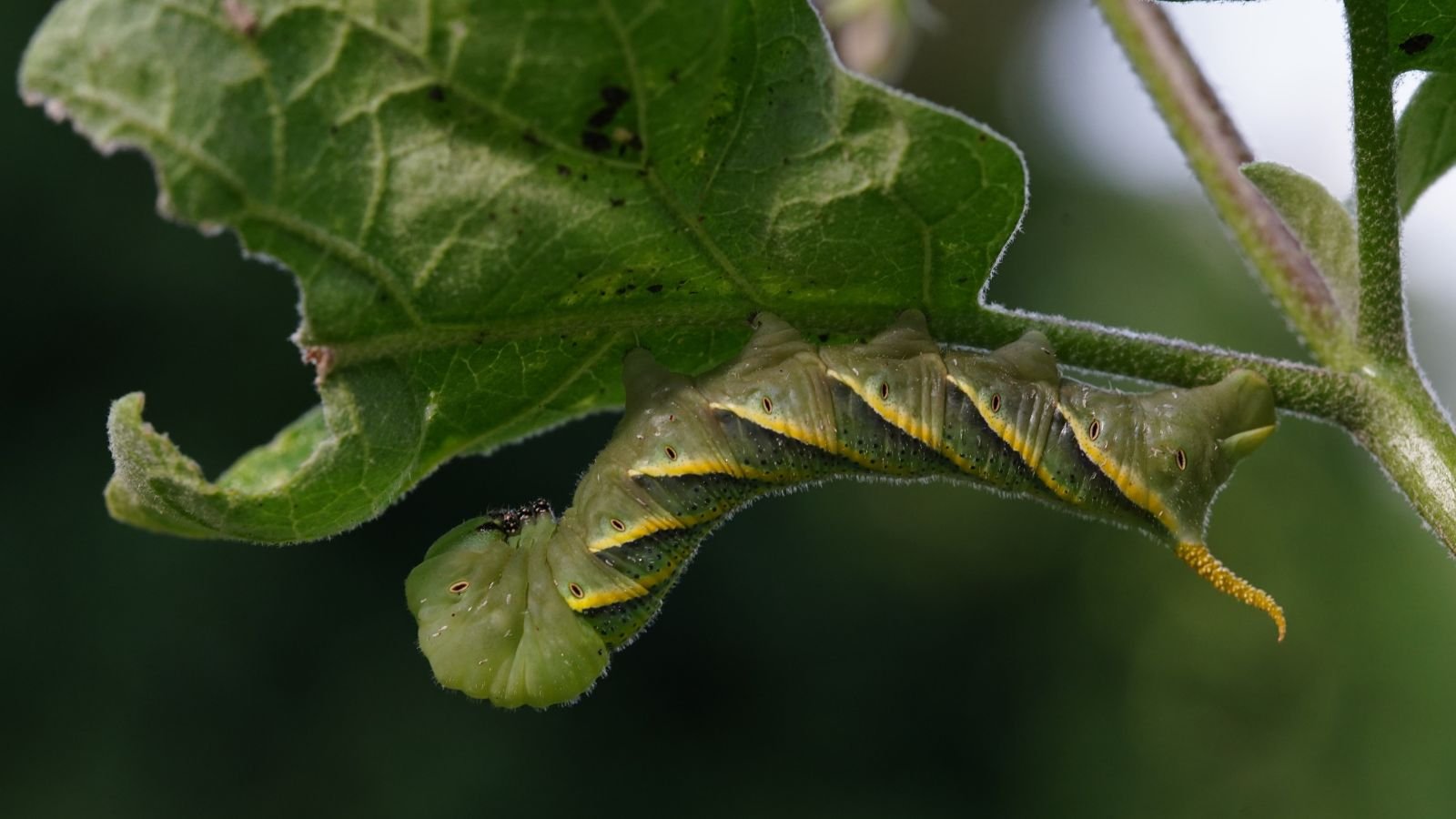
Several pests affect eggplants, and it’s a good idea to scout for them regularly on plants grown outdoors and in greenhouses. Most pests are manageable, but it’s important to keep a good eye on your plants if you live somewhere pests tend to be high in numbers.
| Pest | Description | Treatment |
| Aphids | Tiny, pear-shaped insects that congregate in large numbers on leaf undersides; they leave behind sticky secretions that cause sooty mold | Blast them off the plant with a strong stream of water from a hose. Prune away heavily infested leaves and those with sooty mold. Follow up with neem or insecticidal soap if necessary |
| Whiteflies | Tiny, white, mothlike flies that emerge from the plant when it’s brushed; these also leave behind sticky secretions that cause sooty mold | Hand-pick them, and relocate to wild nightshades to support your local pollinators |
| Flea beetles | Tiny, shiny black beetles that feed on leaves, causing shot holes, and jump when vulnerable | Use floating row covers early in the season to prevent beetle feeding. For infested plants, use insecticidal soap |
| Colorado potato beetle | Small orange larvae or stripey orange and black beetles that feed on leaves, causing holes | Hand-pick larvae and adults. Encourage their primary predator, lady beetles, with yarrow, sweet alyssum, and dill |
| Hornworms | Small to large green caterpillars with a horn protruding from their back side; larval stage of sphinx moth | Hand pick them, and relocate to wild nightshades to support your local pollinators |
| Stink bugs and leaf-footed bugs | Large beetle-like bugs with leaf-like legs that feed on fruit and leaves, causing large lesions where diseases can enter | Hand-pick them as you see them |
| Spider mites | Tiny mites that congregate on leaves, causing dust-like film, light stippling, and eventually weaving dense webs around foliage | Prune away damaged leaves. Blast them with a strong stream of water from a hose. In high infestations, use insecticidal soap |
Diseases
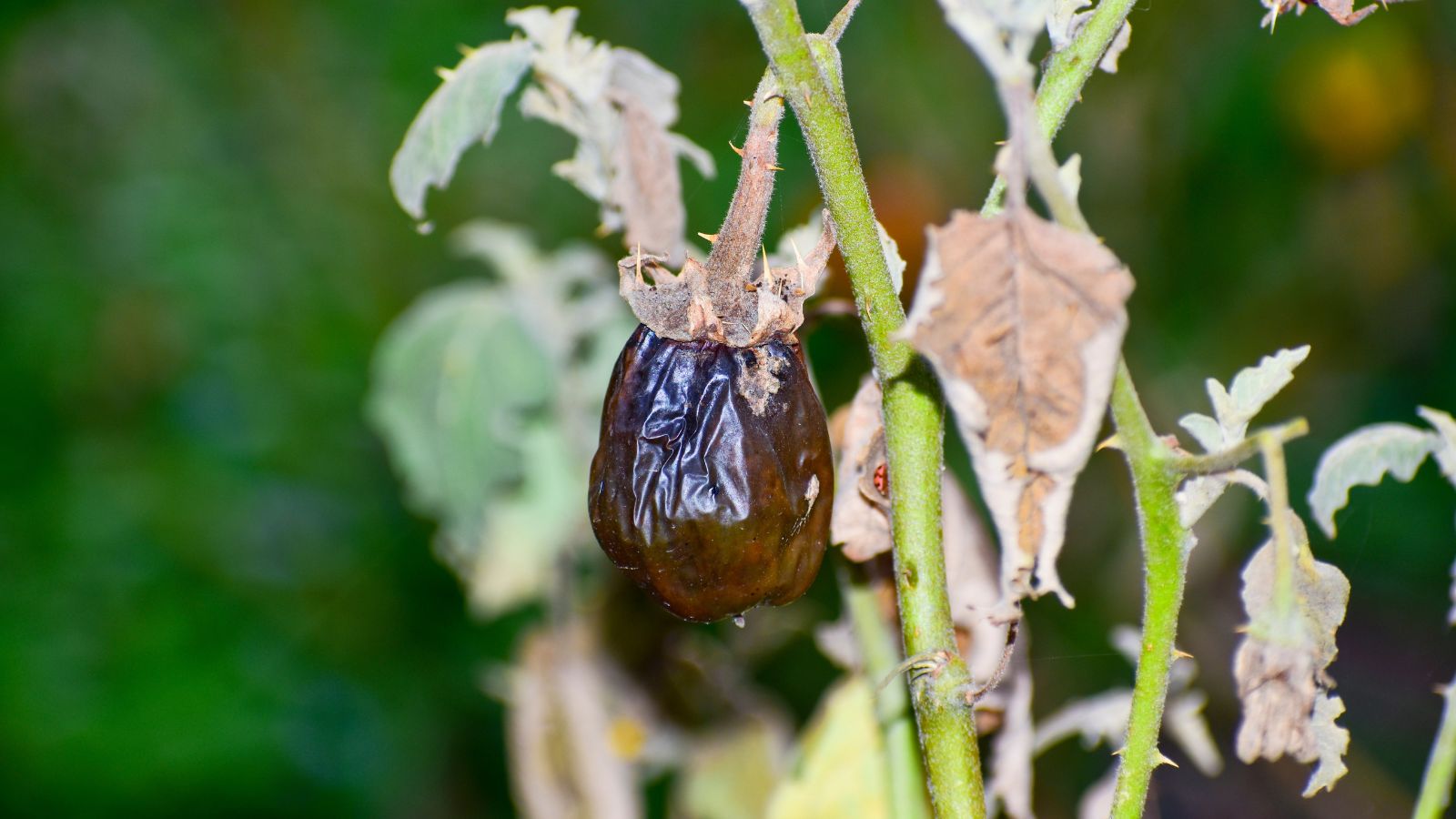
Phytophthora, southern blight, and Phomopsis all cause blight in eggplants. Phytophthora attacks all parts of the plant, with characteristic dark streaking on the upper branches. Southern blight causes darkening of the stem base and subsequent fungal body growth. Phomopsis usually affects fruit, causing multi-ringed lesions.
Bacterial wilt causes sudden wilting. All of these diseases are best controlled through crop rotation and proper watering. Avoid planting solanaceous plants in the same area, and wait three years before planting in the same spot again. Prune away damaged leaves and plant parts as needed. Throw away damaged fruit.
Frequently Asked Questions
How big do Jewel eggplants get?
These tiny fruits reach up to four inches in diameter. Any larger than that and you’ve got overripe eggplants.
What’s the best-tasting eggplant?
We’re partial to this one! ‘Jewel Amethyst’ is a delicious option for growers all over.
What should you not plant near eggplant?
Keep your eggplant separate from other solanaceous plants, like potatoes, tomatoes, and peppers.


