How to Plant, Grow, and Harvest Dill
Are you thinking of adding some dill to your garden? Dill has a variety of different uses, and is quite popular as a flavor in many cooking dishes once dried and added. In this article, gardening expert Taylor Sievers walks you through the easiest way to plant, grow, care for, and harvest dill from your garden.


Contents
What’s a plant with a long history of culinary and medicinal use that attracts beneficial insects and pollinators and is easy to grow in the garden? Why, the herb Anethum graveolens may be just what you’re looking for! Confused by foreign languages of the past? This distinctly scented herb with hollow stems, bluish-green foliage, and yellow umbel flowers is also known as dill or dill weed.
Dill is a member of the Apiaceae family (also known as Umbelliferae), and this family also includes such herbs as parsnip, fennel, coriander, cilantro, anise, angelica, and the fleshy, commonly orange, tap-rooted vegetable known as carrot. Amongst the common cultivated herbs and vegetables mentioned here, there are also several “weedy” species in the Apiaceae family that you can often find growing on the local roadside. Some are not so pleasant, such as the deadly poison hemlock (Conium maculatum).
The herb dill may only conjure images of jars of dill pickles or even the bright yellow potato salad your grandma makes at a summer family get-together, but dill has long been prized for its medicinal and even “magical” uses. In fact, gladiators ate meals with dill sprinkled on top in hopes that the herb would bring courage and valor.
While you may not believe in the “magic” of dill, it’s still a useful, beautiful, and easy-to-grow herb that you can grow both in the garden or in a container! In this article, you’ll learn all about how to grow this precious plant and the history behind the herb known as dill.


Dill Plant Overview

|
Plant Type
Biennial Zones 2-8, Perennial 9-11
Native Area
Mediterranean Region
Hardiness Zone
USDA 7
Season
Summer
Exposure
Full Sun
Maturity Date
65-75 Days
Growth Rate
Fast
|
Plant Spacing
6-12 Inches
Planting Depth
1/8 – 1/4 inch
Height
18-60 inches
Watering Requirements
Moderate
Pests and Diseases
Aphids, Caterpillars
Tolerance
Cool to Warm
Maintenance
Low
|
Soil Type
Fertile, Well-draiing, Slightly Acidic
Attacts
Bees, Butterflies, Ladybugs
Plant With
Brassicas, Asparagus, Cucumber
Don’t Plant With
Carrot, Fennel, Peppers
Family
Apiaceae (formerly Umbelliferae)
Genus
Anethum
Species
graveolens
|
Dill Overview

Anethum graveolens, or dill, is a member of the parsley family (Apiaceae), which has distinct characteristics. This family consists mostly of biennial or perennial herbs that have hollow stems and leaves with sheaths at their base. The thick, most singular, deep roots are considered taproot plants.
The flowers are umbels (which is why the family was originally called Umbelliferae), which means that the inflorescences sit upon equal-length stems that radiate from a central point to create a flat or curved-shaped top.
The stems, petioles, and seeds often contain oils that can be useful in cooking and medicine. Some members of this family are poisonous to humans, so be aware of this characteristic before touching or ingesting a plant of this family.
Dill foliage is described as fern-like, as the foliage is very finely cut. The color of the foliage is typically bluish-green or bright green. The flowers are typically bright yellow. Dill has a very distinct odor that is fresh and strong.
The seed heads mature into brown parallel-lined schizocarps (a dry fruit that splits into two seeds, essentially). Dill seeds have long been a prized spice along with other Apiaceae family members like anise, fennel, and caraway.
Annual or Perennial?

Growers often cultivate dill as an annual, which is a plant that germinates, grows, flowers, and sets seed within one year. However, dill is technically a biennial and can become perennial if grown in warmer growing zones.
Biennials usually form a basal rosette within the first year (a clump of low-growing leaves radiating from a central point). After the first year, the plant will then send up a flower stalk in the second year and set seed. After seeding, the plant will generally die. Perennials will come back each year, though they may go through a dormant period during the winter.
Plant History and Cultivation of Dill

The herb known as dill or dill weed has a long and well-documented history of human use. In fact, several historical sources pinpoint dill, caraway, and spearmint as among the oldest herbs known and used.
The name “dill” derives from the Norse word “dilla,” meaning to lull or soothe, which is synonymous with the plant’s ascribed abilities to calm troubled stomachs and colicky infants. In fact, dill’s Latin name, Anethum graveolens, also describes its herbal characteristics, with the Latin translating to “a tall plant with vigorous growth habit that has a strong smell.”
Dill is believed to have originated in the Mediterranean region, but it first appeared in the written record about 5,000 years ago in Egypt. Babylonians grew dill in their gardens around 3,000 B.C., and the Greeks and Romans had various uses for the herb’s foliage and seeds, including burning dill oils in homes for fragrance, making wine, and using dill seeds to heal wounded soldiers.
Historical Uses

People also knew dill seeds as “meetinghouse seeds,” as they chewed them to stay awake and pay attention during long gatherings, such as church services. The seeds also helped quiet the stomach and freshen the breath.
Throughout history, people used dill seeds to treat stomach ailments, colic, bad breath, flatulence, and hemorrhoids. At one time, practitioners used dill to treat scurvy, a disease caused by a lack of vitamin C. Its effectiveness for this ailment is likely due to dill’s high vitamin C content. Some areas still use dill seeds medicinally, but Western medicine has not fully accepted the practice.
Today, growers harvest dill for its leaves for fresh use (known as dill weed), and the seeds are popularly sold as a spice. Cooks use flowers, leaves, and seeds when pickling. Producers extract essential and aromatic oils from the leaves, flowers, and seeds.
Planting

Gardeners propagate dill from seed, and though you can start and grow it indoors, it is best to sow the flat brown seeds directly into the garden. Dill seedlings do not transplant well due to their long, thick taproot.
Plant the seeds at ⅛ to ¼ inch depth in an area of full sun (at least six to eight hours of direct sunlight). Dill prefers well-drained soil. Typically, you’ll want to sow your dill seeds after your last estimated frost in the spring. However, dill is considered a cool-weather lover, so you can try experimenting with direct-sowing a few weeks before your last frost.
You can plant dill seeds every two to three weeks until midsummer for successions of harvests.
How to Grow Dill
When growing this plant, there are several factors you’ll need to consider. You want to ensure that you have adequate soil conditions, light, a proper place to plant them, and the right fertilizer and water combination. Let’s take a look at each of these factors in more detail.
Soil
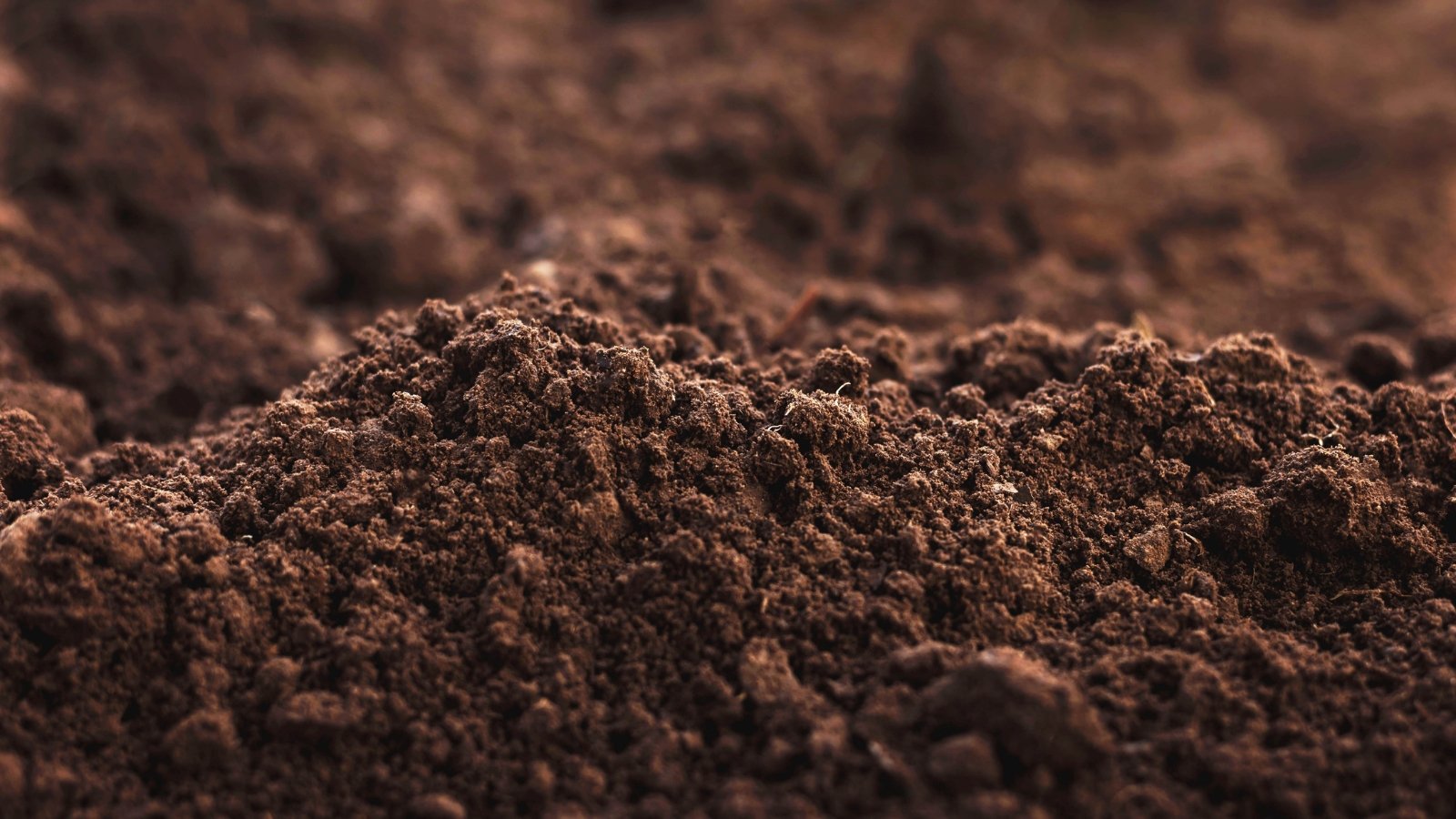
Dill prefers moist, well-drained soils rich in organic matter that are slightly acidic. Plant seeds in rows approximately two feet apart, and as seedlings germinate, thin them to 10 to 12 inches apart. In some cases, you may be able to keep seedlings as close as six inches apart, depending on the variety of dill you plant.
Light

Make sure to plant dill in full sun (at least six to eight hours of direct sunlight), but keep the soil moist. The stems of dill are hollow and the plant can grow rather tall, so it is prone to flopping over. Stake dill if you plant it in an area subject to much wind.
You can grow dill indoors, but make sure that the plants receive at least six hours of light. If not, you will need to add supplemental light. Plants will also require staking as they will become rather tall and leggy compared to garden-grown plants due to low light.
Planting in Containers

Make sure the pots are rather deep for your dill plants to accommodate the plant’s root system, which is a long taproot like other members of the carrot family. Also, make sure that the pots have drainage holes in them.
You can also grow some varieties of dill in containers. See the Varieties of Dill section below to select the best compact varieties of dill for your patio pots!
Temperature

Dill can survive winter temperatures down to 25°F (-4°C), so you can sometimes grow it as a perennial in USDA Zones 9b to 11, and some say Zone 8 as well (depending on microclimate).
Many varieties will flower and set seed within the first year, which is why growers often treat dill as an annual plant.
Fertilizing
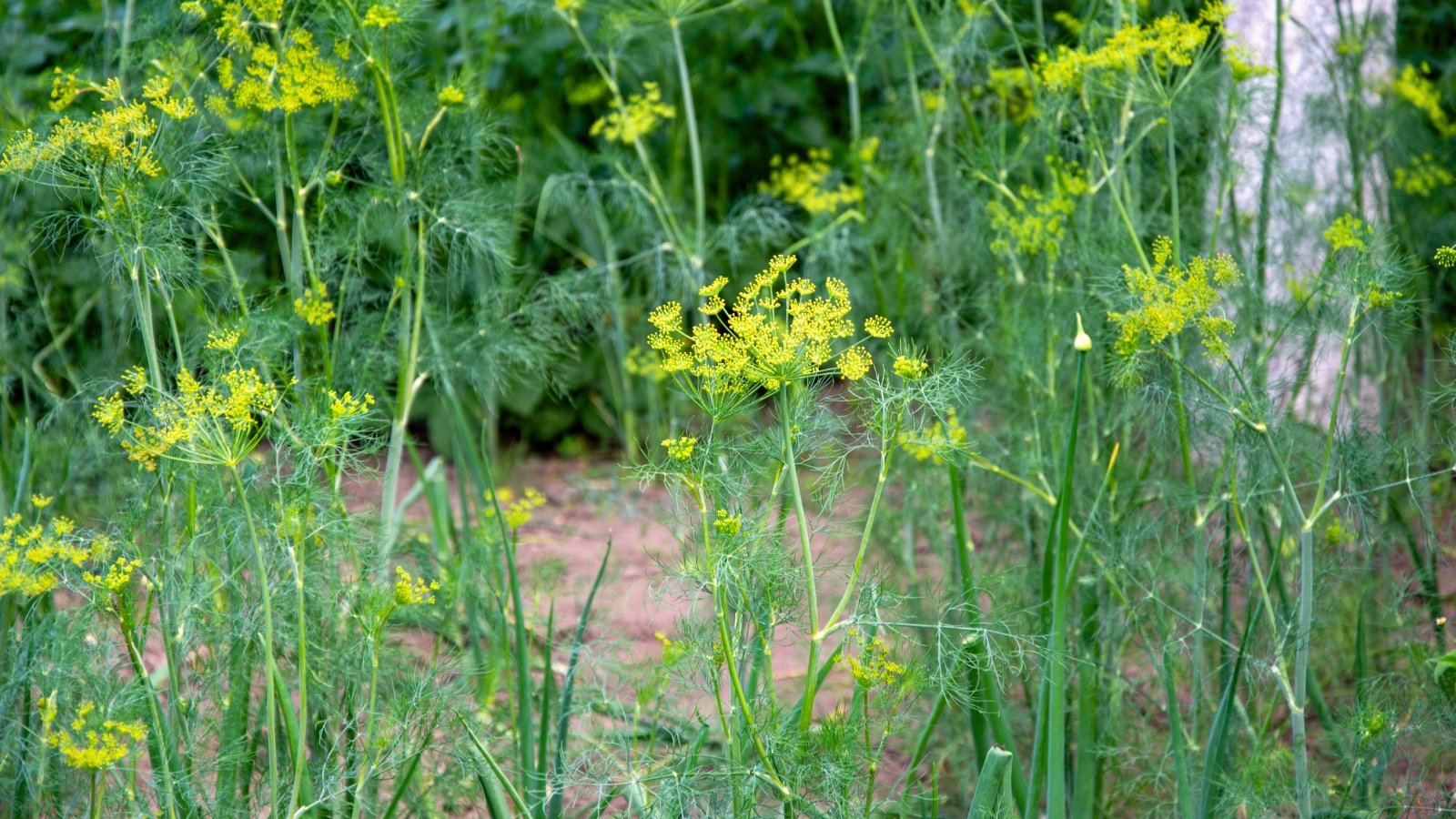
You don’t need to fertilize dill if the soil is properly amended at or before planting with compost, but you can apply a low dose of fertilizer if needed. Try to choose a well-balanced fertilizer (equal parts nitrogen, phosphorus, and potassium) or add some compost around the base of your plants.
Overfertilization will result in poor-quality plants, so don’t freak out if you weren’t able to fertilize your plants. Dill is one of the plants I don’t waste much time babying in my garden because it’s so hardy.
Once established, your dill plant can tolerate drier soils, but you should still water your dill planting at least once or twice a week. If in drought-like conditions, you may need to water your dill more.
Companion Planting

Dill is an excellent companion crop for certain asparagus varieties, onions, members of the Brassica family (cabbage, broccoli, kale, etc.), and cucumbers. It repels insects like cabbage loopers that feed heavily on members of the Brassica family.
Dill attracts lacewings and ladybugs, which feed on aphids that can attack asparagus. It can also attract predators of the tomato hornworm, which can do significant damage to tomatoes. However, do not allow dill to flower and go to seed if planted next to tomatoes, as mature dill can stunt the growth of tomato plants.
Avoid planting dill next to other members of the Apiaceae family (fennel, carrot, parsley, etc.) due to cross-pollination.
The jury is still out on whether or not dill should be planted with members of the nightshade family, such as peppers and tomatoes. Some sources argue that you shouldn’t plant dill or other members of the Apiaceae family next to peppers due to “various reasons” that are not mentioned, while other sources say that dill is excellent to interplant with peppers and eggplant to repel certain pests.
Planting dill next to tomatoes works well until the plant begins to flower and set seed, because mature dill reportedly stunts the growth of tomato plants. Dill is also an excellent reseeder. In some areas, dill is even considered invasive due to its ability to quickly reseed an area.
While the jury is still out on companion planting dill with nightshade family plants, just be aware that because dill can repel certain insects, reseed easily, and stunt plant growth, it may be better to keep your dill away from your nightshade family garden plants.
When and How to Harvest Dill

You can harvest dill foliage any time before the flowers open. Cut the leaves just where they meet the stem and discard the rest of the thick, hollow stem. You can continue to cut back the stem to harvest leaves and delay flowering.
Store the foliage in the refrigerator to keep it fresh, but it is best to wait to harvest until right before you plan to use the leaves. You can also submerge stems in water to keep the foliage fresh.
Some prefer to use the foliage dried instead of fresh, so you can lay the foliage flat on wax paper in a room with good air circulation to dry your dill, or you can dry the leaves in a food dehydrator. Store dried leaves in a sealed container to keep them fresh. You can also freeze fresh leaves. For optimum freshness, freeze the leaves in water by placing dill leaves in ice cube trays filled with water.
To harvest seeds, cut the stalk of dill just before the seed ripens, about two to three weeks after flowering, and hang the seed head upside down with a paper bag around it. Seeds will shatter if you allow them to ripen fully on the plant (basically, scatter everywhere), so it is best to harvest for seeds before they fully ripen.
Preservation

You can dry dill foliage in a well-ventilated area by laying it flat on paper, or hang it upside down to dry. You can also dry foliage in a food dehydrator. However, drying severely diminishes the flavor, so freezing dill foliage preserves its flavor best, and freezing in water is highly recommended if using this method.
Store dill seeds in an airtight container in a cool place, and make sure they are free of moisture. Allow the seeds to dry out for a few days after collecting them.
Varieties
There are several varieties of dill, all known for their specialties. See the list below for information about common varieties:
‘Mammoth’

This is the typical variety of dill grown for fresh use. This variety can reach up to four feet tall (and some sources say six feet tall) with flowers reaching 15 to 18 inches across.
‘Bouquet’

‘Bouquet’ is a more compact form of ‘Mammoth’ used for fresh-cut flower arrangements. Growers often use the seed in pickling.
‘Dukat’

‘Dukat’ has fine-textured foliage with strong flavor and a high aromatic oil content. This variety grows up to 48 inches tall typically and tolerates heat well.
‘Fernleaf’

‘Fernleaf’ is slow to go to seed. This variety is compact and tops out at 18 inches. The foliage is very finely cut.
‘Ella’ and ‘Monia’

They are excellent as container herbs due to their compact nature. ‘Ella’ is slow-bolting, which means it delays pushing out flower stalks.
Pest Prevention

Dill has few pest problems, and this plant resists deer as well. Aphids and powdery mildew may appear on occasion, but dill is also the host of black swallowtail butterfly caterpillars. Many growers consider this an attribute, as the butterflies are very beautiful, though the caterpillars can do considerable damage to the foliage.
If this is a concern, you can pluck caterpillars off the plant. Ensuring that your garden is full of host plants for butterfly larvae will make it more attractive for butterflies to lay their eggs and allows you to view this insect’s entire life cycle.
Promoting excellent air circulation throughout your garden by increasing plant spacing will lessen the incidence of foliar diseases like powdery mildew. Releasing beneficial insects that feed on aphids, like lady beetles, will help reduce aphid populations.
You can also use a forceful stream of water to knock off adult aphids and kill young aphids. These tiny insects can transmit plant viruses and cause stunting, yellowing, or malformed leaves if feeding is heavy. Their waste is frequently called “honeydew” because of its high sugar content and stickiness.
The high sugar content encourages “sooty mold” fungus growth, which is not typically harmful. However, it will turn the honeydew spots into a dark brown or black color, which affects the cosmetic appearance of the plant. If aphids severely infest a plant, I will often remove the entire plant from my garden to prevent spread.
Frequently Asked Questions
How can I prolong dill leaves after harvest?
Dill leaves do not last long in storage after being picked. The best way to extend the storage life of dill leaves is to harvest in the early morning. Wrap the leaves in moist paper towels and place them in the refrigerator or put the cut stems into the water in the refrigerator. Even so, dill leaves need to be used within a few days. Freeze leaves or dry them for long-term use. This will prolong storage time.
What plants can I use dill as a companion plant for?
Dill is an excellent herb to deter certain pests while also attracting beneficial insects that can feed on pests of other plants. Members of the Brassica family, such as cabbage, kale, broccoli, and brussel sprouts, will benefit from companion planting with dill due to its ability to repel the cabbage looper. Dill will also attract lacewings and ladybugs, which feed on the tomato hornworm eggs and younger caterpillars.
Dill should not be allowed to flower and set seed if planted next to tomatoes due to its ability to stunt the growth of tomatoes. Dill is also an excellent companion plant for onions, asparagus, and cucumbers. Do not plant dill with other members of the carrot family (like fennel, carrot, and parsley), because of cross-pollination.
Is dill still good after it flowers?
Most of the dill or dill weed is grown for its leaves or seeds. The question is: what are you growing your dill for? If you’re growing your dill for dill weed (or its leaves), then you want to prevent flowering so that all of the plant’s energy is being pushed towards the flower stalk and seed production.
For high-quality dill weed, you will want to cut back any flower stalks that may begin to emerge. If you desire to harvest the seeds for use, then let your plant flower and set seed. Just make sure you harvest the seed before it’s too dry so it doesn’t shatter on the plant when you go to harvest it. Some people will keep their dill cut back for most of the season to harvest the leaves, and then let the plant flower and set seed when they’re done harvesting fresh leaves.


