

12 Deciduous Hedge Trees That Look Amazing in Fall
Hedge trees go beyond mere hedges to create shelter, privacy, and beauty in the garden. This traditional landscape choice melds historical charm with modern, naturalistic architecture. Here are some of our favorite deciduous hedge trees that look amazing in the fall.

Contents
Deciduous hedge trees, and the hedgerows that they make up, are a landscaping technique that has roots going back over 2,000 years. In medieval Europe, they were useful as wind protection, livestock control, and property boundary marking.
In more modern centuries, they morphed into landscape features, a way to delineate between properties in an elegant and natural way. The practice moved from Europe to North America with settlers in the 19th century. Here, farmers used hedgerows made from hedge trees to manage livestock and delineate their properties.
By the early 19th century, fencing took the place of hedgerows for practical and cost purposes. The practice, however, didn’t die off altogether. Instead, it took a turn toward ornamental and ecological use. Boundaries for formal gardens and wildlife corridors have been the more common functions of these living fences.
In addition to their ecological and aesthetic purposes, hedge trees have other practical functions. They create privacy and also act as a windbreak and noise reducer. Their roots are helpful in preventing erosion, and they continue to support wildlife and sequester carbon.
It’s common to use evergreen trees and shrubs to create hedgerows, but there are other options you might want to consider. For many, autumn color is our favorite feature of the landscape. Layering a row of tall hedge trees that change in the fall, with shorter evergreens, is a wonderful compromise. Here are some deciduous hedge trees that look stunning in the fall.

European Beech

|
botanical name Fagus sylvatica |
|---|---|

|
sun requirements Full sun to partial shade |

|
height Up to 60’ |

|
hardiness zones 4-7 |
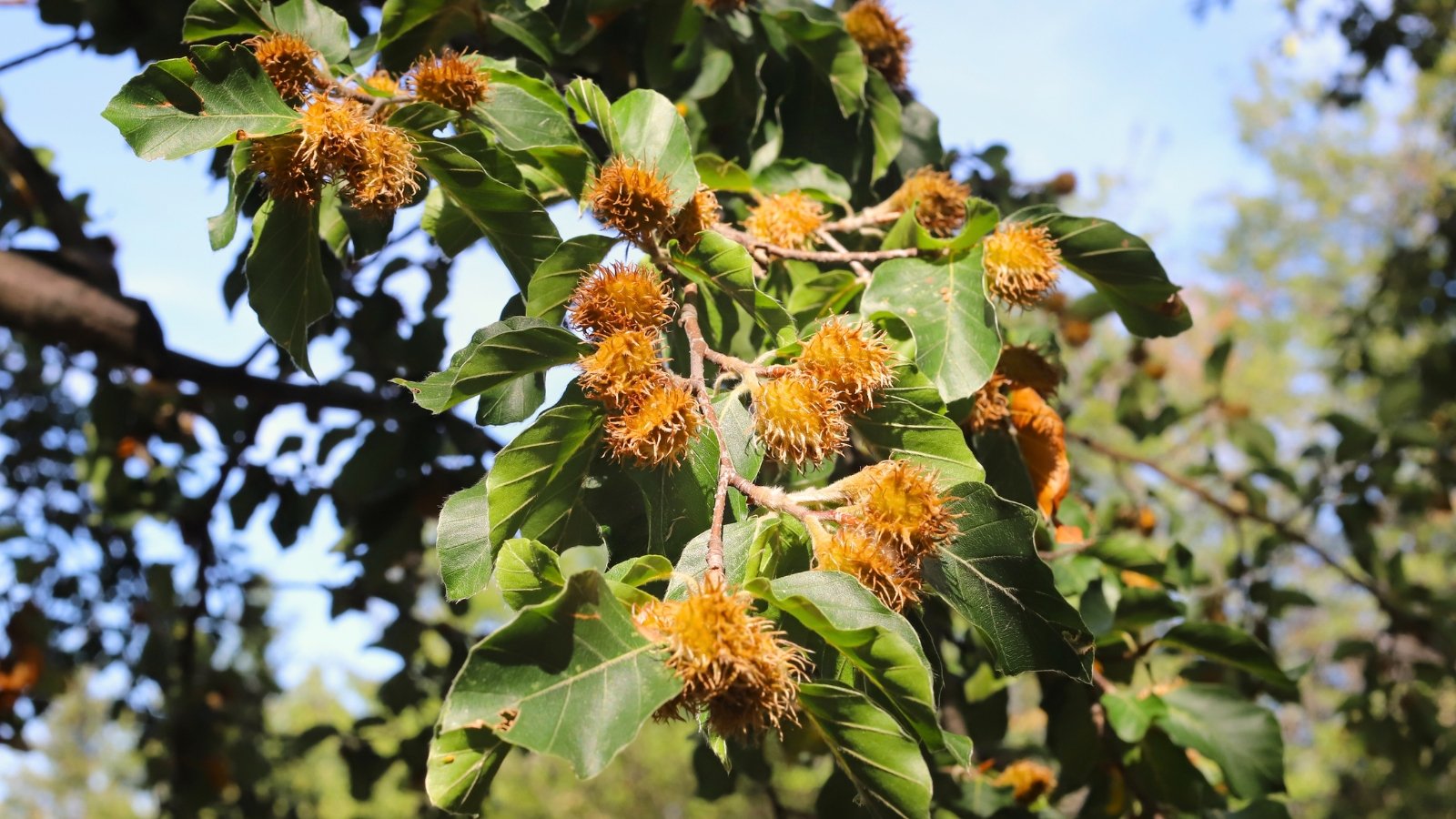
European beech is one of the historical, classic deciduous hedge trees used in European gardens and landscapes. Though non-native, it is non-invasive and makes a beautiful, formal hedge. These grow exceptionally tall if you allow them to, but with regular pruning, they work quite well.
This type of deciduous tree can live for hundreds of years. In the fall, their foliage changes to rich gold tones with bits of yellow and orange. American beech also works, and is striking in the fall. Beech trees hold onto their foliage longer than many, making them even more desirable. You’ll find these at the illustrious palace of Versailles.
American Hornbeam
|
|
botanical name Carpinus caroliniana |
|---|---|
|
|
sun requirements Partial to full shade |
|
|
height Up to 40’ |
|
|
hardiness zones 3-9 |
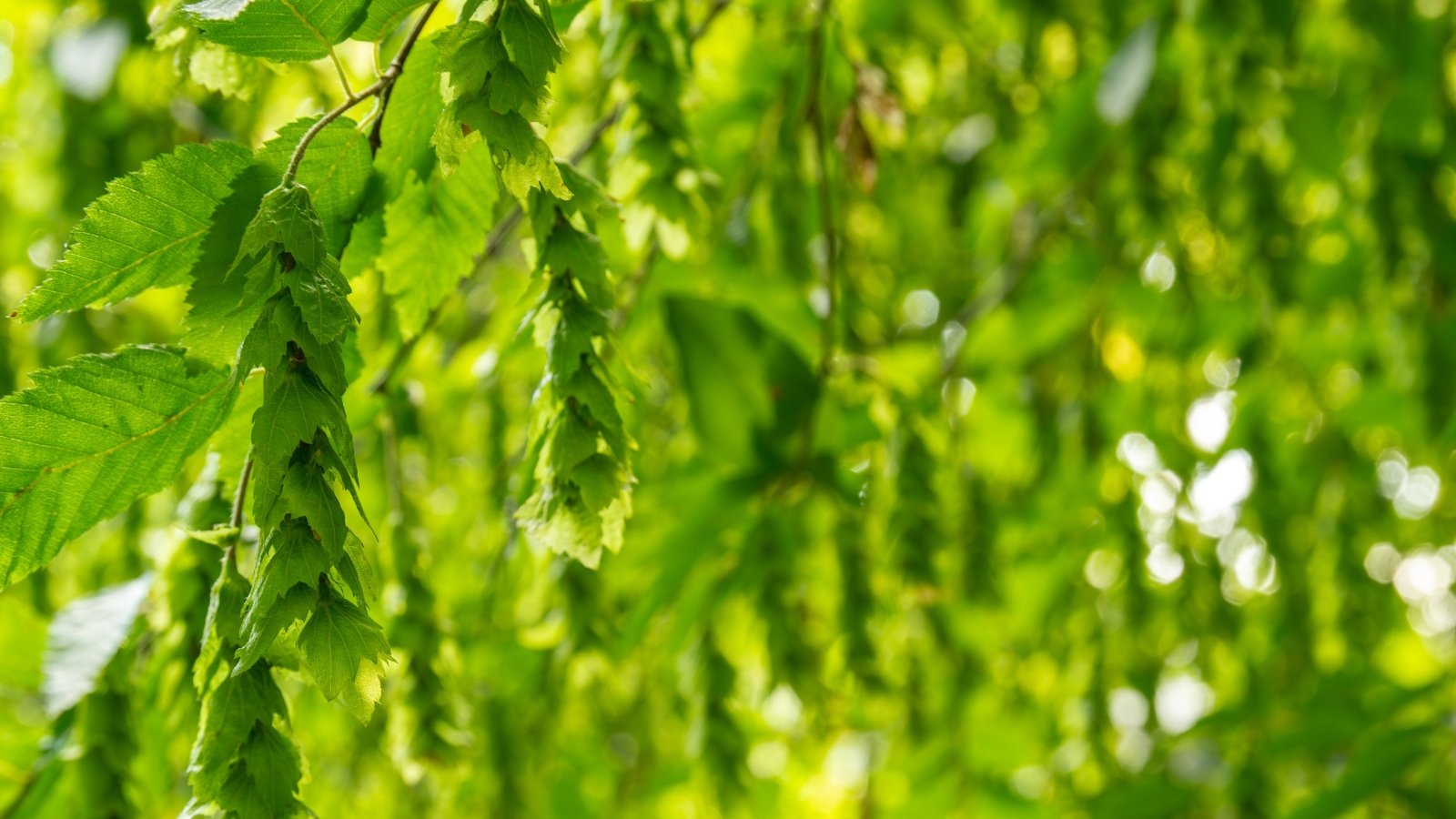
American hornbeam ought to get more attention and appreciation for its use as a deciduous hedge tree. It’s native, so it’s wonderful for supporting wildlife, and it’s a smaller cultivar, so it doesn’t require as much pruning. It makes a dense, elegant hedgerow. It also works beautifully in more wooded, shaded spaces.
As a hedge tree, American hornbeam has some wonderful traits. It has dense branching, which makes it great for privacy and weather screening. It’s shade-tolerant, which means it is more versatile. It has lovely, soft, green leaves in spring and summer, and incredible orange, red, and gold fall foliage.
Washington Hawthorn

|
|
botanical name Crataegus phaenopyrum |
|---|---|
|
|
sun requirements Full sun to partial shade |
|
|
height Up to 30’ |
|
|
hardiness zones 4-8 |
Hawthorns make exemplary deciduous hedge trees. Historically, they are one of the best for living fences and defensive hedges. They have dense, impenetrable foliage, but if that were not enough, they also have large, sharp thorns. No one is cutting through this hedgerow! The one to three-inch thorns keep people and animals in or out.
American hawthorn can grow up to 30 feet tall if you allow it to, but it takes well to pruning. It’s easy to keep it to 15 feet or shorter. It takes well to hard pruning if it ever gets out of hand. This deciduous tree has lovely spring flowers that support pollinators. It also has fiery orange and purple fall foliage, and red winter berries to feed the birds.
Red Osier Dogwood
|
|
botanical name Cornus sericea |
|---|---|
|
|
sun requirements Full sun to partial shade |
|
|
height 6’-12’ |
|
|
hardiness zones 2-7 |
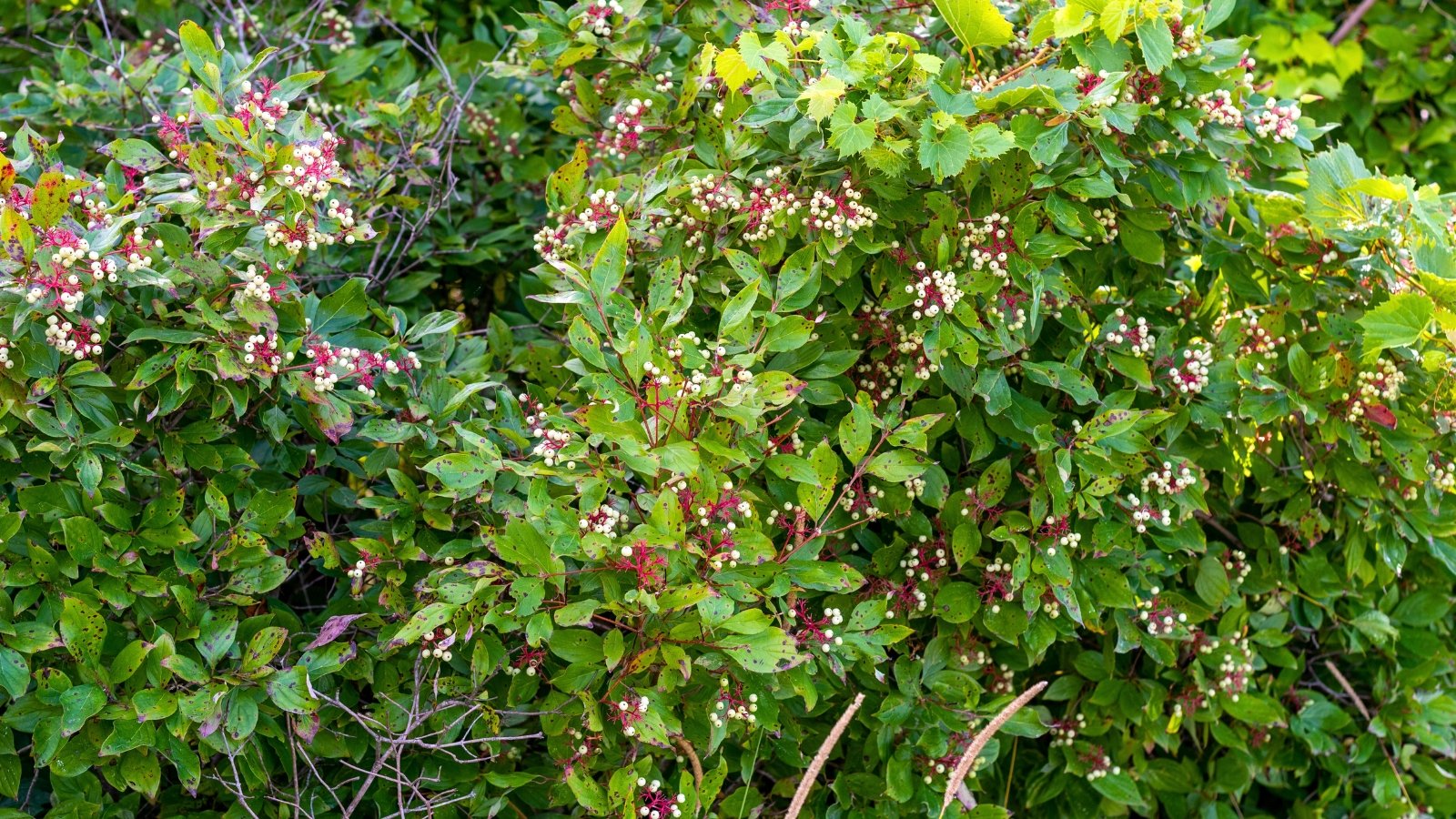
If you want to go all out with your deciduous hedge trees, I highly recommend red osier dogwood. If you purchase larger specimens, this can get pricey. But they grow up to two feet per year, so if you can be patient, it’s doable even on a budget. Planted close together, these create a dense thicket, and they are stunning.
As dogwoods go, this one is unconventional. It flowers in the spring, and the blooms are small, appearing in clusters. Pollinators appreciate these. Its dense, lush foliage is a great screen in summer, and in the fall, it shifts to glowing red and purple.
White berries stand out against the fall foliage and persist into the winter. Even in the winter, this deciduous tree is stunning. The bare stems are a bold, bright shade of red that creates a less private but eye-catching screen.
Florida Maple

|
|
botanical name Acer floridanum |
|---|---|
|
|
sun requirements Full sun to full shade |
|
|
height Up to 60’ |
|
|
hardiness zones 6-9 |
Maples are not nearly as popular deciduous hedge trees as they should be. They don’t all work, but I’ve included two here, as they have some of the most gorgeous fall foliage.
Florida maple is great for planting as a hedge in the Southeast. This is a medium-sized tree, but you can prune it to keep it more manageable.
Florida maple is a wildlife-friendly deciduous tree. It grows well in a wider range of sun exposure types. It’s also heat and drought-tolerant, which is unusual for a maple. The foliage is the main attraction for this maple, like most. Bright green in spring and summer, they turn orange and gold in the fall.
Field Maple

|
|
botanical name Acer campestre |
|---|---|
|
|
sun requirements Full sun to partial shade |
|
|
height Up to 35’ |
|
|
hardiness zones 5-8 |
Field maple also goes by hedge maple, and is one of the best deciduous hedge trees you can find. They have a naturally dense canopy that forms a tight structure and doesn’t mind pruning. It also provides food for pollinators and birds with its flowers and berries.
As maples go, this one is tough and hardy, though it prefers temperate climates. It recovers well from cutting back to hardwood in the event that you wait too long between pruning. It’s a slow grower, but that makes it easier to train. In the fall, the leaves turn gold, orange, and yellow, lighting up the landscape.
Sassafras

|
|
botanical name Sassafras albidum |
|---|---|
|
|
sun requirements Full sun to partial shade |
|
|
height Up to 60’ |
|
|
hardiness zones 4-9 |
Sassafras isn’t just fun to say; it also makes an unconventional but incredible deciduous hedge tree. Native to much of the Eastern and Central United States, sassafras has ecological value. Both the wood and the leaves have an aromatic quality, with a spicy, sweet scent.
This deciduous tree colonizes to form a dense thicket. It’s a larval host plant for spicebush and swallowtail butterflies, and its fruit feeds birds. It’s also drought-tolerant once established and needs little maintenance aside from pruning.
It’s one of the most beautiful when it comes to autumn colors, with leaves in shades of red, orange, and yellow.
Tall Fothergilla

|
|
botanical name Fothergilla latifolia |
|---|---|
|
|
sun requirements Full sun to partial shade |
|
|
height 6’-12’ |
|
|
hardiness zones 4-8 |
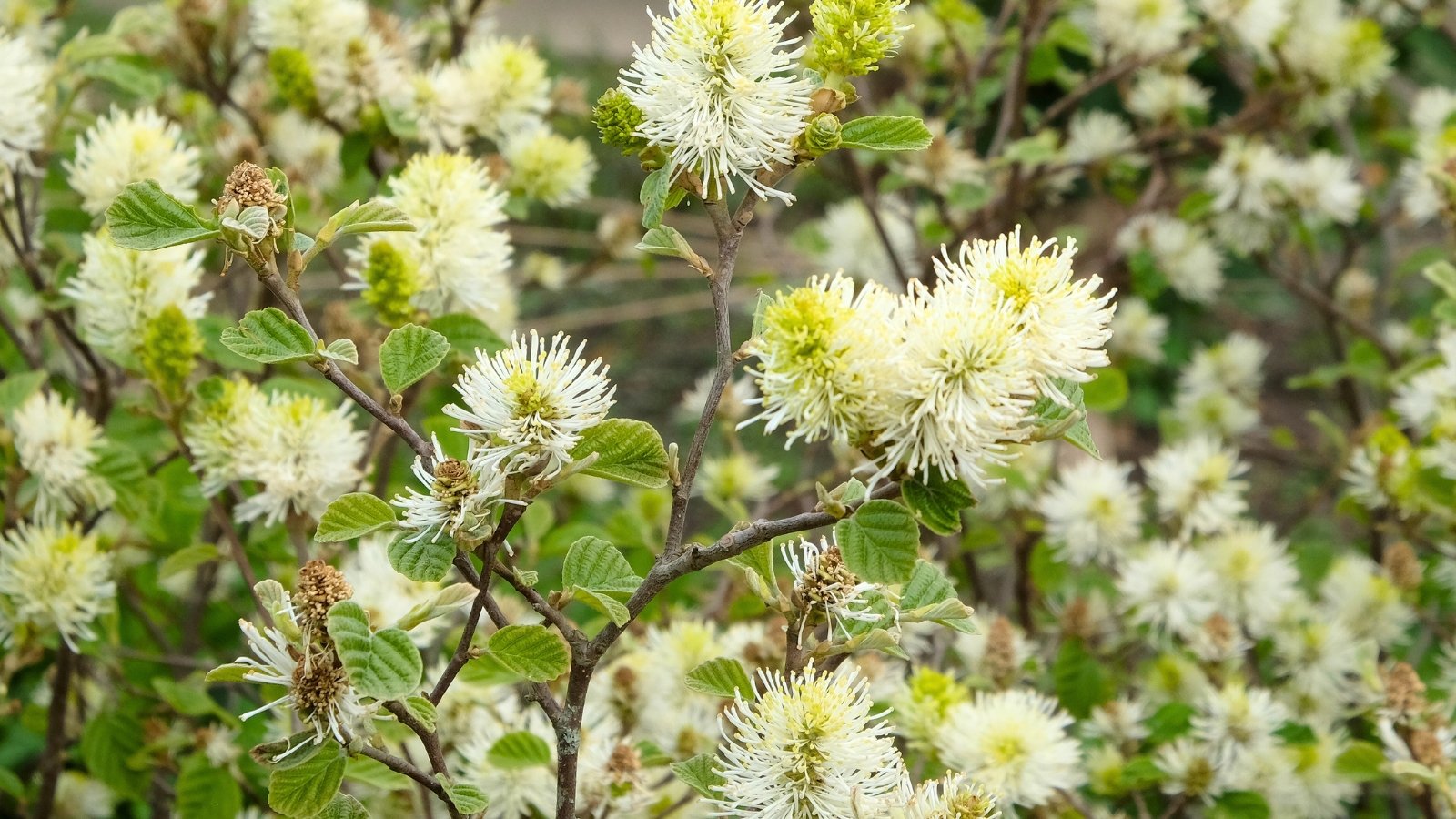
Tall fothergilla is a gem of a tree that works excellently as a deciduous hedge tree. It’s truly more of a shrub, but a large one, so it’s good for layering with shorter evergreens. It produces fluffy, white bottlebrush flowers in the spring that are an excellent early food source for pollinators.
This is a dense, branching shrub, and since it rarely grows over 12 feet tall, it’s manageable as a hedge with little maintenance. This is a spectacular plant in the fall. The leaves change to brilliant blends of red, orange, yellow, and even purple.
Common Witch Hazel

|
|
botanical name Hamamelis virginiana |
|---|---|
|
|
sun requirements Full sun to partial shade |
|
|
height Up to 30’ |
|
|
hardiness zones 3-9 |
Witch hazel doesn’t get nearly enough attention as a hedge tree and otherwise. It’s one of the few plants that flower in late fall, so it’s an incredible late food source for pollinators. It’s adaptable, hardy, and largely pest-resistant, making it an easy one to care for. It also has a soft, naturally attractive structure.
In terms of fall color, witch hazel takes the cake. But it’s not just leaves that make this a special deciduous hedge tree. Just around the time it loses its leaves, it blooms! Depending on the variety, it produces tones of fringelike orange, reddish, or yellow flowers. They can persist into winter.
Spicebush

|
|
botanical name Lindera benzoin |
|---|---|
|
|
sun requirements Partial shade |
|
|
height Up to 15’ |
|
|
hardiness zones 5-9 |
Spicebush makes a perfect deciduous hedge tree! It’s versatile, beautiful, shade-tolerant, and supports a ton of native wildlife. This includes the wonderful spicebush swallowtail butterfly, which uses it as a larval host. This is also not technically a tree, but it will form a striking 15-foot hedge, so it’s excellent for layering with evergreens.
In the spring, spicebush is one of the earliest bloomers. Clusters of small yellow flowers appear before the foliage. Female plants form bright red berries in late summer, which pop against the green foliage. In the fall, the leaves change to gold and yellow. The leaves have a spicy scent when they’re crushed.
Nannyberry

|
|
botanical name Viburnum lentago |
|---|---|
|
|
sun requirements Full sun to partial shade |
|
|
height Up to 20’ |
|
|
hardiness zones 2-8 |
Nannyberry, or viburnum, is a popular large shrub here in the South, and it is one of the best native hedge trees you will find. It’s tough, adaptable, and highly ornamental. It will grow as tall as 20 feet, but you can prune it to keep it closer to 10 feet.
With its moderate growth rate and 50+ year lifespan, this is a deciduous hedge tree with staying power. It’s also a seasonal wonder. In the spring, nannyberry produces clusters of pretty white flowers that pollinators adore. Its summer berries feed birds, and in the fall, its foliage changes to red, orange, and purple.
Black Tupelo

|
|
botanical name Nyssa sylvatica |
|---|---|
|
|
sun requirements Full sun to partial shade |
|
|
height Up to 70’ |
|
|
hardiness zones 4-9 |
Finally, black tupelo is one of the most wonderful and ecologically valuable native trees in North America. It also makes a great deciduous hedge tree! They do grow quite tall if left to their own devices, but you can prune them to keep them smaller. They are exceptionally long-lived and wildlife powerhouses.
These are excellent for properties with less than optimal drainage. They tolerate moisture well. They’re also able to grow in clay, and in full sun or partial shade. They make an excellent wind screen, and in the fall, they are one of the top colorful, native trees you will find. The foliage changes to bright red and orange.


