

15 Native Plant Seeds to Collect and Replant in October
October is an ideal month to collect native plant seeds. It's also a great time to replant them! Join Florida gardener Melissa Strauss to talk about some wonderful native plants you can collect from now for a thriving native garden next year.

Contents
In many climates, October is one of the best times to both collect and replant native plant seeds. As your summer perennials wrap up and dry out, their seed heads mature, making it a perfect time to harvest. Replanting them now also mimics nature’s rhythm, as plants naturally release their seeds this time of year.
When you collect native seeds in October, make sure you do it on a dry day. You can snip the seed heads or shake seeds directly from them into a paper bag. Allow the seeds to dry in an open-air situation for several days before sowing or storing them.
By planting in October, your seeds naturally receive a period of cold stratification. They need this to break dormancy, so it is imperative if you want a solid germination rate.
By resowing your native plant seeds in the fall, you need no special treatment. The natural rhythms of nature will do all the work for you. Here are a few of the many native plants you can collect seeds from and replant them right now!


Milkweed


|
botanical name Asclepias spp. |
|---|---|

|
sun requirements Full sun |

|
height 1’-5’ |

|
hardiness zones 3-11 |
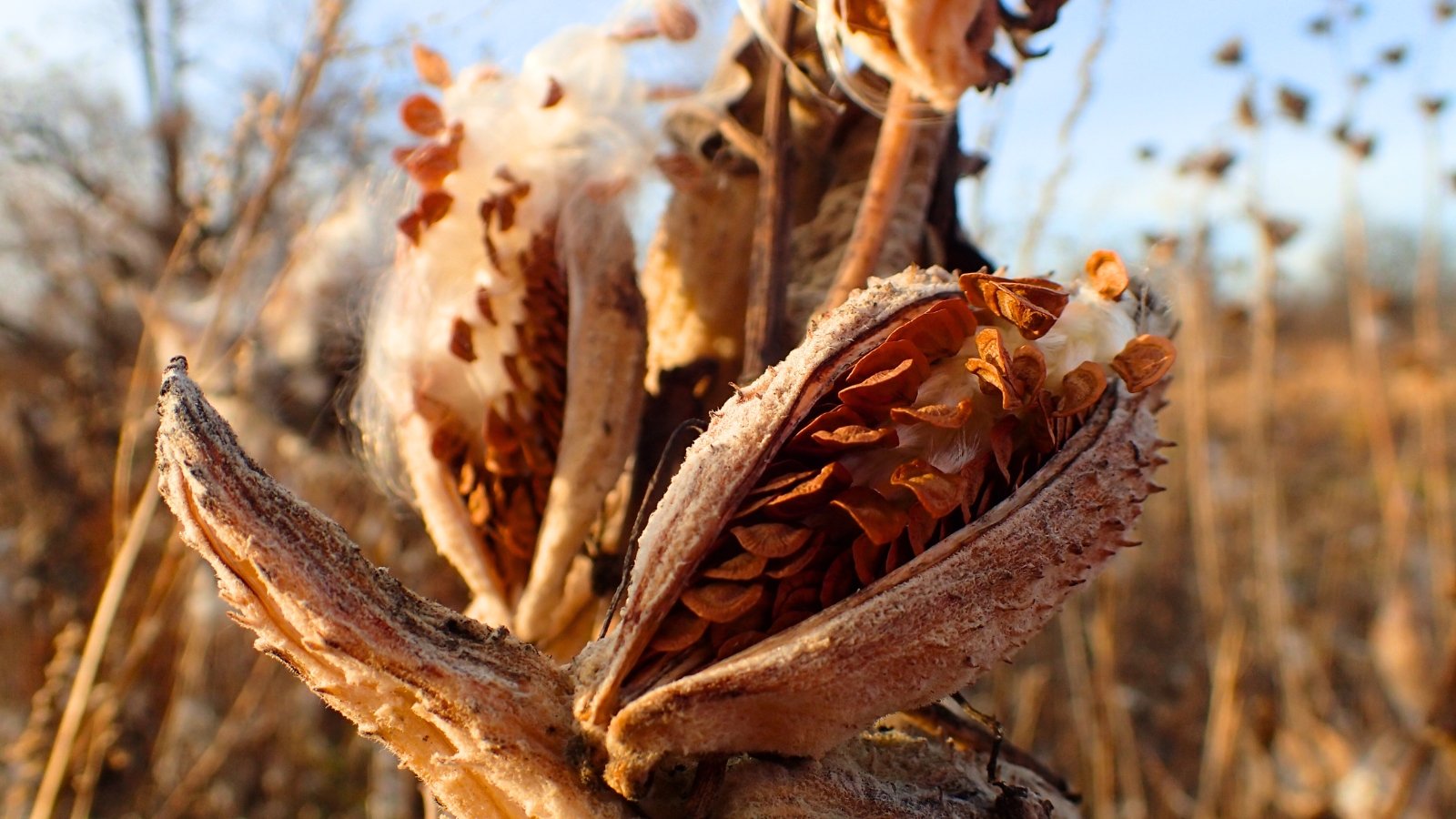
Milkweeds are incredibly important to the North American ecosystem. They are the sole larval food for Monarch butterflies. October is the perfect month to collect seeds from this native plant. The large seed pods should ripen and split right about now, making it easy to harvest from this perennial.
Wait until the pods begin to open on their own and gently crack and pull out the seeds. Choose a sunny spot to plant them, sowing them on the surface and lightly dusting over with soil. Don’t worry if it takes a while for your milkweed to sprout. They tend to take a while. They grow quickly once they do germinate, though.
Coneflower

|
|
botanical name Echinacea purpurea |
|---|---|
|
|
sun requirements Full sun |
|
|
height 2’-5’ |
|
|
hardiness zones 3-9 |
This is the perfect time to collect coneflower seeds, as this native plant is winding down in October. In warm climates, your coneflowers may see a bit of a resurgence after you pluck the seed heads, which is wonderful! By plucking off the spiky seeds, your plant will have some energy to apply elsewhere.
Let your coneflower seeds air dry in a bag or on a screen for a few days. Rub them between your palms gently to release them and separate the chaff. Choose a sunny spot and gently rake these into the soil, scattering them evenly and pressing lightly. Don’t cover with more than a quarter inch of soil.
Black-Eyed Susan

|
|
botanical name Rudbeckia hirta |
|---|---|
|
|
sun requirements Full sun |
|
|
height 1’-4’ |
|
|
hardiness zones 3-9 |
While you’re out in the garden, it’s time to collect seeds from your black-eyed Susan plants as well! Wait until the flower heads are dark brown and the petals have fallen. Snip them into a paper bag and let them dry out for a few days.
Once the heads are good and dry, rub them gently between your fingers to release the seeds. Allow them to finish drying for a couple of days before scattering them in the areas you want to see them next season. A light layer of straw over top will help most seeds stay in place, and still allow the light they need to germinate.
Blanketflower

|
|
botanical name Gaillardia spp. |
|---|---|
|
|
sun requirements Full sun |
|
|
height 1’-3’ |
|
|
hardiness zones 3-10 |
Blanketflowers should be ready to collect native seeds from in October, too. This native plant is sturdy and drought-tolerant, and provides an excellent food source for pollinators. Its foliage is also evergreen in some climates. These native plants colonize easily, building a blanket-like covering on the ground.
Collect these as you would your black-eyed susans. Snip the bristly flower heads into a paper bag and allow them to air-dry for a few days. The seeds are small and each has a fluffy tuft attached. Scatter these seeds in a sunny spot. Make sure that your location has excellent drainage.
Goldenrod

|
|
botanical name Solidago spp. |
|---|---|
|
|
sun requirements Full sun |
|
|
height 1’-8’ |
|
|
hardiness zones 3-9 |
October is right about the time my goldenrod is finishing up, but I’m in Florida. In cooler climates, there’s a solid chance that yours has set seed by now. This native plant is incredibly important to pollinators, and it’s stunning and dramatic in the garden.
Once your flower heads have faded from golden yellow to fluffy and tan, they are ready to collect. Shake the fluffy seeds loose into a paper bag. Always collect on a dry day, and try to collect from more than one plant for diversity. Goldenrod seeds need light to germinate, so lightly press them into the soil.
Penstemon

|
|
botanical name Penstemon spp. |
|---|---|
|
|
sun requirements Full sun to partial shade |
|
|
height 1’-6’ |
|
|
hardiness zones 3-10 |
Penstemon is another wonderful native plant that is easy to collect and sow the seeds of in October. Once the seed pods have turned brown and dry, snip them off into a paper bag. If the pods are ready, you should be able to crush them easily. Then shake out the tiny, black seeds.
Choose a sunny, well-drained site for sowing your penstemon seeds. This native plant doesn’t like soggy soil. Scatter the seeds and rake them in. They need light to germinate, so don’t cover them. These should sprout in mid to late spring.
Aster

|
|
botanical name Symphytrichum spp. |
|---|---|
|
|
sun requirements Full sun |
|
|
height 6”-6’ |
|
|
hardiness zones 3-8 |
October is a great time to collect and sow native aster seeds, as well. These native plants may still be blooming, however, so hold off if they are. You want to allow them to ripen and dry out completely. They should be brown and papery feeling with a bit of white fluff showing.
Once they’re dried out, rub the flower heads between your fingers to release the tiny seeds. A bit of fluff is ok, but for the most part, separate out the chaff. These need cold stratification, and you can sow them in full sun or partial shade. They sprout in late spring, so be patient.
Wild Bergamot

|
|
botanical name Monarda fistulosa |
|---|---|
|
|
sun requirements Full sun |
|
|
height 2’-4’ |
|
|
hardiness zones 3-9 |
Wild bergamot seeds mature as the weather begins to cool off. This makes October a good time to collect these native seeds. This plant is valuable to pollinators and adds interesting texture when you leave some in the garden in the fall.
In terms of location, an open, meadowlike space is what wild bergamot prefers. Scatter and press the seeds lightly into the soil; these also need light to germinate. Winter cold and moisture will give these the stratification they need, and they will sprout and bloom by midsummer.
Joe Pye Weed

|
|
botanical name Eutrochium spp. |
|---|---|
|
|
sun requirements Full sun to partial shade |
|
|
height 3’-12’ |
|
|
hardiness zones 3-10 |
October is right about the time that Joe Pye weed naturally drops its seeds. This makes it the perfect time to collect and resow them. You’ll know they’re ready to collect when the flowers go from pink to brown and become dry and fluffy. Make sure to collect from this native plant on a dry, breezy day.
Bring your Joe Pye weed seeds indoors and allow them to dry for a few days. Then, crumble the flower heads to release the tiny, narrow seeds. This native plant likes moist soil, so plant it in a spot that will stay moist, or is close to a water source.
Little Bluestem

|
|
botanical name Schizachyrium scoparium |
|---|---|
|
|
sun requirements Full sun |
|
|
height 2’-4’ |
|
|
hardiness zones 3-9 |
Little bluestem is a beautiful and important native plant. It prevents erosion, improves soil structure, and feeds birds over the winter. It’s beautiful, too! In October, snip the dried flower heads into a paper bag, making sure to choose a dry day for the task.
You want to collect these seeds when they are a silvery tan color and have turned fluffy. Fall sowing is best for little bluestem. It prefers plenty of light and good drainage. It’s happier in poorer, sandier soil than most plants. Surface sow, as these need light to germinate.
Ironweed

|
|
botanical name Vernonia spp. |
|---|---|
|
|
sun requirements Full sun |
|
|
height 2’-12’ |
|
|
hardiness zones 5-9 |
Ironweed is a valuable native plant that helps control erosion and feeds tons of pollinators, especially butterflies. Its lovely purple flower clusters show up in midsummer and last until early fall. October is an ideal time to collect seeds from your ironweed.
Cut the flower heads and allow them to dry for a few days before crumbling them to collect. Separate out the chaff and resow by scattering or lightly raking the seeds into the soil. These sprout in late spring and grow tall and stately over the summer.
Cardinal Flower

|
|
botanical name Lobelia cardinalis |
|---|---|
|
|
sun requirements Full sun to partial shade |
|
|
height 2’-5’ |
|
|
hardiness zones 3-9 |
Cardinal flower is a native, wetland perennial that provides nectar for hummingbirds and other pollinators. Its late-season blooming time makes this an important food source. It also helps stabilize soil in areas of wet soil, where many plants would rot. In October, you’ll see that the pods they form will turn brown and papery. This means it’s time to collect.
Snip the whole pods into a paper bag and allow them to dry indoors for several days. The seeds are dust-fine, so be sure to work in a draft-free space. Sow in damp soil, pressing lightly into the surface.
Blue Mistflower

|
|
botanical name Conoclinium coelestinum |
|---|---|
|
|
sun requirements Full sun to partial shade |
|
|
height 18”-3’ |
|
|
hardiness zones 5-10 |
October is the perfect time to collect and resow seeds from your blue mistflower plants. These native flowers bloom in late summer and early fall, and turn to fluff as the season goes on. The blooms are exceptionally attractive to butterflies, especially Monarchs.
Wait for a dry day and collect from healthy, vigorous plants. When you pop off the fluffy flower heads, they should come away easily. Let them dry indoors for about a week before you crumble and sort the seeds from the chaff. These will grow in partial shade and need light to germinate.
Switchgrass

|
|
botanical name Panicum virgatum |
|---|---|
|
|
sun requirements Full sun |
|
|
height 3’-7’ |
|
|
hardiness zones 5-9 |
October is prime time to collect and resow native switchgrass. Wait until the seed heads turn tan and shatter easily when rubbed. Wait for a dry day and snip whole panicles into a paper bag, then allow them to dry. Strip the stems into a bowl, using a gentle fan to separate out the winnow or fluff.
Broadcast sow your switchgrass in a sunny spot with moderately moist soil. Barely cover or press into the soil with the back of a rake or your hand. Water once to settle and then allow nature to take its course.
Coreopsis

|
|
botanical name Coreopsis spp. |
|---|---|
|
|
sun requirements Full sun |
|
|
height 6”-4’ |
|
|
hardiness zones 4-10 |
Native coreopsis is a valuable plant that feeds pollinators over a long bloom period. They naturalize easily and make an excellent addition to your meadow planting or pollinator garden. The foliage is also evergreen in warmer climates. Determine the time to collect by waiting until the flower heads are dry and brittle.
Snip those flower heads into a bag and allow them to dry for a few days. Once dry, rub them between your fingers to release the slim seeds and separate out the chaff. Surface sow them back in the garden, pressing lightly into the soil, so they get the light they need to germinate.


