When and How to Water Your Calathea Plant
Calatheas captivate as houseplants with their distinct folding leaves in striking patterns. Balancing the tropical’s water requirements is key to success for a long-lived specimen with healthy, unfurling leaves. Gardening expert Katherine Rowe outlines how and when to water calathea for easy growing and extended enjoyment.

Contents
Calathea (Calathea spp.) has many merits as a houseplant, the first being its handsome leaves in bold, graphic patterns and colors. The tropicals look good year-round, whether hanging or potted in a low bowl.
They tolerate varying light conditions and are non-toxic, making them safe for households with kids and pets. Adding to their intrigue is a subtle fold of the leaves at night to conserve moisture. They open by day to reveal bold stripes and dots in dark green, silver, purple, and more.
While calathea are relatively easy care, there are a few specifics when it comes to balancing their water needs. With water fluctuations, leaves turn yellow, brown, and curl. To sustain vigorous growth and bold foliage, consistent moisture and humidity are essential to calathea health, and knowing how to correctly water a calathea plant is key.
Calathea as Houseplants

There are about 60 species in the Calathea genus and numerous cultivars boasting diverse leaf shapes, patterns, and colors. The tropicals hail from Brazilian rainforests, where they grow on the forest floor beneath a leafy tree canopy. They survive outdoors year-round in frost-free USDA zones 11 to 12, and grow as houseplants for overwintering indoors everywhere else.
In addition to watering and humidity requirements, the right lighting is essential to a healthy, happy calathea. They withstand a range of exposures within their parameters, with the best being medium, indirect light.
This mid-level lighting mirrors their shaded conditions in the forest. They tolerate low light conditions, though growth may be slower and leaf brilliance less pronounced. They handle some morning sun, but too much direct sunlight can scorch, bleach, or fade foliage. Leaf edges may curl and crisp.
Calathea leaves and stems have the fascinating capability of regulating moisture. Nyctinasty is a circadian response to light and darkness. The leaves fold at night, conserving moisture and warmth, and open by day to resume photosynthesis and other plant processes.
Calatheas enjoy consistent, moderate conditions as houseplants. Average room temperatures (65-75°F or 18-24°C) are sufficient, keeping them out of heated and cooled drafts. Well-draining potting mix and containers go hand-in-hand with a balanced watering regimen and thriving specimen.
When to Water
In their rainforest habitat, calathea experiences regular moisture through drenching rains and high humidity, followed by seasonal dry spells. Their native understory soils are organic and humusy, and remain moist during the warm growing season.
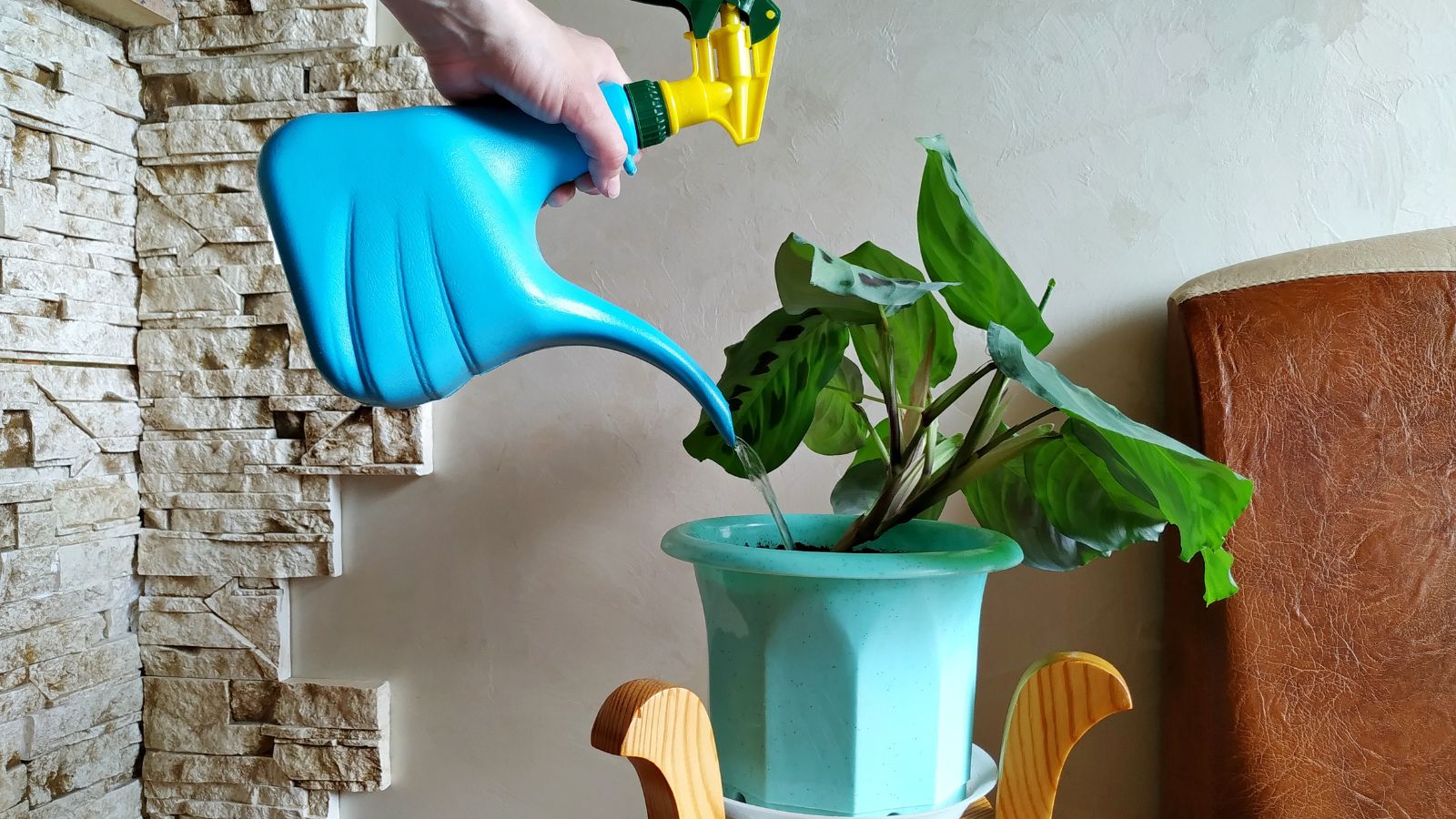
In our temperate homes or for pots summering outdoors, evenly moist soils during the active growing season support healthy specimens. Water your calathea plant when the soil surface feels dry to an inch or two deep (a knuckle or two beneath the surface).
Watering sessions may be once or twice a week during the summer, and less during the cool season. A soil touch test, rather than specific timing, is the best gauge.
Reduce water in late fall and winter as growth is less active, and moisture uptake and evaporation slow. In cool months, soils take longer to dry, and the need is usually once every 10 to 14 days or so, depending on the growing environment.
Err on the dry side rather than overwatering when you water a calathea plant. Calathea can tolerate slight drying between waterings and will rebound more quickly than with excessive moisture.
Variables

Several variables go into how often to water a calathea plant, including size, soil texture, and container type. Again, the best measures are feeling the soil and observing the plant to get a feel for watering cycles throughout the year.
Lighting, seasonality, and environmental factors influence how quickly soils dry. Tropicals in bright light absorb and evaporate more moisture than those in low light, whose growth processes are slower. The specific microclimate, including dry or low-humidity situations, also plays a role.
Potting medium is a factor in how often to water a calathea plant. A high-quality mix formulated for tropical houseplants retains moisture and has good aeration and drainage. Calathea benefits from a mix of mostly potting soil blended with coir and perlite to hold moisture.
Compacted soils (usually from watering fluctuations) or aging potting media create unhealthy situations for the roots. Make sure the soil is well-draining and that pots have sufficient drainage holes.
The type of container is also a consideration in how quickly the soil dries. Terra cotta pots are porous and dry out more quickly than some other materials. The porosity and airflow benefit roots but may need watering more often. Plastic retains moisture longer, which may increase the length of time between watering sessions, but calls for careful observation to prevent oversaturation.
Type of Water

Calatheas are sensitive to some types of tap water. Hard water, high fluorides, and chlorines can cause leaf damage. Because of their sensitivities, they benefit from filtered, distilled, or captured rainwater over treated tap systems.
High fluorides can cause leaf burn. Dissolved sodium bicarbonate in hard water systems may cause mineral buildup. To use tap water, fill the watering can and set it aside for a few hours or overnight.
How to Water

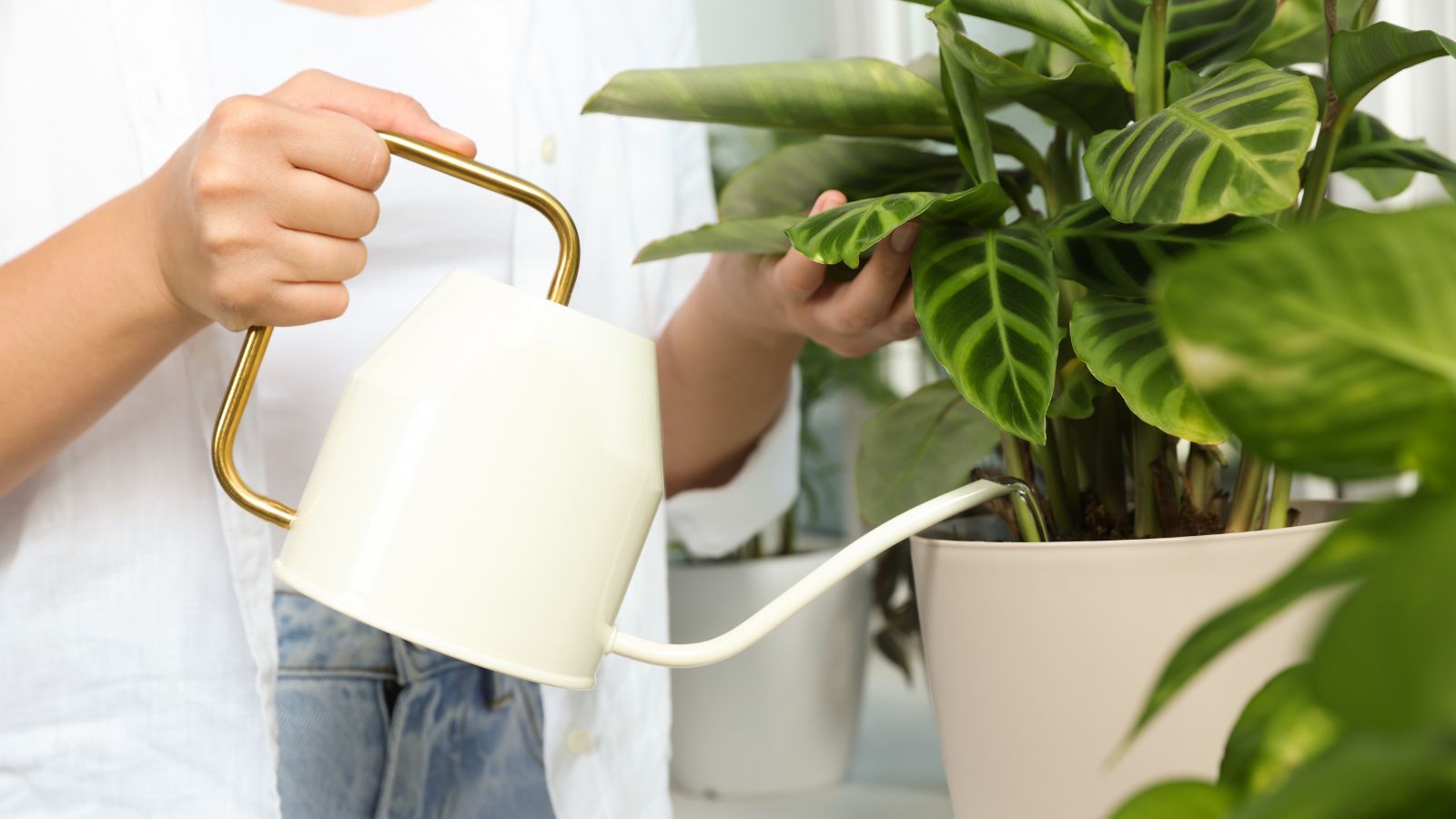
When it’s time to water your calathea plant, water thoroughly until it runs through the pot’s drainage holes. Water at the base of the crown, avoiding wetting the leaves and stems when feasible. Watering at the crown helps prevent overly damp conditions.
Give foliage a rinse or dusting occasionally to prevent pests like spider mites, which flock to dry, dusty situations. Clean leaves also allow the most light absorption.
Remove the catchment saucer after the pot has time to drain (within about 15 minutes). Emptying the dish ensures the container doesn’t sit in water.
Correct Over or Underwatering

Water imbalances are a prime source of stress for the tropicals. Fortunately, they’re a resilient lot and may recover if corrected in time.
With too much water, the potting mix will feel wet, sticky, and spongy for a prolonged period. Without enough, it becomes dry, crumbly, and dusty. In both cases, you’ll notice leaves turning yellow, brown, and dropping.
With overwatering, they’ll be limp and mushy. Underwatering shows dry, crispy edges and curling, wilting foliage.
Overwatering
Excess soil moisture creates soggy conditions that promote the common fungal disease root rot. Rot causes the roots to decay, and they can’t function to support upper growth. Roots become brown and mushy as the fungus progresses.
A calathea in overly saturated media with poor airflow may show yellowing, wilting, and drought-stressed leaves as they experience a lack of nutrition and moisture draw. If you suspect too much moisture, unpot the specimen to check the roots. Healthy roots will be white or light tan, while damaged roots will be brown.
Clip off any roots that are brown or damaged, and replant in fresh potting media. Continue with an as-needed watering schedule based on soil drying to an inch or two deep. If caught early, you’ll hopefully see rebounding growth with new leaves..
Underwatering
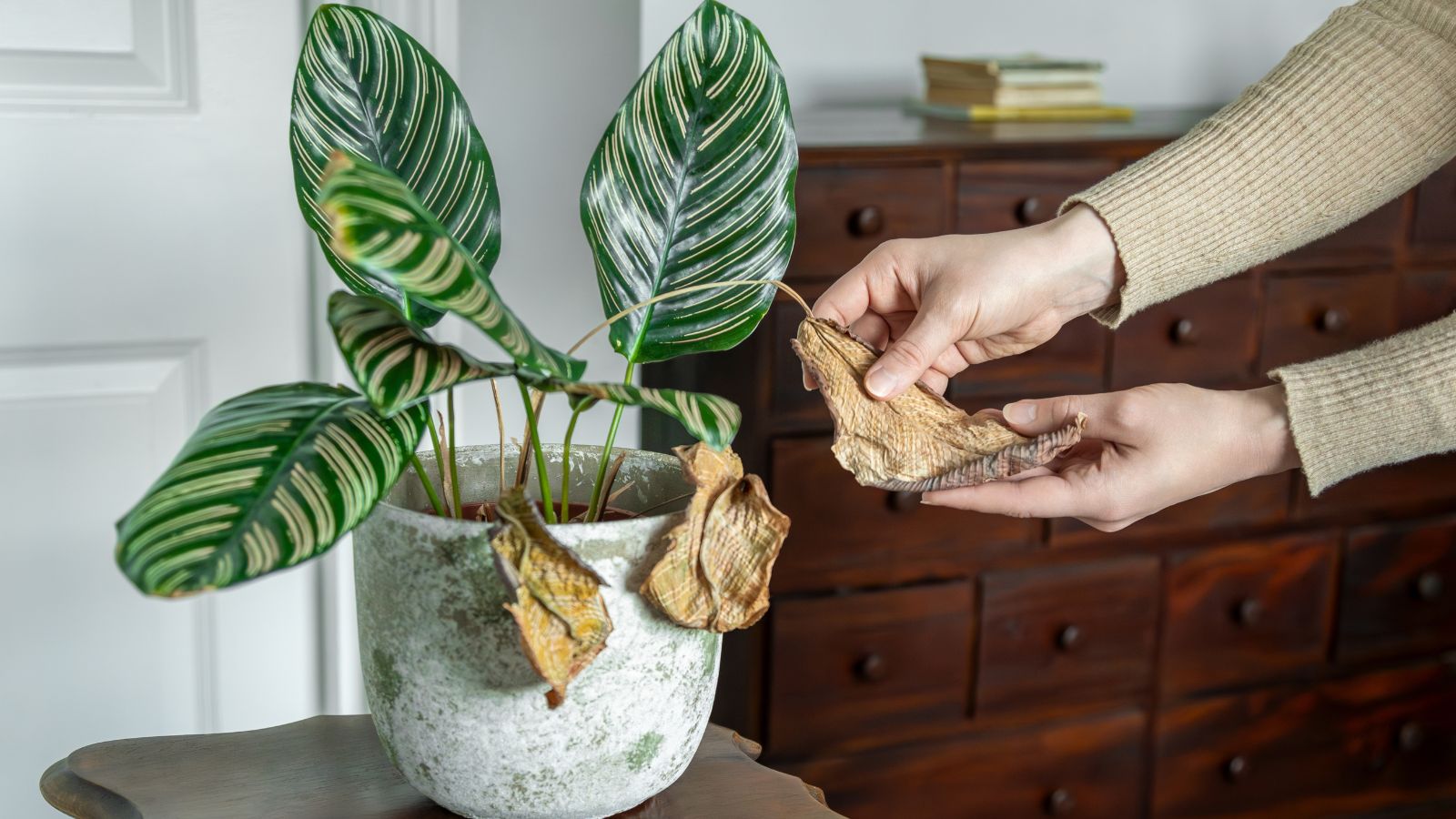
In cases of a skipped watering session or prolonged dryness, the best action is to rehydrate the roots with a deep watering session. Water from the top of the pot, letting it soak in and flow through the bottom. Leaves will bounce back quickly if the plant is still viable. Pinch or clip off any fully yellow or brown leaves.
Take care to avoid overcorrecting by watering too frequently. Use the soil touch test to get on a regular schedule, waiting a few days if the soil feels moist.
Raise the Humidity

Calathea are humidity-loving plants. They don’t tolerate low humidity, and leaf edges will brown and crisp in response. Humidity at 60-80% is optimal, and while they generally adapt to normal household conditions, they’re more sensitive to humidity levels than some other houseplants.
Dry climates, air conditioning, and heating reduce available moisture. Winter, especially, increases drying variables as we enjoy fireplaces and central heat or heaters. Keep pots out of heated drafts or cold blasts from open doors.
To raise humidity, a humidifier in the room is a reliable option. They work quickly and also increase airflow for improved circulation. Another option is to group houseplants so that evaporation, transpiration, and surrounding soil moisture raise ambient humidity levels. This works best in a humid room with sufficient lighting.
Lastly, try placing the pot on a tray of pebbles filled with water. The tray increases immediate air moisture, while the rocks prevent excess water uptake.