How to Pinch Your Pepper Plants for a Better Crop
Pinching pepper plants early in the season can lead to bushier growth and a bigger harvest. Gardening expert Madison Moulton explains when, how, and whether pinching is worth it for your peppers.

Contents
Pinching pepper plants is a great tool to improve your harvest with very little effort. By removing the growing tip or the first flowers early in the season, you redirect the plant’s energy away from growing tall or producing fruit too soon and toward building a stronger, bushier structure that produces more peppers overall.
It’s a common practice among experienced growers, though not everyone agrees it’s necessary. Some gardeners pinch every pepper plant they grow. Others never bother. Whether it’s worth doing depends on the type of pepper you’re growing, the length of your season, and what you’re trying to get out of the plant.


Why It Works

Pepper plants produce growth hormones at the tip of the main stem that drive growth upward. When you remove that tip, the hormones redistribute to the nodes below the cut, and the plant responds by pushing out side branches. More side branches means more places for flowers to form, and more flowers means more fruit.
The effect is most noticeable on varieties that produce small to medium-sized peppers (jalapenos, shishitos, habaneros, and similar). These types naturally branch, and pinching amplifies that tendency. The result is a compact, bushy plant loaded with fruit rather than a tall, lanky one with peppers only at the top.
Pinching early flowers works on a similar principle. When a young plant starts producing fruit before it’s built a strong root system and enough foliage to support it, the fruit takes priority over growth. The plant stays small and puts out a handful of peppers when it could have grown larger and produced many more. Removing those first flowers tells the plant to keep growing for a while longer before it shifts into production mode.
When to Pinch the Growing Tip

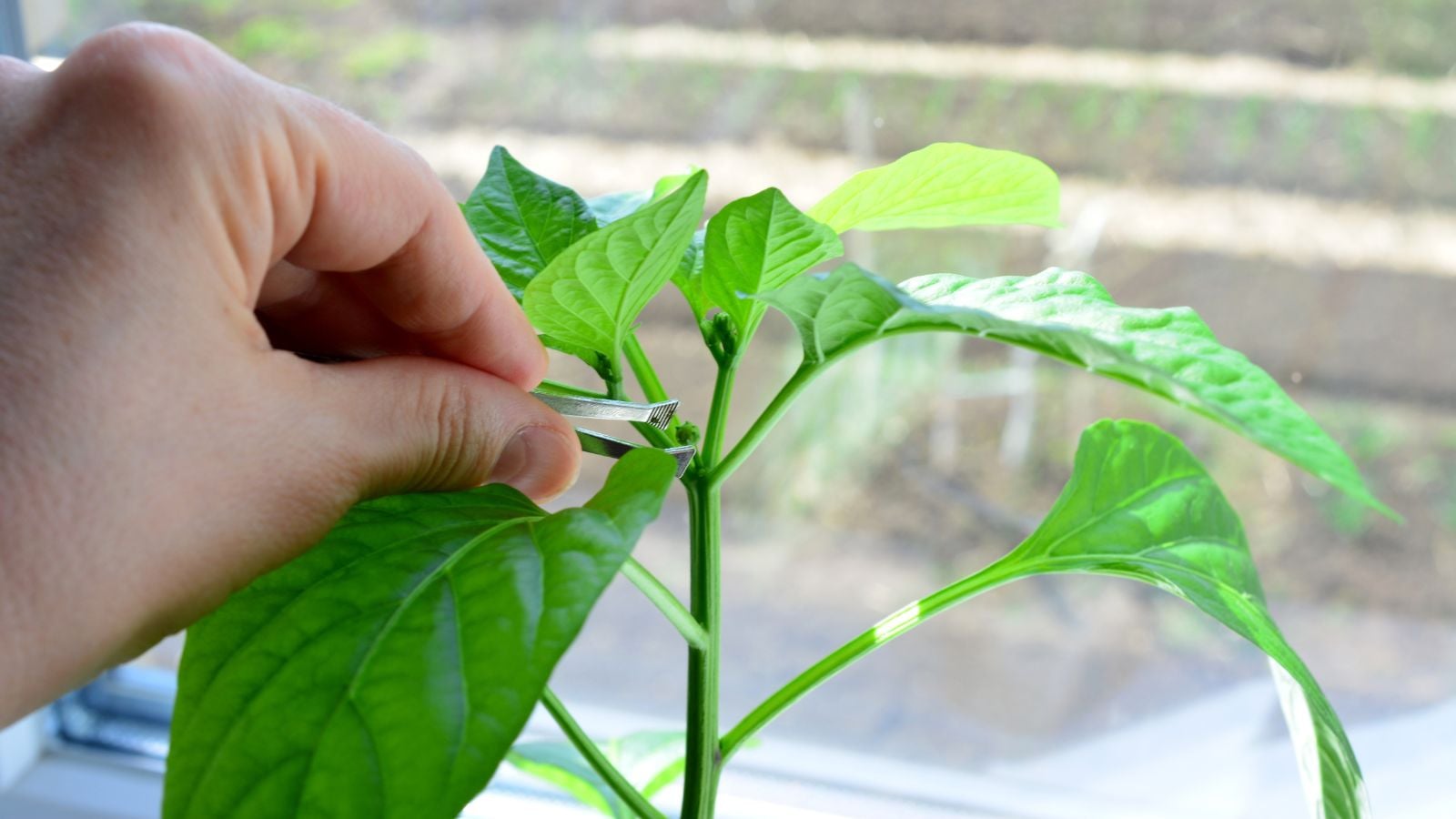
The best time to pinch pepper plants is when the seedlings are about six to eight inches tall, usually a few days to a week after transplanting outdoors. Give the plant a chance to recover from transplant shock first.
Use clean scissors or pruning snips. Cut the very tip of the main stem (about an inch of growth) just above an upper set of leaves. New branches will grow from the nodes where the remaining leaves meet the stem. You should see visible new growth within a week or two.
Always leave several sets of leaves on the plant. The plant still needs foliage to photosynthesize and fuel the new growth. Cutting too far down removes too much leaf surface and can stall the plant rather than encouraging it.
When to Pinch Early Flowers

Pepper seedlings sometimes start flowering well before they’re ready to produce fruit. If the plant is small (under eight inches or so), those early flowers are worth removing. Pinch them off with your fingers or snip them at the base.
Continue removing flowers for two to three weeks after transplanting outdoors. This gives the root system time to establish in the new location and lets the plant put energy into building a sturdy frame before it starts setting fruit. After that window, stop pinching and let the plant flower freely.
Toward the end of the season, the opposite strategy applies. If frost is approaching and your plant is still producing new flowers, pinch those off, too. Late-season flowers won’t have time to develop into mature peppers, and the plant’s energy is better directed toward ripening the fruit that’s already on the vine.
When Not to Pinch
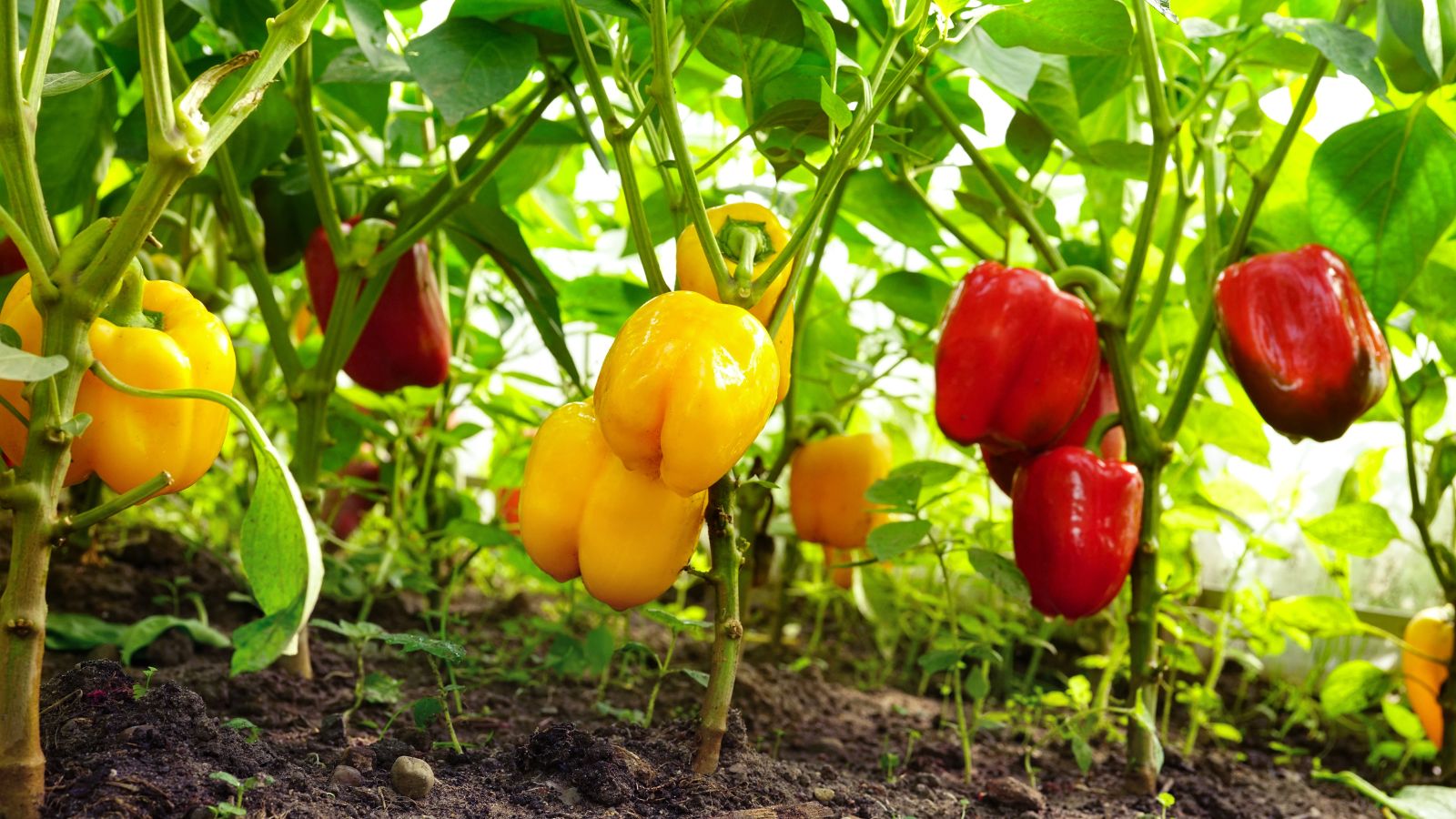
Large-fruited varieties like bell peppers, poblanos, and cubanelles don’t usually need to be pinched to branch well. Short growing seasons are the other consideration. Pinching delays the harvest by a couple of weeks because the plant spends time producing new branches instead of setting fruit. If you’re in a cooler region where the growing season is tight, you may be better off with a reduced yield.
If you’re not sure whether you need to pinch pepper plants, try it on half your plants and leave the other half alone. By the end of the season, you’ll have a clear comparison to use going forward for your climate.
What to Expect After Pinching

In the week or two following pinching, the plant will look like nothing is happening. The cut end may even look a little sad. This is normal. The plant is redirecting energy below the surface, preparing the side branches to take over.
Once the new growth kicks in, it tends to happen quickly. You’ll see two or more shoots emerging from the nodes just below where you made the cut, and each of those shoots will eventually flower and set fruit. The overall shape of the plant shifts from a single upright stem to a wider, bushier form with a thicker main trunk.
Pinched plants also tend to hold up better in wind and under the weight of heavy fruit. The broader structure distributes the load more evenly than a single tall stem, which can snap or lean badly once it’s loaded with peppers.