How to Plant, Grow, and Care for Leyland Cypress Trees
The Leyland cypress tree is an excellent addition to gardens as a foundation planting, a specimen, or planted in rows as a hedge. Plant it in cool regions where drought is common, and you’ll understand why it’s such a beloved tree. Learn how to grow this conifer with experienced gardener Sarah Jay.

Contents
If you live in warmer areas of North America, incorporating a Leyland cypress tree into your garden is a smart addition. Including one of these is a great way to bring drought-tolerant evergreen foliage that adds curb appeal and a conical shape.
This vigorous tree reaches great heights and quickly towers over other plantings within several years after planting. It adapts to various soil types, and in the cooler parts of its range can handle dryness that other trees of its kind can’t.
What x Hesperotropsis leylandii offers with its robust habit is balanced by its tendency to attract pests and diseases. Therefore, it’s important to know the ins and outs of growing it before you plant one. Having an informed perspective on this lovely tree will give you the best indication as to whether or not it is suitable for your garden.
Leyland Cypress Tree
Leyland Cypress Tree
Looking for a touch of evergreen elegance that’s both easy-going and a fast grower? The Leyland Cypress Tree is your garden’s next green giant. With its feathery soft foliage and classic conifer shape, this tree is a natural at adding privacy and charm.
Buy at Epic Gardening ShopLeyland Cypress Overview

|
Plant Type
Conifer
Family
Cupressaceae
Genus
x Hesperotropsis
Species
leylandii
|
Native Area
England
Exposure
Full sun
Height
40-60’
Watering Requirements
Medium
|
Pests & Diseases
Bagworms, canker, root rot, needle blight
Maintenance
Medium
Soil Type
Clay, loam, sand
Hardiness Zone
6-10
|
What Is It?
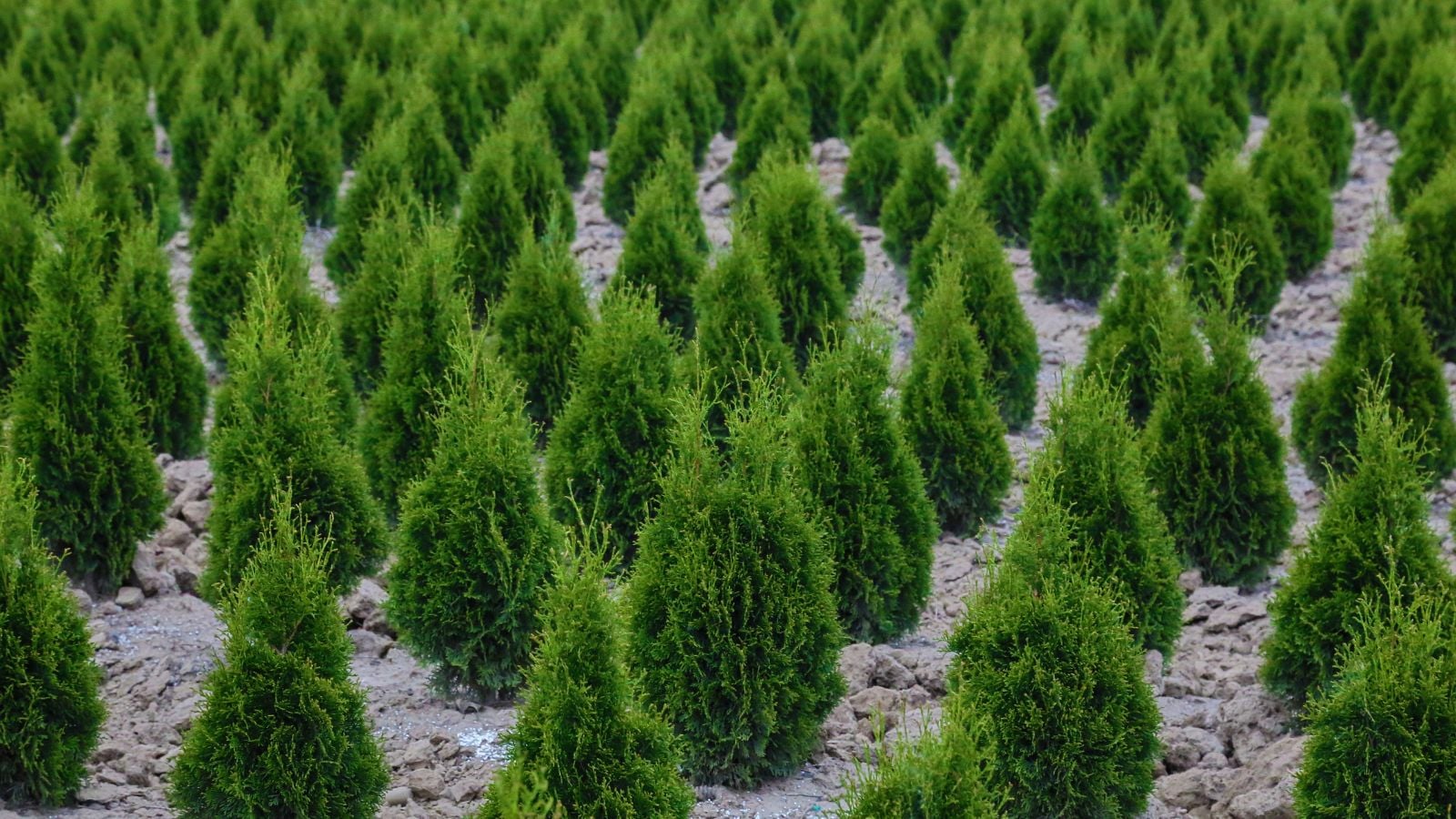
Leyland cypress trees are some of the most beloved conifers that gardeners all over the Southeast US plant regularly in their gardens. It grows quickly and has dense foliage that makes it a great hedge or screen planting, and it’s often sold as a Christmas tree. This highly adaptable plant is useful as a specimen or foundation planting as well.
Characteristics
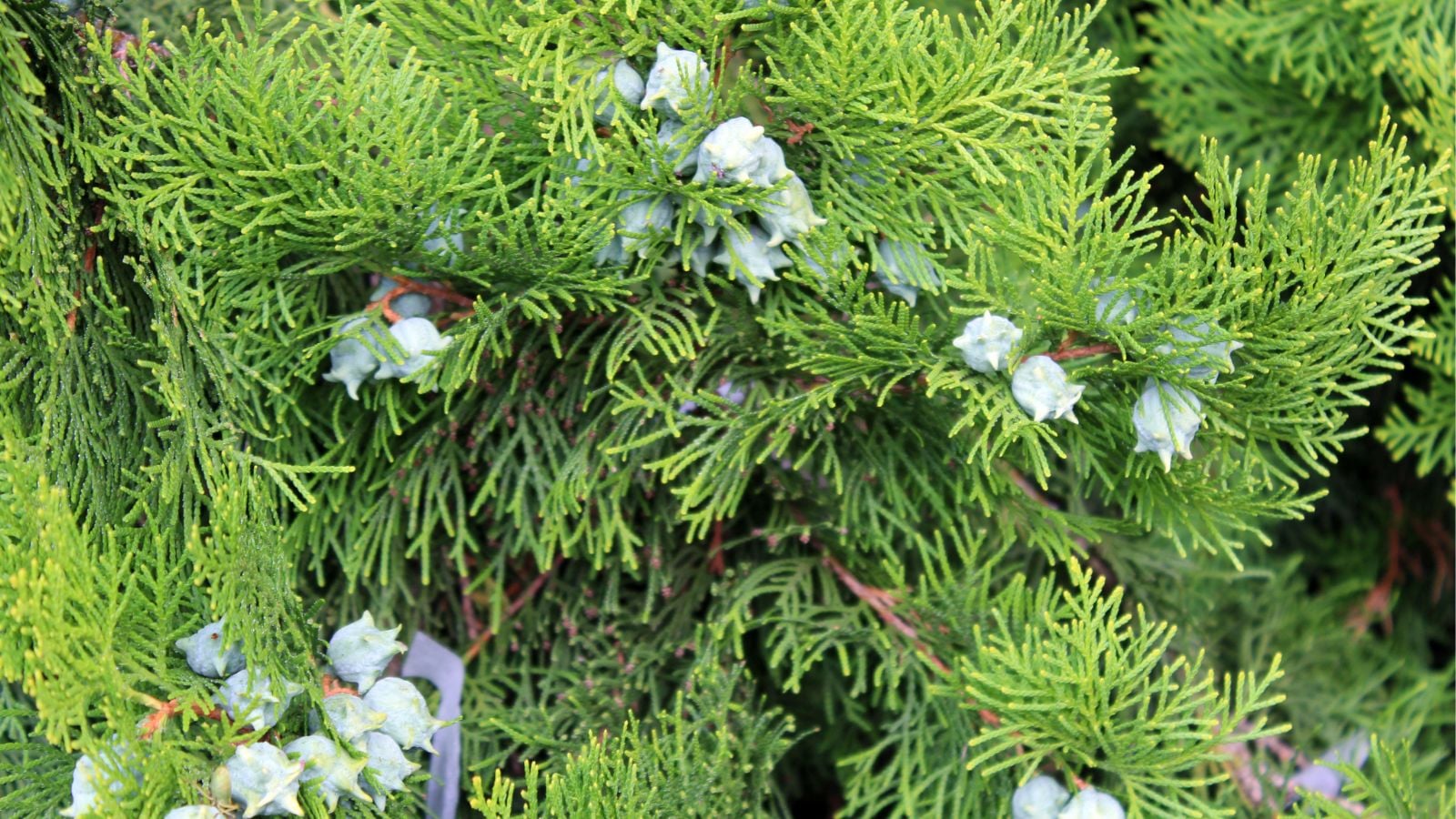
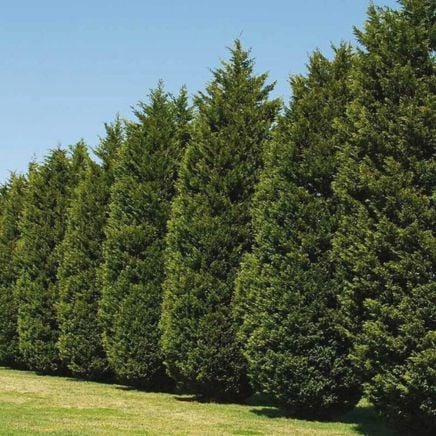
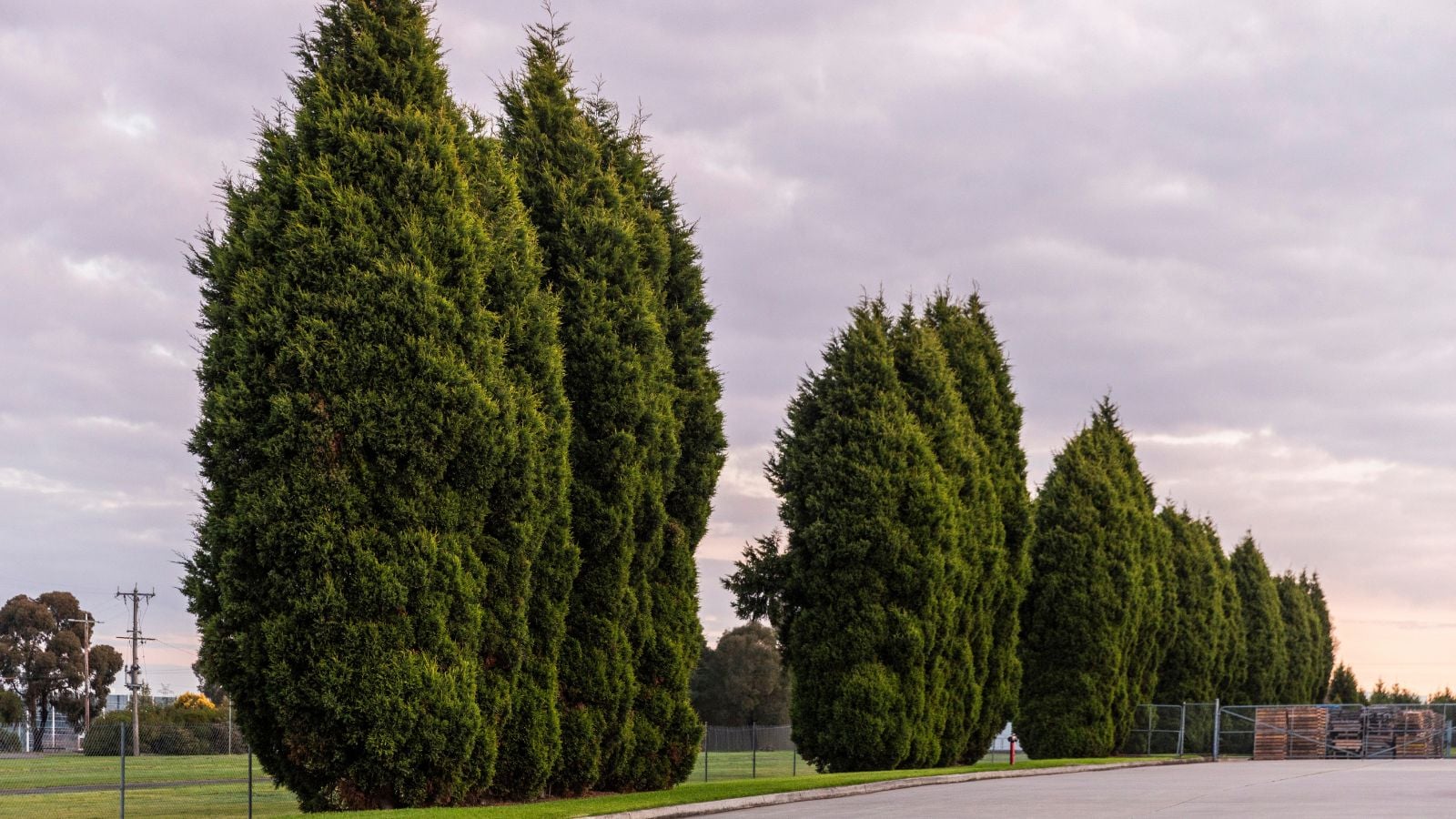
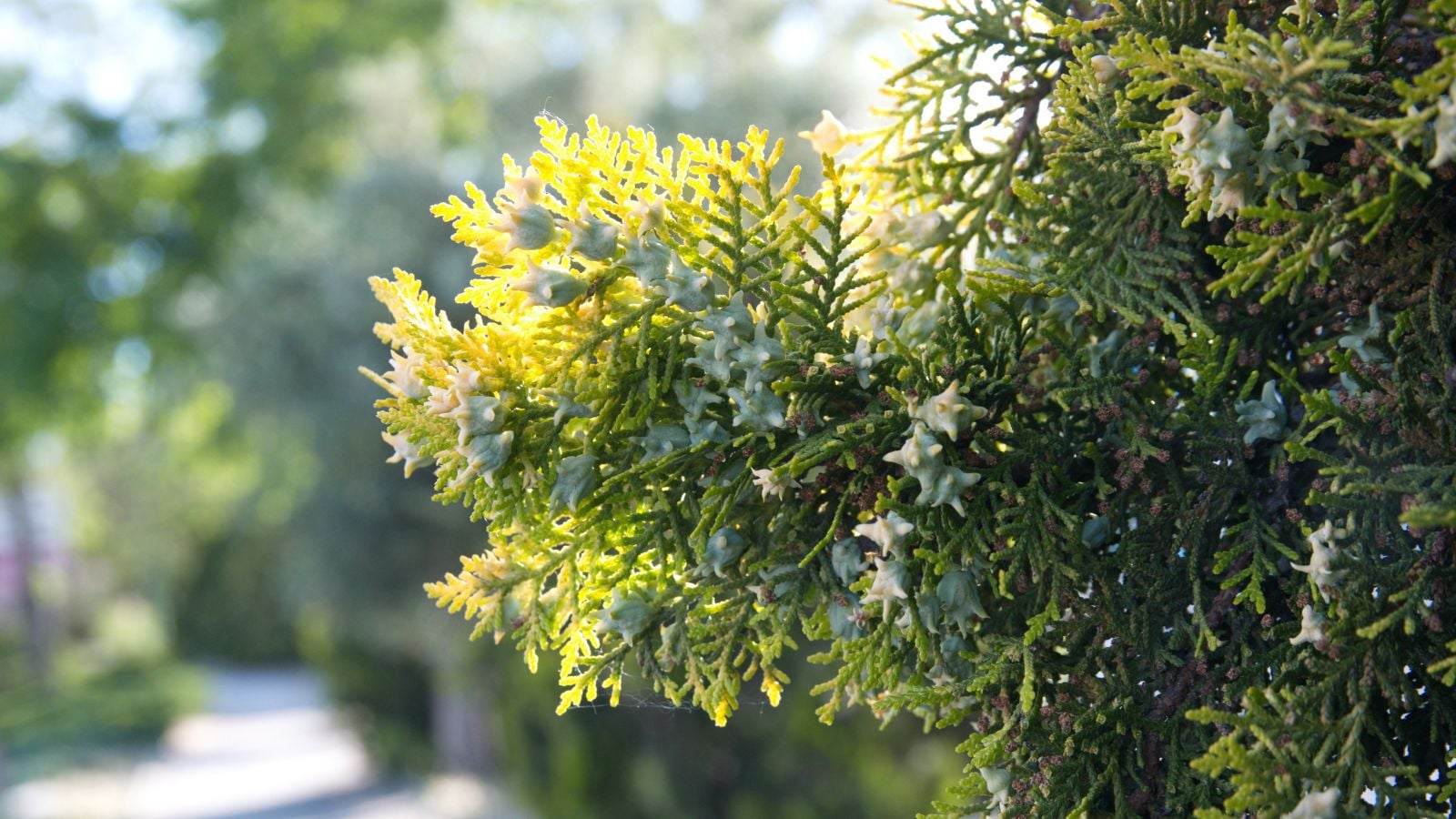
This tree reaches 40 to 60 feet tall and has an overall conical shape. Its leaves are blue-green, remain evergreen, and have a scaly appearance. The bark is also reddish in color. The branches are upright, and the tree has a generally vigorous growth rate of up to three feet per year.
Leyland cypress trees live 20 to 50 years, and due to a shallow root system, may fall over after a period of drought. Their structure resists breakage in high winds. Multiple plantings make a great hedge, as they grow nearly identically.
Native Area
The Leyland cypress tree emerged at the Leighton Hall in Powys, which is renowned for its massive, sometimes terraced gardens. It’s here that many famous plants were bred. This tree is a cross between two North American conifers: the Nootka cypress (Cupressus nootkatensis) and the Monterey cypress (Hesperocyparis macrocarpa).
Because these two trees have such vastly different ranges, they would not naturally cross in the wild. However, at the estate in 1888, the male pollen of the Monterrey cypress fertilized the female cones of the Nootka cypress. Thus, we have one of the most favored home garden trees in the southeastern US.
Planting

Before planting, ensure your garden is not in an area prone to wildfires. Cypress trees are not fire-resistant and have dense sap that can catch fire quickly.
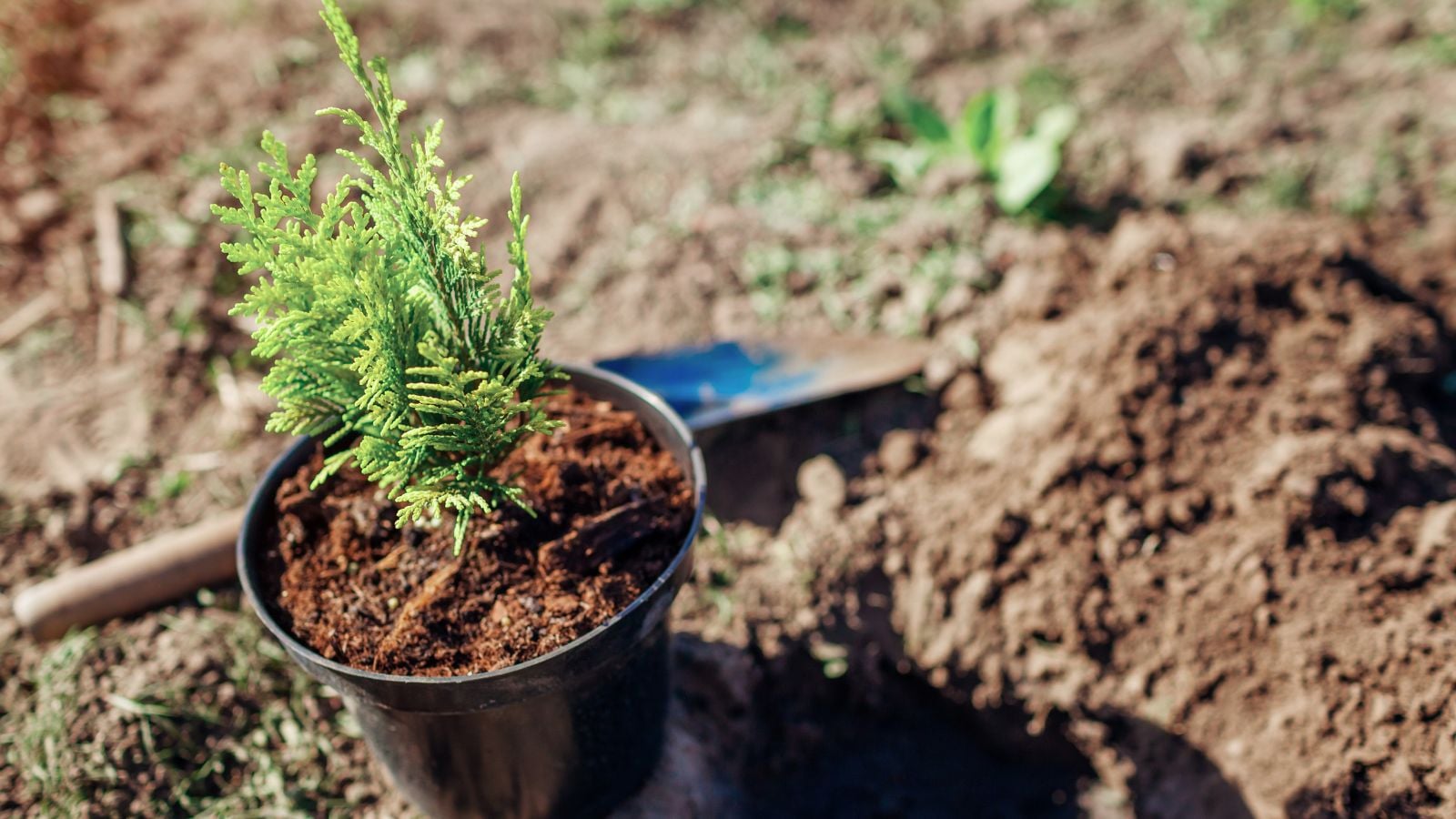
The best way to plant your Leyland cypress is to start with rooted cuttings or young specimens in nursery pots. While you can grow a tree from seed, it’s very difficult and takes many years to do so. We’ll discuss how to propagate this tree via cuttings in the Propagation section.
To start, find a sunny spot with plenty of space for this tall tree. Plant it at least 20 feet away from other trees. Dig a hole as wide as the root ball, and place the plant still in its container into the hole to determine if it’s the right size.
Once you have a hole that is the correct size, gently free the tree from its nursery pot and plant it within. Fill in holes around the perimeter with soil, and top off with one or two inches of mulch, whether organic or plastic.
How to Grow
Aside from pruning and scouting for pests and diseases, this is a fairly easy tree to grow. Ensure that the following conditions are present before you plant yours.
Light
Leyland cypress trees need full sun to thrive. Partial shade in hotter areas of its hardiness range will keep yours happy. At least six hours of full sun per day is a good start. If you plant yours on the south side of your property, it will receive the most sunlight.
Water
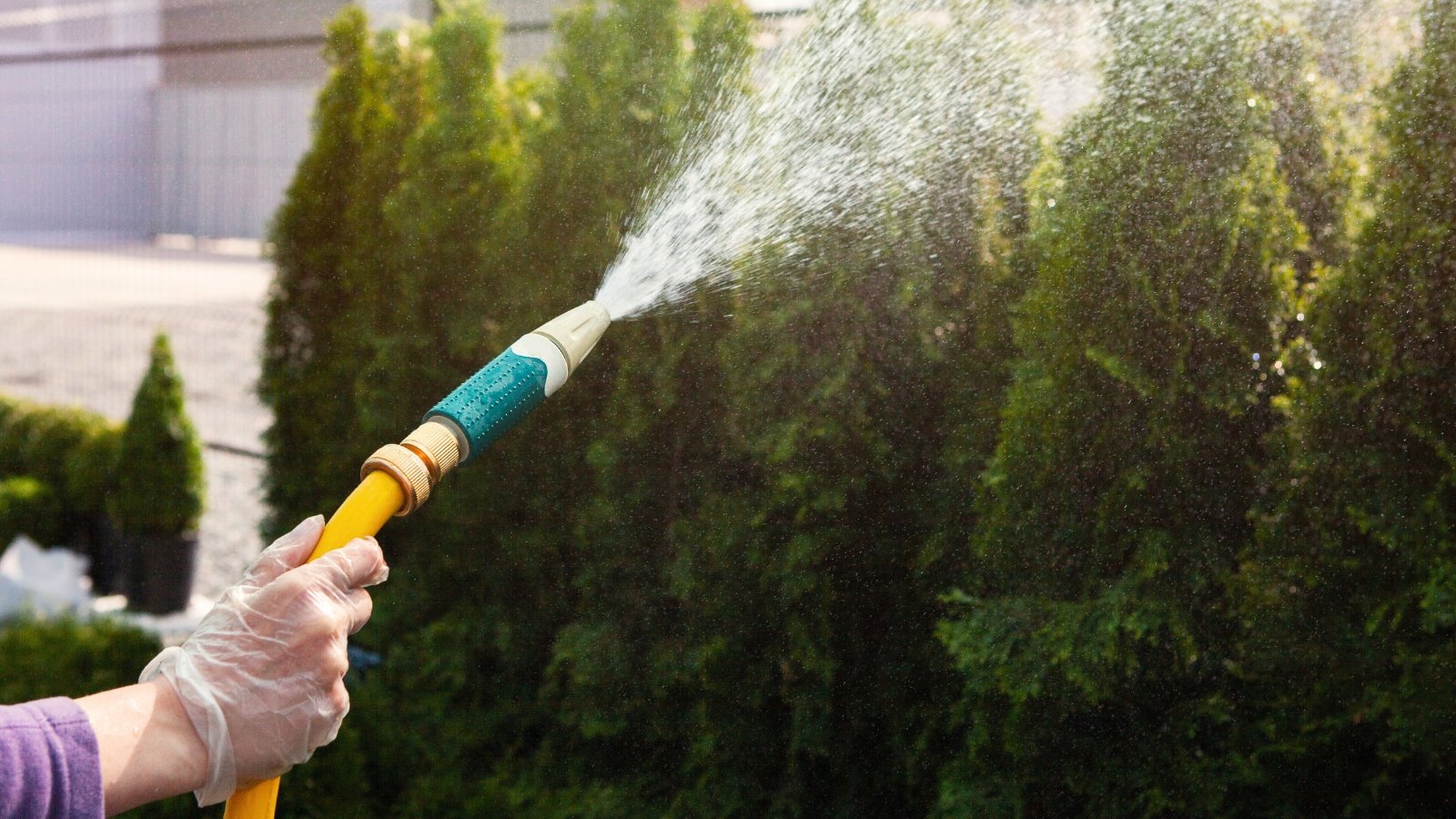
As your Leyland cypress is getting established in your landscape, you’ll need to water it regularly. Use drip irrigation or soaker hoses to water the root zone for 40 to 60 minutes once per week.
Once established, the tree should perform well with local precipitation and will be resistant to drought in cooler areas. In warmer zones, continue to water every other week in the same manner you did to help the tree establish itself. This prevents tipping that can occur in hot areas.
Soil

These trees can be grown in almost any soil type, as long as it is well-draining. Even heavy clay soils are appropriate. In rich soils, Leyland cypress tends to develop root rot when the soil is wet for prolonged periods. In rainy areas, amend rich soils with agricultural grit or sand to promote better drainage.
Temperature and Humidity
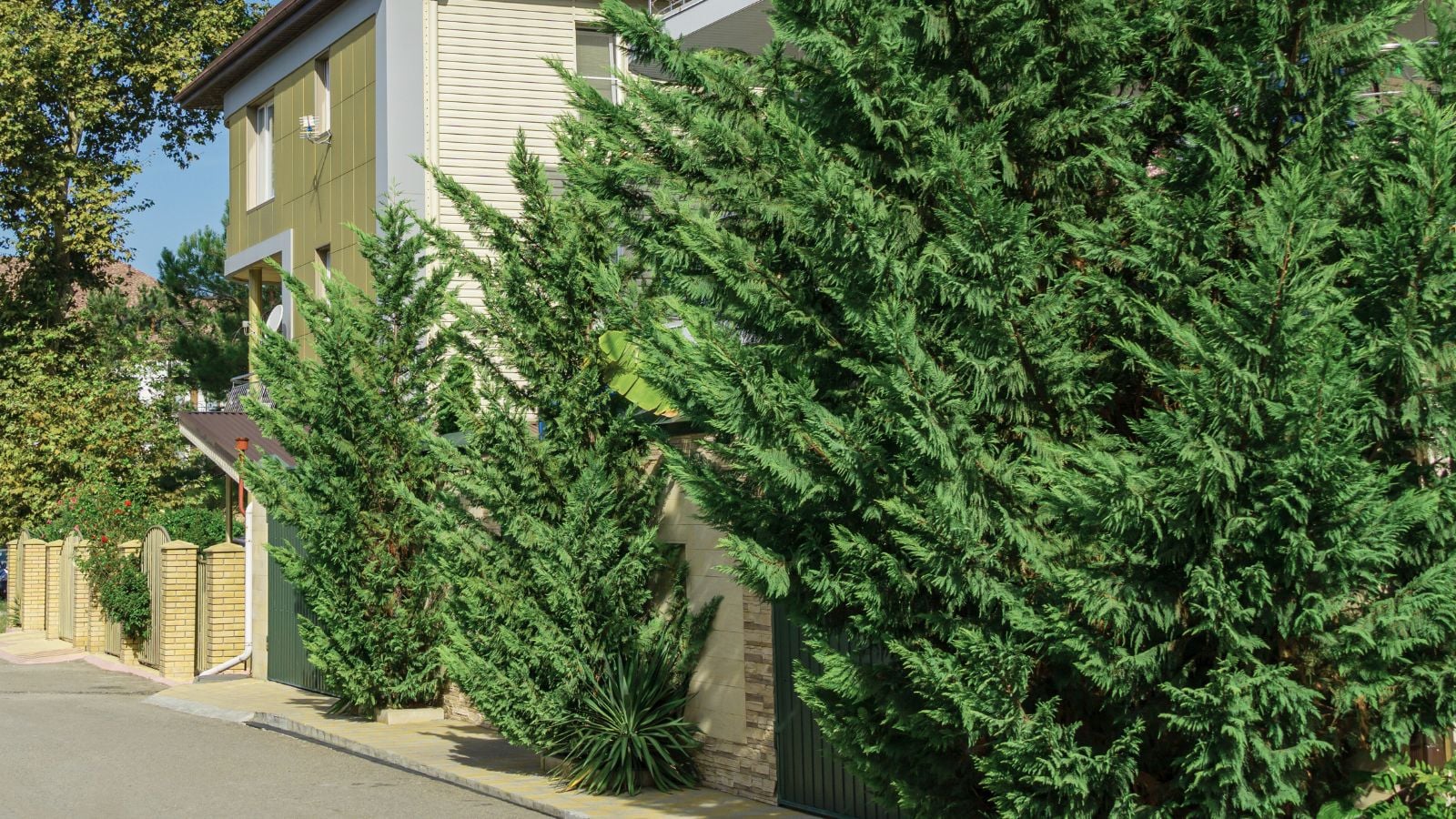
The Leyland cypress is hardy in zones 6 through 10. It handles cold weather down to -8°F (-22°C) and heat up to 100°F (38°C). While drought-tolerant, the tree may fall over in areas with prolonged heat and drought. In these areas, ensure your tree gets enough water.
Moderate humidity is no issue for this plant, but high humidity can promote fungal diseases, such as needle blight and canker. In areas that are humid, provide your tree with plenty of space and prune it for airflow as a preventative measure.
Fertilizing

One annual application of a balanced, slow-release fertilizer in spring is enough to support your Leyland cypress. An organic fertilizer is your best choice. You can side-dress your tree with compost if you’d rather avoid fertilizers.
Maintenance
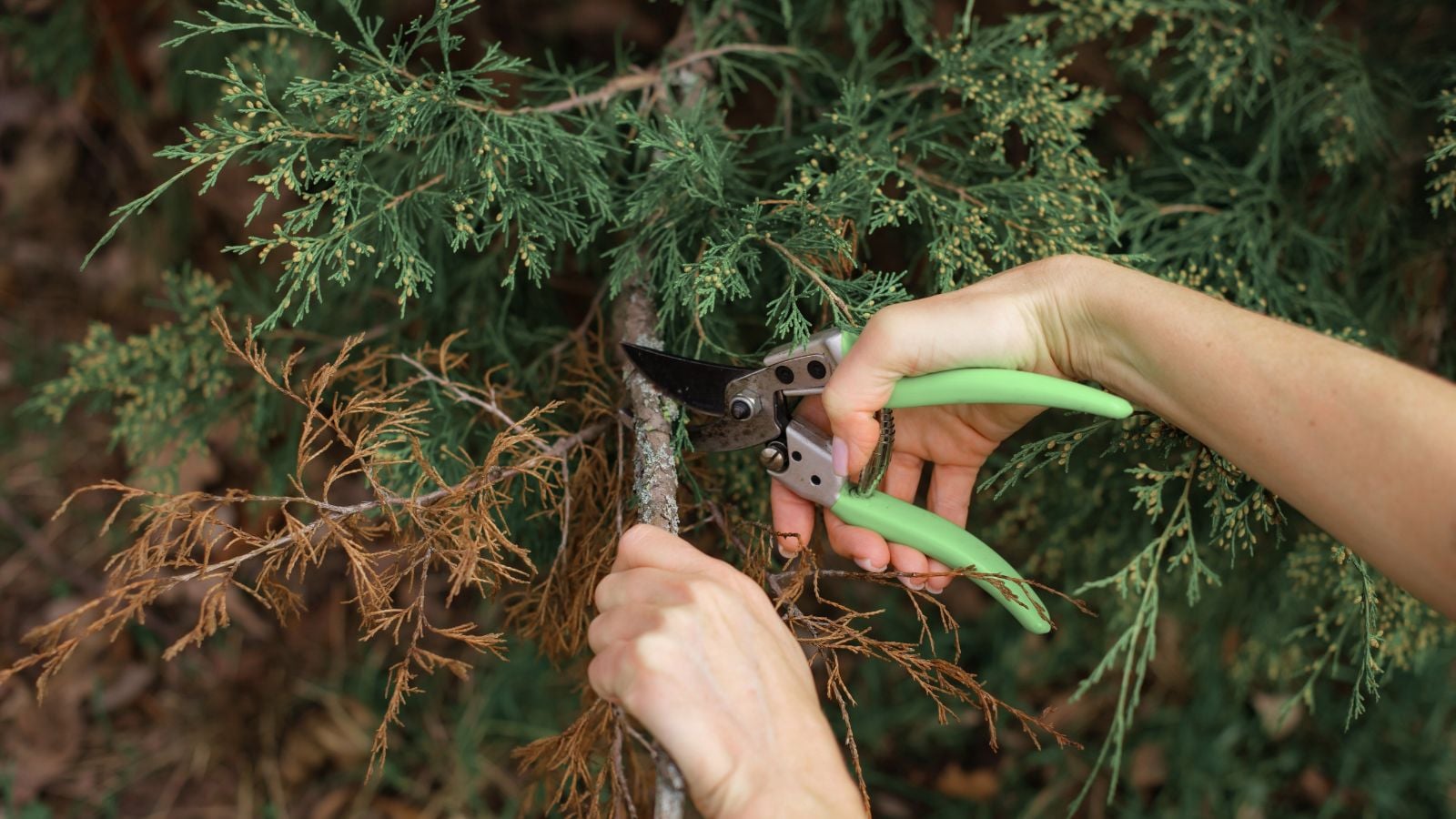
Pruning is an essential part of growing a Leyland cypress. It’s recommended to prune the top and side branches of the tree three times in April through August. This is its prime growing time. Trim side shoots midway through the season to promote dense growth. Tops should be trimmed into a flattened A-shape to prevent bare spots.
Overgrown trees can be pruned to ⅓ their height. Do this pruning at the beginning of April. Remove any dead, damaged, or diseased wood at any time of year. Young trees can be staked after a year of growth to keep them upright if toppling is a concern.
Propagation
The most viable way to propagate your Leyland cypress tree is to take cuttings and root them. Division is not needed, and seed propagation takes far too long for home gardening projects. Seeds may not breed true-to-type.
Cuttings
Look for healthy semi-hardwood sections of your tree, and snip six to eight-inch clippings of them off with sterilized pruning shears or scissors. Prepare small pots by filling them with a soilless rooting medium. Dip the cutting ends in rooting hormone and place them a couple of inches deep in the rooting medium.
Keep the medium moist, and affix a humidity dome or plastic bag over the cuttings as they root. Spray the inside of these humidity fixtures regularly to keep conditions moist. Be patient, as it takes roughly 10 to 12 weeks for cuttings to root. Tug them at the base gently.
When there is resistance, your cuttings have developed roots. Up pot them into a good potting soil at this time, and allow them to mature for at least a year before planting them out.
Popular Varieties
There are multiple varieties of Leyland cypress. Here are a few standouts.
Reco
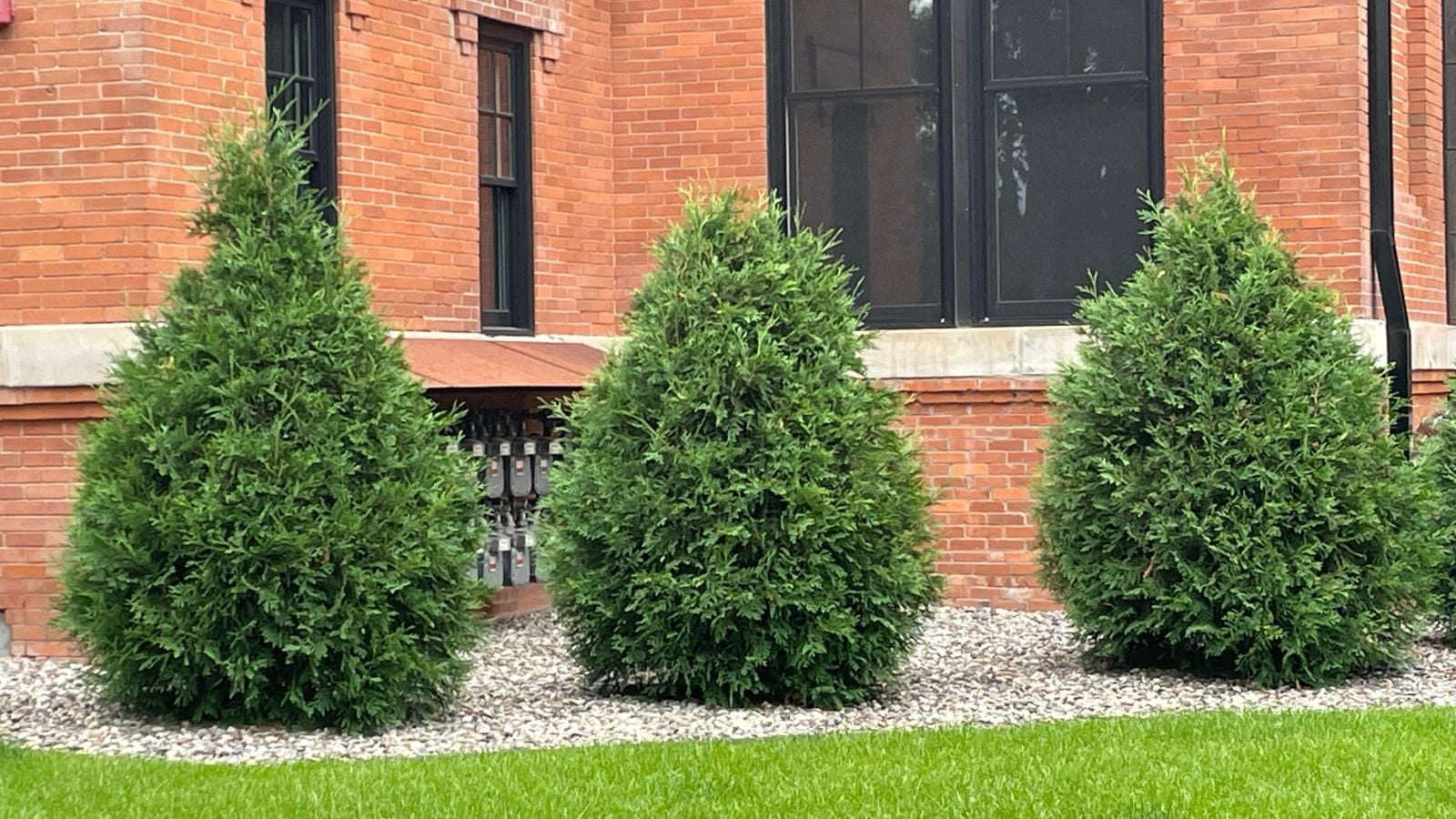
This dwarf cultivar is hardy in zones 6 through 8. It tops out at ten feet, which is just a small fraction of the parent plant’s massive stature. For growers who want to dip their toe in the Leyland cypress world, or for those who want to grow one in a container, this is a great option.
Golconda
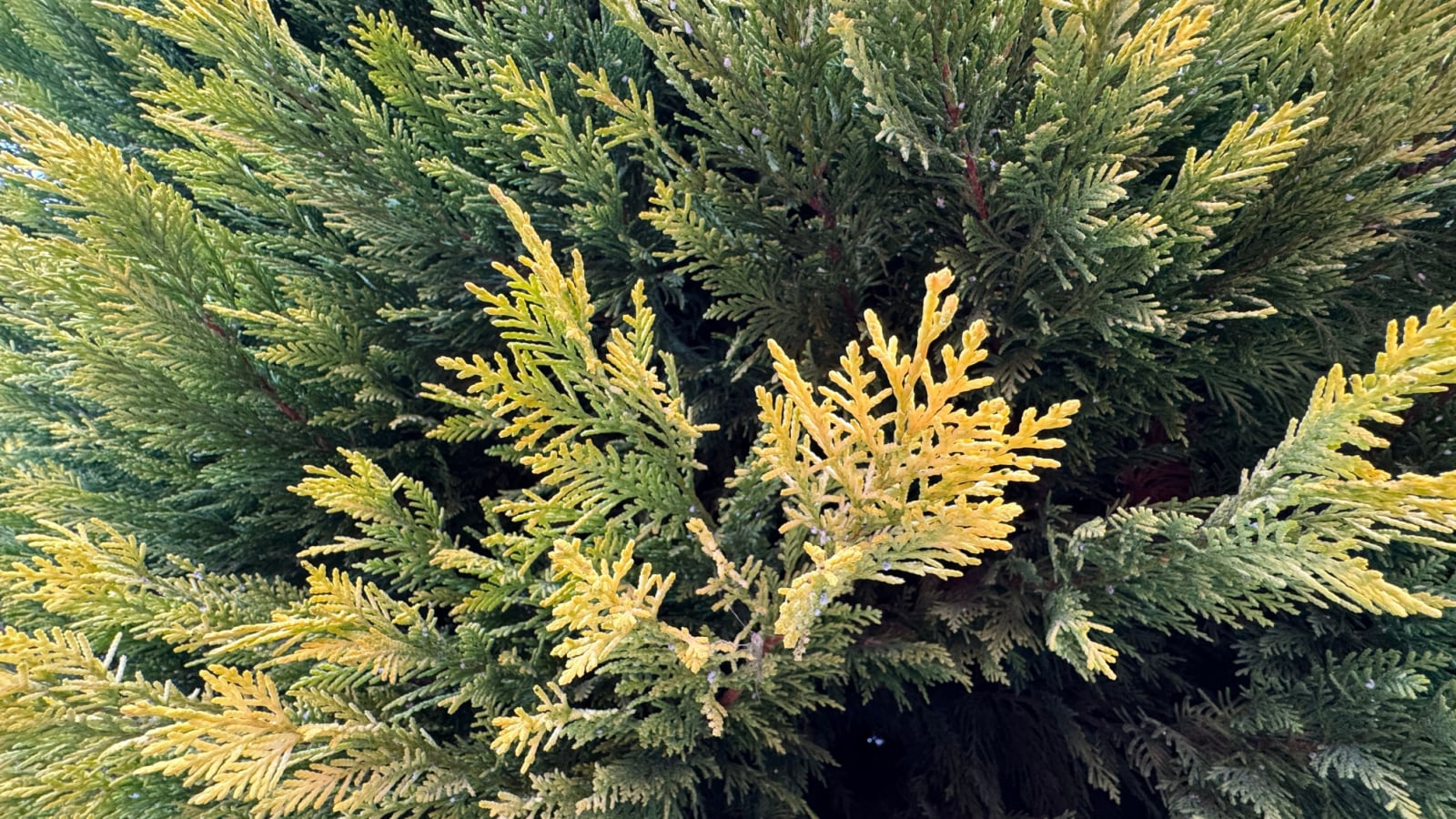
For a cypress that brings a ton of interest to the garden, look for ‘Golconda’. This tree has evergreen needles that are gold-tipped year-round. Aside from this different leaf color, ‘Golconda’ has all the same characteristics of the straight species.
Emerald Isle®
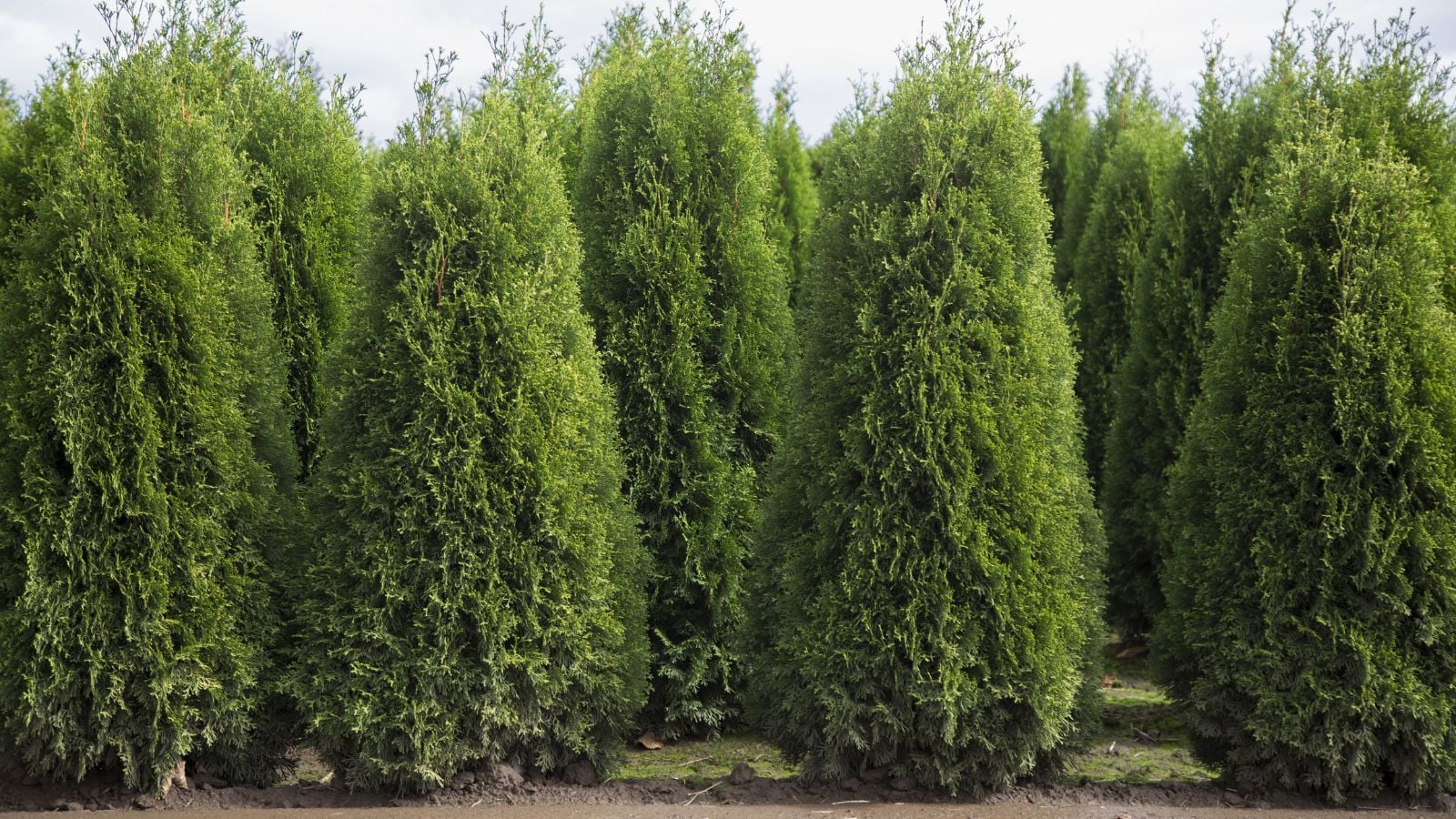
This cultivar is shorter than its parent, reaching only 25 feet tall. It was introduced by Monrovia Nursery in 1992 and has a better root system than the shallow one that x Hesperotropsis leylandii does.
Common Problems
These trees are not free of pests and diseases. In fact, that is what makes them more difficult to manage than many other cypress trees. Look out for the following as you do your regular pruning at the height of the season.
Pests
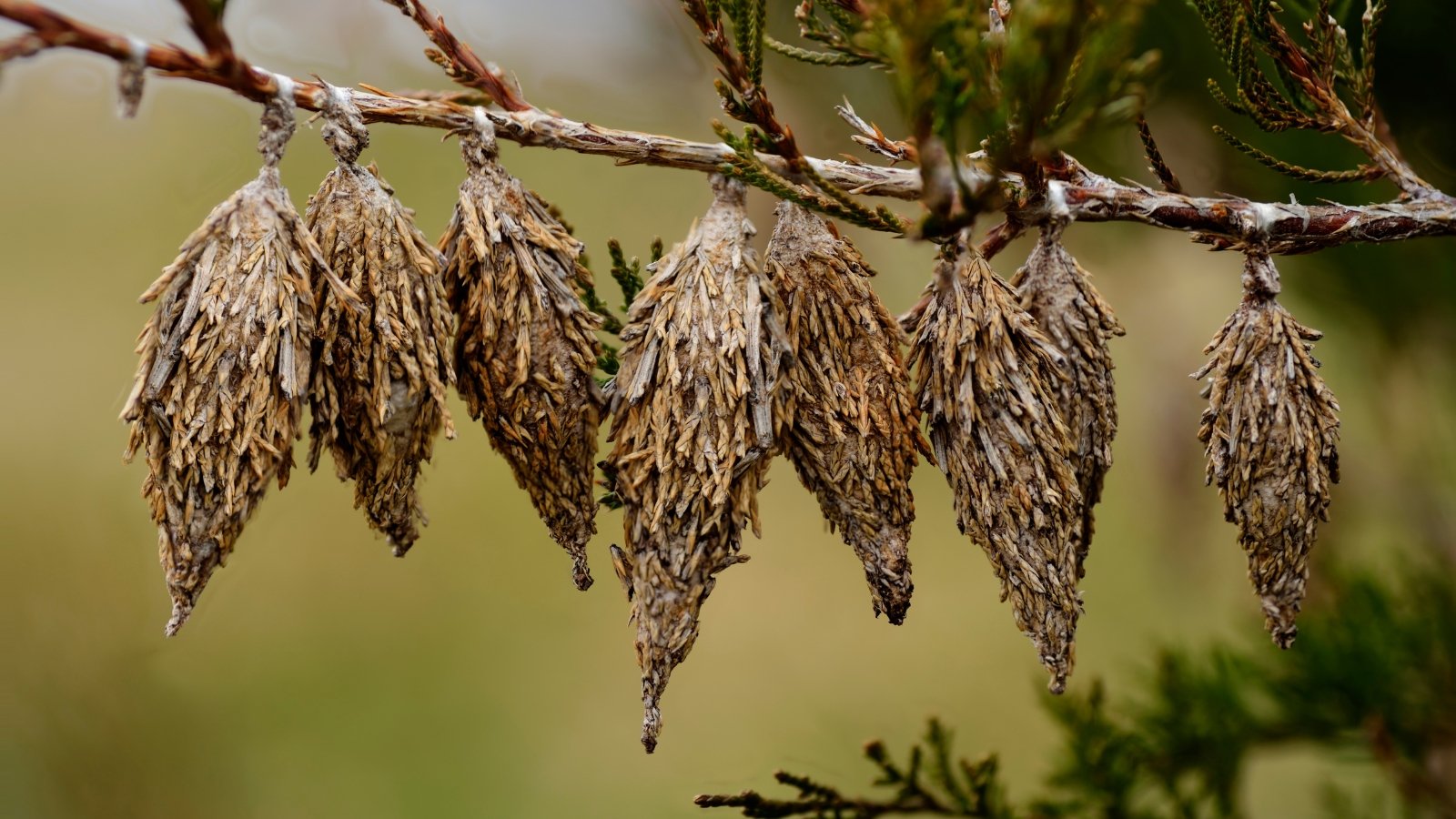
Bagworms are the premier pests of cypress trees. While small populations won’t harm a tree, larger ones will defoliate the tree quickly. They are more often a problem in urban settings, and less of an issue where there are just one or two trees.
To manage them, hand-pick them when they form their bag shelters. These are easy to spot. If you must manage larger populations, you can spray the tree with Bt. Always follow the instructions on the bottle to determine the best ways to apply pesticides.
Diseases
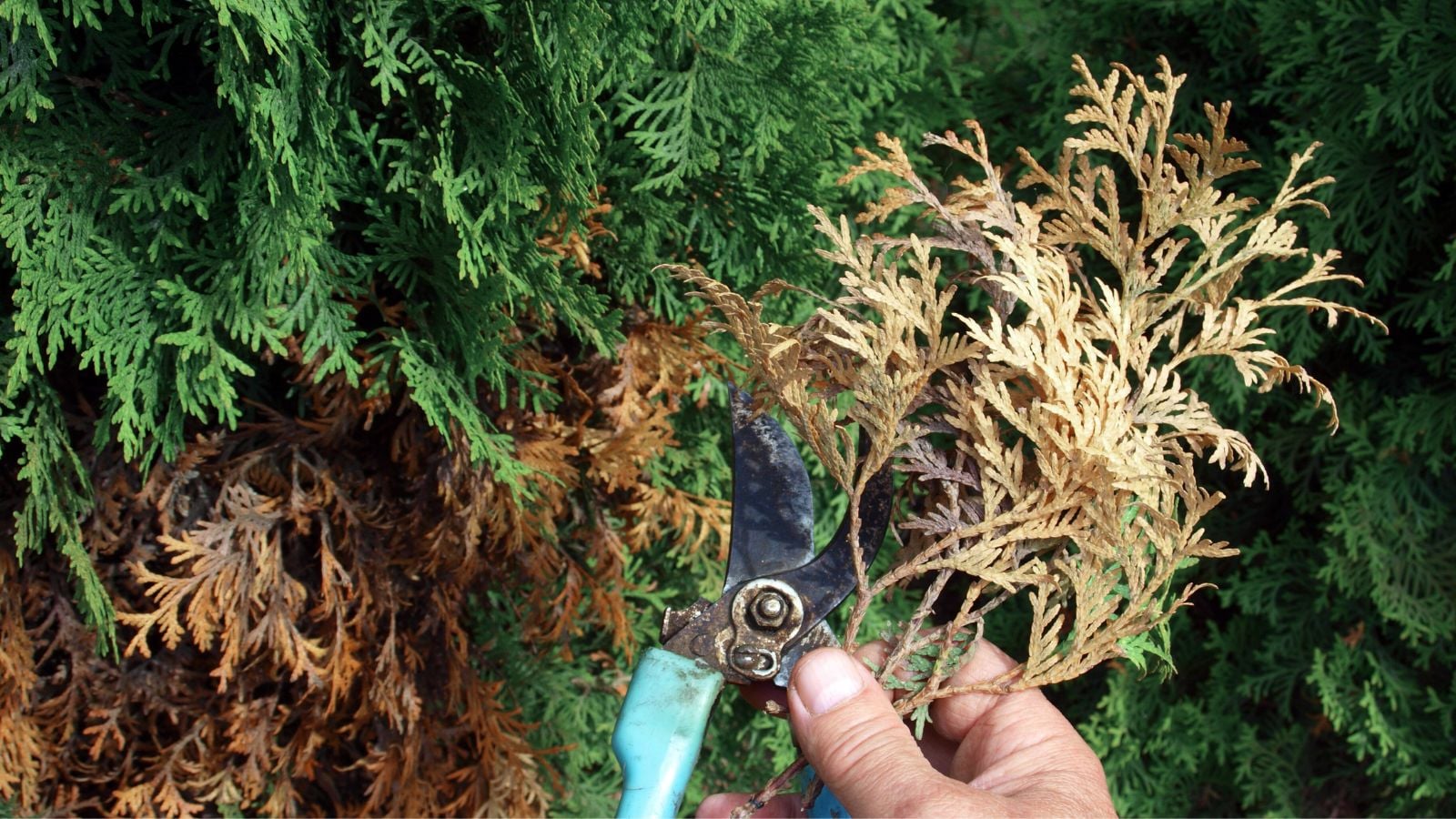
Tip blight is common in humid areas and in dense plantings. This fungal disease causes yellowing and dieback of the branch tips. Remove damaged needles as you see them. Keep your pruning tools clean, and thin dense plantings as a prevention method. Mulch around the base of the tree at planting to keep it healthy and resilient to temperature and moisture extremes.
Various canker diseases affect Leyland cypress. Cankers are sunken and greasy-looking fungal growths that develop on the trunk and branches. They come from pruning wounds and from highly humid environments that promote fungal growth. In humid areas, avoid planting these trees. Remove any affected branches as they appear. Keep trees adequately spaced and promote airflow. There is no chemical treatment for canker.
Root rot develops in soil that remains moist for too long. In areas where rainfall is high, promote drainage with amendments of agricultural sand or grit. Trees heavily affected by root rot typically take on needle discoloration and softening of the trunk of the tree. These affected trees should be removed and disposed of by an arborist to prevent damage to nearby structures or people.
Frequently Asked Questions
What are the downsides of Leyland Cypress?
These are highly pest and disease-prone trees with shallow root systems, which makes them prone to falling over after drought. If you live in a hot area or a highly humid area, choose another cypress.
How long does it take a Leyland cypress to reach full height?
These trees can max out at 60 feet in just 20 years.
What is a better choice than Leyland Cypress?
If you live in a humid or hot area, Arizona cypress trees are a better option. These are less pest and disease-prone than Leyland cypress.
Do Leyland cypress make good Christmas trees?
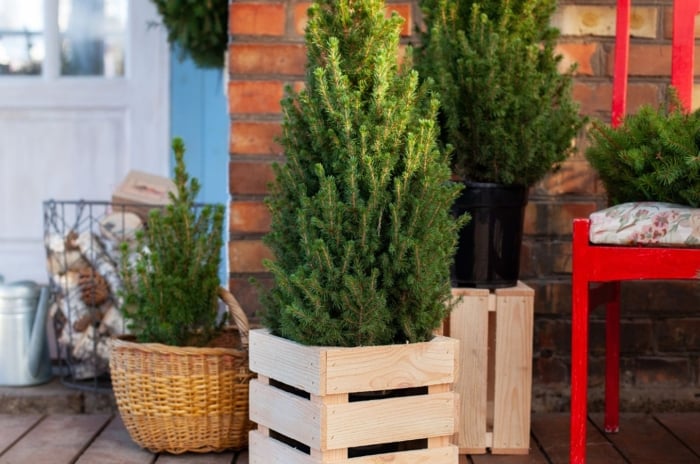
Yes! In fact, they are often bred as Christmas trees due to their classic conical shape and dense foliage.