5 Beautiful Iceland Poppy Varieties For Your Garden
If you want to include Iceland poppy varieties in your garden this year, now is the time to get them planted. There are multiple colors and sizes to choose from, and all are lovely additions. Experienced gardener Sarah Jay outlines five of the most interesting varieties here.

Contents
Iceland poppies (Oreomecon nudicaulis, formerly Papaver nudicaule) aren’t actually from Iceland. They’re from the cold regions of the Yukon and Asia. Even though they are from these cold regions, there are lovely Iceland poppy varieties you can grow anywhere.
Press Iceland seeds into the soil surface four to six weeks before your last frost, directly in the garden or in your preferred container. If you must sow them indoors, use biodegradable pots you can plant directly in the ground, and start them six to eight weeks before your last frost date. As you transplant, be extra careful. Their roots are sensitive, and excessive disturbance will impede their growth.
The best soil temperature for germination is cool, at 50 to 60°F (10-16°C). Expect your seeds to emerge within a couple of weeks. Then look for buds around six weeks after transplanting. If you grow multiple types in one area, you’ll get a rainbow of color and delicate papery petals from spring through early summer.
Nudicaule Blend Iceland Poppy Seeds

Nudicaule Blend Iceland Poppy Seeds
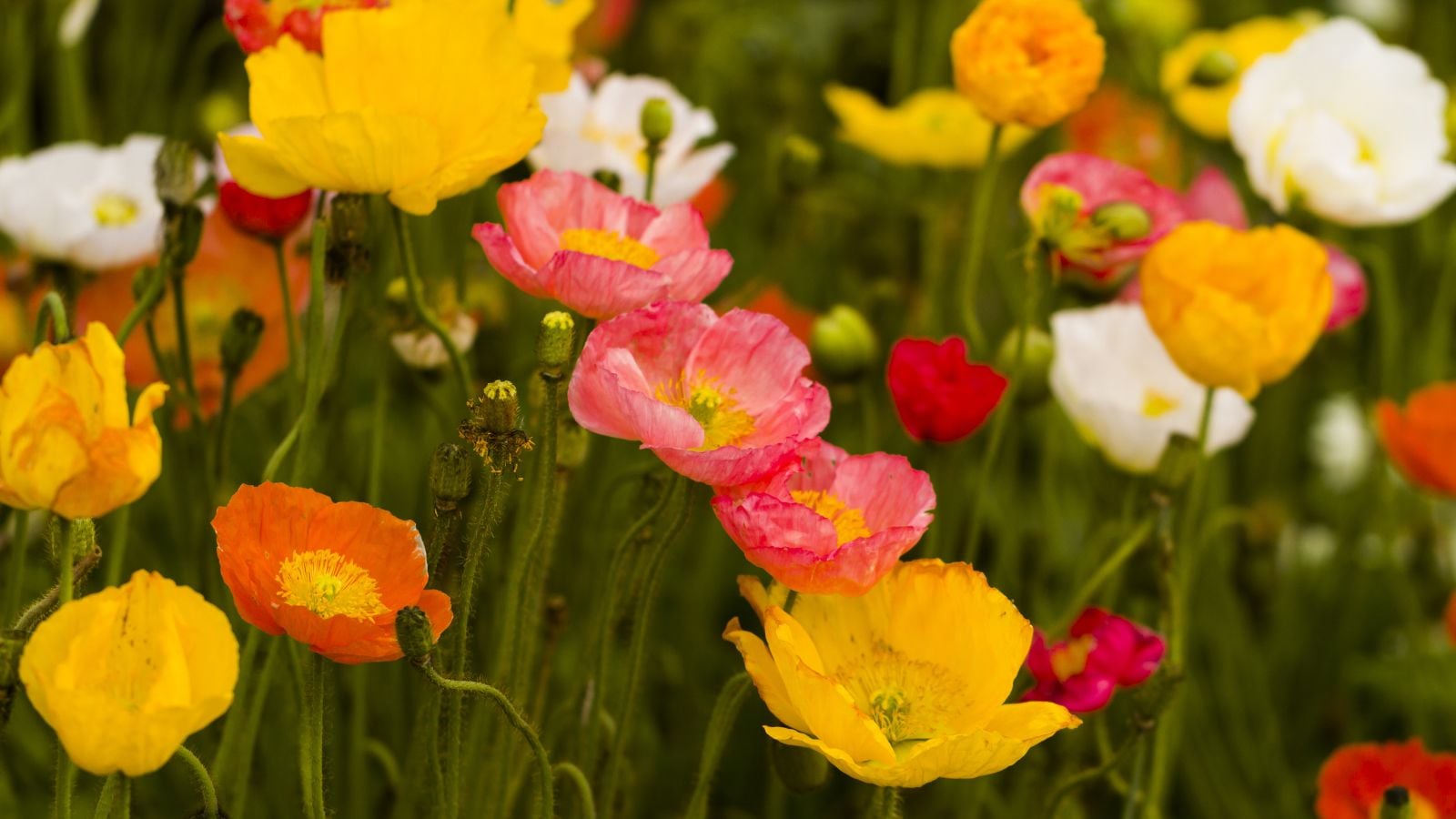
No flower is quite as lovely as Iceland poppy when the sun shines through the chiffon petals. These orange, pale pink, yellow, and white blossoms will light up your garden in spring. They’re fairly drought tolerant, too!
Buy at Botanical Interests ShopNudicaule Blend


|
botanical name Oreomecon nudicaulis ‘Nudicaule Blend’ |
|---|---|

|
sun requirements Full sun to partial shade |

|
height 1-2′ |

|
hardiness zones 2-8 |
For up to three-inch-wide blooms in orange, pale pink, yellow, and white, grow a blend! Many Iceland poppy varieties are sold as blends. We’re showcasing this one here as it’s our favorite. We’re biased, of course, but having the beautiful and translucent petals in your garden will provide you with tons of enjoyment, even though they’re short-lived among other flowers.
After the flowers fade, large, round seedheads remain, with small openings, called “windows” that open when the seeds are ripe. You can let flowers bloom and fade in your garden to collect seeds for next year, or let the buds crack slightly, and harvest them for flower arrangements. They’ll last up to one week in a vase.
Champagne Bubbles

|
|
botanical name Oreomecon nudicaulis ‘Champagne Bubbles’ |
|---|---|
|
|
sun requirements Full sun |
|
|
height 1-2′ |
|
|
hardiness zones 4-8 |
While this poppy is very similar to other Iceland poppy varieties, it does have a particular look that sets it apart. These are F1 hybrids, with more color variation than the ‘Nudicaule Blend’, and with more crinkly petals. You’ll get pinks, white, yellows, and citrus coloring when planting a blend of these stunning blooms.
The flowers of ‘Champagne Bubbles’ are sometimes large, reaching up to five inches wide. Honeybees and bumblebees love these flowers, and you’ll get plenty of seeds if they make regular visits to pollinate them. Plant these on borders, in a drift, or in bunches all over your garden for light and springy goodness.
Colibri Dolce Vita
|
|
botanical name Oreomecon nudicaulis ‘Colibri Dolce Vita’ |
|---|---|
|
|
sun requirements Full sun |
|
|
height 1-2′ |
|
|
hardiness zones 3-7 |
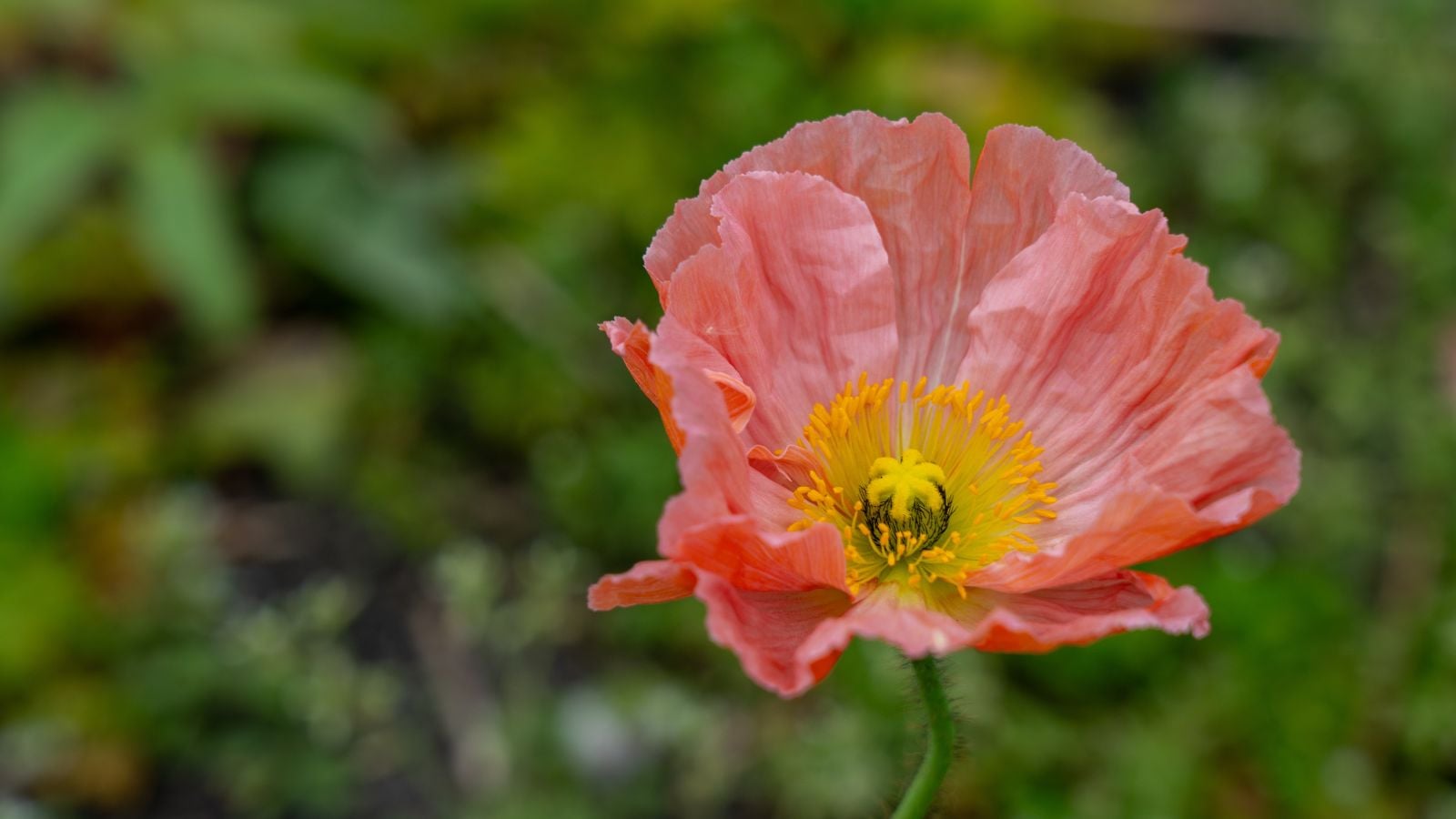
If you like the hues of the blends we’ve discussed so far, but you want a more pastel palette, look for a blend of ‘Colibri Dolce Vita’. Because of the lighter colors, the petals on this one look even more silky than those of other Iceland poppy varieties.
You can also find ‘Sherbert‘ blends of this poppy, which center more on apricot, pink, and bright white. In areas where it’s cool most of the year, you’ll find these perennialize. In areas with hot summers, expect them to cease blooming in mid-summer and grow as annuals.
Colibri Salmonato
|
|
botanical name Oreomecon nudicaulis ‘Colibri Salmonato’ |
|---|---|
|
|
sun requirements Full sun |
|
|
height 15-18″ |
|
|
hardiness zones 4-8 |
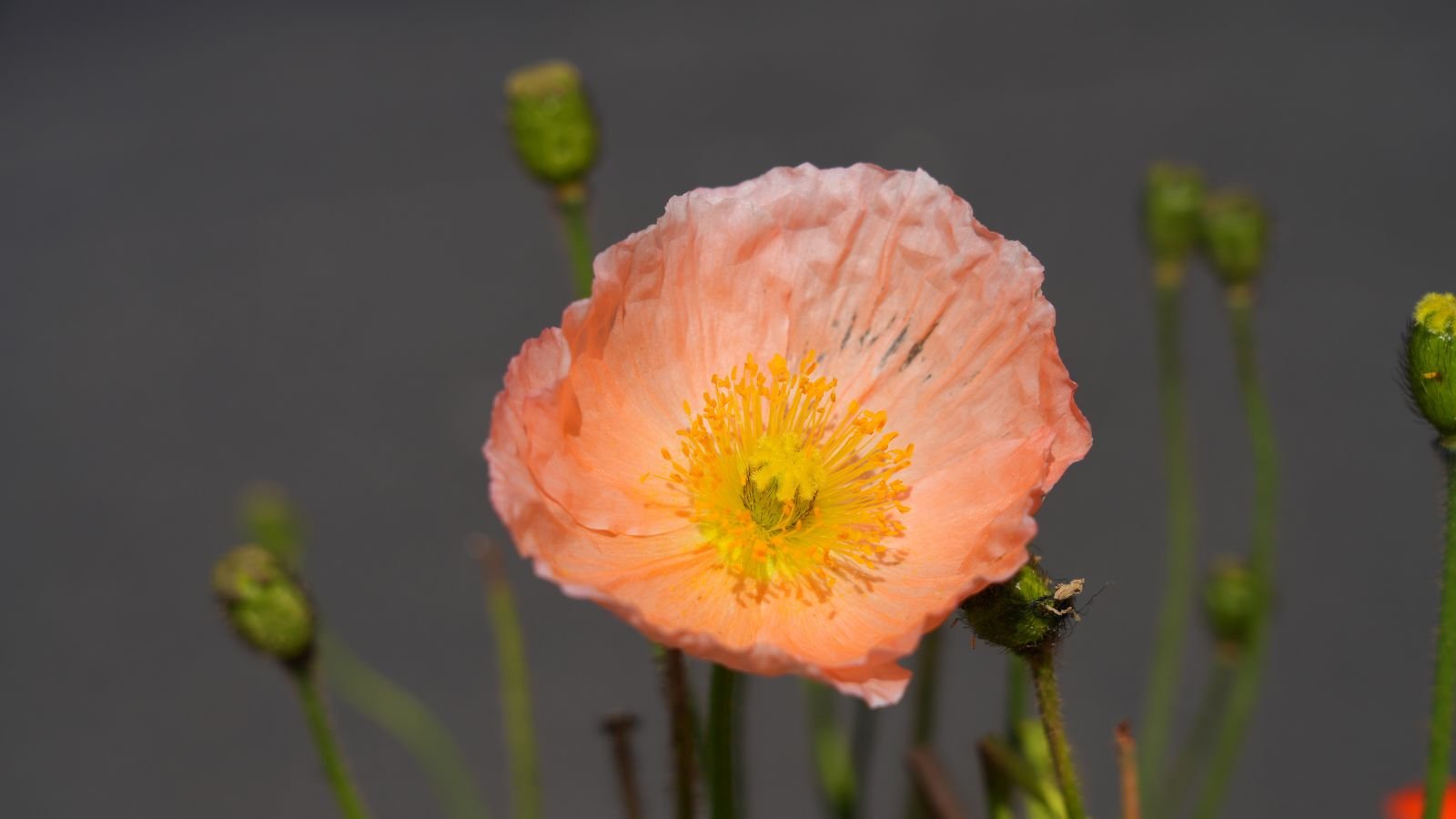
If apricot palettes are your thing, grow Iceland poppy varieties like ‘Colibri Salmonato’. These yellow to salmon blooms are ridged, with thick stems and a citrusy scent. Their petals are so full, they seem almost double. The papery blooms have frilled edges, which are set off by the inner pistil surrounded by almost neon yellow stamens.
This is a special and highly sought-after cultivar that will bring lightness and beauty wherever it grows. It’s bittersweet that these poppies tend to be short-lived in the garden, but they’re wonderful when paired with other summer bloomers, and those that last into fall, too.
Spring Fever®
|
|
botanical name Oreomecon nudicaulis ‘Spring Fever®’ |
|---|---|
|
|
sun requirements Full sun |
|
|
height 6-10″ |
|
|
hardiness zones 3-7 |
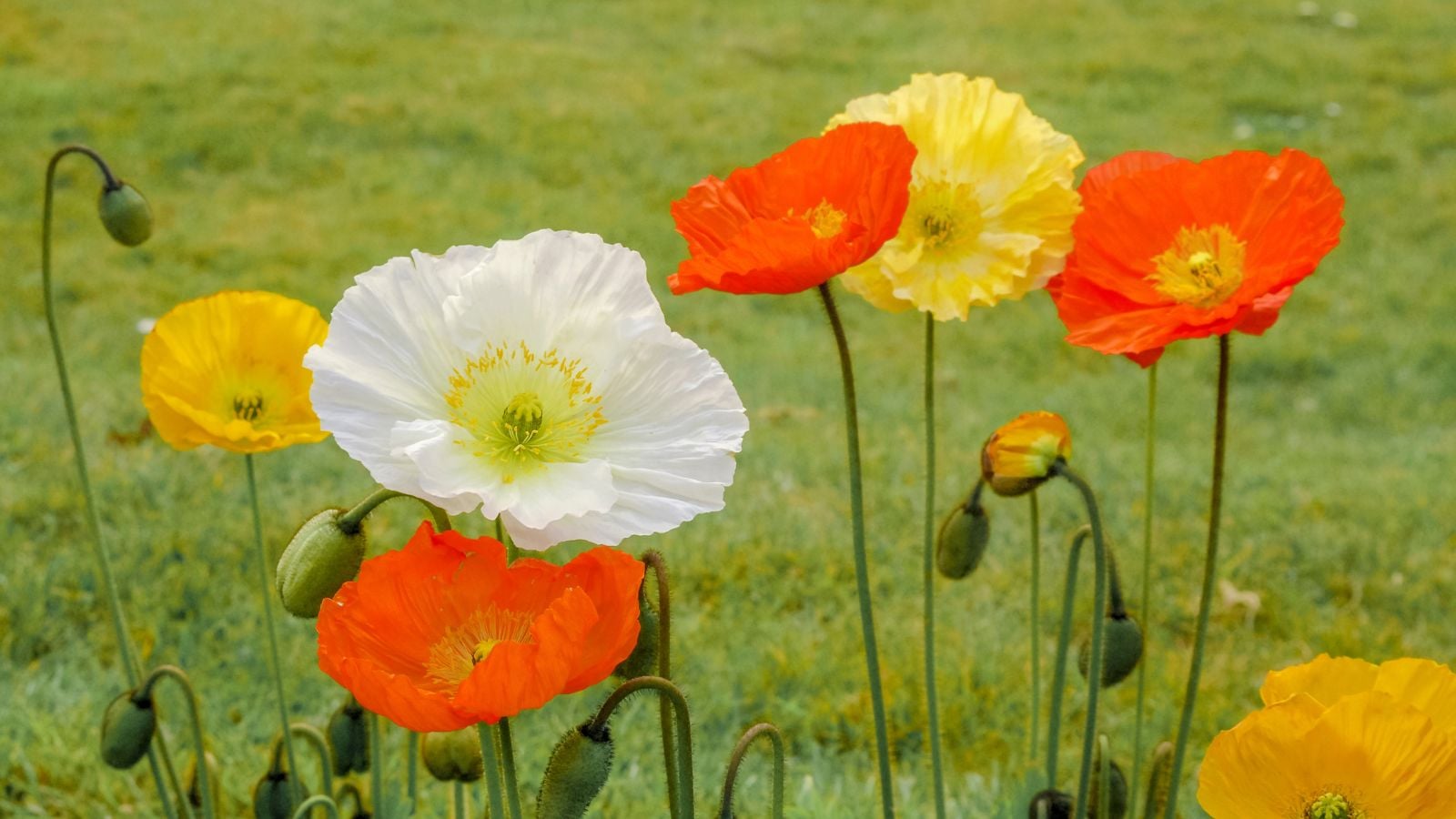
Our last entry on this list of some of the rarest poppies out there is the shorter-statured ‘Spring Fever®’ series. These are deeply and richly-colored flowers that range from red to white, pink, orange, and lemon yellow. The petals on this variety are much more open, revealing their stunning centers.
These are the best on this list for pollinators, as the ruffled single-petal form gives the best access to nectar and pollen. That means you’ll have tons of seed to gather. Similarly, you can deadhead spent blooms to promote a second set before the season is over.