

11 Hosta Varieties You Can Plant in October
Versatile across growing zones and garden spaces, hostas are ready to fill the role of top shade performer. Their dynamic foliage and durable nature make them handsome, easy-care, and long-lived perennials. Gardening expert Katherine Rowe explores award-winning and top-performing hosta varieties to plant in October.

Contents
With classic appeal in a diverse array of colors, sizes, and leaf shapes, hostas are one of the most popular perennials today.
The National Gardening Bureau named 2024 the Year of the Hosta, as they grace shady sites across growing zones and soil types with handsome, full-bodied form. Their rugged durability and easy care belie their pretty summer flowerscapes.
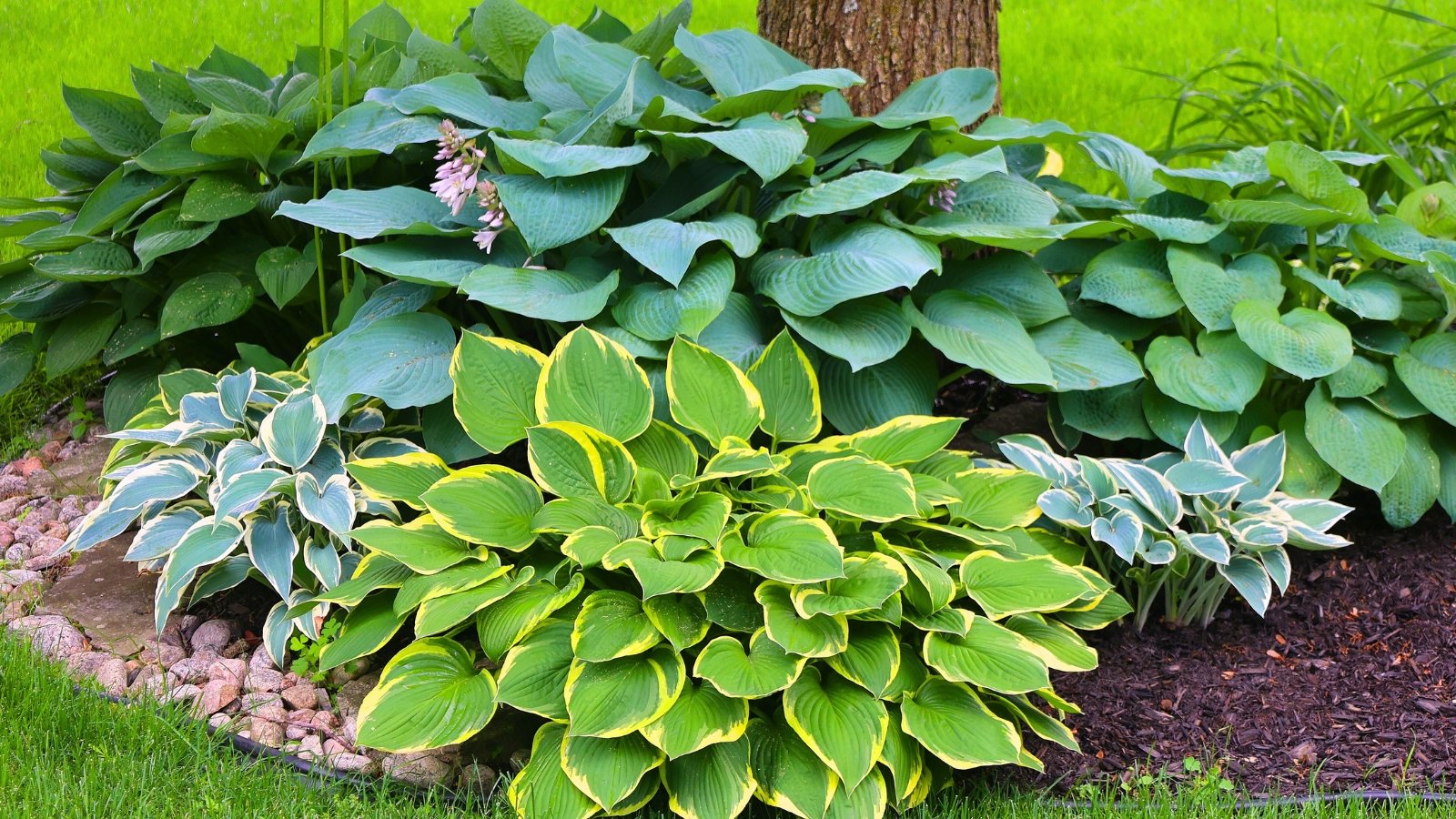
Hostas brighten the shaded border and sites that other plants find challenging. From cooling blues to energizing golds, their leaves become a dense, attractive backdrop to other seasonal performers. Their summer bloom spikes draw hummingbirds, bees, butterflies, and other pollinators.
Requiring little tending, hostas are easy to grow and a fit for beginner gardeners and collectors alike. As they clump and gently spread, they take dividing well for sharing with a friend or expanding to other garden areas.
A fall planting gives the perennials time to settle in and develop roots before cold winter conditions. These are just a few of the hosta varieties for October planting.
‘Above the Clouds’


|
botanical name Hosta ‘CPBRAF PP34341’ |
|---|---|

|
height 25” |
‘Above the Clouds’ is a billowy hosta with chalky blue, cupped, textural leaves. The large variety has a spread of up to five feet and lends a presence to the border. In midsummer, pale lavender flower scapes emerge among the cloudy foliage.
‘Above the Clouds’ is part of the Shadowland® Collection from renowned Michigan perennial breeders Walters Gardens. The premium hosta shows strong landscape performance, pest resistance, and easy growth with long seasonal appeal.
The handsome broad leaves complement other foliage and flowering specimens while filling out the bed with a mounding, leafy form. These are ideal hosta varieties for October planting.
‘Abiqua Drinking Gourd’

|
|
botanical name Hosta ‘Abiqua Drinking Gourd’ |
|---|---|
|
|
height 18” |
‘Abiqua Drinking Gourd’ has large, twisted leaves that unfold to form deep, three-inch cups. Leaves are waxy and blue-green. Rounded and searsuckered, each leaf can reach 11 by 11 inches and holds rainfall after a shower. Tubular white blooms rise to the height of the leaves.
Named after a creek that runs through the Cascades in the region of its Oregon breeder, Dr. Charles Purtymun, ‘Abiqua Drinking Gourd’ boasts Royal Horticultural Society Award of Garden Merit status for its unique foliage and strong landscape performance. It’s also an American Hosta Growers Association Hosta of the Year. The thick, corrugated leaves show good slug resistance.
‘Curly Fries’

|
|
botanical name Hosta ‘Curly Fries’ |
|---|---|
|
|
height 6” |
With a compact habit and narrow, strappy, wavy leaves in bright golden green, ‘Curly Fries’ offers contrast in the front of the border or in a container arrangement. Leaves have wavy margins and arch from the central, clumping crown.
The chartreuse foliage shows the best color with morning sun exposure. Lavender flowers create a pretty complement as they mingle with the bright hues.
‘Curly Fries’ is another Hosta of the Year with its novel form, tone, and durability. Place these hosta varieties in October among blue hostas and other shade plants with purple tones, such as heuchera and epimedium, for visual impact.
‘Rainbow’s End’

|
|
botanical name Hosta ‘Rainbow’s End’ |
|---|---|
|
|
height 12” |
‘Rainbow’s End’ features painterly leaves with clean streaks of creamy gold against rich green. Starting more yellow and maturing to ivory, the light ribbons brighten shady zones. The heavy variegation is distinct and bold, with a spray of color jetting from the crown. Leaves are shiny and lush and a standout among deep greens and silver pairings.
‘Rainbow’s End’ is a Hosta of the Year award winner. In late summer, deep purple blooms rise on 20-inch red scapes to add to the visual and pollinator appeal.
‘Blue Mouse Ears’

|
|
botanical name Hosta ‘Blue Mouse Ears’ |
|---|---|
|
|
height 6” |
This adorable miniature hosta is the total package in a small form, one of the most popular hosta varieties for October planting. Petite, rounded, three-inch leaves in pleasing blue spread horizontally to delight in small spaces and pots. Clumps of the thick foliage spread about one foot wide. Short bloom spikes in lavender-violet rise in summer.
‘Blue Mouse Ears’ is an Award of Garden Merit recipient and a Hosta of the Year with a long season of interest and reliable growth. Use it in rock gardens, as the small stature requires fewer resources than its larger relatives. It adapts to shade and drier conditions, though regular moisture is still the best situation for vigorous growth.
‘Dancing Queen’

|
|
botanical name Hosta ‘Dancing Queen’ |
|---|---|
|
|
height 18” |
Contrasting the blues is ‘Dancing Queen,’ a favorite of the gold hosta varieties to plant in October and any time of year. ‘Dancing Queen’ shakes up the composition with huge, tender leaves and gently ruffled “piecrust” edges. Pale lavender blooms rise on tall scapes at nearly 30 inches.
‘Dancing Queen’ is a champion Hosta of the Year with leaves that reach over a foot long. The bright yellow leaves that emerge in spring hold the color all season, except in deeper shade, where they’ll become more pale and green.
‘Fire and Ice’

|
|
botanical name Hosta ‘Fire and Ice’ |
|---|---|
|
|
height 12-18” |
‘Fire and Ice’ has striking variegation with creamy white leaves and deep green, irregular margins. The funnel flowers are pale purple and hang above the tidy, mounding foliage.
The Award of Garden Merit recipient is a reverse sport of the favorite variegated variety ‘Patriot.’ Leaves are twisted and upright as they emerge from the tight crown.
Because of its heavy variegation (and lack of chlorophyll in the white portions), ‘Fire and Ice’ benefits from dappled light for photosynthesis. Too much direct sun or heat can damage the light leaves. The slow-grower suits small spaces and performs well as an accent in the front of the border.
‘Empress Wu’

|
|
botanical name Hosta ‘Empress Wu’ |
|---|---|
|
|
height 4-5’ |
‘Empress Wu’ is statuesque in height, with broad leaves. With a spread of six to eight feet and reported to be the largest hosta in cultivation, the empress is a specimen to behold. She bears the royal namesake of the only sovereign female empress in Ancient China.
‘Empress Wu’ bears heavily veined leaves that reach over two feet long and wide. They emerge waxy blue in spring and mature to lustrous green in summer. Five-foot-tall, pale lavender bloom spikes rise early in the summer. Give this 2023 Hosta of the Year plenty of space to gradually fill.
‘Stained Glass’

|
|
botanical name Hosta ‘Stained Glass’ |
|---|---|
|
|
height 15” |
‘Stained Glass’ is a sport of ‘Guacamole,’ a stunner with large leaves in multi-toned greens. ‘Stained Glass’ features huge, ten-inch chartreuse leaves with deeper green streaked margins. The shiny leaves and glowing tones brighten the shade-planting arrangement like stained glass windows.
Variegation appears early in the season, with heavy veination throughout. Lavender scapes in late summer are lightly fragrant and rise to 30 inches. ‘Stained Glass’ shows better sun tolerance among other hosta varieties for October.
‘Blueberry Muffin’

|
|
botanical name Hosta ‘Blueberry Muffin’ |
|---|---|
|
|
height 14” |
This delicious medium-sized hosta has varying textures, with puckered and corrugated blue leaves (which mature to a more green in late summer). Foliage is large and rounded, and the plants form an attractive mound for a leafy tuft with substance. It’s also a reliable performer.
Floriferous scapes with light purple funnels are soft among the cool blue. The stalks show rosy purple speckles at the petioles, where they connect to the blade.
The blues of ‘Blueberry Muffin’ lend a tranquil look among limes, silvers, and purples. Pair them with ferns and tiarella for a summer display that obscures the fading foliage of spring-flowering bulbs.
‘Minuteman’

|
|
botanical name Hosta ‘Minuteman’ |
|---|---|
|
|
height 18” |
‘Minuteman’ is another RHS award winner and a sport of the high-performing ‘Francee.’ Among the most popular white variegated hosta varieties for October, ‘Minuteman’ has dark green leaves with contrasting, wide, milky white margins.
Leaves may be cupped with slight waves in the bunch. Oversized lavender flowers on tall scapes adorn the perennials in early to mid-summer. ‘Minuteman’ grows quickly, making it a top performer for pots and shaded beds. Plant the hosta in October to establish in the fall before soils freeze.


