7 Tricks for Keeping Potted Tomato Plants Healthy
Is your garden already full of plants? Don’t despair! Instead, use containers! Potted tomato plants easily fit next to beds, walkways, and borders. Whether you have a full-on container garden or a single tomato plant in a pot, these seven tricks will help you cultivate happy, healthy, and beautiful tomatoes!

Contents
Summer is the season of the tomato! This plump, red fruit is essential for fresh eating and making sauces. With potted tomato plants, you can fit your crops in wherever there is space.
Unlike tomato plants in raised and in-ground beds, potted plants need extra care to thrive. They may lose water and nutrients faster than in-ground specimens, and they need protection from extreme weather. But give them what they need, and they’ll reward you with dozens of tomatoes.
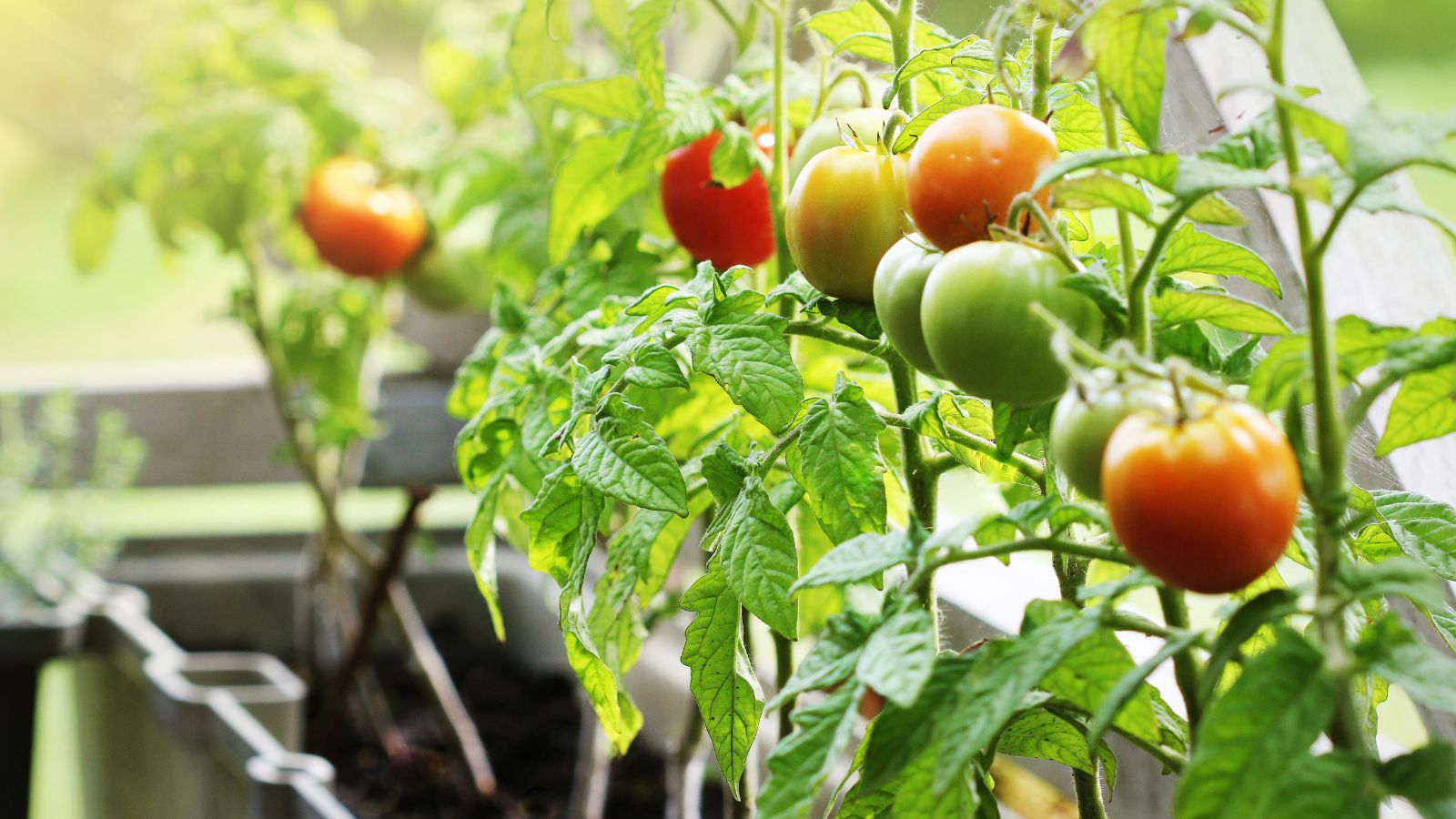
There are cherry, slicer, heirloom, and Roma tomato varieties available. Determinate, cherry tomatoes tend to perform the best in containers, as they form small fruits that resist cracking. Determinate slicers are also good options for pot culture.
No matter the tomato you’re growing, these seven tricks are critical for producing healthy potted tomatoes. With regular watering, fertilizing, and maintenance, you’ll have the best-looking tomatoes on the block!

Chocolate Cherry Pole Cherry Tomato

Chocolate Cherry Pole Cherry Tomato Seeds

Water, Water, Water!
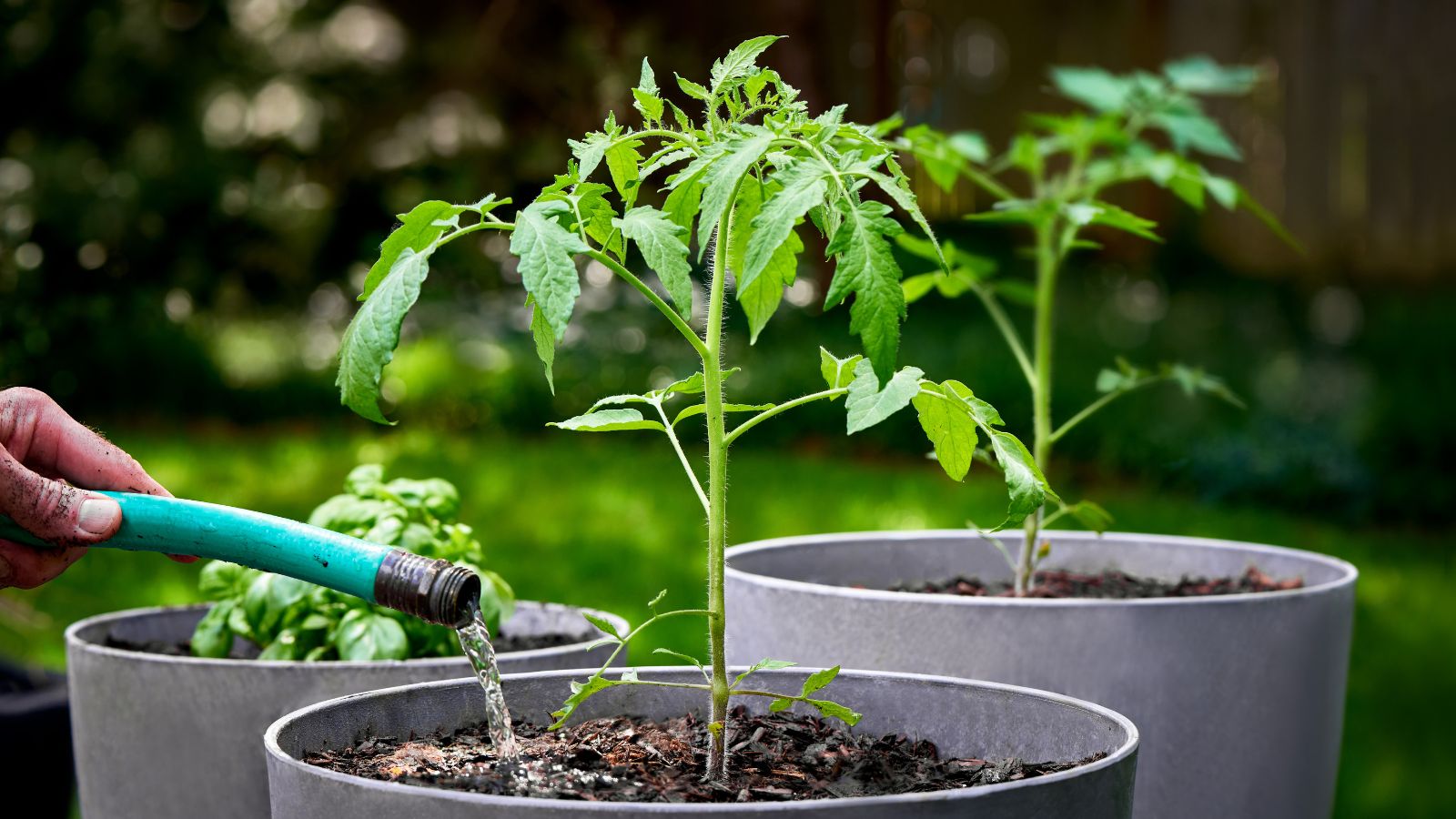
Water is one of the most important factors for healthy potted tomato plants. As tomato fruits ripen, they draw in lots of water from the ground. Their roots pull moisture through the stems and inject it into their tomatoes.
Potted tomatoes are more susceptible to drying out because they sit above the ground. Gravity pulls water out of the drainage holes, leaving the dirt dry and crumbly. Large containers dry more slowly than small ones, so modifying the size of the container can help you water less.
To water, use drip irrigation, overhead sprinklers, or a hose with a nozzle. If you only have a few potted plants, you may use a watering can to ensure they stay moist.
Potted plants may need daily watering during the high heat of summer. If you’re unsure, use the finger test to see how wet or dry the dirt is. Simply stick your finger in the soil and pull it back out. If wet soil sticks to your finger, you don’t need to water. If, however, dry dirt crumbles off your fingers, it’s a good idea to water to ensure your potted tomatoes stay healthy.
Fertilize Regularly

Like us humans, tomatoes need nutrients to thrive. They benefit from nitrogen for their leaves, and phosphorus and potassium for their flowers and fruits. They also need secondary nutrients, like calcium, and micronutrients, like boron.
Fresh potting soil with ample nutrients will provide enough for the tomatoes to thrive for a month or two after planting. After repeated watering, the moisture leaches the nutrients out of the soil, and you’ll need to add more to replace them.
Use liquid, powder, or granular fertilizer to feed your healthy potted tomato. Give it a regular dose of well-balanced organic fertilizer monthly. Avoid splashing any fertilizer onto the leaves and stems, as it can cause burning.
Instead of fertilizer, you can also feed with compost! Compost is an incredible soil amendment you can make in the backyard. It feeds the soil, and it improves its structure over time.
Support Pole Tomatoes
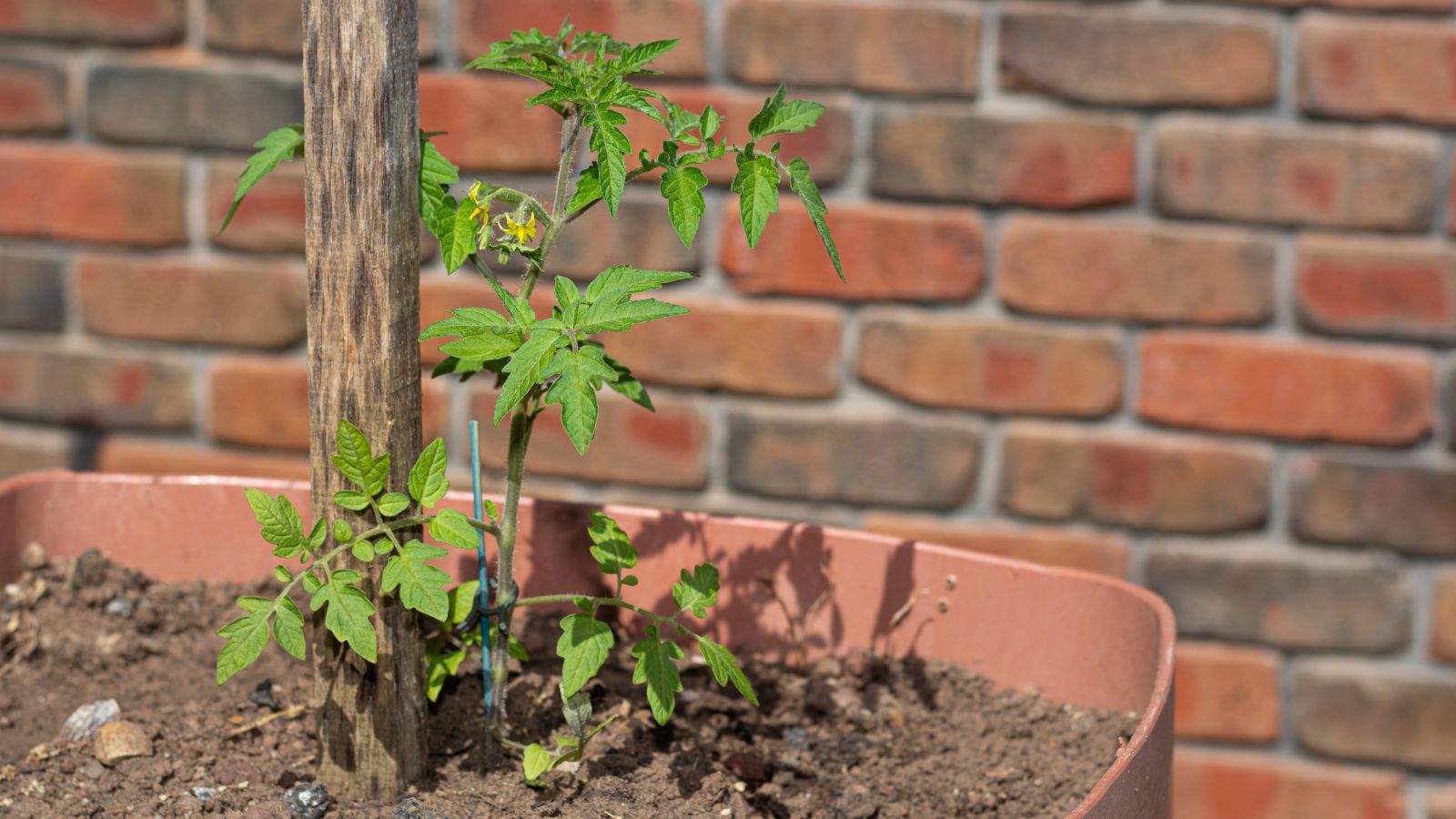
Pole tomatoes are climbing, ever-growing tomato varieties that need support to grow well. They produce throughout the growing season, and they don’t stop fruiting until the first frost in autumn.
Keeping these types of tomatoes off the ground is essential. Soil particles can splash onto the leaves and spread diseases when the foliage is close to the ground. Tie the stems to bamboo stakes, lean them on a trellis, or hang them from beams with strings.
Tomato cages are superb for potted tomatoes, keeping them upright and healthy throughout spring, summer, and fall. Simply stab a cage in the pot and let the stems grow out of it.
Prune Off Dying Leaves

Alongside regular watering and fertilizing, pruning helps maintain healthy potted tomatoes free from pests and diseases. Lower tomato leaves may yellow and wither as the plants age. Instead of leaving them to foster pests, it’s a good idea to remove them.
Watch for leaf spots, powdery mildew, and yellowing symptoms as the season progresses. Spray off pests with a strong stream of water from a hose, and prevent leaves from touching the soil.
Don’t get carried away! Excessive pruning may harm (not help) your healthy potted tomato plants. Tomatoes use their leaves to protect the fruits from sunburn. They need them to photosynthesize and generate energy.
Harvest Consistently
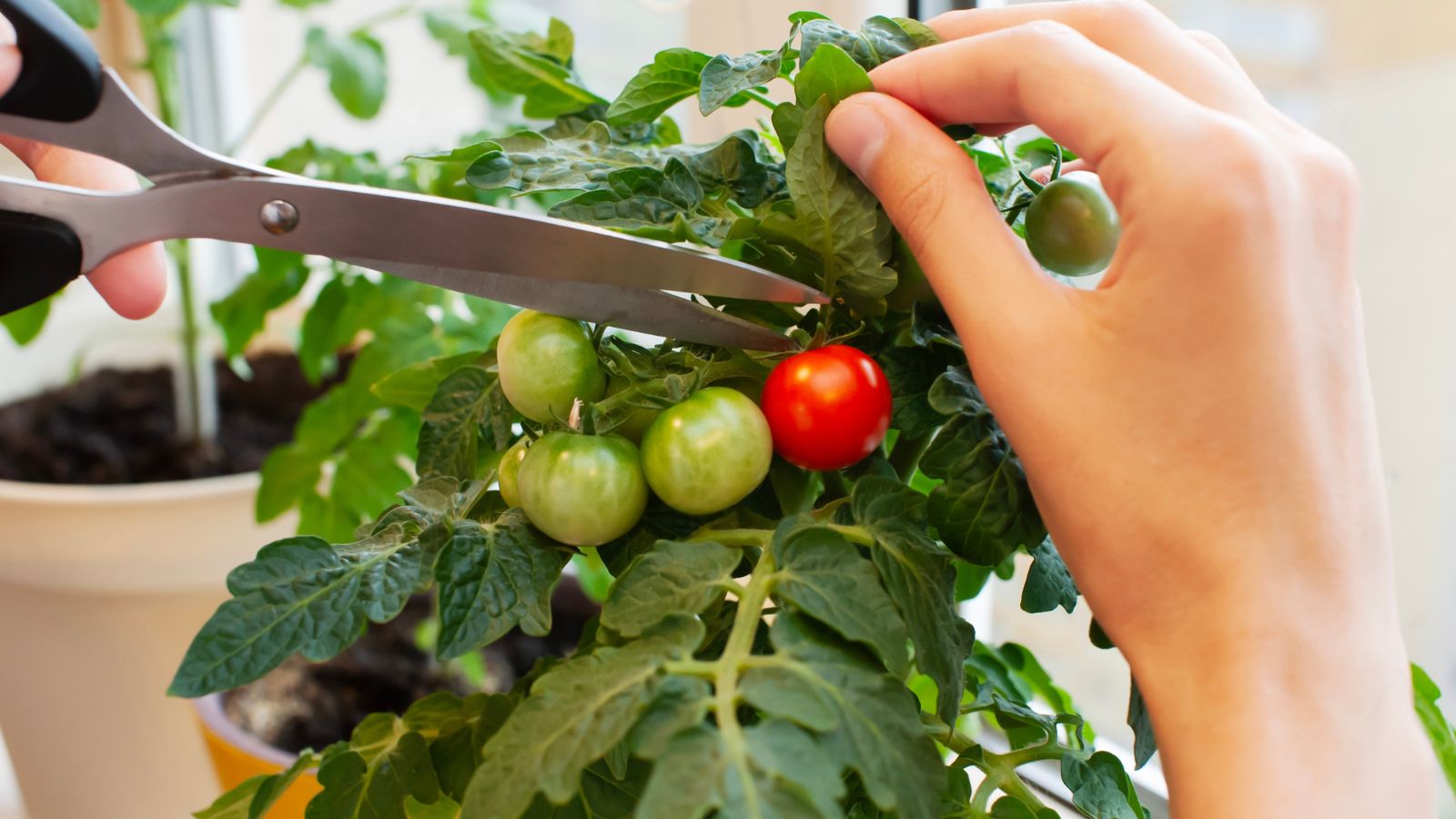
Consistent harvesting promotes more tomatoes from indeterminate plants. As you pick the fruits from your plants, you trick them into thinking they haven’t grown seeds. They’ll rush to flower and produce more seed-filled tomatoes.
Pick maturing tomatoes when they’re between 40% and 60% ripe. Set them on the kitchen counter to ripen fully, then store them in the refrigerator for a week or two. They’ll stay ripe and healthy until you’re ready to use them.
As summer shifts into fall, tomatoes run out of time to ripen and swell. You can snip off the plants’ flowers and small green fruits to redirect energy towards their almost-ripe tomatoes.
Move the Pots
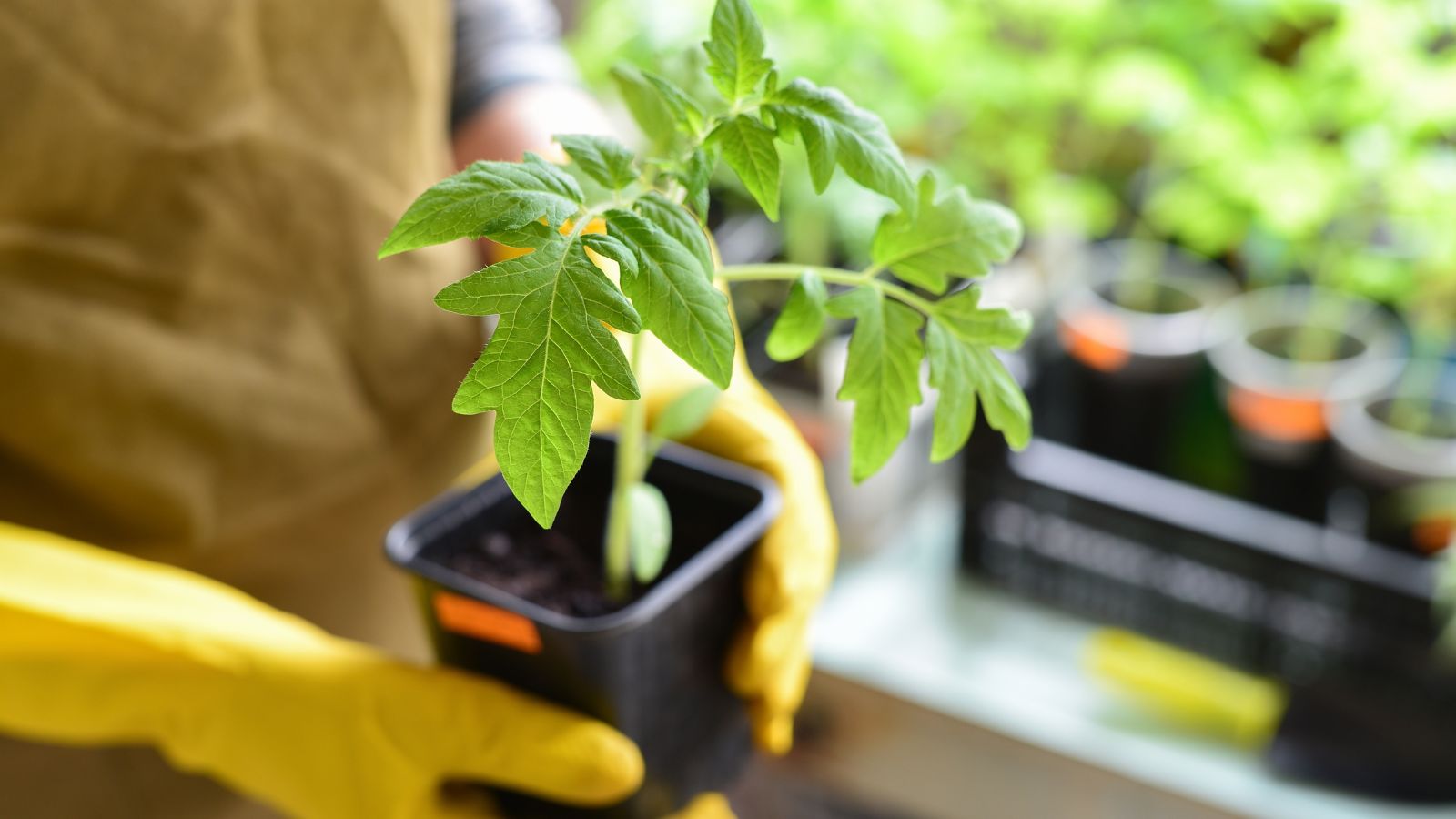
Tomatoes love sunlight, but too much heat can harm them! Strong heat waves and arid droughts cause a myriad of issues for container specimens. Instead of leaving them to bake in the sun, move them under cover while the heat wave passes.
Moving the pots is also helpful when strong rains arrive. Too much water causes splitting, cracking of fruit, and fungal conditions. Move the containers under cover to control the amount of water they receive.
Or, perhaps the plants don’t receive enough sunlight! As other crops grow in the garden, they may shade out the tomato stems. Move the containers to a sunnier site to grant them the full sun exposure needed for a healthy potted tomato.
Protect From Frost
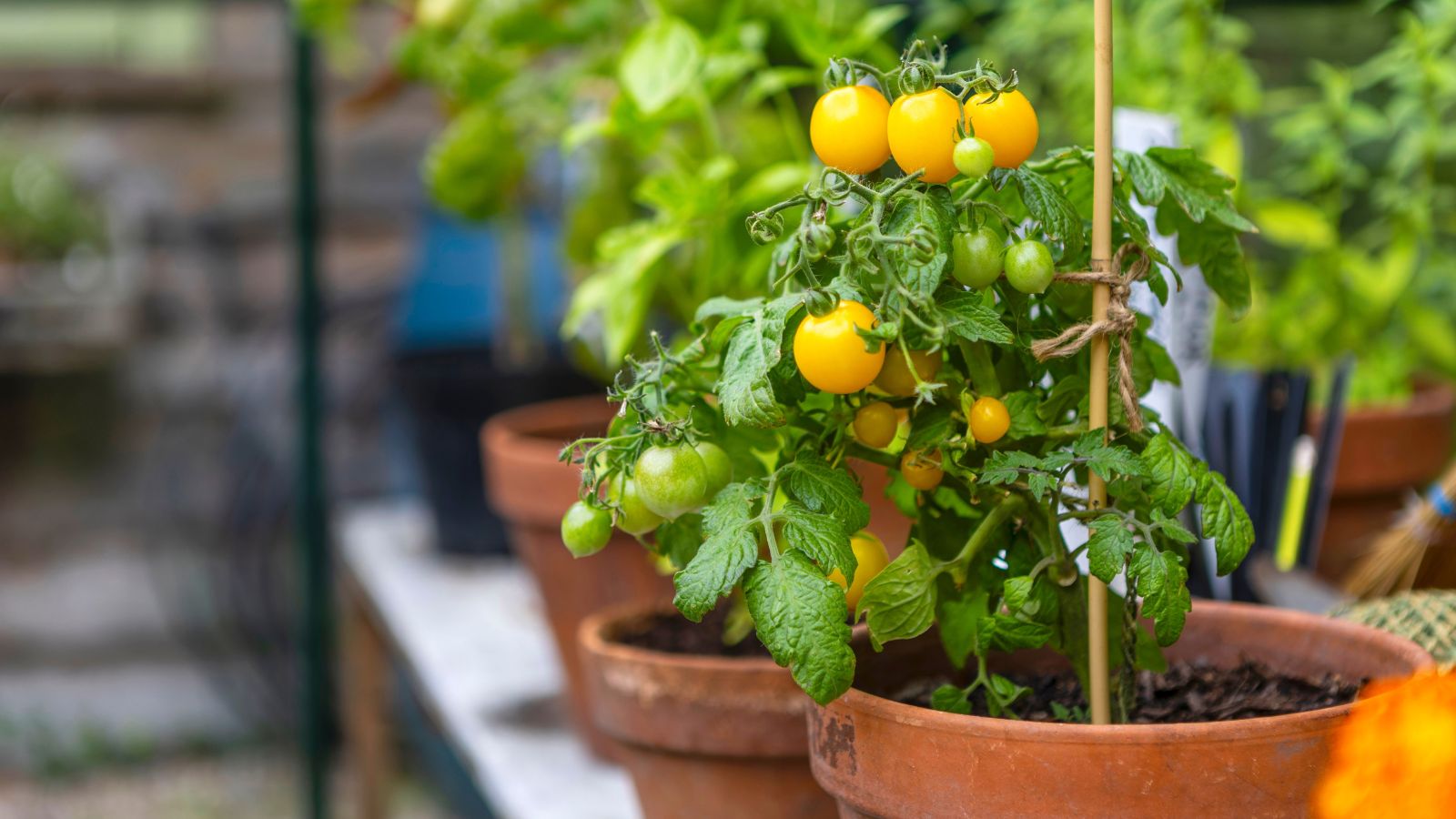
Late spring and early fall frosts threaten your ripening crops. Tomatoes are especially susceptible, as most varieties aren’t frost-tolerant. Try to harvest them all before the first average frost date, or use cold protection strategies to extend the seasons.
Frost cloth protects the leaves, stems, and fruits by trapping warm air and moisture inside. Simply lay it over the plants in the evening before the expected frost arrives.
Another way to protect them is with greenhouse plastic and metal hoops. Stab the hoops into the beds, drape clear plastic over them, and weigh down the edges. Open the ends on warm days to let air flow through, and close them on frosty nights for cold protection.