
How to Grow Dragon Fruit in Raised Beds
Dragonfruit, or pitahaya, is a subtropical cactus that yields juicy, colorful fruits and nighttime flowers. Exotic on grocery store shelves, they’re more captivating in the garden. Growing fruits in raised beds brings an eye-catching, rewarding tropical flair.

Contents
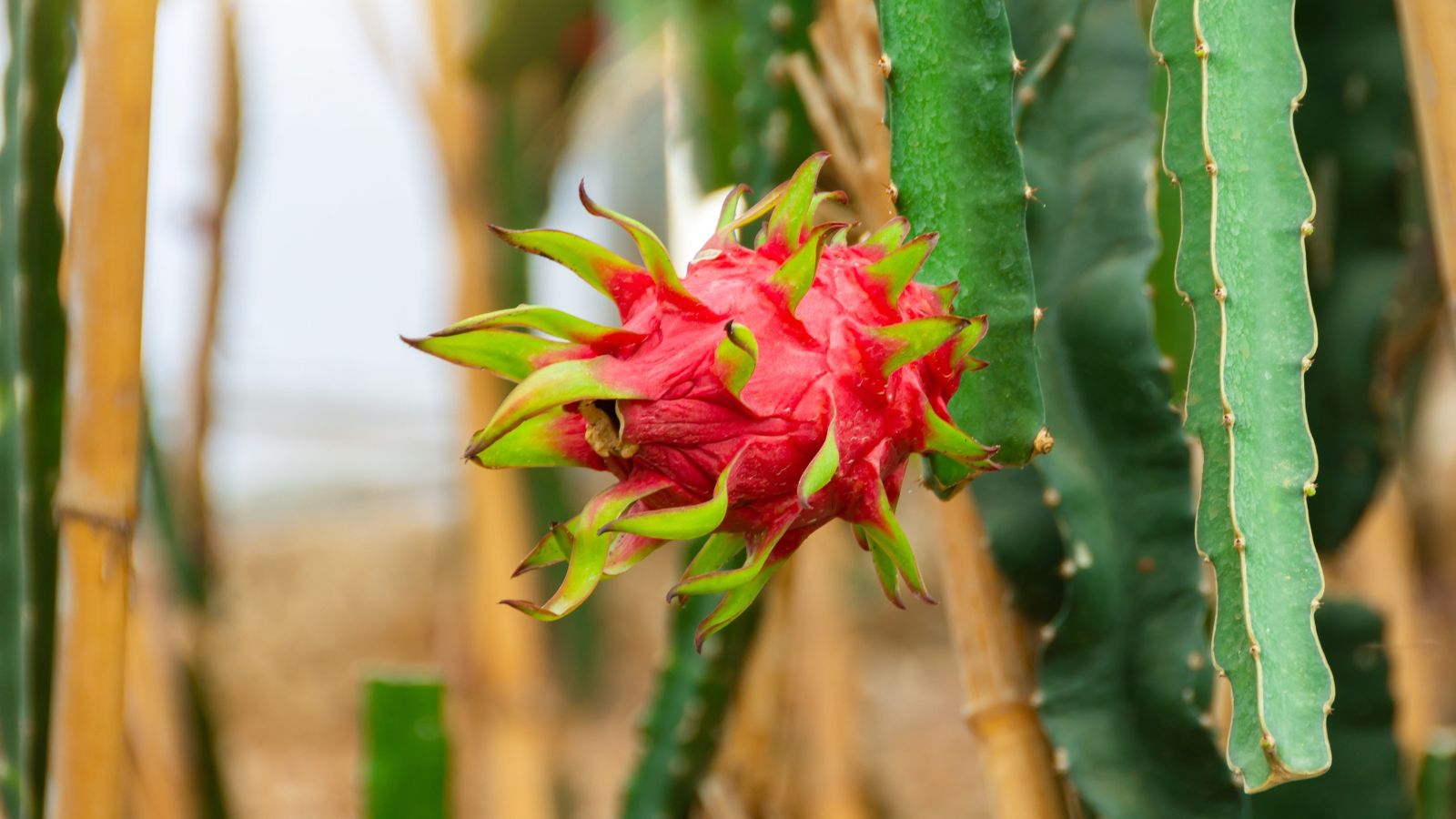
Originating in Mexico, Central and South America, the subtropical dragonfruit produces fuchsia or yellow fruits with a fleshy interior and tiny black seeds. The vine-like cactus is fast-growing with striking nighttime blooms that lead to the colorful fruits.
Pitahaya thrives in mostly frost-free tropical climates and is hardy in USDA zones 10 and 11. Elsewhere, it grows with protection against cold temperatures.
Incorporating dragonfruit into our edible landscapes is sure to brighten the landscape and culinary endeavors. Here, we’ll explore growing dragon fruit in raised beds for a gardening adventure with fruitful rewards.
About Dragon Fruit

Dragon fruit (Selenicereus undatus) has fleshy, triangular stems that grow long and form aerial roots as they climb and run. In addition to the spectacular fruits are showy bell blooms that open at night to draw nocturnal pollinators like moths and bats.
The edible flowers are white or pink, depending on the species, and may reach over one foot long. Extremely fragrant, the night-blooming cereus enchants the evening garden.
When sourcing dragon fruit to grow in raised beds, consider the variety and its pollination requirements. The cacti are often self-fruitful, producing berries without cross-pollination from another nearby specimen. But others are self-incompatible, relying on a different variety in close proximity for pollination.
Two or three different types of dragon fruit can boost fruiting. It helps to know your variety to gauge whether a single plant is sufficient or if more are necessary. Sometimes varieties are muddled in cultivation, and it’s difficult to know for sure. Grow a few dragon fruit in raised beds for best results.
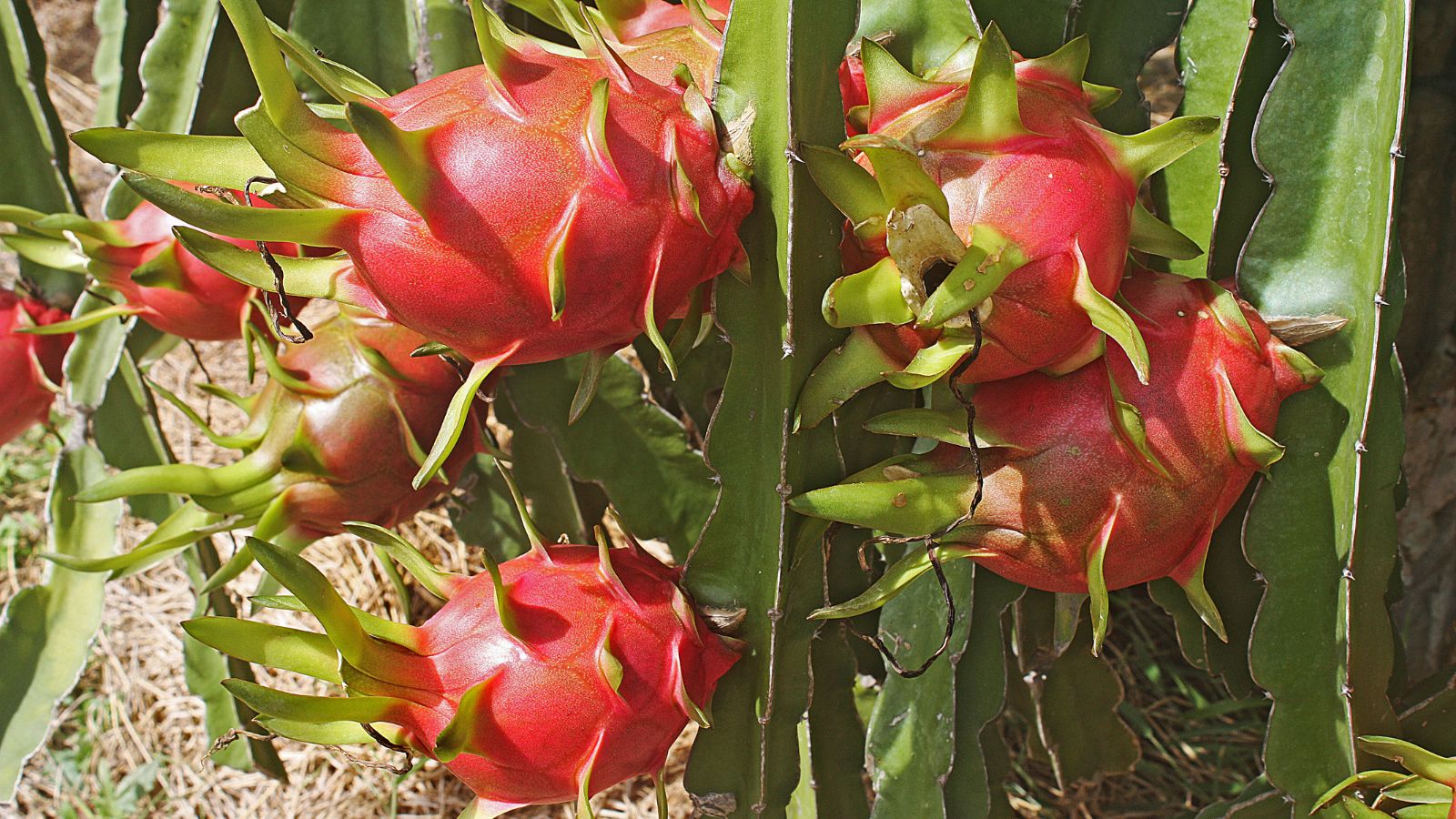
The fleshy oblong fruits reach nearly five inches long and are cerise-pink or yellow, depending on species, and may be spiny or spineless. The interior is white, red, or magenta. Pulpy, numerous black seeds embed the flesh.
The tropicals are frost-sensitive plants and require mild air and soil temperatures for best growth. Purchase them as nursery potted specimens for a head start toward faster fruiting. They grow easily from cuttings, whether from a pass-along plant or sourced through a grower.
Cuttings bear fruit in one to two years. They also grow from seed, and the patient gardener can expect fruit in five to seven years after sowing.
Growing Dragon Fruit in Raised Beds
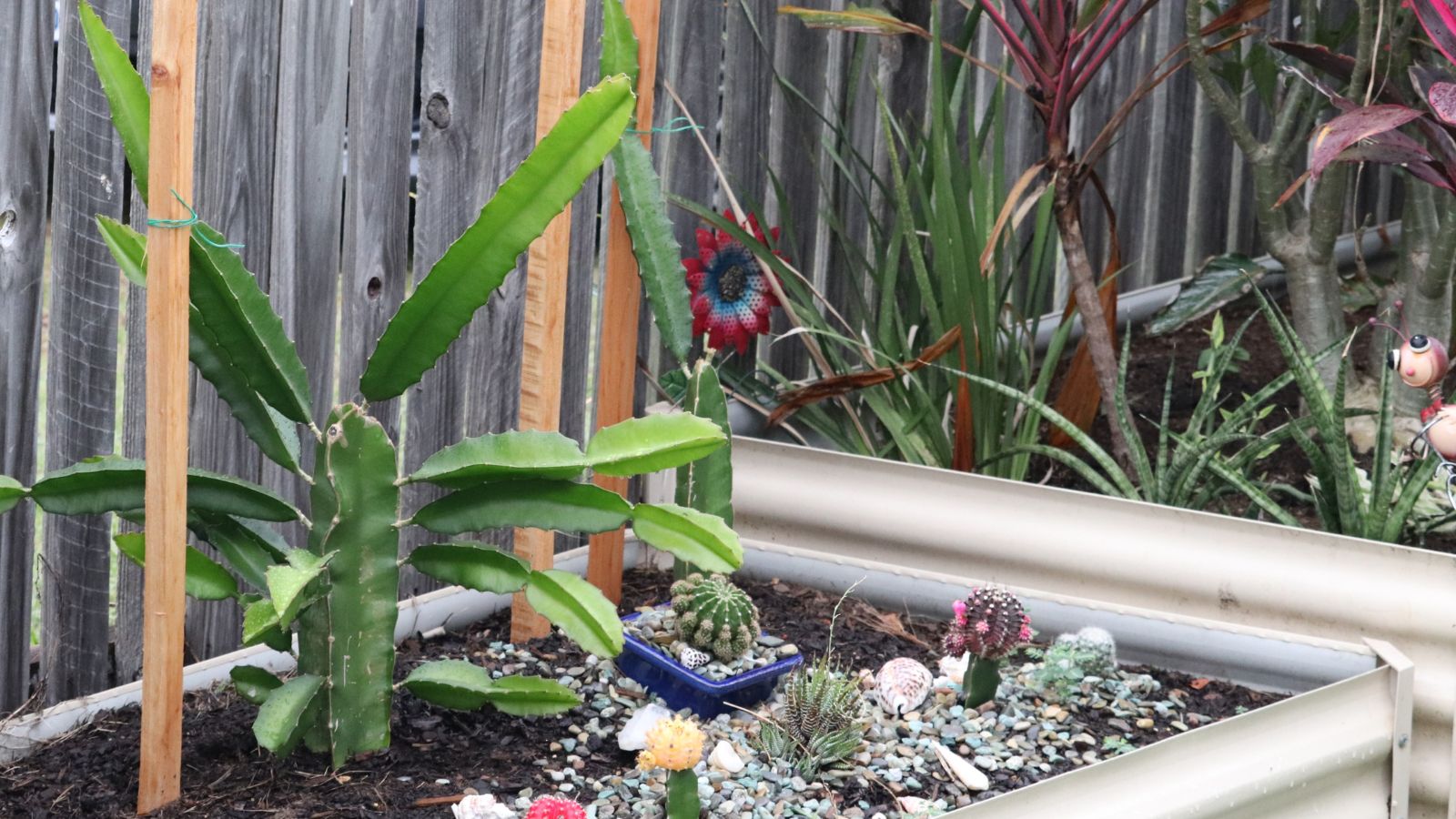
Growing dragon fruit in temperate climates means a few specific cultural conditions are necessary for the best growth and vigor. Growing them in raised beds offers an opportunity to enjoy the wild fruits in our home gardens while insulating them in frosty climates. Moderate temperatures are key to their longevity. In optimal conditions, they can live for 20 years.
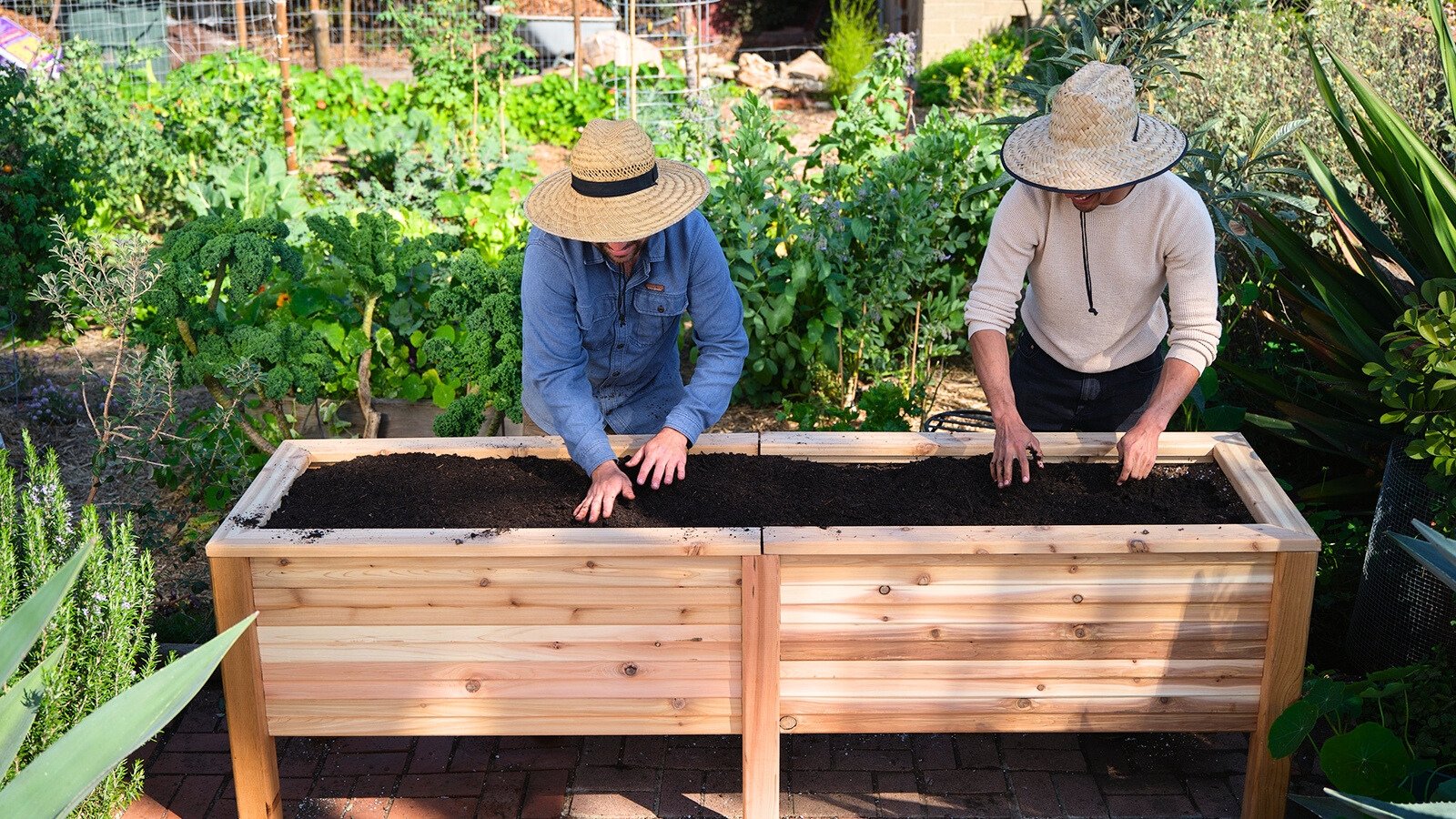
Raised beds also make good growing options to allow for the vines’ hefty mature growth. A small raised bed (25 to 35 gallons) works well for a single specimen. Opt for a larger bed to grow a few together. And, raised beds let us control the soil material, ensuring well-draining situations for the cactus.
With soil fill and a trellis or pole in place, nursery specimens are ready to go in their raised bed locations. For those propagated from cured cuttings, plant them directly or after they’ve developed sturdy root systems in a pot (about four to six months).
Temperature
Dragon fruit grows in warm climates where the temperature stays below 100°F (38°C). The optimal growing temperatures in their native range are between 65 and 77°F (18-25°C).
They tolerate a light frost and recover quickly, but won’t withstand prolonged conditions below freezing and can receive damage below 40°F (4°C).
Location
Situate the raised bed where it receives full sun with some shade protection against intense afternoon rays. While the cacti are full sun specimens, they’re stems are susceptible to sunburn and scorch, especially in dry or high altitude growing areas. Partial shade in the first several months of development helps protect tender branches.
A placement in morning sun (east or south-facing) offers the best exposure, with plenty of light to support flowering and fruiting. Light shade protection in the afternoon is optimal.
Soil Base

Pitahayas tolerate a range of soils as long as they have good drainage. Generously amend succulent soils with compost, horticultural sand, perlite, and vermiculite. For filling raised beds, opt for a quality mix that’s organically rich and light for good aeration. Topdress with compost annually to boost nutrition and soil quality.
A mulch layer helps retain moisture and regulate soil temperatures in the dragon fruit raised bed. In summer, it offers cooling moisture while providing insulation in winter. Use an organic mulch that breaks down quickly.
Staking and Trellising
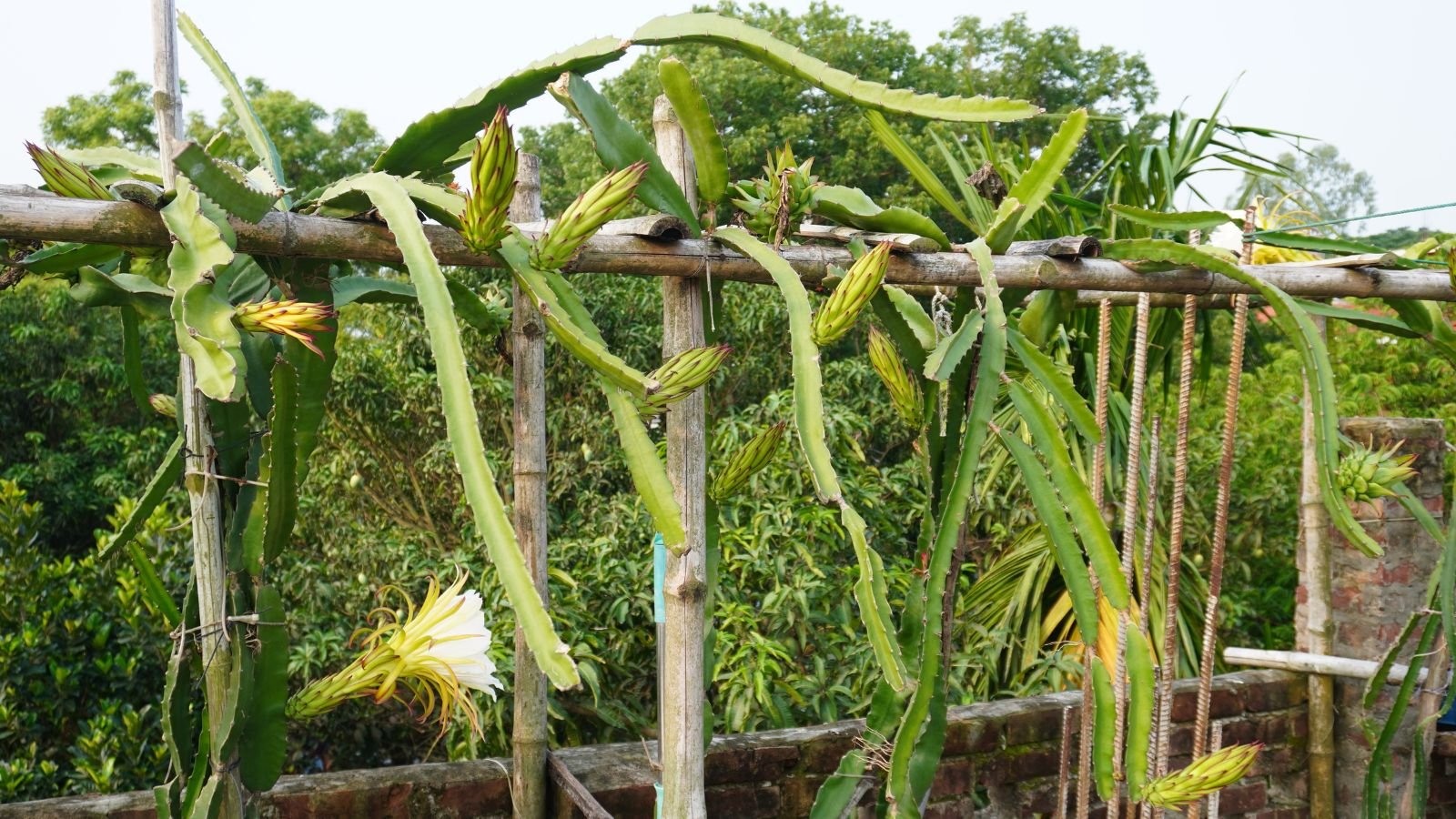
The long, fleshy vines require support as they grow. Install supports when positioning the beds and before infill. Situate the supports in the beds themselves or right next to them for easy training. The vines grow upright the first year and begin to branch laterally and cascade downward for a full top.
A pole and trellis system in raised beds keeps the plants upright. They support the “trunk” (central vines) and the spreading crown. The pole and trellis must be a sturdy system to support them over the long term. Weighty vines and fruits are within reach with a well-situated setup.
Use a four to six-inch wooden post, four to six feet tall, anchored in the ground with a concrete pier or rebar support, about one foot deep. An arbor-style or wooden frame secured to the post forms a workable trellis. Four to six pieces of two-by-four framing lumber craft an open box frame to mount to the post.
With training and pruning, the supports hold the cacti as they grow.
Water Needs

Dragon fruits in raised beds withstand dry spells and drying out between waterings, but they do best with regular water in their well-draining soils. Too much moisture and soggy situations lead to diseases like root rot, but consistent water during the growing season supports production.
In their native environments, pitahayas experience a short dry period and dormancy. The dormant period allows for the best production over the summer.
Avoid regular irrigation in winter to mirror their optimal conditions. Once growth and flowering resume in spring, begin watering for even soil moisture, allowing it to dry slightly between sessions.
Fertilizing
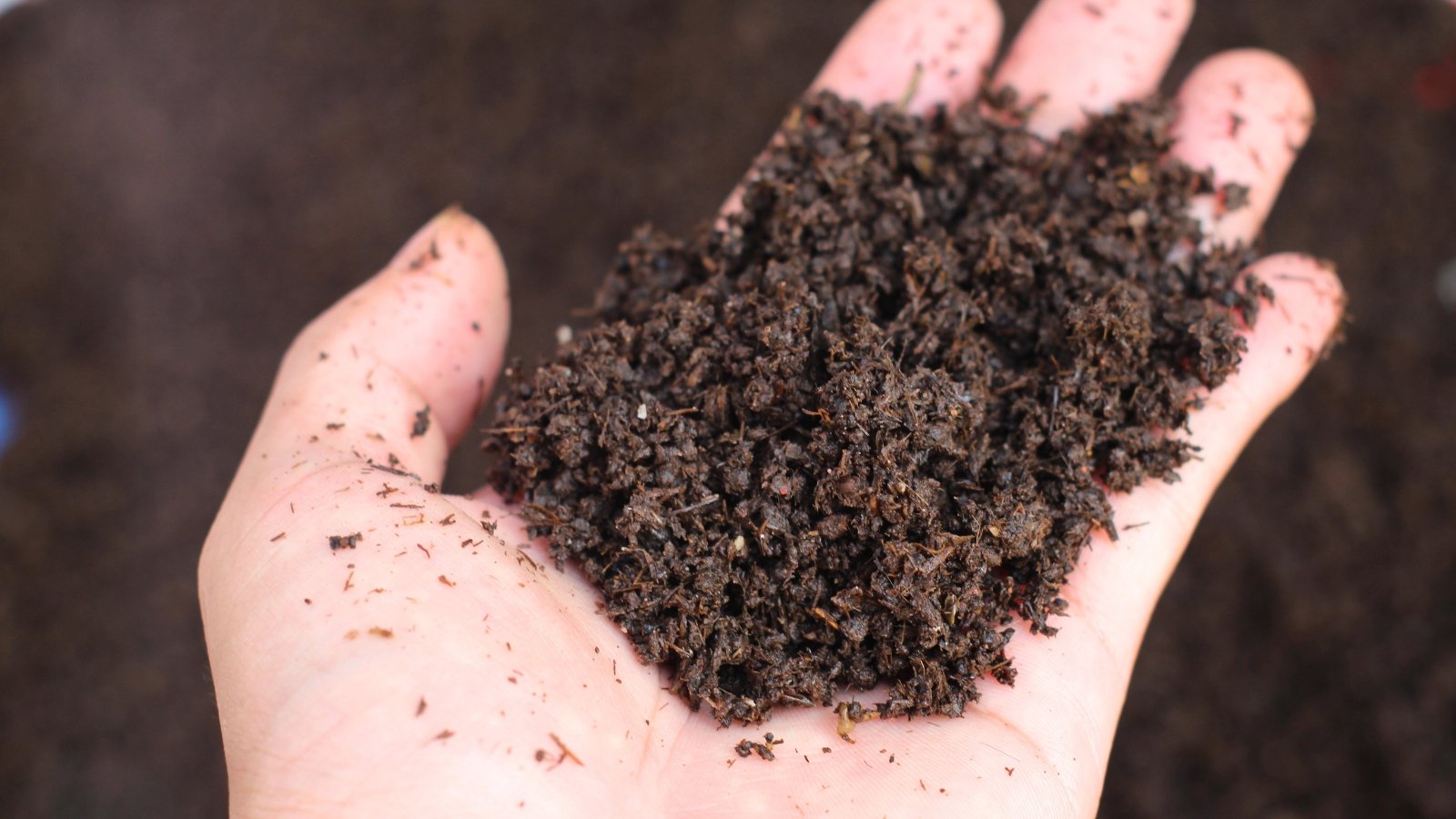
Fertilizing, especially in the first year of growth, supports healthy rooting and branching. A 6-6-6 or similar formula in spring and again in summer offers a boost during active growth. Compost (kept off of stems) enriches the beds for the warm season.
Pruning

Dragonfruit grows vigorously where it’s happiest and may benefit from pruning one to three times a year to manage size and hearty yields. In subtropical climates, the vines can reach 20 feet long. Raised bed specimens in colder zones will stay smaller, and pruning and regular training foster the best form and fruiting.
The first type of pruning for raised bed training is to remove side branches that develop off the central vine. As young plants grow upright along the base of a pole, tie the central vine to the post to secure it. Once vines reach the trellis or support frame, cut the tips off stems to promote the production of lateral branches. Tie stems to the frame as they grow.
The next form of pruning fosters fruit production. Remove diseased, damaged, or crossing canes anytime they occur. Trim any long canes off the ground. Thin the canopy if it becomes dense, heavy, or too large. A dense crown can shade out other stems and reduce fruit production. Train and foster the healthiest, plumpest stems for dragon fruit in raised beds.
Harvesting

From summer through fall, depending on the climate, dragon fruits produce harvestable berries. Look for fully-colored fruits for picking. Use pruners to clip the fruit from the stem to avoid damaging vines or the fruit with hand pulling. Clip the stem flush to the top of the fruit after picking for storage.
The juicy berries store for four to five days at room temperature. In the refrigerator, they’ll last for several weeks.
Winter Protection

Outside of zones 10-11, dragon fruit in raised beds need winter protection. Depending on the climate, they’ll need frost cloth or increased insulation like a greenhouse or cold frame atop the raised bed.
They need above-freezing temperatures to survive, and can receive cold damage in prolonged spells below the mid-40s (~4°C). Winter temperatures in the 50s (~10°F) keep them comfortable.
Frost cloth is available in various thicknesses and is rated for different temperatures. It allows filtered light and seasonal moisture to infiltrate the bed. Plastic sheeting or a cold frame setup offers warmth and light while limiting outside moisture. Greenhouses are preferable for these tall plants.
These can be useful in very cold climates and to control the amount of water the cacti receive during dormancy. To maintain their dry period, blocking external seasonal moisture can be beneficial. But, to prevent soils and roots from drying out completely, they’ll need some water during the season.
Open the frame or cover on warm days. Water as needed on these days for periodic moisture and evaporation. Opening also allows air circulation and prevents overheating, especially as spring nears. If your climate can’t accommodate the necessary warmth needed for overwintering, try growing the fruits in pots and containers to move them indoors or to a sheltered location for the winter.


