How to Plant, Grow, and Care for Cacao Trees
Growing a cacao tree seems exotic, but if you have the right climate, it's well worth the attempt! This in-depth growing guide explains how to provide the ideal conditions for these tropical trees.

Contents
Who wouldn’t want to grow their own chocolate? When you grow a cacao tree, you can get many of the cocoa products you see in stores today. Theobroma cacao is definitely a true tropical tree. Like other tropical plants, cacao likes humidity, heat, and all the things that most climates in the continental US just don’t have. But that doesn’t mean it’s entirely impossible to grow it here.
In parts of Florida and Hawaii, cacao can be grown outdoors. In other areas, it’s possible to grow cacao in a greenhouse. People have also managed to grow it in Mexico, and there are cacao trees at most botanical gardens along the west coast of the US, although they are often in large enclosed greenhouse spaces with higher humidity than outside.
What’s more rewarding than growing your own chocolate, though? Cacao is not your typical houseplant and has very specific requirements. This species will take some serious preparation, a lot of love, and creativity to grow well. But it will be worth it in the end. For anyone who loves to eat chocolate and also loves to garden, growing your own cacao tree is the ultimate crossover!
Harvest Basket
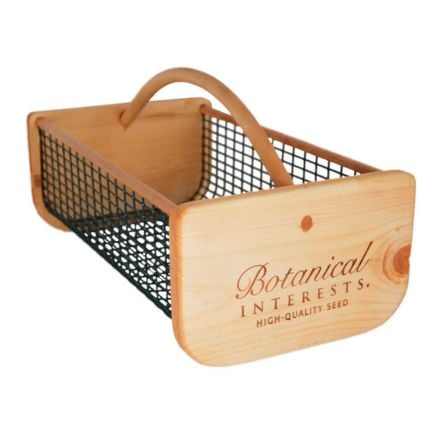
Styled after a traditional, New England clamming basket, this harvest basket is not only beautiful but it is sturdy enough to become a family heirloom. Veggies can be rinsed off right in the basket. Crafted of pine, birch and oak with a weather-resistant, hand-rubbed oil finish and food-grade vinyl-coated wire to last many years.
Buy at Epic Gardening Shop
Quick Care Guide
|
Scientific Name
Theobroma cacao
Days to Harvest
When started from seed, it can take up to 5 years for a cacao tree to produce pods
Light
Full sun to partial shade
Water
1-2 inches of water per week
|
Soil
well-draining soil
Fertilizer
Organic matter, well-balanced fertilizer
Pests
Cocoa pod borer
Diseases
Frosty pod rot, swollen shoot, black pod rot, witches broom
|
All About The Cacao Tree
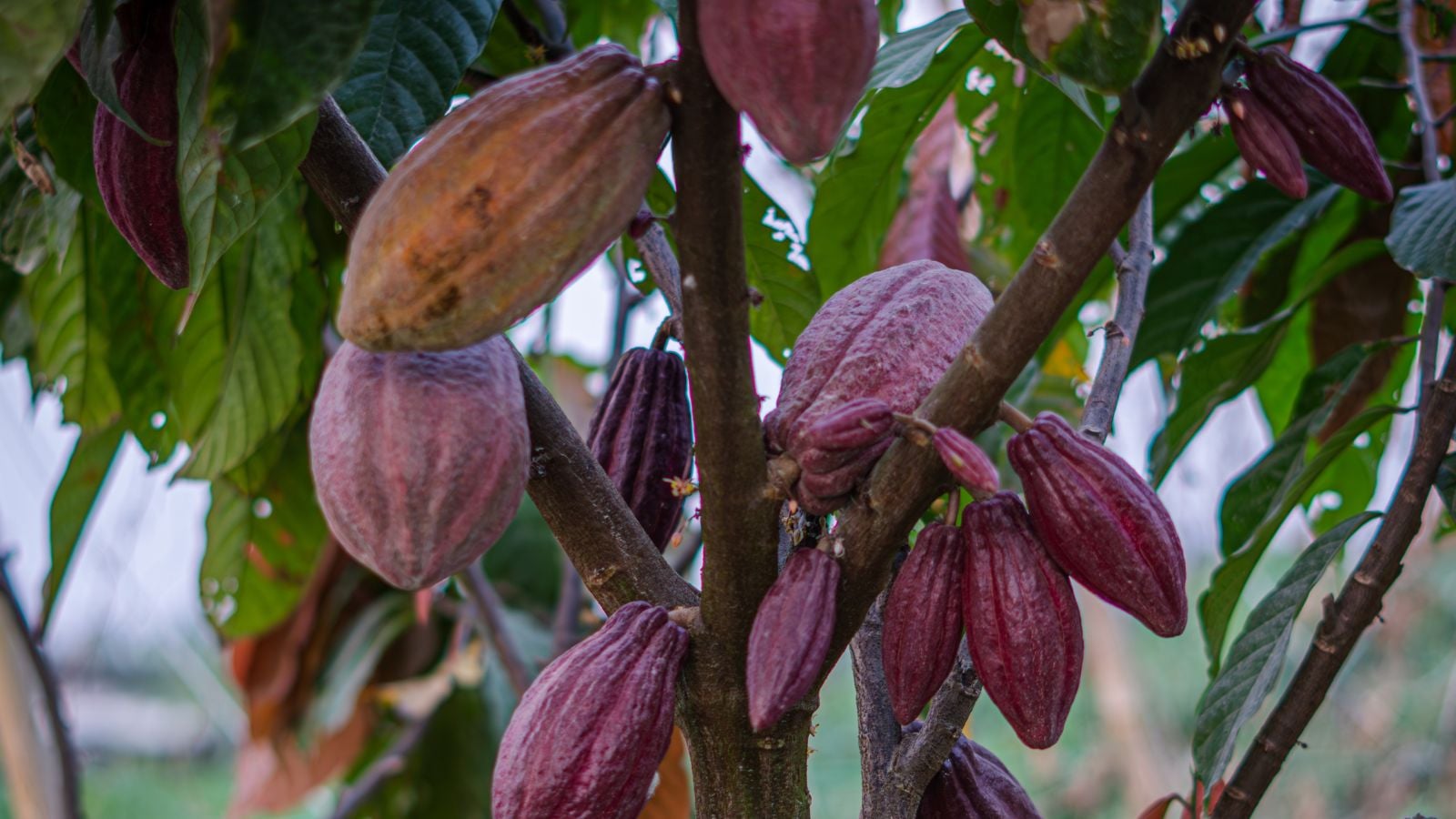
Theobroma cacao is an evergreen tree in the Malvaceae (mallow) family, which also includes plants like cotton, okra, durian, and hollyhock. The cocoa plant goes by several common names: cacao plant, cocoa tree, and food of the gods. More than half of the world’s cocoa comes from just two countries where the tree is native: the Ivory Coast and Ghana.
Most cocoa pods grown in the United States come from Hawaii. Scientists believe cacao trees originated in the upper Amazon region of modern-day South America, spanning Peru, Ecuador, and Colombia. The native range stretches from southern Mexico through Central America and into South America.
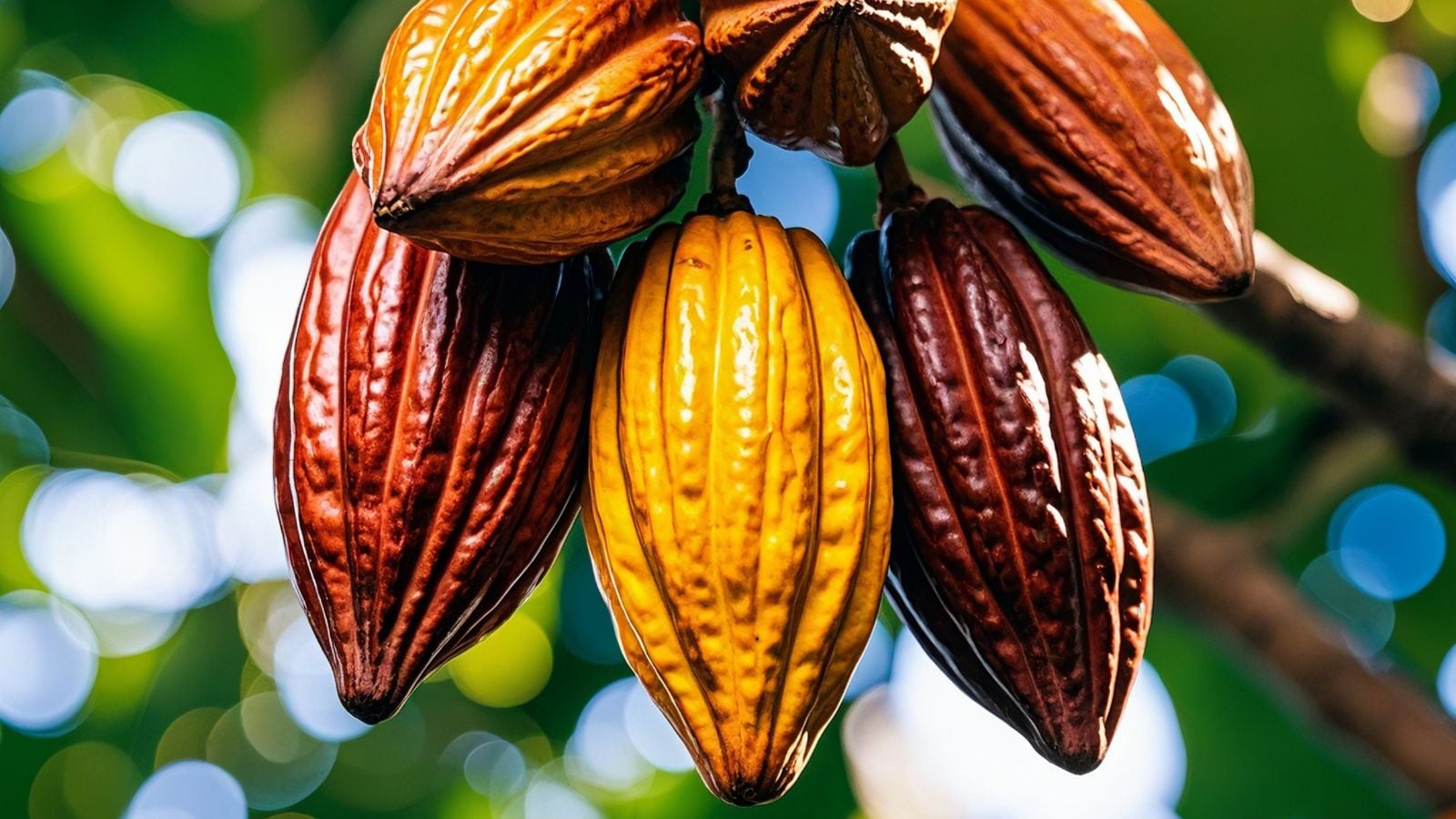
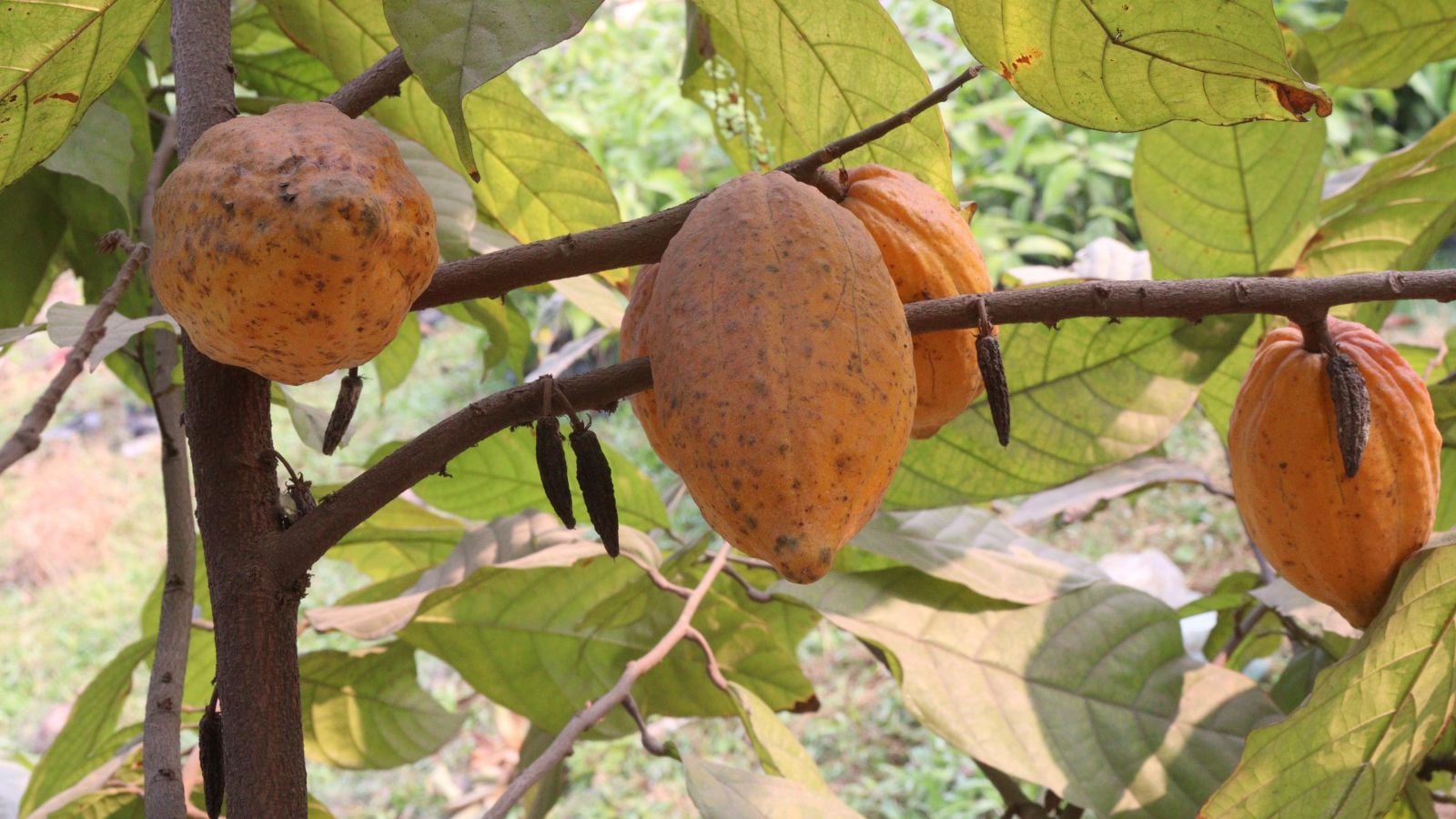
Cacao trees have rich green leaves and can grow up to 30 feet tall, with branches reaching the same distance horizontally. In their natural habitat, they form part of the understory ground floor of a tropical rainforest and therefore prefer shade. The flowers grow in clusters directly from the trunk, giving the tree a unique appearance once pods begin to form. Football-shaped yellow-orange pods jut out from the trunk rather than the branches.
Inside the pods, fruit develops containing the cocoa beans everyone knows and loves. Cacao plants have shallow roots, and both the roots and branches need protection from strong winds, which the understory naturally provides. Cacao flowers rely strictly on insect pollination (entomophilous pollination). In its native range, the cocoa midge, a small mosquito-like insect, serves as the main pollinator. This insect pollination is essential for cocoa plants to set fruit in the wild.
The three most popular varieties of cacao used for cocoa production are Criollo, Forastero, and Trinitario. Trinitario is a hybrid of Forastero and Criollo.
From the cacao beans within the pods, you can produce cocoa powder, chocolate liquor, and cocoa butter. White chocolate contains cocoa butter but no chocolate liquor, which gives it a white color. Dark chocolate contains both cocoa butter and chocolate liquor and generally has a lower sugar content, which can leave a slightly bitter flavor compared to milk chocolate (which also includes milk solids).
Planting
You can grow cacao from seeds, and it is an extremely fast grower. Within the first 30 days after the seeds sprout, seedlings can reach a foot tall. However, as with most fruiting trees, it takes approximately five years of flowering for the tree to reach maturity and begin setting fruit.
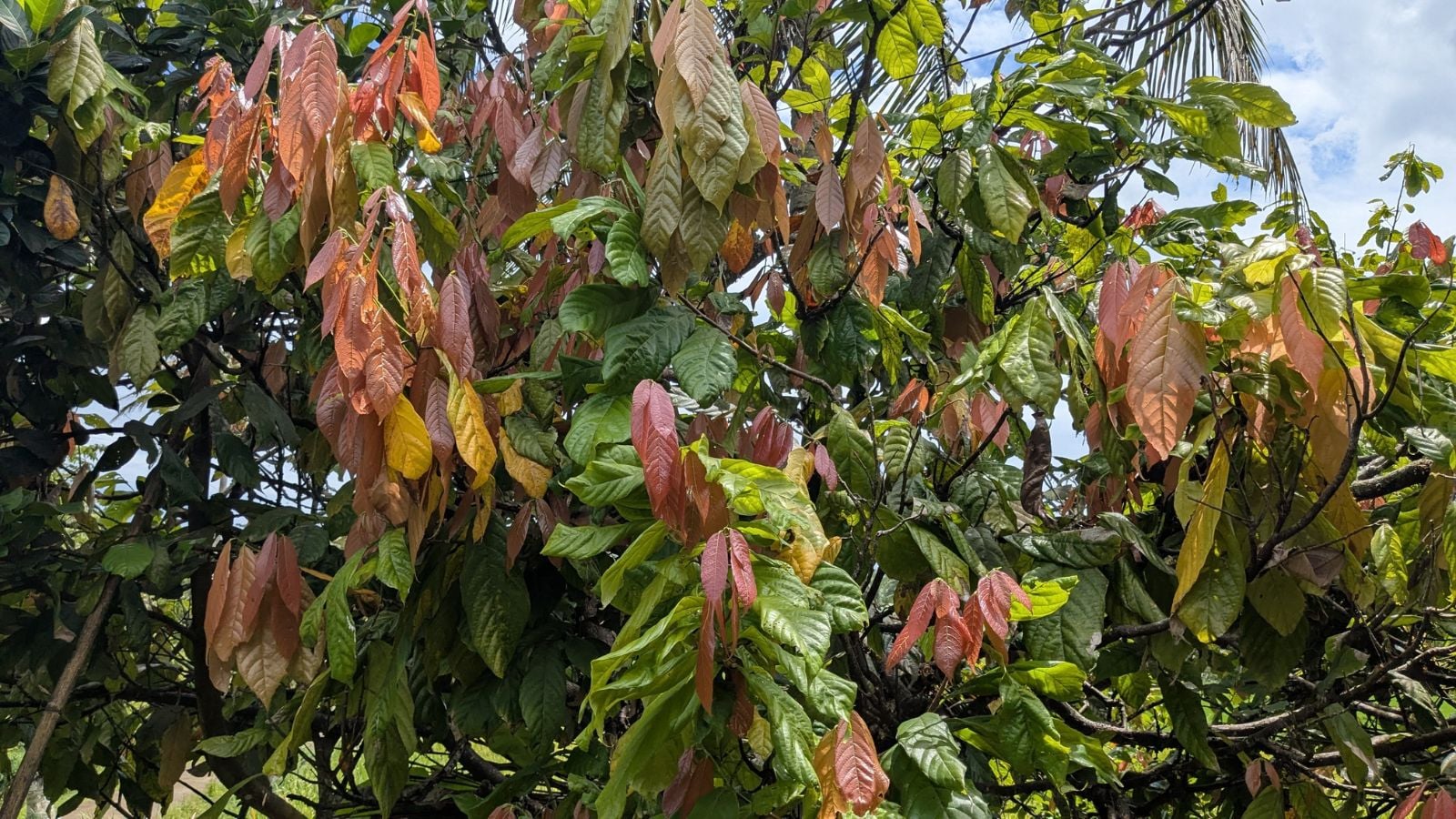
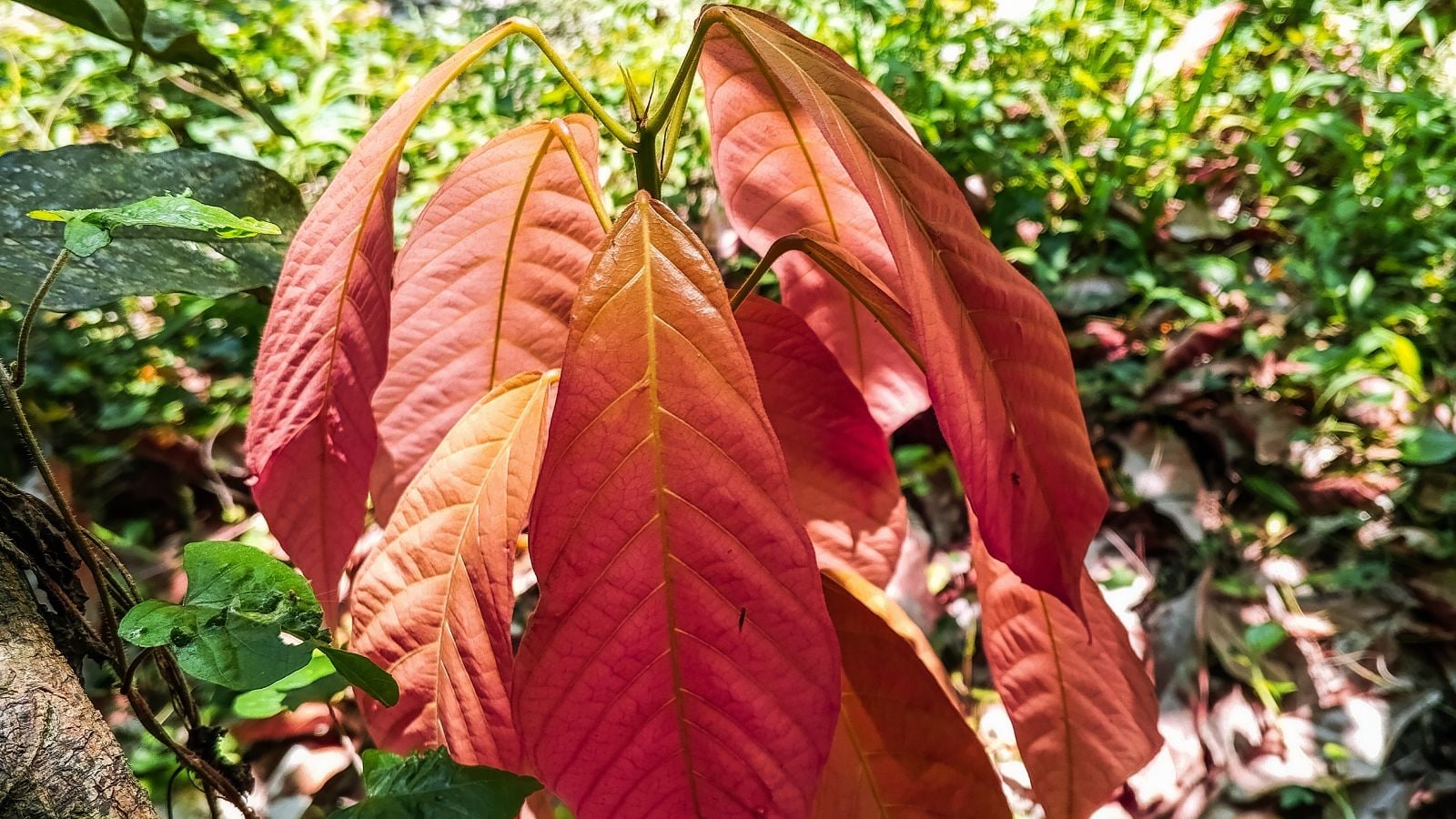
Young leaves on cocoa plants appear reddish at first with red veins, then slowly turn green. Since cacao trees prefer hot and humid tropical climates, few areas in the United States support outdoor growing outside of a greenhouse.
The seeds within the fruit are large, and you should peel the outer white pulp away from the seed before planting. Plant the seed at a depth at least two times the size of the bean. Maintain even moisture and place the pot in a hot, humid environment. Your seed should sprout within a week.
Care
Cacao trees are fast growers that can thrive given the right conditions. Read on to learn about their specific requirements.
Light
Cacao plants can survive in full sun to part shade. In their natural environment, they grow in the understory and can thrive with as little as three hours of direct sunlight per day.
Water
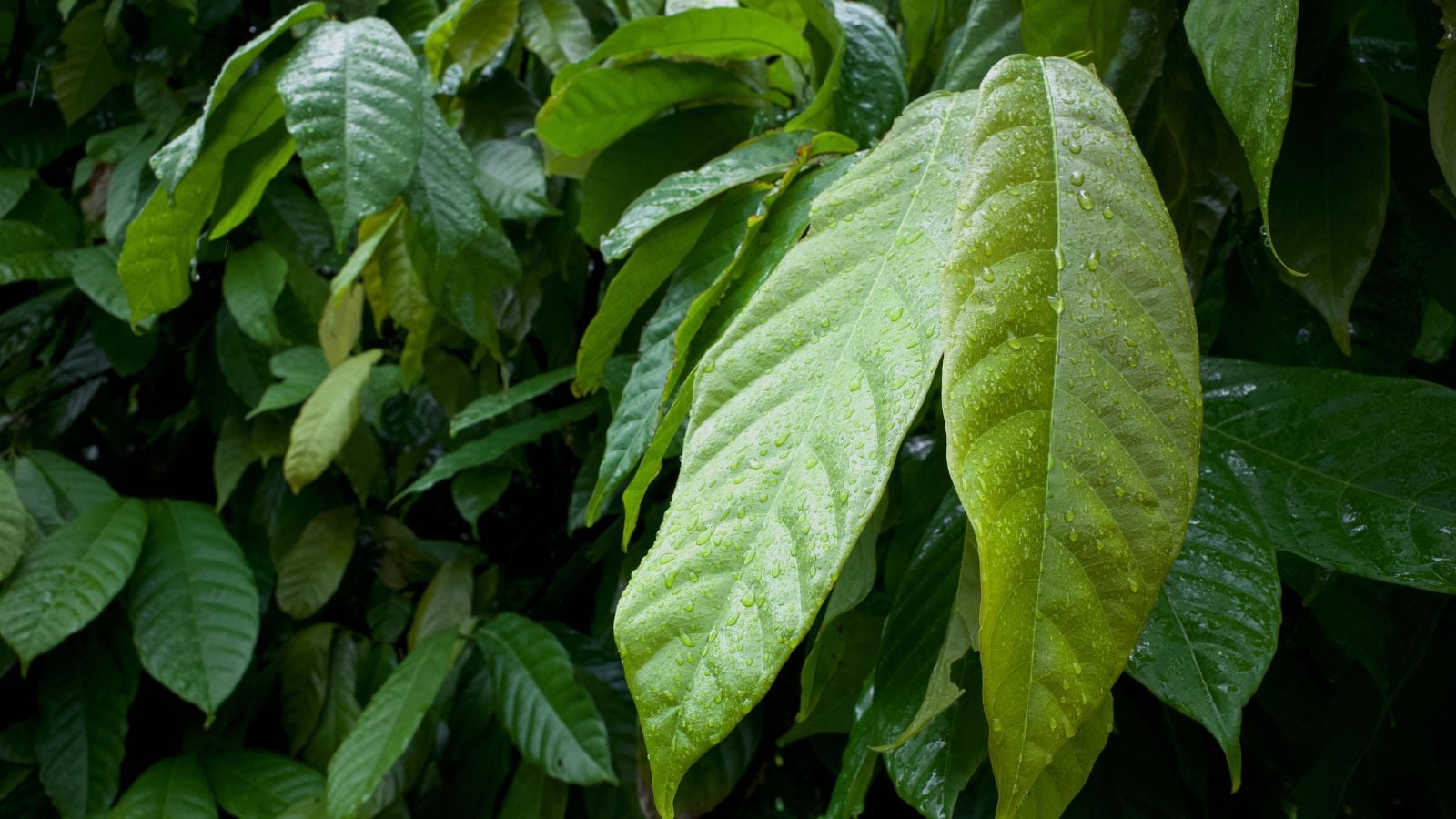
Cacao trees thrive in hot, humid environments. In their native tropical rainforests, they receive regular rainfall and moisture. Water your cacao tree deeply at least once a week. For maximum fruit production, provide one to two inches of water per week. A slow, deep drenching of the soil works best, and creating a humid environment will help keep the soil moist and prevent it from drying out too quickly.
Soil

Cacao trees require loamy, moisture-retentive, well-draining media. A mixture of potting soil and peat moss or coco coir will help keep the soil evenly moist. This tree can survive in a variety of soil pH levels but performs best in slightly acidic soil.
Before planting, amend the top four to eight inches of soil with plenty of compost and organic matter. Then, mulch around the base of the tree with wood chip mulch, keeping the layer away from the trunk.
Temperature

You can grow cacao outdoors in USDA zones 11–13. Cacao is extremely sensitive to frost and freeze. The ideal temperature range is 65 to 90°F (18–35°C). Temperatures above 90°F (35°C) can slow overall growth and cause flowers to drop, preventing fruit from forming. There is no reliable way to protect this plant from cold other than avoiding cold regions altogether, which makes greenhouse growing an excellent option for meeting its specific temperature needs.
Fertilizing

Fertilize young trees twice a year: once in spring and again in fall. Use a well-balanced fertilizer slightly higher in nitrogen to help boost the growth of a young plant. Once the cacao tree reaches maturity, reduce the nitrogen fertilizer. Nitrogen promotes foliage growth, but at this stage, you want the tree to focus its energy on forming flowers and fruit.
Pruning
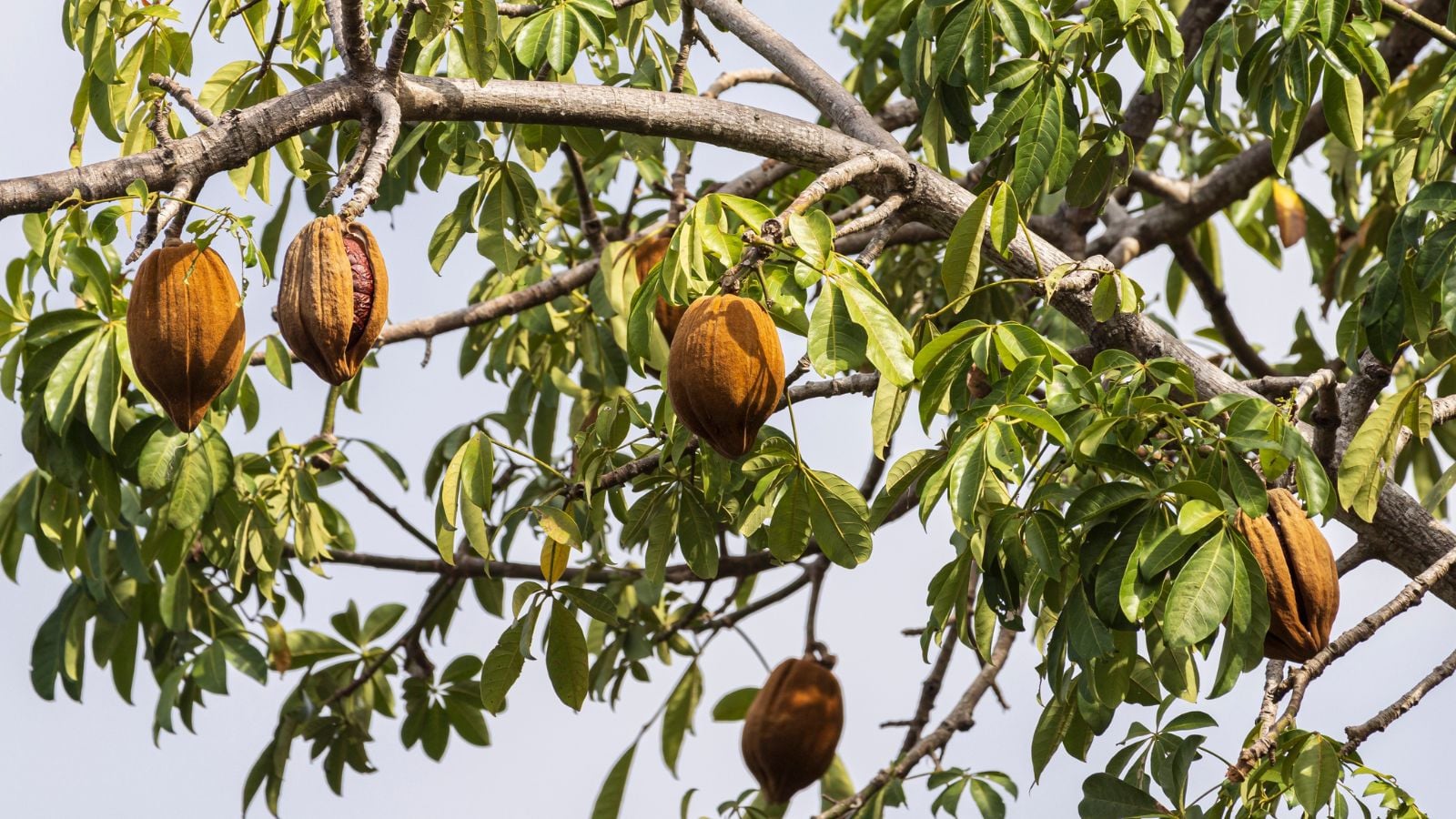
Cacao trees can grow 20 to 30 feet above the ground. Once the tree develops a five- to six-foot-tall trunk, it will begin to branch out. This is the perfect time to start pruning and shaping to control overall form and height, though pruning is not strictly necessary.
Propagation
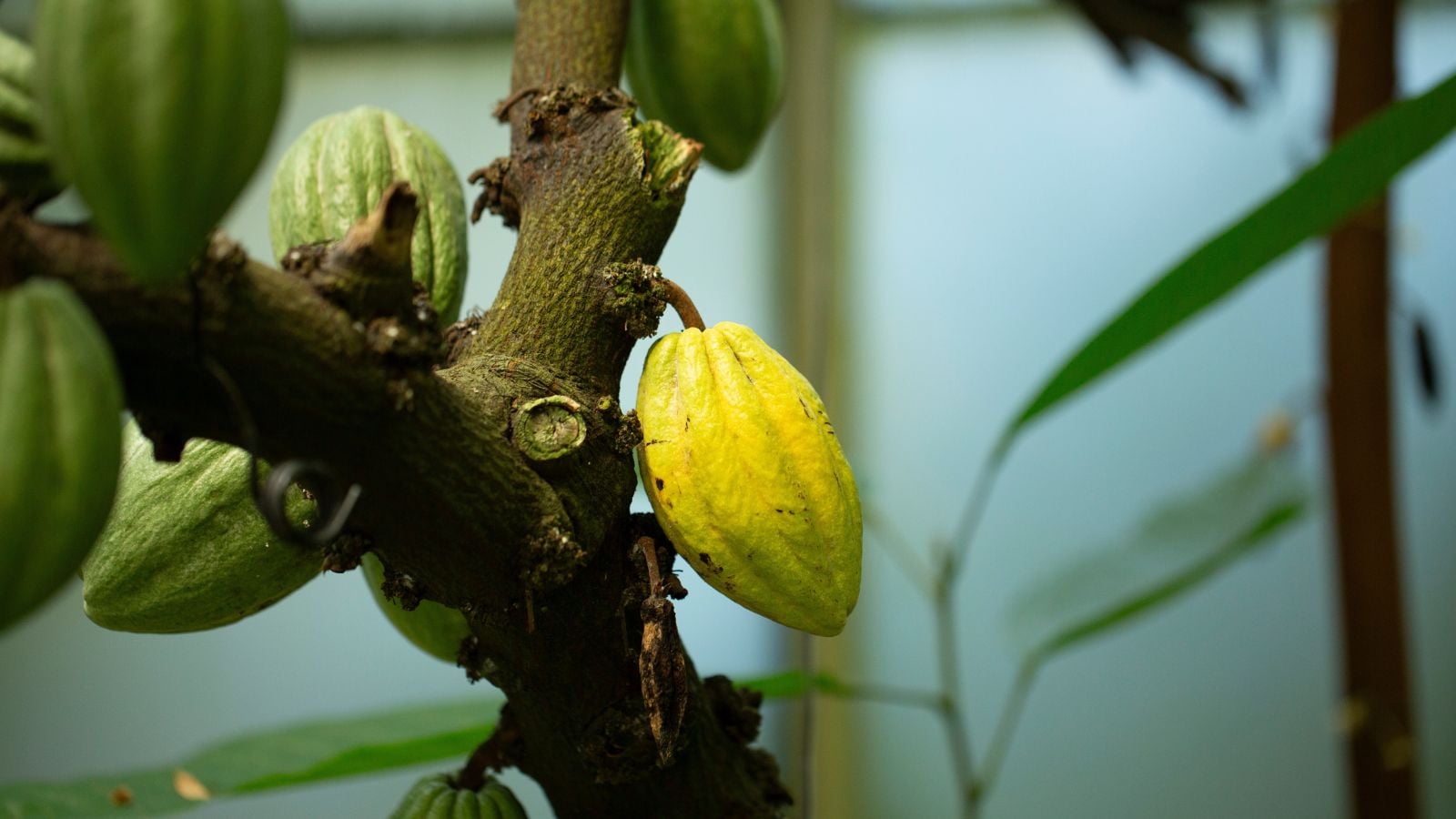
You can propagate cacao via stem cuttings. When taking a cutting, select a section growing from the trunk that has about five leaves and one to two flower buds. Place the cutting in a glass of water until tiny white roots form, which typically takes about a week. Once the roots have developed, plant the cutting directly into soil. Your new cacao tree should establish itself within a few weeks.
Harvesting
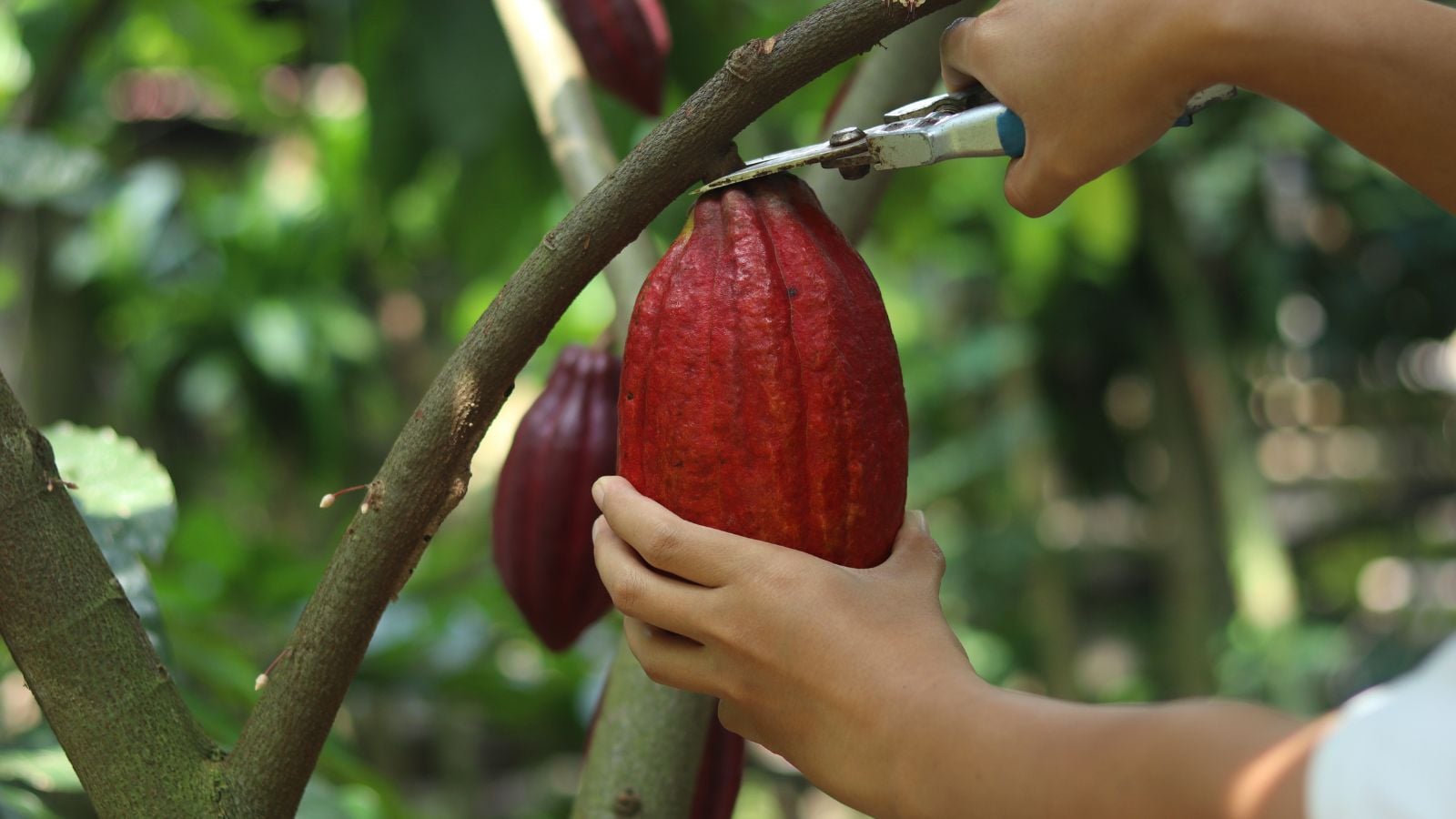
Now for the fun part of growing cacao: harvesting your chocolate! Or rather, your soon-to-be chocolate, depending on how you choose to process your cacao beans.
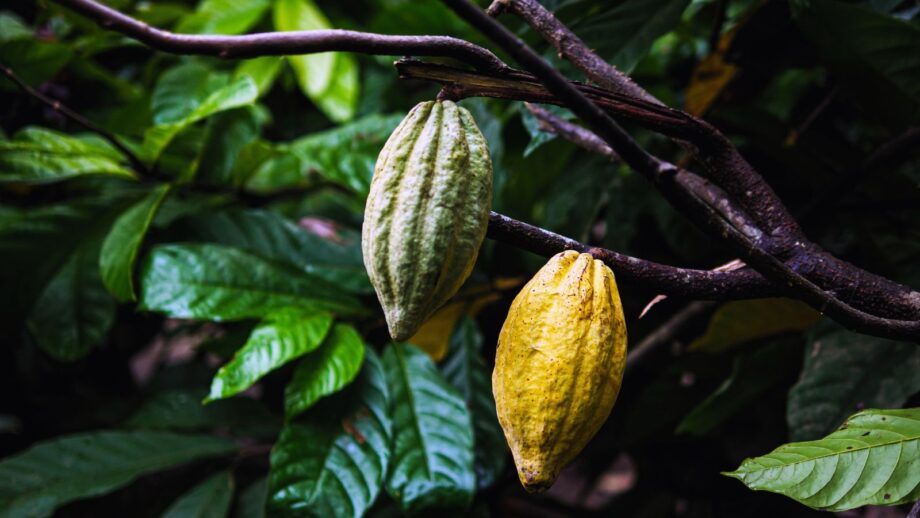
The cacao pod starts out green and ripens to an orangey-yellow color. Harvest the pod at the right time when it has progressed beyond a yellow hue. If you wait too long, the seeds inside may begin to sprout before you can plant them.
You’ll know the pod is ripe when the color deepens to orange or red (depending on the variety) and you can hear the beans rattle inside when you shake it. Each pod can contain up to 50 cocoa beans. Break the pod open with a hammer or mallet to remove the beans. Each bean will be surrounded by white pulp. The beans then typically undergo a fermentation process before storage.
Storing
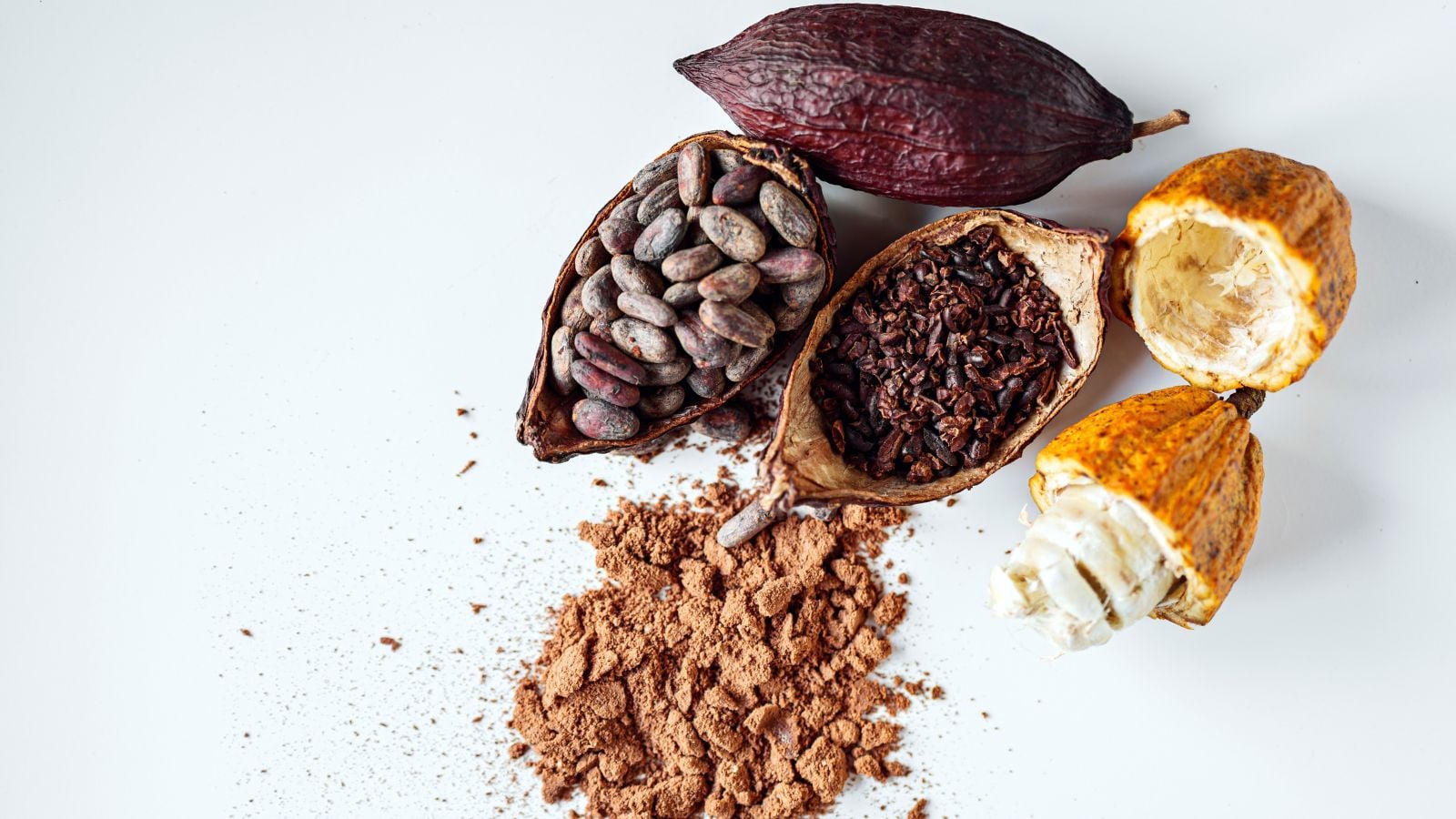
Raw cacao beans have a citrusy flavor. You can eat them as is or roast them. However, they usually go through a fermentation process before being processed into various chocolate products.
The fermentation process occurs naturally thanks to the yeasts that surround the outer white pulp. Spread the beans outdoors in a single layer to ferment for six to 10 days. The beans will slowly change from white to purple to red when fully fermented. After fermentation, dry the beans and store them for future use. You can also store freshly harvested beans before fermentation in the refrigerator for up to a week.
Troubleshooting
Growing your own chocolate is an exciting adventure, but a few challenges may arise. Read on to learn how to troubleshoot potential problems with growing cacao.
Growing Problems
Most growing problems stem from unmet temperature and humidity requirements. If you notice leaves or flowers turning brown and dropping, this indicates that the air’s moisture level needs to increase. Growing cacao successfully requires mimicking the high humidity and warmth of a tropical rainforest.
Pests
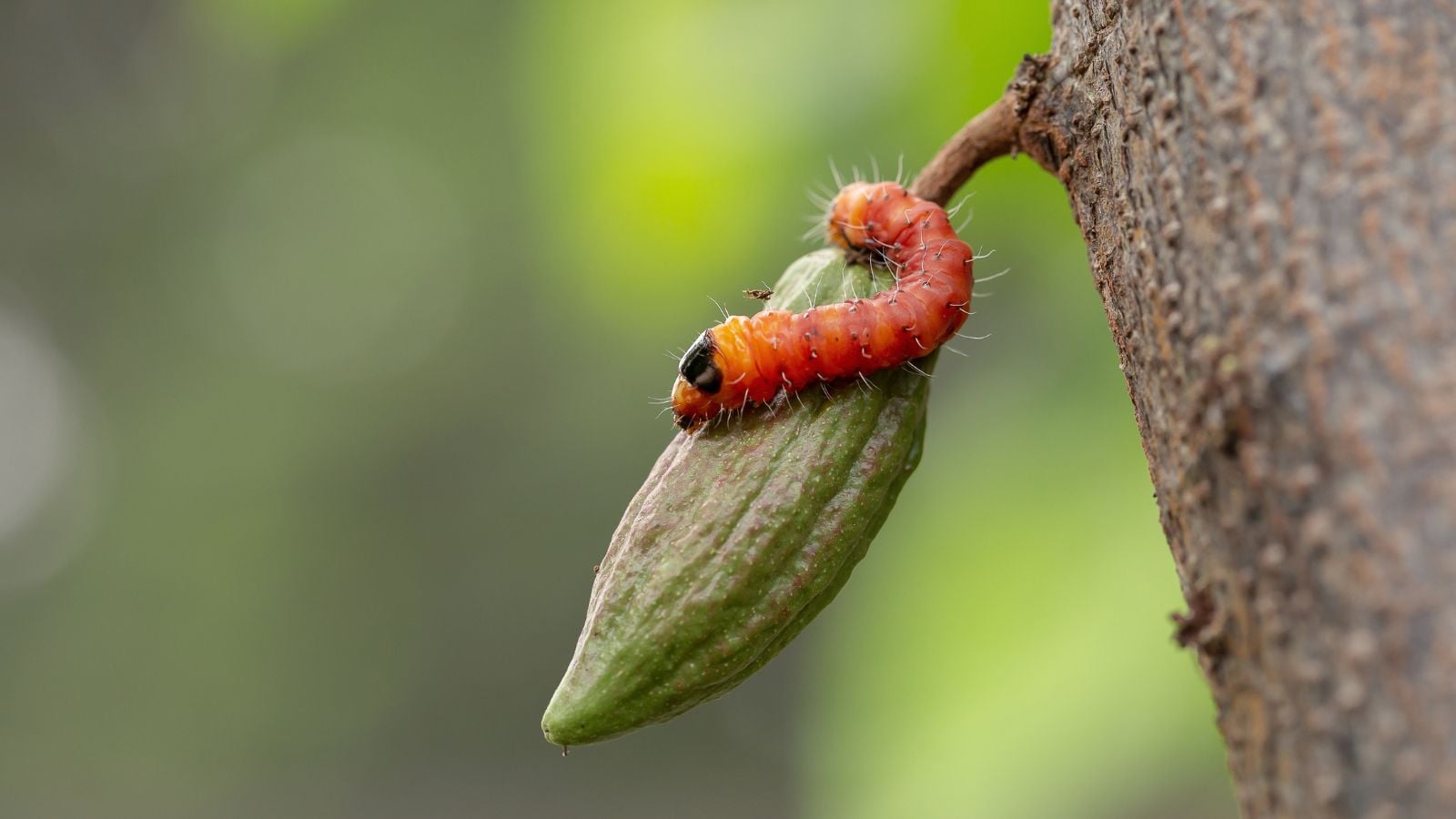
The pod borer is the most common pest for commercially grown cocoa trees. As its name suggests, this insect tunnels into leaves, stems, and fruit. Signs of infestation include exit holes from larvae on the pods and uneven ripening. Pyrethrin-based organic insecticides applied as a foliar spray offer the best method for controlling cacao pod borers.
Diseases
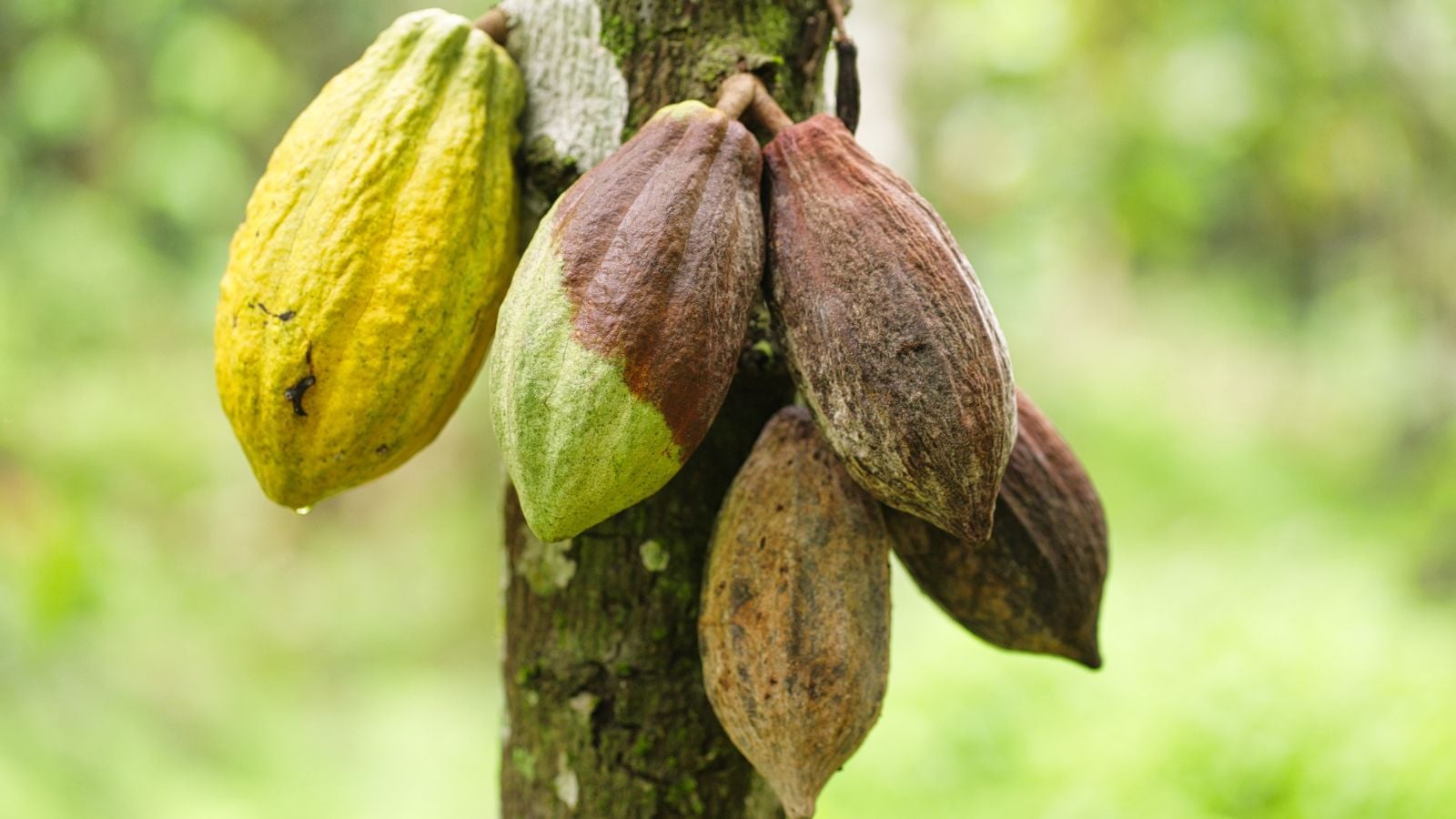
Cocoa pod rot, caused by a fungus, is one of the most destructive diseases affecting cacao trees. It causes lesions on the pods, which then begin to rot, and it can reduce production by 80% in just a few years. Another fungus, Phytophthora palmivora, causes black pod rot with similar symptoms. Copper fungicides effectively control both of these fungal diseases.
Swollen shoot is a virus that can kill cacao trees within a few years and has been particularly destructive in West Africa. Symptoms include leaf discoloration and stem or shoot swelling. Mealybugs primarily transmit this virus, so controlling their population helps prevent the disease.
Witches’ broom, caused by the fungal pathogen Moniliophthora perniciosa, produces unhealthy clustering of new shoots and reduces the tree’s vigor. Prune affected parts of the tree promptly. If pruning does not resolve the issue, remove the entire tree and burn it to prevent further spread.
Frequently Asked Questions
Can I grow a cacao tree?
Yes! They can be grown indoors in a container and do best in a warm, high humidity environment such as a greenhouse.
Can you grow cacao in the US?
Yes, most cacao grown in the United States is grown in Hawaii, but it has also been grown in places like Florida and can be found in botanical gardens across the Western states.
How long does a cacao tree take to grow?
It takes 5 years from seed to maturity. Around the 5-year mark, the cacao tree will begin to set fruit.
How long is a cacao tree life span?
Cacao trees can live for up to 100 years.
Is cacao fruit edible?
It is edible in its raw form and has been described as tasting citrusy like lime.