Bush vs. Vining Cucumbers: Which Is Right for Your Garden?
If you’re asking yourself whether it makes the most sense to grow bush vs. vining cucumbers, worry not! Some basic considerations will help you make the most informed decision, and that leads to lots of delicious cukes. Experienced gardener, Sarah Jay, covers what to think about before you grow.

Contents
Every year, I weigh my options for growing bush vs. vining cucumbers. There are multiple things to consider when I’m pondering my cuke harvest. I have a long growing season, but it’s punctuated by hot weather in summer, which makes most cukes bitter and inedible. But pickling them works out well.
I also determine how much space I want to dedicate to my cukes, and how I want to grow them. A lot goes into where these will be planted, and I want to be sure I don’t waste my time growing them. So naturally, I’m thinking about every possible angle before I put seeds in the ground.
You can do this too! From the most basic, foundational considerations to the desired yield, you can really pick the right type of cucumber and have lots of success. All it takes is a little planning and brainstorming to bring your initial planting to fruition (pun intended). Here’s what you should think about when making your decision.


Bush vs. Vining Cucumbers
As you determine whether to grow bush vs. vining cucumbers, the main factors that influence your ability to do so are the length of your season, your available space, and how many cukes you want to ultimately grow. These form the basis from which to pick your favorite cucumber variety and get growing.

Which Is Right for Your Garden?

Now we’ll get into the particulars involved in comparing bush vs. vining cucumbers. Each of these is really important for selecting the right variety. Start from the most basic issue, and build up from there. This will help you make the most informed decision.
Season Length
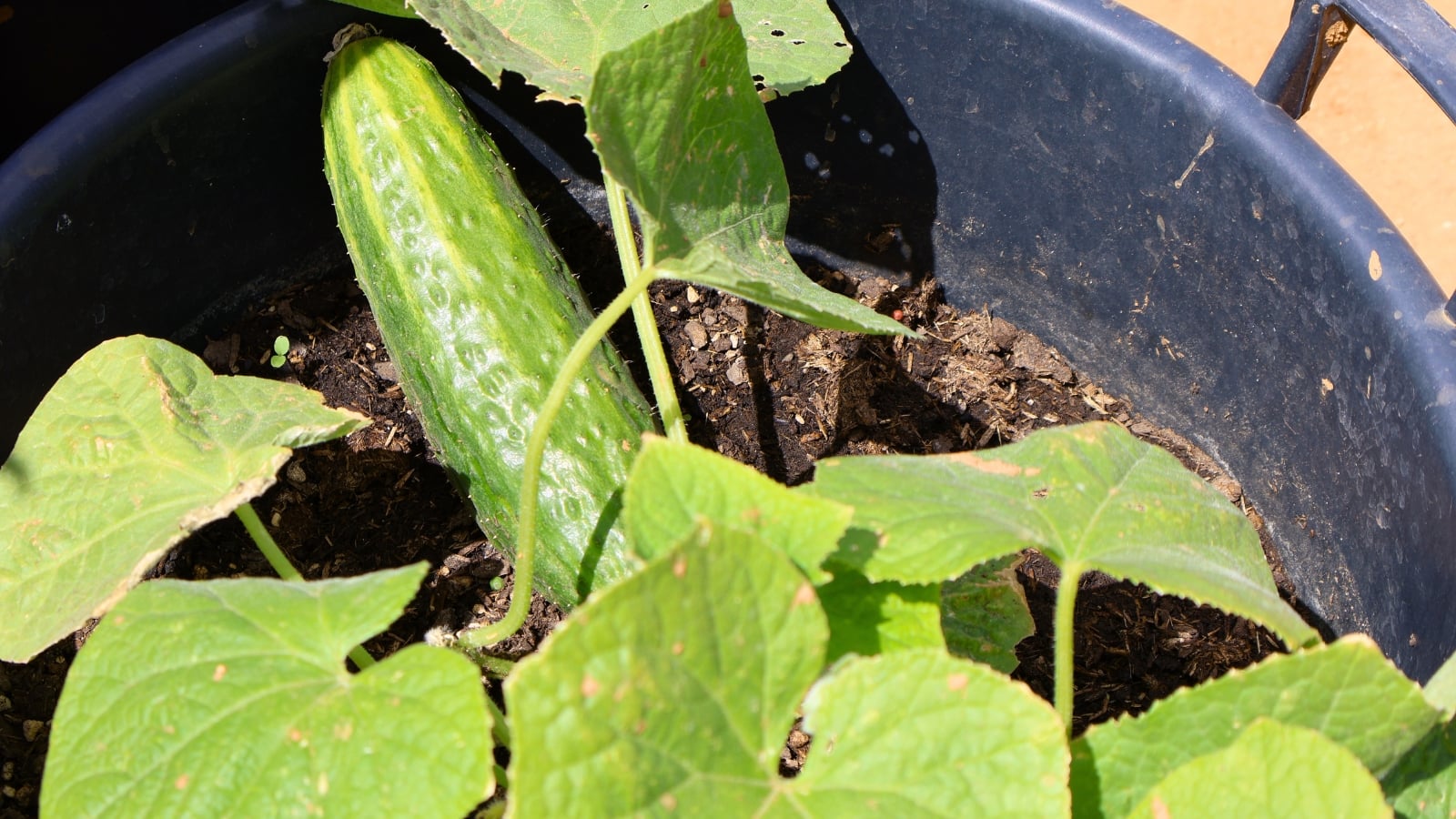
While most cucumbers take about the same amount of time to mature, vining cucumbers tend to live longer and will continuously produce. If you know your season is short, and you don’t have a way to shelter vines from cold weather in late summer, you may not want to devote all that space to a large vine.
Bush cucumbers mature at the same rate, but take up less space. So people with shorter seasons will save space for cool-weather crops, rather than having to cut down a large vine after harvest. Bush varieties also produce at a more condensed rate, offering up cukes in a shorter period. Vines tend to grow cukes at a trickle’s pace.
If you have a long season, vines may be the better option, especially if your summers are mild. If you’re like me, and the season is long but hot, vines can work, but be prepared to make pickles out of mid-summer harvests.
Available Space
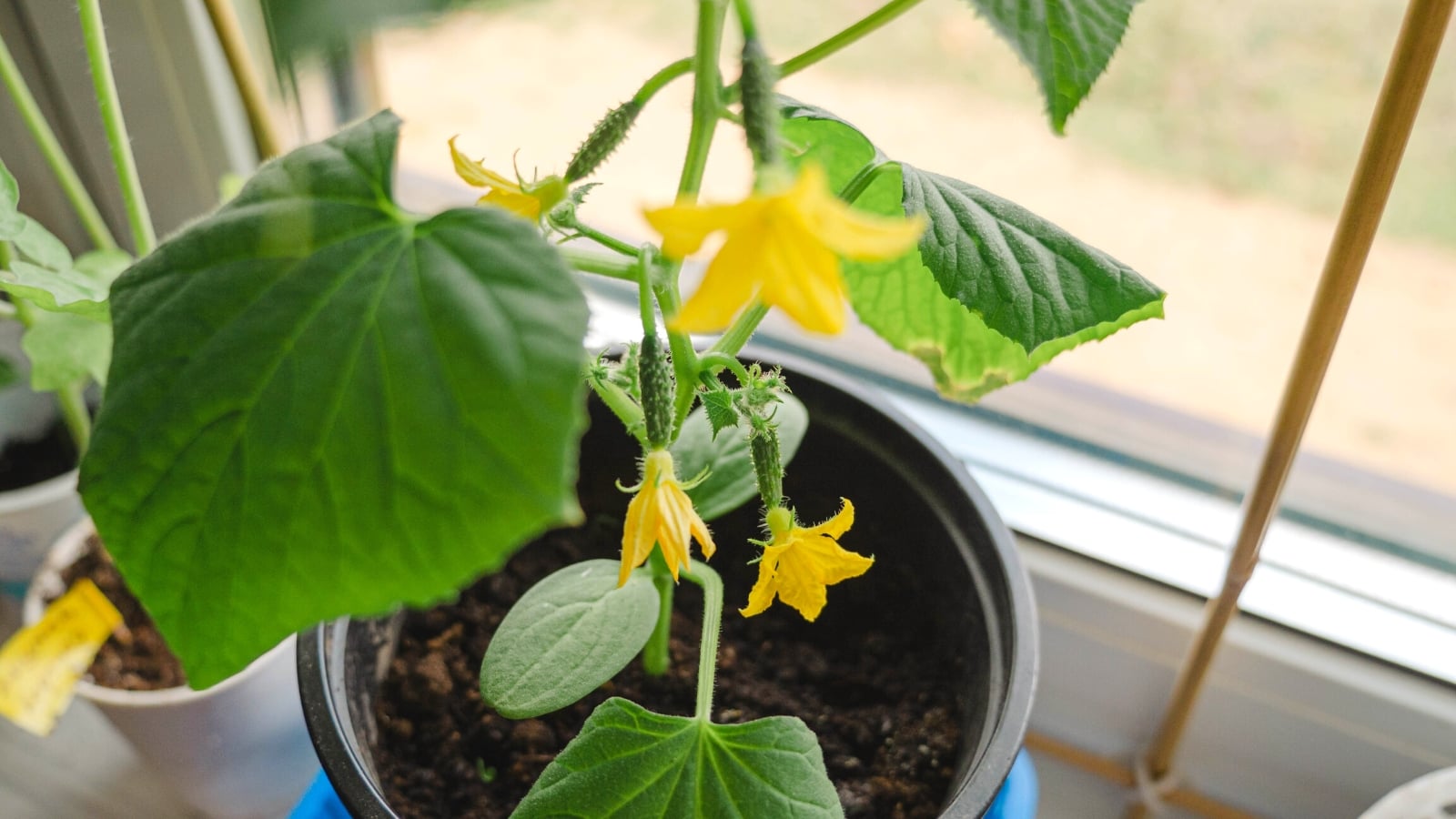
One very obvious consideration is how much space you have. If you’re growing a container garden, it will be easiest to do so with bush plants. These top out at three feet tall. If you have a long season, but little space, plant successions every two to three weeks until it’s a couple of months before your first frost or until you’re tired of cucumbers.
If you have a lot of space, vines may be a better option. Then you can devote an area or two to growing some of your favorite cukes. However, the truth is that people with more space have more options and can grow either type, or both.
Do You Have a Support?

If you don’t have a bamboo cane, specialized trellis, or a cattle panel arbor, vines will be hard to grow without room for them to spread out. If you’re willing to get a trellis for your garden, and you have the space, vines will climb it and save space in the meantime.
While supports aren’t a requirement for vining plants, cucumbers tend to appreciate vertical growth, and it will be easier to access the cukes, prune, and scout for pests and diseases. If you don’t have room for a trellis or won’t be able to acquire one, bushes are best.
Another important aspect has to do with the fact that diseases are more prevalent on bush varieties. It’s my pet theory that these more cultivated and bred plants tend to be less hardy and susceptible to the elements. Vines are more resilient and have fewer issues with disease. If you have the room, and you don’t want to spend a lot of time scouting for diseases, vines may be your preference.
Yield Requirements
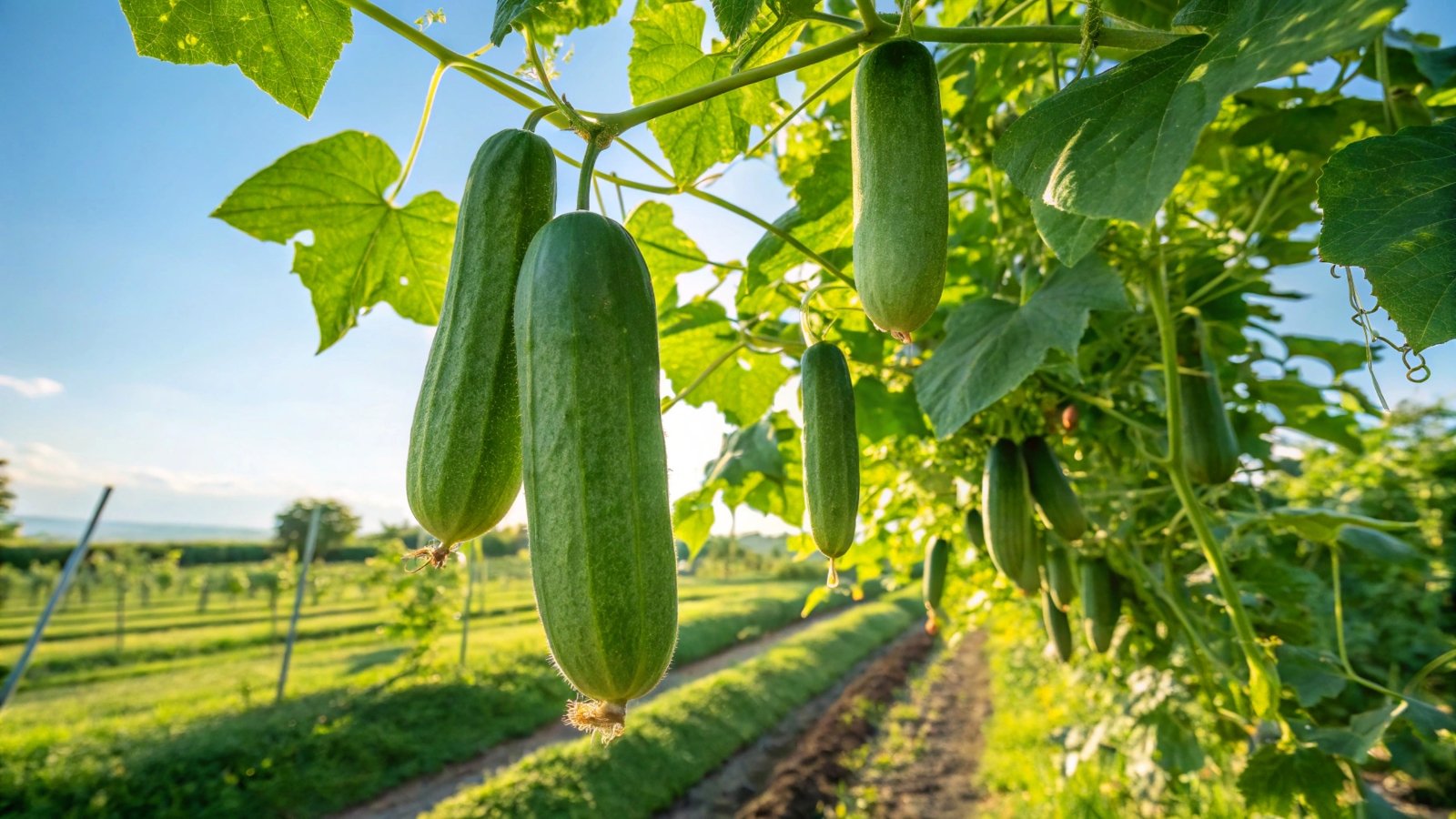
One important consideration when weighing bush vs. vining cucumbers is how much of a yield you want. While there’s not a huge difference, the harvest will be slightly more with vines. We’re talking a difference of a few cukes, but for market gardeners, this is a difference to pay attention to.
Add to that the tendency for bush plants to contract more diseases, and you may want to stick with vines. If you’re already working with plants that tend to require effort and time, vines are the lower-maintenance option, and they’ll trickle you more cukes over time.
However, if you’re willing to put in the work and you want all your cukes at once, bushes will provide.
Key Takeaways
If you’re already set on the variety you want to grow, use this piece to give you a heads-up about what to expect. If you’re still deciding, remember, there are a few things to think about before you choose.
- Vines produce continuously over a longer period of time, while bushes produce all at once in a shorter period.
- Bushes may only need a container, while vines prefer larger spaces to spread out.
- Vines don’t require a trellis, but they tend to do best with one.
- Bushes tend to attract more diseases than vines do.
- While the difference is slight, vines ultimately produce more cukes than bushes.