

How and When to Harvest Parsnips
As parsnips slowly develop underground, it helps to know what to look for in determining when to harvest. Gardening expert Katherine Rowe outlines when to harvest the root vegetables for peak nutty, sweet flavor.

Contents
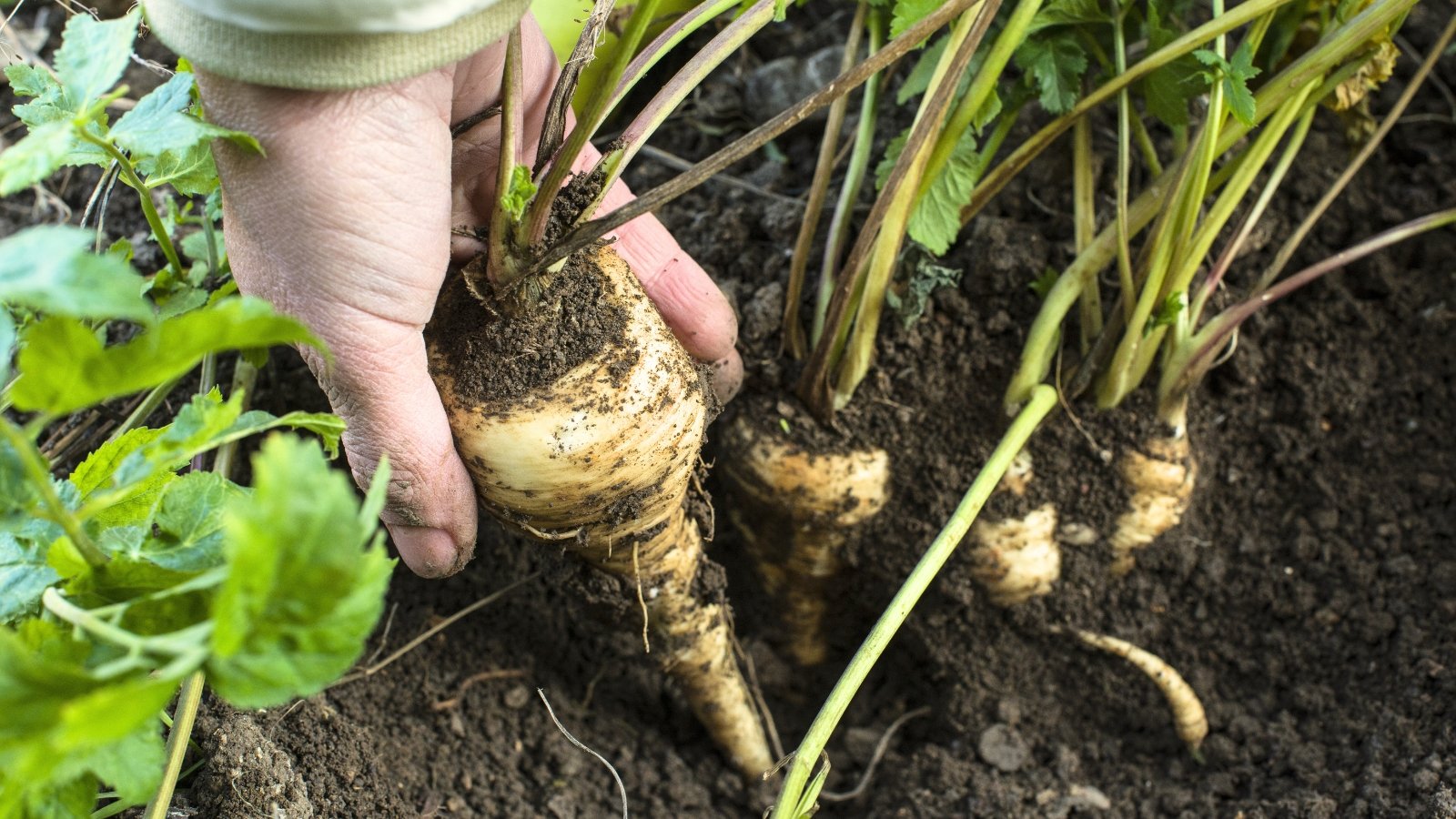
Parsnips have a secret life as they grow underground slowly for three to four months. It’s a delightful surprise come harvest time to pull up the long, fully formed, well-shapen taproots. The historic crop is underrated, but with edible roots and greens, it becomes an easy staple in cool-season cuisine.
Like their carrot relatives, parsnips grow best in cool temperatures. In cold climates, sow seeds a few weeks before spring’s final frost for a fall harvest. In mild climates, plant them in the fall for a winter yield.
They grow easily from seed and have a long storage life. They’re ideal for cooking in soups, stews, and baked dishes. Roast or mash them like potatoes for a hearty source of vitamins B, C, E, and K, as well as folate, potassium, and dietary fiber.
To tell when the subsurface root vegetables are ready for harvesting, a few key indicators above ground are helpful guides. We’ll explore what to look for and how to time the harvest for a peak parsnip harvest.
All American Parsnip Seeds

- Early maturing variety, ready in about 95 days
- Tender white roots with sweet, distinctive flavor
- Delicious roasted, mashed, stir-fried, or in soups and stews
- Cold temperatures after frost enhance sweetness
- Nutritious root with a long culinary history
Javelin Parsnip Seeds
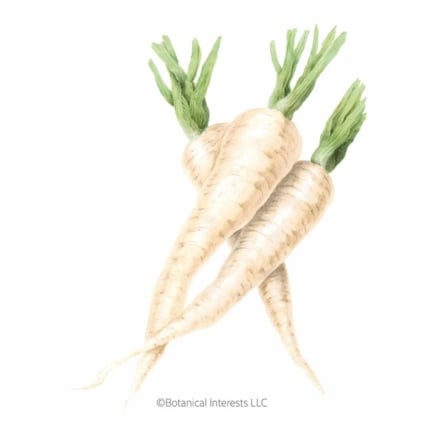
- Excellent canker resistance for healthy roots
- Matures in about 110 days, plant early
- Sweet flavor enhanced by cool weather
- Best harvested after the first frost
- Reliable variety for long in-ground growth
When to Harvest Parsnips
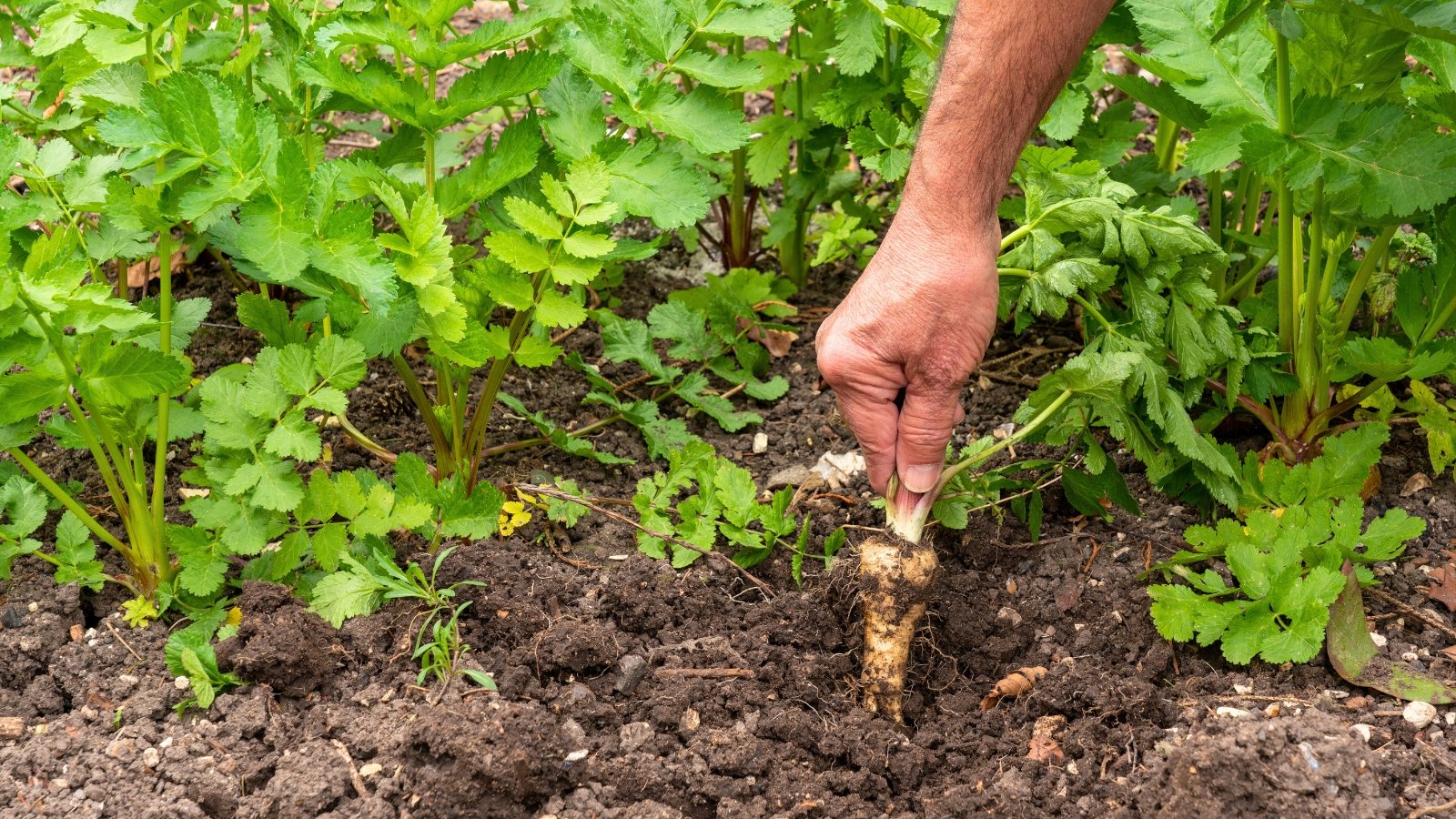
Pastinaca sativa produces fibrous white taproots with leafy tops and stems. The tapered roots grow as long as one foot, but are tastiest at eight to ten inches long. While we can eat them fresh, they’re usually cooked for sweet and savory goodness, as are the leaves for adding to stock.
The ancient crops appear as early as the Roman Empire and belong to the Apiaceae family, with carrots, parsley, and fennel. Parsnips are slow to mature, taking about 90 to 125 days to fully develop, depending on the variety. The cold-hardy vegetables grow best in cool conditions and sweeten after frost.
Sow them in spring for an autumn harvest (about 4 months before fall’s first anticipated frost). In mild climates, sow them in late summer or fall for overwintering.
Optimal growing conditions for the easy-care root crop include:
- Full sun (six or more hours of sunlight daily) to partial shade (four or more hours)
- Loose, sandy, well-draining soil
- Cool conditions (60-65°F or 16-18°C are ideal growing temperatures)
- Consistent moisture with about one inch of water per week (rainfall and irrigation)
Because the substantial taproots are sensitive to transplant disturbance, direct sowing parsnips in their growing location is best. Loose, sandy loams with good drainage, free of rocks and clumps, allow unfettered development. Temperatures between 50-70°F (10-21°C) are optimal for germination.
Mark the Days to Maturity

Because the roots are so slow and steady to develop, it’s helpful to use the number of days it takes for the variety to mature as a guide for when to harvest parsnips. They range between three and four months from sowing to pulling. The seed packet or varietal information lists the “days to maturity” based on performance in optimal growing conditions.
The days to maturity timeframe is an estimate. We can usually add several days or a week to allow for seasonal weather variations and localized situations that may affect growth rate. The days to maturity are a good indicator of readiness in combination with other physical cues.
For a parsnip variety that matures slightly earlier, look to ‘All American.’ The creamy white tapers are ready in around 95 days. ‘Harris Early Model’ matures 80 to 90 days from seeding.
Wait for Fall Frosts
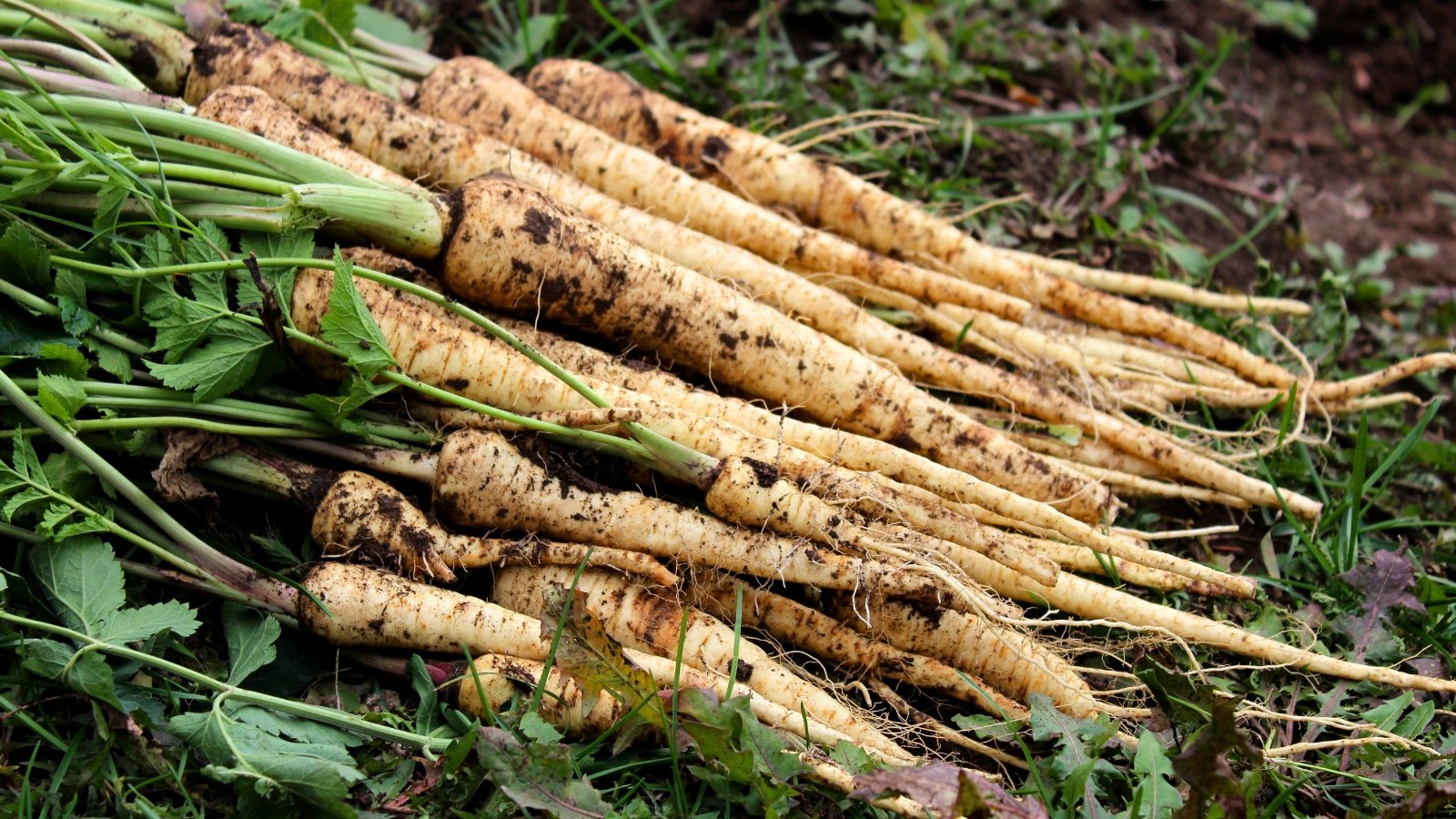
Fall frosts mean harvest time is near for spring-planted parsnips. The hardy vegetables tolerate frost and heavy freezes and even taste better after them. They sweeten as starches to convert to sugars with exposure to several weeks of cold.
Let a few light frosts pass to capture the best flavor. The leafy tops may freeze. When the tops begin to die back, parsnips are ready for harvesting. For easy lifting, pull the roots before the ground freezes. To extend the harvest beyond freezing conditions, cover the plants with frost cloth or straw for easy, continued lifting.
Parsnips store well in the soil in cold conditions. To overwinter the roots, insulate with a few inches of mulch or clean straw. Harvest during the winter and early spring before new growth appears. Roots left too long as new growth sets become too woody, dense, and fibrous for eating.
If your winter soils tend to stay wet from rain or thaw conditions, go ahead and lift the crop after fall’s initial frosts. They don’t withstand saturated or waterlogged conditions, which can cause fungal root problems.
Look for Full, Leafy Tops

After measuring the days to maturity and allowing exposure to frosty conditions, look to the leaves as an indicator of when to harvest parsnips. The leafy tops are a reflection of root readiness. The full greens may reach one foot tall and three feet wide, depending on the variety. Leaves resemble carrot tops but are broader like parsley. Each leaf is usually about six inches long.
Mature leaves yellow and die down in late summer and early fall as the season progresses, and with frosts. Leaf decline is a sign of harvest readiness.
With winter, leaves disappear altogether, but you can continue to harvest the roots. Just mark the crop to know where to lift the roots.
How to Harvest

With the readiness indicators in place, water the patch deeply the day before harvesting. Watering softens the soil for easy pulling and makes for turgid roots and stems. Pick early in the day for the most plump plants that resist breaking.
When harvesting, plan to dig a few or the entire crop, depending on your uses (cooking, storing, freezing). Carefully loosen the surrounding soil with a spade or fork, taking care not to damage the sizeable taproots.
With soils loosened, gently pull the tops by hand. Twist off or clip leafy stems, leaving one inch of the stems attached. Wash the parsnips with cold water and a vegetable brush for fresh storage. Brush away excess dirt without washing for storing in a cold space like a root cellar.
Storage

Parsnips store for up to six months and freeze for 12 to 18 months. The vegetables store well over the winter in a cool, dry spot, like a root cellar or basement. Separate roots in a tray of moist sand for long-lasting fresh storage.
Fresh parsnips last two to three weeks in the crisper drawer of the refrigerator. Wrap them in a paper towel after washing, making sure to remove the tops. The greens don’t last as long as the roots, and continue to draw moisture and nutrients. Use the leafy greens cooked or as a fresh garnish within a few days.
Freezing

Wash the tapers before cutting them into half-inch pieces. Blanch them for two to three minutes in boiling water, followed by an ice bath for the same length of time. Drain and transfer them to an airtight container or baggie for freezing, leaving half an inch of headspace.
To keep the pieces from freezing in a block (allowing for the use of smaller amounts over time), place them on a parchment-lined baking sheet after blanching and cooling. Freeze the sheet for a couple of hours until the pieces are firm, then transfer them all to the larger container for long-term freezing.
Frequently Asked Questions
Why are my parsnips small and bitter?
Hot weather, either lingering in early autumn with a fall sowing or in summer if sown in spring, may cause stunted and bitter roots. The flavor of leafy greens and roots declines as temperatures rise. They thrive in cool conditions, especially in fall, where the vegetables sweeten with a nip of frost. The best growing temperatures for the bulk of development are 60 to 65°F (16-18°C). The roots grow and taste best in temperatures below 75°F (21°C).
Do parsnips grow in containers?
The crop grows well in containers, vertical planters, and raised beds. Direct sow seeds to promote even taproots. Spacing is essential for the best health, yield, and viability. Start with a thick seeding, as germination can vary. As they sprout, thin the seedlings to four inches apart to allow for mature size, increase airflow, reduce crowding, and minimize competition.


