The 15 Best Companion Plants for Tulips and Daffodils
Tulips and daffodils are easy to incorporate for a sweet welcome to spring. Their pop-up show of color lasts for weeks. Paired with other spring-flowering bulbs, the rolling arrangement is a dynamic succession of blooms. Leafy perennials soften the landing as bulbs fade. Garden expert Katherine Rowe highlights top companions to plant with tulips and daffodils for lasting landscape value.

Contents
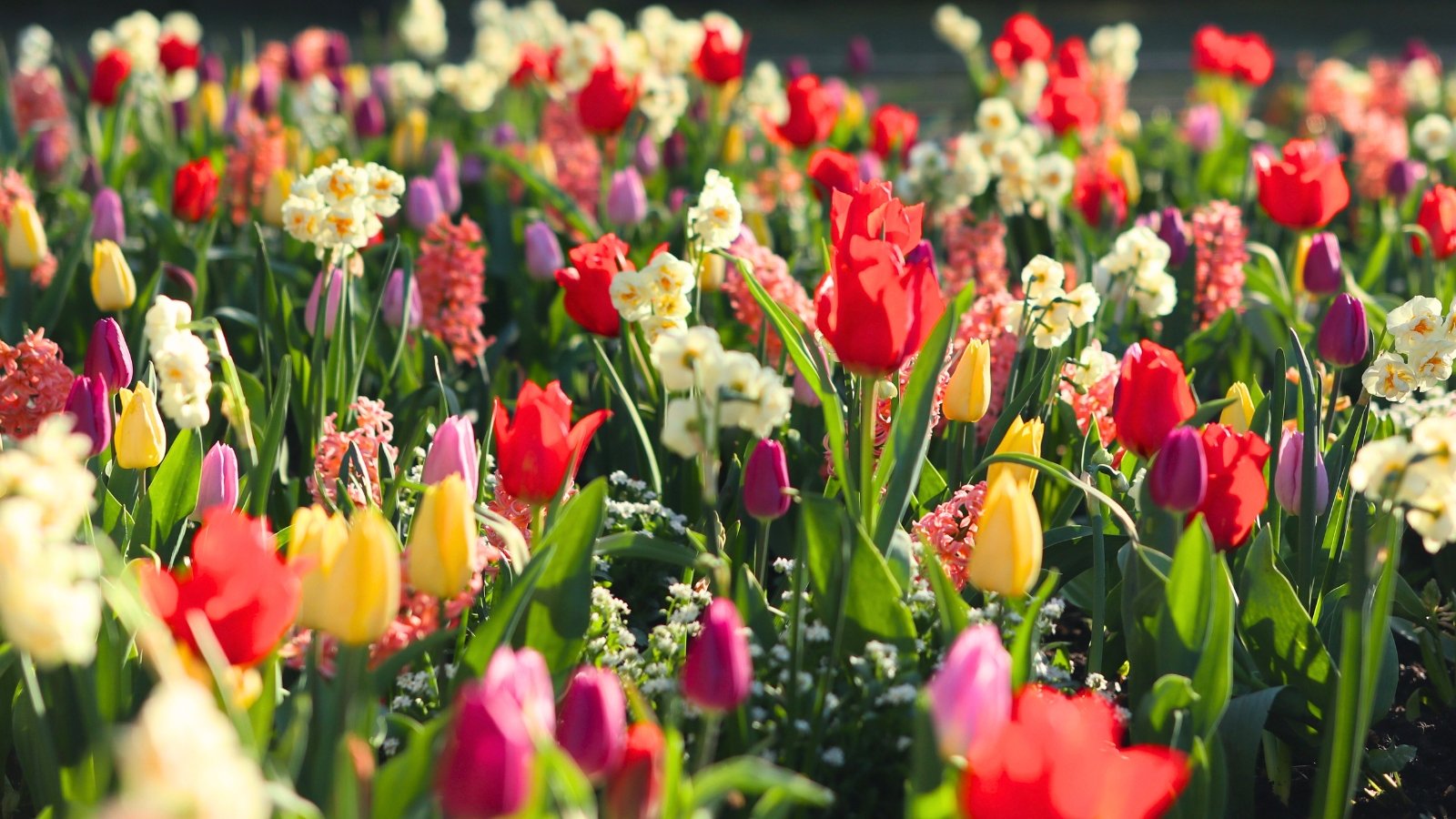
Among the showiest of the spring-flowering bulbs, tulips and daffodils shine in the late winter and spring landscape. With staggered bloom times, an ongoing display of blooms unfolds. As an early variety fades, a later one is ready to take its place, at least for several weeks. And with perennial bulbs like daffodils that naturalize gently, the sweet show recurs for years.
To add to the joy of tulips and daffodils, pair them with companions like other spring-flowering bulbs to synchronize the show or create a rolling display of color. Because tulips and daffodils fade after their burst of joy, it also helps to have lasting companions like leafy perennials to complement the arrangement.
Tulip and daffodil companions include those with fresh foliage to obscure the bulbs after flowering. It’s best to leave bulb foliage in place until it completely yellows or browns, as the leaves continue to photosynthesize and collect energy for the bulb. Lush plants help conceal fading foliage as their fresh growth emerges for the season.
Bulb companions also extend the seasonal display. From spring into summer, they take the show and pollinator benefits into warm weather. With a fall planting, it’s easy to underplant bulbs among other star performers. Plant them in numbers for the biggest impact, or enjoy a mixed composition in pots.
Hosta


|
botanical name Hosta spp. |
|---|---|

|
sun requirements Partial to full shade |

|
height 4”-3’ |

|
hardiness zones 3-9 |
Hostas, with their full leaves, conceal fading bulb foliage in spring. As new growth emerges, hosta leaves bring visual interest in shades from cool blue to hot gold. From broad and cupped to strappy and wavy, dynamic leaf shapes fill the gaps left by dormant bulbs.
In addition to their striking foliage and full form, hostas bloom in the summer with tall scapes of tubular flowers. The white or lavender funnel blooms attract hummingbirds and other pollinators.
Like many on our list of tulip and daffodil companions, hostas benefit from the dappled light of a tree canopy. It’s the same for tulips and daffodils, which experience winter sun needed to bloom, followed by cooling shade during summer dormancy (though the bulbs also thrive in open, full sun locations).
Hostas enjoy morning sun, especially helpful for bright or variegated varieties to retain color. Blue and green varieties tolerate more shade.
Wood Fern

|
|
botanical name Dryopteris spp. |
|---|---|
|
|
sun requirements Partial to full shade |
|
|
height 2–4′ |
|
|
hardiness zones 4-9 |
Ferns fill out beautifully in spring for a lush appeal that easily hides withering bulb foliage. From evergreen Christmas ferns to royal ferns, the fronded specimens offer rich textural contrast.
Wood ferns, with several species native to North America, are resilient in the woodland understory and tolerate varying conditions, including some sun. They complement the other tulip and daffodil companions on our list to fill a diverse understory of leafy greens and flowering perennials.
Autumn fern, Dryopteris erythrosora, features new fronds in coppery red that mature to deep green in summer. Dwarf and dense, the easy fern brightens the arrangement with bold foliage and even tolerates dry spells.
Glory of the Snow

|
|
botanical name Scilla luciliae |
|---|---|
|
|
sun requirements Full sun to partial shade |
|
|
height 4-6” |
|
|
hardiness zones 3-8 |
Glory of the snow is a late winter-blooming bulb for a carpet of blue among taller blooms. Fresh green shoots pop up through the snow in late February and March. Starry blooms dazzle among the late winter/early spring landscape.
Pair glory of the snow with early daffodils for a simultaneous early-season display. Early tulips closely follow the first to rise. Extend the interest with mid and late-season spring bulbs to keep the color going.
Glory of the snow leaves fade by late spring or early summer, though the bulbs perennialize well with gradual spreading and self-seeding.
Placing the small bulbs close together at planting, about two to three inches apart, and a few inches deep. For spring-flowering bulbs, well-draining soil is essential.
Tiarella

|
|
botanical name Tiarella spp. |
|---|---|
|
|
sun requirements Partial to full shade |
|
|
height 6-12” |
|
|
hardiness zones 4-9 |
Tiarella is a darling workhorse of the native woodland. The herbaceous perennial is a Heuchera relative with striking foliage and delicate flower sprays. Lobed leaves in unique shapes and colorful patterns cover declining bulbs with high texture and contrast.
For weeks in the spring, airy bloom sprays float in pinks and whites above the foliage. Also called foamflower, these low-growing perennials are ideal as a groundcover or specimen planting, especially in groupings.
Tiarella is a gem with tidy, compact, mounded foliage. Greek for “little crown,” tiarella is a low-maintenance princess in the shade, making it an ideal tulip and daffodil companion.
Hellebore

|
|
botanical name Helleborus orientalis |
|---|---|
|
|
sun requirements Partial to full shade |
|
|
height 18” |
|
|
hardiness zones 4-9 |
Hellebores feature large, cupped-shaped nodding blooms atop dark green palmate leaves. Their spring growth and blooms complement flowering bulbs in an elegant fashion. Hellebores feature a long bloom time with single or double flowers in colors from soft pink to apricot to deep burgundy.
Hellebores colonize slowly to form naturalized groundcover and perform beautifully in a woodland setting. They rely on the winter sun to flower and for lush, full leaves. In the warm months, partial shade protects them from direct exposure and heat.
A deciduous canopy is ideal, allowing winter light when branches are bare and dappled sun as they leaf out in spring and summer. Morning sun and filtered afternoon light are optimal. Hellebores tolerate deep shade, though you may see slower growth and fewer flowers (the same for daffodils and tulips in shaded conditions).
Snapdragon

|
|
botanical name Antirrhinum majus |
|---|---|
|
|
sun requirements Full sun |
|
|
height 6-36” |
|
|
hardiness zones 7-10 |
Snapdragons are cool-season favorites that bring charming nostalgia in an easy-care, big-blooming package. The classic garden flowers feature tubular bloom spikes loaded with yellow, red, pink, and coral blooms, among many other hues. When tulips and daffodils emerge among the annuals, they transform the display.
Snapdragons range in height from tall to intermediate to dwarf, making them versatile across flowerbeds and in containers. They create a flurry of color among spring-flowering bulbs and extend the season. Use them in the landscape or layer bulbs in a container amongst cool-season annuals and perennials for a pop-up display when conditions are right.
Deahdead spent blooms to promote continued flowering (rather than seed production). In mild winter climates, snaps can bloom all winter long. In colder climates, they flower in spring, summer, and fall.
Epimedium

|
|
botanical name Epimedium spp. |
|---|---|
|
|
sun requirements Partial to full shade |
|
|
height 6-24” |
|
|
hardiness zones 4-8 |
Epimediums are low-growing, compact perennials that bring color, texture, and form across seasons. Their dramatic, wing-shaped foliage has striking mottling, blotching, and venation. In summer, intricate flowers with long, slender spurs add to the appeal.
While delicate in appearance, epimediums (also called barrenwort and fairy wings) are of a durable nature. Low-maintenance, they grow in conditions others find challenging, like deep, dry shade. They make lovely tulip and daffodil companions.
‘Pretty in Pink’ is a sweet complement for spring collections with rose and pale pink flowers and bronzey-pink and green heart-shaped leaves. ‘Pink Champagne’ adds sparkle with blushing blooms and leaves and is an Award of Garden Merit recipient.
‘Sulphureum’ is another award-winner with new leaves that emerge light green with red mottling. They mature to a deeper green and turn red again in the fall. Open sprays of creamy yellow flowers appear on dark red stems.
Snowdrops

|
|
botanical name Galanthus spp. |
|---|---|
|
|
sun requirements Full sun to partial shade |
|
|
height 12” |
|
|
hardiness zones 3-8 |
Snowdrops bring delicate white, bell-shaped blooms, and a light, fresh perfume to the late winter landscape. They can bloom as early as January, and reliably in February and March, often emerging through frosty ground.
A rugged constitution belies the early perennial bulbs and their petite flowers. The carefree growers pop up even through the snow, with shoots of fresh green foliage and buds signaling winter’s end. They achieve the most impact in groups.
Plant them among groundcovers, perennials, spring ephemerals, and with other late winter and early spring-flowering bulbs. Winter aconite, glory of the snow, and early daffodils like ‘Tête-a-Tête’ complete the stunning herald to spring.
Plant snowdrops in the fall, placing them two to three inches apart and four inches deep. Snowdrops are ideal for woodlands and naturalized settings and are lovely in garden beds, rock gardens, and along pathways.
Violas & Pansies

|
|
botanical name Viola spp. |
|---|---|
|
|
sun requirements Full sun to partial shade |
|
|
height 6” |
|
|
hardiness zones 3-8 |
Violas and pansies offer a profusion of blooms and a compact form. They cushion taller bulbs and flowering annuals with colorful petals on stems above tufted mounds of foliage. Tuck them in planter and border edges, underplanting with bulbs for a spring emergence.
The cheerful faces adorn a cold-hardy foundation, as pansies and violas tolerate temperatures to 20°F (-7°C) or colder with mulch protection. Pair them with snapdragons and various bulbs for a burst of color and extended flowering. Ornamental cabbages, kales, and Swiss chards make leafy complements to the composition.
Hyacinth

|
|
botanical name Hyacinthus orientalis |
|---|---|
|
|
sun requirements Full sun to partial shade |
|
|
height 6-12” |
|
|
hardiness zones 4-8 |
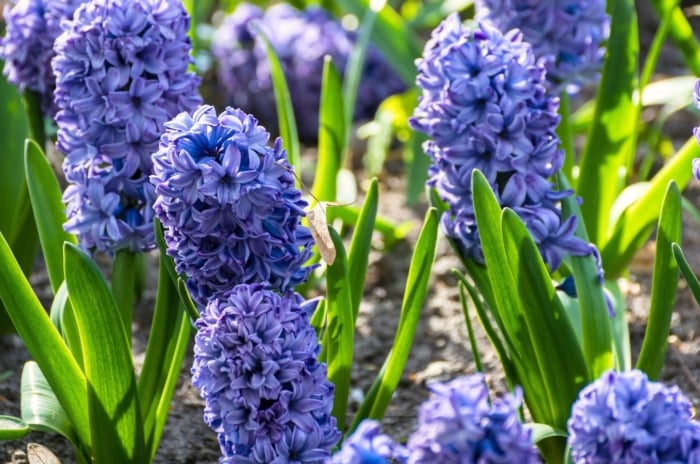
Hyacinths usher in spring with colorful, fragrant blooms. Dense tubular flowers in purple, blue, pink, gold, and white rise above bladed foliage. The saturated blooms carry an intensely sweet scent that enchants the senses.
Plant the easy-care, cold-hardy bulbs in the fall along with tulips and daffodils for an early-to-mid spring show. Like daffodils, hyacinths deter foragers like deer, rabbits, and squirrels with their natural toxins. And like tulips, they flower most vigorously in their first growing season, offering a burst of color and fragrance as temperatures warm. They’ll continue to bloom for several years after, but with looser, sparser flowers along the stem.
Often with double florets on compact stems, the tubular flowers reflex slightly for a graceful but stiff, structural look. The fragrant flowers attract bees to their nectar, and the sweet perfume of a single stem fills a room with fragrance.
Daylily

|
|
botanical name Hemerocallis spp. |
|---|---|
|
|
sun requirements Full sun to partial shade |
|
|
height 1-4’ |
|
|
hardiness zones 3-9 |
Daylilies are tough, adaptable perennials that grow across a variety of conditions, including hot, cold, and fluctuating moisture levels. Their fountain of blue-green, bladed foliage flushes in spring to disguise weary bulbs. In summer, cheery flowers supply continual color during their bloom cycle, following the sun each day.
Daylilies need little, if any, tending to live for years. Provide space between plantings for tulips and daffodils to emerge around their roots and leaves. Choose a species that isn’t invasive in your region for the most ecological benefit and easiest maintenance.
Bluebells

|
|
botanical name Mertensia spp. |
|---|---|
|
|
sun requirements Partial shade |
|
|
height 1-3’ |
|
|
hardiness zones 3-9 |
Bluebells offer a sweet splash of blue-violet in the bulb display. Bell-shaped flowers suspend gracefully from arching stems above leafy crowns in spring and summer. Bluebells grow best with regular moisture, with a natural habitat of stream banks, wet meadows, and moist woodlands. Allow good air circulation to prevent mildew diseases.
Mertensia ciliata, or mountain bluebell, is native to the Western U.S. and tolerates drought and temperature extremes. The tallest of the bluebells, M. ciliata, forms pink buds that open to rich purple-blue and turn pink as flowers age.
In the Eastern United States, the ephemeral Virginia bluebell emerges in spring, gracing the woodland garden with sky-blue tubular blooms for several weeks. In the right spot, Mertensia virginica naturalizes and readily reseeds.
English bluebells are a different species (Hyacinthoides non scripta), but also a lovely pairing with other spring bulbs. Their lightly fragrant, blue-violet bell flowers appear for about five weeks.
Solomon’s Seal

|
|
botanical name Polygonatum spp. |
|---|---|
|
|
sun requirements Partial to full shade |
|
|
height 1-6’ |
|
|
hardiness zones 3-9 |
Solomon’s Seal is a structural perennial with zig-zagging foliage along upright and arching stems. Leaves are soft, mint green or milky white with variegation, and are lush as bulbs fade. In spring, greenish-white bell blooms suspend from each node along the stem.
North American native species include P. biflorum, smooth Solomon’s seal, and P. pubescens, hairy Solomon’s seal. Moist, well-drained soils show the best vigor, but the adaptable native is versatile.
False Solomon’s seal (Maianthemum racemosum) is another option for native tulip and daffodil companions. Starry, feathery, ivory flowers ornament the ends of the stems. A light fragrance attracts insects, and the berries that follow support wildlife.
Creeping Phlox

|
|
botanical name Phlox stolonifera |
|---|---|
|
|
sun requirements Full sun to partial shade |
|
|
height 3-6” |
|
|
hardiness zones 5-8 |
Creeping phlox brings a blanket of color in spring as a low-growing spreader with dense foliage and purple-blue blooms. The low-maintenance groundcovers are versatile and offer a “filler” quality as tulip and daffodil companions. Needled foliage creates a carpet that disguises behind-the-scenes yellowing.
Woodland phlox, P. divaricata, is another companion for daffodils and tulips. It has powder blue flowers and a loose, informal habit. ‘Blue Moon’ is a top performer with reliable blooms and a compact habit. The periwinkle blossoms show in April and May, and glossy dark leaves form an attractive backdrop throughout the season.
Astilbe

|
|
botanical name Astilbe spp. |
|---|---|
|
|
sun requirements Partial to full shade |
|
|
height 3’ |
|
|
hardiness zones 4-9 |
Astilbe features tufts of feathery plumes and ferny foliage, perfect for rounding out the understory. The full, pyramidal bloom spikes hold hundreds of florets that open in succession.
In pink, peach, red, purple, and champagne, the blooms set in spring and open through early summer. The dried plumes and seed heads extend interest beyond the bloom. Astilbe’s glossy green leaves have tinges of red and copper.
Astilbe is relatively easy to grow but needs consistent soil moisture (they wither in dry spells). They do best in rich, organic soils.