5 Tricks for Towering Sunflowers This Summer
The romantic feeling a row of towering sunflowers provides to a garden is unmatched. At the height of summer, these blooms follow the sun each day, as it rises and sets. If you want to grow towering sunflowers, know that it’s not hard! Experienced gardener Sarah Jay shares five tips for growing tall, stately sunnies.


Contents
In summer’s heat, it’s a huge relief to stand below towering sunflowers, shaded from the intense sunlight. These blooms are the quintessential flower of summer, and they’re pollinator powerhouses. They also offer seeds, which can be pressed into oil or butter, depending on your taste.
If you’ve tried to grow them in the past but struggled to get them to grow, there are a few ways to achieve big stalks and giant flower heads. While it starts with picking the right type of sunflower, there are a few ways to care for them to promote even higher stems.
Did I mention you can roast an entire giant sunflower head? Pretty wild, right? You have to be able to reach up and cut the head of the sunflower after it’s done blooming. After you retrieve it, let it dry in a protected area out of the elements. An airy outdoor space is best. Then remove the petals, season it up, and roast it.



Select Tall Varieties
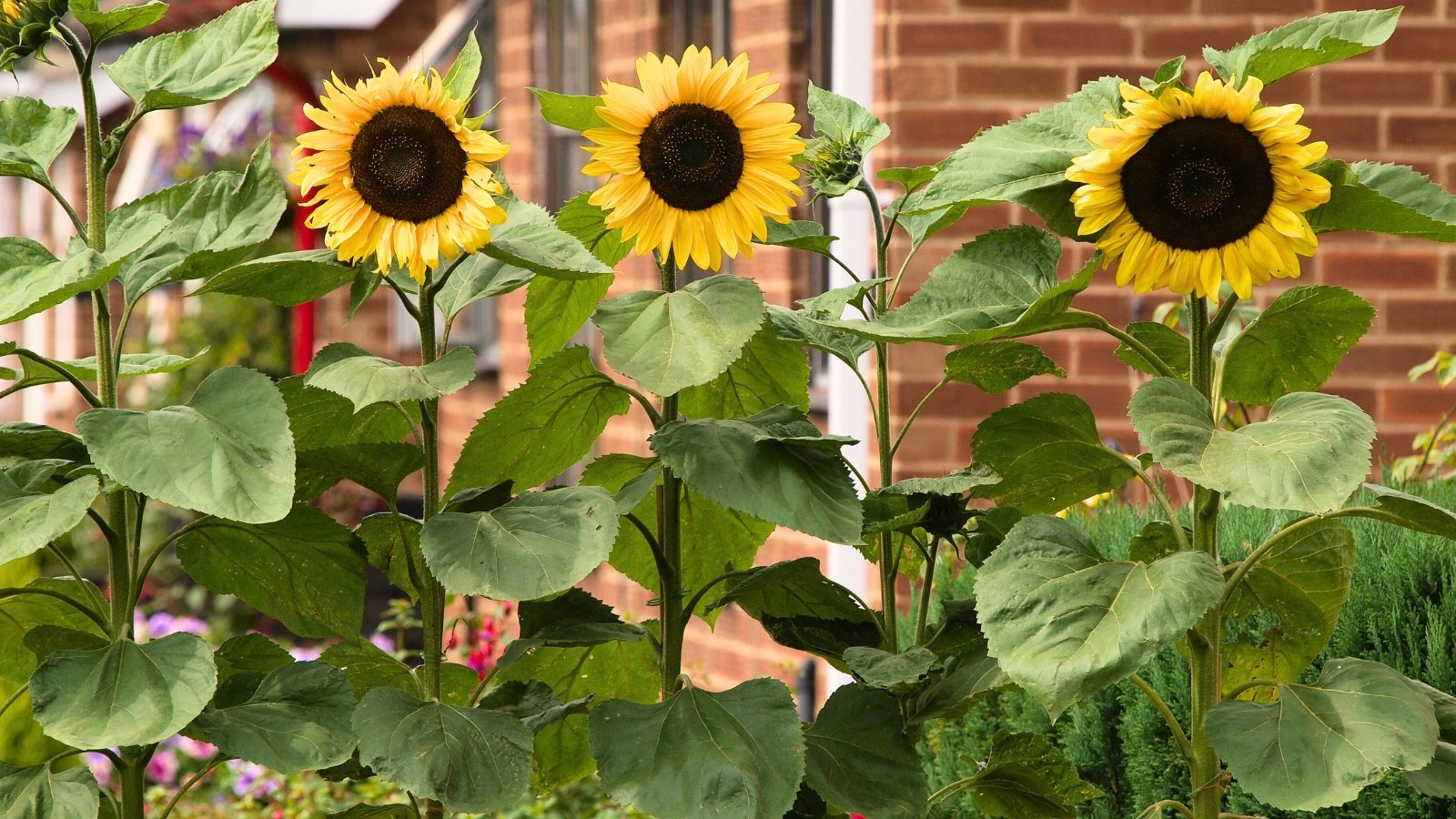
To start, you need to plant the right kinds of sunflowers. The ‘ProCut®’ series has tall stems and decent-sized flower heads. ‘Sunzillas’ are also very tall, up to 16 feet, and they have large flowers. ‘Titans’ reach 14 feet at maximum height, and ‘Mammoths’ reach about 12 feet with up to one-foot-wide blooms.
‘Mongolian Giants’ are truly huge, reaching up to 15 feet and 18 inches across their flowers. If you’re unsure where to start, Botanical Interests has a few of these. You can also search for “hedge sunflowers”. This will get you to the tallest, towering sunflowers the internet has to offer.
If you know a sunflower farmer, you can ask them for seeds. Chances are, they aren’t short on them, as each sunflower produces tons of viable seeds.
Space Appropriately

While you generally want to plant groups of multiple seeds every couple of feet when you’re starting your sunflowers, after they sprout, you should thin them. This gives them the maximum space and available nutrients to grow from a small sprout to towering sunflowers.
Sow your sunflowers directly in the garden one to two weeks after your last frost. Once your sprouts reach a few inches tall, eliminate all but the most vigorous one in your newly planted hedge. Keep the sprouts after you thin them to eat. They’re some of the best sprouts out there, flavor-wise, and they’re full of nutrition. I like to throw mine on a salad or in a sandwich.
Feed Them

It’s really not necessary to feed sunflowers, but if your soil is lacking in richness and organic matter, it will help you grow towering sunflowers. Every month, either side dress your sunflower hedge with well-rotted compost or apply an organic fertilizer. Liquids are faster to reach sunflower roots.
You don’t want to fertilize too much, as doing so promotes excess sugar production in plants. This attracts pests, which can hamper the growth of your sunnies.
Weed and Water

Weeding starts when you prep the bed. Remove weeds before you sow your sunflower seeds, and you limit competition for nutrients in the soil. Keep weeding throughout germination and continue to do so through the entire season. Water well, too. Sunflowers like somewhat moist soil.
Once they’re well established, you can cut back on watering. As you grow towering sunflowers, the leaves shade out the soil, and water evaporates from the surface less. Weeding is still important, even in later phases, but only add water if the soil is dry. When you water, do so deeply and slowly. Optimal conditions are present when you use soaker hoses or drip irrigation.
Provide Lots of Sun

They are called sunflowers, and therefore, they require tons of sunlight. When you pick a site for your hedge of towering sunflowers, ensure it’s not blocked by nearby structures, trees, or other plants. You want plenty of sunlight from the get-go. At least six to eight hours of direct sunlight is a good baseline.
If you can, and if you need to, you can remove a branch or two from a tree to open your sunflowers up to more light access. If you’re in the northern hemisphere, plant them on the south side of your garden for the best results.
Scout for Pests and Diseases
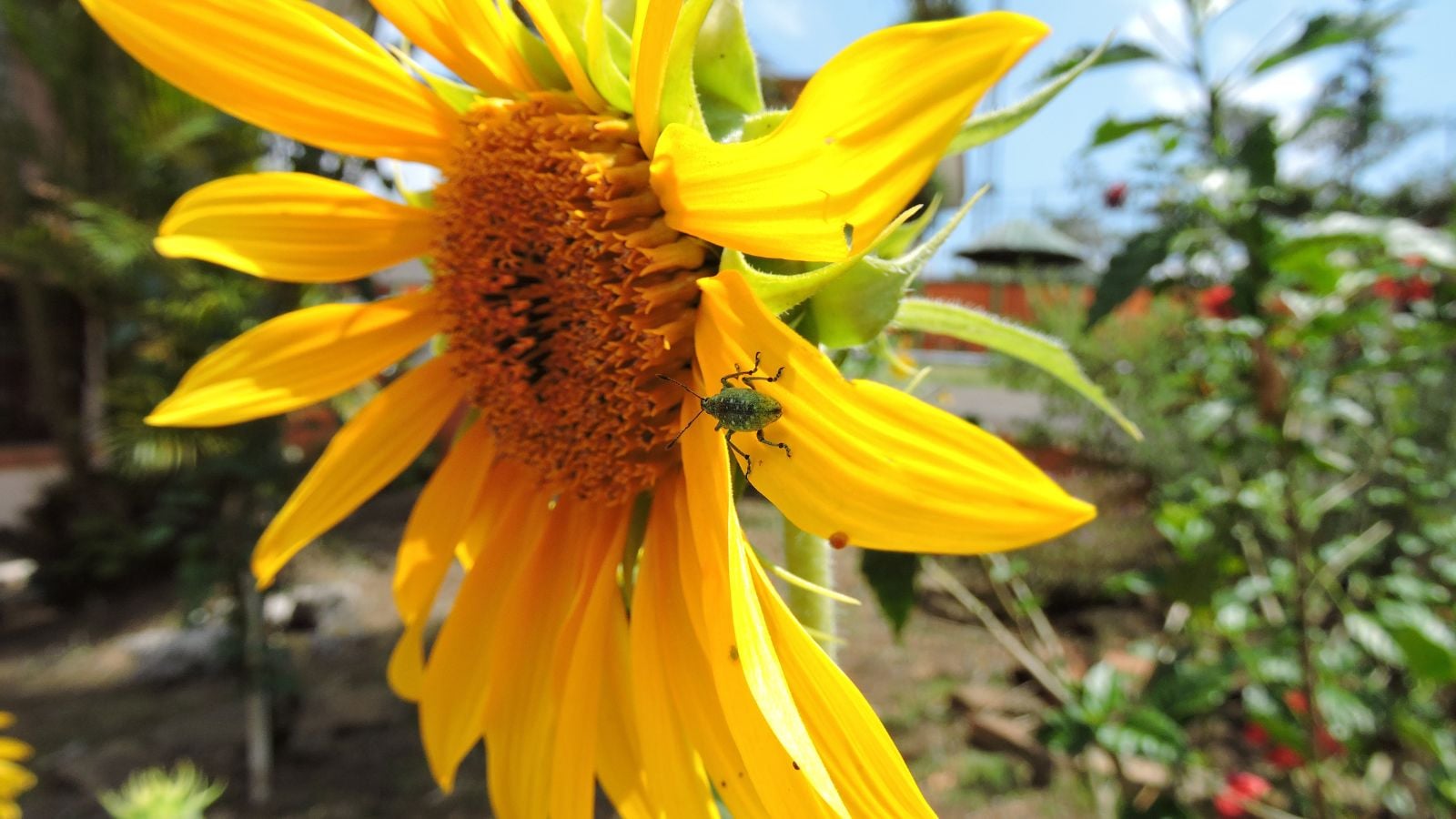
While established sunflowers have no problem handling most pests and diseases, young sprouts are susceptible to plenty of problems. If you look out for common pests and diseases at this stage, you’ll be able to get your sunflowers to the mature, tall stage that you want them to get to.
The most destructive pests are weevils and stem borers. Look out for egg masses on the leaves and girdling stems. Check the crown of the plants for evidence of feeding at the root level. Look for darkening and sogginess. The disease of most concern is damping off.
As long as you have well-draining, fresh soil and you water appropriately, this is less likely to take hold. But it causes seedlings to suddenly die. If yours die back unexpectedly, try to sow more seeds in another area. As long as you have a few months left in the season, you should be able to grow more of them in time.
Key Takeaways
So remember, it’s not hard to grow towering sunflowers, but there are a few ways you can ensure that your hedge is tall and lovely at the height of summer.
- Start by selecting the right varieties, and look for “hedge sunflowers” as you choose the variety you want to grow.
- Give your plants at least two feet of space between each. Plant groups of three seeds per hole, and thin them to one when they reach a few inches tall.
- Feed sunflowers with monthly side dressings of compost or an organic liquid fertilizer.
- Weed the site before you plant, and as you’re growing your flowers.
- Water deeply and slowly, in order to keep the soil consistently moist. A little drying is ok.
- Keep an eye out for pests and diseases that can stop sunflower growth in its tracks.