

Potted Bulbs in Containers: How to Do It Right
Fall is prime for planting bulbs in containers for a cheerful welcome to spring. It’s also the time to force bulbs for holiday displays and gifts. With easy planting in endless combinations, the nearly effortless arrangements bring a big show.

Contents
Fall-planted bulbs make easy arrangements for rewarding pop-up displays in spring. Easy to plant, the quick work now brings colorful blooms that usher in warmer weather in a sunny fashion.
With some planning, spring and summer-flowering bulbs become exquisite container combinations for weeks of blooms. They also make lovely holiday displays and gifts by forcing blooms early in pots.
With their generous compatibility, spring-flowering bulbs complement each other or stand out as single-species compositions. Potted bulb designs bring limitless creativity in diverse colors and forms. Have fun planting bulbs in containers by following these steps.
Planting Bulbs in Containers

Many of our spring-flowering favorites require a winter chill time for growth. Planting bulbs in containers in the fall allows a natural vernalization (cold exposure) period as they spend winter outdoors.
Whether forcing blooms or growing them in pots in the landscape, many bulbs require cold exposure for at least 10 weeks. Consistent temperatures at 40 to 45°F (4-7°C) for these weeks trigger growth as temperatures warm.
The amount of chill time and temperature requirement varies according to species. Without ample cold exposure, growth and flowering may be weak and more sparse.
After about 10 to 12 weeks and as temperatures warm, move the pots to their display location (indoors or out) for flowering.
When to Plant

Whether planting bulbs in containers outdoors or “forcing” them for indoor flowering, October and November are optimal for many areas. The warm start gives roots time to develop before freezing conditions. The cool temperatures that follow allow the necessary chill period for flowering.
Aim to plant bulbs early in the season, or when soil temperatures begin to cool and nighttime temperatures are in the 40s and 50s (around 4-13°C).
You can plant bulbs later in the season and even into winter as long as they’ve met their chill time or are pre-chilled and have winter protection in cold climates.
The Best Bulbs
When sourcing bulbs for planting in containers, opt for plump, full, firm ones without soft spots. Sizeable bulbs among the selection bring good energy stores for the strongest overwintering and flowering, especially in pots and for forcing.
Pre-chilled bulbs from a grower ensure proper chill requirements for the bulb species are met. These are ideal in warmer climates (zones 8 to 10), where the seasonal cold exposure may not meet the requirements.
Pre-cooled bulbs are also helpful for forcing bulbs indoors in pots for early blooming around the holidays. With pre-chilled selections, there’s no need for weeks of refrigeration or seasonal cooling.
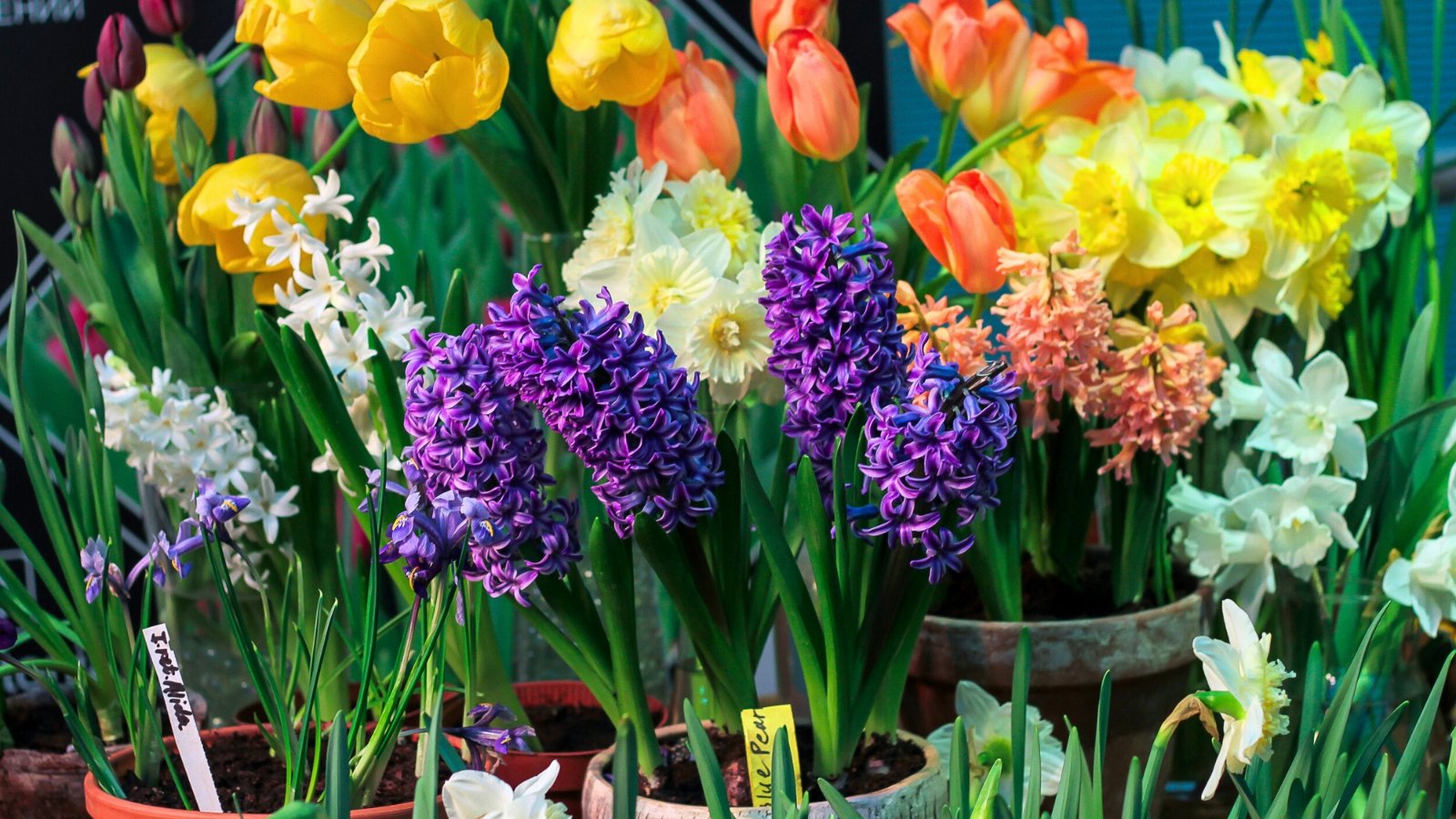
From hyacinths to daffodils to tulips, pairing those with overlapping bloom times (early, mid, late season) brings a burst of color with the potential to extend for weeks. Very early blooms like snowdrops, winter aconite, glory of the snow, and crocus kick off the display.
Materials

A high-quality potting mix offers loose, lightweight, and well-draining soil suitable for planting bulbs in containers. Pots can be any size, from small to hold a single bloom to large for higher numbers. The key to the container is good drainage, so make sure there are drainage holes so the roots and bulb aren’t oversaturated.
In addition to potting soil, bulbs also root in water for a pretty show. To root them in specialized glass bulb vases or gravel dishes, only the very bottom-most portion of the bulbs, where the roots emerge, should make contact with the water. The bulk of the bulb should sit above the water level to avoid rot.
How to Plant

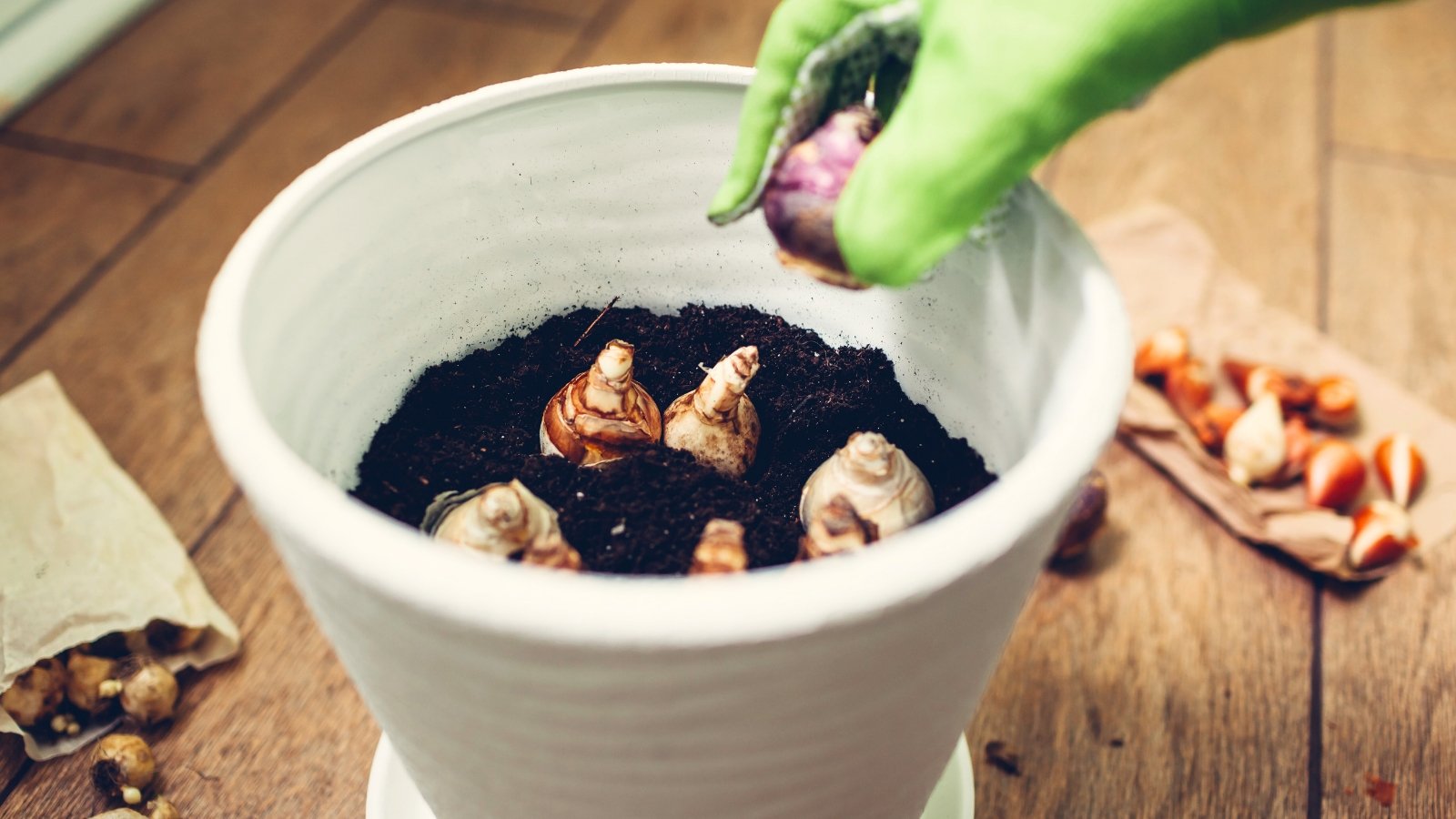
Bulbs like to be crowded in a pot. Situate them nearly shoulder to shoulder on their broad bases, with the stem-end pointed up.
Partially fill a container with the well-draining potting soil, and plant according to species guidelines for depth. Plan to leave one or two inches of headspace beneath the pot’s rim. Since we plant potted bulbs more closely than in-ground selections, place the bulbs about half to one inch apart.
Depending on the varietal preferences, cover the bulbs with soil. For forcing bulbs for early blooms, plant them closer to the surface (usually only one to two inches deep). For overwintering in containers, follow regular planting depths. Water thoroughly until it pours through the container’s drainage holes.
To underplant cool-season perennials and annuals, tuck the bulbs in amongst the leafy selections at their appropriate depth. They’ll emerge in spring to transform the arrangement.
Layering

Layering different types of bulbs in the same pot extends the interest and the length of flowering. Lasagna gardening for bulbs involves planting small-bulbed early risers toward the top, mid-size bulbs in the middle, and large ones at the base. Increase the spacing between upper layers of bulbs to one to two inches to allow for those below them to surface.
Compositions can be multicolored for a bright cheer, yellow for a dose of sunshine, or pure white for crisp elegance. Mix and match to your desired color scheme and timeframe.
Choose a large pot for a grouped planting, or one that’s at least 12 inches deep for smaller numbers. When pairing, consider early, mid, and late-season bloom times to coordinate the combinations.
With staggered bloom times (e.g., snowdrops, early daffodils, and mid tulips), you’ll have a lasting show of revolving color. Snowdrops appear first, with daffodils closely behind. The tulips show as the last of the daffodils fade. Opt for those with overlapping flowering times when planting bulbs in containers for a big display all at once.
Forcing

Many spring-flowering selections bloom indoors any time of year through forcing. Paperwhites, amaryllis, hyacinths, daffodils, tulips, and snowdrops are excellent to force for early flowering.
You can force them in pots indoors with pre-chilled bulbs from a grower, or outdoors to achieve their chill period. Pre-cooled fall-planted bulbs usually bloom around the holiday time. Those started in pots outdoors are brought inside after their chill requirement and flower around Valentine’s Day.
To force pre-chilled bulbs indoors, keep them in a cool space (about 60°F or 16°C) with bright light out of direct sunlight. Move them to their display area when they’re almost ready to flower. Keep the blooms cool at night to prolong flowering, and away from sunlight and heated drafts to extend flowering.
To force outdoors before bringing in, plant the pots in early fall and place them outside a few weeks before the first anticipated frost. An unheated garage, basement, cold frame, or greenhouse works well, too.
Move the containers indoors by mid to late January to continue developing for blooms in a few weeks.
Overwintering

For potted bulbs outdoors in the winter, nestle them close to a building or wall under a layer of leaves for insulation. Outdoors, they’ll receive adequate seasonal moisture without additional watering during dormancy. If indoors or undercover, keep the soil moist, but with minimal watering sessions to avoid soggy, waterlogged conditions.
After blooming, treat the bulbs the same way you would in-ground plantings with post-bloom care. Reduce watering as flowers fade, deadhead spent blooms, and let foliage fade naturally. Transplant perennial bulbs like daffodils and snowdrops to a permanent spot in the garden in spring.
Forced bulbs often use all of their energy in the first season of early flowering. It’s best to compost forced bulbs and start fresh next fall.


