Blueberry Bushes: Soil Prep, Variety Selection, and Spring Planting
If you choose to plant a blueberry in spring, you should know what preparations are needed. You want to choose the right variety and site carefully, and then prepare the site appropriately to help your bushes thrive. Experienced gardener, Sarah Jay, covers the basics of how to prep for a good summer harvest.

Contents
So, you’ve chosen to plant a blueberry in spring, and you’re wondering how to proceed. The process to follow is logical and simple. Start with the right variety of blueberries – one best suited to your climate. Then figure out where you’ll plant it, and prepare the way for your shrub.
Not only do you have to clear the way for your blueberries in an in-ground site (or even in a raised bed), but you also have to prep the soil, as most soils aren’t exactly suited to growing them. The changes you make before flowering occurs will have positive repercussions come summer.
Here, we detail each of those steps. We cover how to select the best variety and how to site prep like a pro. Then we detail how to plant your shrub effectively and maintain it for years to come. Planting perennials like these gives your garden multi-year blessings in scrumptious blueberries.


Step 1: Choose a Variety

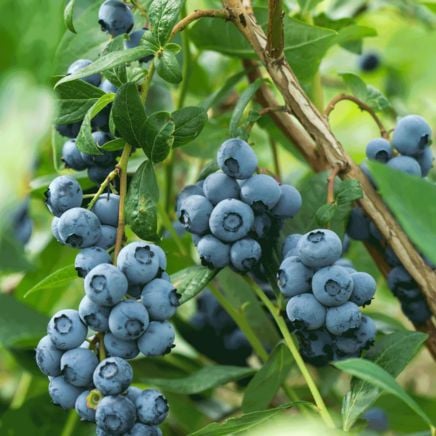
There are blueberry varieties suitable for almost any part of North America, and there are even some awesome natives. If you can’t find a native species, you can always grow one well-adapted to your climate and hardiness range. In general, blueberries thrive easily in zones 3 through 7. There are others suited to more tropical zones, though.
Aside from the hardiness zones, ensure the variety you choose is suited to your climate by how many chill hours are required for fruit set. If you live somewhere warm with few freezes, pick a low chill hour bush. If you live in a cold region, you should choose something with a high chill hour requirement.
Regional Considerations

If you live in one of these southerly zones, the Southern Highbush is a good choice. Vaccinium ashei ‘Tifblue’ is a great option for zones 7 through 9, especially where it’s hot and humid in summer. In the Pacific Northwest and all but Central Canada, oval-leaved blueberries (V. ovalifolium) are perfect, but these are more tree-like than your standard cultivated berry.
For Appalachia and the Northeast, V. corymbosum, or highbush blueberries, reign. In the middle of the continent, from Minnesota to Virginia, choose a lowbush blueberry (V. angustifolium). Both of these have been bred for home gardens, so you’re likely to find one near you.
Adapted Varieties

We don’t mean to suggest you should only select a native species or a variety of one for your garden. There are plenty of options that work for multiple regions. It’s just that looking for a variety developed from a local native will do best in your region.
Because blueberries are so beloved, they’ve been bred over time to include traits that function best in varying regions. Some have bred in cold or heat-tolerance, while others are crossed for resiliencies, like disease and pest-resistance. Chances are, you have a nursery near you and an ag extension that can point you in the right direction if you don’t know where to go.
Step 2: Select a Site

While blueberries can survive in partial shade, full sun is best for them. When you plant blueberry in spring, use this to guide you. This promotes the best flowering and fruiting. They need a moisture-retentive, but well-draining and somewhat sandy soil to thrive.
One important aspect of blueberry growing is pH. They prefer a more acidic soil than other plants do, at around 4 to 5 (compare that to 6 to 7 for most other plants). We’ll get deeper into that in the next section, as most soils aren’t already this acidic. Another consideration: will you grow yours in a container, or a raised bed? Or will you plant yours in the ground? If so, you’ll want to prep that as well.
You should prep enough space for two, as growing two improves pollination and fruit set. The location of your planting should be somewhat sheltered from the elements at first. Plenty of wildlife absolutely love blueberries, and while you won’t necessarily have access to blueberries in the first year, you don’t want to lose yours to a hungry little rabbit. Prepare for mulch or a cover for winter, too.
Step 3: Amend Soil

Start with a soil test to determine what your pH is. If you’re already in the 4 to 5 range, you’ll focus on amending for texture rather than acidity. If not, you can amend the soil with elemental sulfur, which takes a few months to acidify the soil and requires reapplication, or you can use sphagnum peat moss. Peat moss works best if the pH is between 5 and 7.
If you’re close to a 7 pH, use five to six inches of peat moss worked into the surrounding soil. Ensure a two to three-foot strip is amended this way to accommodate both shrubs. In-ground and in raised beds, amend soils for texture, ensuring the area is rich with nutrients (add compost to improve this) and well-draining (add agricultural sand or grit for this).
If you’re working with empty raised beds or containers, there are blueberry-specific formulations you can find at select retailers. Numerous brands sell these, but we at Epic are partial to Fox Farm.
Step 4: Plant Your Blueberries
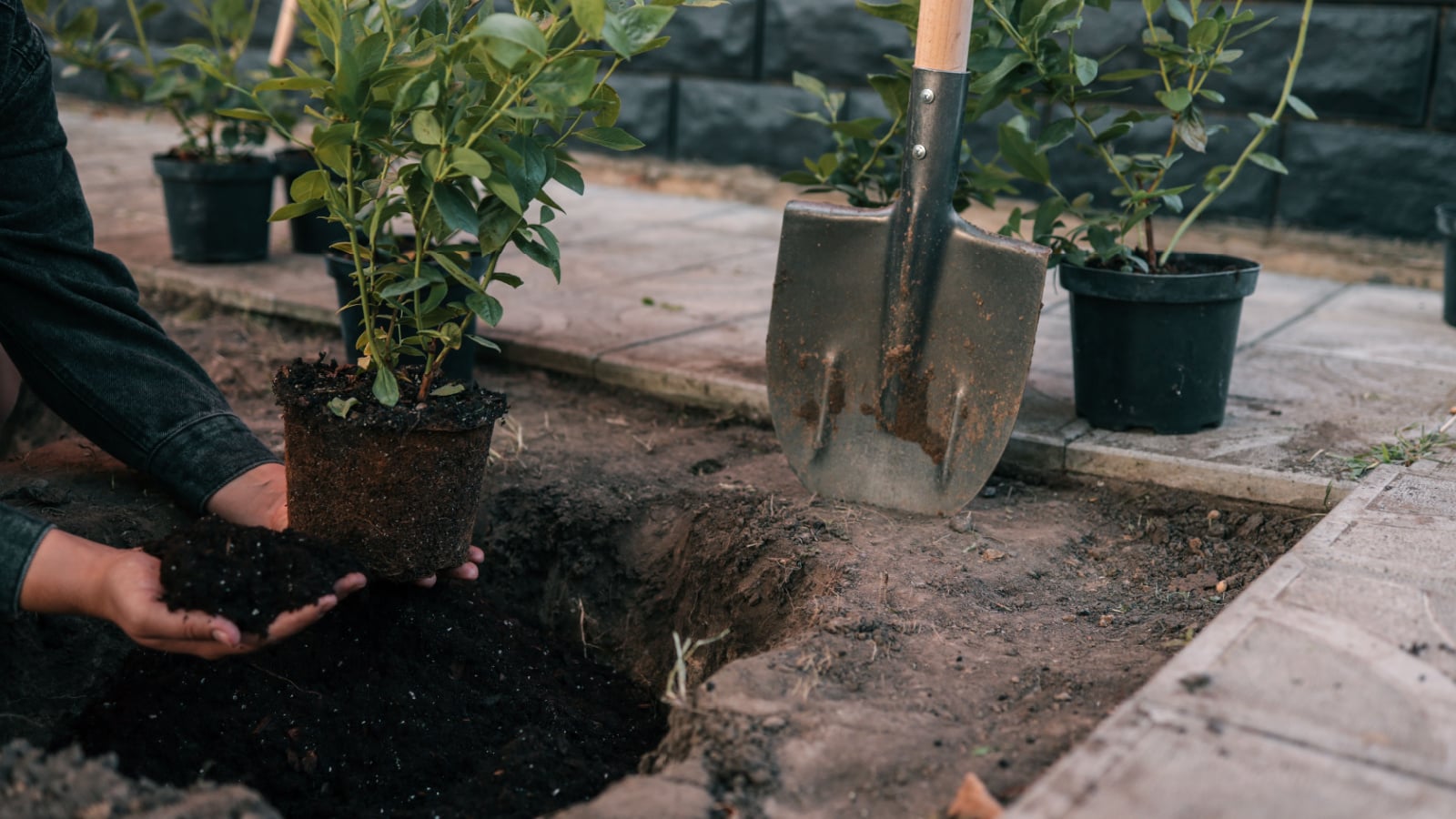
You’ll purchase blueberries in one of two forms: in nursery pots or bare root. If you’re planting bare-root blueberries, soak the roots for three to six hours before planting. Then prepare a hole large enough to accommodate the root system without curling it. Place the crown about one inch below the soil line, and fill in your hole.
For transplants in nursery pots, simply dig a hole the same size and depth as your plant is in the pot, and plant it. Fill in holes around your hole, and gently press the perimeter of the plant into the soil. Water either your bare-root or container-grown plant and fill in any depressions that form in the soil afterward.
Cover young shrubs to protect them from birds and rabbits, and provide a hefty dose of mulch to help them through winter.
Key Takeaways
Once you plant a blueberry in spring, all that’s left to do is maintain your shrubs and wait for your first harvest. Here are some key points to remember as you plan your planting.
- Pick a variety suited to your climate. A native species will be most suited, and there are many non-native, adapted choices as well.
- Select a sunny, somewhat sheltered site for your shrubs. You’ll need to plan for two for the best fruit set.
- Amend soils for a more acidic pH, along with a rich, well-draining texture.
- Soak bare-root blueberries before planting, and plant one inch or so above the crown.
- Plant container-grown blueberries at the same depth as they were in the container.