

How to Plant, Grow, and Care for ‘Pink Profusion’ Salvia
If you want to entice pollinators to the garden, salvia is perfect for the job. 'Pink Profusion' has stunning blooms that reliably bring color to the summer and fall landscape. Join gardening expert Melissa Strauss to discuss growing this pretty perennial.


Contents
Salvias do an excellent job of adding color to the garden and a bounty of blooms for pollinators to enjoy. They’re a prolific herbaceous perennial that you can depend on to keep coming back and bringing joy year after year. They come in an array of colors and fit well into a variety of spaces and designs.
Here’s how to grow ‘Pink Profusion’ salvia for a stunning, vibrant display.
‘Pink Profusion’ Salvia Overview

|
Plant Type
Herbaceous perennial
Family
Lamiaceae
Genus
Salvia
Species
Nemorosa
|
Native Area
Europe, Asia
Exposure
Full sun
Height
16”-20”
Watering Requirements
Moderate
|
Pests & Diseases
Spider mites, aphids, root rot, powdery mildew
Maintenance
Low to moderate
Soil Type
Well-drained, sand, gravel
Hardiness Zone
3-8
|
What is ‘Pink Profusion’ Salvia?

‘Pink Profusion’ is a lovely variety of woodland sage in the Salvia genus. It’s a member of the mint family and is exceptionally attractive to pollinators, including bees, butterflies, and hummingbirds. Its long and prolific blooming habit makes it an excellent food source for these garden helpers, and it dresses up the landscape as well.
The mint family includes more than 7,000 species sorted into over 200 genera. These plants are widely popular and commonly used medicinally, culinary, and ornamentally. Salvia nemorosa is perennial in zones 3-8, though here in zone 9, I’ve had plenty of success with it, so don’t shy away if you, too, are a zone 9 gardener.
Characteristics
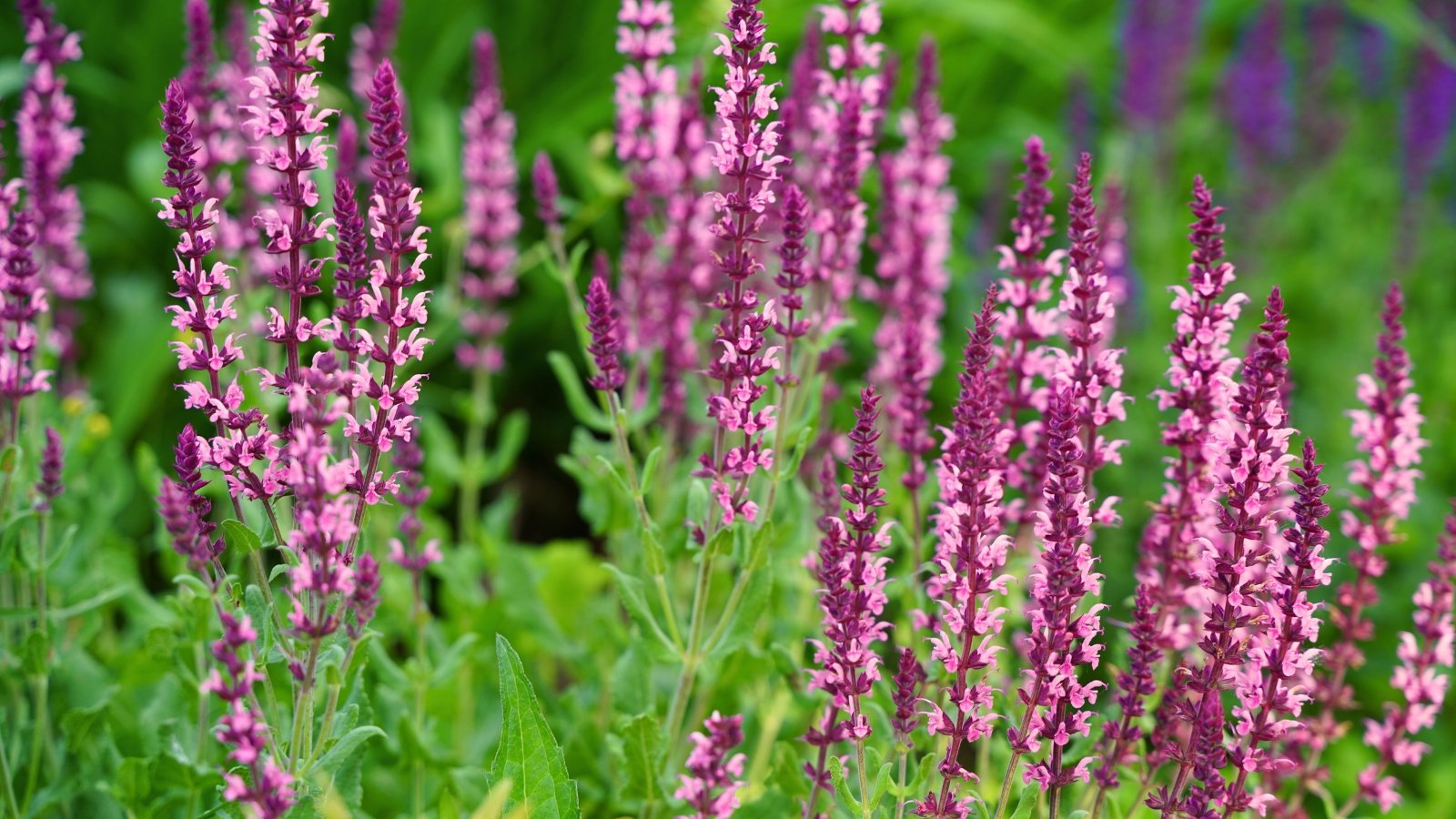
‘Pink Profusion’ is a cultivar of Salvia nemerosa. This branching, woody-based perennial has a clumping habit and typically reaches about 18 inches tall, though it can grow taller. This particular variety is on the smaller side. It’s in the mint family and has attractive, aromatic foliage.
In late spring to early summer, flower racemes pop up from the top of branches. In them, masses of pretty, dark pink calyxes hold lighter pink flowers. They re-bloom throughout the season and into the fall months if you cut them back after blooming.
The plant is a neat, well-balanced, rounded shrub. Its attractive shape and dense foliage and flowers make it a perfect addition to garden beds. It also makes a stunning border, and the fragrant flowers are nice for cutting. Once established, these are low-maintenance and drought-tolerant.
Native Area

‘Pink Profusion’ is a hybrid variety, but the parent species, Salvia nemorosa, is native to Western Asia and Central Europe. It grows well in open woodlands, grasslands, and meadows. It’s versatile and can grow in a wide range of climates and landscapes.
Planting
Salvia is an easy-going perennial that requires minimal care once established. It performs well in warm climates but is cold-tolerant, so it will grow in most areas of the United States. You can plant it nearly any time of year, but as with most tender perennials, planting in spring gives it the optimal amount of time to develop roots before its first winter. Gardeners in warm or mild climates can also plant in the fall.
Transplanting

Choose a temperate to cool day for transplanting to minimize stress and get your salvia off to a comfortable start. Dig a hole that is as deep and slightly wider than the root ball. If the soil is poor, you can amend it with compost, but it’s typically not necessary as this plant is efficient with nutrients.
After planting, backfill around your root ball and water thoroughly. Continue to water regularly for the following two weeks, keeping the soil lightly moist.
Growing From Seed

Salvia is easy to grow from seeds, but we don’t recommend directly sowing in the garden. If you want to direct sow, wait until a week or two after your last expected frost date. It takes the seeds up to two weeks to germinate, and they need light, so you’ll want to surface-sow them. This makes direct sowing complicated because it’s easy for them to wash away before they’re able to germinate.
For the best results, start your seeds indoors about two months before your last frost date. This gives them plenty of time to germinate, root, and grow several sets of true leaves. Plant three seeds into a cell, lightly pressing them into the soil but not covering them. When your seedlings are about three inches tall, thin them out to one per cell.
How to Grow
Initially, you should keep the soil moist, watering regularly to help the plant establish roots. This is an easy perennial to grow and care for, and in the right location, it will thrive and bloom for an extra-long season. Give your plants a foot of space between them to allow them to spread out and reach their full potential. This also reduces the occurrence of fungal diseases.
Light

For the most impressive blooming season, plant your ‘Pink Profusion’ salvia in a location that receives full sun, which is six to eight hours per day. While they can survive in partial shade, they will not flower nearly as well. In warmer climates, partial shade in the afternoon is well-received.
Water

Initially, you should keep this plant well-watered. They establish quickly, so if you plant in the spring, you’ll usually be fine reducing watering by summer. It’s better to water deeply and less frequently than to water lightly and more often.
Allow the soil to dry between waterings to avoid root rot and other fungal issues like powdery mildew. It’s generally resistant to drought, so dry weather is not a major issue, but in times of prolonged drought, make sure to give it some water now and then. If the flowers droop over, it’s probably thirsty.
Soil

Salvia is not particular about soil, though drainage is important. Clay soil can be heavy and dense, which sometimes leads to drainage issues. If you have clay-heavy soil, it’s a good idea to amend it with organic material or coarse sand.
Sandy soil or soil with a lot of gravel is not a problem for ‘Pink Profusion’ salvia. They are truly not particular. The ideal soil conditions are loamy and fertile, but they will grow in most places without any fuss.
Temperature and Humidity

This is an herbaceous, deciduous salvia, so it dies back to the ground in winter. However, the roots are quite cold tolerant, so they will return in the spring. They tend to be happiest in climates with mild summers.
Despite their preference for temperate weather, they are surprisingly tolerant of heat. Their flexibility makes them an excellent choice for a wide range of gardeners in different climates.
Moderate humidity will keep your salvia happy and blooming. A range of 40-50% is ideal. They will tolerate higher humidity, but it’s best to keep them thinned out and plant them farther apart in humid places to maintain proper air circulation.
Fertilizing

Salvia is not a heavy feeder; it’s efficient with nutrients, so it doesn’t need fertilizer regularly. Mixing some compost with the soil will be more than sufficient. You can also topdress with compost every year or two.
Maintenance

Because it dies back in the winter, ‘Pink Profusion’ salvia doesn’t require pruning. In spring, just clear away the dead foliage to make room for the new. Leave the spent blooms and foliage intact over the winter, particularly in colder climates; this will offer some protection from the cold.
Deadheading is imperative if you want your plant to continue blooming through the summer and fall. After it finishes a blooming cycle, cut it back to the foliage, and it will produce more flower spikes.
Propagation
Propagation by seeds is not difficult or uncommon. The other common methods of propagating salvia are division and cuttings.
Cuttings

You can propagate by cuttings, though this takes a bit longer than by division. Take cuttings in spring or early summer while the plant is actively growing. Select healthy stems with no flowers on them and cut sections of four to five inches. Make your cuts just below a node, where the stem grows a leaf.
Strip the leaves from the bottom half of your cutting, leaving about two sets of leaves at the top. Dip the cut end in rooting hormone. This will encourage root development.
Prepare containers with a well-draining potting mix. Standard potting mix is fine, but it’s a good idea to add some perlite or coarse sand to improve drainage.
Insert your cuttings about one or two inches into the soil and firm the soil around the stems. Water the soil, and then cover the containers with plastic to create a dome that will hold moisture inside.
Place your cuttings in a spot with bright but indirect light, and maintain moisture in the soil. When new growth appears, this indicates successful rooting. At this time, you can move your cuttings to a spot with more light.
Division

Propagation by division is the easiest and most effective method. The ideal time to divide your salvia is in spring or fall when the plant is not in bloom. It’s healthy to do this occasionally to prevent overcrowding.
You can plant the divisions directly in the ground, as they don’t need to spend time in pots. Prepare the holes ahead of time. Dig up your plants gently, removing them from the ground without damaging the roots if possible.
Shake off as much soil as possible so that you can see the roots clearly all the way to the crown. Identify separate stem shoots and use a saw or sharp knife to cut through the roots in between stems. Then, plant your divisions and water them well.
Common Problems
Salvia is a sturdy plant that doesn’t attract a great deal of attention from pests. The aromatic foliage is unappealing to most, but not all. It’s fairly disease-resistant as well, though some fungal issues can arise.
Pests

Spider mites and aphids are the most common pests to encounter in salvia. Both do damage by piercing the tissue and sucking the sap from your plant with their mouth parts. A mild infestation is not usually an issue, and natural predators may take care of it.
Neem oil is an effective solution for more serious infestations. Because salvia is a pollinator plant, it’s important to use pollinator-friendly pest control. If you need to use neem oil, wait until early morning when pollinators are not present.
In general, with a plant that attracts so many pollinators, it’s best to avoid chemical treatments. Include plantings for attracting beneficial predatory insects like lacewings and ladybugs. Their larvae consume nuisance pests voraciously.
Diseases
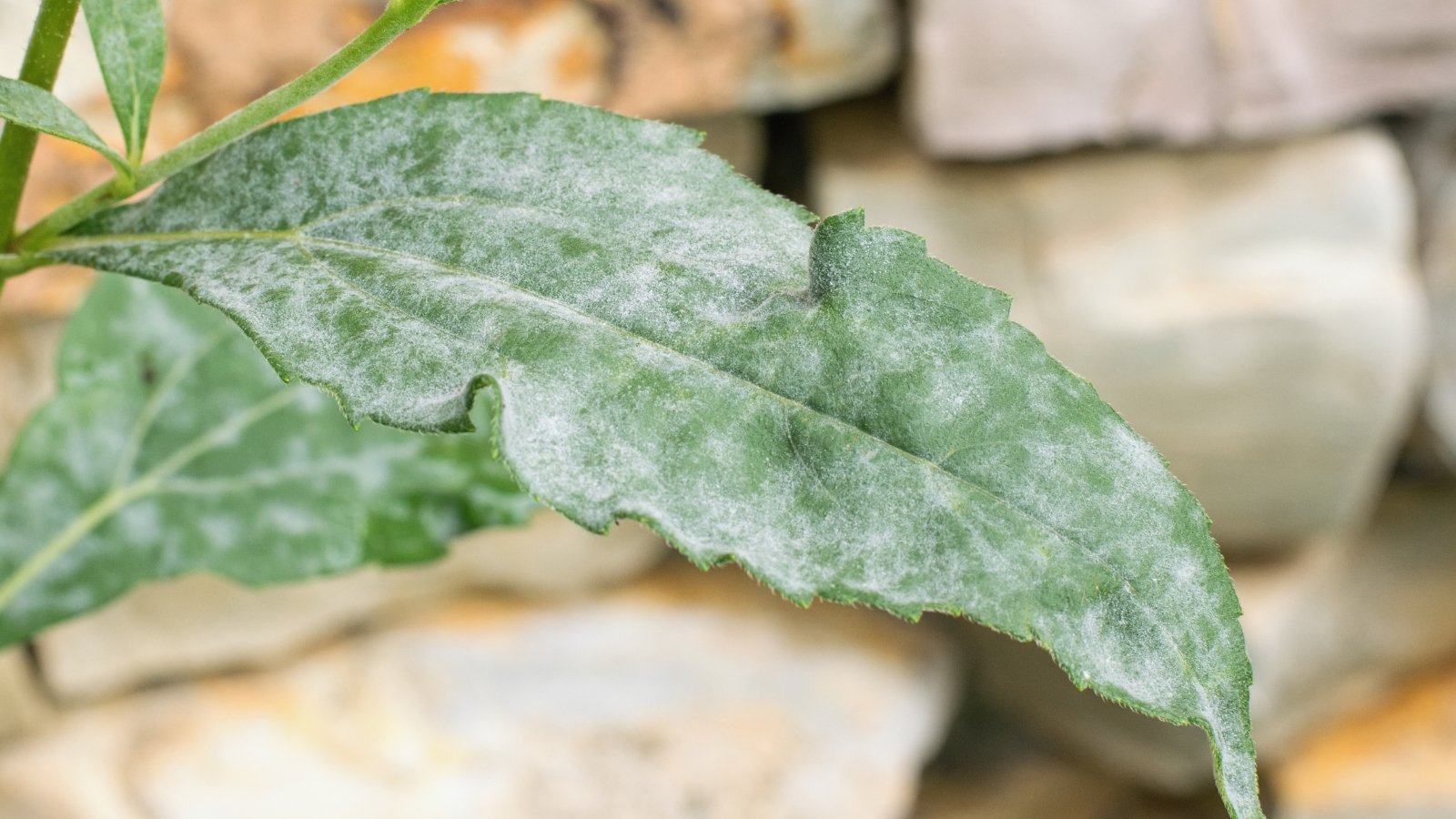
The most common disease issues for salvia are fungal in nature and typically result from overwatering. Root rot is sometimes a problem. It’s caused by overwatering and/or poor drainage in the soil. Planting in well-draining soil helps to prevent this problem.
The other fungal issue to look out for is powdery mildew. This white, powdery fungus grows on foliage. It’s caused by several different things. Overhead watering and watering at the wrong time of day can leave your foliage wet for a long period, allowing fungus to grow. Poor air circulation can exacerbate the problem.
Always water early in the day and at the soil level rather than overhead. This places the water where the plant will use it, the roots, and keeps it off the leaves. Leave enough space between your plants for air to circulate, and thin out the interior if it becomes too dense.
Frequently Asked Questions
What can you plant salvia with?
Other perennials that like well-drained soil and full sun are good companions. Rudbeckia, coneflowers, lavender, and catmint are all good neighbors.
Is it safe for pets?
Yes, Salvia is a mint and is safe for animals and humans to ingest.
How do you overwinter salvia?
In cold climates, leave the foliage and stems intact over the winter for protection. All a layer of mulch for extra insulation.


